Śikṣāsamuccaya

From Bodhicitta
< TextsTexts/Śikṣāsamuccaya

🤓 Admin Zone 🛠️ hidden to non-admins
शिक्षासमुच्चय
Śikṣāsamuccaya
བསླབ་པ་ཀུན་ལས་བཏུས་པ།
bslab pa kun las btus pa
The Compendium of Training
Text


Please note that many items in our library are simply pages that represent a detailed library catalog entry and citation of someone else's work, presentation, or performance. Read our General Disclaimer for more information.

Description

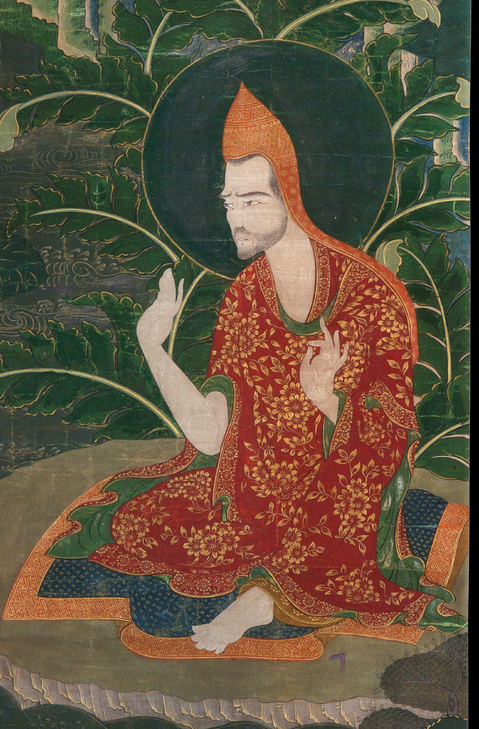
Śikṣāsamuccaya (T. Bslab pa kun las btus pa; C. Dasheng ji pusa xue lun; J. Daijōjū bosatsugakuron; K. Taesǔng chip posal hak non 大乘集菩薩學論). In Sanskrit, "Compendium of Training," a work by the eighth-century Indian Mahāyāna master Śāntideva. It consists of twenty-seven stanzas on the motivation and practice of the bodhisattva, including bodhicitta, the six perfections (pāramitā), the worship of buddhas and bodhisattvas, the benefits of renunciation, and the peace derived from the knowledge of emptiness (śūnyatā). The topic of each of the stanzas receives elaboration in the form of a prose commentary by the author as well as in illustrative passages, often quite extensive, drawn from a wide variety of Mahāyāna sūtras. Some ninety-seven texts are cited in all, many of which have been lost in their original Sanskrit, making the Śikṣāsamuccaya an especially important source for the textual history of Indian Buddhism. These citations also offer a window into which sūtras were known to a Mahāyāna author in eighth-century India. The digest of passages that Śāntideva provides was repeatedly drawn upon by Tibetan authors in their citations of sūtras. Although Śāntideva's Bodhicaryāvatāra and Śikṣāsamuccaya both deal with similar topics, the precise relation between the two texts is unclear. Several of the author's verses appear in both texts and some of the sūtra passages from the Śikṣāsamuccaya also appear in the Bodhicaryāvatāra. One passage in the Bodhicaryāvatāra also refers readers to the Śikṣāsamuccaya, but this line does not occur in the Dunhuang manuscript of the text and may be a later interpolation. (Source: "Śikṣāsamuccaya." In The Princeton Dictionary of Buddhism, 821. Princeton University Press, 2014. http://www.jstor.org/stable/j.ctt46n41q.27.)
Quoted in the aligned translations
Reference
Śāntideva (ཞི་བ་ལྷ་). Śikṣāsamuccaya [शिक्षासमुच्चय]. bslab pa kun las btus pa [བསླབ་པ་ཀུན་ལས་བཏུས་པ།]. [The Compendium of Training]. Tengyur, RKTST 3281 http://www.rkts.org/cat.php?id=3281&typ=2.
Interconnections
All 286Books 32Articles 121Classical Works 112Multimedia 2Dissertations 14Tibetan Publications 5
6 Recensions
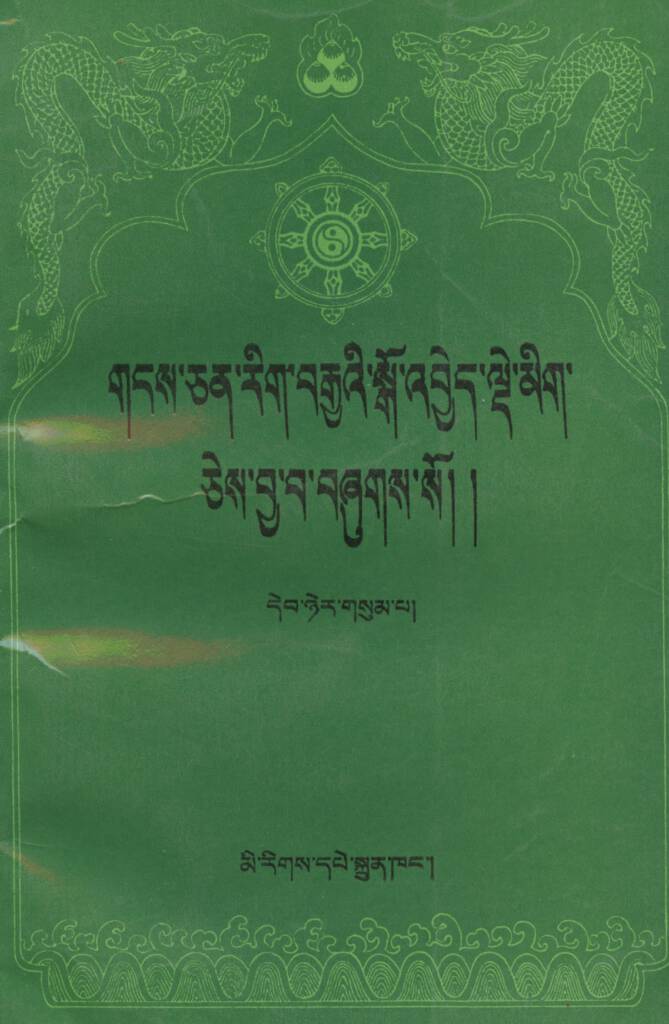
Bslab pa kun las btus pa (Mi rigs dpe skrun khang 1995)-front.jpg
Tibetan Publications1995About this item
The Śikṣāsamuccaya, Compendium of mind training texts. Supplement to the Bodhicaryāvatāra by Śāntideva.
The Written Works of Santideva (Phuntsho 2025)-front.jpg
Tibetan Publications2026About this item
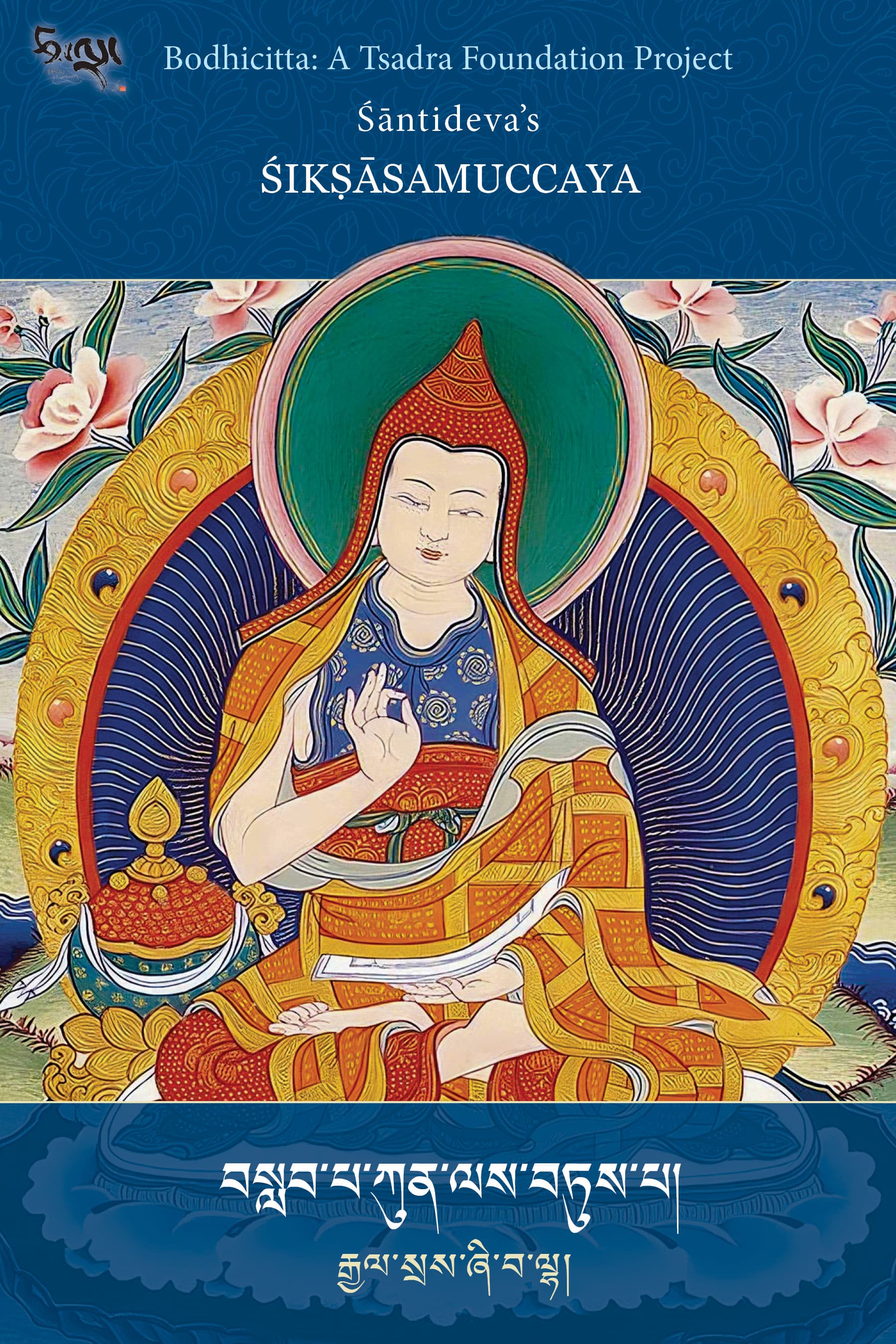
Collected in one book for the first time in the modern era: The Bodhisattvacaryāvatāra, or The Way of the Bodhisattva (BCA), and The Śikṣāsamuccaya, or The Compendium of Training. Available for free as a PDF online at Bodhicitta.org

This "Tsadra Critical Edition" was created for the Bodhicitta Resource Project by comparing four versions of the text from Derge, Cone, Narthang, and Peking Tengyurs from BDRC scans, along with Dunhuang manuscripts IOL Tib J 628, 629, and 630. When Tibetan readings were problematic, the Sanskrit texts from GRETIL and LTB (Oslo) were consulted.

The book includes an extensive introduction in English covering the life of Śāntideva with reference to special sources, the history and legacy of his texts and teachings, as well as research on the history and origins of the Śikṣāsamuccaya.

Also available in a limited "deluxe" edition with box.
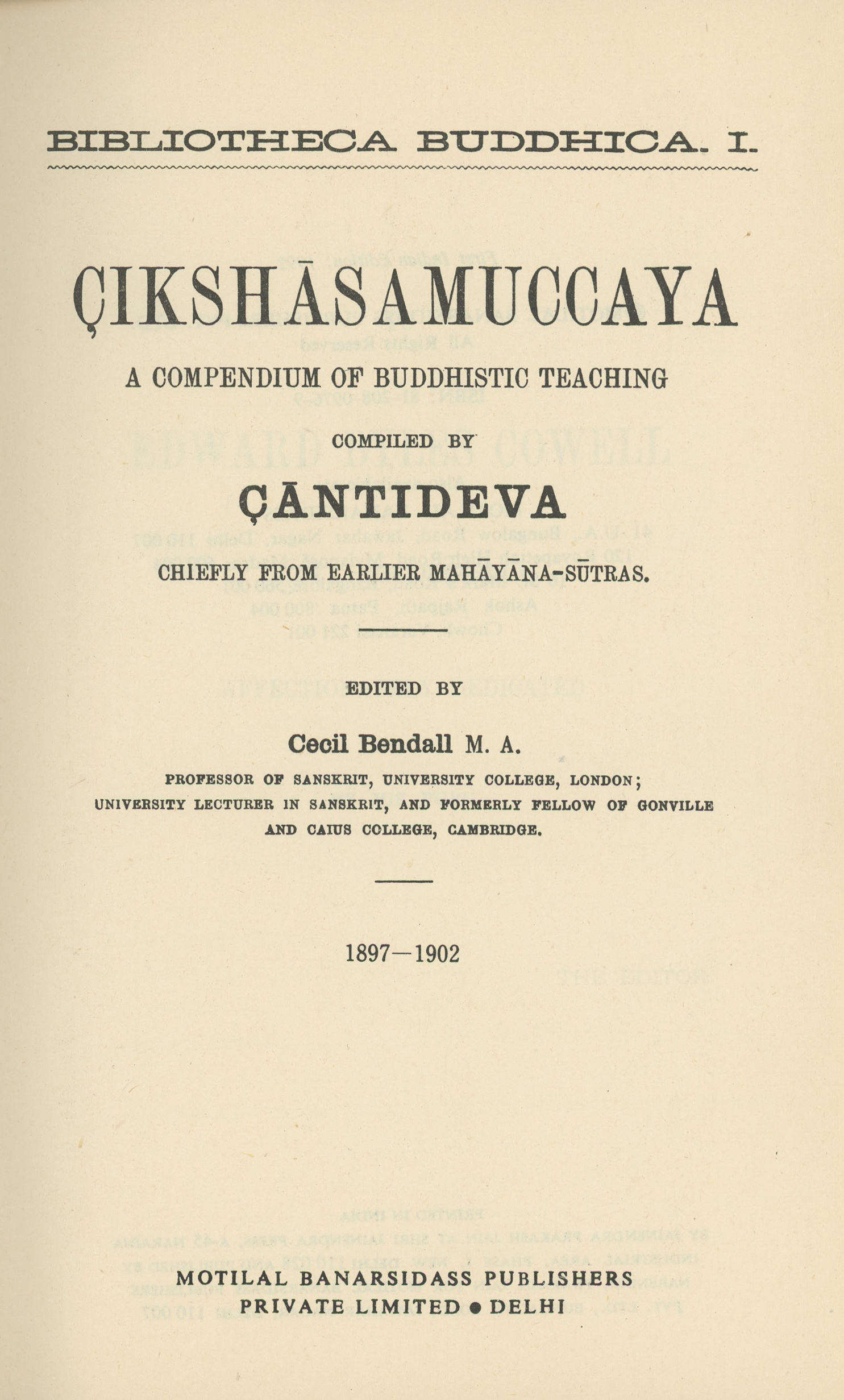
Çikshāsamuccaya A Compendium of Buddhistic Teaching Motilal Banarsidass 1992-front.jpg
Books1992About this item
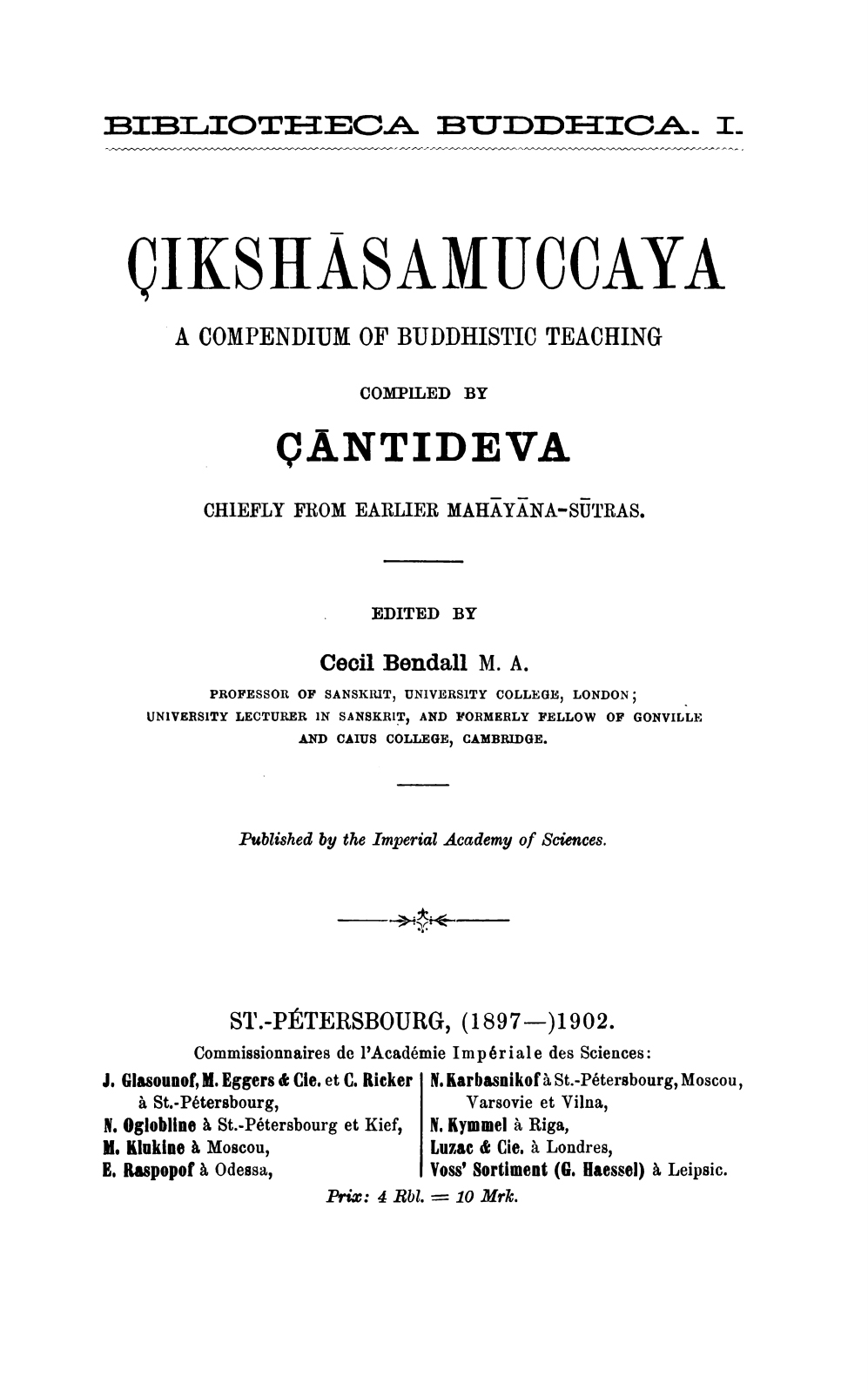
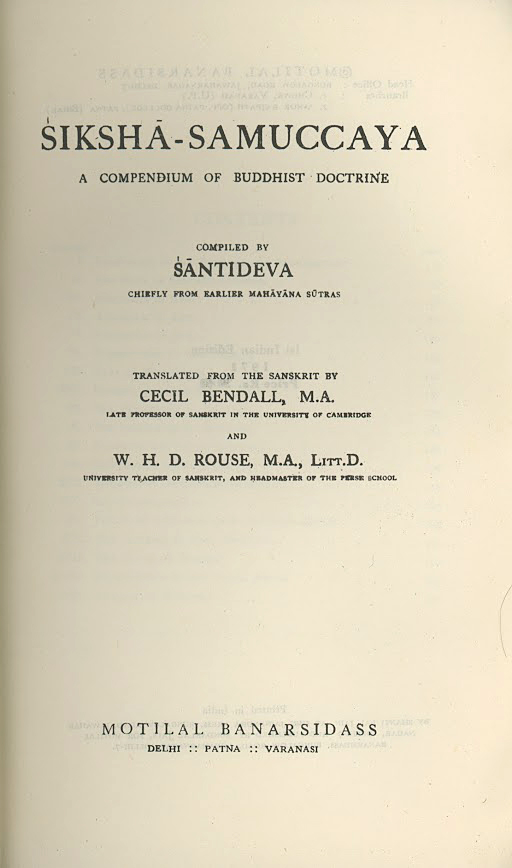
The first Indian edition of the critical Sanskrit edition of the Śikṣāsamuccaya, originally edited by Cecil Bendall in 1897–1902. Published by Motilal Banarsidass, 1992.
Braarvig Jens In Reading Slowly- A Festschrift for Jens E. Braarvig.jpg
Books2003About this item
This critical edition of the text is based on the edition of Cecil Bendall from his Çikshāsamuccaya: A Compendium of Buddhistic Teaching, Bibliotheca Buddhica, vol. I.
2 Full translations
Santideva SSC BC cover.jpg
Books2016About this item
Charles Goodman offers a translation of the Śikṣāsamuccaya, a major work of religious literature by Śāntideva, in which he brings together a large number of sūtra passages.
Bendal Cecil and W.H.D. Rouse trans 1922 Śikshā-Samuccaya A Compendium of Buddhist Training John Murray.jpg
Books1922About this item
Chandrakirti laid the foundations and initiated the Prasangika Madhyamika school of Buddhist thought, but Shantideva provided it with mystic vision and ecstatic fervour. Born in the eighth century, he was a son of the ruler of Saurashtra, a small kingdom in modern Gujarat. While still a child, he was vouchsafed a vision of Manjushri, the Bodhisattva of wisdom, and the vision was repeated near the time for his accession to the throne. Manjushr I declared that he was Shantideva’s kalyanamitra, spiritual friend, and warned him not to take the throne of Saurashtra. At about the same time, Shantideva had a dream in which Tara, the feminine aspect and counterpart of Avalokiteshvara, appeared to him in the guise of his mother and consecrated him. In an act reflecting the renunciation of Buddha, he fled the kingdom and wandered in a forest for twenty-one days. He came upon a woman who offered him sweet water and led him to a yogin who initiated him into Buddhist doctrine and meditation. He soon attained samadhi and recognized the woman and the yogin as Tara and Manjushri. From that moment, the vision of Manjushri remained with him throughout his life. While at Nalanda, Shantideva composed the Shikshasamuccaya, a “Compendium of Buddhist Doctrines”, which drew together citations from a vast number of sutras and texts. It emphasizes the moral dimension of the Bodhisattva Path, whilst the Bodhicaryavatara focusses on the Path from the stand point of consciousness. The book is translated from the Sanskrit by Cecil Bendall, Late Professor of Sanskrit in the University of Cambridge and W.H.D. Rouse, Late University teacher of Sanskrit. (Source Accessed Jan 6, 2022)
10 Classical commentaries
Kyoton Monlam Tsultrim cropped.jpg
Classical WorksAbout this item
Kyotön Mönlam Tsultrim's guidance manual for Śāntideva's Śikṣāsamuccaya
Khyentse-pecha-stock.jpg
Classical WorksAbout this item
Glo bo mkhan chen bsod nams lhun grub (གློ་བོ་མཁན་ཆེན་བསོད་ནམས་ལྷུན་གྲུབ). bslab btus kyi legs 'grel [བསླབ་བཏུས་ཀྱི་ལེགས་འགྲེལ།]. [An Elegant Commentary on the Compendium of Instructions].
Khyentse-pecha-stock.jpg
Classical WorksAbout this item
Rgya zhabs drung skal bzang dkon mchog rgya mtsho (རྒྱ་ཞབས་དྲུང་སྐལ་བཟང་དཀོན་མཆོག་རྒྱ་མཚོ). bslab btus kyi sdom tshig rin chen sil dag [བསླབ་བཏུས་ཀྱི་སྡོམ་ཚིག་རིན་ཆེན་སིལ་དག།]. [A Rosary of Jewels: Summary Verses from the Śikṣāsamuccaya].
Khyentse-pecha-stock.jpg
Classical WorksAbout this item
Byang chub skyabs (བྱང་ཆུབ་སྐྱབས་). bslab btus pa'i don bsdus pa [བསླབ་བཏུས་པའི་དོན་བསྡུས་པ།]. [Synopsis of the Main Topics of the Compendium of Training].
Tsongkhapa (R. Beer).jpg
Classical WorksAbout this item
"Notes taken by Jamyang Chöje during the extensive teachings on the Compendium of Training by Je Rinpoche [Tsongkhapa] at Reting Monastery."
Khyentse-pecha-stock.jpg
Classical WorksAbout this item
Byang chub skyabs (བྱང་ཆུབ་སྐྱབས་). bslab pa kun btus kyi rnam bshad [བསླབ་པ་ཀུན་བཏུས་ཀྱི་རྣམ་བཤད།]. [Explanation of the Compendium of Spiritual Disciplines].
Tshe mchog gling ye shes rgyal mtshan tibeto-logic.blogspot.jpg
Classical WorksAbout this item
Tshe mchog gling ye shes rgyal mtshan (ཚེ་མཆོག་གླིང་ཡོངས་འཛིན་ཡེ་ཤེས་རྒྱལ་མཚན་). bslab pa kun btus lung gi brgyud pa [བསླབ་པ་ཀུན་བཏུས་ལུང་གི་བརྒྱུད་པ།]. [The Scriptural Transmission of the Compendium of Trainings].
Khyentse-pecha-stock.jpg
Classical WorksAbout this item
Gzhon nu rin chen (གཞོན་ནུ་རིན་ཆེན་). bslab pa kun las btus pa'i Tik+ka [བསླབ་པ་ཀུན་ལས་བཏུས་པའི་ཊིཀྐ།]. [Commentary on the Compendium of Spiritual Disciplines].
Khyentse-pecha-stock.jpg
Classical WorksAbout this item
Gzhon nu rgyal mchog (གཞོན་ནུ་རྒྱལ་མཆོག). rgyal sras bslab pa kun las btus pa'i legs par bshad pa [རྒྱལ་སྲས་བསླབ་པ་ཀུན་ལས་བཏུས་པའི་ལེགས་པར་བཤད་པ།]. [An Eloquent Explanation of the Compendium of Disciplines of the Conqueror's Heirs].
Gser gling pa.jpg
Classical WorksAbout this item
The title Śikṣāsamuccayābhisamaya means literally "The Clear Realization (abhisamaya) of the Compendium of Training (Śikṣāsamuccaya)" — it is a condensed verse synopsis or topical summary of the contents of Śāntideva's Śikṣāsamuccaya, structured in the abhisamaya genre (i.e., a mnemonic outline of a larger work's topics, analogous to how the Abhisamayālaṃkāra encapsulates the Prajñāpāramitā). The text is quite short and functions as a compressed guide to the Śikṣāsamuccaya's structure, mapping its topics onto the four paths (accumulation, preparation, seeing, and meditation) and summarizing key categories of training.
62 Scholarship
Catanese-Alex-reduced-2019.jpg
Articles2024About this item
The Bodhicaryāvatāra and the Śikṣāsamuccaya both discuss the generation of the mind of enlightenment for the benefit of sentient beings and prescribe practices one must perform in order to attain buddhahood. As such, both texts are designed to elicit a transformation in the reader. While they are stylistically and structurally unique, the two texts are thought to be mutually illuminating, and for this reason it is often recommended that they be studied together.
Sasaki Kazunori researchgate.jpg
Articles2005About this item
The present paper attempts to show how the term bodhicitta appeared in Śāntideva's Śikṣāsamuccaya (SS) and Nāgārjuna's Ratnāvalī (RA).
Harrison Paul Stanford.jpg
Articles2018About this item
This article by Paul Harrison investigates the relationship between the Sanskrit and Tibetan texts of the Śikṣāsamuccaya in a systematic fashion.
Dissertations.jpeg
Dissertations1975About this item
A BA Honors thesis by P. G. Johnston, carried out as a College Year in India Program Fieldwork Project, University of Wisconsin-Madison, 1975.
Saito Akira icabs.jpg
Articles2010About this item
Examines the interaction between the Śikṣāsamuccaya (ŚS), the Bodhisattvacaryāvatāra (BSA), and the Bodhicaryāvatāra (BCA), while referring to their probable chronological order.
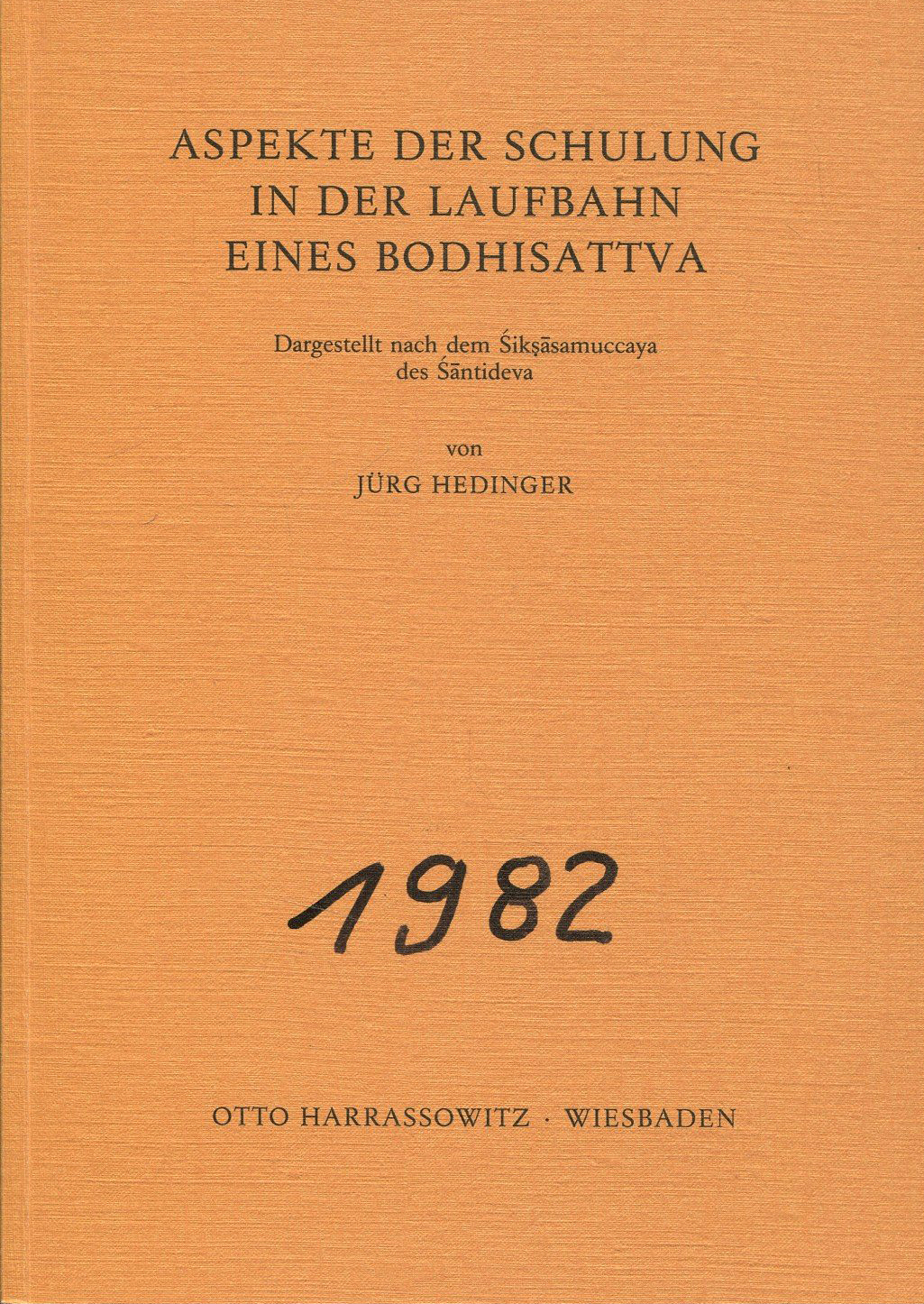
Aspekte der Schulung in der Laufbahn eines Bodhisattva-front.jpg
Books1984About this item
A study of the Śikṣāsamuccaya by Jürg Hedinger that includes an analysis of chapters 11-13, information on Śāntideva, an English summary, a bibliography, and a Sanskrit index.
Articles.jpeg
Articles2004About this item
Explores Bhadracaryā in the ŚS, paying attention to the meanings of Bhadracaryā in the Bhadracaryāpraṇidhānarāja and in Dignāga's commentary and the treatments of it in the ŚS.
Saito Akira icabs.jpg
Articles2001About this item
Japanese publication by Akira Saito on the Bodhi(sattva)caryāvatāra and the Śikṣāsamuccaya. Published in Indo Tetsugaku Bukkyōgaku 16 (2001): 1–28.
Phuntsho, Karma-Official-2.jpeg
Articles2025About this item
This chapter presents Śāntideva's teachings on the fourth perfection of effort, emphasizing that bodhisattvas should pursue learning and study with humility and proper motivation, avoiding texts that promote materialism or harmful practices while focusing on meaningful treatises that cultivate wisdom and pacify afflictive emotions. The chapter outlines eighty specific approaches to learning from The Teachings of Akṣayamati, stressing that genuine study combined with moral discipline leads to spiritual realization and protection from negative forces, with dedicated practitioners receiving blessings of longevity, health, memory, and correct understanding.
Phuntsho, Karma-Official-2.jpeg
Articles2025About this item
Chapter 11 of the Śikṣāsamuccaya emphasizes the importance of renouncing householder life for solitary practice in the wilderness, citing various sūtras to highlight how solitude facilitates spiritual development by reducing worldly distractions and enabling the cultivation of virtues necessary for enlightenment. Śāntideva stresses that true renunciation involves not just physical isolation but complete nonattachment to self and phenomena, while maintaining awareness that one's practice is witnessed by buddhas and spiritual beings even in solitude.
Phuntsho, Karma-Official-2.jpeg
Articles2025About this item
This chapter on meditation from Śāntideva's Śikṣāsamuccaya emphasizes that bodhisattvas must maintain unwavering meditative concentration while guarding their senses against attachment, using specific antidotes for the three main afflictive emotions: meditation on bodily impurity for attachment, loving-kindness for aversion, and contemplation of dependent-arising for ignorance.
Phuntsho, Karma-Official-2.jpeg
Articles2025About this item
This chapter explores the practice of mindfulness of body, sensations, mind, and phenomena, emphasizing their impermanent, empty, and illusory nature through extensive citations from various sūtras. Śāntideva uses reductive analysis and numerous analogies to demonstrate that all phenomena, including the body and mind, lack true essence and exist only as interdependent processes, while maintaining that bodhisattvas should cultivate compassion even while recognizing this ultimate emptiness.
Phuntsho, Karma-Official-2.jpeg
Articles2025About this item
This chapter explores how meditation on emptiness purifies the body and mind by eliminating the false notion of self, which Śāntideva argues is the root of all afflictive emotions and negative actions. Through extensive sūtra citations and analysis of the two truths doctrine, he demonstrates that all phenomena—including the body's elements, sense experiences, and mental engagements—lack inherent existence and are merely conventional designations, leading practitioners to achieve equanimity and avoid attachment, aversion, and other destructive mental states.
Phuntsho, Karma-Official-2.jpeg
Articles2025About this item
Chapter 15 of the Śikṣāsamuccaya presents Śāntideva's teaching that bodhisattvas purify their possessions through ethical livelihood, nonattachment, and genuine virtue free from hypocrisy, while purifying their merit through practicing the six perfections with the realization of emptiness combined with compassion. The chapter emphasizes that true purification occurs when all Buddhist practices—from giving to wisdom—are performed with a mind that both understands emptiness and is motivated by genuine compassion for sentient beings.
Phuntsho, Karma-Official-2.jpeg
Articles2025About this item
Chapter 16 focuses on the fourth action of enhancing the body, possessions, and merits as essential practices for achieving full buddhahood. Śāntideva emphasizes that merit enhancement is the foundation of spiritual advancement, requiring three key elements—effort (vīrya), firm resolve, and great compassion—along with dedicated practices of offering, aspiration, and merit dedication for the benefit of all sentient beings.
Phuntsho, Karma-Official-2.jpeg
Articles2025About this item
Chapter 17 provides scriptural justification for the merit-enhancing practices discussed in the previous chapter by citing various sūtras that describe the immeasurable benefits of prostration, offerings, circumambulation, and veneration of buddhas and stūpas. Śāntideva emphasizes that while physical offerings generate great merit, the highest form of veneration is the actual practice of the bodhisattva path itself—cultivating bodhicitta, upholding the Dharma, and generating compassion—with rejoicing in virtuous deeds producing particularly extraordinary merit that surpasses even the merit of advanced meditative accomplishments.
Phuntsho, Karma-Official-2.jpeg
Articles2025About this item
This chapter of the Śikṣāsamuccaya explores the practice of recollecting the Three Jewels (Buddha, Dharma, and Saṅgha) as a means for Mahāyāna practitioners to advance on the bodhisattva path. Drawing from various sūtras, it details how faith and the five spiritual faculties support this practice, while providing extensive descriptions of the Buddha's physical and spiritual qualities, the Dharma as the source of all positive attainments, and the Saṅgha's compassionate activities and miraculous abilities in benefiting sentient beings.
Phuntsho, Karma-Official-2.jpeg
Articles2025About this item
This final chapter of Śāntideva's Śikṣāsamuccaya focuses on enhancing merit through two primary methods: thinking of benefiting sentient beings in all daily activities (such as offering flowers or entering temples), and cultivating bodhicitta—the altruistic aspiration to achieve enlightenment for the sake of all beings. Śāntideva concludes by emphasizing that bodhisattvas must dedicate themselves completely to serving others through the equality and exchange of self and others, viewing this compassionate work as extending to the furthest limits of space and time.
Phuntsho, Karma-Official-2.jpeg
Articles2025About this item
In chapter 1 of the Śikṣāsamuccaya, Śāntideva establishes the foundational importance of listening to the Dharma to avoid suffering and attain enlightenment, then systematically develops the cultivation of faith and the mind of enlightenment (bodhicitta) as prerequisites for the bodhisattva path. The chapter concludes by introducing the four core activities that structure the entire work—giving, protecting, purifying, and expanding—applied to one's body, possessions, and virtues for all sentient beings. Particular emphasis is given to the practice of generosity as the first of these essential bodhisattva commitments.
Phuntsho, Karma-Official-2.jpeg
Articles2025About this item
Chapter 2 of the Śikṣāsamuccaya explores how bodhisattvas must protect their body, possessions, and virtues to effectively serve other beings, emphasizing two primary methods: following a righteous teacher (kalyāṇamitra) who guides one away from transgressions and toward liberation, and upholding the Dharma through studying, teaching, and practicing the sūtras. Śāntideva illustrates these principles through extensive citations from texts like The Stem Array Sūtra and analogies such as viewing oneself as a patient and the teacher as a doctor, while highlighting exemplars like Sudhana and Sādaprarudita to demonstrate the transformative power of proper guidance and Dharma study.
Phuntsho, Karma-Official-2.jpeg
Articles2025About this item
Chapter 3 of the Śikṣāsamuccaya focuses on protecting the body of a Dharma upholder by avoiding harm, detailing how bodhisattvas should conduct themselves with joy and compassion while avoiding distractions from kings, non-Buddhists, and various worldly influences. The chapter extensively discusses the workings of Māra (the evil force), who attempts to discourage virtuous activities, presents the four white and four dark dharmas as core bodhisattva precepts, and concludes with warnings about the karmic consequences of misusing monastic authority and resources.
Phuntsho, Karma-Official-2.jpeg
Articles2025About this item
Chapter 4 of the Śikṣāsamuccaya systematically outlines the eighteen root downfalls of the bodhisattva precepts as taught in the Ākāśagarbhasūtra, ranging from serious transgressions for rulers and ministers to common pitfalls for ordinary practitioners on the Mahāyāna path. The chapter emphasizes the gravity of these violations, provides purification practices through confession to Bodhisattva Ākāśagarbha, and concludes with warnings against disrespecting bodhisattvas and the Dharma, underscoring that such actions obstruct future buddhas from fulfilling their potential to benefit all beings.
Phuntsho, Karma-Official-2.jpeg
Articles2025About this item
Chapter 5 outlines Śāntideva's methods for avoiding the grave moral harms and transgressions that obstruct bodhisattva practice, including making pledges before the Buddha, choosing favorable rebirths, and following specific sūtra precepts, including avoiding criticism of fellow practitioners and remaining in solitude for meditation. Śāntideva emphasizes that meaningful activity consists solely in benefiting others, and that practitioners must eliminate all gaps in their practice through meditation on emptiness combined with compassion, as any lapse allows faults to infiltrate like air filling empty space.
Phuntsho, Karma-Official-2.jpeg
Articles2025About this item
Chapter 6 of the Śikṣāsamuccaya outlines how bodhisattvas should protect their bodies through twelve types of mindfulness and proper conduct regarding food, clothing, and shelter, emphasizing that physical preservation serves the ultimate purpose of benefiting all sentient beings. Śāntideva argues that mindful discipline, including vegetarianism, moderate consumption, and the skillful use of mantras for protection, enables bodhisattvas to maintain their bodies as instruments for compassionate service to the world rather than objects of personal attachment.
Phuntsho, Karma-Official-2.jpeg
Articles2025About this item
Chapter 7 of the Śikṣāsamuccaya explores how bodhisattvas must balance material giving with spiritual teaching, emphasizing that renunciate bodhisattvas should prioritize sharing Dharma over material gifts to maximize benefit for all beings. Śāntideva outlines essential principles for protecting merit through selfless motivation, avoiding anger and arrogance, cultivating ten types of beneficial minds toward all sentient beings, and dedicating all merit toward universal enlightenment.
Phuntsho, Karma-Official-2.jpeg
Articles2025About this item
This chapter explores the Buddhist practice of purifying sinful actions through confession and atonement, presenting the four essential powers of proper confession: cultivating remorse, engaging in remedial practices, resolving to avoid future offenses, and finding support through the Three Jewels and bodhicitta. Śāntideva emphasizes that bodhisattvas with skill-in-means (combining wisdom and compassion) can overcome even serious transgressions through practices like reciting mantras, making offerings, and cultivating the altruistic mind of bodhicitta, which serves as a powerful cosmic fire capable of burning away all negativity.
Phuntsho, Karma-Official-2.jpeg
Articles2025About this item
This chapter focuses on patience (tolerance) as the third perfection necessary for purifying negative emotions and karmic obscurations, presenting three types of patience and emphasizing how bodhisattvas must cultivate an unperturbed mind even when facing extreme suffering or harm. Through extensive scriptural citations, Śāntideva demonstrates that with proper practice and the armor of patience, a bodhisattva can transform even the most severe physical torture into opportunities to perfect all six perfections simultaneously while maintaining an unwavering commitment to achieving buddhahood for all sentient beings.
Articles.jpeg
Articles1904 and 1906About this item
This work by Unrai Wogihara, published in Le Museon over two volumes, illustrates certain selected passages from Chinese sources that contribute to the study of the Śikṣāsamuccaya.
Ethics in the Śikṣāsamuccaya- A Study in Mahāyāna Morality.jpg
Dissertations2001About this item
This dissertation by Barbra Clayton examines the ethics of Śāntideva, particularly through his work, the Śikṣāsamuccaya (Compendium of Teaching).
Articles.jpeg
Articles2018About this item
Nobuyuki Suzuki aims to show the strong connection between śraddhā and Mahāyānist practice expounded in the first chapter, Dānapāramitā, of the Śikṣāsamuccaya.
Jamieson Craig-Cambridge.jpg
Dissertations1979About this item
Robert Craig Jamieson's MA thesis entitled "MindFulness in Santideva's Siksasamuccaya." University of London (King's College), 1979.
Edelglass William Barre Center.jpg
Articles2017About this item
In this chapter William Edelglass presents Śāntideva’s ethics as it is embedded in his accounts of the bodhisattva path of moral transformation and mental discipline.
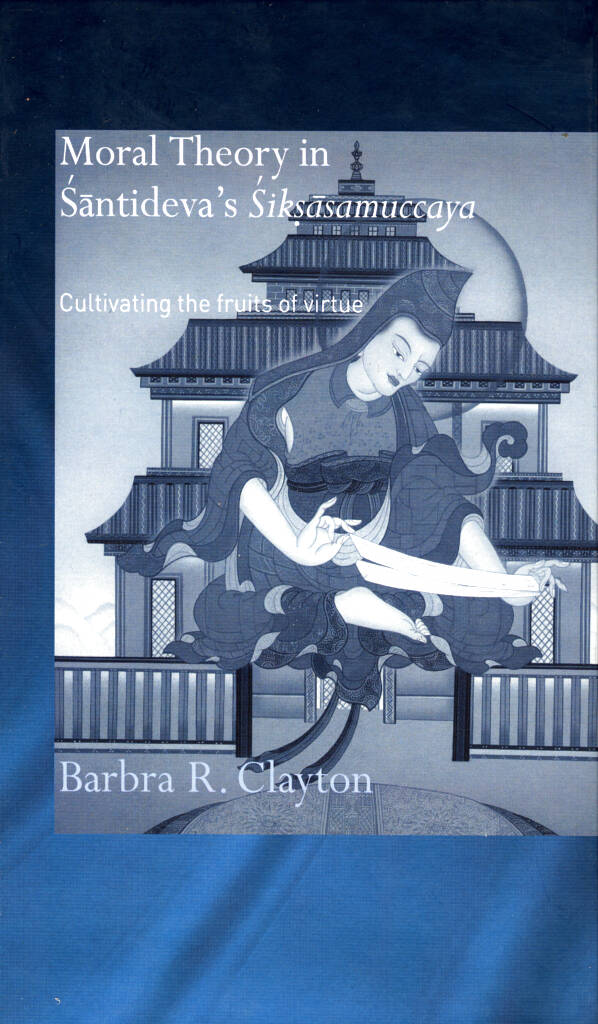
Moral Theory in Shantideva Siksasamuccaya-front.jpg
Books2006About this item
Focusing on the Śikṣāsamuccaya, this book uses original translations and critical analysis in order to ask how Śāntideva’s ethics might be understood in terms of Western moral theory.
Of the Progresse of the Bodhisattva-front.jpg
Books2016About this item
This paper attempts to provide a comprehensive analysis of the content, structure, theme, and meaning of the Śikṣāsamuccaya (Śs) and Śikṣāsamuccayakārikā (Śskā).
Of the Progresse of the Bodhisattva The Bodhisattvamārga in the Śikṣāsamuccaya MA Thesis.jpg
Dissertations2002About this item
This paper asserts that the Śikṣāsamuccaya and Śikṣāsamuccayakārikā were composed by Śāntideva to counter the bewilderment which results from reading Mahāyāna sūtras.
Sasaki Kazunori researchgate.jpg
Articles2007About this item
Kazunori Sasaki argues that the Śikṣāsamuccaya Sanskrit Ms. was likely copied in the early 13th cent. by Vibhuticandra, who copied it at Sa skya region and brought it later into Kathmandu.
DiSimone Charles Ghent.jpg
Articles2015About this item
Taking an instance of intertextuality between a pair of passages from two texts quoted in the Śikṣāsamuccaya, this paper explores the usage of the phrase tṛṇagulmauṣadhivanaspati.
Shastri Hara Prasad Wikipedia.jpg
Articles1913About this item
Hara Prasad Shastri provides a summary of Śāntideva's life and works, touching on the Bodhicaryāvatāra and Śikṣāsamuccaya, his familial relations, and the legendary story at Nālanda.
Bucknell Rod.jpg
Articles1997About this item
A section of the book The Meditative Way: Readings in the Theory and Practice of Buddhist Meditation, containing extracts from Śāntideva's Śikṣāsamuccaya on mindfulness.
Sasaki Kazunori researchgate.jpg
Articles2002About this item
This article (in Japanese) concerns the seven crucial points (marmasthāna) that represent the essence of the saṃvara ritual found at the end of Śikṣāsamuccaya chap. 1.
Articles.jpeg
Articles1923About this item
Nariman presents a short description of the life and works of Śāntideva, describing the Śikṣāsamuccaya and the Bodhicaryāvatāra and mentioning related extant scholarship.
Yuyama Akira.jpg
Articles2003About this item
In this paper I would like to make some philological remarks on a fragmentary citation in the Śikṣāsamuccaya by Śāntideva (around 700 CE).[1] It is a matter of great significance for the history of ideas in Indian Buddhism, for the celebrated Madhyamaka master has cited it.[2] It is also of great importance from the viewpoints of Buddhist Sanskrit textual transmission. This is not just for the recovery of the missing literature but for linguistic peculiarities of the extant texts belonging to the Mahāsāṃghika-Lokottaravādins (cf. infra §1.0.0-1.0.2).
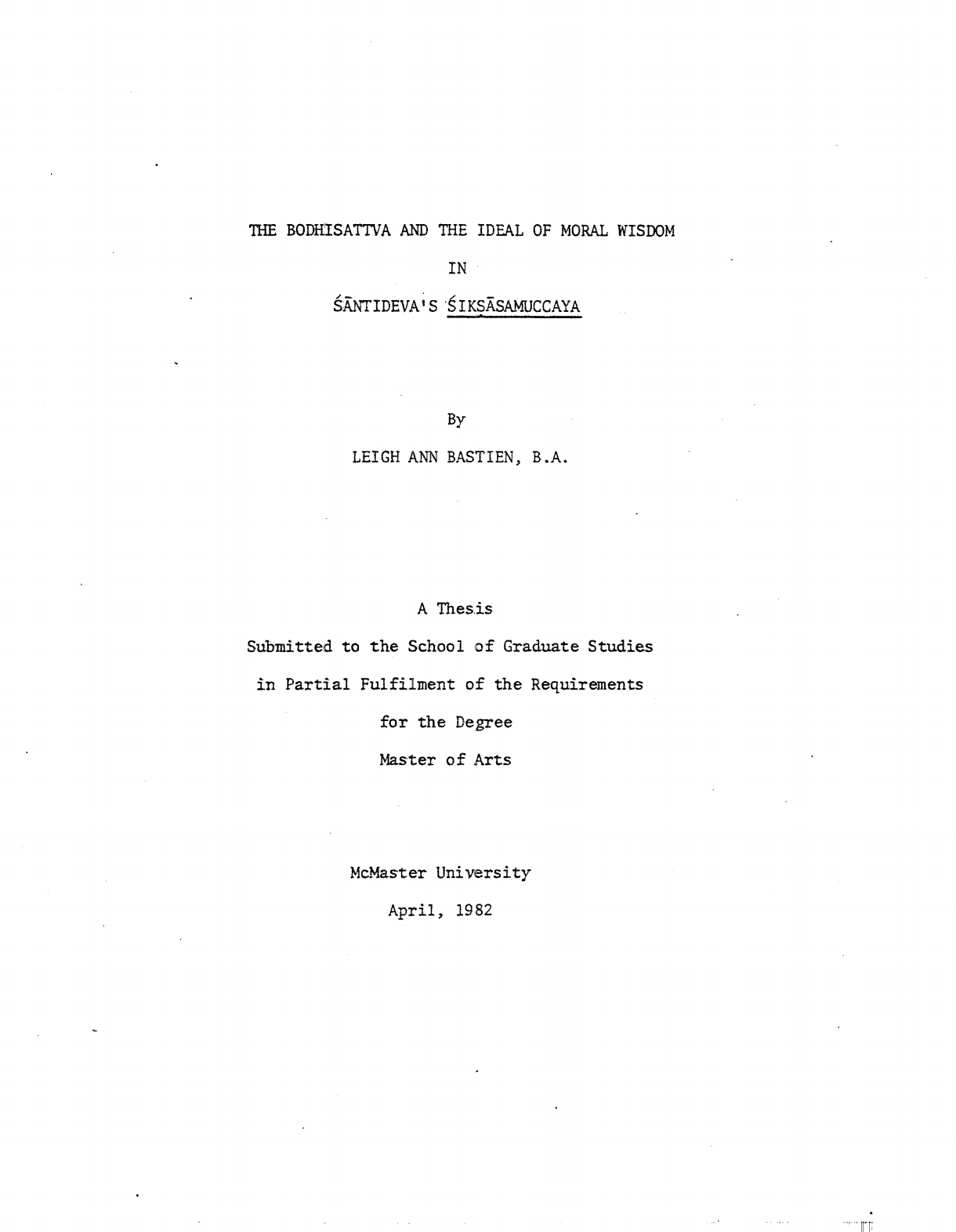
The Bodhisattva and the Ideal of Moral Wisdom in Śāntideva's Śikṣāsamuccaya-front.jpg
Dissertations1982About this item
This is Leigh Ann Bastien's MA thesis on Śāntideva's Śikṣāsamuccaya from McMaster University, 1982.
Catanese-Alex-reduced-2019.jpg
Articles2024About this item
The Bodhicaryāvatāra and the Śikṣāsamuccaya were composed in India in Sanskrit and made a significant impact on the understanding of Mahāyāna Buddhism and the bodhisattva path there. Both works spread beyond the Indian subcontinent and became especially important in Tibet, inspiring commentaries as well as other works by famous teachers. While it has been the Bodhicaryāvatāra that has received more adoration and attention historically, both texts continue to inspire scholars and practitioners around the globe.
Articles.jpeg
Articles1994About this item
Sharma, T. R. "The Philosophical Basis of Worship in the Works of Śāntideva." In An Introduction to Buddhist Philosophy: (Vijñānavāda and Mādhyamika), 126–35. Delhi: Eastern Book Linkers, 1994.
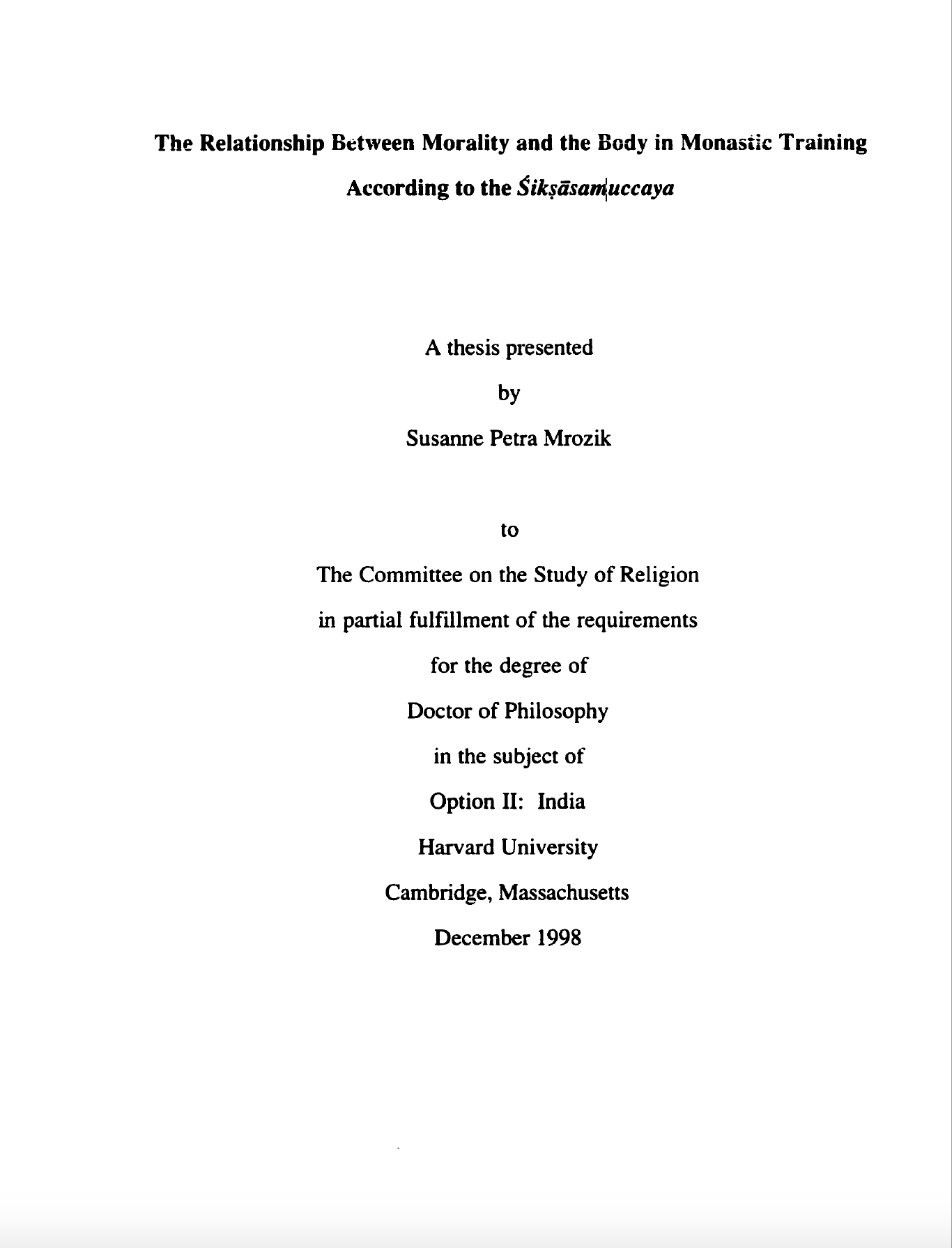
The Relationship between Morality and the Body in Monastic Training according to the Śikṣāsamuccaya-front.jpg
Dissertations1998About this item
This thesis argues that according to the Śikṣāsamuccaya, a Sanskrit Buddhist compendium of monastic discipline, virtue is as much a feature of the body as it is an inner quality.
Phuntsho, Karma-Official-2.jpeg
Articles2024About this item
This article by Karma Phuntsho provides a comprehensive overview of the Śikṣāsamuccaya's origins, spread, and influence. It traces the text's composition in eighth-century India, its early translations into Tibetan and Chinese, and subsequent transmission through various Buddhist lineages. The study explores the text's relationship with the Bodhicaryāvatāra and its importance in Tibetan Buddhism, particularly within the Kadam tradition. It also covers the Śikṣāsamuccaya's rediscovery by Western academics and subsequent scholarly analyses in the twentieth and twenty-first centuries. This thorough examination offers a rich resource for those interested in the Śikṣāsamuccaya and its place in Buddhist literature. The detailed account of translations, commentaries, and scholarly works provides a detailed analysis of textual and historical resources related to the text. By discussing the text's relationship with other Buddhist works and its role in different traditions, the article also helps readers understand its significance in Buddhist thought and practice. The exploration of ongoing academic debates and recent scholarship demonstrates the text's continued relevance, making it an excellent starting point for both academic researchers and Buddhist practitioners.
Santideva SSC BC cover.jpg
Books2016About this item
Charles Goodman offers a translation of the Śikṣāsamuccaya, a major work of religious literature by Śāntideva, in which he brings together a large number of sūtra passages.
The Written Works of Santideva (Phuntsho 2025)-front.jpg
Tibetan Publications2026About this item
Collected in one book for the first time in the modern era: The Bodhisattvacaryāvatāra, or The Way of the Bodhisattva (BCA), and The Śikṣāsamuccaya, or The Compendium of Training. Available for free as a PDF online at Bodhicitta.org

This "Tsadra Critical Edition" was created for the Bodhicitta Resource Project by comparing four versions of the text from Derge, Cone, Narthang, and Peking Tengyurs from BDRC scans, along with Dunhuang manuscripts IOL Tib J 628, 629, and 630. When Tibetan readings were problematic, the Sanskrit texts from GRETIL and LTB (Oslo) were consulted.

The book includes an extensive introduction in English covering the life of Śāntideva with reference to special sources, the history and legacy of his texts and teachings, as well as research on the history and origins of the Śikṣāsamuccaya.

Also available in a limited "deluxe" edition with box.
Harrison Paul Stanford.jpg
Articles2009About this item
In this paper Paul Harrison presents a preliminary draft of a new English translation of the entire sequence of verses of the Śikṣāsamuccayakārikā.
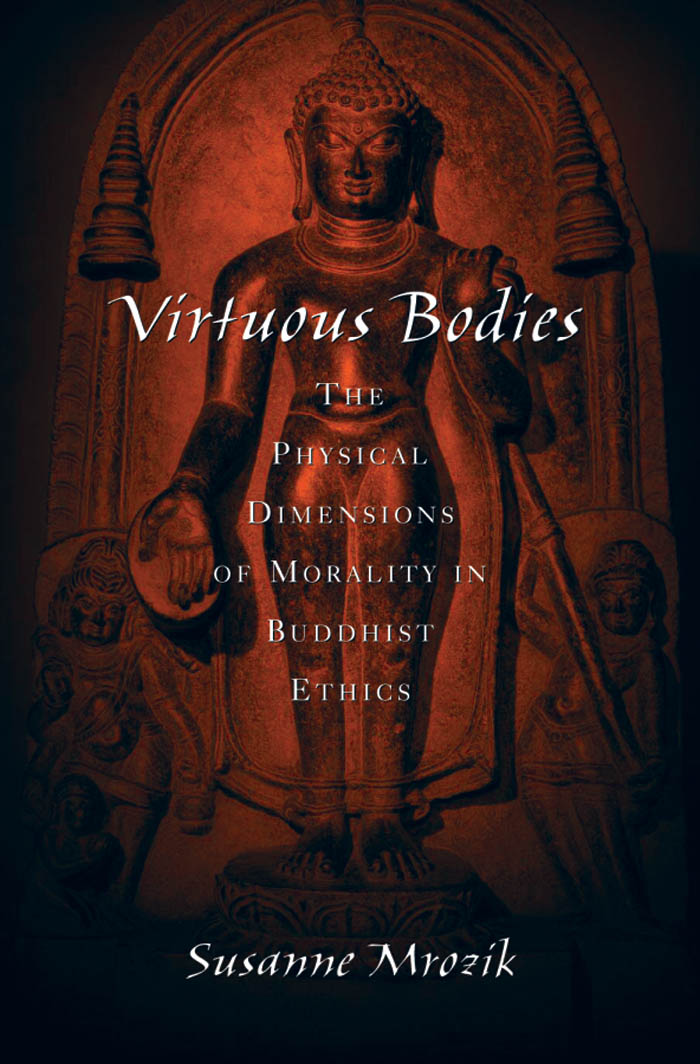
Virtuous Bodies-front.jpg
Books2007About this item
Taking Śāntideva's Śikṣāsamuccaya as a case study, Susanne Mrozik demonstrates that Buddhists regarded ethical development as a process of physical and moral transformation.
Paul Griffiths.jpg
Articles1999About this item
Paul Griffiths gives a brief analysis of the Śikṣāsamuccaya as a text, touching on its structure of verses and prose and focusing on who would have read it and the benefits of reading it.
Filliozat Jean Sanskrit Day in Paris.jpg
Articles1964About this item
In this article Jean Filliozat discusses the authorship of the Sūtrasamuccaya and the various hypotheses from scholars.
Braarvig Jens In Reading Slowly- A Festschrift for Jens E. Braarvig.jpg
Books2003About this item
This critical edition of the text is based on the edition of Cecil Bendall from his Çikshāsamuccaya: A Compendium of Buddhistic Teaching, Bibliotheca Buddhica, vol. I.
Liland Fredrik LinkedIn.jpg
Articles2009About this item
This excerpt from Fredrik Liland's master's thesis details the Bodhicaryāvatāra's history from its origins in India to its transmission in Nepal. It discusses the text's authorship, traditionally attributed to Śāntideva in seventh-century India, and explores various commentaries and abbreviated versions produced by Indian scholars. The study then focuses on Nepal, tracing the text's introduction around 800 CE, its significance during Atiśa Dīpaṃkaraśrījñāna's visit in 1040 CE, and its continued importance through the Malla Dynasty period and into modern times. This comprehensive timeline proves valuable for scholars and students interested in the history and textual transmission of Śāntideva's works. It offers insights into how the Bodhicaryāvatāra was interpreted, commented upon, and preserved in India and Nepal. The examination of both Indian and Nepalese traditions deepens our understanding of the text's significance in various Buddhist communities. By highlighting the often-overlooked Newar Buddhist tradition, the article opens up new avenues for research and underscores the importance of studying lesser-known Buddhist lineages involved in preserving and interpreting important Buddhist texts.
2 Related
Sutra portrait.jpg
Classical WorksAbout this item
The Anupūrvasamudgataparivarta (अनुपूर्वसमुद्गतपरिवर्त), Tib. Mthar gyis yang dag par 'phags pa'i le'u is a short Mahāyāna scripture known only through a single citation in Śāntideva's Śikṣāsamuccaya (Bendall ed., p. 279; Goodman ed., p. 290), where it is quoted for a fourfold teaching on the benefits of venerating the Tathāgata. The text is not otherwise attested in the surviving Kangyur, and its relationship to any known sūtra remains unidentified.
Sutra portrait.jpg
Classical WorksAbout this item
The Lokanāthavyākaraṇa (लोकनाथव्याकरण), "The Explanation by the Lord of the World" is a short Mahāyāna work known only through a single citation in Śāntideva's Śikṣāsamuccaya, chapter 13, quoted for a verse on the conventional, empty nature of names. The citation is present in Bendall's Sanskrit edition (1902) and both English translations made from it (Bendall & Rouse, 1922; Goodman, 2016), but is absent from the Tibetan translation of the Śikṣāsamuccaya (Derge Tengyur D3940), where chapter 13 has no corresponding passage. The text is not otherwise attested in the surviving Kangyur; and its relationship to any known sūtra remains unidentified.
202 A topic of
Catanese-Alex-reduced-2019.jpg
Articles2024About this item
The Bodhicaryāvatāra and the Śikṣāsamuccaya both discuss the generation of the mind of enlightenment for the benefit of sentient beings and prescribe practices one must perform in order to attain buddhahood. As such, both texts are designed to elicit a transformation in the reader. While they are stylistically and structurally unique, the two texts are thought to be mutually illuminating, and for this reason it is often recommended that they be studied together.
Sasaki Kazunori researchgate.jpg
Articles2005About this item
The present paper attempts to show how the term bodhicitta appeared in Śāntideva's Śikṣāsamuccaya (SS) and Nāgārjuna's Ratnāvalī (RA).
Harrison Paul Stanford.jpg
Articles2018About this item
This article by Paul Harrison investigates the relationship between the Sanskrit and Tibetan texts of the Śikṣāsamuccaya in a systematic fashion.
Dissertations.jpeg
Dissertations1975About this item
A BA Honors thesis by P. G. Johnston, carried out as a College Year in India Program Fieldwork Project, University of Wisconsin-Madison, 1975.
Jinamitra translator.jpg
Classical WorksAbout this item
Inspiring Determination is directed at reforming the conduct of sixty bodhisattvas who have lost their sense of purpose and confidence in their ability to practice the Dharma. The bodhisattva Maitreya leads them to seek counsel from the Buddha, who explains the causes these bodhisattvas created in former lives that resulted in their current circumstance. They make a commitment to change their ways, which pleases the Buddha, and this leads him to engage in a dialog with the bodhisattva Maitreya on how bodhisattvas, including those in the future age of final degeneration, the final half-millennium, should avoid faults and uphold conduct that accords with the Dharma. (Source: 84000)
Sutra portrait.jpg
Classical WorksAbout this item
The bodhisatva Akṣayamati arrives in our world from the buddha field of the buddha Samantabhadra. In response to Śāriputra's questions, Akṣayamati gives a discourse on the subject of imperishability. In all, Akṣayamati explains that there are eighty different aspects of the Dharma that are imperishable. When he has given this explanation, the Buddha praises it and declares it worthy of being spread by the countless bodhisatvas gathered there to listen. (Source: 84000)
Saito Akira icabs.jpg
Articles2010About this item
Examines the interaction between the Śikṣāsamuccaya (ŚS), the Bodhisattvacaryāvatāra (BSA), and the Bodhicaryāvatāra (BCA), while referring to their probable chronological order.
Gunabhadra-dakinitranslations.jpg
Classical WorksAbout this item
The Anantamukhasādhakadhāraṇī (also called The Incantation for Achieving the Boundless Gate) is an important Buddhist dhāraṇī text from the Mahāyāna tradition. It belongs to the early dhāraṇī literature that eventually developed into full tantric practices.

The text likely dates to around the 3rd-4th century CE, originating during the later development of Mahāyāna Buddhism in India. Like many dhāraṇī texts, its specific author is unknown, as these works were typically attributed to the Buddha himself or were considered to have emerged from collective spiritual practice rather than individual authorship.

The text contains mantras and incantations believed to possess spiritual power. It focuses on the concept of "unimpeded" or "infinite entrances" (anantamukha) to dharma realization. The dhāraṇī is recited to remove obstacles to spiritual practice and to gain insight into the nature of reality.

The Anantamukhasādhakadhāraṇī was influential in several ways:

  • It was translated into Chinese multiple times, including versions by Zhiyan in the 5th century and later by Xuanzang.
  • It contributed to the development of esoteric Buddhist practices in East Asia
  • It served as an important text in the transition from earlier Mahāyāna Buddhism to later tantric forms.
  • Elements of its practices were incorporated into various Buddhist rituals across Asia. (Generated by Claude.ai Apr 4, 2025)
Sutra portrait.jpg
Classical WorksAbout this item
The Anupūrvasamudgataparivarta (अनुपूर्वसमुद्गतपरिवर्त), Tib. Mthar gyis yang dag par 'phags pa'i le'u is a short Mahāyāna scripture known only through a single citation in Śāntideva's Śikṣāsamuccaya (Bendall ed., p. 279; Goodman ed., p. 290), where it is quoted for a fourfold teaching on the benefits of venerating the Tathāgata. The text is not otherwise attested in the surviving Kangyur, and its relationship to any known sūtra remains unidentified.
Aspekte der Schulung in der Laufbahn eines Bodhisattva-front.jpg
Books1984About this item
A study of the Śikṣāsamuccaya by Jürg Hedinger that includes an analysis of chapters 11-13, information on Śāntideva, an English summary, a bibliography, and a Sanskrit index.
De Jong Jan Willem DWC KNAW past members.jpg
Articles1987About this item
Review of Jürg Hedinger's Aspekte der Schulung in der Laufbahn eines Bodhisattva. Dargestellt nach dem Śikṣāsamuccaya des Śāntideva by J. W. de Jong.
Articles.jpeg
Articles2007About this item
This article, "Atiśa (Dīpamkaraśrījñāna)—His Philosophy, Practice and its Sources" by Miyazaki Izumi, offers an in-depth examination of Atiśa's philosophy and practical teachings, with a particular focus on the diverse sources he utilized, especially in his non-tantric works. Miyazaki highlights Atiśa's pragmatic approach. The paper meticulously traces how Atiśa integrated various prominent Indian Buddhist texts, such as Asaṅga's Yogācārabhūmi and Śāntideva's Bodhicaryāvatāra, into his system, demonstrating a rich intellectual heritage that he synthesized for the benefit of his disciples. Miyazaki also addresses several complex and debated aspects of Atiśa's thought, particularly his nuanced stance on philosophical classifications. For instance, while later Tibetan doxographies often categorized Atiśa within specific Madhyamika subdivisions, the article suggests that Atiśa himself did not rigidly adhere to such distinctions in his own writings. It further investigates the apparent discrepancies in his reliance on different sources for distinct aspects of practice, such as Asaṅga for śīla and Bodhibhadra for dhyāna, and his unique views on the role of logical inference in realizing ultimate truth. The article concludes by identifying areas for further scholarly inquiry, aiming to clarify Atiśa's genuine philosophical position by privileging his original texts over subsequent interpretations, thereby contributing to a more precise understanding of this pivotal figure in Indo-Tibetan Buddhism.
Jinamitra translator.jpg
Classical WorksAbout this item
The Avalokinī Sūtra takes place in the city of Rājagṛha, where the Buddha teaches on the benefits that result from honoring the stūpas of awakened beings. The major part of this teaching consists in the Buddha detailing the many positive rewards obtained by those who worship the buddhas' stūpas with offerings, such as flowers, incense, and lamps. (Source: 84000)
Jinamitra translator.jpg
Classical WorksAbout this item
The Avalokiteśvaravimokṣa is chapter 30 of the Gaṇḍavyūhasūtra, in which the bodhisattva Avalokiteśvara, teaching Sudhana on Mount Potalaka, describes his attainment of the bodhisattva liberation called "the unimpeded gateway to great compassion," through which he frees beings from a wide range of fears—including fear of heights, bondage, danger, hunger, disgrace, death, unfortunate rebirth, separation from loved ones, and bodily and mental torment. This passage is quoted at length by Śāntideva in the Śikṣāsamuccaya (Bendall ed., p. 296) under the title Avalokiteśvaravimokṣa, where it illustrates the dedication of merit toward the protection of all beings. The text is not preserved independently in the Tibetan Kangyur; it survives only as this chapter within the Gaṇḍavyūhasūtra (Toh 44–45).
Kumārajīva Khyentse Foundation.jpg
Classical WorksAbout this item
The Perfection of Wisdom in Eight Thousand Lines, like other sūtras on the Perfection of Wisdom, deals with the topic of emptiness and the understanding of the ultimate truth or the way things are. Modern scholars date the sūtra roughly to the 2nd and 1st century BC and consider it to be the earliest sūtra on which other Perfection of Wisdom sūtras are based. Its adherents claim the sūtra to be a part of the words of the Buddha. It is believed to have been taken to the subterranean world and brought back to the human world by Nāgārjuna. It is sometimes known as the Condensed Mother (ཡུམ་བསྡུས་པ་), the term Mother referring to the Perfection of Wisdom which gives rise to all buddhas and bodhisattvas. It is said to be the condensed version of the long version in one hundred thousand lines and the middle version in twenty-five thousand lines. Having spread across Asia and beyond and having been translated into many languages, it is one of the most common books to be found in the Buddhist Himalayas. The sūtra takes the form of a series of dialogues between the Buddha Śākyamuni, Subhūti, Śāriputra, and others, such as Indra, the king of gods, and a goddess of the Ganges. In the final chapters, the sūtra contains the inspirational narratives of Sadāprarudita and his quest for the teachings on the Perfection of Wisdom from the Bodhisattva Dharmodgata. The sūtra is also one of the earliest Mahāyāna sources proclaiming the luminous nature of the mind.
Jinamitra translator.jpg
Classical WorksAbout this item
༄༅། །འཕགས་པ་བཟང་པོ་སྤྱོད་པའི་སྨོན་ལམ་གྱི་རྒྱལ་པོ་བཞུགས།

The King of Aspiration Prayers: Samantabhadra’s “Aspiration to Good Actions” (Zangchö Mönlam) from the Gaṇḍavyūha chapter of the Avataṃsaka Sūtra. Many translations of this text exist as it is regularly chanted around the world in many different traditions. For an example, see Lotsawa House.

Bhadracarīpranidhāna. (T. Bzang po spyod pa'i smon lam; C. Puxian pusa xingyuan zan; J. Fugen bosatsu gyōgansan; K. Pohyǒn posal haengwǒn ch'an 普賢菩薩行願讚). In Sanskrit, "Vows of Good Conduct," the last section of the Gaṇḍavyūha in the Avataṃsakasūtra and one of the most beloved texts in all of Mahāyāna Buddhism; also known as the Samantabhadracarīpraṇidhānarāja. The Bhadracarīpraṇidhāna focuses on the ten great vows (praṇidhāna) taken by Samantabhadra to realize and gain access to the dharmadhātu, which thereby enable him to benefit sentient beings. The ten vows are: (1) to pay homage to all the buddhas, (2) to praise the tathāgatas, (3) to make unlimited offerings, (4) to repent from one's transgressions in order to remove karmic hindrances (cf. karmāvaraṇa), (5) to take delight in others' merit, (6) to request the buddhas to turn the wheel of dharma (dharmacakrapravartana), (7) to request the buddhas to continue living in the world, (8) always to follow the teachings of the Buddha, (9) always to comply with the needs of sentient beings, and (10) to transfer all merit to sentient beings for their spiritual edification. The text ends with a stanza wishing that sentient beings still immersed in evil be reborn in the Pure Land of Amitābha. The text was translated into Chinese in 754 by Amoghavajra (705–774). Other Chinese recensions appear in the Wenshushili fayuan jing ("Scripture on the Vows made by Mañjuśrī"), translated in 420 by Buddhabhadra (359–429), which corresponds to the verse section from Ru busiyi jietuo jingjie Puxian xingyuan pin, the last roll of the forty-roll recension of the Huayan jing translated by Prajña in 798. (There is no corresponding version in either the sixty- or the eighty-roll translations of the

Huajan jing.) The verses are also called the "Précis of the Huayan jing (Lüe Huayan jing), because they are believed to constitute the core teachings of the Avataṃsakasūtra. In the main Chinese recension by Amoghavajra, the text consists of sixty-two stanzas, each consisting of quatrains with lines seven Sinographs in length, thus giving a total number of 1,736 Sinographs. In addition to the sixty-two core stanzas, Amoghavajra's version adds ten more stanzas of the Bada pusa zan ("Eulogy to the Eight Great Bodhisattvas") from the Badapusa mantuluo jing ("Scripture of the Maṇḍalas of the Eight Great Bodhisattvas") . . . Buddhabhadra's version consists of forty-four stanzas with 880 Sinographs, each stanza consisting of a quatrain with lines five Sinographs in length. Prajña's version contains fifty-two stanzas with each quatrain consisting of lines seven Sinographs in length. There are five commentaries on the text attributed to eminent Indian exegetes, including Nāgārjuna, Dignāga, and Vasubandhu, which are extant only in Tibetan translation. In the Tibetan tradition, the prayer is called the "king of prayers" (smon lam gyi rgyal po). It is incorporated into many liturgies; the opening verses of the prayer are commonly incorporated into a Tibetan's daily recitation. (Source: "Bhadracarīpraṇidhāna." In The Princeton Dictionary of Buddhism, 106. Princeton University Press, 2014. http://www.jstor.org/stable/j.ctt46n41q.27.)
Articles.jpeg
Articles2004About this item
Explores Bhadracaryā in the ŚS, paying attention to the meanings of Bhadracaryā in the Bhadracaryāpraṇidhānarāja and in Dignāga's commentary and the treatments of it in the ŚS.
Kawa Paltsek-Mandala-reduced.jpg
Classical WorksAbout this item
Bhadrakalpikasūtra. (T. Bskal pa bzang po'i mdo/Mdo sde bskal bzang; C. Xianjie jing; J. Gengōgyō; K. Hyǒn'gǒp kyǒng 賢劫經). In Sanskrit, "Auspicious Eon Scripture"; a Mahāyāna text in twenty-four chapters, written c. 200-250 CE and translated into Chinese by Dharmarakṣa in either 291 or 300 CE. In this scripture, the Buddha teaches a special concentration (samādhi) through the mastery of which bodhisattvas come to be equipped with 2,100 perfections (pāramitā), 84,000 samādhis and 84,000 codes (dhāraṇī). He then lists the names of a thousand buddhas who will appear during the "auspicious eon" (bhadrakalpa) due to the merit they obtained from practicing this samādhi, as well as their residences, parents, disciples, spiritual powers, teachings, and so on. In the Tibetan bka' 'gyur the Bhadrakalpikasūtra takes pride of place as the first in the sūtra section (mdo sde); it is recited often, and it is not uncommon for the elaborate hagiographies (rnam thar) of important Tibetan religious figures or incarnations (sprul sku) to identify their subject as an earlier rebirth of one of the thousand buddhas. (Source: "Bhadrakalpikasūtra." In The Princeton Dictionary of Buddhism, 106. Princeton University Press, 2014. http://www.jstor.org/stable/j.ctt46n41q.27.)
Jinamitra translator.jpg
Classical WorksAbout this item
The Detailed Account of the Previous Aspirations of the Blessed Bhaiṣajyaguruvaiḍūryaprabha centers on the figure commonly known as the Medicine Buddha. The text opens in Vaiśālī, where the Buddha Śākyamuni is seated with a large retinue of human and divine beings. The bodhisattva Mañjuśrī asks Śākyamuni to teach the names and previous aspirations of the buddhas, along with the benefit that buddhas can bring during future times when the Dharma has nearly disappeared. The Buddha gives a teaching on the name and previous aspirations of the Buddha Bhaiṣajyaguruvaiḍūryaprabha, and then details the benefits that arise from hearing and retaining this buddha's name. (Source: 84000)
Jinamitra translator.jpg
Classical WorksAbout this item
The Detailed Account of the Previous Aspirations of the Blessed Bhaiṣajyaguruvaiḍūryaprabha centers on the figure commonly known as the Medicine Buddha. The text opens in Vaiśālī, where the Buddha Śākyamuni is seated with a large retinue of human and divine beings. The bodhisattva Mañjuśrī asks Śākyamuni to teach the names and previous aspirations of the buddhas, along with the benefit that buddhas can bring during future times when the Dharma has nearly disappeared. The Buddha gives a teaching on the name and previous aspirations of the Buddha Bhaiṣajyaguruvaiḍūryaprabha, and then details the benefits that arise from hearing and retaining this buddha's name. (Source: 84000)
Sutra portrait.jpg
Classical WorksAbout this item
The Bhikṣuprakīrṇaka ("Miscellany Concerning Monks") is a lost Mahāsāṃghika-Lokottaravādin Vinaya text, known directly only through a fragmentary Sanskrit citation preserved in Śāntideva's Śikṣāsamuccaya (Ch. 7, ed. Bendall 154.17–155.3). The cited passage recounts the Buddha instructing Ānanda to wash the soiled robes of a sick monk, illustrating the duty of monks to care for one another. Parallel accounts of the same episode survive independently in the Chinese Mahāsāṃghika-Vinaya (Taishō 1425) and the Pāli Mahāvagga (VIII.26.2), though neither is a direct witness to the Bhikṣuprakīrṇaka itself. A companion text for nuns, the Bhikṣuṇīprakīrṇaka, survives in abridged form (headings only) within a Sanskrit manuscript of the Bhikṣuṇī-Vinaya recovered from Tibet, edited by Gustav Roth (1970); no comparably abridged or complete witness of the Bhikṣuprakīrṇaka itself has been identified. Rāhula Sāṅkṛtyāyana reported deciphering a fuller manuscript of the Bhikṣuprakīrṇaka among materials he photographed in Tibet (c. 1954), but this has not been traced or published since.
Saito Akira icabs.jpg
Articles2001About this item
Japanese publication by Akira Saito on the Bodhi(sattva)caryāvatāra and the Śikṣāsamuccaya. Published in Indo Tetsugaku Bukkyōgaku 16 (2001): 1–28.
Gunabhadra-dakinitranslations.jpg
Classical WorksAbout this item
The Āryabodhisattvagocara-upāyaviṣaya-vikurvāṇa nirdeśa nāma Mahāyānasūtra or Āryasatyakaparivarta is a medium-Iength early Mahāyāna sutra dealing with Buddha's teachings on both conventional and ultimate truths as weII as integrating these teaching with advice on state policy. Thus, this sūtra is full of the jewels of Buddha's teaching, which can be stored in the treasury of one's own mind. Its archaic language is simple and clear and it is filled with profound meaning, its similes lovely and vivid.
      This sūtra discusses all the stages of practice of the path to enlightenment starting with the ten virtuous actions, upward to the universal compassion of bodhisattvas and the Buddha, and explaining the relationship of action and effect from the viewpoints of conventional truth and the inexpressible state of ultimate truth, In short, it demonstrates how to accumulate the store of merit from giving, morality, forbearance, and striving and the store of knowledge from meditation and insight in order to accomplish omniscience for the benefit of sentient beings. (Jamspal, Introduction to "The Range of the Bodhisattva: A Study of an Early Mahāyānasūtra, 'Āryasatyakaparivarta,' Discourse of Truth Teller," PhD diss., Columbia University, 1–2)
Jowo Je Atisha.jpg
Classical WorksAbout this item
In The Accomplishment of the Sets of Four Qualities: The Bodhisattvas' Prātimokṣa, Venerable Śāriputra requests the Buddha Śākyamuni to explain the conduct of bodhisattvas. The Buddha responds by describing how bodhisattvas train in many practices and in the cultivation of many qualities, here presented in sets of four, related to generosity and diligence in particular, and more broadly to their attitude, conduct, learning, insight, and teaching. In this way bodhisattvas swiftly progress along the path to buddhahood. (Source: 84000)
Kyoton Monlam Tsultrim cropped.jpg
Classical WorksAbout this item
Kyotön Mönlam Tsultrim's guidance manual for Śāntideva's Śikṣāsamuccaya
Khyentse-pecha-stock.jpg
Classical WorksAbout this item
Glo bo mkhan chen bsod nams lhun grub (གློ་བོ་མཁན་ཆེན་བསོད་ནམས་ལྷུན་གྲུབ). bslab btus kyi legs 'grel [བསླབ་བཏུས་ཀྱི་ལེགས་འགྲེལ།]. [An Elegant Commentary on the Compendium of Instructions].
Khyentse-pecha-stock.jpg
Classical WorksAbout this item
Rgya zhabs drung skal bzang dkon mchog rgya mtsho (རྒྱ་ཞབས་དྲུང་སྐལ་བཟང་དཀོན་མཆོག་རྒྱ་མཚོ). bslab btus kyi sdom tshig rin chen sil dag [བསླབ་བཏུས་ཀྱི་སྡོམ་ཚིག་རིན་ཆེན་སིལ་དག།]. [A Rosary of Jewels: Summary Verses from the Śikṣāsamuccaya].
Khyentse-pecha-stock.jpg
Classical WorksAbout this item
Byang chub skyabs (བྱང་ཆུབ་སྐྱབས་). bslab btus pa'i don bsdus pa [བསླབ་བཏུས་པའི་དོན་བསྡུས་པ།]. [Synopsis of the Main Topics of the Compendium of Training].
Khyentse-pecha-stock.jpg
Classical WorksAbout this item
Byang chub skyabs (བྱང་ཆུབ་སྐྱབས་). bslab pa kun btus kyi rnam bshad [བསླབ་པ་ཀུན་བཏུས་ཀྱི་རྣམ་བཤད།]. [Explanation of the Compendium of Spiritual Disciplines].
Tshe mchog gling ye shes rgyal mtshan tibeto-logic.blogspot.jpg
Classical WorksAbout this item
Tshe mchog gling ye shes rgyal mtshan (ཚེ་མཆོག་གླིང་ཡོངས་འཛིན་ཡེ་ཤེས་རྒྱལ་མཚན་). bslab pa kun btus lung gi brgyud pa [བསླབ་པ་ཀུན་བཏུས་ལུང་གི་བརྒྱུད་པ།]. [The Scriptural Transmission of the Compendium of Trainings].
Bslab pa kun las btus pa (Mi rigs dpe skrun khang 1995)-front.jpg
Tibetan Publications1995About this item
The Śikṣāsamuccaya, Compendium of mind training texts. Supplement to the Bodhicaryāvatāra by Śāntideva.
Khyentse-pecha-stock.jpg
Classical WorksAbout this item
This is a synopsis of the Bodhicaryāvatāra. Pages 1–22 contain an elaborate introduction about how the ten chapters of the Bodhicaryāvatāra summarize the eighteen chapters of the Śikṣāsamuccaya. Right after the introduction is the note/commentary explaining the meaning of the verses based on topical outlines, referring frequently to the Śikṣāsamuccaya and to other sūtras and śāstras. The author says at the beginning, "I shall write in accordance with the words of the Glorious Yönten Gyatso (Yon tan rgya mtsho)."
Tsongkhapa (R. Beer).jpg
Classical WorksAbout this item
Tsongkhapa's commentary on the moral-ethics (tshul khrims) chapter of Asaṅga's Bodhisattvabhūmi with reference to the major Indian treatises on the subject of the bodhisattva discipline.
Jinamitra translator.jpg
Classical WorksAbout this item
The Sutra of the Dialogue of the Girl Candrottarā was probably composed about the third or fourth century A.D., about the same time as the sequel to The Sutra of the Teaching of Vimalakīrti, which is known as The Sutra of the King Who Was Annointed on the Head (Ting-wang ching or Kuan-ting-wang ching). The Chinese translation of the Candrottarā was undertaken by Jnanagupta of Sui, a North Indian monk from Gandhara, and by the Chinese monk Chih-te in 591. The Tibetan translation was begun in the ninth century by Jinamitra. The text is mainly in prose with several long sections of verse. The Candrottarā has few discourses on Mahāyāna teachings, focusing instead on a series of dialogues between Candrottarā, Śāriputra, and various Bodhisattvas . . . A noteworthy feature in the Candrottarā is the portrayal of Vimalakīrti as a rather weak individual who is afraid of threats from other men. In The Sutra of the Teaching of Vimalakīrti (Vimalakīrtinirdeśa) . . . on the other hand, Vimalakīrti is an immensely powerful Bodhisattva of unmitigated energy, who devastates the arguments of the monk Śāriputra. In Candrottarā, ("On top of the moon") Vimalakīrti's daughter, who is named Candrottarā, in an apparent reversal of roles with the Vimalakīrti of The Sutra of the Teaching of Vimalakīrti, has the same eloquence and incisive wisdom with regard to the Dharma as her father. The Candrottarā may be viewed as a sequel to the Vimalakīrtinirdeśa. (Extracted from Diana Paul, "Introduction to The Sutra of the Dialogue of the Girl Candrottarā," in Women in Buddhism: Images of the Feminine in the Mahāyāna Tradition, 190-91)
PNT Nanam Yeshe de.jpg
Classical WorksAbout this item
While Buddha Śākyamuni is residing in the Sudharmā assembly hall in the Heaven of the Thirty-Three, he explains to the great bodhisattva Maitreya four factors that make it possible to overcome the effects of any negative deeds one has committed. These four are: the action of repentance, which involves feeling remorse; antidotal action, which is to practice virtue as a remedy to non-virtue; the power of restraint, which involves vowing not to repeat a negative act; and the power of support, which means taking refuge in the Buddha, Dharma, and Saṅgha, and never forsaking the mind of awakening. The Buddha concludes by recommending that bodhisattvas regularly recite this sūtra and reflect on its meaning as an antidote to any further wrongdoing. (Source: 84000: Translating the Words of the Buddha)
Articles.jpeg
Articles2010About this item
An English translation of the Caturdharmikasūtra by Bhikṣuṇī Vinītā (Vinita Tseng) published by the China Tibetology Publishing House and the Austrian Academy of Sciences Press.
Phuntsho, Karma-Official-2.jpeg
Articles2025About this item
This chapter presents Śāntideva's teachings on the fourth perfection of effort, emphasizing that bodhisattvas should pursue learning and study with humility and proper motivation, avoiding texts that promote materialism or harmful practices while focusing on meaningful treatises that cultivate wisdom and pacify afflictive emotions. The chapter outlines eighty specific approaches to learning from The Teachings of Akṣayamati, stressing that genuine study combined with moral discipline leads to spiritual realization and protection from negative forces, with dedicated practitioners receiving blessings of longevity, health, memory, and correct understanding.
Phuntsho, Karma-Official-2.jpeg
Articles2025About this item
Chapter 11 of the Śikṣāsamuccaya emphasizes the importance of renouncing householder life for solitary practice in the wilderness, citing various sūtras to highlight how solitude facilitates spiritual development by reducing worldly distractions and enabling the cultivation of virtues necessary for enlightenment. Śāntideva stresses that true renunciation involves not just physical isolation but complete nonattachment to self and phenomena, while maintaining awareness that one's practice is witnessed by buddhas and spiritual beings even in solitude.
Phuntsho, Karma-Official-2.jpeg
Articles2025About this item
This chapter on meditation from Śāntideva's Śikṣāsamuccaya emphasizes that bodhisattvas must maintain unwavering meditative concentration while guarding their senses against attachment, using specific antidotes for the three main afflictive emotions: meditation on bodily impurity for attachment, loving-kindness for aversion, and contemplation of dependent-arising for ignorance.
Phuntsho, Karma-Official-2.jpeg
Articles2025About this item
This chapter explores the practice of mindfulness of body, sensations, mind, and phenomena, emphasizing their impermanent, empty, and illusory nature through extensive citations from various sūtras. Śāntideva uses reductive analysis and numerous analogies to demonstrate that all phenomena, including the body and mind, lack true essence and exist only as interdependent processes, while maintaining that bodhisattvas should cultivate compassion even while recognizing this ultimate emptiness.
Phuntsho, Karma-Official-2.jpeg
Articles2025About this item
This chapter explores how meditation on emptiness purifies the body and mind by eliminating the false notion of self, which Śāntideva argues is the root of all afflictive emotions and negative actions. Through extensive sūtra citations and analysis of the two truths doctrine, he demonstrates that all phenomena—including the body's elements, sense experiences, and mental engagements—lack inherent existence and are merely conventional designations, leading practitioners to achieve equanimity and avoid attachment, aversion, and other destructive mental states.
Phuntsho, Karma-Official-2.jpeg
Articles2025About this item
Chapter 15 of the Śikṣāsamuccaya presents Śāntideva's teaching that bodhisattvas purify their possessions through ethical livelihood, nonattachment, and genuine virtue free from hypocrisy, while purifying their merit through practicing the six perfections with the realization of emptiness combined with compassion. The chapter emphasizes that true purification occurs when all Buddhist practices—from giving to wisdom—are performed with a mind that both understands emptiness and is motivated by genuine compassion for sentient beings.
Phuntsho, Karma-Official-2.jpeg
Articles2025About this item
Chapter 16 focuses on the fourth action of enhancing the body, possessions, and merits as essential practices for achieving full buddhahood. Śāntideva emphasizes that merit enhancement is the foundation of spiritual advancement, requiring three key elements—effort (vīrya), firm resolve, and great compassion—along with dedicated practices of offering, aspiration, and merit dedication for the benefit of all sentient beings.
Phuntsho, Karma-Official-2.jpeg
Articles2025About this item
Chapter 17 provides scriptural justification for the merit-enhancing practices discussed in the previous chapter by citing various sūtras that describe the immeasurable benefits of prostration, offerings, circumambulation, and veneration of buddhas and stūpas. Śāntideva emphasizes that while physical offerings generate great merit, the highest form of veneration is the actual practice of the bodhisattva path itself—cultivating bodhicitta, upholding the Dharma, and generating compassion—with rejoicing in virtuous deeds producing particularly extraordinary merit that surpasses even the merit of advanced meditative accomplishments.
Phuntsho, Karma-Official-2.jpeg
Articles2025About this item
This chapter of the Śikṣāsamuccaya explores the practice of recollecting the Three Jewels (Buddha, Dharma, and Saṅgha) as a means for Mahāyāna practitioners to advance on the bodhisattva path. Drawing from various sūtras, it details how faith and the five spiritual faculties support this practice, while providing extensive descriptions of the Buddha's physical and spiritual qualities, the Dharma as the source of all positive attainments, and the Saṅgha's compassionate activities and miraculous abilities in benefiting sentient beings.
Phuntsho, Karma-Official-2.jpeg
Articles2025About this item
This final chapter of Śāntideva's Śikṣāsamuccaya focuses on enhancing merit through two primary methods: thinking of benefiting sentient beings in all daily activities (such as offering flowers or entering temples), and cultivating bodhicitta—the altruistic aspiration to achieve enlightenment for the sake of all beings. Śāntideva concludes by emphasizing that bodhisattvas must dedicate themselves completely to serving others through the equality and exchange of self and others, viewing this compassionate work as extending to the furthest limits of space and time.
Phuntsho, Karma-Official-2.jpeg
Articles2025About this item
In chapter 1 of the Śikṣāsamuccaya, Śāntideva establishes the foundational importance of listening to the Dharma to avoid suffering and attain enlightenment, then systematically develops the cultivation of faith and the mind of enlightenment (bodhicitta) as prerequisites for the bodhisattva path. The chapter concludes by introducing the four core activities that structure the entire work—giving, protecting, purifying, and expanding—applied to one's body, possessions, and virtues for all sentient beings. Particular emphasis is given to the practice of generosity as the first of these essential bodhisattva commitments.
Phuntsho, Karma-Official-2.jpeg
Articles2025About this item
Chapter 2 of the Śikṣāsamuccaya explores how bodhisattvas must protect their body, possessions, and virtues to effectively serve other beings, emphasizing two primary methods: following a righteous teacher (kalyāṇamitra) who guides one away from transgressions and toward liberation, and upholding the Dharma through studying, teaching, and practicing the sūtras. Śāntideva illustrates these principles through extensive citations from texts like The Stem Array Sūtra and analogies such as viewing oneself as a patient and the teacher as a doctor, while highlighting exemplars like Sudhana and Sādaprarudita to demonstrate the transformative power of proper guidance and Dharma study.
Phuntsho, Karma-Official-2.jpeg
Articles2025About this item
Chapter 3 of the Śikṣāsamuccaya focuses on protecting the body of a Dharma upholder by avoiding harm, detailing how bodhisattvas should conduct themselves with joy and compassion while avoiding distractions from kings, non-Buddhists, and various worldly influences. The chapter extensively discusses the workings of Māra (the evil force), who attempts to discourage virtuous activities, presents the four white and four dark dharmas as core bodhisattva precepts, and concludes with warnings about the karmic consequences of misusing monastic authority and resources.
Phuntsho, Karma-Official-2.jpeg
Articles2025About this item
Chapter 4 of the Śikṣāsamuccaya systematically outlines the eighteen root downfalls of the bodhisattva precepts as taught in the Ākāśagarbhasūtra, ranging from serious transgressions for rulers and ministers to common pitfalls for ordinary practitioners on the Mahāyāna path. The chapter emphasizes the gravity of these violations, provides purification practices through confession to Bodhisattva Ākāśagarbha, and concludes with warnings against disrespecting bodhisattvas and the Dharma, underscoring that such actions obstruct future buddhas from fulfilling their potential to benefit all beings.
Phuntsho, Karma-Official-2.jpeg
Articles2025About this item
Chapter 5 outlines Śāntideva's methods for avoiding the grave moral harms and transgressions that obstruct bodhisattva practice, including making pledges before the Buddha, choosing favorable rebirths, and following specific sūtra precepts, including avoiding criticism of fellow practitioners and remaining in solitude for meditation. Śāntideva emphasizes that meaningful activity consists solely in benefiting others, and that practitioners must eliminate all gaps in their practice through meditation on emptiness combined with compassion, as any lapse allows faults to infiltrate like air filling empty space.
Phuntsho, Karma-Official-2.jpeg
Articles2025About this item
Chapter 6 of the Śikṣāsamuccaya outlines how bodhisattvas should protect their bodies through twelve types of mindfulness and proper conduct regarding food, clothing, and shelter, emphasizing that physical preservation serves the ultimate purpose of benefiting all sentient beings. Śāntideva argues that mindful discipline, including vegetarianism, moderate consumption, and the skillful use of mantras for protection, enables bodhisattvas to maintain their bodies as instruments for compassionate service to the world rather than objects of personal attachment.
Phuntsho, Karma-Official-2.jpeg
Articles2025About this item
Chapter 7 of the Śikṣāsamuccaya explores how bodhisattvas must balance material giving with spiritual teaching, emphasizing that renunciate bodhisattvas should prioritize sharing Dharma over material gifts to maximize benefit for all beings. Śāntideva outlines essential principles for protecting merit through selfless motivation, avoiding anger and arrogance, cultivating ten types of beneficial minds toward all sentient beings, and dedicating all merit toward universal enlightenment.
Phuntsho, Karma-Official-2.jpeg
Articles2025About this item
This chapter explores the Buddhist practice of purifying sinful actions through confession and atonement, presenting the four essential powers of proper confession: cultivating remorse, engaging in remedial practices, resolving to avoid future offenses, and finding support through the Three Jewels and bodhicitta. Śāntideva emphasizes that bodhisattvas with skill-in-means (combining wisdom and compassion) can overcome even serious transgressions through practices like reciting mantras, making offerings, and cultivating the altruistic mind of bodhicitta, which serves as a powerful cosmic fire capable of burning away all negativity.
Phuntsho, Karma-Official-2.jpeg
Articles2025About this item
This chapter focuses on patience (tolerance) as the third perfection necessary for purifying negative emotions and karmic obscurations, presenting three types of patience and emphasizing how bodhisattvas must cultivate an unperturbed mind even when facing extreme suffering or harm. Through extensive scriptural citations, Śāntideva demonstrates that with proper practice and the armor of patience, a bodhisattva can transform even the most severe physical torture into opportunities to perfect all six perfections simultaneously while maintaining an unwavering commitment to achieving buddhahood for all sentient beings.
Articles.jpeg
Articles1904 and 1906About this item
This work by Unrai Wogihara, published in Le Museon over two volumes, illustrates certain selected passages from Chinese sources that contribute to the study of the Śikṣāsamuccaya.
Mrozik Suzanne Mount Holyoke.jpg
Articles2004About this item
Drawing upon the Śikṣāsamuccaya this paper by Suzanne Mrozik explores the role bodhisattva bodies play in the ethical development of other living beings.
Jinamitra translator.jpg
Classical WorksAbout this item
Daśabhūmikasūtra. (T. Sa bcu pa'i mdo; C. Shidi jing/Shizhu jing; J. Jūjikyō/Jūjūkyō; K. Sipchi kyǒng/Sipchu kyǒng 十地經. In Sanskrit, "Scripture of the Ten Stages"; the definitive scriptural account of the ten "grounds" or "stages" (daśabhūmi) at the upper reaches of the bodhisattva path (mārga). In the sūtra, each of the ten stages is correlated with seminal doctrines of mainstream Buddhism, as well as with mastery of one of a list of ten perfections (pāramitā) completed in the course of training as a bodhisattva. The sūtra appears as one of the chapters of the Avatamsakasūtra [chapter 31] and also circulated as an independent text. (Source: "Daśabhūmikasūtra." In The Princeton Dictionary of Buddhism, 220. Princeton University Press, 2014. http://www.jstor.org/stable/j.ctt46n41q.27.)
Jinamitra translator.jpg
Classical WorksAbout this item
While the Buddha is dwelling on Vulture Peak Mountain, the bodhisattva King Precious Moonlight of Pure Virtue asks him what it means to enter the Mahāyāna, and the Buddha responds with a teaching on ten qualities that describe a bodhisattva who has done so. On the topic of the ninth quality, the Buddha teaches on ten events from his life, revealing them to be merely the display of his skill in means and for the purpose of instructing beings. Māra then approaches Vulture Peak Mountain with his army, intending to attack the Buddha, but the bodhisattva King Precious Moonlight of Pure Virtue miraculously instills in him a change of heart. Māra confesses his evil intentions and asks why the Buddha calls him “wicked.” The Buddha explains that he uses harsh speech to discipline Māra, who is like a beloved but unruly only child, just as he always tames beings using the appropriate means. (Source: 84000: Translating the Words of the Buddha)
Winternitz Moriz 1930 Der Mahāyāna-Buddhismus nach Sanskrit und Prākrittexten Mohr Siebeck.jpg
Books1930About this item
A work by Moriz Winternitz, contains a German translation of passages of the Bodhicaryāvatāra
PNT Nanam Yeshe de.jpg
Classical WorksAbout this item
Dharmasaṃgīti. (T. Chos yang dag par sdud pa; C. Faji jing; J. Hōjūkyō; K. Pǒpchip kyǒng 法集經). In Sanskrit, "Recitation of Dharma," a sūtra that contains references to doctrines that become emblematic of Mahāyāna and especially Yogācāra thought, such as the notion of the nominal reality of all dharmas and the eight levels of consciousness (vijñāna). The sūtra does not survive in Sanskrit, and is extant only in Tibetan and Chinese. The Chinese translation was made by the Indian monk Bodhiruci (fl. sixth century) in 515 CE, during the Northern Wei dynasty, at its capital Luoyang. The Dharmasaṃgīti, translated in six rolls, is one of over thirty Mahāyāna sūtras and treatises that Bodhiruci translated during his sojourn in China, most of which reflect the latest developments in Indian Mahāyāna. Besides the Dharmasaṃgīti, Bodhiruci's translations that were related to the developing Yogācāra tradition include the Laṅkāvatārasūtra, the Saṃdhinirmocanasūtra, and the Shidijing lun; his translation of the latter treatise led to the development of the Yogācāra influenced Di lun zong in China. (Source: "Dharmasaṃgīti." In The Princeton Dictionary of Buddhism, 251–52. Princeton University Press, 2014. http://www.jstor.org/stable/j.ctt46n41q.27.)
Lele Amod Jayant 2007 Ethical Revaluation in the Thought of Śāntideva PhD diss Harvard University.jpg
Dissertations2007About this item
This dissertation examines the idea of ethical revaluation—taking things we normally see as good for our flourishing and seeing them as neutral or bad—in Śāntideva's thought.
Ethics in Schopenhauer and Buddhism-front.jpg
Dissertations2008About this item
In this dissertation Kenneth Hutton compares the core ideas of Schopenhauer's solution to the problem of suffering with what seems similar in Śāntideva.
Ethics in the Śikṣāsamuccaya- A Study in Mahāyāna Morality.jpg
Dissertations2001About this item
This dissertation by Barbra Clayton examines the ethics of Śāntideva, particularly through his work, the Śikṣāsamuccaya (Compendium of Teaching).
Saito Akira icabs.jpg
Articles2018About this item
This article by Akira Saito attempts to reexamine Śāntideva's names, life, and works in light of the earliest short version of the Bodhisattvacaryāvatāra discovered at Dunhuang.
Articles.jpeg
Articles2018About this item
Nobuyuki Suzuki aims to show the strong connection between śraddhā and Mahāyānist practice expounded in the first chapter, Dānapāramitā, of the Śikṣāsamuccaya.
Goodman Charles.jpg
Articles2016About this item
Charles Goodman articulates one way that Buddhist ethics might be systematized as a coherent metaethical framework—as a family of consequentialist theories.
PNT Nanam Yeshe de.jpg
Classical WorksAbout this item
The Sūtra of the Questions of Gaganagañja (Gaganagañjaparipṛcchāsūtra, Toh 148) is an important canonical work centering on the bodhisattva Gaganagañja’s inquiries to the Buddha, his display of seven miracles, and dialogue between various figures about core Mahāyāna principles. The sūtra covers topics such as the bodhisattva path, bodhicitta, concentration, buddha activity, wisdom (jñāna), as well as predictions about the future enlightenment of disciples. Throughout the discourse, the sky (gagana) is used as the central metaphor for emptiness (śūnyatā) and nonduality (advaya) to describe the nature of reality. (Source: 84000)
Jinamitra translator.jpg
Classical WorksAbout this item
In this lengthy final chapter of the Avataṃsaka Sūtra, while the Buddha Śākyamuni is in meditation in Śrāvastī, Mañjuśrī leaves for South India, where he meets the young layman Sudhana and instructs him to go to a certain kalyāṇamitra or "good friend," who then directs Sudhana to another such friend. In this way, Sudhana successively meets and receives teachings from fifty male and female, child and adult, human and divine, and monastic and lay kalyāṇamitras, including night goddesses surrounding the Buddha and the Buddha’s wife and mother. The final three in the succession of kalyāṇamitras are the three bodhisattvas Maitreya, Mañjuśrī, and Samantabhadra. Samantabhadra’s recitation of the Samantabhadracaryāpraṇidhāna ("The Prayer for Completely Good Conduct") concludes the sūtra. (Source: 84000)
Jinamitra translator.jpg
Classical WorksAbout this item
The Gocarapariśuddhisūtra ("Sūtra on Purifying the Domain") is cited by Śāntideva in chapter 19 of the Śikṣāsamuccaya, "Enhancing Goodness," in his commentary on the first line of kārikā 26—"In all postures, for the benefit of sentient beings." After illustrating this line with quotations from the Ratnameghasūtra and the Prajñāpāramitā, Śāntideva directs the reader to the Gocarapariśuddhisūtra for its detailed explanation, without quoting from it directly. The Gocarapariśuddhisūtra does not appear as an independently titled text in the Tibetan Kangyur. It corresponds to the "Pure Practice" chapter of the Buddhāvataṃsakasūtra. The title it is also cited by Vasubandhu in his Mahāyānasūtrālaṃkārabhāṣya and by Asvabhāva in his Mahāyānasaṃgrahopanibandhana. This pattern—an Avataṃsaka chapter circulating and being cited independently under its own Sanskrit title—parallels other chapter-sūtras of the Avataṃsaka cited by Śāntideva, such as the Vajradhvajasūtra and the Ratnolkādhāraṇī.
PNT Nanam Yeshe de.jpg
Classical WorksAbout this item
A group of wealthy householders led by Ugra ask the Buddha for guidance on the proper conduct for married, male, lay practitioners. The Buddha answers by laying out, in great detail, the many challenges presented by remaining in a household as compared to the many advantages of going forth as an ordained monk and renouncing worldly life. Instructions are also given on how laymen should behave when visiting a monastery. Convinced of the superiority of monastic renunciation, Ugra and the other householders request to go forth and receive monastic ordination. The Buddha then lays out the proper conduct for renunciant bodhisattvas while living in retreat in the wilderness. (Source: 84000)
Indica et Buddhica Festschrift für Michael Hahn-front.jpg
Books2007About this item
Nepal hat seit den siebziger Jahren des letzten Jahrhunderts eine wichtige Rolle in der Laufbahn vieler deutscher Indologen und Tibetologen gespielt. Das Nepal-German Manuscript Preservation Project bot nicht nur einen zeitweiligen Arbeitsplatz, der es ermoglichte, in einem fill Forschungen aller Art ungemein fruchtbaren Umfeld Landeserfahrung zu sammeln; als gemeinsamer Bezugspunkt verband es auch alle diejenigen, die dort arbeiteten und forschten, und bot es den Jüngeren die Gelegenheit, femab der heimischen Begrenztheiten in unmittelbaren, oft sehr persönlichen Kontakt zu den Autoritäten innerhalb des eigenen Faches zu treten. Das daraus entstandene Beziehungsgeflecht hat die heutige deutsche Indologie durchaus mitgeprägt. So sind auch Michael Hahn und wir, die Herausgeber des vorliegenden Bandes, seit den gemeinsamen Tagen in Kathmandu, die nun schon bald 30 Jahre zurückliegen, durch feste Freundschaft verbunden.
      In jener Zeit in Nepal haben wir den Jubilar als äußerst kenntnisreichen und anregenden Gelehrten kennengelemt, der nicht müde wurde, uns Jüngeren, noch ganz am Anfang Stehenden etwas von der Faszination zu vermitteln, die ihm aus der Beschäftigung mit seinen Forschungsgegenständen erwuchs. Gleichzeitig verstand er es, durch seine offene und aufgeschlossene, Alters- und Wissensunterschiede ignorierende Art die Wurzeln für eine dauerhafte Freundschaft zu legen. Dafür und für all das, was wir seither an Anregung und Förderung von ihm erfahren haben, sind wir dankbar, und wir freuen uns, ihm mit dem vorliegenden Band wenigstens einen kleinen Teil jener Dankesschuld abstatten zu können.
      Wir haben davon abgesehen, den Band in einen engeren thematischen Rahmen zu stellen, etwa durch die Forderung nach einem Bezug zu Nepal oder die Beschränkung auf Beiträge zu den engeren Forschungsgebieten des Jubilars. Michael Hahn ist mit Kollegen aus vie len Bereichen unseres Faches in alter Welt verbunden, und selbst die Arbeiten seiner Schüler umfassen ein so weites Spektrum, daß uns eine thematische Öffnung sinnvoll und notwendig erschien, um niemanden seiner zahlreichen Freunde und Schüler von vomherein von der Mitwirkung an dem Band auszuschließen.
      Unser besonderer Dank gilt Herrn Dr. Helmut Eimer für sein sorgfaltiges Korrekturlesen. Herrn Peter Wyzlic, M. A., haben wir dafür zu danken, daß er stets mit Rat und Tat zur Seite stand, wenn es um die Lösung von Font-Problemen ging, insbesondere von solchen mit chinesischen und griechischen Zeichensätzen. Herr Prof. Dr. Ernst Steinkellner schlug uns vor, als seinen Beitrag zu der Festschrift den Band in die renommierte Reihe der Wiener Studien zur Tibetologie und Buddhismuskunde aufzunehmen, und diesem Vorschlag sind wir sehr gerne gefolgt. So danken wir ihm und den jetzigen Herausgebern, Frau Dr. Birgit Kellner, Herrn PD Dr. Helmut Krasser und Herrn Prof. Dr. Helmut Tauscher, fur die Veröffentlichung des Bandes in ihrer Reihe. (Die Herausgeber, preface, 7–8)
Jinamitra translator.jpg
Classical WorksAbout this item
The Buddha is residing at Āmrapālī's Grove in Vaiśālī, when Mañjuśrī brings before him the monk Stainless Light, who had been seduced by a prostitute and feels strong remorse for having violated his vows. After the monk confesses his wrongdoing, the Buddha explains the lack of inherent nature of all phenomena and the luminous nature of mind, and the monk Stainless Light gives rise to the mind of enlightenment. At Mañjuśrī's request, the Buddha then explains how bodhisattvas purify obscurations by generating an altruistic mind and realizing the empty nature of all phenomena. He asks Mañjuśrī about his own attainment of patient forbearance in seeing all phenomena as non-arising and recounts the tale of the monk Vīradatta, who, many eons in the past, had engaged in a sexual affair with a girl and even killed a jealous rival before feeling strong remorse. Despite these negative actions, once the empty, non-existent nature of all phenomena had been explained to him by the bodhisattva Liberator from Fear, he was able to generate bodhicitta and attain patient forbearance in seeing all phenomena as non-arising. The Buddha explains that even a person who had enjoyed pleasures and murdered someone would be able to attain patient forbearance in seeing all phenomena as non-arising through practicing this sūtra, which he calls "the Dharma mirror of all phenomena." (Source: 84000)
Rinchen Zangpo (R. Beer).jpg
Classical WorksAbout this item
The Kāmāvavādakasūtra ('Dod pa gdams pa'i mdo, "Sūtra of Instruction on Desires") is a Buddhist sūtra preserved in the Go Gondhla Kangyur (RKTSK 914), translated by the Indian preceptor Kamalagupta together with Rinchen Zangpo and Shakya Lodrö. The sūtra is set at Śrāvastī, in Anāthapiṇḍada's park in Prince Jeta's grove, and consists largely of the Buddha's direct exhortation to a monk to abandon attachment to sensual pleasure. It opens with the urgent injunction to "turn the mind away from sensual pleasures," describing the path of desire as fearful, thorny, and dark, and compares sensual pleasures to a disease, a tumor, an arrow, and a baited hook, as well as to traps for deer, nets for birds, snares for monkeys, and a mass of flame for moths. The deer-trap simile in particular has a parallel in the Pāli Ariyapariyesanā Sutta (MN 26), suggesting the text draws on a shared body of early Buddhist imagery and literary stock also attested in the Pāli canonical tradition. The text goes on to detail the karmic consequences of pursuing desire across successive rebirths (as beef-eaters, snakes, frogs, thieves, and others), catalogues an extensive litany of the body's illnesses and miseries, and closes with the same urgent reminder that "the time for seeking sensual pleasures has passed; the time for seeking the Dharma has come." The Buddha's teaching culminates in an exposition of the Four Noble Truths, after which the monk addressed attains the fruit of stream-entry.

This text corresponds to the Kāmāpavādakasūtra ("Sūtra that Warns against Sensual Pleasures") cited by Śāntideva in the Śikṣāsamuccaya immediately following his citation of the Saptamaithunasaṃyuktasūtra (see Bendall, Śikṣāsamuccaya, Bibliotheca Buddhica 1, St. Petersburg, 1897–1902; Goodman, The Training Anthology of Śāntideva, Oxford University Press, 2016, pp. 80–81, n. 18). Neither Bendall nor Goodman identified a Tibetan canonical equivalent for the passage. Comparison of the Sanskrit-derived English translation against the Tibetan of RKTSK 914 confirms the identification: the opening exhortation, the deer/bird/fish-hook/monkey/moth imagery, the catalogue of karmic rebirths, the litany of bodily miseries, and the closing "time to search for the Dharma" formula all correspond closely between the two. The apavādaka ("warns against") and avavādaka ("instruction on") variance between Bendall/Goodman's Sanskrit title and the Tibetan colophon's title reflects transmission variance rather than two distinct texts.

References:

  • Bendall, Cecil, ed. Śikṣāsamuccaya. Bibliotheca Buddhica 1. St. Petersburg, 1897–1902.
  • Goodman, Charles. The Training Anthology of Śāntideva: A Translation of the Śikṣā-samuccaya. Oxford University Press, 2016. See pp. 80–81, n. 18.
Jinamitra translator.jpg
Classical WorksAbout this item
Kāśyapaparivarta. (T. 'Od srung gi le'u; C. Yiri monibao jing; J. Yuinichi manihōkyō; K. Yuil manibo kyǒng 遺日摩尼寶經). In Sanskrit, "The Kāśyapa Chapter"; a sūtra from one of the earliest strata of Indian Mahāyāna Buddhism, probably dating from sometime in the first Century CE. The sūtra offers an overview of practices emblematic of bodhisattvas, which are arranged in several groups of four practices apiece. The text cites a "bodhisattva canon" (bodhisattvapiṭaka) as the source for the teaching on the six perfections (pāramitā) and offers one of the earliest mentions of the "thought of enlightenment" (bodhicitta) in its Mahāyāna interpretation as the aspiration to achieve buddhahood. A bodhisattva who generates this thought even for the first time is said to be superior to the solitary buddhas (pratyekabuddha) and disciples (śrāvaka). Disciples are also censured as not being true sons of the Buddha, an early expression of the later Mahāyāna school's more explicit denunciations of the so-called hīnayāna. The sūtra also refers to bodhisattva precepts (see bodhisattvaśīla), which will subsequently be elaborated upon in such texts as Maitreya/Asaṅga's Bodhisattvabhūmi and in such Chinese apocrypha as the Fanwang jing. The Kāśyapaparivarta was one of the first sūtras translated into Chinese, by the Indo-Scythian monk *Lokakṣema (c. 178-198 CE) in 179 CE; a later recension is also included in the massive Ratnakūṭa collection of sūtras. The Kāśyapaparivarta is one of a substantial number of scriptures in the Ratnakūṭa collection for which Sanskrit recensions have been rediscovered and edited. Its Sanskrit manuscript was first discovered in Khotan in the 1890s and was more than one thousand years old; other Sanskrit fragments have subsequently been recovered. (Source: "Kāśyapaparivarta." In The Princeton Dictionary of Buddhism, 426. Princeton University Press, 2014. http://www.jstor.org/stable/j.ctt46n41q.27.)
Śikṣānanda.png
Classical WorksAbout this item
Kṣitigarbhasūtra. (C. Dizang pusa benyuan jing; J. Jizō bosatsu hongangyō; K. Chijang posal ponwǒn kyǒng 地藏菩薩本願經. In Sanskrit, "The Scripture on Kṣitigarbha," now extant only in a Chinese translation (which may be rendered as "Scripture on the Original Vows of Kṣitigarbha Bodhisattva") made by the Khotanese monk Śikṣānanda between 695 and 700 CE. The Chinese recension is in a total of thirteen chapters, which are divided into three sections. The sūtra is presented as a dialogue between Śākyamuni Buddha and Kṣitigarbha before a congregation of buddhas, bodhisattvas, divinities, and ghosts. The sūtra describes Kṣitigarbha's vow to save all beings from saṃsāra before becoming a buddha himself and offers various accounts of his prior births, during which he exhibited the uncanny ability to save beings from rebirth in the Avīci hell. For example, in one prior-birth story, the bodhisattva is portrayed as a young girl mourning the death of her non-Buddhist mother; through the girl’s filial devotion, her mother was rescued from avīci hell and reborn in one of the heavens. Another chapter outlines the far-reaching effects of Kṣitigarbha's vows, by demonstrating that even beings suffering in different hells (the attributes of which are described in vivid detail in the sūtra) were rescued by various other transformations of Kṣitigarbha. Some chapters also detail proper religious behavior: for example, in one chapter, Śākyamuni Buddha outlines in detail the ways one should pray to Kṣitigarbha, while in another is delineated the appropriate actions for honoring and benefiting the dead and the dying. (Source: "Kṣitigarbhasūtra." In The Princeton Dictionary of Buddhism, 448–49. Princeton University Press, 2014. http://www.jstor.org/stable/j.ctt46n41q.27.)
Jinamitra translator.jpg
Classical WorksAbout this item
The Play in Full tells the story of how the Buddha manifested in this world and attained awakening, as perceived from the perspective of the Great Vehicle. The sūtra, which is structured in twenty-seven chapters, first presents the events surrounding the Buddha’s birth, childhood, and adolescence in the royal palace of his father, king of the Śākya nation. It then recounts his escape from the palace and the years of hardship he faced in his quest for spiritual awakening. Finally the sūtra reveals his complete victory over the demon Māra, his attainment of awakening under the Bodhi tree, his first turning of the wheel of Dharma, and the formation of the very early saṅgha. (Source: 84000)
Gunabhadra-dakinitranslations.jpg
Classical WorksAbout this item
An important Mahāyāna sūtra that was highly influential in East Asia as well as in Nepal, where a manuscript was discovered that remains the only extant Sanskrit recension of this text. It is notable for its inclusion of many doctrinal features that would come to be associated with the Yogācāra philosophy of Mind-Only (Cittamātra), such as the ālayavijñāna, or store-house consciousness, that acts as a repository for the seeds of karmic actions. It also includes several lengthy discussions of tathāgatagarbha and, though it is never actually referenced in the Uttaratantra, it is often listed among the so-called tathāgatagarbha sūtras. While its lack of mention in the Uttaratantra has been interpreted by scholars as evidence that the sūtra postdates the treatise, it should be noted that the ways in which the tathāgatagarbha is discussed in the sūtra is often at odds with its presentation in the Uttaratantra.
Sutra portrait.jpg
Classical WorksAbout this item
The Lokanāthavyākaraṇa (लोकनाथव्याकरण), "The Explanation by the Lord of the World" is a short Mahāyāna work known only through a single citation in Śāntideva's Śikṣāsamuccaya, chapter 13, quoted for a verse on the conventional, empty nature of names. The citation is present in Bendall's Sanskrit edition (1902) and both English translations made from it (Bendall & Rouse, 1922; Goodman, 2016), but is absent from the Tibetan translation of the Śikṣāsamuccaya (Derge Tengyur D3940), where chapter 13 has no corresponding passage. The text is not otherwise attested in the surviving Kangyur; and its relationship to any known sūtra remains unidentified.
Jinamitra translator.jpg
Classical WorksAbout this item
Lokottaraparivarta (Tib. 'jig rten las 'das pa'i le'u, "Chapter on Transcending the World") is chapter 44 of 45 in the Buddhāvataṃsakasūtra (Toh 44, Dege Kangyur vol. 37, phal chen, ga). One of only five chapters in the Avataṃsaka with its own introductory narrative (nidāna), it presents a teaching by the bodhisattva Samantabhadra delivered after he enters a samādhi called sangs rgyas phal po che ("Multitude of Buddhas"). It immediately precedes the sūtra's final and longest chapter, the Gaṇḍavyūha.
Jinamitra translator.jpg
Classical WorksAbout this item
The White Lotus of Compassion (Skt. Karuṇā-puṇḍarīka; Tib. སྙིང་རྗེ་པད་མ་དཀར་པོ།, Wyl. Snying rje pad ma dkar po) is a Mahāyāna sūtra which describes the origin of many buddhas and bodhisattvas, focusing in particular on the Buddha Shakyamuni and how he first aroused bodhichitta in his previous life as the brahmin Samudrarenu (Rgya mtsho'i rdul). The white lotus of compassion in the title refers to Shakyamuni himself, emphasizing his superiority over all other buddhas, like a fragrant, healing white lotus among a bed of ordinary flowers.

Most of the sūtra's narrative, recounted by the Buddha on Vulture's Peak Mountain, takes place in the distant past and concerns the chakravartin king Araṇemin, his thousand sons, his chief court priest Samudrareṇu, and Samudrareṇu's followers and eighty-one sons, one of whom has sought enlightenment and become the Buddha Ratnagarbha. Samudrareṇu encourages people throughout the kingdom to aspire to attain enlightenment too, and eventually brings about the conditions for the king and many members of his court to make their own aspirations in the presence of the Buddha Ratnagarbha. On these occasions the Buddha Ratnagarbha prophesies the buddhahood of the individuals concerned. He prophesies that King Araṇemin will become the Buddha Amitabha; that 999 of Samudrareṇu's disciples, together with five of his attendants, will become the 1,004 buddhas of our Fortunate Eon; and that Samudrareṇu himself will become the Buddha Shakyamuni. Origin stories for the Buddha Akshobhya, for the Buddha Amitabha's accompanying bodhisattvas Avalokiteshvara and Mahasthamaprapta, and for the bodhisattvas Manjushri and Samantabhadra are also told.

The text explains how Shakyamuni is a buddha whose compassionate activity surpasses that of other buddhas because of the exceptionally powerful aspirations he made as Samudrareṇu in the presence of the Buddha Ratnagarbha. It also recounts miracles he accomplishes beyond anything else described in Mahāyāna Buddhist literature—such as bringing trillions of bodhisattvas into his body—and narratives of other previous lifetimes in which his generosity and self-sacrifice are unparalleled.

It therefore counters the seemingly justifiable notion that buddhas such as Amitabha and Akshobhya, who dwell for many eons in their pure buddhafields, have qualities greater than those of Shakyamuni, whose life was much shorter and whose buddhafield—this Saha world—appears so rough and impure. That Shakyamuni deliberately vowed to attain enlightenment and teach the hard-to-train beings in such a difficult environment is the very measure of his extraordinary compassion and exceptional activity. (Source Accessed April 3, 2025)
PNT Nanam Yeshe de.jpg
Classical WorksAbout this item
Mahāmeghasūtra. (T. Sprin chen po'i mdo; C. Dafangdeng wuxiang jing/Dayun jing; J. Daihōdō musōkyō/Daiungyō; K. Taebangdǔng musang kyǒng/Taeun kyǒng 大方等無想經/大雲經). In Sanskrit, the "Great Cloud Sūtra"; it is also known in China as the Dafangdeng wuxiang jing. The Mahāmeghasūtra contains the teachings given by the Buddha to the bodhisattva "Great Cloud Secret Storehouse" (C. Dayunmizang) on the inconceivable means of attaining liberation, samādhi, and the power of dhāraṇīs. The Buddha also declares that tathāgatas remain forever present in the dharma and the saṃgha despite having entered parinirvāṇa and that they are always endowed with the four qualities of nirvāṇa mentioned in the Mahāparinirvāṇasūtra, namely, permanence, bliss, purity, and selfhood (see guṇapāramitā). The Mahāparinirvāṇasūtra's influence on the Mahāmeghasūtra can also be witnessed in the story of the goddess "Pure Light" (C. Jingguang). Having heard the Mahāparinirvāṇasūtra in her past life, the goddess is told by the Buddha that she will be reborn as a universal monarch (cakravartin). The sūtra is often cited for its prophecy of the advent of Nāgārjuna, as well as for its injunctions against meat-eating. It was also recited in order to induce rain. In China, commentators on the Mahāmeghasūtra identified the newly enthroned Empress Wu Zetian as the reincarnation of the goddess, seeking thereby to legitimize her rule. As Emperor Gaozong (r. 649–683) of the Tang dynasty suffered from increasingly ill health, his ambitious and pious wife Empress Wu took over the imperial administration. After her husband's death she exiled the legitimate heir Zhongzong (r. 683–684, 703–710) and usurped the throne. One of the many measures she took to gain the support of the people was the publication and circulation of the Mahāmeghasūtra. Two translations by Zhu Fonian and Dharmakṣema were available at the time. Wu Zetian also ordered the establishment of monasteries called Dayunsi ("Great Cloud Monastery") in every prefecture of the empire. (Source: "Mahāmeghasūtra." In The Princeton Dictionary of Buddhism, 500. Princeton University Press, 2014. http://www.jstor.org/stable/j.ctt46n41q.27.)
Jinamitra translator.jpg
Classical WorksAbout this item
According to Paul Harrison in his essay "Śāntideva: The Author and His Project" in Readings of Santideva's Guide to Bodhisattva Practice (2019), the Maitreyavimokṣa is chapter 54 of the Gaṇḍavyūhasūtra (see page 39). He explains that verse 1.14 of the Guide makes mention of Maitreya's commendation of the aspiration to awakening to Sudhana, which is a reference to a sequence of verses in chapter 54 (Maitreyavimokṣa) of the Gaṇḍavyūha. The relevant verses are given in full in the Anthology (See B101-104:G103-106; cf. also B9:G11).
Jinamitra translator.jpg
Classical WorksAbout this item
In this sūtra, the Buddha Śākyamuni explains the connection between the bodhisattvas' aspirations and the virtues of their future buddha realms. He describes the various qualities that help bodhisattvas bring their aspirations to fulfillment. After bodhisattvas arrive from all directions to hear his teachings on the virtues of the buddha realms, the Buddha Śākyamuni recounts the story of how Mañjuśrī first engendered the mind set on awakening. Finally, the Buddha reveals the extraordinariness of Mañjuśrī’s bodhisattva aspirations, and how they will contribute to the exceptional qualities of his future buddha realm. (Source: 84000)
PNT Nanam Yeshe de.jpg
Classical WorksAbout this item
The Miraculous Play of Mañjuśrī presents a series of profound teachings within a rich narrative structure involving a beautiful courtesan’s daughter, Suvarṇottamaprabhāśrī. A banker’s son has purchased her favors, but while they are riding together toward a pleasure garden the girl’s attention is captivated instead by the radiantly attractive Mañjuśrī, who gives her instructions related to the meaning of the mind set on awakening. She then expresses her new understanding in a dialogue with Mañjuśrī, in the presence of King Ajātaśatru, his retinue, and the citizens of Rājagṛha. Meanwhile the banker’s son, with the help of Mañjuśrī and Śakra, experiences his own realization and receives teaching from the Buddha himself. The sūtra deals with well-known Mahāyāna themes, but places special emphasis on the emptiness and sameness of all phenomena. (Source: 84000)
Jamieson Craig-Cambridge.jpg
Dissertations1979About this item
Robert Craig Jamieson's MA thesis entitled "MindFulness in Santideva's Siksasamuccaya." University of London (King's College), 1979.
Edelglass William Barre Center.jpg
Articles2017About this item
In this chapter William Edelglass presents Śāntideva’s ethics as it is embedded in his accounts of the bodhisattva path of moral transformation and mental discipline.
Moral Theory in Shantideva Siksasamuccaya-front.jpg
Books2006About this item
Focusing on the Śikṣāsamuccaya, this book uses original translations and critical analysis in order to ask how Śāntideva’s ethics might be understood in terms of Western moral theory.
Osto Douglas.jpg
Articles2008About this item
Douglas Osto's review of Barbra Clayton's Moral Theory in Śāntideva's Śikṣāsamuccaya, published by the Journal of Buddhist Ethics 15 (2008): 63–67.
Goodman Charles.jpg
Articles2008About this item
Charles Goodman's review of Barbra Clayton's Moral Theory in Śāntideva's Śikṣāsamuccaya, published by H-Net Reviews, April, 2008.
PNT Nanam Yeshe de.jpg
Classical WorksAbout this item
In this sūtra, Mañjuśrī asks the Buddha about the factors that make it either certain or not certain that a bodhisattva will attain unsurpassable, perfect awakening. In response, the Buddha describes five ways in which bodhisattvas may or may not make progress on the path. As an analogy for different ways of making progress, he compares five different ways of traveling a very great distance: using a cattle cart, using an elephant chariot, using the moon and sun, using the magical power of the śrāvakas, and using the magical power of the Tathāgata. (Source: 84000)
Kawa Paltsek-Mandala-reduced.jpg
Classical WorksAbout this item
The Buddha’s disciple, the monk Pūrṇa, oversees the construction of a temple dedicated to the Buddha in a distant southern city. When the master builder suggests that the building may be used by others in the Buddha’s absence, Pūrṇa argues that no one but an omniscient buddha may rightly take up residence there. Enumerating the kinds of knowledge that are unique to a buddha’s perfect awakening, Pūrṇa then delivers a lengthy exposition that also relates each of these qualities to the knowledge of the four truths. Following Pūrṇa’s teaching, the master builder invites the Buddha and his followers from afar to the inauguration of the newly built structure. They arrive, flying through the sky. After the inauguration, the Buddha pauses with his monks on the shores of the ocean, where he receives the worship of numerous nāga kings, teaches and inspires them, and predicts their awakening. At Maudgalyāyana’s request, the Buddha then recounts each of the specific events in his past lives that ultimately led to the unfolding of each of his particular kinds of knowledge. This long sūtra thus serves as a detailed guide to the different aspects of the Buddha’s awakened wisdom, particularly those that, in many accounts of the qualities of buddhahood, are known as the ten powers or strengths. (Source: 84000)
Articles.jpeg
Articles2001About this item
Discusses the Skt. Bodhicaryāvatāra chap. 5 verses 97, 98, and 105 and how these verses contributed to the compilation and transmission of the text's two versions: the BCA and BSA.
Of the Progresse of the Bodhisattva-front.jpg
Books2016About this item
This paper attempts to provide a comprehensive analysis of the content, structure, theme, and meaning of the Śikṣāsamuccaya (Śs) and Śikṣāsamuccayakārikā (Śskā).
Of the Progresse of the Bodhisattva The Bodhisattvamārga in the Śikṣāsamuccaya MA Thesis.jpg
Dissertations2002About this item
This paper asserts that the Śikṣāsamuccaya and Śikṣāsamuccayakārikā were composed by Śāntideva to counter the bewilderment which results from reading Mahāyāna sūtras.
Sasaki Kazunori researchgate.jpg
Articles2007About this item
Kazunori Sasaki argues that the Śikṣāsamuccaya Sanskrit Ms. was likely copied in the early 13th cent. by Vibhuticandra, who copied it at Sa skya region and brought it later into Kathmandu.
Sutra portrait.jpg
Classical WorksAbout this item
The Perfection of Wisdom in 25,000 Lines is the second longest of the six ‘mother’ Prajñāpāramitā texts (yum drug). It comprises three entire volumes of the Kangyur (vols. 26-28) and is divided into 76 chapters relating dialogues between the Buddha and senior disciples, notably Śāriputra, Subhūti and Ānanda.

With some exceptions, the text parallels the structure of the other Perfection of Wisdom sūtras, especially the Prajñāpāramitā in 10,000 Lines, yet it has traditionally been regarded as more influential, analyzing the bodhisattvas’ transcendent perfections in considerably greater detail, and showing how bodhisattvas should practise them without ever considering either their practice, or any other phenomena whatsoever, as truly existing.

An original Sanskrit version found in Gilgit exists, as well as four distinct Chinese translations. There is also an important recast Sanskrit manuscript, possibly of 5th century origin, which divides the text according to the eight sections of Asaṅga-Maitreya’s famous treatise, the Abhisamayālaṃkāra. The Tibetan text dates from the 9th century. There are several important commentaries on the text in the Tengyur, by Haribhadra, Smṛtijñānakīrti, Vimuktasena and others. (Source: 84000)
Jinamitra translator.jpg
Classical WorksAbout this item
Pitāputrasamāgamasūtra. (T. Yab dang sras mjal ba'i mdo; C. Pusa jianshi jing/Fuzi heji jing; J. Bosatsu kenjitsukyō/Fushi gōjūkyō; K. Posal kyǒnsil kyǒng/Puja hapchip kyǒng 菩薩見實會/父子合集經. In Sanskrit, "Sūtra on the Meeting of Father and Son," a Mahāyāna scripture found in the Ratnakūṭasūtra, often cited in Madhyamaka texts, especially for its expositions of emptiness (śūnyatā) and the two truths (satyadvaya). It is quoted in such famous works as Nāgārjuna's Sūtrasamuccaya and Śāntideva's Śikṣāsamuccaya. The Pitāputrasamāgamasūtra was translated into Chinese by Rajendrayaśas in 568 as the Pusa jianshi jing and was included in the massive Dabaoji jing (Ratnakūṭasūtra) compilation. It was subsequently retranslated in the eleventh century by Richeng and others as the Fuzi heji jing. (Source: "Pitāputrasamāgamasūtra." In The Princeton Dictionary of Buddhism, 646–47. Princeton University Press, 2014. http://www.jstor.org/stable/j.ctt46n41q.27.)
Sutra portrait.jpg
Classical WorksAbout this item
The Pravrajyāntarāyasūtra ("Sūtra on the Obstacles to Ordination") is a Sanskrit Buddhist sūtra otherwise unknown outside of a single quotation preserved in Śāntideva's Śikṣāsamuccaya. The text is not found in the Tibetan Kangyur. The passage, addressed to a figure named Mahānaman, concerns the karmic consequences suffered by laypeople who commit any of four harmful acts: creating obstacles for beings who have served previous Buddhas by obstructing their intention to renounce the world, take ordination, or follow the noble path; using a position of family authority — motivated by eagerness for wealth or children and lacking faith in the law of karma — to obstruct the ordination of a son, daughter, wife, or relative; rejecting the holy Dharma; and hostility toward religious wanderers and Brahmins. The first two acts directly concern obstruction of ordination, while the latter two reflect broader hostility toward the religious life and those who pursue it. The consequences of such actions include rebirth as a blind person, one profoundly intellectually disabled, one without a tongue, an untouchable (caṇḍāla), a severely depressed person, one universally reviled, a ṣaṇḍaka or paṇḍaka (persons of indeterminate or anomalous sex, categories which constitute traditional disqualifications for ordination), a lifelong servant, a woman, or as various animals including dogs, pigs, donkeys, camels, and poisonous snakes. The sūtra's title and content place it within Vinaya-adjacent Mahāyāna literature concerned with conduct and eligibility for monastic ordination. It is among the numerous texts cited by Śāntideva that appear to have circulated in Sanskrit at Nālandā but were never transmitted to Tibet or otherwise preserved.

References:

  • Cecil Bendall, ed., Śikṣāsamuccaya, Bibliotheca Buddhica 1 (St. Petersburg, 1897–1902), 69.5–7; Cambridge MS Add. 1478, fol. 40a3.
  • Charles Goodman, The Training Anthology of Śāntideva: A Translation of the Śikṣā-samuccaya (Oxford University Press, 2016).
Jinamitra translator.jpg
Classical WorksAbout this item
In this sūtra the Buddha Śākyamuni teaches how bodhisattvas proceed to awakening, without ever regressing, by relying on an absorption known as the miraculous ascertainment of peace. He lists the very numerous features of this absorption, describes how to train in it, and explains how through this training bodhisattvas develop all the qualities of buddhahood. The "peace" of the absorption comes from the relinquishment of misconceptions and indeed of all concepts whatsoever, and the sūtra provides a profound and detailed survey of how all the abilities, attainments, and other qualities of the bodhisattva's path arise as the bodhisattva's understanding and realization of what is meant by the Thus-Gone One unfold. (Source: 84000)
Sutra portrait.jpg
Classical WorksAbout this item
The text comprises a teaching given by the Buddha Śākyamuni to the bodhisattva Siṃhavikrīḍita in response to his question: what kind of merit does one gain by worshipping the Tathāgata? The Buddha addresses the question by stating that the merits of the awakened ones are limitless, thus any merit accrued by worshipping them, whether face to face or in the form of a caitya, is also limitless. What truly matters is the worshipper’s mental attitude. He then continues by teaching a dhāraṇī accompanied by a short practice and describes its benefits. (Source: 84000)
Kamalashila-cropped.jpg
Classical WorksAbout this item
The Ratnacūḍaparipṛcchā ("The Questions of Ratnacūḍa," Tib. dkon mchog brtsegs pa) is a Mahāyāna sūtra preserved in the Tibetan Kangyur (D 91, dkon brtsegs, cha 210a1–254b7, vol. 44) as part of the Ratnakūṭa collection of sūtras. The text is cited extensively by Śāntideva in the Śikṣāsamuccaya, where it appears under the abbreviated title Ratnacūḍasūtra ("Sūtra on the Jewel at the Crown of the Head"), most prominently in Chapter 13, which is devoted to the four applications of mindfulness (smṛtyupasthāna). In that chapter the text is cited in connection with each of the four applications in turn. On the application of mindfulness to the body, it teaches that the body is impermanent and ends in death, and that those who truly understand this become servants of all sentient beings, avoid crookedness and hypocrisy, and give up clinging to possessions; it further teaches that the bodhisattva connects the bodies of all sentient beings to his own, aspiring that all beings attain the body of a Buddha. On the application of mindfulness to feelings, it teaches that bodhisattvas cultivate great compassion for beings caught in pleasant, painful, and neutral feelings, giving up the underlying tendencies to attraction, aversion, and delusion respectively, while experiencing all feelings as impermanent, as suffering, and as without self. On the application of mindfulness to mind, it addresses the impossibility of locating mind internally, externally, in the aggregates, components, or sense-spheres, using the analogy that mind cannot perceive itself just as a sword cannot cut itself. On the application of mindfulness to phenomena (dharma), it teaches that when bodhisattvas look at phenomena they see no phenomena at all—no arising without a cause, and no producer—and that they never give up the recollection of the mind of awakening no matter how deeply they look into the teachings. The abbreviated title Ratnacūḍasūtra used by Śāntideva is confirmed as referring to this text by comparison with the Kangyur recension. The Ratnacūḍaparipṛcchāsūtra is also quoted briefly in the Ratnagotravibhāga without mentioning it by name.

References:

Goodman, Charles. The Training Anthology of Śāntideva: A Translation of the Śikṣā-samuccaya. Oxford University Press, 2016, pp. 222–229.

Bendall, Cecil, ed. Śikṣāsamuccaya. Bibliotheca Buddhica 1. St. Petersburg, 1897–1902.
Gunabhadra-dakinitranslations.jpg
Classical WorksAbout this item
A Mahāyāna sūtra (Skt. Ratnakaraṇḍanāmamahāyānasūtra; Tib. 'Phags pa dkon mchog gi za ma tog ces bya ba theg pa chen po'i mdo) concerning Mañjuśrī's miraculous powers and the qualities to be cultivated by bodhisattvas. It was translated into Chinese by Guṇabhadra between 435–443 CE, with an earlier translation attributed to Dharmarakṣa. It is Toh 117 in the Derge Kangyur (RKTSK 117) and should be distinguished from the later, better-known Kāraṇḍavyūhasūtra (Toh 116), with which it is sometimes conflated in secondary sources due to the similarity of their titles.
Sutra portrait.jpg
Classical WorksAbout this item
On Gayāśīrṣa Hill, Buddha Śākyamuni is visited by a great gathering of bodhisattvas who have traveled miraculously there from a distant world, to venerate him as one who has vowed to liberate beings in a world much more afflicted than their own. The visiting bodhisattvas are led by Sarvanīvaraṇaviṣkambhin, who asks the Buddha a series of searching questions. In response, the Buddha gives a detailed and systematic account of the practices, qualities, and nature of bodhisattvas, the stages of their path, their realization, and their activities. Many of the topics are structured into sets of ten aspects, expounded with reasoned explanations and illustrated with parables and analogies. This sūtra is said to have been one of the very first scriptures translated into Tibetan. Its doctrinal richness, profundity, and clarity are justly celebrated, and some of its key statements on meditation, the realization of emptiness, and the fundamental nature of the mind have been widely quoted in the Indian treatises and Tibetan commentarial literature. (Source: 84000)
PNT Nanam Yeshe de.jpg
Classical WorksAbout this item
The very title Ratnarāśi means "a heap or hoard of treasure or gems."[1] For the authors of the sutra, the reference is clearly to the life of strict observance of discipline, a life structured by Buddhist ascetic practice: this is the gem, and the text is a collection of advice on how to properly conduct oneself in order to realize for oneself and in oneself this jewelled goal. The monastic, ascetic, renunciant life is a treasure because it is the key to liberation from the suffering of the round of samsāra, not only for the ascetic but for those who materially support him. (Silk, "The Origins and Early History of the Mahāratnakūṭa Tradition of Mahāyāna Buddhism," 29)
PNT Nanam Yeshe de.jpg
Classical WorksAbout this item
The Dhāraṇī of the Jewel Torch starts with a profound conversation between the Buddha and the bodhisattvas Samantabhadra and Mañjuśrī on the nature of the dharmadhātu, buddhahood, and emptiness. The bodhisattva Dharmamati then enters the meditative absorption called the infinite application of the bodhisattva's jewel torch and, at the behest of the millions of buddhas who have blessed him, emerges from it to teach how bodhisattvas arise from the presence of a tathāgata and progress to the state of omniscience. Following Dharmamati's detailed exposition of the "ten categories" or progressive stages of a bodhisattva, the Buddha briefly teaches the mantra of the dhāraṇī and then, for most of the remainder of the text, encourages bodhisattvas in a long versified passage in which he recounts teachings by a bodhisattva called Bhadraśrī on the qualities of bodhisattvas and buddhas. Some verses from this passage on the virtues of faith have been widely quoted in both India and Tibet. (Source: 84000)
DiSimone Charles Ghent.jpg
Articles2015About this item
Taking an instance of intertextuality between a pair of passages from two texts quoted in the Śikṣāsamuccaya, this paper explores the usage of the phrase tṛṇagulmauṣadhivanaspati.
Khyentse-pecha-stock.jpg
Classical WorksAbout this item
Gzhon nu rgyal mchog (གཞོན་ནུ་རྒྱལ་མཆོག). rgyal sras bslab pa kun las btus pa'i legs par bshad pa [རྒྱལ་སྲས་བསླབ་པ་ཀུན་ལས་བཏུས་པའི་ལེགས་པར་བཤད་པ།]. [An Eloquent Explanation of the Compendium of Disciplines of the Conqueror's Heirs].
Jinamitra translator.jpg
Classical WorksAbout this item
Rāṣṭrapālaparipṛcchā (T. Yul 'khor skyong gis zhus pa; C. Huguo pusahui [jing]; J. Gokoku bosatsue[kyō]; K. Hoguk posal hoe [kyǒng] 護國菩薩會[經]). In Sanskrit, "The Questions of Rāṣṭrapāla," one of the earliest Mahāyāna sūtras; the terminus ad quem for its composition is the third century CE, when Dharmarakṣa (c. 233–310) translated the sūtra into Chinese (c. 270 CE), probably following a manuscript from the Gandhāra region in the Kharoṣṭhī script. (The extant Sanskrit recension is much later.) There are also two later Chinese translations, one made c. 585–600 by Jnānagupta and other c. 980 by Dānapāla. The Raṣṭrapāla represents a strand of early Mahāyāna (found also in such sūtras as the Kāśyapaparivarta and the Ugraparipṛcchā) that viewed the large urban monasteries as being ill-suited to serious spiritual cultivation because of their need for constant fund-raising from the laity and their excessive entanglements in local politics. The Rāṣṭrapāla strand of early Mahāyāna instead dedicated itself to forest dwelling . . . away from the cities, like the "rhinoceros" (khaḍgaviṣāṇa), and advocated a return to the rigorous asceticism (S. dhūtaguṇa) . . . that was thought to characterize the early saṃgha. To the Rāṣṭrapāla author(s), the Buddha's own infinitely long career as a bodhisattva was an exercise in self-sacrifice and physical endurance, which they in turn sought to emulate through their own asceticism. The physical perfection the Buddha achieved through this long training, as evidenced in his acquisition of the thirty-two major marks of the superman (mahāpuruṣalakṣaṇa), receives special attention in the sūtra. This approach is in marked contrast to other early Mahāyāna sūtras, such as the Aṣṭasāhasrikāprajñāpāramitā, which were suspicious of the motives of forest dwellers and supportive of cenobitic monasticism in the towns and cities, where monks and nuns would be in a better position to serve the laity by preaching the dharma to them. (Source: "Rāṣṭrapālaparipṛcchā." In The Princeton Dictionary of Buddhism, 700. Princeton University Press, 2014. http://www.jstor.org/stable/j.ctt46n41q.27.)
Kumārajīva Khyentse Foundation.jpg
Classical WorksAbout this item
The White Lotus of the Good Dharma, popularly known as the Lotus Sūtra, is taught by Buddha Śākyamuni on Vulture Peak to an audience that includes bodhisattvas from countless realms, as well as bodhisattvas who emerge from under the ground, from the space below this world. Buddha Prabhūtaratna, who has long since passed into nirvāṇa, appears within a floating stūpa to hear the sūtra, and Śākyamuni enters the stūpa and sits beside him. The Lotus Sūtra is celebrated, particularly in East Asia, for its presentation of crucial elements of the Mahāyāna tradition, such as the doctrine that there is only one yāna, or "vehicle"; the distinction between expedient and definite teachings; and the notion that the Buddha's life, enlightenment, and parinirvāṇa were simply manifestations of his transcendent buddhahood, while he continues to teach eternally. A recurring theme in the sūtra is its own significance in teaching these points during past and future eons, with many passages in which the Buddha and bodhisattvas such as Samantabhadra describe the great benefits that come from devotion to it, the history of its past devotees, and how it is the Buddha's ultimate teaching, supreme over all other sūtras. (Source: 84000)
Abhayakaragupta2 HAR.jpg
Classical WorksAbout this item
While on the way to Rājagṛha to collect alms, a group of newly ordained monks are approached by some non-Buddhists, who suggest that their doctrine is identical to that of the Buddha, since everyone agrees that misdeeds of body, speech, and mind are to be given up. The monks do not know how to reply, and when they later return to the brahmin town of Nālati, where the Buddha is residing, Śāradvatīputra therefore encourages them to seek clarification from the Blessed One himself. In response to the monks’ request, the Buddha delivers a comprehensive discourse on the effects of virtuous and unvirtuous actions, explaining these matters from the perspective of an adept practitioner of his teachings, who sees and understands all this through a process of personal discovery. As the teaching progresses, the Buddha presents an epic tour of the realm of desire—from the Hell of Ultimate Torment to the Heaven Free from Strife—all the while introducing the specific human actions and attitudes that cause the experience of such worlds and outlining the ways to remedy and transcend them. In the final section of the sūtra, which is presented as an individual scripture on its own, the focus is on mindfulness of the body and the ripening of karmic actions that is experienced among humans in particular. (Source: 84000)
Shastri Hara Prasad Wikipedia.jpg
Articles1913About this item
Hara Prasad Shastri provides a summary of Śāntideva's life and works, touching on the Bodhicaryāvatāra and Śikṣāsamuccaya, his familial relations, and the legendary story at Nālanda.
Sutra portrait.jpg
Classical WorksAbout this item
The Saptamaithunasamyuktasūtra ("Sūtra about Seven Forms of Sexual Intercourse") is a Sanskrit Buddhist sūtra quoted by Śāntideva in the Śikṣāsamuccaya in the context of a discussion of sexual misconduct and the requirements of genuine celibacy. The passage, addressed to a brahmin, enumerates seven ways in which a person who claims to be celibate is in fact "engaged in intercourse": looking at women's bodies with attachment and remaining absorbed in that experience; playfully enjoying women's company and conversation; enjoying attending upon women; enjoying the sounds of women's dancing and singing from behind a wall or curtain; enjoying looking at a neighbor given over to the five forms of sensual pleasure; and dedicating the merit of celibacy toward rebirth in the god-realm. The sūtra thus extends the concept of sexual misconduct beyond physical acts to encompass mental and sensory engagement with objects of desire, treating any form of attachment to sensory pleasure as incompatible with genuine celibacy. The text does not appear to survive as an independent Sanskrit recension and is not found in the Tibetan Kangyur. The content of the passage quoted by Śāntideva corresponds closely to the Pāli Aṅguttara Nikāya, specifically AN 7.50 (Methunasutta), which addresses the same seven forms of sexual attachment in a dialogue with the same brahmin interlocutor, Jāṇussoṇī. See SuttaCentral.
Sutra portrait.jpg
Classical WorksAbout this item
This sūtra, much quoted in later Buddhist writings for its profound statements especially on the nature of emptiness, relates a long teaching given by the Buddha mainly in response to questions put by a young layman, Candraprabha. The samādhi that is the subject of the sūtra, in spite of its name, primarily consists of various aspects of conduct, motivation, and the understanding of emptiness; it is also a way of referring to the sūtra itself. The teaching given in the sūtra is the instruction to be dedicated to the possession and promulgation of the samādhi, and to the necessary conduct of a bodhisattva, which is exemplified by a number of accounts from the Buddha's previous lives. Most of the teaching takes place on Vulture Peak Mountain, with an interlude recounting the Buddha's invitation and visit to Candraprabha's home in Rājagṛha, where he continues to teach Candraprabha before returning to Vulture Peak Mountain. In one subsequent chapter the Buddha responds to a request by Ānanda, and the text concludes with a commitment by Ānanda to maintain this teaching in the future. (Source: 84000)
Kumārajīva Khyentse Foundation.jpg
Classical WorksAbout this item
The Sarvadharmāpravṛttinirdeśa belongs to the great mass of literature representing the middle period of Mahāyāna sūtra literature. As such it is quite difficult to date with certainty, as it neither represents any outstanding or special doctrinal viewpoint, nor has been much employed as a canonical source in later scholastic literature. It is however still interesting for, among other things, its standpoints on the teachings and implications of emptiness, and its views on arrogance and judging others for their religious views. It also warns against the purely rhetorical use of Mahāyāna doctrines, such as the teaching on emptiness. The text is also itself a very typical example of what aptly can be called "Mahāyāna Rhetoric." (Source: Bibliotheca Polyglotta)
Sutra portrait.jpg
Classical WorksAbout this item
The Absorption That Encapsulates All Merit tells the story of Vimalatejā, a strongman renowned for his physical prowess, who visits the Buddha in order to compare abilities and prove that he is the mightier of the two. He receives an unexpected, humbling riposte in the form of a teaching by the Buddha on the inconceivable magnitude of the powers of awakened beings, going well beyond mere physical strength. The discussions that then unfold—largely between the Buddha, Vimalatejā, and the bodhisattva Nārāyaṇa—touch on topics including the importance of creating merit, the centrality of learning and insight, and the question of whether renunciation entails monasticism. Above all, however, Vimalatejā is led to see that the entirety of the Great Vehicle path hinges on the practice that forms the name of the sūtra, which is nothing other than the mind of awakening (bodhicitta). (Source: 84000)

Śāntideva quotes this sūtra four times in the Śikṣāsamuccaya, citing it as the Nārāyaṇaparipṛcchā (The Inquiry of Nārāyaṇa; Tib. Sred med kyi bus zhus pa), after the bodhisattva Nārāyaṇa, one of its principal interlocutors: once in chapter 1, on giving away one’s possessions and body; once in chapter 7, on the motivation and benefits of moral discipline; and twice in chapter 10, on the value of learning and on respect for the Dharma, the second addressed to Vimalatejas. All four correspond closely to passages in the Derge Kangyur translation of this text (vol. 56, ff. 83b–85a, 87b–89b, and 92b–96b), in the same order in which Śāntideva cites them.

The quotations are not found in the Kangyur text that bears the title Nārāyaṇaparipṛcchā (Toh 684), a dhāraṇī for victory in battle in which Nārāyaṇa, defeated by the asuras, asks the Buddha for protection. According to its colophon, that dhāraṇī had not previously been translated into Tibetan and was rendered from a Sanskrit manuscript obtained from Nepal by Situ Paṇchen Chökyi Jungne in the eighteenth century, long after the Śikṣāsamuccaya was translated. The work Śāntideva cites as the Nārāyaṇaparipṛcchā therefore corresponds, at least in the passages he quotes, to this sūtra, the Sarvapuṇyasamuccayasamādhi.

Kamalaśīla likewise quotes this sūtra under the title Nārāyaṇaparipṛcchā in the second Bhāvanākrama, citing the passage on learning and wisdom that Śāntideva quotes in chapter 10 of the Śikṣāsamuccaya.
Jinamitra translator.jpg
Classical WorksAbout this item
The Sarvavaidalyasaṃgrahasūtra ("Sūtra Gathering All Fragments") is a Mahāyāna sūtra preserved in the Tibetan Kangyur (Tib. 'Phags pa rnam par 'thag pa thams cad bsdus pa zhes bya ba theg pa chen po'i mdo), translated from Sanskrit by the Indian paṇḍitas Jinamitra and Munivarman together with the Tibetan lotsāwa Yeshé Dé. The sūtra is set at Vulture Peak near Rājagṛha at the time of the Buddha's approaching parinirvāṇa, with Maitreya (Ajita) and Mañjuśrī as the principal interlocutors. Its central concern is the rejection of the holy Dharma (dharmapratikṣepa) — the text provides an extensive enumeration of the many ways in which practitioners, teachers, and communities fall into the fault of rejecting the Dharma, whether by dividing the Buddha's teaching into separate vehicles, criticizing Dharma teachers, or claiming that certain teachings are not relevant to certain practitioners. The text also addresses those who claim that awakening can be achieved by the single method of emptiness alone, to which the Buddha responds by affirming the necessity of all six perfections, pointing to Maitreya's own practice of each perfection over sixty eons. The sūtra is cited by Śāntideva in the Śikṣāsamuccaya, where it is quoted in the context of harmful conduct to be avoided; comparison of the Kangyur text with the passages quoted in the Śikṣāsamuccaya confirms that the content of the Sarvavaidalyasaṃgrahasūtra matches the passages Śāntideva cites under this title. Goodman's translation of the Śikṣāsamuccaya renders the title as Sarvadharmavaipulyasaṃgrahasūtra ("Sūtra That Is a Compendium on the Spaciousness of Everything"), following the Sanskrit manuscript of the Śikṣāsamuccaya used by Bendall, which appears to read vaipulya where the actual Kangyur text and the Tibetan translation both confirm vaidalya. Goodman himself flags the Tibetan rendering rnam par 'thag pa as problematic given the Sanskrit, indicating a scribal variant or misreading—vaidalya and vaipulya being sufficiently similar in manuscript script to have been confused in transmission.
Kawa Paltsek-Mandala-reduced.jpg
Classical WorksAbout this item
The following description of the Saṃgharakṣitāvadāna is an extract from: Vogel, Claus, and Klaus Wille, ed. and trans. The Pravrajyāvastu of the Mūlasarvāstivāda Vinaya. Göttingen: Akademie der Wissenschaften, Sanskrit-Wörterbuch der buddhistischen Texte aus den Turfan-Funden, 2014. http://gretil.sub.uni-goettingen.de/gretil_elib/VoW014__Vogel_Wille_The_Pravrajyavastu_of_the_Mulasarvastivada_Vinaya.pdf. . . . Saṃgharakṣitāvadāna, that is, the legend of a merchant's son named Saṃgharakṣita, who, after entering the Buddhist congregation, happened to get into the submarine world of serpent-demons and, back on earth, to reach various places of recompense[9]. It is meant to illustrate the precept that a monk shall not teach the Law without request[10], which was violated in this case inasmuch as Saṃgharakṣita was deemed to have been kidnapped by the serpent-demons for the purpose of preaching[11]. The said precept was formulated by the Buddha in the context of another legend, the so-called Nāgakumārāvadāna, which treats of a serpent-demon having turned monk[12] and makes up, as it were, the frame story of the Saṃgharakṣitāvadāna, with the tale of the present preceding and that of the past succeeding it. The aim of this superordinate Avadāna is to exemplify the maxim that a so-called phantom creature — an animal able to transform itself into a human being — must be removed from the congregation[13].
      The whole former part of the Nāgakumārāvadāna and roughly the first quarter of the Saṃgharakṣitāvadāna have been lost in the original Sanskrit; they are, however, still extant in a Tibetan translation of the Vinayavastu dating from the latter half of the eighth century[14] and handed down in the Kanjur division of the Lamaist canon[15].
      The gap at the outset of the Saṃgharakṣitāvadāna may be filled in a measure by means of the Divyāvadāna, the celebrated Mūlasarvāstivāda-oriented compilation of Buddhist legends probably dating from the third century, chapters XXIII and XXV of which are a shortened version of the same Avadāna but in a form subsequently vitiated by errors and alterations[16]. Owing to a mistake by its compiler, the Divyāvadāna also gives the final portion of the tale of the present relative to the Nāgakumārāvadāna, which is hardly comprehensible by itself and hence caused many a difficulty of interpretation and classification[17].
      There are at least two canonical translations of the Saṃgharakṣitāvadāna in the Chinese Tripiṭaka. One introduces the fourth fascicle of the 出家事 Ch'u-chia shih[18]; done between 703 and 710 by I-ching, it sets in with the five hundred merchants sailing back to the seashore after Saṃgharakṣita's reappearance from the realm of serpent-demons[19]. The other is a separate sūtra from the time of the Eastern Chin dynasty (317-419) bearing the title 因緣僧護經 Yin–yüan Seng–hu ching[20]; it opens with a résumé of the tale of the present of the Nāgakumārāvadāna[21] and has the Saṃgharakṣitāvadāna proper start with the five hundred merchants making up their minds to go on a business voyage, and to ask Saṃgharakṣita to keep them company and teach them the Law[22]. The latter version, without the 'preamble', has been quoted almost in full by Tao-shih (d. 683) towards the close of fascicle 92 of his 法苑珠林 Fa yüan chu lin[23].
Bucknell Rod.jpg
Articles1997About this item
A section of the book The Meditative Way: Readings in the Theory and Practice of Buddhist Meditation, containing extracts from Śāntideva's Śikṣāsamuccaya on mindfulness.
Maroufkhani Kevin academia.jpg
Articles2017About this item
Kevin Maroufkhani examines Śāntideva's claim that we can become altruists, arguing that metaphysical selflessness is consistent with some forms of practical selfishness.
Sasaki Kazunori researchgate.jpg
Articles2002About this item
This article (in Japanese) concerns the seven crucial points (marmasthāna) that represent the essence of the saṃvara ritual found at the end of Śikṣāsamuccaya chap. 1.
Articles.jpeg
Articles1923About this item
Nariman presents a short description of the life and works of Śāntideva, describing the Śikṣāsamuccaya and the Bodhicaryāvatāra and mentioning related extant scholarship.
PNT Nanam Yeshe de.jpg
Classical WorksAbout this item
At the opening of this sūtra, King Ajātaśatru’s son Siṃha and his five hundred attendants approach the Buddha, who is on Vulture Peak. After paying homage and offering golden parasols, Siṃha asks the Buddha a series of questions about the conduct of bodhisattvas. The Buddha answers each of Siṃha’s questions with a series of verses describing the various karmic causes that result in the qualities and attributes of bodhisattvas. Afterward, when Siṃha and his attendants promise to train in this teaching, the Buddha smiles, causing the three-thousandfold world system to quake. When the bodhisattva Ajita asks the Buddha why he smiled, the Buddha explains that Siṃha and all of his companions will become buddhas and establish buddhafields similar to that of Amitābha. (Source: 84000: Translating the Words of the Buddha)
Khyentse-pecha-stock.jpg
Classical WorksAbout this item
At the age of 45, Jetsun Lobzang Tupten Jikme Gyatso (Rje btsun blo bzang thub bstan 'jigs med rgya mtsho) gave a reading transmission of the Bodhicaryāvatāra. At that time, he gave some introductory teachings before the transmission and some concluding teachings at the end of the transmission. Akhu Ching Sherap Gyatso (A khu ching shes rab rgya mtsho) noted down these teachings in the form of this text. The introductory part of the text explains how the Bodhicaryāvatāra and the Śikṣāsamuccaya are complementary to each other and how these two texts are among the so-called six texts of the Kadampa (bka' gdams gzhung drug).
Kyoton Monlam Tsultrim cropped.jpg
Classical WorksAbout this item
This short text compares the correlation between the ten chapters of the Bodhicaryāvatāra to a wheel (cakra). It is based on some verses, said to have been given to Śāntideva by Mañjuśrī, where he presents the essence of the ten chapters in the form of practice instructions for higher, intermediate, and lesser individuals, using the hub and spokes of a wheel as examples.
Jinamitra translator.jpg
Classical WorksAbout this item
The Sūtra of the Sublime Golden Light has held great importance in Buddhism for its instructions on the purification of karma. In particular, much of the sūtra is specifically addressed to monarchs and thus has been significant for rulers—not only in India but also in China, Japan, Mongolia, and elsewhere—who wished to ensure the well-being of their nations through such purification. Reciting and internalizing this sūtra is understood to be efficacious for personal purification and also for the welfare of a state and the world.

In this sūtra, the bodhisattva Ruciraketu has a dream in which a prayer of confession emanates from a shining golden drum. He relates the prayer to the Buddha, and a number of deities then vow to protect it and its adherents. The ruler’s devotion to the sūtra is emphasized as important if the nation is to benefit. Toward the end of the sūtra are two well-known narratives of the Buddha’s previous lives: the account of the physician Jalavāhana, who saves and blesses numerous fish, and that of Prince Mahāsattva, who gives his body to a hungry tigress and her cubs.

This is the second-longest version of The Sūtra of the Sublime Golden Light preserved in the Kangyur. It comprises twenty-nine chapters and was translated into Tibetan primarily from Sanskrit. (Source: 84000)
Jinamitra translator.jpg
Classical WorksAbout this item
Heralded by a miraculous flood, the celestial bodhisattva Sāgaramati arrives in Rājagṛha to engage in a Dharma discussion with Buddha Śākyamuni. He discusses an absorption called "The Pristine and Immaculate Seal" and many other subjects relevant to bodhisattvas who are in the process of developing the mind of awakening and practicing the bodhisattva path. The sūtra strongly advises that bodhisattvas not shy away from the afflictive emotions of beings—no matter how unpleasant they may be—and that insight into these emotions is critical for a bodhisattva's compassionate activity. The sūtra deals with the preeminence of wisdom and non-grasping on the path. In the end, as a teaching on how to deal with māras, the sūtra illuminates the many pitfalls possible on the path of the Great Vehicle. (Source: 84000)
Jinamitra translator.jpg
Classical WorksAbout this item
The Questions of the Nāga King Sāgara begins with a miracle that portends the coming of the Nāga King Sāgara to Vulture Peak Mountain in Rājagṛha. The nāga king engages in a lengthy dialogue with the Buddha on various topics pertaining to the distinction between relative and ultimate reality, all of which emphasize the primacy of insight into emptiness. The Buddha thereafter journeys to King Sāgara's palace in the ocean and reveals details of the king’s past lives in order to introduce the inexhaustible casket dhāraṇī. In the nāga king's palace in the ocean, he gives teachings on various topics and acts as peacemaker, addressing the ongoing conflicts between the gods and asuras and between the nāgas and garuḍas. Upon returning to Vulture Peak, the Buddha engages in dialogue with King Ajātaśatru and provides Nāga King Sāgara's prophecy. (Source: 84000)
Jinamitra translator.jpg
Classical WorksAbout this item
The Questions of the Nāga King Sāgara presents a discourse given by the Buddha Śākyamuni on the importance of considering the effects caused by actions. At the start of his teaching, the Buddha remarks how the variety of forms that exist, and in fact all phenomena, come about as the result of virtuous and nonvirtuous actions. By understanding this law of cause and effect and by taking great care to engage in virtue, one will avoid rebirth in the lower realms and enter the path to perfect awakening. In the rest of his discourse he explains in great detail the advantages of engaging in each of the ten virtues and the problems associated with not engaging in them. (Source: 84000)
PNT Nanam Yeshe de.jpg
Classical WorksAbout this item
In this very short sūtra, the Buddha explains to a nāga king and an assembly of monks that reciting the four aphorisms of the Dharma is equivalent to recitation of all of the 84,000 articles of the Dharma. He urges them to make diligent efforts to engage in understanding the four aphorisms (also called the four seals), which are the defining philosophical tenets of the Buddhist doctrine: (1) all compounded phenomena are impermanent; (2) all contaminated phenomena are suffering; (3) all phenomena are without self; (4) nirvāṇa is peace. (Source: 84000)
Jinamitra translator.jpg
Classical WorksAbout this item
In The Exemplary Tale About a Sow, the Buddha recounts the earlier events surrounding a god in Trāyastriṃśa heaven who foresaw that he would be reborn as a pig in Rājagṛha. At the encouragement of Śakra, this god, in the final moments of agony before his death, took refuge in the Three Jewels and thereby attained rebirth in the even higher Tuṣita heaven. The story thus illustrates the liberative power of taking refuge in the Three Jewels, as befittingly expressed in the concluding verses of this short avadāna. (Source: 84000)
Sutra portrait.jpg
Classical WorksAbout this item
Tathāgatabimbaparivarta ("The Chapter on the Image of the Tathāgata") is cited once by Śāntideva in the Śikṣāsamuccaya, in the section on clearing away vile actions (pāpa). The cited passage illustrates, through the simile of washing away a foul smell with bathing and perfume, how even the five actions of immediate retribution (ānantarya) can be purified through faith in the Tathāgata and the making of images of the Tathāgata—a practice said to be especially effective for those who have generated the mind of awakening (bodhicitta) and for those who have left the household life for moral discipline. The text does not correspond to any known title in the Tibetan Kangyur. A small number of Sanskrit manuscript fragments possibly related to a text of this name have been identified in the Schøyen Collection and studied by Paul Harrison, Jens-Uwe Hartmann, and Kazunobu Matsuda (2016), though the identification there is treated as provisional.
Sutra portrait.jpg
Classical WorksAbout this item
The Tathāgatakośasūtra (Tib. De bzhin gshegs pa'i mdzod kyi mdo) is cited by Śāntideva in the Śikṣāsamuccaya as a source for clearing away vile actions (pāpaśodhana) through confidence in emptiness. In the passage quoted, addressed to Kāśyapa, the Buddha enumerates the most extreme forms of the ten unwholesome courses of action—killing a father who is also a solitary sage (pratyekabuddha), stealing the property of the Three Jewels, raping a mother who is also a saint, falsely accusing the Tathāgata, disparaging the community of noble ones, holding noble ones in contempt, distracting those who wish to hear the Dharma, plotting the five actions of immediate retribution, coveting the rightfully earned wealth of others, and becoming entangled in wrong views. Śāntideva then explains that even a person who has committed all of these worst forms of unwholesome action can be freed from their karmic consequences by being introduced to the Tathāgata's teaching on causes and conditions—the insight that there is no self, no sentient being, no life-force, no person, no agent, and no experiencer of action—together with confidence in the primordial purity of all phenomena; such a person, the text states, will not fall into the lower realms. No text titled De bzhin gshegs pa'i mdzod kyi mdo (*Tathāgatakośasūtra) is contained in the Tibetan Kangyur, and its identification with the Tathāgatagarbhasūtra—sometimes assumed on the grounds that the Chinese character zang 藏 can render both garbha and kośa—has not been substantiated; the content of the passage bears no resemblance to the Tathāgatagarbhasūtra's nine similes of buddha-nature. Tauscher (2021), addressing the same citation as it appears in the early Tibetan sūtra anthology Mdo sde brgyad bcu khungs, likewise finds no confirmed match and tentatively suggests the text may survive, if at all, only in a Chinese work, the [Dafangguang] Rulai mimizang jing 大方廣如來祕密藏經 (Taishō 821), though no corresponding passage could there be identified either. The Tathāgatakośasūtra is therefore best treated as an unidentified or lost text.
Jinamitra translator.jpg
Classical WorksAbout this item
In this sūtra, the narrative largely revolves around the figures of Vajrapāṇi, the yakṣa lord and constant companion of the Buddha, and the Buddha himself. In the first half of the sūtra, Vajrapāṇi gives a series of teachings on the mysteries or secrets of the body, speech, and mind of bodhisattvas and the realized ones. In the second half of the sūtra, Vajrapāṇi describes several events in the Buddha’s life: his practice of severe asceticism, his approach to the seat of awakening, his defeat of Māra, his awakening, and his turning of the wheel of Dharma. Following this, the Buddha gives a prediction of Vajrapāṇi’s future awakening as a buddha and travels to Vajrapāṇi’s abode for a meal. Interspersed throughout the sūtra are sermons, dialogues, and marvelous tales exploring a large number of topics and featuring an extensive cast of characters, including several narratives about past lives of Vajrapāṇi, Brahmā Sahāṃpati, and the Buddha himself. The sūtra concludes with the performance of two long dhāraṇīs, one by Vajrapāṇi and one by the Buddha, for the protection and preservation of the Dharma. (Source: 84000)
Yuyama Akira.jpg
Articles2003About this item
In this paper I would like to make some philological remarks on a fragmentary citation in the Śikṣāsamuccaya by Śāntideva (around 700 CE).[1] It is a matter of great significance for the history of ideas in Indian Buddhism, for the celebrated Madhyamaka master has cited it.[2] It is also of great importance from the viewpoints of Buddhist Sanskrit textual transmission. This is not just for the recovery of the missing literature but for linguistic peculiarities of the extant texts belonging to the Mahāsāṃghika-Lokottaravādins (cf. infra §1.0.0-1.0.2).
The Bodhisattva and the Ideal of Moral Wisdom in Śāntideva's Śikṣāsamuccaya-front.jpg
Dissertations1982About this item
This is Leigh Ann Bastien's MA thesis on Śāntideva's Śikṣāsamuccaya from McMaster University, 1982.
Lele Amod Boston University.jpg
Articles2013About this item
This article shows how Śāntideva's views run counter to many engaged Buddhist discussions of political action and support the "modernist" interpretation of engaged Buddhist practice.
Catanese-Alex-reduced-2019.jpg
Articles2024About this item
The Bodhicaryāvatāra and the Śikṣāsamuccaya were composed in India in Sanskrit and made a significant impact on the understanding of Mahāyāna Buddhism and the bodhisattva path there. Both works spread beyond the Indian subcontinent and became especially important in Tibet, inspiring commentaries as well as other works by famous teachers. While it has been the Bodhicaryāvatāra that has received more adoration and attention historically, both texts continue to inspire scholars and practitioners around the globe.
Lele Amod Boston University.jpg
Articles2015About this item
Amod Lele explores four key arguments in the Bodhicaryāvatāra that Śāntideva makes, showing how metaphysical claims can matter a great deal for Buddhist ethics, practice, and liberation.
Articles.jpeg
Articles1996About this item
This article (in Japanese) by Morinobu Asano discusses the Ratnarāśisūtra as quoted in the Śikṣāsamuccaya. Published in the Journal of Indian and Buddhist Studies.
The Relationship between Morality and the Body in Monastic Training according to the Śikṣāsamuccaya-front.jpg
Dissertations1998About this item
This thesis argues that according to the Śikṣāsamuccaya, a Sanskrit Buddhist compendium of monastic discipline, virtue is as much a feature of the body as it is an inner quality.
Phuntsho, Karma-Official-2.jpeg
Articles2024About this item
This article by Karma Phuntsho provides a comprehensive overview of the Śikṣāsamuccaya's origins, spread, and influence. It traces the text's composition in eighth-century India, its early translations into Tibetan and Chinese, and subsequent transmission through various Buddhist lineages. The study explores the text's relationship with the Bodhicaryāvatāra and its importance in Tibetan Buddhism, particularly within the Kadam tradition. It also covers the Śikṣāsamuccaya's rediscovery by Western academics and subsequent scholarly analyses in the twentieth and twenty-first centuries. This thorough examination offers a rich resource for those interested in the Śikṣāsamuccaya and its place in Buddhist literature. The detailed account of translations, commentaries, and scholarly works provides a detailed analysis of textual and historical resources related to the text. By discussing the text's relationship with other Buddhist works and its role in different traditions, the article also helps readers understand its significance in Buddhist thought and practice. The exploration of ongoing academic debates and recent scholarship demonstrates the text's continued relevance, making it an excellent starting point for both academic researchers and Buddhist practitioners.
Santideva SSC BC cover.jpg
Books2016About this item
Charles Goodman offers a translation of the Śikṣāsamuccaya, a major work of religious literature by Śāntideva, in which he brings together a large number of sūtra passages.
Lele Amod Boston University.jpg
Articles2018About this item
This is Amod Lele's review of the book The Training Anthology of Śāntideva: A Translation of the Śikṣā-samuccaya, by Charles Goodman.
The Written Works of Santideva (Phuntsho 2025)-front.jpg
Tibetan Publications2026About this item
Collected in one book for the first time in the modern era: The Bodhisattvacaryāvatāra, or The Way of the Bodhisattva (BCA), and The Śikṣāsamuccaya, or The Compendium of Training. Available for free as a PDF online at Bodhicitta.org

This "Tsadra Critical Edition" was created for the Bodhicitta Resource Project by comparing four versions of the text from Derge, Cone, Narthang, and Peking Tengyurs from BDRC scans, along with Dunhuang manuscripts IOL Tib J 628, 629, and 630. When Tibetan readings were problematic, the Sanskrit texts from GRETIL and LTB (Oslo) were consulted.

The book includes an extensive introduction in English covering the life of Śāntideva with reference to special sources, the history and legacy of his texts and teachings, as well as research on the history and origins of the Śikṣāsamuccaya.

Also available in a limited "deluxe" edition with box.
Davis Gordon Carleton College.jpg
Articles2013About this item
Gordon Davis traces the presence of consequentialism and non-consequentialism in bodhisattva ethics, discussing the work of Charles Goodman, Barbra Clayton, and Kant.
Sutra portrait.jpg
Classical WorksAbout this item
The Trisamayarājasādhana (Skt. Trisamayarājasya sādhana; Tib. དམ་ཚིག་གསུམ་གྱི་རྒྱལ་པོའི་སྒྲུབ་པའི་ཐབས, Dam tshig gsum gyi rgyal po'i sgrub pa'i thabs), Toh 3144 / RKTST 1964, is a short tantric sādhana attributed to Kumudākaramati, translated into Tibetan by the monk Tsultrim Gyaltsen; the text sets out a ritual sequence of offerings, mantra recitations, and purification practices, including an extended offering formula dedicating unowned jewels, wish-fulfilling trees, and ocean-treasures "arising from dry land" and "born from water" across the ten directions, together with the sensory offerings of form, sound, smell, taste, and touch, and a purification rite built around reciting the hundred-syllable mantra of the Tathāgatagarbha eight thousand times to exhaust the karmic obscurations of having disparaged the holy Dharma or committed the five heinous acts; this same jewel-mountain offering formula recurs nearly verbatim in Kumudākaramati's other attributed work, the Sādhanasamuccaya (Toh 3400), pointing to a shared liturgical idiom across his corpus, and its exact title match to Bendall's citation of "the holy Trisamayarāja" in Śāntideva's Śikṣāsamuccaya makes it the strongest surviving candidate source for that citation, though the fuller catalogue of offerings Śāntideva quotes (medicinal mushrooms, nectar-plants, wild and cultivated rice, the delicacies of Uttarakuru) does not appear in the text as preserved here.
Jinamitra translator.jpg
Classical WorksAbout this item
Manipulated into a murderous rage by the jealous Queen Anupamā, King Udayana launches a barrage of arrows at Queen Śyāmāvatī. King Udayana is terrified when Queen Śyāmāvatī pays homage to the Buddha, cultivates loving kindness, and the arrows are repelled. Awestruck by such a spectacle and inspired by Queen Śyāmāvatī’s words of praise for the Buddha, King Udayana approaches the Buddha and requests a teaching on the inadequacies of women. The Buddha tells King Udayana that he must first understand his own faults and proceeds to deliver a discourse on the four faults of men, such as attachment to sense pleasures and failure to take care of elderly parents. The teaching is delivered with a plethora of analogies and striking imagery to turn the mind away from sensual desires. The work concludes with King Udayana giving up his weapons and going for refuge in the Three Jewels, filled with love for all beings. (Source: 84000)
Sutra portrait.jpg
Classical WorksAbout this item
Upāyakauśalyasūtra. (T. Thabs la mkhas pa'i mdo; C. Dasheng fangbian hui; J. Daijō hōben'e; K. Taesǔng pangp'yǒn hoe 大乘方便會). In Sanskrit, "Skillful Means Sūtra," an early Mahāyāna sūtra included in the Ratnakūṭasūtra collection, where it is also known as the Jñānottarabodhisattvaparipṛcchā. (In addition to the recension embedded in the 410 CE Chinese translation of the Ratnakūṭa, as transcribed above, there are also two other Chinese translations, one made in 285 CE, the other c. 980.) The first part of the sūtra extols the virtues of the practice of "skillful means" (upāyakauśalya), generally understood in this context to refer to the dedication of the merit from a virtuous deed, such as offerings made for the welfare and ultimate enlightenment of all beings. The sūtra goes on to explain how apparently nonvirtuous acts, such as sexual misconduct, become virtues when performed by a bodhisattva with skillful means, noting, "Something that sends other sentient beings to hell sends the bodhisattva who is skilled in means to rebirth in the world of Brahmā." Also recounted is the famous story of the Buddha's previous life as a ship captain, when he kills a potential murderer in order to save others' lives. In the second part of the sūtra, the Buddha recounts the events of his life (see Baxiang), from his entry into his mother's womb to his decision to teach the dharma as instances of his skillful means; none of these events are presented as the consequences of his own past nonvirtuous actions or indeed of any fault whatsoever on his part. For example, after his enlightenment, the Buddha has no hesitation to teach the dharma; nonetheless, he compels the god Brahmā to descend from his heaven to implore the Buddha to teach. He forces this act so that beings who worship Brahmā will have faith in the Buddha and so that the myriad forms of the god Brahmā will generate bodhicitta. The sūtra concludes with a discussion of ten cases in the life of the Buddha in which he apparently undergoes suffering (such as a headache, backache, and being pierced by a thorn) that had previously been ascribed to his nonvirtuous deeds in a past life; in each case, these are instead explained as being examples of the Buddha's skillful means. (Source: "Upāyakauśalyasūtra." In The Princeton Dictionary of Buddhism, 943. Princeton University Press, 2014. http://www.jstor.org/stable/j.ctt46n41q.27.)
Jinamitra translator.jpg
Classical WorksAbout this item
Chapter 30 [of the Buddhāvataṃsakamahāvaipūlyasūtra] is considered by the Degé Catalog to represent a section on its own called rdo rje rgyal mtshan gyi le'u ("the Vajradhvaja chapter," *Vajradhvajaparivarta), but . . . Pekar Zangpo includes chapters 28 and 29 as well under a similar name. Whichever grouping one takes, this section presumably corresponds to the Denkarma's byang chub sems dpa' rdo rje rgyal mtshan gyis yongs su bsngo ba'i le'u ("the chapter on the bodhisattva Vajradhvaja's dedications," *Bodhisattvavajradhvajapariṇāmaparivarta). Tashi Wangchuk uses the same name but does not state whether he includes all three chapters 28–30 or only 30.
Chapter 30: Vajradhvaja's Dedications (rdo rje rgyal mtshan gyi yongs su bsngo ba, Toh 44-30)
— this chapter may be the same work as a sūtra so named that is cited in several Indian treatises and is probably the Vajradhvajasūtra mentioned by Śāntideva in the Bodhicaryāvatāra (VII.46). A work in the Tengyur (Toh 3965) summarizes its contents. (Source: 84000).
Kumārajīva Khyentse Foundation.jpg
Classical WorksAbout this item
Vimalakīrtinirdeśa (T. Dri med grags pas bstan pa'i mdo; C. Weimo jing; J. Yuimagyō; K. Yuma kyǒng 維摩經). In Sanskrit, "Vimalakīrti's Instructions"; one of the most beloved Indian Mahāyāna sūtras, renowned especially for having a layman, the eponymous Vimalakīrti, as its protagonist. The text probably dates from around the second century CE. Among the seven translations of the sūtra into Chinese, the most famous is that made by Kumārajīva in 406. His translation seems to have been adapted to appeal to Chinese mores, emphasizing the worldly elements of Vimalakīrti's teachings and introducing the term "filial piety" into the text. The sūtra was also translated by Xuanzang in 650. The sūtra was translated into Tibetan twice, the more famous being that of Chos nyid tshul khrims in the ninth Century. It has also been rendered into Sogdian, Khotanese, and Uighur. The original Sanskrit of the text was lost for over a millennia until a Sanskrit manuscript was discovered in the Po ta la palace in Tibet in 2001. The narrative of the sūtra begins with the Buddha requesting that his leading Śrāvaka disciples visit his lay disciple Vimalakīrti, who is ill. Each demurs, recounting a previous meeting with Vimalakīrti in which the layman had chastised the monk for his limited understanding of the dharma. The Buddha then instructs his leading bodhisattva disciples to visit Vimalakīrti. Each again demurs until MañjuśrI reluctantly agrees. Vimalakīrti explains that his sickness is the sickness of all sentient beings, and goes on to describe how a sick bodhisattva should understand his sickness, emphasizing the necessity of both wisdom (prajñā) and method (upāya). A large audience of monks and bodhisattvas then comes to Vimalakīrti's house, where he delivers a sermon on "inconceivable liberation" (acintyavimokṣa). Among the audience is Śariputra, the wisest of the Buddha's śrāvaka disciples. As in other Mahāyāna sūtras, the eminent śrāvaka is made to play the fool, repeatedly failing to understand how all dichotomies are overcome in emptiness (śūnyatā), most famously when a goddess momentarily transforms him into a female. Later, a series of bodhisattvas take turns describing various forms of duality and how they are overcome in nonduality. Vimalakīrti is the last to be invited to speak. He remains silent and is praised for this teaching of the entrance into nonduality. The sūtra is widely quoted in later literature, especially on the topics of emptiness, method, and nonduality. It became particularly famous in East Asia because the protagonist is a layman, who repeatedly demonstrates that his wisdom is superior to that of monks. Scenes from the sūtra are often depicted in East Asian Buddhist art. (Source: "Vimalakīrtinirdeśa." In The Princeton Dictionary of Buddhism, 971. Princeton University Press, 2014. http://www.jstor.org/stable/j.ctt46n41q.27.)
Gunaprabha Rigpa Wiki.jpg
Classical WorksAbout this item
Vinayasūtra. (T. 'Dul ba'i mdo). In Sanskrit, "Discourse on Discipline"; a work on the monastic code by the Indian master Guṇaprabha, who is dated between the fifth and seventh century CE. Despite its title, the work is not a sūtra (in the sense of a discourse ascribed to the Buddha), but instead is an authored work composed of individual aphoristic statements (sūtras). The text offers a summary or condensation of the massive Mūlasarvāstivāda vinaya. At approximately one quarter the length of this massive vinaya collection, Guṇaprabha's abridgment seems to have functioned as a kind of primer on the monastic code, omitting lengthy passages of scripture and providing the code of conduct to which monks were expected to subscribe. In this sense, the text is an important work for determining what monastic practice may actually have been like in medieval India. The Vinayasūtra became the most important vinaya text for Tibetan Buddhism, being studied in all of the major sects. In the Dge lugs, it is one of the five books (gzhung lnga) that served as the basis of the monastic curriculum. The detailed commentaries on the Vinayasūtra by the Pāla dynasty writer Dharmamitra (early ninth century) and the Bka' gdam pa master Tsho sna ba Shes rab bzang po's (b. thirteenth century) were widely studied. (Source: "Vinayasūtra." In The Princeton Dictionary of Buddhism, 976. Princeton University Press, 2014. http://www.jstor.org/stable/j.ctt46n41q.27.)
Jinamitra translator.jpg
Classical WorksAbout this item
Ascertaining the Vinaya: Upāli's Questions is a sūtra focused on the relationship between and integration of the prātimokṣa vows of monastic discipline and the conduct of a bodhisattva who follows the Mahāyāna tradition. The sūtra’s two main interlocuters, Śāriputra and Upāli, query the Buddha about the relationship between these two levels of commitments, eliciting a teaching on the different orientations held by the followers of different Buddhist vehicles and how their different views affect the application of their vows. Ascertaining the Vinaya is a particularly valuable sūtra for its inclusion of a unique form of the confessional "Three Sections" rite, making it one of the few extant canonical sources to describe it at length. (Source: 84000)
Virtuous Bodies-front.jpg
Books2007About this item
Taking Śāntideva's Śikṣāsamuccaya as a case study, Susanne Mrozik demonstrates that Buddhists regarded ethical development as a process of physical and moral transformation.
Jinamitra translator.jpg
Classical WorksAbout this item
While the Buddha is residing in Prince Jeta’s Grove, Anāthapiṇḍada’s Park, with a great assembly of monks, elsewhere in Śrāvastī the eminent householder Vīradatta hosts a meeting with five hundred householders to discuss certain questions regarding the practice of the Great Vehicle. Hoping to resolve these questions, Vīradatta and the householders decide to approach the Buddha in Anāthapiṇḍada’s Park. There the Buddha explains how bodhisattvas should engender the spirit of great compassion while not being attached to the body or to enjoyments, and he then instructs the householders on how bodhisattvas should examine the impermanence and impurity of the body. This prose teaching is followed by a set of verses that reiterate how the body is impure and impermanent and that elucidate the process of karma and its effects. As a result of this teaching, Vīradatta and the five hundred householders attain the acceptance that phenomena are unborn. They then proclaim, in a well-known series of verses, the merits of aspiring for the awakening to buddhahood. The Buddha smiles, predicting that Vīradatta and the five hundred householders will attain spiritual awakening. The sūtra concludes with the Buddha telling Ānanda about the name of this Dharma discourse. (Source: 84000)
Çikshāsamuccaya A Compendium of Buddhistic Teaching Motilal Banarsidass 1992-front.jpg
Books1992About this item
The first Indian edition of the critical Sanskrit edition of the Śikṣāsamuccaya, originally edited by Cecil Bendall in 1897–1902. Published by Motilal Banarsidass, 1992.
Shakyaprabha HAR 2.jpg
Classical WorksAbout this item
While the Buddha is dwelling on Khalatika Mountain with his retinue, an amazing display of light appears, brought about by the bodhisattva Ākāśagarbha’s liberating activities. As he joins the gathering, Ākāśagarbha manifests another extraordinary display, and the Buddha, praising his inconceivable accomplishments and activities, explains how to invoke his blessings. He sets out the fundamental transgressions of rulers, ministers, śrāvakas, and beginner bodhisattvas, and, after explaining in detail how to conduct the rituals of purification, encourages those who have committed such transgressions to turn to Ākāśagarbha. When people pray to Ākāśagarbha, Ākāśagarbha adapts his manifestations to suit their needs, appearing to them while they are awake, in their dreams, or at the time of their death. In this way, Ākāśagarbha gradually leads them all along the path, helping them to purify their negative deeds, relieve their sufferings, fulfill their wishes, and eventually attain perfect enlightenment. (Source: 84000)
Sutra portrait.jpg
Classical WorksAbout this item
While residing in the Jeta's Grove in Śrāvastī, the Buddha explains to an assembly of monks and bodhisattvas four factors of the path that bodhisattvas must not abandon even at the cost of their lives: (1) the thought of awakening, (2) the spiritual friend, (3) tolerance and lenience (which are here counted as one), and (4) dwelling in the wilderness. The sūtra concludes with two verses in which the Buddha restates the four factors and asserts that those who do not relinquish them will attain complete awakening. (Source: 84000)
Bendal Cecil and W.H.D. Rouse trans 1922 Śikshā-Samuccaya A Compendium of Buddhist Training John Murray.jpg
Books1922About this item
Chandrakirti laid the foundations and initiated the Prasangika Madhyamika school of Buddhist thought, but Shantideva provided it with mystic vision and ecstatic fervour. Born in the eighth century, he was a son of the ruler of Saurashtra, a small kingdom in modern Gujarat. While still a child, he was vouchsafed a vision of Manjushri, the Bodhisattva of wisdom, and the vision was repeated near the time for his accession to the throne. Manjushr I declared that he was Shantideva’s kalyanamitra, spiritual friend, and warned him not to take the throne of Saurashtra. At about the same time, Shantideva had a dream in which Tara, the feminine aspect and counterpart of Avalokiteshvara, appeared to him in the guise of his mother and consecrated him. In an act reflecting the renunciation of Buddha, he fled the kingdom and wandered in a forest for twenty-one days. He came upon a woman who offered him sweet water and led him to a yogin who initiated him into Buddhist doctrine and meditation. He soon attained samadhi and recognized the woman and the yogin as Tara and Manjushri. From that moment, the vision of Manjushri remained with him throughout his life. While at Nalanda, Shantideva composed the Shikshasamuccaya, a “Compendium of Buddhist Doctrines”, which drew together citations from a vast number of sutras and texts. It emphasizes the moral dimension of the Bodhisattva Path, whilst the Bodhicaryavatara focusses on the Path from the stand point of consciousness. The book is translated from the Sanskrit by Cecil Bendall, Late Professor of Sanskrit in the University of Cambridge and W.H.D. Rouse, Late University teacher of Sanskrit. (Source Accessed Jan 6, 2022)
Śikshā-Samuccaya A Compendium of Buddhist Doctrine 1st Indian Edition 1971-front.jpg
Books1971About this item
This is the first Indian edition of the English translation of Siksasamuccaya- a Mahayana Buddhist treatise edited by Dr. Bendall from a single Nepalese manuscript for the Russian Bibliotheca Buddhica.

The book is a compendium of Buddhist doctrine preserved in the schools of the great Vehicle-Mahayana. It presents as its subject matter the code of righteous conduct for the enlightenment of the aspirant.

The translation is authentic and authoritative. The book is interesting and instructive. There is also an alphabetical index of quoted works and a general index. (Source: Motilal Banarsidass)
Paul Griffiths.jpg
Articles1999About this item
Paul Griffiths gives a brief analysis of the Śikṣāsamuccaya as a text, touching on its structure of verses and prose and focusing on who would have read it and the benefits of reading it.
Filliozat Jean Sanskrit Day in Paris.jpg
Articles1964About this item
In this article Jean Filliozat discusses the authorship of the Sūtrasamuccaya and the various hypotheses from scholars.
Braarvig Jens In Reading Slowly- A Festschrift for Jens E. Braarvig.jpg
Books2003About this item
This critical edition of the text is based on the edition of Cecil Bendall from his Çikshāsamuccaya: A Compendium of Buddhistic Teaching, Bibliotheca Buddhica, vol. I.
Gser gling pa.jpg
Classical WorksAbout this item
The title Śikṣāsamuccayābhisamaya means literally "The Clear Realization (abhisamaya) of the Compendium of Training (Śikṣāsamuccaya)" — it is a condensed verse synopsis or topical summary of the contents of Śāntideva's Śikṣāsamuccaya, structured in the abhisamaya genre (i.e., a mnemonic outline of a larger work's topics, analogous to how the Abhisamayālaṃkāra encapsulates the Prajñāpāramitā). The text is quite short and functions as a compressed guide to the Śikṣāsamuccaya's structure, mapping its topics onto the four paths (accumulation, preparation, seeing, and meditation) and summarizing key categories of training.
PNT Nanam Yeshe de.jpg
Classical WorksAbout this item
The Seal of Engagement in Awakening the Power of Faith is made up of two lengthy orations—one by the Buddha, and one by the bodhisattva Samantabhadra—delivered in response to questions by the bodhisattva Mañjuśrī. The Buddha’s teaching consists of numerous sets of five principles related to bodhisattva practice, each item of which is subsequently defined. These come together to teach Mañjuśrī how bodhisattvas can be "inspired" and thereby prepare themselves for the first bodhisattva level. In the latter part of the sūtra Samantabhadra teaches on the topic of buddha activity with a rich account of the expansive way in which buddhas act to benefit beings. (Source: 84000)
Gunabhadra-dakinitranslations.jpg
Classical WorksAbout this item
One of the more prominent sūtra sources for the Ratnagotravibhāga, this text tells of the story of Śrīmālādevī taking up the Buddhist path at the behest of her royal parents based on a prophecy of the Buddha. It includes mention of important concepts related to the teachings on buddha-nature, such as the single vehicle and the four perfections, or transcendent characteristics, of the dharmakāya. It also mentions the notion that buddha-nature, which is equated with mind's luminous nature, is empty of adventitious stains but not empty of its limitless inseparable qualities. In his commentary on the Ratnagotravibhāga, Asaṅga quotes this sūtra more than any other source text. In particular, it is considered a source for the fifth of the seven vajra topics, enlightenment.
Amoghavajra 14 century National Museum Tokyo Wikipedia.jpg
Classical WorksAbout this item
In this sūtra, at the request of venerable Śāriputra, the bodhisattva mahāsattva Maitreya elucidates a very brief teaching on dependent arising that the Buddha had given earlier that day while gazing at a rice seedling. The text discusses outer and inner causation and its conditions, describes in detail the twelvefold cycle by which inner dependent arising gives rise to successive lives, and explains how understanding the very nature of that process can lead to freedom from it. (Source: 84000)
Articles.jpeg
Articles1990About this item
A bibliography of works by Śāntideva, in Japanese and English. The editors have categorized Śāntideva's works under "The Literature of the Madhyamaka school", "The later period".
Lele Amod Boston University.jpg
Articles2009About this item
This is Amod Lele's entry for Śāntideva on the Internet Encyclopedia of Philosophy website. The article covers Śāntideva's life and works, the six perfections, and more.
Lang Karen University of Sydney.jpg
Articles2017About this item
This is Karen Lang's entry for Śāntideva from the introduction to vol. 21 of Karl Potter's Encyclopedia of Indian Philosophies, titled "Buddhist Philosophy from 600 to 750 A.D."
Potter Karl Univ. Washington.jpg
Articles2020About this item
This is Karl H. Potter's online bibliography for "Śāntideva", last updated Apr 15, 2020. It covers critical editions and translations of works attributed to Śāntideva as well as secondary literature.
Kalupahana David.jpg
Articles2017About this item
Entry for Śāntideva in the Encyclopedia of Indian Philosophies, Vol. 21. Includes brief biography, chapter summaries of the BCA, and a short paragraph on the Śikṣāsamuccaya.
Śāntideva and Bodhicaryāvatāra-front.jpg
Books2013About this item
This book contains research papers by Dr. Akira Saito, Prof. C. Upender Rao, Ven. Khenpo Kalsang Gyaltsen, and others, providing fresh information about Śāntideva and his writings.
Goodman Charles.jpg
Articles2019About this item
In this chapter Charles Goodman attempts to ascertain where Śāntideva's ethical views might fit in the space of ethical theories that are defended today.
Goodman Charles.jpg
Articles2017About this item
In this essay Charles Goodman focuses primarily on what we can learn from the Śikṣāsamuccaya about Śāntideva's understanding of ethical questions.
Liland Fredrik LinkedIn.jpg
Articles2009About this item
This excerpt from Fredrik Liland's master's thesis details the Bodhicaryāvatāra's history from its origins in India to its transmission in Nepal. It discusses the text's authorship, traditionally attributed to Śāntideva in seventh-century India, and explores various commentaries and abbreviated versions produced by Indian scholars. The study then focuses on Nepal, tracing the text's introduction around 800 CE, its significance during Atiśa Dīpaṃkaraśrījñāna's visit in 1040 CE, and its continued importance through the Malla Dynasty period and into modern times. This comprehensive timeline proves valuable for scholars and students interested in the history and textual transmission of Śāntideva's works. It offers insights into how the Bodhicaryāvatāra was interpreted, commented upon, and preserved in India and Nepal. The examination of both Indian and Nepalese traditions deepens our understanding of the text's significance in various Buddhist communities. By highlighting the often-overlooked Newar Buddhist tradition, the article opens up new avenues for research and underscores the importance of studying lesser-known Buddhist lineages involved in preserving and interpreting important Buddhist texts.
Shantideva high res brighter cropped.jpg
Books1965About this item
The Śikṣāsamuccayakārikā edited and translated from Sanskrit into English with explanatory notes by Lal Mani Joshi.
Articles.jpeg
Articles1960About this item
Amalia Pezzali presents a brief general description of Śāntideva and his works, touching on the concept of bodhicitta as well as the six perfections.
Clayton Barbra Mount Allison University.jpg
Articles2009About this item
Barbra Clayton attempts to show why some forms of "virtue consequentialism" are a useful lens through which to view the "bodhisattva ethics" of Śāntideva.
Śāntideva il Bodhicaryāvatāra e le kārikā del Śikṣāsamuccaya-front.jpg
Books1982About this item
A translation of the Bodhicaryāvatāra and the Śikṣāsamuccayakārikā from Sanskrit to Italian by Amalia Pezzali. Published by Editrice Missionaria Italiana, 1982.
Śāntideva Mystique Bouddhiste des VIIe et VIIIe siècles-front.jpg
Books1968About this item
Amalia Pezzali presents an exhaustive account of the life and works of the great Indian Buddhist saint Śāntideva while providing a good general summary of his thought.
Harrison Paul Stanford.jpg
Articles2019About this item
Paul Harrison argues that the Bodhicaryāvatāra and the Śikṣāsamuccaya serve a common agenda, and that neither work can be fully understood independently of the other.
Kumārajīva Khyentse Foundation.jpg
Classical WorksAbout this item
Śūraṃgamasamādhisūtra [or Śūraṅgamasamādhisūtra]. (T. Dpa' bar 'gro ba'i ting nge 'dzin gyi mdo; C. Shoulengyan sanmei jing; J. Shuryōgon zanmaikyō; K. Sunǔngǒm sammae kyǒng). In Sanskrit, "Sūtra on the Heroic-March Concentration," an early Mahāyāna sūtra that explains how the mind becomes free and unimpeded like the "march" (gama) of a "hero" (śūra), who "walks alone, fearlessly, like a lion." (This translated sūtra should be distinguished from the *Śūraṃgamasūtra, a Chinese apocryphal scripture of similar name, which dates from the early eighth century.) The Śūraṃgamasamādhi as taught in this sūtra not only enables bodhisattvas quickly to attain complete, perfect enlightenment (anuttarasamyaksaṃbodhi), but also ensures that even śrāvakas, pratyekabuddhas, and arhats are put on the right path leading to buddhahood. In addition, the Śūraṃgamasamādhi also permits enlightened beings to manifest themselves in any variety of forms in order to teach sentient beings. The sūtra also includes descriptions of the world systems of many other buddhas (buddhakṣetra), including Abhirati, the buddha-land of Akṣobhya. Although some fragments of the Sanskrit recension of the Śūraṃgamasamādhisūtra have survived, the full sūtra is extant only in an early-fifth-century translation attributed to the eminent Kuchean translator Kumārajīva, in two rolls, and in an early-ninth-century Tibetan translation. (Source: "Śūraṃgamasamādhisūtra." In The Princeton Dictionary of Buddhism, 873. Princeton University Press, 2014. http://www.jstor.org/stable/j.ctt46n41q.27)