| 🤓 Admin Zone 🛠️ hidden to non-admins | |


Description


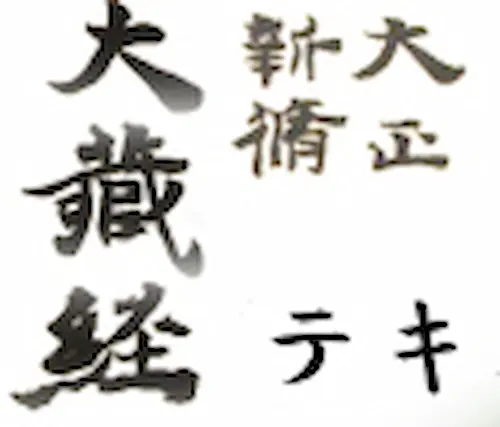
The Sutra of firm establishment in all doctrine, describing clearly the secret merit and attainments in the religious life of Tathāgata, who appears as Buddha in his great and unsurpassed stature; also the many acts of the Bodhisattwas.
It is called also Chung-yin-tu-na-lan-to-ta-tau-ch'ang-king. "The Sutra of Nalanda, the great seat of worship, in Central India."
The monastery of Nalanda, in the kingdom of Magadha, the present Bahar, was of great size, and lasted through more than seven centuries. The Chinese traveller Hiuen-tsang visited it. He found there ten thousand monks living in six buildings erected by as many monarchs, forming together one great ascetic establishment, the most splendid in India. It was celebrated as a place of study both for the Brahmanical books and those of Buddhism, and was devoted to the study of that branch of Buddhist doctrine called the "Greater Development." For legends connected with this flourishing seat of Buddhism, the translation by M. Julien of Hiuen-tsang's travels, from which I have derived these facts, may be consulted. It lay about thirty miles south-east of the modern Patna.
The Chinese translation of the Leng-yen-king was made in the year 705 A.D., by Paramiti, a Hindoo Buddhist morell [sic] at Canton. He was assisted by Yung-pi, a Chinese, sans Migashakya, a native of Udyana, a country lying northwest of Cashmere. (Joseph Edkins, introductory remarks, 289)

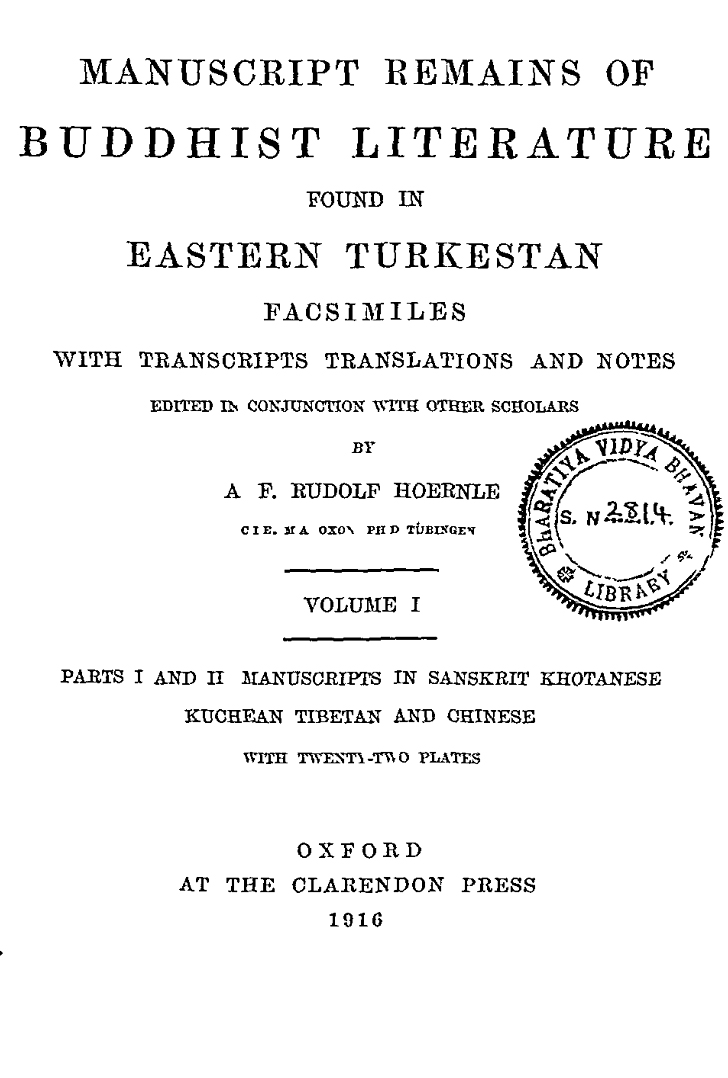
This is a part, between one-half and two-thirds of a folio, imperfect on the left, and therefore lacking a number. But for one small gap near the right lower corner, the existing part, measuring 258 x 121 mm. (or 10 x 4 4/5 inches), is undamaged. The writing, eight lines on either side, in Upright Gupta characters, is fine, bold, formal, black, and clear: a little rubbed at the left lower corner of the obverse and corresponding upper corner of the reverse; but the reverse lines 6-8, with continuation 8 a, are in a different, smaller, thinner, distinctly cursive hand, and probably by another scribe (footnote 13, p. 127), and contain a different text.
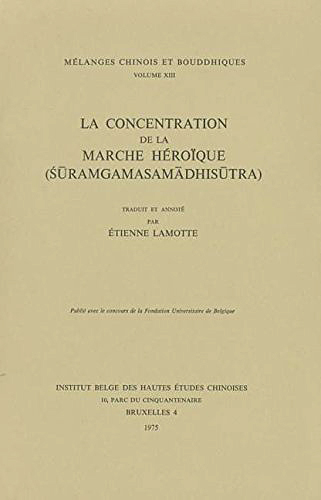
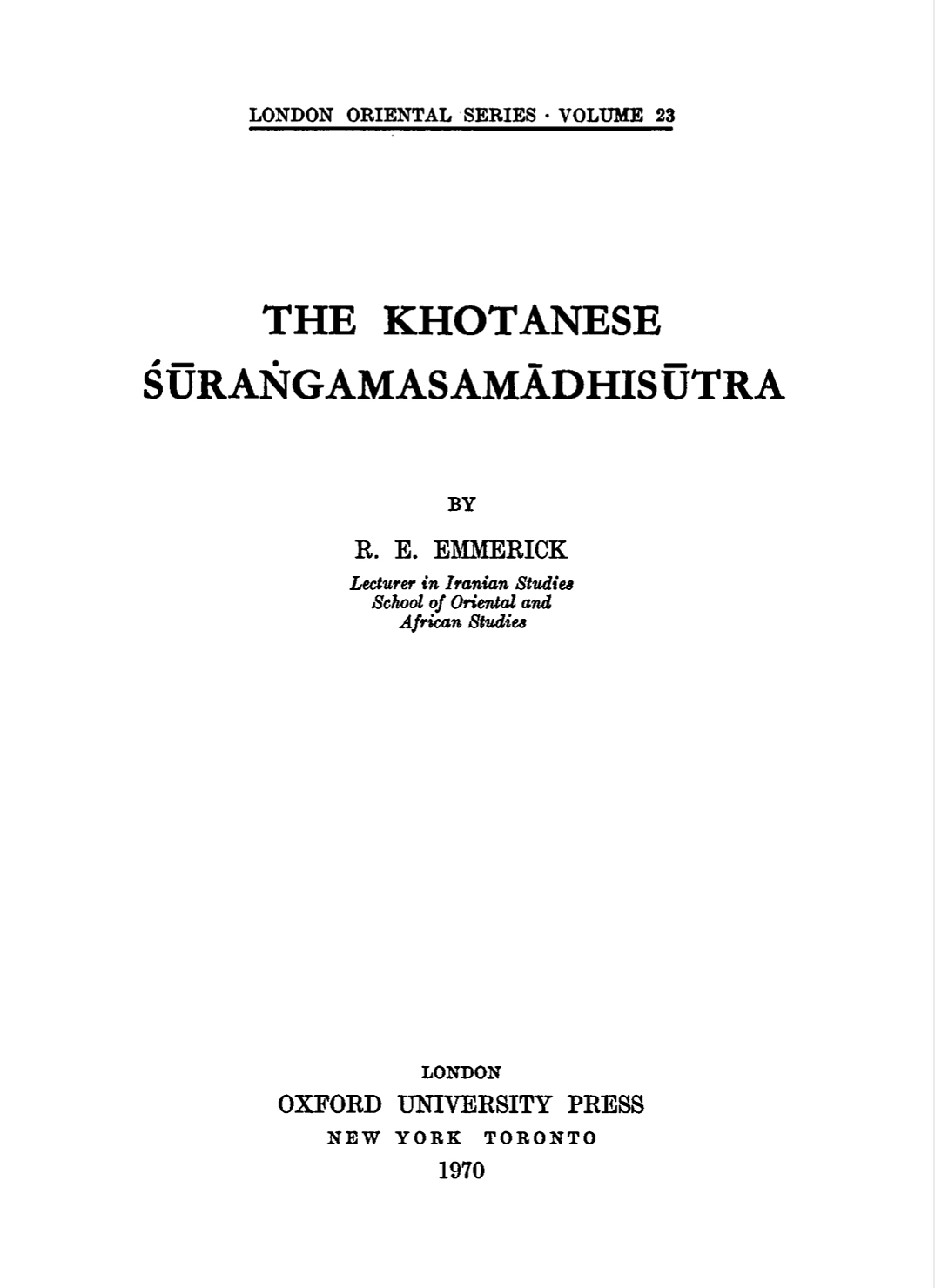
The text is the conclusion of a Śūraṁgama-samādhi Sūtra, followed by a Dhāraṇī, or charm (in the cursive hand). A Tibetan version, with, however, an amplified ending, may be seen in the Bkah-hgyur, Mdo. vol. 5 (ix), foll. 407 b–510 a of the India Office edition. It was translated into Chinese in A.D. 384-417 (Nanjio, No. 399, col. 98). For some passages, cited in the Śikṣāsamuccaya, see the Index I to the edition by the late


The Sutra of firm establishment in all doctrine, describing clearly the secret merit and attainments in the religious life of Tathāgata, who appears as Buddha in his great and unsurpassed stature; also the many acts of the Bodhisattwas.
It is called also Chung-yin-tu-na-lan-to-ta-tau-ch'ang-king. "The Sutra of Nalanda, the great seat of worship, in Central India."
The monastery of Nalanda, in the kingdom of Magadha, the present Bahar, was of great size, and lasted through more than seven centuries. The Chinese traveller Hiuen-tsang visited it. He found there ten thousand monks living in six buildings erected by as many monarchs, forming together one great ascetic establishment, the most splendid in India. It was celebrated as a place of study both for the Brahmanical books and those of Buddhism, and was devoted to the study of that branch of Buddhist doctrine called the "Greater Development." For legends connected with this flourishing seat of Buddhism, the translation by M. Julien of Hiuen-tsang's travels, from which I have derived these facts, may be consulted. It lay about thirty miles south-east of the modern Patna.
The Chinese translation of the Leng-yen-king was made in the year 705 A.D., by Paramiti, a Hindoo Buddhist morell [sic] at Canton. He was assisted by Yung-pi, a Chinese, sans Migashakya, a native of Udyana, a country lying northwest of Cashmere. (Joseph Edkins, introductory remarks, 289)This is a part, between one-half and two-thirds of a folio, imperfect on the left, and therefore lacking a number. But for one small gap near the right lower corner, the existing part, measuring 258 x 121 mm. (or 10 x 4 4/5 inches), is undamaged. The writing, eight lines on either side, in Upright Gupta characters, is fine, bold, formal, black, and clear: a little rubbed at the left lower corner of the obverse and corresponding upper corner of the reverse; but the reverse lines 6-8, with continuation 8 a, are in a different, smaller, thinner, distinctly cursive hand, and probably by another scribe (footnote 13, p. 127), and contain a different text.
The text is the conclusion of a Śūraṁgama-samādhi Sūtra, followed by a Dhāraṇī, or charm (in the cursive hand). A Tibetan version, with, however, an amplified ending, may be seen in the Bkah-hgyur, Mdo. vol. 5 (ix), foll. 407 b–510 a of the India Office edition. It was translated into Chinese in A.D. 384-417 (Nanjio, No. 399, col. 98). For some passages, cited in the Śikṣāsamuccaya, see the Index I to the edition by the late