| 🤓 Admin Zone 🛠️ hidden to non-admins | |
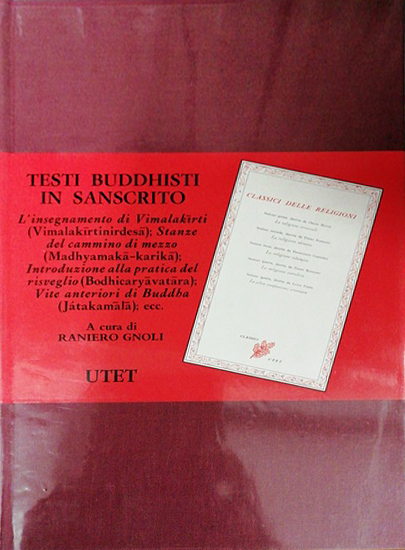
Testi Buddhisti in Sanscrito
Book
See Timeline of BCA Translations
- A Comparative of Sanskrit, Tibetan and Mongolian on Prajñāpāramitā Chapter of Śāntideva's Bodhicaryāvatāra (2) (The Commemoration Number Published on the Occasion of the Seventieth Birthday of Professor Ryojun Fuyo)
- A Descriptive Catalogue of Sanscrit Manuscripts in the Government Collection
- A Preliminary Survey of Sanskrit Manuscripts of Madhyamaka Texts Preserved in the Tibet Autonomous Region
- A Study of the Wisdom Chapter (Prajñāpāramitā Pariccheda) of the Bodhicaryāvatārapañjikā of Prajñākaramati
- An Index to the Bodhicaryāvatāra Pañjikā, Chapter IX
- Bodhicaryāvatāra (Minaev)
- Bodhicaryāvatāra of Śāntideva (Bhattacharya)
- Bodhicaryāvatāra of Śāntideva with the Commentary Pañjikā of Prajñākaramati (1960)
- Bodhicaryāvatāra of Śāntideva with the Commentary Pañjikā of Prajñākaramati (1988)
- Bodhicaryāvatāra-pañjikā VIII.90-103 by Prajñākaramati, Commenting on Śāntideva
- Bodhicaryāvatārapañjikā: Prajñākaramati's Commentary to the Bodhicaryāvatāra of Çāntideva
- Bouddhisme, études et matériaux: Ādikarmapradīpa, Bodhicaryāvatāraṭīkā (La Vallée Poussin 1898)
- Catalogue of Buddhist Sanskrit Manuscripts in the Possession of the Royal Asiatic Society (Hodgson Collection)
- Der Mahāyāna-Buddhismus nach Sanskrit und Prākrittexten
- Die Aufnahme des Erleuchtungsgeistes: Eine Übersetzung von Prajñākaramatis Bodhicaryāvatārapañjikā 3.1-19
- Iti als Adverbialbilder
- Jitāri, Śāntideva and Prabhākarakīrti
- On the Role of Vairocanarakṣita in the Later Transmission Period: A Cross-section of the "Bodhisattva theory" Tradition
- On the Sanskrit Manuscript of the Śikṣāsamuccaya
- Preliminary Survey of Sanskrit Manuscripts of the Bodhicaryāvatāra
- Santideva (Indian Antiquary, Vol. 42, 1913)
- Studies in the Philosophy of the Bodhicaryāvatāra (2000)
- Testi Buddhisti in Sanscrito
- The Sanskrit Buddhist Literature of Nepal (1882)
- The Sanskrit Buddhist Literature of Nepal (1971)
- The Transmission of the Bodhicaryāvatāra: The History, Diffusion, and Influence of a Mahāyāna Buddhist Text
- Tibetisch-Sanskritischer Index zum Bodhicaryāvatāra (Weller 1952)
- Ācārya Śāntideva kā Bodhicaryāvatāra
- Śāntidēva's Bodhicharyāvatāra
Please note that many items in our library are simply pages that represent a detailed library catalog entry and citation of someone else's work, presentation, or performance. Read our General Disclaimer for more information.

Description
A compilation of fourteen Sanskrit Buddhist texts translated into Italian. Edited by Raniero Gnoli. The texts include the Pratītyasamutpādasūtra, Śālistambasūtra, Vajracchedikāsūtra, Śūraṅgamasamādhisūtra, Vimalakīrtinirdeśasūtra, Mūlamadhyamakakārikā, Prasannapadā, Prajñāpāramitāpiṇḍārtha, Bodhicaryāvatāra, Jātakamāla, Śatapañcāśatka, Prajñāpāramitāstotra, Guhyasamājatantra, and the Tattvajñānasaṃsiddhi.
Citation
Gnoli, Raniero, ed. Testi Buddhisti in Sanscrito. Classici della Religioni 42. Turin, Italy: Unione Tipografico-Editrice Torinese, 1983.
Table of contents
- Introduzione7
- Nota bibliografica35
- PRATĪTYASAMUTPĀDASŪTRA (Discorso della coproduzione condizionata)43
- ŚĀLISTAMBASŪTRA (Discorso delle giovane pianta di riso)49
- VAJRACCHEDIKASŪTRA (Fenditrice del fulmine)61
- Lode alla beata santa perfezione della gnosi!63
- ŚŪRAṄGAMASAMĀDHISŪTRA (Il Sūtra della Concentrazione della Marcia Eroica)87
- VIMALAKĪRTINIRDEŚA (Insegnamento di Vimalakīrti)171
- Capitolo I173
- Capitolo II187
- Capitolo III193
- Capitolo IV221
- Capitolo V233
- Capitolo VI242
- Capitolo VII252
- Capitolo VIII260
- Capitolo IX267
- Capitolo X276
- Capitolo XI287
- Capitolo XII294
- MADHYAMAKAKĀRIKĀ (Stanze del Cammino di Mezzo)305
- I. Critica delle condizioni307
- II. Critica del percorso e del non percorso310
- III. Critica del senso della vista, eccetera314
- IV. Critica degli aggregati316
- V. Critica degli elementi318
- VI. Critica dell'interesse e dell'interessato320
- VII. Critica del coeffettuato322
- VIII. Critica dell'atto e dell'agente327
- IX. Critica di un essere preesistente329
- X. Critica del fuoco e del combustibile331
- XI. Critica di un limite anteriore e posteriore334
- XII. Critica del dolore336
- XIII. Critica dei coefficienti338
- XIV. Critica della congiunzione340
- XV. Critica della natura propria342
- XVI. Critica del legame a della liberazione344
- XVII. Critica dell'atto e dei frutti dell'atto346
- XVIII. Critica del sé351
- XIX. Critica del tempo353
- XX. Critica dell'insieme354
- XXI. Critica della produzione e della sparizione357
- XXII. Critica del Tathāgata360
- XXIII. Critica dei Malintesi363
- XXIV. Critica delle Sante Verità366
- XXV. Critica del nirvāṇa371
- XXVI. Critica dei dodici fattori374
- XXVII. Critica delle opinioni376
- PRASANNAPADĀ (Parole chiare)381
- VII383
- Citazioni411
- PRAJÑĀPĀRAMITĀPIṆḌĀRTHA (Riassunto della perfezione della gnosi)415
- Le sedici forme di vacuità418
- Le dieci distrazioni420
- Conclusione425
- BODHICARYĀVATĀRA (Introduzione alla pratica del risveglio)427
- I. Elogio del pensiero del risveglio429
- II. La confessione dei peccati434
- III. L'assunzione del pensiero del risveglio441
- IV. L'attenta applicazione al pensiero del risveglio445
- V. La custodia della consapevolezza e la perfezione della moralità451
- VI. La perfezione della pazienza464
- VII. La perfezione della forza479
- VIII. La perfezione del raccoglimento487
- IX. La perfezione della gnosi506
- JĀTAKAMĀLĀ (Ghirlanda delle vite anteriori (del Buddha))527
- Storia di Supāraga529
- La storia della grande scimmia538
- Storia di Kṣāntivādin547
- La storia dell'elefante561
- Storia di Sutasoma570
- ŚATAPAÑCĀŚATKA (Le centocinquanta stanze)591
- I. Introduzione593
- II. Laude delle cause594
- III. Laude dell'incomparabile596
- IV. Laude della meraviglia598
- V. Laude della forma599
- VI. Laude della pietà600
- VII. Laude della parola601
- VIII. Laude dell'insegnamento603
- IX. Laude del voto604
- X. Laude dell'entrata nel cammino605
- XI. Laude delle azioni difficili606
- XII. Laude dell'abilità608
- XIII. Laude della libertà da debiti609
- Conclusione611
- PRAJÑĀPĀRAMITĀSTOTRA (Lode alla perfezione della gnosi)613
- GUHYASAMĀJATANTRA (Tantra dell'assemblea segreta)619
- OM lode all'Ente di Folgore!621
- Capitolo I621
- Capitolo II628
- Capitolo III631
- TATTVAJÑĀNASAṂSIDDHI (Realizzazione della conoscenza della Realtà635
- Lode a Vajravārāhī637
- I637
- II639
- III642
- IV644
- V646
- Indice dei nomi649
- Indice delle tavole657
Interconnections
7 Full translation of

An "Introduction to Bodhisattva Practice," the Bodhisattvacaryāvatāra is a poem about the path of a bodhisattva, in ten chapters, written by the Indian Buddhist Śāntideva (fl. c. 685–763). One of the masterpieces of world literature, it is a core text of Mahāyāna Buddhism and continues to be taught, studied, and commented upon in many languages and by many traditions around the world. The main subject of the text is bodhicitta, the altruistic aspiration for enlightenment, and the path and practices of the bodhisattva, the six perfections (pāramitās). The text forms the basis of many contemporary discussions of Buddhist ethics and philosophy.

Vimalakīrtinirdeśa (T. Dri med grags pas bstan pa'i mdo; C. Weimo jing; J. Yuimagyō; K. Yuma kyǒng 維摩經). In Sanskrit, "Vimalakīrti's Instructions"; one of the most beloved Indian Mahāyāna sūtras, renowned especially for having a layman, the eponymous Vimalakīrti, as its protagonist. The text probably dates from around the second century CE. Among the seven translations of the sūtra into Chinese, the most famous is that made by Kumārajīva in 406. His translation seems to have been adapted to appeal to Chinese mores, emphasizing the worldly elements of Vimalakīrti's teachings and introducing the term "filial piety" into the text. The sūtra was also translated by Xuanzang in 650. The sūtra was translated into Tibetan twice, the more famous being that of Chos nyid tshul khrims in the ninth Century. It has also been rendered into Sogdian, Khotanese, and Uighur. The original Sanskrit of the text was lost for over a millennia until a Sanskrit manuscript was discovered in the Po ta la palace in Tibet in 2001. The narrative of the sūtra begins with the Buddha requesting that his leading Śrāvaka disciples visit his lay disciple Vimalakīrti, who is ill. Each demurs, recounting a previous meeting with Vimalakīrti in which the layman had chastised the monk for his limited understanding of the dharma. The Buddha then instructs his leading bodhisattva disciples to visit Vimalakīrti. Each again demurs until MañjuśrI reluctantly agrees. Vimalakīrti explains that his sickness is the sickness of all sentient beings, and goes on to describe how a sick bodhisattva should understand his sickness, emphasizing the necessity of both wisdom (prajñā) and method (upāya). A large audience of monks and bodhisattvas then comes to Vimalakīrti's house, where he delivers a sermon on "inconceivable liberation" (acintyavimokṣa). Among the audience is Śariputra, the wisest of the Buddha's śrāvaka disciples. As in other Mahāyāna sūtras, the eminent śrāvaka is made to play the fool, repeatedly failing to understand how all dichotomies are overcome in emptiness (śūnyatā), most famously when a goddess momentarily transforms him into a female. Later, a series of bodhisattvas take turns describing various forms of duality and how they are overcome in nonduality. Vimalakīrti is the last to be invited to speak. He remains silent and is praised for this teaching of the entrance into nonduality. The sūtra is widely quoted in later literature, especially on the topics of emptiness, method, and nonduality. It became particularly famous in East Asia because the protagonist is a layman, who repeatedly demonstrates that his wisdom is superior to that of monks. Scenes from the sūtra are often depicted in East Asian Buddhist art. (Source: "Vimalakīrtinirdeśa." In The Princeton Dictionary of Buddhism, 971. Princeton University Press, 2014. http://www.jstor.org/stable/j.ctt46n41q.27.)
One of the most revered and recited scriptures of the perfection of wisdom genre (prajñāpāramitāsūtras), perhaps second only to the Heart Sūtra, both of which became especially popular in the East Asian Buddhist traditions. It is a crucial source for Mahāyāna tenets of selflessness and the emptiness of phenomena, and its discourse is framed as an explanation of how to enter into the vehicle of the bodhisattvas by developing and sustaining their enlightened perspective.

In this sūtra, at the request of venerable Śāriputra, the bodhisattva mahāsattva Maitreya elucidates a very brief teaching on dependent arising that the Buddha had given earlier that day while gazing at a rice seedling. The text discusses outer and inner causation and its conditions, describes in detail the twelvefold cycle by which inner dependent arising gives rise to successive lives, and explains how understanding the very nature of that process can lead to freedom from it. (Source: 84000)
Śūraṃgamasamādhisūtra [or Śūraṅgamasamādhisūtra]. (T. Dpa' bar 'gro ba'i ting nge 'dzin gyi mdo; C. Shoulengyan sanmei jing; J. Shuryōgon zanmaikyō; K. Sunǔngǒm sammae kyǒng). In Sanskrit, "Sūtra on the Heroic-March Concentration," an early Mahāyāna sūtra that explains how the mind becomes free and unimpeded like the "march" (gama) of a "hero" (śūra), who "walks alone, fearlessly, like a lion." (This translated sūtra should be distinguished from the *Śūraṃgamasūtra, a Chinese apocryphal scripture of similar name, which dates from the early eighth century.) The Śūraṃgamasamādhi as taught in this sūtra not only enables bodhisattvas quickly to attain complete, perfect enlightenment (anuttarasamyaksaṃbodhi), but also ensures that even śrāvakas, pratyekabuddhas, and arhats are put on the right path leading to buddhahood. In addition, the Śūraṃgamasamādhi also permits enlightened beings to manifest themselves in any variety of forms in order to teach sentient beings. The sūtra also includes descriptions of the world systems of many other buddhas (buddhakṣetra), including Abhirati, the buddha-land of Akṣobhya. Although some fragments of the Sanskrit recension of the Śūraṃgamasamādhisūtra have survived, the full sūtra is extant only in an early-fifth-century translation attributed to the eminent Kuchean translator Kumārajīva, in two rolls, and in an early-ninth-century Tibetan translation. (Source: "Śūraṃgamasamādhisūtra." In The Princeton Dictionary of Buddhism, 873. Princeton University Press, 2014. http://www.jstor.org/stable/j.ctt46n41q.27)

Mūlamadhyamakakārikā. (T. Dbu ma rtsa bai tshig le'u byas pa; C. Zhong lun; J. Chüron; K. Chung non 中論). In Sanskrit, "Root Verses on the Middle Way"; the magnum opus of the second-century Indian master Nāgārjuna ; also known as the Prajñānāmamūlamadhyamakakārikā and the Madhyamakaśāstra. (The Chinese analogue of this text is the Zhong lun, which renders the title as Madhyamakaśāstra. This Chinese version was edited and translated by Kumārajīva . Kumārajīva's edition, however, includes not only Nāgārjuna's verses but also Piṅgala's commentary to the verses.) The most widely cited and commented upon of Nāgārjuna's works in India, the Mūlamadhyamakakārikā, was the subject of detailed commentaries by such figures as Buddhapālita, Bhāvaviveka, and Candrakīrti (with Candrakīrti's critique of Bhāvaviveka's criticism of a passage in Buddhapālita's commentary providing the locus classicus for the later Tibetan division of Madhyamaka into *Svātantrika and *Prāsaṅgika). In East Asia, it was one of the three basic texts of the "Three Treatises" school (C. San lun zong), and was central to Tiantai philosophy. Although lost in the original Sanskrit as an independent work, the entire work is preserved within the Sanskrit text of Candrakīrti's commentary, the Prasannapadā (serving as one reason for the influence of Candrakīrti's commentary in the European reception of the Mūlamadhyamakakārikā). The work is composed of 448 verses in twenty-seven chapters. The topics of the chapters (as provided by Candrakīrti) are the analysis of: (1) conditions (pratyaya), (2) motion, (3) the eye and the other sense faculties (indriya), (4) aggregates (skandha), (5) elements (dhātu), (6) passion and the passionate, (7) the conditioned (in the sense of production, abiding, disintegration), (8) action and agent, (9) prior existence, (10) fire and fuel, (11) the past and future limits of saṃsāra, (12) suffering, (13) the conditioned (saṃskāra), (14) contact (saṃsarga), (15) intrinsic nature (svabhāva), (16) bondage and liberation, (17) action and effect, (18) self, (19) time, (20) assemblage (sāmagrī), (21) arising and dissolving, (22) the tathāgata, (23) error, (24) the four noble truths, (25) nirvāṇa, (26), the twelve links of dependent origination (pratītyasamutpāda), and (27) views. (Source: "Mūlamadhyamakakārikā." In The Princeton Dictionary of Buddhism, 553. Princeton University Press, 2014. http://www.jstor.org/stable/j.ctt46n41q.27.)

Prasannapadā. (T. Tshig gsal). In Sanskrit, "Clear Words," the commentary on Nāgārjuna's Mūlamadhyamakakārikā by the seventh-century Indian master Candrakīrti; its full title is Mūlamadhyamakavṛtti-Prasannapadā. Among Candrakīrti's major works, it is regarded as second in importance only to his independent treatise, the Madhyamakāvatāra, which was composed earlier. Apart from its importance as a commentary on Nāgārjuna's text, Candrakīrti's work is also important as the locus classicus for the division of Madhyamaka into the *Svātantrika and *Prāsaṅgika. Candrakīrti's was the third in an influential series of commentaries. The first was that of Buddhapālita. The second was the Prajñāpradīpa of Bhāvaviveka, who criticized Buddhapālita's commentary on the first chapter of Nāgārjuna's text, specifically the section in which Buddhapālita refutes the Sāṃkhya position that an effect is produced from a cause that is the same nature as itself. In the Prasannapadā, Candrakīrti defended Buddhapālita and attacked Bhāvaviveka. It is based largely on these exchanges that later Tibetan scholars came to designate Buddhapālita and Candrakīrti as *Prāsaṅgikas and Bhāvaviveka as a *Svātantrika. Candrakīrti's commentary is also valued by scholars for its many citations from Mahāyāna sūtras. The Prasannapadā has attracted the attention of modern scholars, in part because, unlike the commentaries of Buddhapālita and Bhāvaviveka, for example, it has been preserved in Sanskrit. (Source: "Prasannapadā." In The Princeton Dictionary of Buddhism, 664. Princeton University Press, 2014. http://www.jstor.org/stable/j.ctt46n41q.27.)