Vimalakīrtinirdeśasūtra

From Bodhicitta
< TextsTexts/Vimalakīrtinirdeśasūtra

🤓 Admin Zone 🛠️ hidden to non-admins
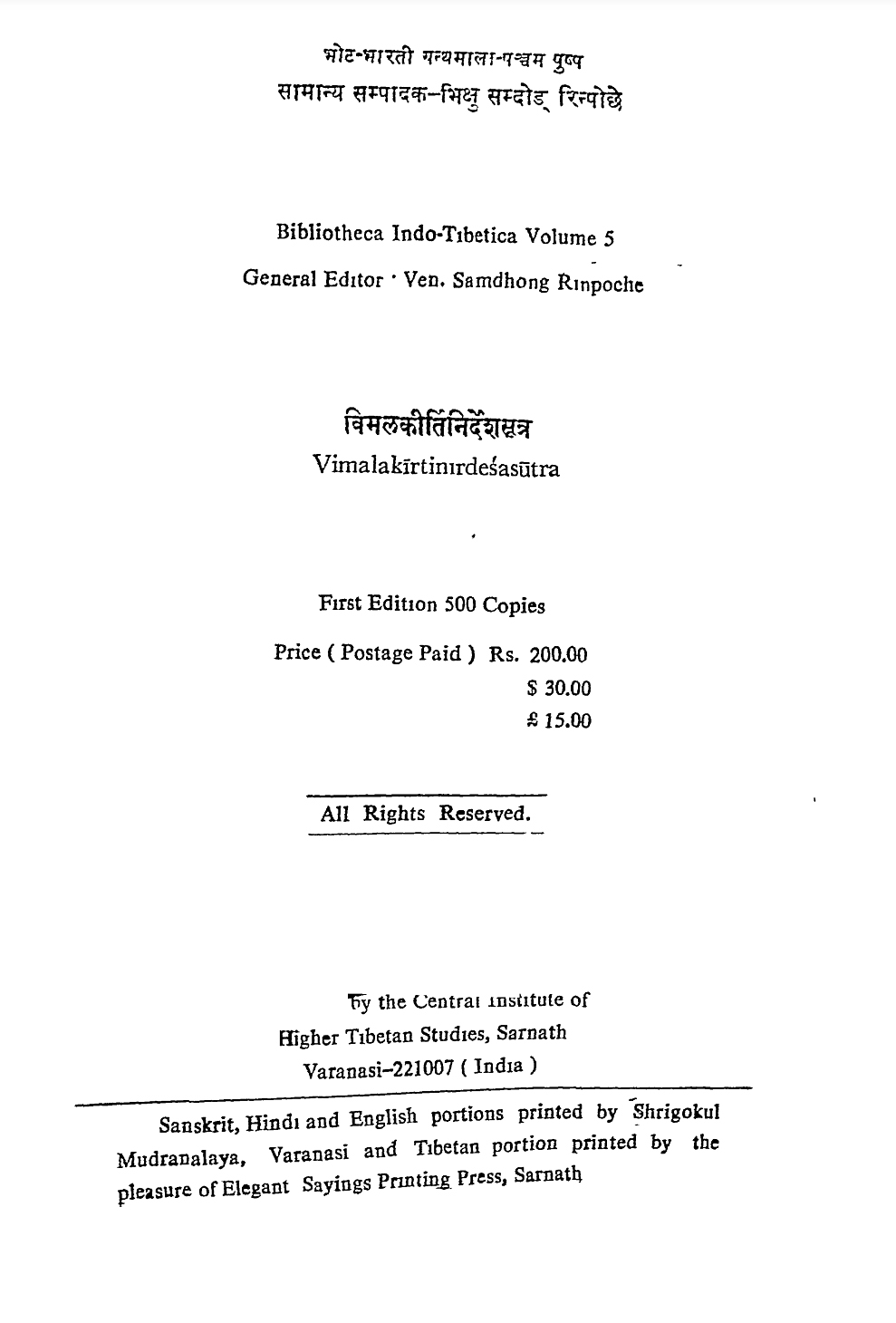
आर्यविमलकीर्तिनिर्देशनाममहायानसूत्र
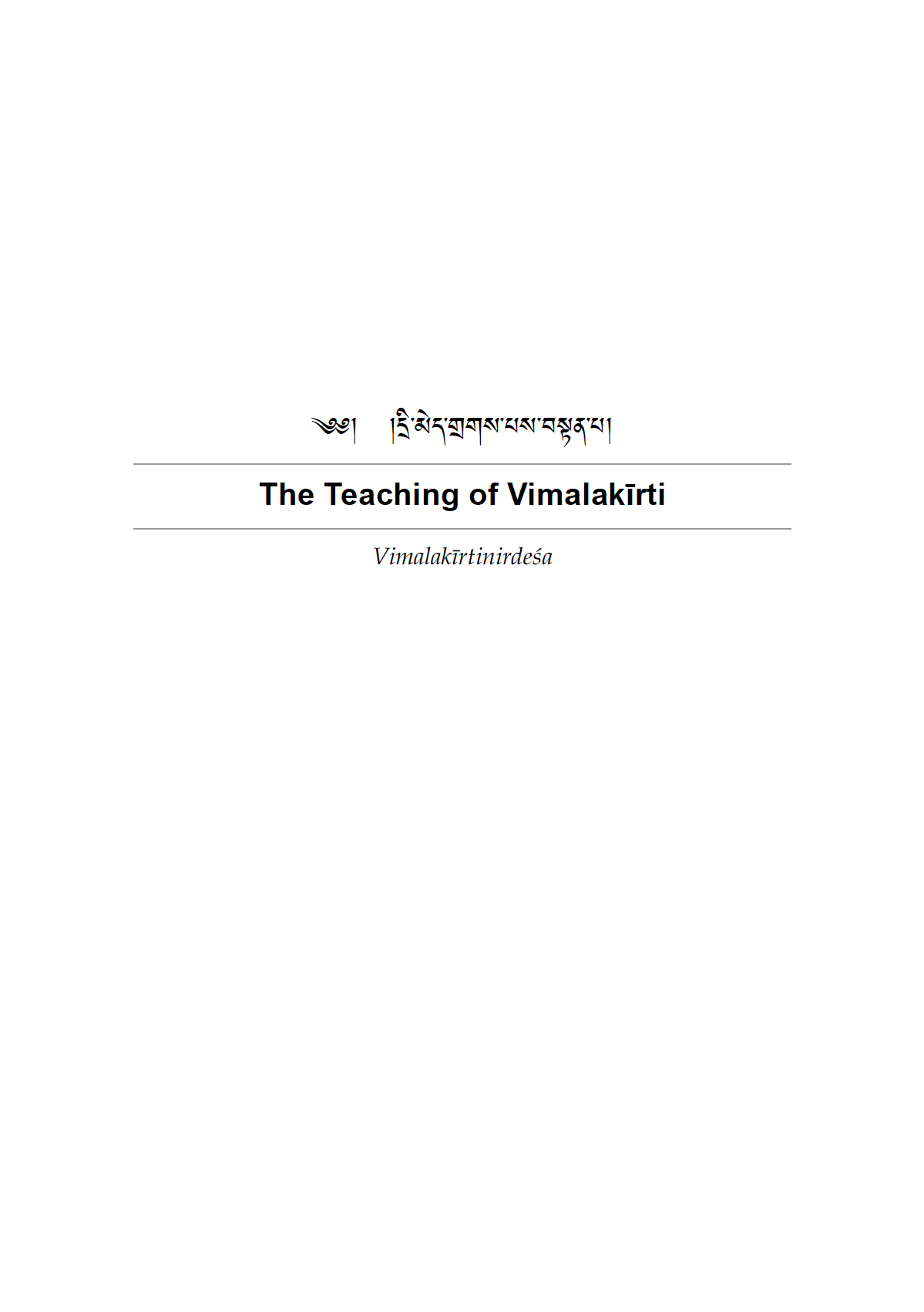
Vimalakīrtinirdeśasūtra
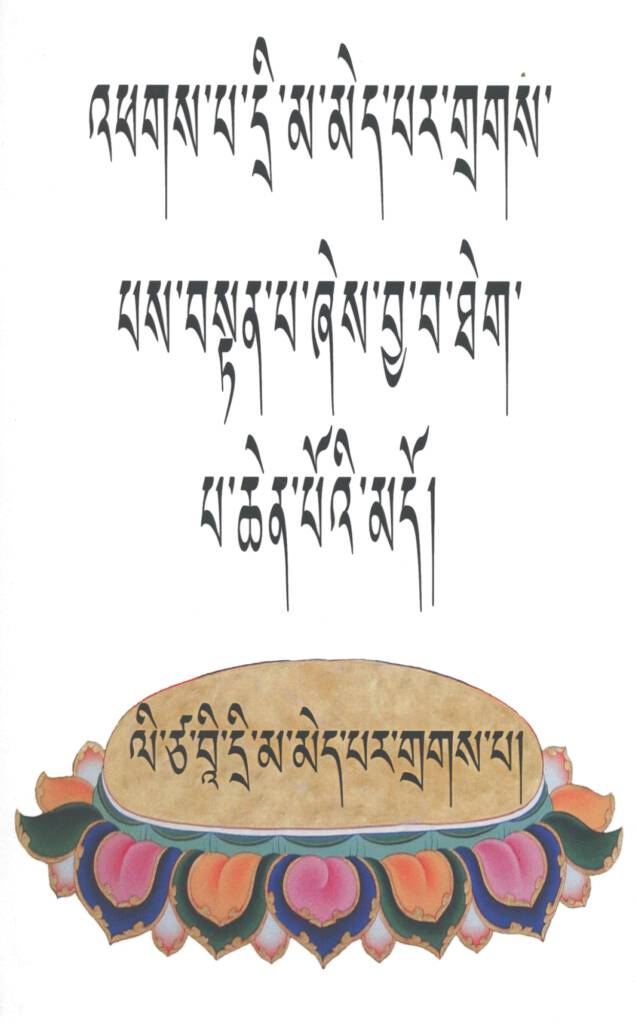
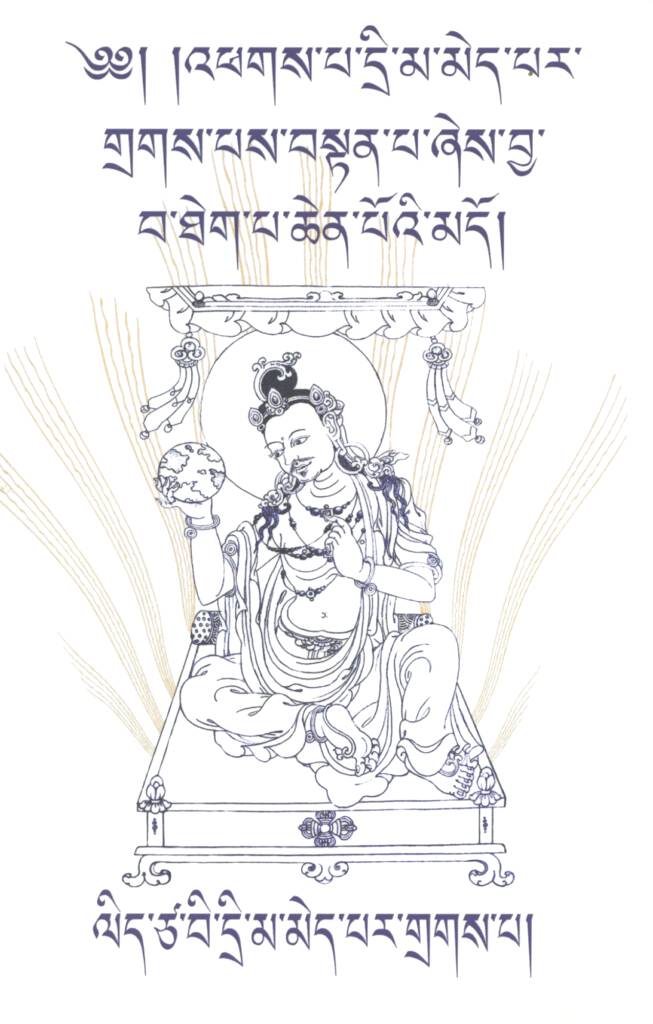
འཕགས་པ་དྲི་མ་མེད་པར་གྲགས་པས་བསྟན་པ་ཞེས་བྱ་བ་ཐེག་པ་ཆེན་པོའི་མདོ།
'phags pa dri ma med par grags pas bstan pa zhes bya ba theg pa chen po'i mdo
The Noble Mahāyāna Sūtra "The Teaching of Vimalakīrti" (84000)
Text


Please note that many items in our library are simply pages that represent a detailed library catalog entry and citation of someone else's work, presentation, or performance. Read our General Disclaimer for more information.

Description

Vimalakīrtinirdeśa (T. Dri med grags pas bstan pa'i mdo; C. Weimo jing; J. Yuimagyō; K. Yuma kyǒng 維摩經). In Sanskrit, "Vimalakīrti's Instructions"; one of the most beloved Indian Mahāyāna sūtras, renowned especially for having a layman, the eponymous Vimalakīrti, as its protagonist. The text probably dates from around the second century CE. Among the seven translations of the sūtra into Chinese, the most famous is that made by Kumārajīva in 406. His translation seems to have been adapted to appeal to Chinese mores, emphasizing the worldly elements of Vimalakīrti's teachings and introducing the term "filial piety" into the text. The sūtra was also translated by Xuanzang in 650. The sūtra was translated into Tibetan twice, the more famous being that of Chos nyid tshul khrims in the ninth Century. It has also been rendered into Sogdian, Khotanese, and Uighur. The original Sanskrit of the text was lost for over a millennia until a Sanskrit manuscript was discovered in the Po ta la palace in Tibet in 2001. The narrative of the sūtra begins with the Buddha requesting that his leading Śrāvaka disciples visit his lay disciple Vimalakīrti, who is ill. Each demurs, recounting a previous meeting with Vimalakīrti in which the layman had chastised the monk for his limited understanding of the dharma. The Buddha then instructs his leading bodhisattva disciples to visit Vimalakīrti. Each again demurs until MañjuśrI reluctantly agrees. Vimalakīrti explains that his sickness is the sickness of all sentient beings, and goes on to describe how a sick bodhisattva should understand his sickness, emphasizing the necessity of both wisdom (prajñā) and method (upāya). A large audience of monks and bodhisattvas then comes to Vimalakīrti's house, where he delivers a sermon on "inconceivable liberation" (acintyavimokṣa). Among the audience is Śariputra, the wisest of the Buddha's śrāvaka disciples. As in other Mahāyāna sūtras, the eminent śrāvaka is made to play the fool, repeatedly failing to understand how all dichotomies are overcome in emptiness (śūnyatā), most famously when a goddess momentarily transforms him into a female. Later, a series of bodhisattvas take turns describing various forms of duality and how they are overcome in nonduality. Vimalakīrti is the last to be invited to speak. He remains silent and is praised for this teaching of the entrance into nonduality. The sūtra is widely quoted in later literature, especially on the topics of emptiness, method, and nonduality. It became particularly famous in East Asia because the protagonist is a layman, who repeatedly demonstrates that his wisdom is superior to that of monks. Scenes from the sūtra are often depicted in East Asian Buddhist art. (Source: "Vimalakīrtinirdeśa." In The Princeton Dictionary of Buddhism, 971. Princeton University Press, 2014. http://www.jstor.org/stable/j.ctt46n41q.27.)
Quoted in the aligned translations
Reference
Vimalakīrtinirdeśasūtra [आर्यविमलकीर्तिनिर्देशनाममहायानसूत्र]. 'phags pa dri ma med par grags pas bstan pa zhes bya ba theg pa chen po'i mdo [འཕགས་པ་དྲི་མ་མེད་པར་གྲགས་པས་བསྟན་པ་ཞེས་བྱ་བ་ཐེག་པ་ཆེན་པོའི་མདོ།]. [The Noble Mahāyāna Sūtra "The Teaching of Vimalakīrti" (84000)]. Translated by Chos nyid tshul khrims, Kumārajīva, Zhiqian, Xuanzang, Dharmarakṣa. Kangyur, RKTSK 176 http://www.rkts.org/cat.php?id=176&typ=1.
Interconnections
All 65Books 43Articles 17Multimedia 2Tibetan Publications 3
6 Recensions
'phags pa dri ma med par grags pas bstan pa zhes bya ba theg pa chen po'i mdo (Jeweled Lotus Publishing, 2015)-front.jpg
Tibetan Publications2015About this item
A recension of the Tibetan Vimalakīrtrinirdeśasūtra published by Jeweled Lotus Publishing, 2022.
'phags pa dri ma med par grags pas bstan pa zhes bya ba theg pa chen po'i mdo (Jeweled Lotus Publishing, 2017)-front.jpg
Tibetan Publications2017About this item
Vimalakīrtinirdeśa (T. Dri med grags pas bstan pa'i mdo; C. Weimo jing; J. Yuimagyō; K. Yuma kyǒng 維摩經). In Sanskrit, "Vimalakīrti's Instructions"; one of the most beloved Indian Mahāyāna sūtras, renowned especially for having a layman, the eponymous Vimalakīrti, as its protagonist. The text probably dates from around the second century CE. Among the seven translations of the sūtra into Chinese, the most famous is that made by Kumārajīva in 406. His translation seems to have been adapted to appeal to Chinese mores, emphasizing the worldly elements of Vimalakīrti's teachings and introducing the term "filial piety" into the text. The sūtra was also translated by Xuanzang in 650. The sūtra was translated into Tibetan twice, the more famous being that of Chos nyid tshul khrims in the ninth Century. It has also been rendered into Sogdian, Khotanese, and Uighur. The original Sanskrit of the text was lost for over a millennia until a Sanskrit manuscript was discovered in the Po ta la palace in Tibet in 2001. The narrative of the sūtra begins with the Buddha requesting that his leading Śrāvaka disciples visit his lay disciple Vimalakīrti, who is ill. Each demurs, recounting a previous meeting with Vimalakīrti in which the layman had chastised the monk for his limited understanding of the dharma. The Buddha then instructs his leading bodhisattva disciples to visit Vimalakīrti. Each again demurs until MañjuśrI reluctantly agrees. Vimalakīrti explains that his sickness is the sickness of all sentient beings, and goes on to describe how a sick bodhisattva should understand his sickness, emphasizing the necessity of both wisdom (prajñā) and method (upāya). A large audience of monks and bodhisattvas then comes to Vimalakīrti's house, where he delivers a sermon on "inconceivable liberation" (acintyavimokṣa). Among the audience is Śariputra, the wisest of the Buddha's śrāvaka disciples. As in other Mahāyāna sūtras, the eminent śrāvaka is made to play the fool, repeatedly failing to understand how all dichotomies are overcome in emptiness (śūnyatā), most famously when a goddess momentarily transforms him into a female. Later, a series of bodhisattvas take turns describing various forms of duality and how they are overcome in nonduality. Vimalakīrti is the last to be invited to speak. He remains silent and is praised for this teaching of the entrance into nonduality. The sūtra is widely quoted in later literature, especially on the topics of emptiness, method, and nonduality. It became particularly famous in East Asia because the protagonist is a layman, who repeatedly demonstrates that his wisdom is superior to that of monks. Scenes from the sūtra are often depicted in East Asian Buddhist art. (Source: "Vimalakīrtinirdeśa." In The Princeton Dictionary of Buddhism, 971. Princeton University Press, 2014. http://www.jstor.org/stable/j.ctt46n41q.27.)
Le Sūtra de Vimalakīrti en mongol-vol. 1-front.jpg
Books1982About this item
An edition of the Vimalakīrtinirdeśasūtra in Mongolian in 2 vols. Text in Mongolian (Roman and Mongolian script); notes in French.
Chris-lawton-zvKx6ixUhWQ-unsplash.jpg
Books2006About this item
This work contains only the Sanskrit text of the Vimalakīrtinirdeśasūtra, which the editors have set about to standardize and revise according to philological standards.
Vimalakirtinirdesasutra Joshi and Prasadika-front.jpg
Books1981About this item
A translation of the Vimalakīrtinirdeśasūtra into Hindi by Lal Mani Joshi based on the Tibetan version and Sanskrit reconstruction prepared by Bhikṣu Prāsādika.
17 Full translations
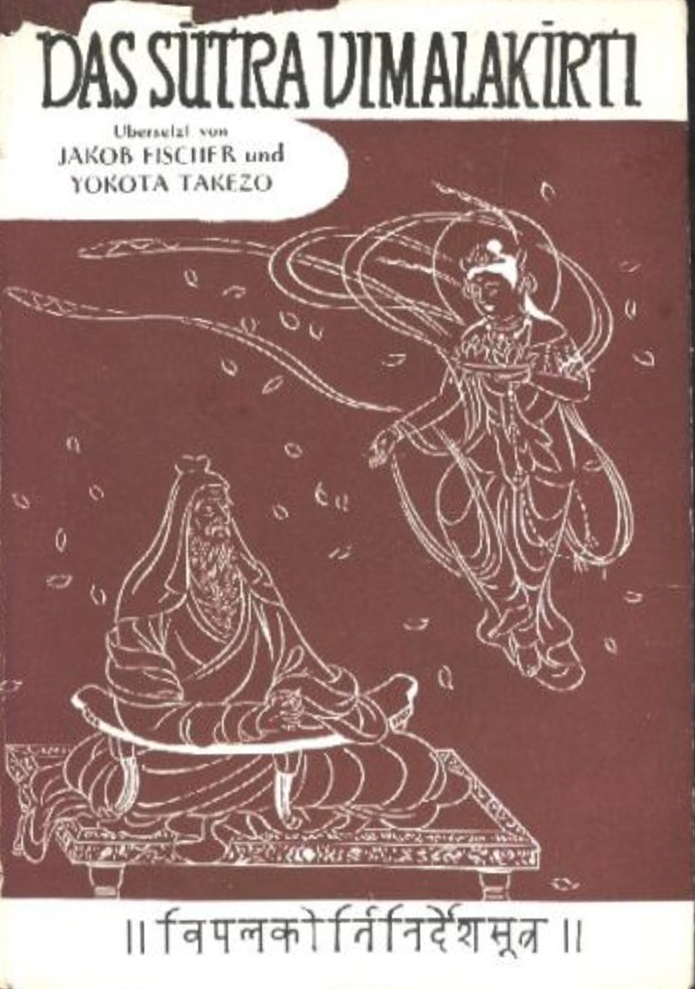
Das Sutra Vimalakirti-front.jpg
Books1944About this item
German translation of the Vimalakīrtisūtra from Chinese and Japanese by Jakob Fischer and Yokota Takezo
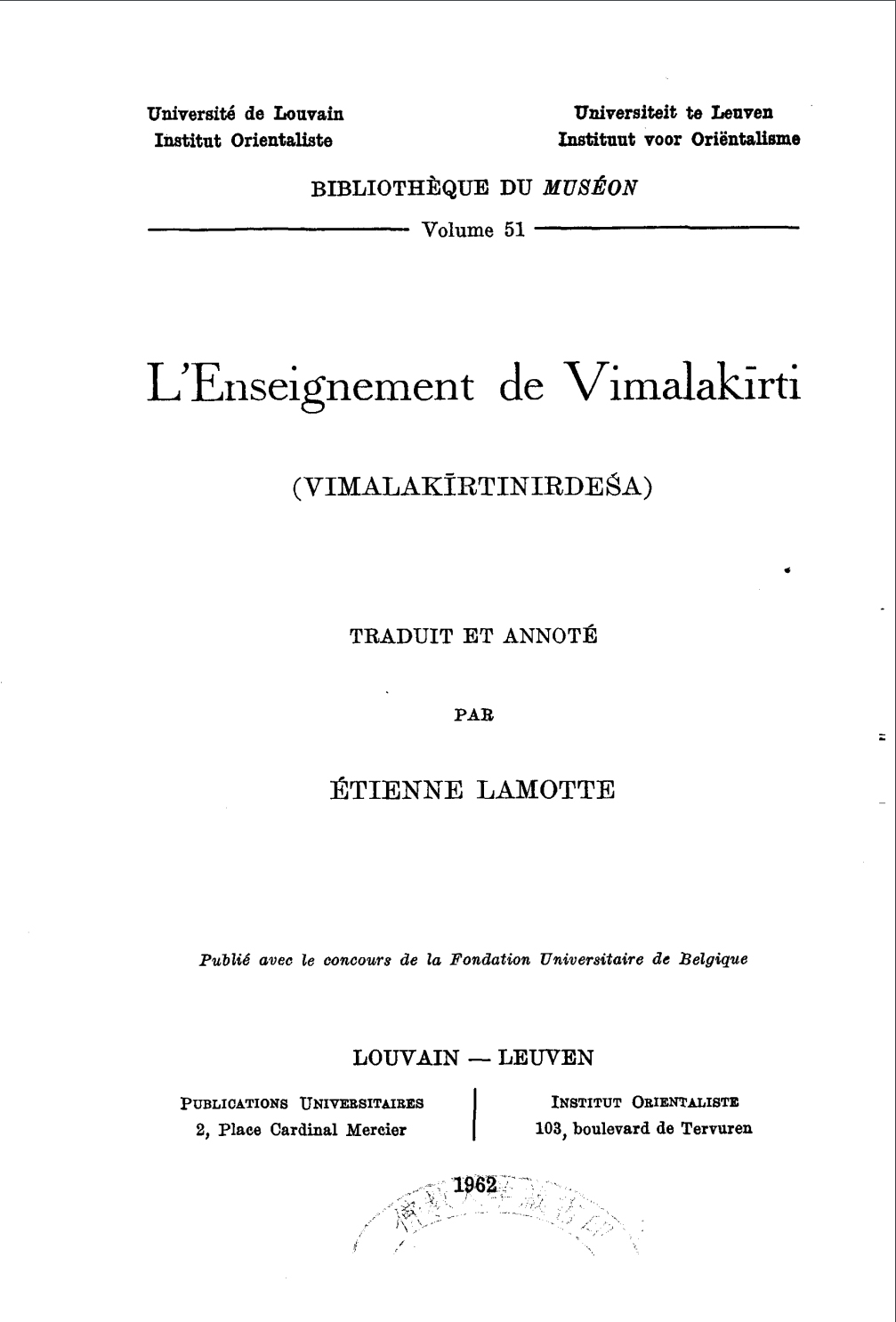
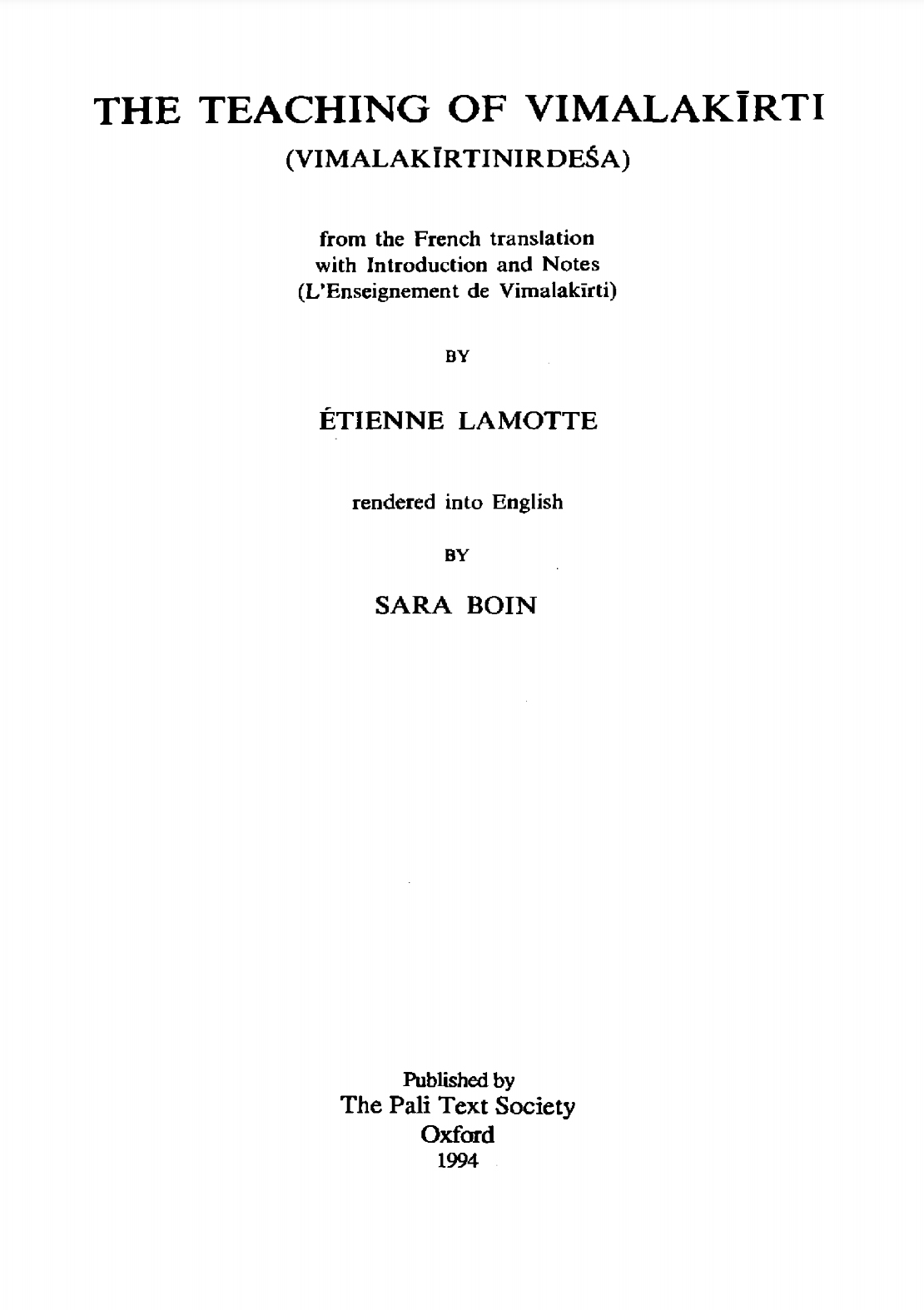
LEnseignement de Vimalakirti Vimalakirtinirdesa 1962-front.jpg
Books1962About this item
This book is a French translation of the Vimalakīrtinirdeśasūtra by Étienne Lamotte, pubished by Institut Orientaliste, 1962.
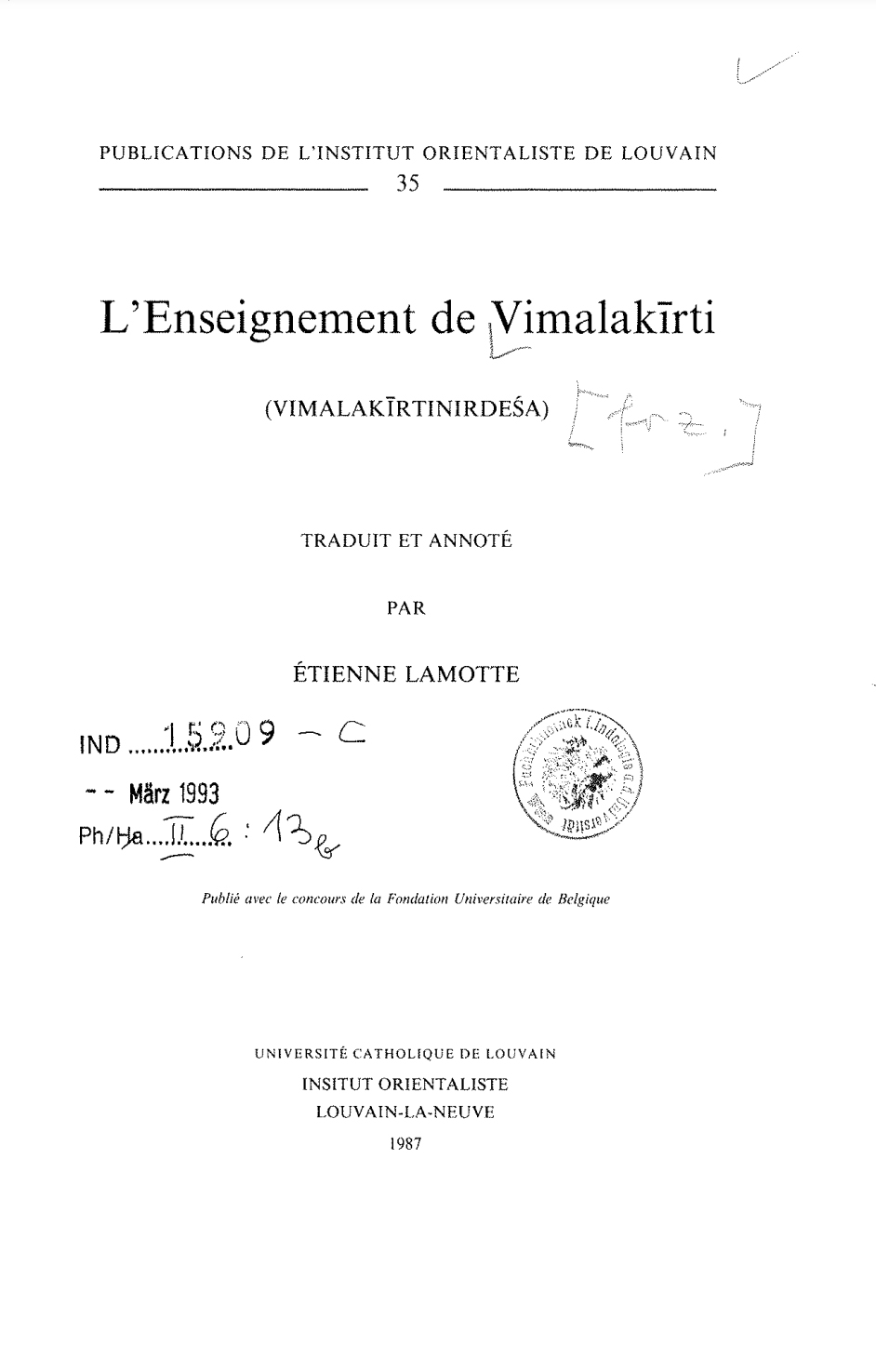
LEnseignement de Vimalakirti Vimalakirtinirdesa Lamotte 1987-front.jpg
Books1987About this item
This book is a reprint of a French translation of the Vimalakīrtinirdeśasūtra by Étienne Lamotte, originally published by Publications Universitaires, 1962.
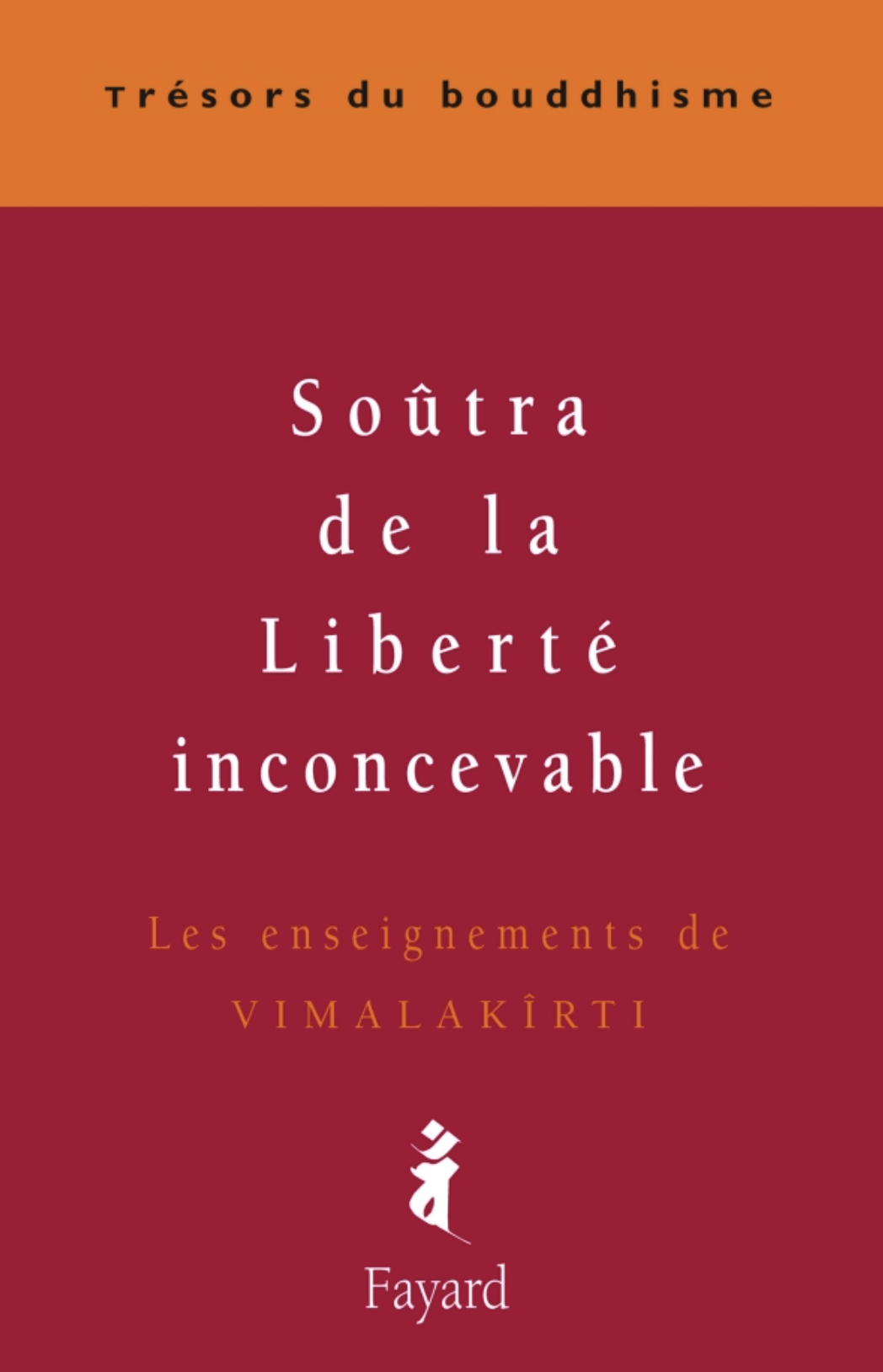
Soûtra de la liberté inconcevable-front .jpg
Books2011About this item
A French translation of the Vimalakīrtinirdeśasūtra from the Chinese of version by Kumārajīva. Translated by Patrick Carré.
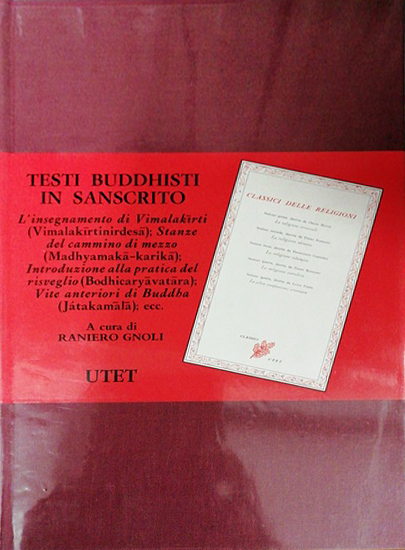
Testi Buddhisti in Sanscrito-front.jpg
Books1983About this item
A compilation of fourteen Sanskrit Buddhist texts translated into Italian, including the Bodhicaryāvatāra. Edited by Raniero Gnoli.
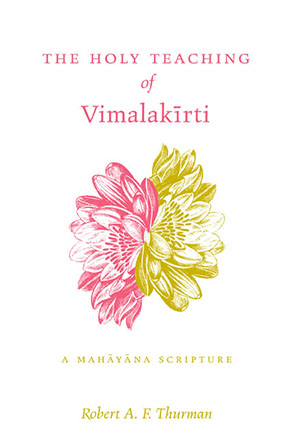
The Holy Teaching of Vimalakirti-front.jpg
Books2003About this item
Robert Thurman's translation of the Vimalakīrtinirdeśasūtra makes available, in relatively nontechnical English, the Tibetan version of this key Buddhist scripture.
Kumārajīva Khyentse Foundation.jpg
Books1967About this item
This is an English translation of the Vimalakīrtinirdeśasūtra by Richard H. Robinson from the Chinese edition of Kumārajīva, T475. Published in Madison, WI, 1967.
The Teaching of Vimalakīrti Vimalakīrtinirdeśa-front.jpg
Books2022About this item
An English translation of the Vimalakīrtinirdeśasūtra by Robert Thurman. Published by 84000: Translating the Words of the Buddha.
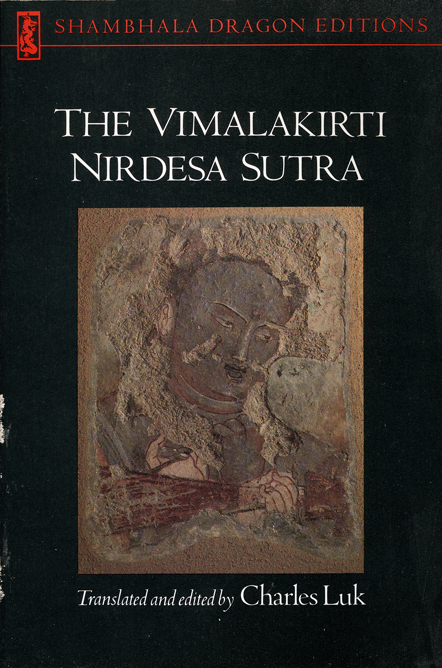
The Vimalakirti Nirdesa Sutra-front.jpg
Books1990About this item
An English translation of the Vimalakīrtinirdeśasūtra by Charles Luk based on the Chinese translation of Kumārajīva.
The Vimalakīrti Sutra Watson-front.jpg
Books1999About this item
The first-ever translation into English of the Vimalakīrtinirdeśasūtra from the popular Chinese version of Kumārajīva. Translated by Burton Watson.
Articles.jpeg
Articles1922–1925About this item
This is an English translation of the Vimalakīrtinirdeśasūtra by Hokei Idzumi from the Chinese of Kumārajīva T475, the first attempt to introduce the text to Western readers.
Articles.jpeg
Articles1898About this item
An English translation of the Vimalakīrtinirdeśasūtra by Masatoshi Ōhara from the Chinese.
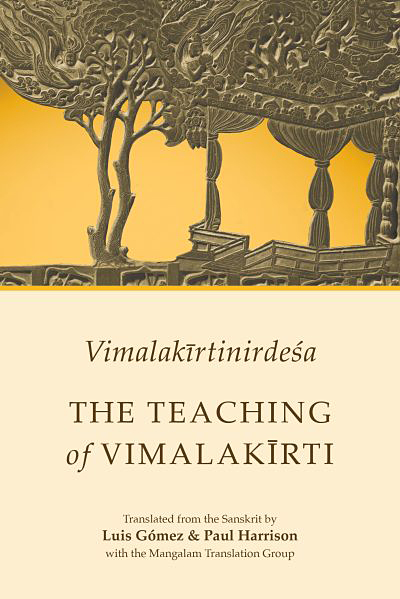
Vimalakirtinirdesa The Teaching of Vimalakirti Gomez and Harrison-front.jpg
Books2022About this item
An English Translation of the Sanskrit Text Found in the Potala Palace, Lhasa, by Luis Gómez and Paul Harrison, with members of the Mangalam Translation Group.
Vimalakirtinirdesasutra Joshi and Prasadika-front.jpg
Books1981About this item
A translation of the Vimalakīrtinirdeśasūtra into Hindi by Lal Mani Joshi based on the Tibetan version and Sanskrit reconstruction prepared by Bhikṣu Prāsādika.
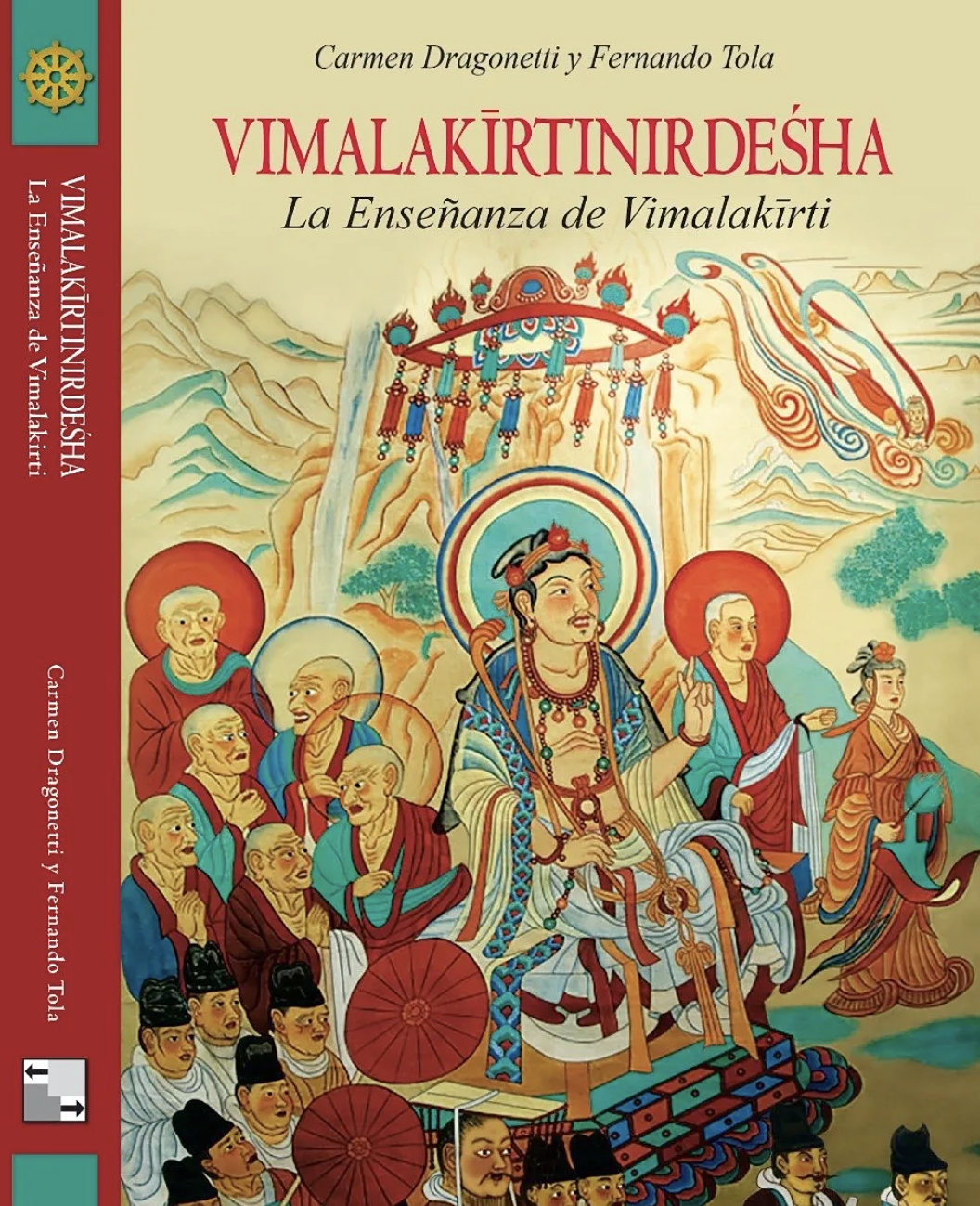
Vimalakirtinirdesha La Ensenanza de Vimalakirti-front.jpg
Books2018About this item
This is the first translation of the Vimalakīrtinirdeśasūtra into Spanish from the Sanskrit. Translated by Carmen Dragonetti and Fernando Tola, 2018.
2 Partial translations
1 Teachings
Khyentse Dzongsar Wikipedia.jpg
MultimediaAbout this item
The Vimalakīrti Sūtra turns conventional spirituality upside down—revealing that wisdom comes not from eliminating messy emotions, but from understanding their true nature.

These videos feature teachings on the Vimalakīrti Sūtra, a foundational Mahayana Buddhist text that emphasizes nonduality and the integration of spiritual wisdom into ordinary life. Dzongsar Khyentse Rinpoche highlights how the protagonist, a wealthy layperson named Vimalakīrti, challenges traditional religious hierarchies and moral rigidity by demonstrating that enlightenment can exist within the "mud" of worldly existence. Central to the discourse is the idea that human defilements, such as anger and desire, are actually the raw ingredients of wisdom rather than obstacles to be discarded. The teaching explores six spiritual sicknesses, including dependency and wrong views, suggesting that these are cured not through dualistic renunciation but through a profound, nonjudgmental awareness. Additionally, the teaching addresses the equality of gender and the superiority of the bodhisattva’s compassionate engagement over the arhat’s pursuit of personal liberation. Ultimately, it encourages practitioners to find inconceivable liberation by collapsing the walls between meditation and daily activity.

Woven throughout the teaching are theatrical performances in which participants step into the roles of the sūtra's characters, bringing its most pointed exchanges to life.

These performances aren't ornamental. They serve the teaching's central argument: that the sūtra's wisdom cannot be held at arm's length—it must be recognized in action, in relationship, in the texture of ordinary life. Together, teaching and theater illuminate the radical claim at the heart of the Vimalakīrti Sūtra: that enlightenment doesn't require leaving the world behind, and that the apparent obstacles of daily existence may be exactly where wisdom is found.

Part I
In the first video, the teaching focuses on the definitive truth and the nature of enlightenment, which is defined not as moving to another place, but as the direct experience of reality. It emphasizes that intellectual understanding is insufficient; one must realize the truth to end suffering, similar to waking from a nightmare. A significant portion of the teaching details Vimalakīrti’s interactions with various high-level disciples of the Buddha—such as Mahakasyapa, Subhuti, and Ananda—where he challenges their limited or "one-sided" understandings of compassion, emptiness, and the nature of the Buddha's body. The video concludes with the introduction of Manjushri, the only one willing to visit the "sick" Vimalakirti after others refused out of intimidation by his profound wisdom.

The following are the approximate times in the video where the theatrical performances occur:

1:09:44: The first theatrical episode begins, where Vimalakirti calls for his attendant, Viyasa, to discuss his "celebrity sickness" and prepare for the crowds of visitors and the Buddha's disciples.

1:29:40: The second theatrical episode begins, dramatizing the encounter between Vimalakirti and Shariputra. In this scene, Vimalakirti critiques Shariputra's meditation style, explaining that true meditation is to "meditate and not meditate at the same time" and that the wall between concentration and distraction must collapse

Part II
The second video introduces the Vimalakīrti Sūtra as a "road map" for the spiritual path, noting its massive influence on Zen (Chan) Buddhism and its reputation for being "the opposite of rigidity". Dzongsar Khyentse Rinpoche explains that the sūtra’s "hero" is a wealthy layperson, which challenges the traditional hierarchy that places clergy above the laity. The core theme is the non-duality of wisdom and defilement, summarized by the idea that the "Buddha mind" is found within the "muddy mind" of emotions. The discourse explores six fundamental "sicknesses" of the human habit and concludes with practical instructions on meditation as a state of awareness that collapses the wall between concentration and distraction.

The following are the approximate times in the video where the theatrical performances occur:

0:00:00: The session opens immediately with a skit where Vimalakirti interrupts Maudgalyayana, challenging his method of teaching the dharma and the five aggregates.

0:26:40: Vimalakirti interrupts Maitreya to challenge his understanding of reincarnation and the prophecy of his future Buddhahood.

0:50:50: This theatrical scene depicts Mara (disguised as Kausika) attempting to offer 12,000 divine maidens to a monk, only for Vimalakirti to intervene and accept them so he can teach them the bodhisattva vow.

1:11:45: The skit featuring Ananda occurs, where he is searching for milk for the "sick" Buddha and is confronted by Vimalakirti about the nature of the Buddha's body.

1:53:20: This major ensemble performance features Manjushree visiting Vimalakirti, Shariputra searching for a seat in the empty house, and the Goddess transforming Shariputra into a woman to teach him about the non-dual nature of gender.

2:41:40: The final skit involves an interaction with Sudatta, who offers cookies and a necklace to Vimalakirti, leading to a teaching on genuine generosity and merit. (Source: 84000)
8 Scholarship
Le Sūtra de Vimalakīrti en mongol-vol. 1-front.jpg
Books1982About this item
An edition of the Vimalakīrtinirdeśasūtra in Mongolian in 2 vols. Text in Mongolian (Roman and Mongolian script); notes in French.
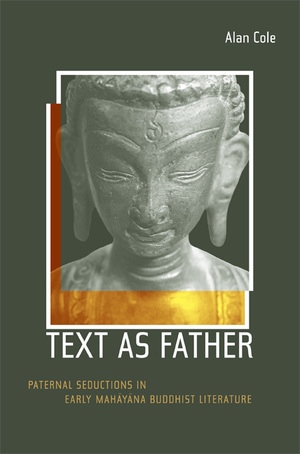
Text as Father-front.jpg
Books2005About this item
This beautifully written work sheds new light on the origins and nature of Mahayana Buddhism with close readings of four well-known texts—the Lotus Sutra, Diamond Sutra, Tathagatagarbha Sutra, and Vimalakirtinirdesa. Treating these sutras as literary works rather than as straightforward philosophic or doctrinal treatises, Alan Cole argues that these writings were carefully sculpted to undermine traditional monastic Buddhism and to gain legitimacy and authority for Mahayana Buddhism as it was veering away from Buddhism’s older oral and institutional forms. His sophisticated and sustained analysis of the narrative structures and seductive literary strategies used in these sutras suggests that they were specifically written to encourage devotion to the written word instead of other forms of authority, be they human, institutional, or iconic. (Source: University of California Press)
Paul Diana deborahkalbbooks.blogspot.jpg
Articles1985About this item
This is a partial translation of the Vimalakīrtinirdeśasūtra by Diana Paul from the Chinese edition of Kumārajīva, T475.
Articles.jpeg
Articles2014About this item
The current integrative review aims to do the following: first, examine the Chinese and English topical studies on the Vimalakirti Nirdesa Sutra published from 1900 to 2011; second, analyze the characteristics of those works; third, investigate related study trends through a statistical analysis; and finally, identify research gaps. This review not only offers a comprehensive overview of the available literature on the Sutra retrieved from 25 English and Chinese electronic databases, but also categorizes the 256 selected publications (n=34 English; n=222 Chinese) into eight sub-themes: art (n=36; 14%), book reviews (n=11; 4%), philological studies (n=11; 4%), literature (n=24; 10%), philosophy (n=77; 30%), textual criticism (n=22; 9%), translation (n=56; 22%), and miscellaneous topics (n=19; 7%); thus illuminating different research foci and features between English and Chinese scholars, and also among Chinese researchers in various territories. This project illustrates how an integrative review can be employed in Buddhist studies; it reveals challenges and opportunities related to Buddhist studies, stemming from technology; it suggests collaborative research in Buddhism; and it proposes the application of the philosophy of the Sutra to practical disciplines.
Chris-lawton-zvKx6ixUhWQ-unsplash.jpg
Books2006About this item
This work contains only the Sanskrit text of the Vimalakīrtinirdeśasūtra, which the editors have set about to standardize and revise according to philological standards.
2 Interviews
Canti John 84000.jpg
ArticlesNo date providedAbout this item
When 84000 took on Robert Thurman's landmark 1976 translation of The Teaching of Vimalakīrti, the challenge was clear: honor what made the original great while bringing it into alignment with 84000's editorial standards. John Canti reflects on the process, the sūtra's enduring significance, and what he personally finds most profound in its pages.
Thurman Robert Menla.jpg
ArticlesNo date providedAbout this item
Nearly fifty years after his landmark 1976 translation, Robert Thurman reflects on what first drew him to the Vimalakīrti Sūtra, how the discovery of a Sanskrit edition changed his understanding, and why this text remains one of the great entry points into Mahāyāna Buddhism.
29 A topic of
'phags pa dri ma med par grags pas bstan pa zhes bya ba theg pa chen po'i mdo (Jeweled Lotus Publishing, 2015)-front.jpg
Tibetan Publications2015About this item
A recension of the Tibetan Vimalakīrtrinirdeśasūtra published by Jeweled Lotus Publishing, 2022.
Canti John 84000.jpg
ArticlesNo date providedAbout this item
When 84000 took on Robert Thurman's landmark 1976 translation of The Teaching of Vimalakīrti, the challenge was clear: honor what made the original great while bringing it into alignment with 84000's editorial standards. John Canti reflects on the process, the sūtra's enduring significance, and what he personally finds most profound in its pages.
Das Sutra Vimalakirti-front.jpg
Books1944About this item
German translation of the Vimalakīrtisūtra from Chinese and Japanese by Jakob Fischer and Yokota Takezo
LEnseignement de Vimalakirti Vimalakirtinirdesa 1962-front.jpg
Books1962About this item
This book is a French translation of the Vimalakīrtinirdeśasūtra by Étienne Lamotte, pubished by Institut Orientaliste, 1962.
LEnseignement de Vimalakirti Vimalakirtinirdesa Lamotte 1987-front.jpg
Books1987About this item
This book is a reprint of a French translation of the Vimalakīrtinirdeśasūtra by Étienne Lamotte, originally published by Publications Universitaires, 1962.
Le Sūtra de Vimalakīrti en mongol-vol. 1-front.jpg
Books1982About this item
An edition of the Vimalakīrtinirdeśasūtra in Mongolian in 2 vols. Text in Mongolian (Roman and Mongolian script); notes in French.
Soûtra de la liberté inconcevable-front .jpg
Books2011About this item
A French translation of the Vimalakīrtinirdeśasūtra from the Chinese of version by Kumārajīva. Translated by Patrick Carré.
Testi Buddhisti in Sanscrito-front.jpg
Books1983About this item
A compilation of fourteen Sanskrit Buddhist texts translated into Italian, including the Bodhicaryāvatāra. Edited by Raniero Gnoli.
Text as Father-front.jpg
Books2005About this item
This beautifully written work sheds new light on the origins and nature of Mahayana Buddhism with close readings of four well-known texts—the Lotus Sutra, Diamond Sutra, Tathagatagarbha Sutra, and Vimalakirtinirdesa. Treating these sutras as literary works rather than as straightforward philosophic or doctrinal treatises, Alan Cole argues that these writings were carefully sculpted to undermine traditional monastic Buddhism and to gain legitimacy and authority for Mahayana Buddhism as it was veering away from Buddhism’s older oral and institutional forms. His sophisticated and sustained analysis of the narrative structures and seductive literary strategies used in these sutras suggests that they were specifically written to encourage devotion to the written word instead of other forms of authority, be they human, institutional, or iconic. (Source: University of California Press)
The Holy Teaching of Vimalakirti-front.jpg
Books2003About this item
Robert Thurman's translation of the Vimalakīrtinirdeśasūtra makes available, in relatively nontechnical English, the Tibetan version of this key Buddhist scripture.
Forgues-Gregory-Darthmouth-2026.png
Articles2025About this item
Bodhicitta, the "mind of awakening," constitutes the foundational principle of Mahāyāna Buddhism. This essay traces the concept's historical and doctrinal genesis from its pre-Mahāyāna antecedents to its full articulation in the Indian and Tibetan traditions. It explores the main scriptural and scholastic sources in India, the two great Indian lineages of practice—the "Profound View" of Nāgārjuna and the "Vast Conduct" of Asaṅga—and the pivotal role of Atiśa Dīpaṃkara Śrījñāna in transmitting and systematizing these teachings in Tibet. The article further details how Atiśa's Kadam school and its core mind training (lojong) teachings influenced the subsequent development of bodhicitta cultivation in the Nyingma, Kagyu, Sakya, and Geluk schools. Bodhicitta is not a static concept but a dynamic, multifaceted principle that functions as the soteriological core of the Mahāyāna path, embodying the indivisible union of universal compassion and the profound wisdom that realizes emptiness.
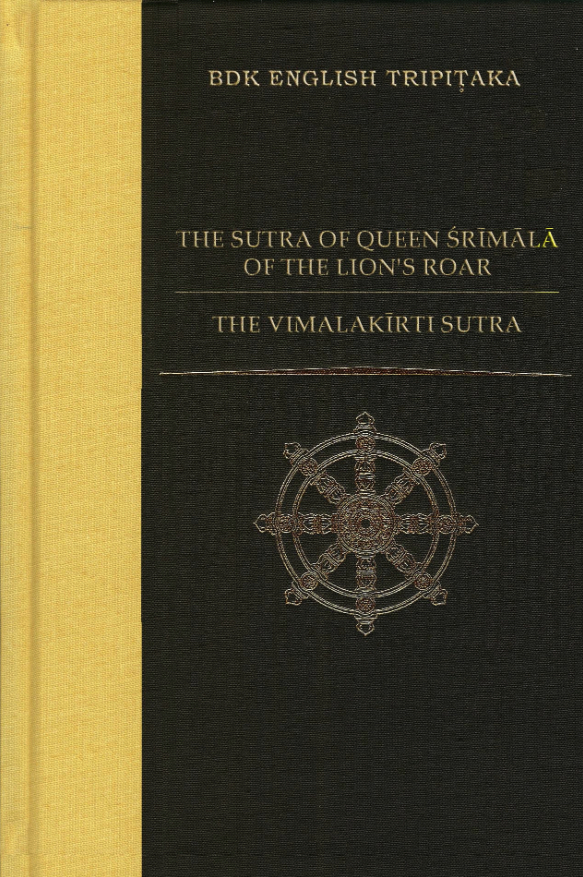
The Sutra of Queen Srimala of the Lion's Roar and the Vimalakirti Sutra-front.jpg
Books2004About this item
An English translation of the Śrīmālādevīsūtra by Diana Y. Paul and an English translation of the Vimalakīrtinirdeśasūtra by John R. McRae. Published by BDK America.
Kumārajīva Khyentse Foundation.jpg
Books1967About this item
This is an English translation of the Vimalakīrtinirdeśasūtra by Richard H. Robinson from the Chinese edition of Kumārajīva, T475. Published in Madison, WI, 1967.
Paul Diana deborahkalbbooks.blogspot.jpg
Articles1985About this item
This is a partial translation of the Vimalakīrtinirdeśasūtra by Diana Paul from the Chinese edition of Kumārajīva, T475.
The Teaching of Vimalakīrti Vimalakīrtinirdeśa-front.jpg
Books2022About this item
An English translation of the Vimalakīrtinirdeśasūtra by Robert Thurman. Published by 84000: Translating the Words of the Buddha.
The Vimalakirti Nirdesa Sutra-front.jpg
Books1990About this item
An English translation of the Vimalakīrtinirdeśasūtra by Charles Luk based on the Chinese translation of Kumārajīva.
The Vimalakīrti Sutra Watson-front.jpg
Books1999About this item
The first-ever translation into English of the Vimalakīrtinirdeśasūtra from the popular Chinese version of Kumārajīva. Translated by Burton Watson.
Khyentse Dzongsar Wikipedia.jpg
MultimediaAbout this item
The Vimalakīrti Sūtra turns conventional spirituality upside down—revealing that wisdom comes not from eliminating messy emotions, but from understanding their true nature.

These videos feature teachings on the Vimalakīrti Sūtra, a foundational Mahayana Buddhist text that emphasizes nonduality and the integration of spiritual wisdom into ordinary life. Dzongsar Khyentse Rinpoche highlights how the protagonist, a wealthy layperson named Vimalakīrti, challenges traditional religious hierarchies and moral rigidity by demonstrating that enlightenment can exist within the "mud" of worldly existence. Central to the discourse is the idea that human defilements, such as anger and desire, are actually the raw ingredients of wisdom rather than obstacles to be discarded. The teaching explores six spiritual sicknesses, including dependency and wrong views, suggesting that these are cured not through dualistic renunciation but through a profound, nonjudgmental awareness. Additionally, the teaching addresses the equality of gender and the superiority of the bodhisattva’s compassionate engagement over the arhat’s pursuit of personal liberation. Ultimately, it encourages practitioners to find inconceivable liberation by collapsing the walls between meditation and daily activity.

Woven throughout the teaching are theatrical performances in which participants step into the roles of the sūtra's characters, bringing its most pointed exchanges to life.

These performances aren't ornamental. They serve the teaching's central argument: that the sūtra's wisdom cannot be held at arm's length—it must be recognized in action, in relationship, in the texture of ordinary life. Together, teaching and theater illuminate the radical claim at the heart of the Vimalakīrti Sūtra: that enlightenment doesn't require leaving the world behind, and that the apparent obstacles of daily existence may be exactly where wisdom is found.

Part I
In the first video, the teaching focuses on the definitive truth and the nature of enlightenment, which is defined not as moving to another place, but as the direct experience of reality. It emphasizes that intellectual understanding is insufficient; one must realize the truth to end suffering, similar to waking from a nightmare. A significant portion of the teaching details Vimalakīrti’s interactions with various high-level disciples of the Buddha—such as Mahakasyapa, Subhuti, and Ananda—where he challenges their limited or "one-sided" understandings of compassion, emptiness, and the nature of the Buddha's body. The video concludes with the introduction of Manjushri, the only one willing to visit the "sick" Vimalakirti after others refused out of intimidation by his profound wisdom.

The following are the approximate times in the video where the theatrical performances occur:

1:09:44: The first theatrical episode begins, where Vimalakirti calls for his attendant, Viyasa, to discuss his "celebrity sickness" and prepare for the crowds of visitors and the Buddha's disciples.

1:29:40: The second theatrical episode begins, dramatizing the encounter between Vimalakirti and Shariputra. In this scene, Vimalakirti critiques Shariputra's meditation style, explaining that true meditation is to "meditate and not meditate at the same time" and that the wall between concentration and distraction must collapse

Part II
The second video introduces the Vimalakīrti Sūtra as a "road map" for the spiritual path, noting its massive influence on Zen (Chan) Buddhism and its reputation for being "the opposite of rigidity". Dzongsar Khyentse Rinpoche explains that the sūtra’s "hero" is a wealthy layperson, which challenges the traditional hierarchy that places clergy above the laity. The core theme is the non-duality of wisdom and defilement, summarized by the idea that the "Buddha mind" is found within the "muddy mind" of emotions. The discourse explores six fundamental "sicknesses" of the human habit and concludes with practical instructions on meditation as a state of awareness that collapses the wall between concentration and distraction.

The following are the approximate times in the video where the theatrical performances occur:

0:00:00: The session opens immediately with a skit where Vimalakirti interrupts Maudgalyayana, challenging his method of teaching the dharma and the five aggregates.

0:26:40: Vimalakirti interrupts Maitreya to challenge his understanding of reincarnation and the prophecy of his future Buddhahood.

0:50:50: This theatrical scene depicts Mara (disguised as Kausika) attempting to offer 12,000 divine maidens to a monk, only for Vimalakirti to intervene and accept them so he can teach them the bodhisattva vow.

1:11:45: The skit featuring Ananda occurs, where he is searching for milk for the "sick" Buddha and is confronted by Vimalakirti about the nature of the Buddha's body.

1:53:20: This major ensemble performance features Manjushree visiting Vimalakirti, Shariputra searching for a seat in the empty house, and the Goddess transforming Shariputra into a woman to teach him about the non-dual nature of gender.

2:41:40: The final skit involves an interaction with Sudatta, who offers cookies and a necklace to Vimalakirti, leading to a teaching on genuine generosity and merit. (Source: 84000)
Articles.jpeg
Articles2014About this item
The current integrative review aims to do the following: first, examine the Chinese and English topical studies on the Vimalakirti Nirdesa Sutra published from 1900 to 2011; second, analyze the characteristics of those works; third, investigate related study trends through a statistical analysis; and finally, identify research gaps. This review not only offers a comprehensive overview of the available literature on the Sutra retrieved from 25 English and Chinese electronic databases, but also categorizes the 256 selected publications (n=34 English; n=222 Chinese) into eight sub-themes: art (n=36; 14%), book reviews (n=11; 4%), philological studies (n=11; 4%), literature (n=24; 10%), philosophy (n=77; 30%), textual criticism (n=22; 9%), translation (n=56; 22%), and miscellaneous topics (n=19; 7%); thus illuminating different research foci and features between English and Chinese scholars, and also among Chinese researchers in various territories. This project illustrates how an integrative review can be employed in Buddhist studies; it reveals challenges and opportunities related to Buddhist studies, stemming from technology; it suggests collaborative research in Buddhism; and it proposes the application of the philosophy of the Sutra to practical disciplines.
Thurman Robert Menla.jpg
ArticlesNo date providedAbout this item
Nearly fifty years after his landmark 1976 translation, Robert Thurman reflects on what first drew him to the Vimalakīrti Sūtra, how the discovery of a Sanskrit edition changed his understanding, and why this text remains one of the great entry points into Mahāyāna Buddhism.
Articles.jpeg
Articles1922–1925About this item
This is an English translation of the Vimalakīrtinirdeśasūtra by Hokei Idzumi from the Chinese of Kumārajīva T475, the first attempt to introduce the text to Western readers.
Articles.jpeg
Articles1898About this item
An English translation of the Vimalakīrtinirdeśasūtra by Masatoshi Ōhara from the Chinese.
Chris-lawton-zvKx6ixUhWQ-unsplash.jpg
Books2006About this item
This work contains only the Sanskrit text of the Vimalakīrtinirdeśasūtra, which the editors have set about to standardize and revise according to philological standards.
Vimalakirtinirdesa The Teaching of Vimalakirti Gomez and Harrison-front.jpg
Books2022About this item
An English Translation of the Sanskrit Text Found in the Potala Palace, Lhasa, by Luis Gómez and Paul Harrison, with members of the Mangalam Translation Group.
Vimalakirtinirdesasutra Joshi and Prasadika-front.jpg
Books1981About this item
A translation of the Vimalakīrtinirdeśasūtra into Hindi by Lal Mani Joshi based on the Tibetan version and Sanskrit reconstruction prepared by Bhikṣu Prāsādika.
Vimalakirtinirdesha La Ensenanza de Vimalakirti-front.jpg
Books2018About this item
This is the first translation of the Vimalakīrtinirdeśasūtra into Spanish from the Sanskrit. Translated by Carmen Dragonetti and Fernando Tola, 2018.