| 🤓 Admin Zone 🛠️ hidden to non-admins | |


Description

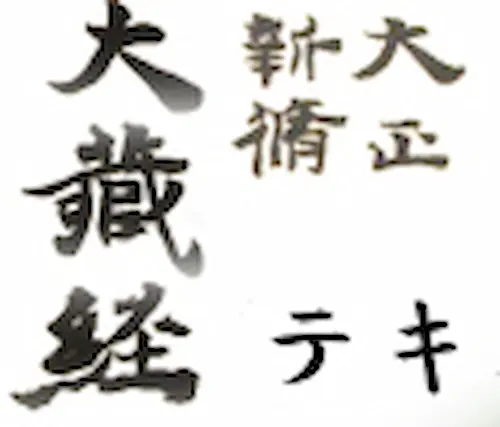
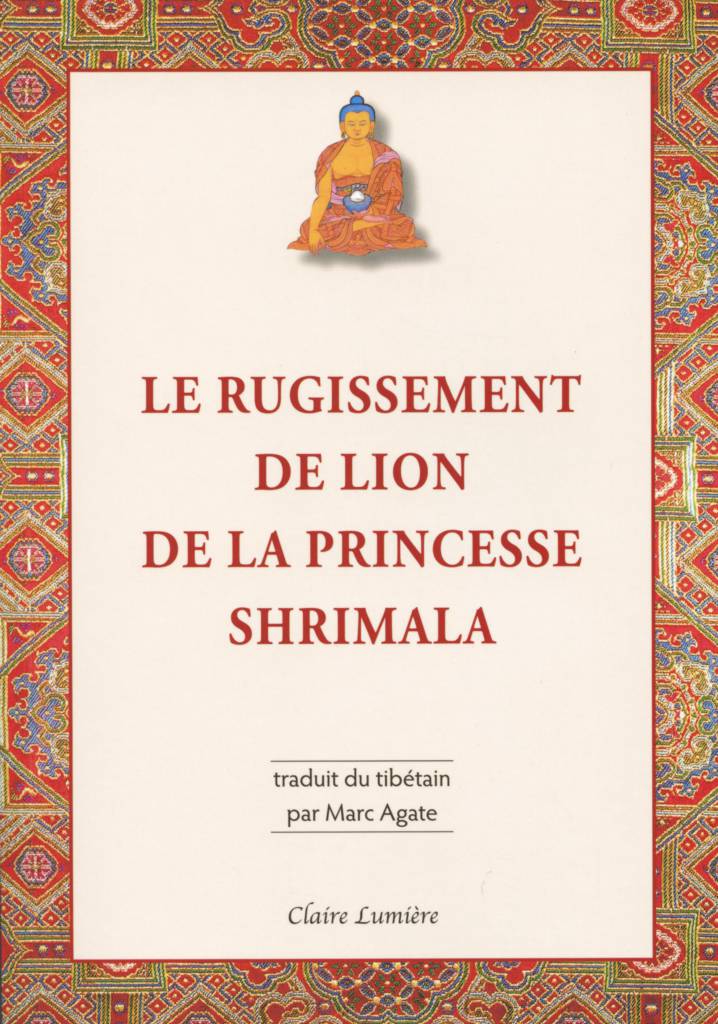
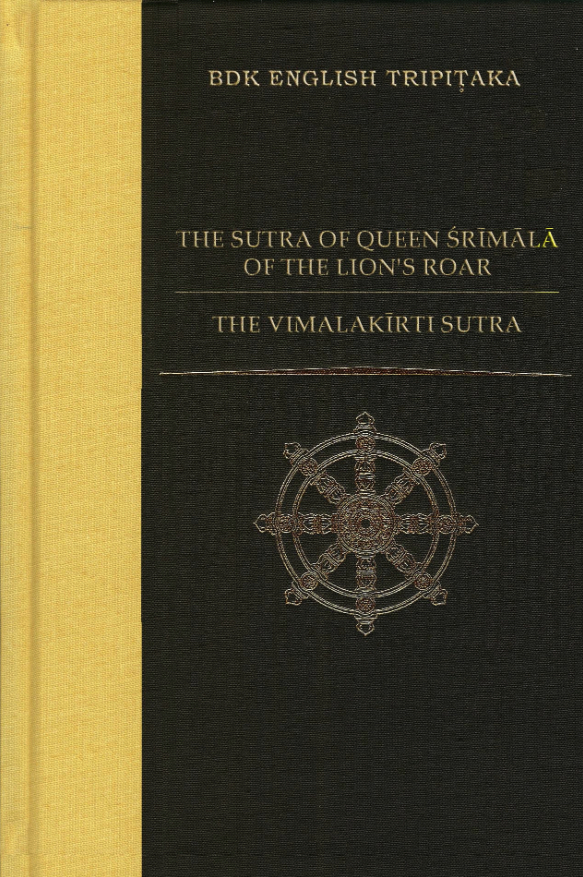
There are two Chinese translations of the sūtra: the Guṇabhadra version translated in A.D. 436 called the Shengman shizihou yicheng dafangbian fangguang jing, T. 353, vol. 12 <ŚSN(Ch.1)>); and the Bodhiruci version of A.D. 710 called the Shengman furen hui (T. 310(48), vol. 11 <ŚSN(Ch.2)>), which is the 48th sūtra of the Ratnakūṭa collection (Da bao ji jing). There is also a ninth century Tibetan translation called the 'Phags pa Iha mo dpal 'phren gi sen ge'i sgra śes bya ba theg pa chen po'i mdo <ŚSN(Tib.)>. The English translation by Alex and Hideko Wayman is based on the Chinese translation.[1] Readers are referred to this work for more detailed information. There is also a great deal of research that has been done on this sūtra by Japanese scholars, which we will not touch upon here.
The original version of this sūtra has been lost, and there are only a few fragmentary quotations in Sanskrit in the Ratnagotravibhāga and the Śikṣāsamuccaya. In The Schøyen Collection, however, I was able to discover three virtually complete folios that cover the final portion of the sutra as well as another two fragments related to other sections. As the sūtra ends on the recto side of folio no. 392,[2] the verso side of the same folio begins another sūtra which is the subject of the next report in this volume. In the following, I will introduce the above mentioned three folios and
two fragments related to the ŚSN. (Matsuda, preliminary remarks, 65)


The text emphasizes total devotion to the Tathāgatagarbha or Buddha nature which is the means for universal salvation (Ekayāna). Each individual has this potential Buddha within his or her mind but must nurture and develop the awareness of this potentiality so that one may "give birth" or realize this nature of the Buddha. This theory of Buddha nature or Tathāgatagarbha became increasingly popular in China and Japan, particularly in Zen Buddhism where the notion of universal Buddha mind (Busshin) was identified with the mind that understands Emptiness (mushin).
The Sutra of Queen Śrīmālā Who Had the Lion’s Roar inspired first the Indian royal patronesses of Buddhism and then the court ladies in China and Japan. The popularity of this text undoubtedly was due not only to the portrayal of a woman as both a compassionate and helping human being, but also as an example of a human being in her struggle to exist and understand the world in freedom.
Although the text is no longer available in Sanskrit, fragments are cited in other Buddhist Sanskrit texts, attesting to the text's wide circulation throughout India at one time. In addition, both the Chinese and Tibetan collections of scripture have preserved redactions of the text. Commentaries on the Śrīmālā Sutra are extant only in Chinese and Japanese. According to the Chinese commentator Chi-tsang, monks at one time studied and composed commentaries in this sutra in great numbers from the time of the North-South dynastic periods through the Sui (that is, from approximately 440-618 of the common era).
Gunabhadra, the central Indian Tripiṭaka master (ca. 394-468) who translated the older of the two Chinese redactions (one of which was the source of the following translations), was a Central Indian scholar who departed for Canton in 435 via Ceylon, bringing the first Buddhist idealist (Vijñānavādin) texts with him. His translations of these texts were virtually neglected until the late Wei dynasty, when Ratnamati, Bodhiruci, and others came to China to translate texts from the same school of thought. He translated, among others, the Great Dharma Drum (Mahābherihārakaparivarta), which is a Tathāgatagarbhan text, and the Saṃdhinirmocana-sūtram and Laṇkāvatāra-sūtram, both considered Vijñānavādin in doctrine.
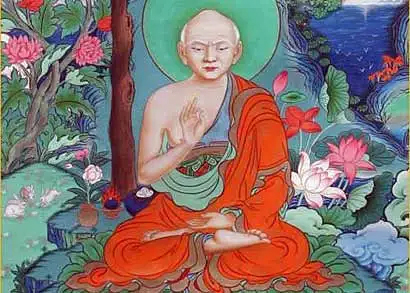
Queen Śrīmālā and her historicity still remain obscure. In other Buddhist literature she is sometimes identified with King Prasenajit's wife, Mallikā, instead of with his daughter as described in the Śrīmālā sutra. According to the Sarvāstivādin books of discipline (Vinaya) which are preserved in the Chinese, Śrīmālā was the daughter of a village administrator who was raised by the king. Because she loved to pick flowers for her hair, she was known as Śrīmālā, which means "Beautiful Flower Garland." One day when King Prasenajit was visiting her guardian, Śrīmālā, through her foresight, ordered the palace gates closed during the period of his stay. Later, King Prasenajit discovered that his enemies had attempted to seize the palace and assassinate him but had failed in their plot because of Śrīmālā. He immediately asked her to be his queen, and she accepted. From that time on, Queen Śrīmālā compassionately ruled over the kingdom with her husband.
In the following sutra Queen Śrīmālā, with her eloquence or "lion's roar," receives the prediction that she will become a Buddha, and all of her kingdom subsequently practices according to the Buddha's teaching. (Paul, "Introduction to Selections from The Sutra of Queen Śrīmālā Who Had the Lion's Roar," 289–91)

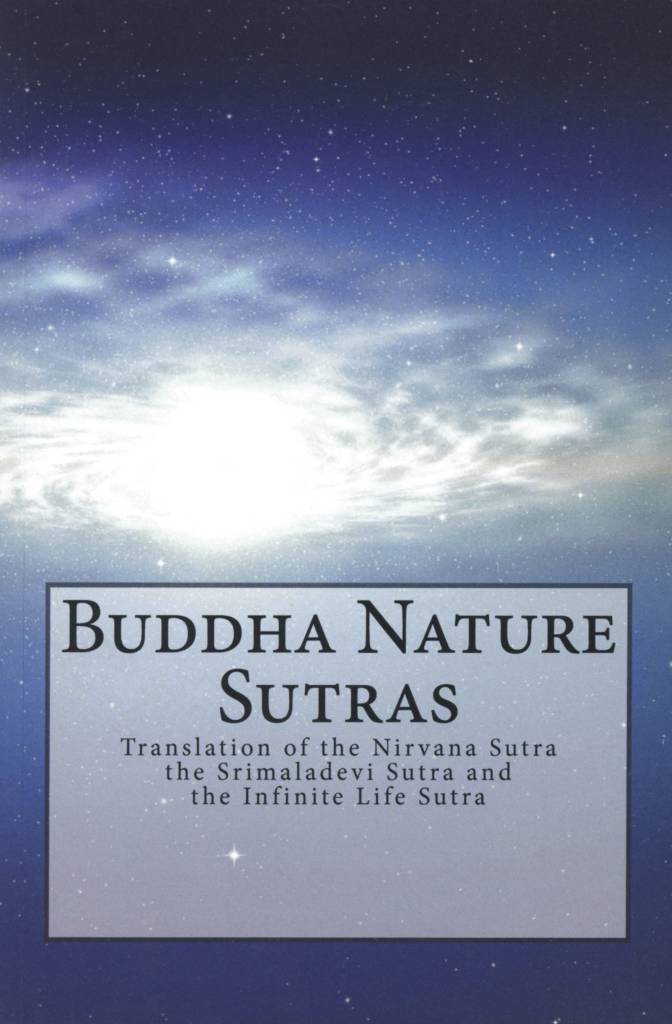
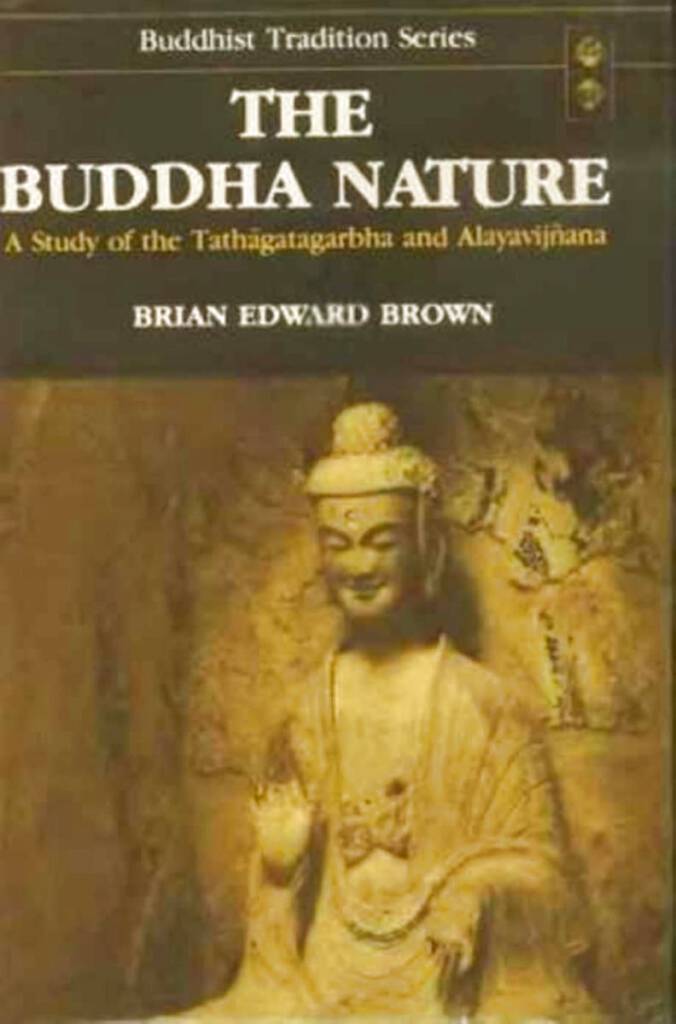
The Introduction chapter of this book, Rulu's seventh, explores the origin of the concept of the Tathagata store, and discusses how teachings on the Tathagata store have come to be accepted in China as the mainstream of Mahayana teachings and a distinct school of thought, standing apart from and along with the Madhyamaka School and the Yogacara School. Highlights of teachings on the Tathagata store presented in this chapter include why all sentient beings possess the Tathagata store, meanings of the dharma body and its four virtues, a comparison between the self claimed by those on non-Buddhist paths and a true self taught by the Buddha, meanings of one's Buddha nature, and how one's Tathagata store and alaya consciousness (alaya-vijnana) are unified.
This book presents the English translations of six sutras selected from the Chinese Buddhist Canon. The Mahavaipulya Sutra of the Tathagata Store gives a basic teaching and describes by nine analogies that one's Tathagata store is shrouded by one's afflictions. The Sutra of Neither Increase Nor Decrease reveals that the Tathagata store is a Tathagata's dharma body, and that the realm of sentient beings neither increases nor decreases. The Sutra of Shrimala's Lion’s Roar gives teachings on one's afflictions that shroud one's Tathagata store and inspires all sentient beings to ride the One Vehicle to attain Buddhahood. The Mahayana version of the Sutra of Angulimalika reveals that as one's Tathagata store transcends all dharmas, all dharmas are one's Tathagata store. The Sutra of the Unsurpassed Reliance teaches one to rely on one's Tathagata store in order to walk the bodhi path to Buddhahood. The Sutra of the Vajra Samadhi reveals that one's inherent awareness, the pure awareness of one's true mind, has a mass of benefits. This book will benefit readers at all levels and can serve as a basis for scholarly research. (Source: Author House)


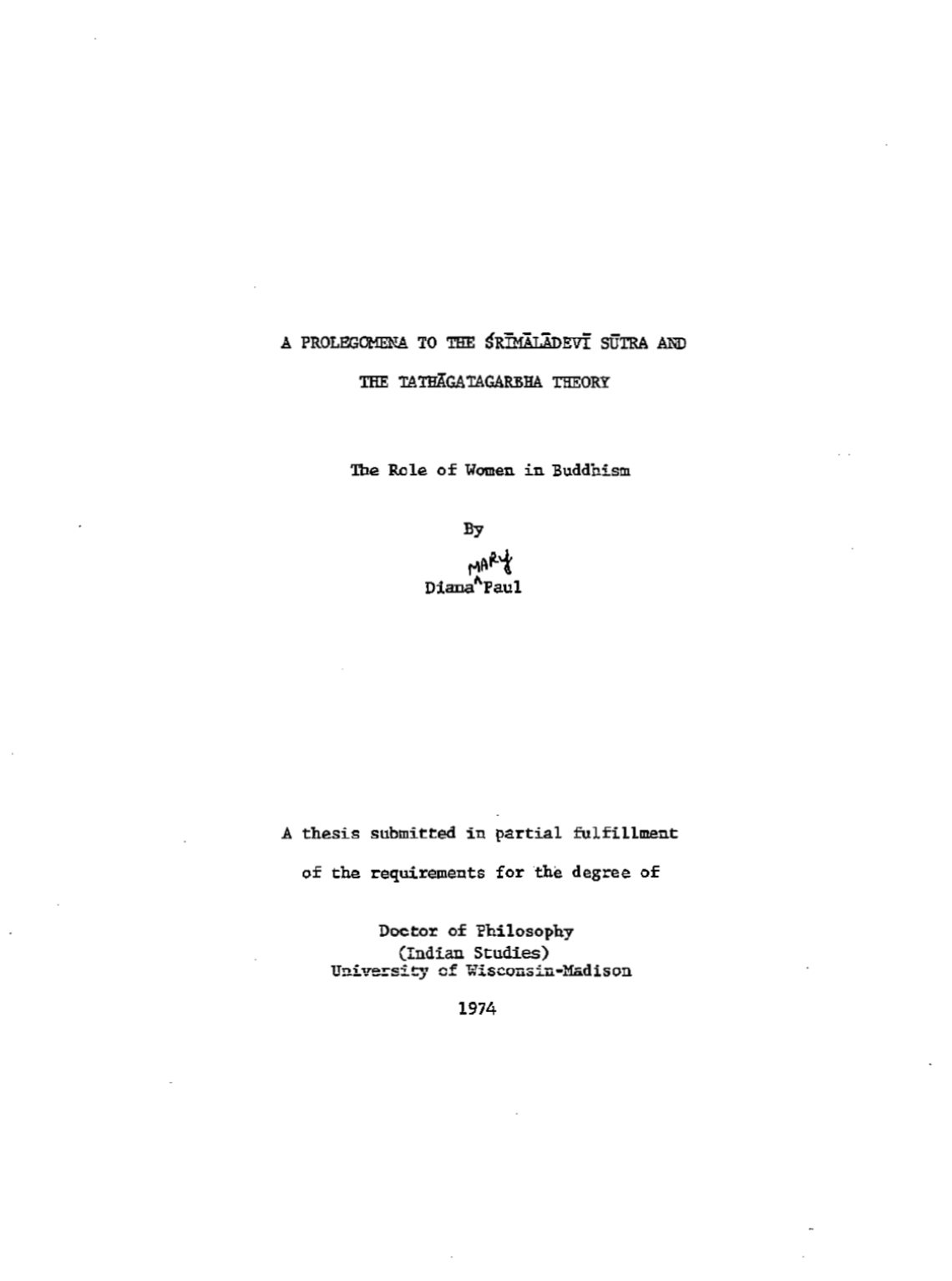
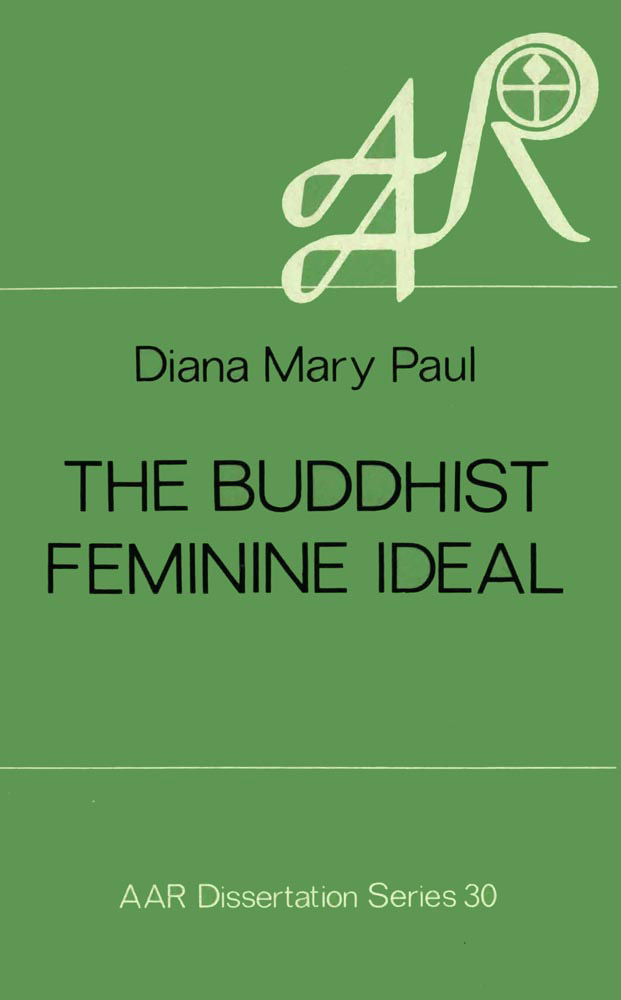
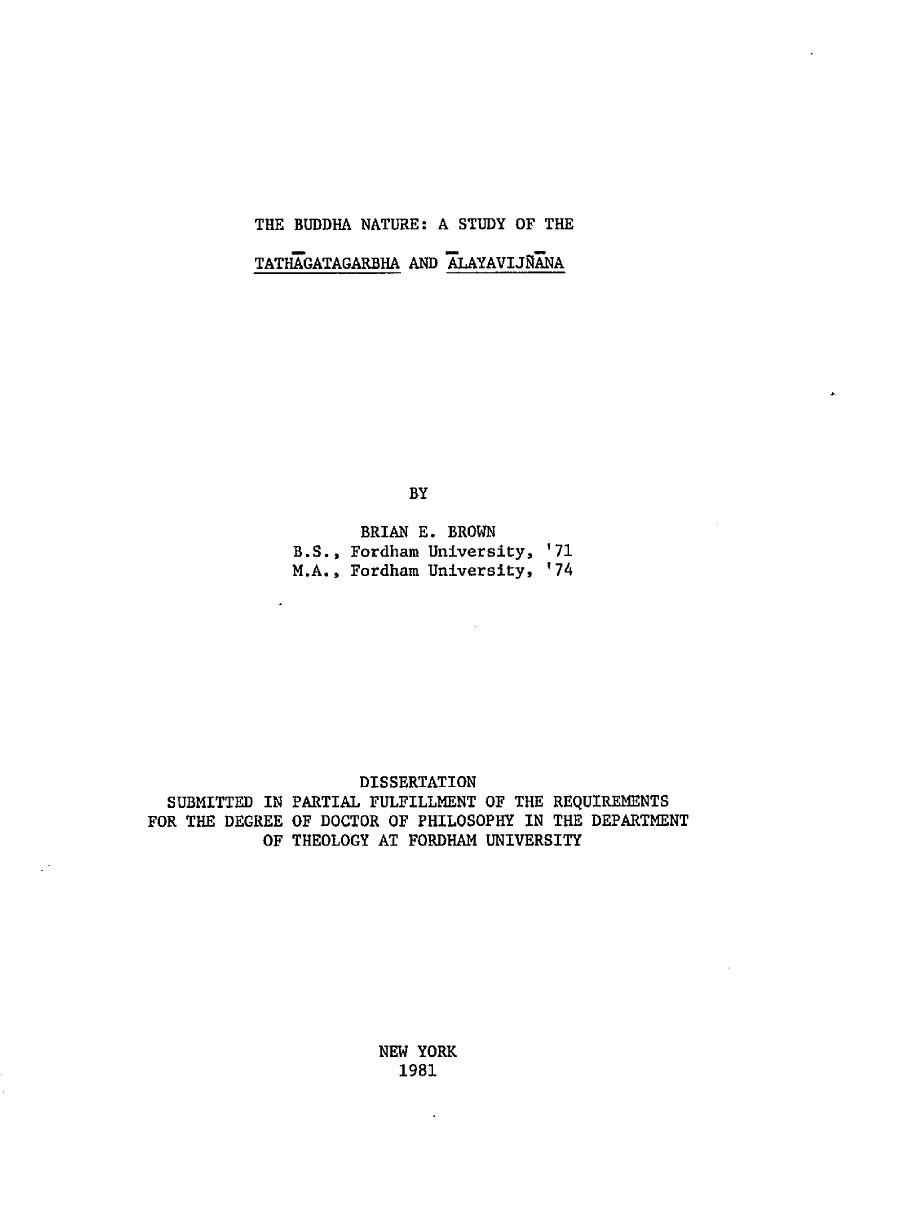
The dissertation interprets the Buddhist enlightenment as the salvific-transformational moment in which Tathatā "awakens" to itself,
comes to perfect self-realization as the Absolute Suchness of reality, in and through phenomenal human consciousness. It is an interpretation of the Buddhist Path as the spontaneous self-emergence of "embryonic" absolute knowledge as it comes to free itself from the concealments of adventitious defilements, and possess itself in fully self-explicitated self-consciousness as the "Highest Truth" and unconditional nature of all existence; it does so only in the form of omniscient wisdom.
Aside from Ruegg's La Theorie du Tathāgatagarbha et du Gotra and Verdu's study of the Ālayavijñāna in Dialectical Aspects in Buddhist Thought, Western scholarship treating of the subject is negligible. And while both sources are excellent technical treatises, they fail to integrate in any detailed analysis the dual concepts as complementary modes of each other. Thus, the dissertation, while adopting the
methodology of textual analysis, has as its emphasis a thematic-interpretive study of its sources. Conducting a detailed analysis into the structure of the texts, the dissertation delineates and appropriates the inherent ontological, soteriological and epistemological foci which they themselves assume as their natural form.
Structurally, the dissertation is divided into three major parts. The first focuses on the Tathāgatagarbha, the second on the Ālayavijñāna, the third on their relation and deeper significance in the human thought tradition. The first two parts are sub-divided into seven and four chapters respectively. The former seven chapters establish the ontological identity of the Tathāgata-embryo (Tathagātagarbha) through a critical examination of the major sūtral authority for the concept, i.e., the Śrī-Mālā-Sūtra, and the primary śāstral elaboration inspired by it, viz., the Ratnagotravlbhāga.
Following the same pattern, the four chapters of part 2 note the role of the Laṅk¯āvatāra Sūtra as a principal scriptural advocate for the theory of the Storehouse Consciousness (Ālayavijñāna), while detailing the scholastic amplification of it in Hsüan Tsang's Ch'eng Wei-Shih Lun. Part 3 concludes the study by recapitulating the principal developments in the emergent complementarity of the two concepts, arguing that any adequate
discussion of the Buddha Nature must be informed on the one hand by the theory of the Tathāgatagarbha which grounds and authenticates its ontological status, and on the other by the Ālayavijñāna, its noetic-cognitive determination. While the former tends to elucidate the
process towards, and experience of enlightenment as a function of Absolute Suchness (Tathatā), the latter adopts the reciprocal perspective and examines the subject in the light and function of phenomenal consciousness.
By way of comparison with Western thought, the chapter likewise demonstrates the analogous dynamic in the bilateral theory of the Tathāgatagarbha-Ālayavijñāna and the Hegelian Absolute Spirit in-and-for-itself. Focusing upon The Phenomenology of Spirit, the chapter notes that the self-becoming process in and through which consciousness realizes its own plenitude is strikingly homologous to the theory of Buddhist enlightenment presented through the concept of the Tathāgatagarbha-Ālayavijñāna. It suggests that these two representative thought systems

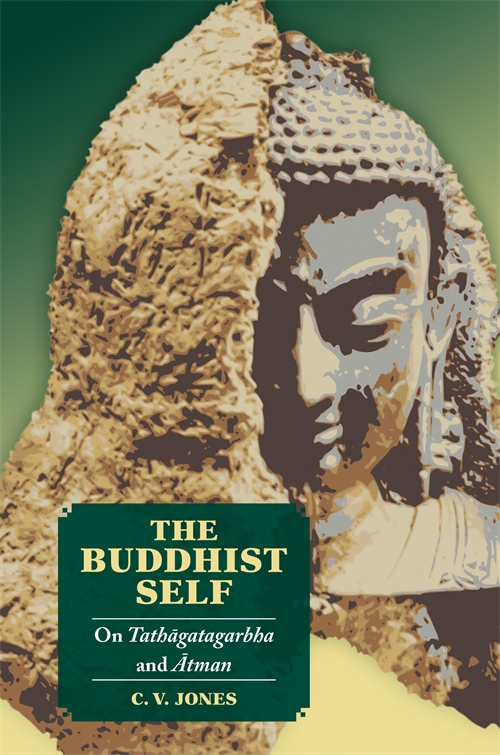
The Buddhist Self is a methodical examination of Indian teaching about the tathāgatagarbha (otherwise the presence of one's “Buddha-nature”) and the extent to which different Buddhist texts and authors articulated this in terms of the self. C. V. Jones attends to each of the Indian Buddhist works responsible for explaining what is meant by the expression tathāgatagarbha, and how far this should be understood or promoted using the language of selfhood. With close attention to these sources, Jones argues that the trajectory of Buddha-nature thought in India is also the history and legacy of a Buddhist account of what deserves to be called the self: an innovative attempt to equip Mahāyāna Buddhism with an affirmative response to wider Indian interest in the discovery of something precious or even divine in one's own constitution. This argument is supplemented by critical consideration of other themes that run through this distinctive body of Mahāyānist literature: the relationship between Buddhist and non-Buddhist teachings about the self, the overlap between the tathāgatagarbha and the nature of the mind, and the originally radical position that the only means of becoming liberated from rebirth is to achieve the same exalted status as the Buddha. (Source: University of Hawai'i Press)

It is well recognized by Buddhologists that the Mahāsāṃghika sect arose by a schism from the previously undivided Buddhist saṃgha in the second century after the Buddha's Nirvāṇa (A.N.), leaving the other part of the saṃgha to be called Sthavira. As to precisely when the schism occurred, there was a difference of opinion as to whether it happened as a result of the Second Buddhist Council (about 110 A.N.) over a laxity of Vinaya rules by some monks, or happened later in the century (137 A.N.) over the five theses about Arhats and which occasioned a 'Third Buddhist Council' sponsored by the Kings Nanda and Mahāpadma. There were some other possibilities, as summarized by Nattier and Prebish,[2] who conclude that the schism occurred 116 A.N. over Vinaya rules, while the argument over Arhat attainment provoked a further split within the already existing Mahāsāṃghika sect. It is immaterial for our purposes whether the 'five theses of Mahādeva' downgrading the Arhat occasioned the schism between the Mahāsāṃghikas and the Sthaviras, or whether this downgrading was an internal argument within the Mahāsāṃghika. What is important here is that the downgrading of the Arhat continued into a Mahāyāna scripture called the Śrīmālā-sūtra, and that the five theses are a characteristic of the Mahāsāṃghika, to wit: 1. Arhats are tempted by others, 2. they still have ignorance, 3. they still have doubt, 4. they are liberated by others; and 5. the path is accompanied by utterance. The fifth of these seems explainable by other Mahāsāṃghika tenets, in Bareau's listing:[3] No. 58 'morality is not mental'; No. 59 'morality does not follow upon thought'; No. 60 'virtue caused by a vow increases'; No. 61 'candor (vijñapti) is virtue'; No. 62 'reticence (avijñapti) is immoral.'
Part I of this paper attempts to relate the Śrīmālā-sūtra and the Tathāgatagarbha doctrine to the Mahāsaṃnghika school. Part II discusses the terms dharmatā and svabhāva so as to expose an ancient quarrel. (Wayman, introduction, 35–36)
Notes
- Akira Hirakawa, "The Rise of Mahāyāna Buddhism and its Relationship to the Worship of Stupas," Memoirs of the Research Department of the Toyo Bunko, No. 22, Tokyo, 1963, p. 57.
- Janice J. Nattier and Charles S. Prebish, "Mahāsaṃghika Origins: The Beginnings of Buddhist Sectarianism," History of Religions, 16:3, Feb., 1977, pp. 237, ff.
- André Bareau, Les sectes bouddhiques du Petit Véhicule (École Française d'Extrême-Orient, 1955), Chapitre I 'Les Mahâsânghika', pp. 55–74.
The text emphasizes total devotion to the Tathāgatagarbha or Buddha nature which is the means for universal salvation (Ekayāna). Each individual has this potential Buddha within his or her mind but must nurture and develop the awareness of this potentiality so that one may "give birth" or realize this nature of the Buddha. This theory of Buddha nature or Tathāgatagarbha became increasingly popular in China and Japan, particularly in Zen Buddhism where the notion of universal Buddha mind (Busshin) was identified with the mind that understands Emptiness (mushin).
The Sutra of Queen Śrīmālā Who Had the Lion’s Roar inspired first the Indian royal patronesses of Buddhism and then the court ladies in China and Japan. The popularity of this text undoubtedly was due not only to the portrayal of a woman as both a compassionate and helping human being, but also as an example of a human being in her struggle to exist and understand the world in freedom.
Although the text is no longer available in Sanskrit, fragments are cited in other Buddhist Sanskrit texts, attesting to the text's wide circulation throughout India at one time. In addition, both the Chinese and Tibetan collections of scripture have preserved redactions of the text. Commentaries on the Śrīmālā Sutra are extant only in Chinese and Japanese. According to the Chinese commentator Chi-tsang, monks at one time studied and composed commentaries in this sutra in great numbers from the time of the North-South dynastic periods through the Sui (that is, from approximately 440-618 of the common era).
Gunabhadra, the central Indian Tripiṭaka master (ca. 394-468) who translated the older of the two Chinese redactions (one of which was the source of the following translations), was a Central Indian scholar who departed for Canton in 435 via Ceylon, bringing the first Buddhist idealist (Vijñānavādin) texts with him. His translations of these texts were virtually neglected until the late Wei dynasty, when Ratnamati, Bodhiruci, and others came to China to translate texts from the same school of thought. He translated, among others, the Great Dharma Drum (Mahābherihārakaparivarta), which is a Tathāgatagarbhan text, and the Saṃdhinirmocana-sūtram and Laṇkāvatāra-sūtram, both considered Vijñānavādin in doctrine.
Queen Śrīmālā and her historicity still remain obscure. In other Buddhist literature she is sometimes identified with King Prasenajit's wife, Mallikā, instead of with his daughter as described in the Śrīmālā sutra. According to the Sarvāstivādin books of discipline (Vinaya) which are preserved in the Chinese, Śrīmālā was the daughter of a village administrator who was raised by the king. Because she loved to pick flowers for her hair, she was known as Śrīmālā, which means "Beautiful Flower Garland." One day when King Prasenajit was visiting her guardian, Śrīmālā, through her foresight, ordered the palace gates closed during the period of his stay. Later, King Prasenajit discovered that his enemies had attempted to seize the palace and assassinate him but had failed in their plot because of Śrīmālā. He immediately asked her to be his queen, and she accepted. From that time on, Queen Śrīmālā compassionately ruled over the kingdom with her husband.
In the following sutra Queen Śrīmālā, with her eloquence or "lion's roar," receives the prediction that she will become a Buddha, and all of her kingdom subsequently practices according to the Buddha's teaching. (Paul, "Introduction to Selections from The Sutra of Queen Śrīmālā Who Had the Lion's Roar," 289–91)
There are two Chinese translations of the sūtra: the Guṇabhadra version translated in A.D. 436 called the Shengman shizihou yicheng dafangbian fangguang jing, T. 353, vol. 12 <ŚSN(Ch.1)>); and the Bodhiruci version of A.D. 710 called the Shengman furen hui (T. 310(48), vol. 11 <ŚSN(Ch.2)>), which is the 48th sūtra of the Ratnakūṭa collection (Da bao ji jing). There is also a ninth century Tibetan translation called the 'Phags pa Iha mo dpal 'phren gi sen ge'i sgra śes bya ba theg pa chen po'i mdo <ŚSN(Tib.)>. The English translation by Alex and Hideko Wayman is based on the Chinese translation.[1] Readers are referred to this work for more detailed information. There is also a great deal of research that has been done on this sūtra by Japanese scholars, which we will not touch upon here.
The original version of this sūtra has been lost, and there are only a few fragmentary quotations in Sanskrit in the Ratnagotravibhāga and the Śikṣāsamuccaya. In The Schøyen Collection, however, I was able to discover three virtually complete folios that cover the final portion of the sutra as well as another two fragments related to other sections. As the sūtra ends on the recto side of folio no. 392,[2] the verso side of the same folio begins another sūtra which is the subject of the next report in this volume. In the following, I will introduce the above mentioned three folios and
two fragments related to the ŚSN. (Matsuda, preliminary remarks, 65)
Volume 56
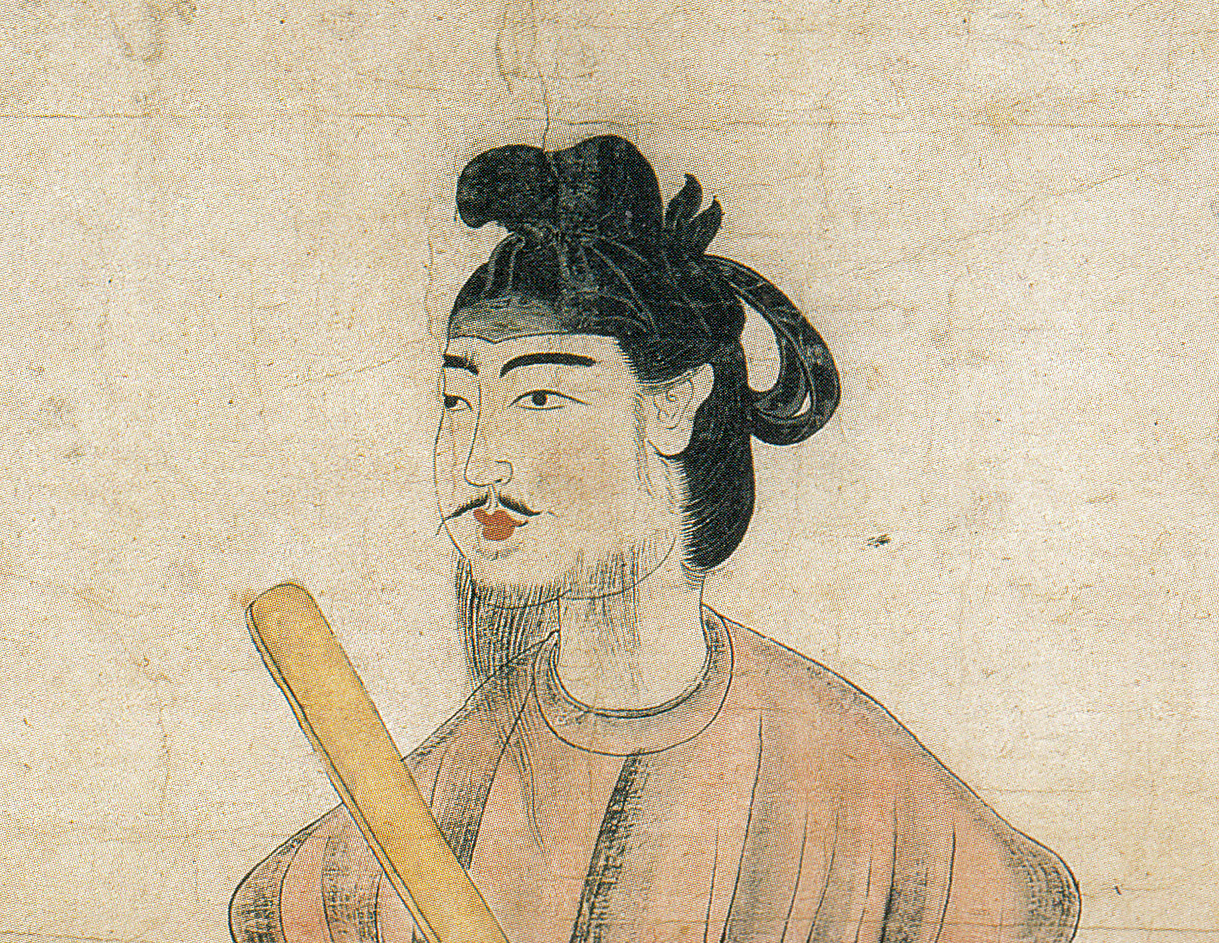
This work is a commentary on the Śrīmālā-sūtra (Taisho No.16), and is considered to be the earliest of the "Commentaries on Three Sūtras" (Jp. San-gyō-gi-sho) composed by Prince Shōtoku. The Nihon-shoki ("Chronicles of Japan") records that Prince Shōtoku gave a discourse on the Śrīmālā-sūtra for Empress Suiko. It is considered that Prince Shōtoku chose this particular sūtra as the subject of his discourse to the Empress probably because the protagonist of the Śrīmālā-sūtra is a woman, Śrīmālā, and Empress Suiko was the first Empress in Japanese history. The present work was then put together in book-form in Chinese at a later date. Be that as it may, there is no changing the fact that this was the first written work composed by a Japanese.
Source
Volume 56
This work is a commentary on the Śrīmālā-sūtra (Taisho No.16), and is considered to be the earliest of the "Commentaries on Three Sūtras" (Jp. San-gyō-gi-sho) composed by Prince Shōtoku. The Nihon-shoki ("Chronicles of Japan") records that Prince Shōtoku gave a discourse on the Śrīmālā-sūtra for Empress Suiko. It is considered that Prince Shōtoku chose this particular sūtra as the subject of his discourse to the Empress probably because the protagonist of the Śrīmālā-sūtra is a woman, Śrīmālā, and Empress Suiko was the first Empress in Japanese history. The present work was then put together in book-form in Chinese at a later date. Be that as it may, there is no changing the fact that this was the first written work composed by a Japanese.
Source
The dissertation interprets the Buddhist enlightenment as the salvific-transformational moment in which Tathatā "awakens" to itself,
comes to perfect self-realization as the Absolute Suchness of reality, in and through phenomenal human consciousness. It is an interpretation of the Buddhist Path as the spontaneous self-emergence of "embryonic" absolute knowledge as it comes to free itself from the concealments of adventitious defilements, and possess itself in fully self-explicitated self-consciousness as the "Highest Truth" and unconditional nature of all existence; it does so only in the form of omniscient wisdom.
Aside from Ruegg's La Theorie du Tathāgatagarbha et du Gotra and Verdu's study of the Ālayavijñāna in Dialectical Aspects in Buddhist Thought, Western scholarship treating of the subject is negligible. And while both sources are excellent technical treatises, they fail to integrate in any detailed analysis the dual concepts as complementary modes of each other. Thus, the dissertation, while adopting the
methodology of textual analysis, has as its emphasis a thematic-interpretive study of its sources. Conducting a detailed analysis into the structure of the texts, the dissertation delineates and appropriates the inherent ontological, soteriological and epistemological foci which they themselves assume as their natural form.
Structurally, the dissertation is divided into three major parts. The first focuses on the Tathāgatagarbha, the second on the Ālayavijñāna, the third on their relation and deeper significance in the human thought tradition. The first two parts are sub-divided into seven and four chapters respectively. The former seven chapters establish the ontological identity of the Tathāgata-embryo (Tathagātagarbha) through a critical examination of the major sūtral authority for the concept, i.e., the Śrī-Mālā-Sūtra, and the primary śāstral elaboration inspired by it, viz., the Ratnagotravlbhāga.
Following the same pattern, the four chapters of part 2 note the role of the Laṅk¯āvatāra Sūtra as a principal scriptural advocate for the theory of the Storehouse Consciousness (Ālayavijñāna), while detailing the scholastic amplification of it in Hsüan Tsang's Ch'eng Wei-Shih Lun. Part 3 concludes the study by recapitulating the principal developments in the emergent complementarity of the two concepts, arguing that any adequate
discussion of the Buddha Nature must be informed on the one hand by the theory of the Tathāgatagarbha which grounds and authenticates its ontological status, and on the other by the Ālayavijñāna, its noetic-cognitive determination. While the former tends to elucidate the
process towards, and experience of enlightenment as a function of Absolute Suchness (Tathatā), the latter adopts the reciprocal perspective and examines the subject in the light and function of phenomenal consciousness.
By way of comparison with Western thought, the chapter likewise demonstrates the analogous dynamic in the bilateral theory of the Tathāgatagarbha-Ālayavijñāna and the Hegelian Absolute Spirit in-and-for-itself. Focusing upon The Phenomenology of Spirit, the chapter notes that the self-becoming process in and through which consciousness realizes its own plenitude is strikingly homologous to the theory of Buddhist enlightenment presented through the concept of the Tathāgatagarbha-Ālayavijñāna. It suggests that these two representative thought systems
The Buddhist Self is a methodical examination of Indian teaching about the tathāgatagarbha (otherwise the presence of one's “Buddha-nature”) and the extent to which different Buddhist texts and authors articulated this in terms of the self. C. V. Jones attends to each of the Indian Buddhist works responsible for explaining what is meant by the expression tathāgatagarbha, and how far this should be understood or promoted using the language of selfhood. With close attention to these sources, Jones argues that the trajectory of Buddha-nature thought in India is also the history and legacy of a Buddhist account of what deserves to be called the self: an innovative attempt to equip Mahāyāna Buddhism with an affirmative response to wider Indian interest in the discovery of something precious or even divine in one's own constitution. This argument is supplemented by critical consideration of other themes that run through this distinctive body of Mahāyānist literature: the relationship between Buddhist and non-Buddhist teachings about the self, the overlap between the tathāgatagarbha and the nature of the mind, and the originally radical position that the only means of becoming liberated from rebirth is to achieve the same exalted status as the Buddha. (Source: University of Hawai'i Press)
It is well recognized by Buddhologists that the Mahāsāṃghika sect arose by a schism from the previously undivided Buddhist saṃgha in the second century after the Buddha's Nirvāṇa (A.N.), leaving the other part of the saṃgha to be called Sthavira. As to precisely when the schism occurred, there was a difference of opinion as to whether it happened as a result of the Second Buddhist Council (about 110 A.N.) over a laxity of Vinaya rules by some monks, or happened later in the century (137 A.N.) over the five theses about Arhats and which occasioned a 'Third Buddhist Council' sponsored by the Kings Nanda and Mahāpadma. There were some other possibilities, as summarized by Nattier and Prebish,[2] who conclude that the schism occurred 116 A.N. over Vinaya rules, while the argument over Arhat attainment provoked a further split within the already existing Mahāsāṃghika sect. It is immaterial for our purposes whether the 'five theses of Mahādeva' downgrading the Arhat occasioned the schism between the Mahāsāṃghikas and the Sthaviras, or whether this downgrading was an internal argument within the Mahāsāṃghika. What is important here is that the downgrading of the Arhat continued into a Mahāyāna scripture called the Śrīmālā-sūtra, and that the five theses are a characteristic of the Mahāsāṃghika, to wit: 1. Arhats are tempted by others, 2. they still have ignorance, 3. they still have doubt, 4. they are liberated by others; and 5. the path is accompanied by utterance. The fifth of these seems explainable by other Mahāsāṃghika tenets, in Bareau's listing:[3] No. 58 'morality is not mental'; No. 59 'morality does not follow upon thought'; No. 60 'virtue caused by a vow increases'; No. 61 'candor (vijñapti) is virtue'; No. 62 'reticence (avijñapti) is immoral.'
Part I of this paper attempts to relate the Śrīmālā-sūtra and the Tathāgatagarbha doctrine to the Mahāsaṃnghika school. Part II discusses the terms dharmatā and svabhāva so as to expose an ancient quarrel. (Wayman, introduction, 35–36)
Notes
- Akira Hirakawa, "The Rise of Mahāyāna Buddhism and its Relationship to the Worship of Stupas," Memoirs of the Research Department of the Toyo Bunko, No. 22, Tokyo, 1963, p. 57.
- Janice J. Nattier and Charles S. Prebish, "Mahāsaṃghika Origins: The Beginnings of Buddhist Sectarianism," History of Religions, 16:3, Feb., 1977, pp. 237, ff.
- André Bareau, Les sectes bouddhiques du Petit Véhicule (École Française d'Extrême-Orient, 1955), Chapitre I 'Les Mahâsânghika', pp. 55–74.
The text emphasizes total devotion to the Tathāgatagarbha or Buddha nature which is the means for universal salvation (Ekayāna). Each individual has this potential Buddha within his or her mind but must nurture and develop the awareness of this potentiality so that one may "give birth" or realize this nature of the Buddha. This theory of Buddha nature or Tathāgatagarbha became increasingly popular in China and Japan, particularly in Zen Buddhism where the notion of universal Buddha mind (Busshin) was identified with the mind that understands Emptiness (mushin).
The Sutra of Queen Śrīmālā Who Had the Lion’s Roar inspired first the Indian royal patronesses of Buddhism and then the court ladies in China and Japan. The popularity of this text undoubtedly was due not only to the portrayal of a woman as both a compassionate and helping human being, but also as an example of a human being in her struggle to exist and understand the world in freedom.
Although the text is no longer available in Sanskrit, fragments are cited in other Buddhist Sanskrit texts, attesting to the text's wide circulation throughout India at one time. In addition, both the Chinese and Tibetan collections of scripture have preserved redactions of the text. Commentaries on the Śrīmālā Sutra are extant only in Chinese and Japanese. According to the Chinese commentator Chi-tsang, monks at one time studied and composed commentaries in this sutra in great numbers from the time of the North-South dynastic periods through the Sui (that is, from approximately 440-618 of the common era).
Gunabhadra, the central Indian Tripiṭaka master (ca. 394-468) who translated the older of the two Chinese redactions (one of which was the source of the following translations), was a Central Indian scholar who departed for Canton in 435 via Ceylon, bringing the first Buddhist idealist (Vijñānavādin) texts with him. His translations of these texts were virtually neglected until the late Wei dynasty, when Ratnamati, Bodhiruci, and others came to China to translate texts from the same school of thought. He translated, among others, the Great Dharma Drum (Mahābherihārakaparivarta), which is a Tathāgatagarbhan text, and the Saṃdhinirmocana-sūtram and Laṇkāvatāra-sūtram, both considered Vijñānavādin in doctrine.
Queen Śrīmālā and her historicity still remain obscure. In other Buddhist literature she is sometimes identified with King Prasenajit's wife, Mallikā, instead of with his daughter as described in the Śrīmālā sutra. According to the Sarvāstivādin books of discipline (Vinaya) which are preserved in the Chinese, Śrīmālā was the daughter of a village administrator who was raised by the king. Because she loved to pick flowers for her hair, she was known as Śrīmālā, which means "Beautiful Flower Garland." One day when King Prasenajit was visiting her guardian, Śrīmālā, through her foresight, ordered the palace gates closed during the period of his stay. Later, King Prasenajit discovered that his enemies had attempted to seize the palace and assassinate him but had failed in their plot because of Śrīmālā. He immediately asked her to be his queen, and she accepted. From that time on, Queen Śrīmālā compassionately ruled over the kingdom with her husband.
In the following sutra Queen Śrīmālā, with her eloquence or "lion's roar," receives the prediction that she will become a Buddha, and all of her kingdom subsequently practices according to the Buddha's teaching. (Paul, "Introduction to Selections from The Sutra of Queen Śrīmālā Who Had the Lion's Roar," 289–91)
The Introduction chapter of this book, Rulu's seventh, explores the origin of the concept of the Tathagata store, and discusses how teachings on the Tathagata store have come to be accepted in China as the mainstream of Mahayana teachings and a distinct school of thought, standing apart from and along with the Madhyamaka School and the Yogacara School. Highlights of teachings on the Tathagata store presented in this chapter include why all sentient beings possess the Tathagata store, meanings of the dharma body and its four virtues, a comparison between the self claimed by those on non-Buddhist paths and a true self taught by the Buddha, meanings of one's Buddha nature, and how one's Tathagata store and alaya consciousness (alaya-vijnana) are unified.
This book presents the English translations of six sutras selected from the Chinese Buddhist Canon. The Mahavaipulya Sutra of the Tathagata Store gives a basic teaching and describes by nine analogies that one's Tathagata store is shrouded by one's afflictions. The Sutra of Neither Increase Nor Decrease reveals that the Tathagata store is a Tathagata's dharma body, and that the realm of sentient beings neither increases nor decreases. The Sutra of Shrimala's Lion’s Roar gives teachings on one's afflictions that shroud one's Tathagata store and inspires all sentient beings to ride the One Vehicle to attain Buddhahood. The Mahayana version of the Sutra of Angulimalika reveals that as one's Tathagata store transcends all dharmas, all dharmas are one's Tathagata store. The Sutra of the Unsurpassed Reliance teaches one to rely on one's Tathagata store in order to walk the bodhi path to Buddhahood. The Sutra of the Vajra Samadhi reveals that one's inherent awareness, the pure awareness of one's true mind, has a mass of benefits. This book will benefit readers at all levels and can serve as a basis for scholarly research. (Source: Author House)There are two Chinese translations of the sūtra: the Guṇabhadra version translated in A.D. 436 called the Shengman shizihou yicheng dafangbian fangguang jing, T. 353, vol. 12 <ŚSN(Ch.1)>); and the Bodhiruci version of A.D. 710 called the Shengman furen hui (T. 310(48), vol. 11 <ŚSN(Ch.2)>), which is the 48th sūtra of the Ratnakūṭa collection (Da bao ji jing). There is also a ninth century Tibetan translation called the 'Phags pa Iha mo dpal 'phren gi sen ge'i sgra śes bya ba theg pa chen po'i mdo <ŚSN(Tib.)>. The English translation by Alex and Hideko Wayman is based on the Chinese translation.[1] Readers are referred to this work for more detailed information. There is also a great deal of research that has been done on this sūtra by Japanese scholars, which we will not touch upon here.
The original version of this sūtra has been lost, and there are only a few fragmentary quotations in Sanskrit in the Ratnagotravibhāga and the Śikṣāsamuccaya. In The Schøyen Collection, however, I was able to discover three virtually complete folios that cover the final portion of the sutra as well as another two fragments related to other sections. As the sūtra ends on the recto side of folio no. 392,[2] the verso side of the same folio begins another sūtra which is the subject of the next report in this volume. In the following, I will introduce the above mentioned three folios and
two fragments related to the ŚSN. (Matsuda, preliminary remarks, 65)