| 🤓 Admin Zone 🛠️ hidden to non-admins | |

Description
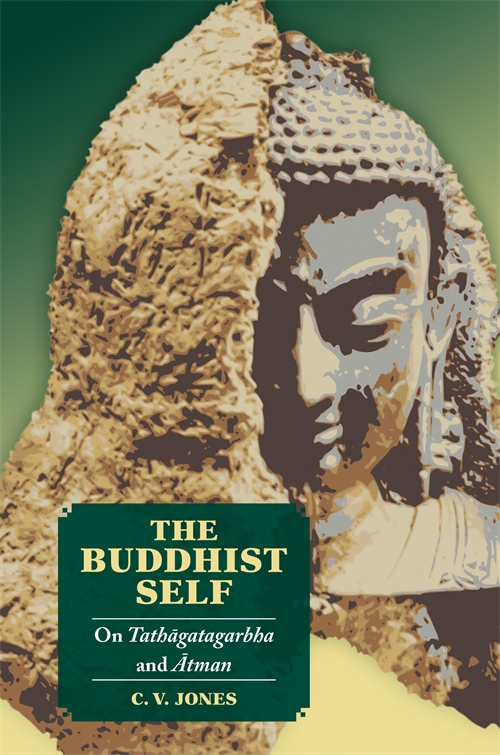
The Buddhist Self is a methodical examination of Indian teaching about the tathāgatagarbha (otherwise the presence of one's “Buddha-nature”) and the extent to which different Buddhist texts and authors articulated this in terms of the self. C. V. Jones attends to each of the Indian Buddhist works responsible for explaining what is meant by the expression tathāgatagarbha, and how far this should be understood or promoted using the language of selfhood. With close attention to these sources, Jones argues that the trajectory of Buddha-nature thought in India is also the history and legacy of a Buddhist account of what deserves to be called the self: an innovative attempt to equip Mahāyāna Buddhism with an affirmative response to wider Indian interest in the discovery of something precious or even divine in one's own constitution. This argument is supplemented by critical consideration of other themes that run through this distinctive body of Mahāyānist literature: the relationship between Buddhist and non-Buddhist teachings about the self, the overlap between the tathāgatagarbha and the nature of the mind, and the originally radical position that the only means of becoming liberated from rebirth is to achieve the same exalted status as the Buddha. (Source: University of Hawai'i Press)
- ACKNOWLEDGMENTSXI
- ABBREVIATIONSVIII
- CONVENTIONSXVII
- 1 Introduction1
- 1.1 Self and Not-Self in Early Buddhism1
- 1.2 Tathāgatagarbha Literature in Overview11
- 1.3 Essences, Natures, Wombs, and Chambers14
- 1.4 Buddhist Ātmavāda: Preliminary Thoughts21
Part I: Buddha-Nature, the Self
- 2 The Mahāparinirvāṇamahāsūtra and the Buddhist Self29
- 2.1 The Text29
- 2.2 The Buddha as Self33
- 2.3 Buddha-nature and the Self40
- 2.4 Contentions and Clarifications47
- 2.5 The True Self and False Notions of It55
- 2.6 Self and Absence of Self59
- 2.7 Buddha-nature in Dharmakṣema's MPNMSD+62
- 2.8 Conclusions67
- 3 The Aṅgulimālīyasūtra and the Essential Self70
- 3.1 The Text70
- 3.2 An "Essence" of One's Own74
- 3.3 What Buddha-nature Is Not: More False Notions of the Self77
- 3.4 Perceiving Buddha-nature79
- 3.5 Essence, Action, and the Self83
- 3.6 A "Single Essence"87
- 3. 7 Buddhism contra Other Systems91
- 3.8 Conclusions95
- 4 The Mahābherīhārakasūtra and Liberation of the Self97
- 4.1 The Text97
- 4.2 Continuity of the Self100
- 4.3 The Sovereign Self104
- 4.4 Buddha-nature and Buddhist Practice107
- 4.5 Self, Not-Self, and Emptiness109
- 4.6 Conclusions114
Part II: Buddha-nature, Not Self
- 5 The Śrīmālādevīsiṃhanādasūtra and the Perfection of Self119
- 5.1 The Text119
- 5.2 Reimagining Tathāgatagarbha122
- 5.3 The Dharmakāya and Its Qualities129
- 5.4 On "Singularity"132
- 5.5 Conclusions136
- 6 Other Tathāgatagarbha Sources139
- 6.1 The Anūnatvāpūrṇatvānirdeśaparivarta139
- 6.2 The Tathāgatagarbhasūtra143
- 6.3 The Mahāyānasūtrālaṃkāra148
- 7 The Ratnagotravibhāga and the Self That Is No Self154
- 7.1 The Text154
- 7.2 Buddha-nature and the "Basic" RGV158
- 7.3 "Perfection of Self' in the RGVV167
- 7.4 Tathāgatagarbha as, Once Again, the Self175
- 7.5 Conclusions178
- 8 The Laṅkāvatārasūtra and Rejecting the Buddhist Self181
- 8.1 The Text181
- 8.2 Tathāgatagarbha and Absence of Self183
- 8.3 The "Ālayavijñāna-Tathāgatagarbha"188
- 8.4 Selfhood in the Sagāthaka191
- 8.5 Conclusions194
- 8.6 Postscript: After the LAS195
Part III: Buddha-nature Reconsidered
- 9 Recurring Themes and Motifs203
- 9.1 The Single Vehicle203
- 9.2 "Cryptic" Utterances210
- 9.3 The Intrinsically Pure Mind214
- 9.4 "Sarvalokapriyadarśana"217
- 9.5 Emptiness and Nonemptiness218
- 9.6 Non-Buddhists and Their Teachings223
- 10 Evolution of the Buddhist Self229
- 10.1 The Course of Buddha-nature Teaching229
- 10.2 Origins of the Buddha-nature Idea237
- 10.3 Liberation and the Self245
- 10.4 Buddhist Selfhood and the Mahāyāna253
- 10.5 Closing Thoughts261
- REFERENCES265
- INDEX287

.jpg)