Ratnagotravibhāga Mahāyānottaratantraśāstra

From Bodhicitta
(Redirected from Ratnagotravibhāga Mahāyānottaratantraśāstra)
Texts/Ratnagotravibhāga Mahāyānottaratantraśāstra

🤓 Admin Zone 🛠️ hidden to non-admins
रत्नगोत्रविभाग महायानोत्तरतन्त्रशास्त्र
Ratnagotravibhāga Mahāyānottaratantraśāstra
ཐེག་པ་ཆེན་པོ་རྒྱུད་བླ་མའི་བསྟན་བཅོས།
theg pa chen po rgyud bla ma'i bstan bcos
The Treatise on the Ultimate Continuum of the Mahāyāna (84000)
Text


Please note that many items in our library are simply pages that represent a detailed library catalog entry and citation of someone else's work, presentation, or performance. Read our General Disclaimer for more information.

Description

The Ratnagotravibhāga, commonly known as the Uttaratantra, or Gyu Lama in Tibetan, is one of the main Indian scriptural sources for buddha-nature theory. It was likely composed during the fifth century, by whom we do not know. Comprised of verses interspersed with prose commentary, it systematizes the buddha-nature teachings that were circulating in multiple sūtras such as the Tathāgatagarbhasūtra, the Mahāparinirvāṇasūtra, and the Śrīmaladevisūtra. The Tibetan tradition attributes the verses to the Bodhisattva Maitreya and the commentary to Asaṅga, and treats the two as separate texts, although this division is not attested to in surviving Indian versions. The Chinese tradition attributes the text to *Sāramati (娑囉末底), but the translation itself does not include the name of the author, and the matter remains unsettled. It was translated into Chinese in the early sixth century by Ratnamati and first translated into Tibetan by Atiśa, although this text is not known to survive. Ngok Loden Sherab translated it a second time based on teachings from the Kashmiri Pandita Sajjana, and theirs remains the standard translation. It has been translated into English several times, and recently into French. See the Ratnagotravibhāgavyākhyā, read more about the Ratnagotravibhāga, or take a look at the most complete English translation in When the Clouds Part by Karl Brunnholzl.
Quoted in the aligned translations
Reference
Maitreya, Asaṅga (བྱམས་པ་, ཐོགས་མེད་). Ratnagotravibhāga Mahāyānottaratantraśāstra [रत्नगोत्रविभाग महायानोत्तरतन्त्रशास्त्र]. theg pa chen po rgyud bla ma'i bstan bcos [ཐེག་པ་ཆེན་པོ་རྒྱུད་བླ་མའི་བསྟན་བཅོས།]. [The Treatise on the Ultimate Continuum of the Mahāyāna (84000)]. Translated by Sajjana, Rngog blo ldan shes rab, Ratnamati. Tengyur, RKTST 3363 http://www.rkts.org/cat.php?id=3363&typ=2.
Interconnections
All 15Books 13Dissertations 2
2 Full translations
Books2000About this item
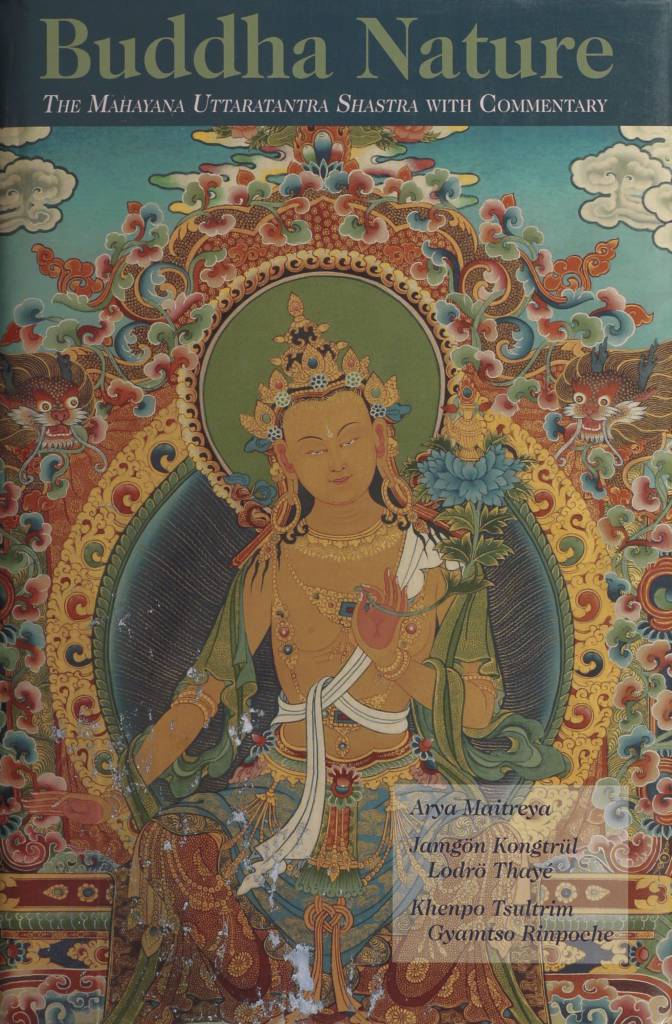
All sentient beings, without exception, have buddha nature, the inherent purity and perfection of the mind, untouched by changing mental states. The Mahayana Uttaratantra Shastra, one of the "Five Treatises" said to have been dictated to Asanga by the Bodhisattva Maitreya, presents the Buddha's definitive teachings on how we should understand this ground of enlightenment and clarifies the nature and qualities of buddhahood. This seminal text details with great clarity the view which forms the basis for Vajrayana, and especially Mahamudra, practice. Thus it builds a bridge between the Sutrayana and the Vajrayana levels of the Buddha's teaching, elaborated here in Jamgön Kongtrül's commentary. (Source: Shambhala Publications)
Books2014About this item
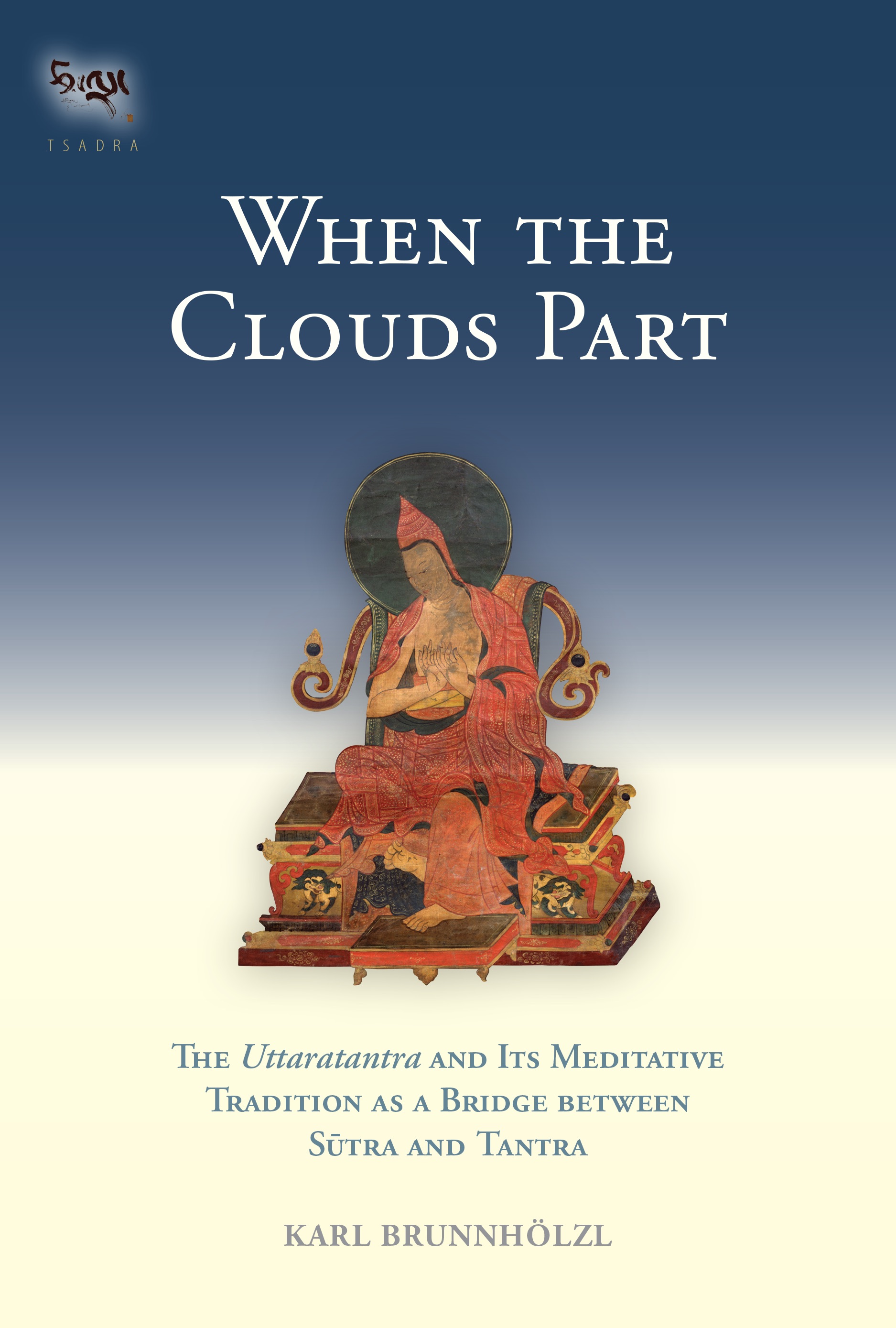
"Buddha nature" (tathāgatagarbha) is the innate potential in all living beings to become a fully awakened buddha. This book discusses a wide range of topics connected with the notion of buddha nature as presented in Indo-Tibetan Buddhism and includes an overview of the sūtra sources of the tathāgatagarbha teachings and the different ways of explaining the meaning of this term. It includes new translations of the Maitreya treatise Mahāyānottaratantra (Ratnagotravibhāga), the primary Indian text on the subject, its Indian commentaries, and two (hitherto untranslated) commentaries from the Tibetan Kagyü tradition. Most important, the translator’s introduction investigates in detail the meditative tradition of using the Mahāyānottaratantra as a basis for Mahāmudrā instructions and the Shentong approach. This is supplemented by translations of a number of short Tibetan meditation manuals from the Kadampa, Kagyü, and Jonang schools that use the Mahāyānottaratantra as a work to contemplate and realize one’s own buddha nature. (Source: Shambhala Publications)
3 Works containing teachings
Books2003About this item
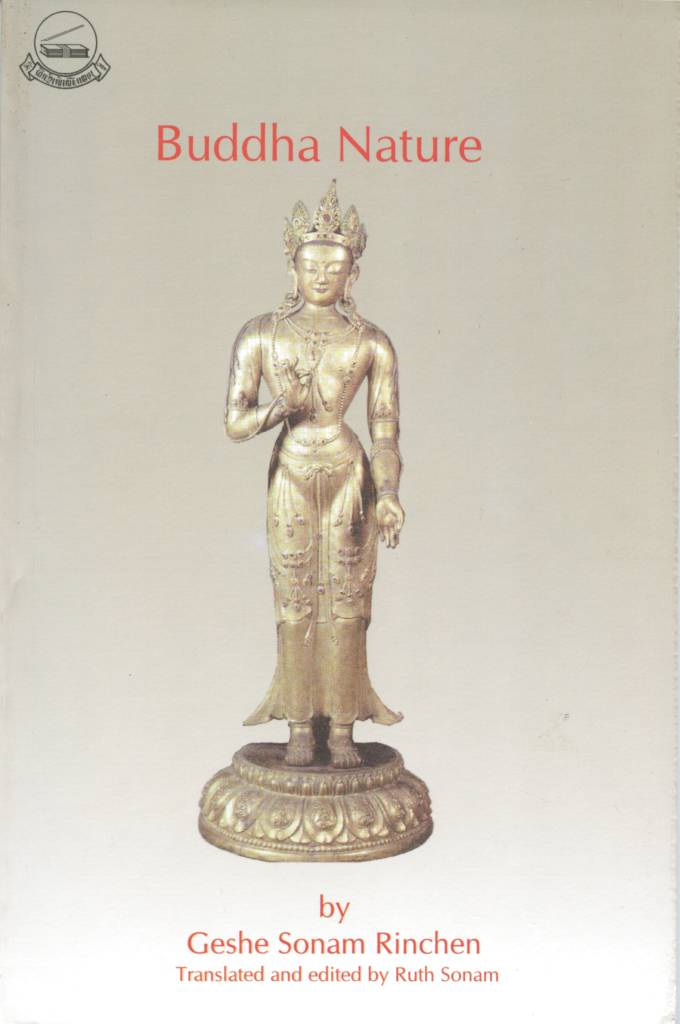
Do all living beings ultimately become enlightened? Do we have Buddha nature, the seed of enlightenment? These questions concerning an ordinary living being's potential to become a Buddha, the purest form of existence, are the main topic of this book. Based on the views of the three major Buddhist schools of Buddhist philosophy — Vaibhasika, Cittamatrin and Madhyamaka — Geshe Sonam Rinchen explains how our minds, though stained by temporary defilements, are innately pure, luminous and cognizant and how we can become aware of the mind's clear light nature. (Source: back cover)
Books1988About this item
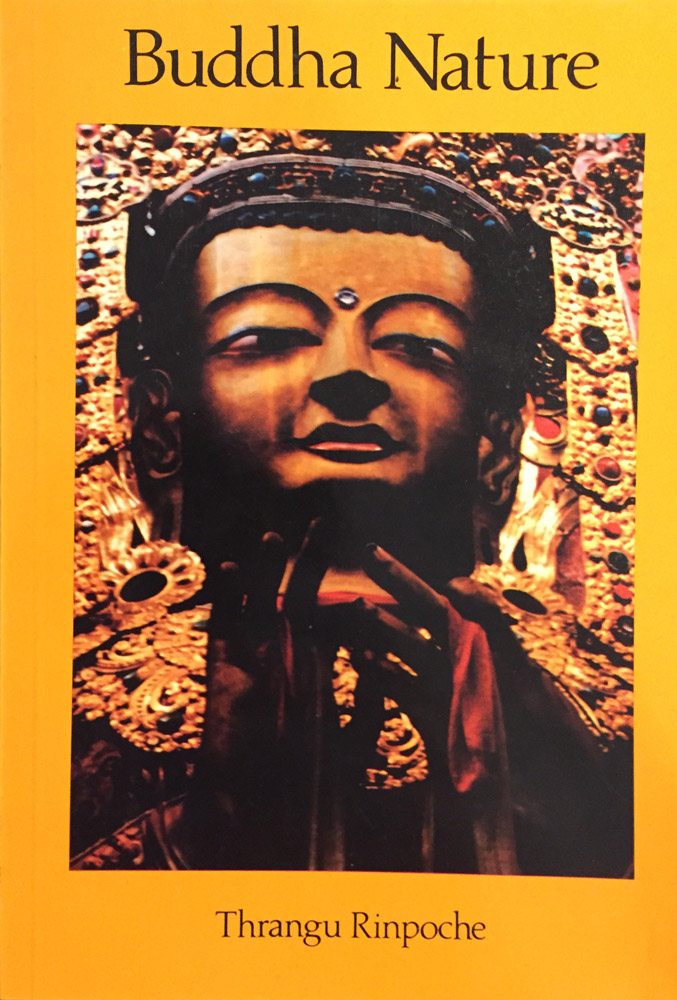
In this short book, a teaching given by Thrangu Rinpoche and translated by Erik Pema Kunsang, Thrangu Rinpoche uses the Uttaratantrashastra to outline ten points of focus, including the seven vajra points. Each chapter contains comments related to each point and a transcript of questions from the participants and answers from Thrangu Rinpoche.
Books2000About this item
All sentient beings, without exception, have buddha nature, the inherent purity and perfection of the mind, untouched by changing mental states. The Mahayana Uttaratantra Shastra, one of the "Five Treatises" said to have been dictated to Asanga by the Bodhisattva Maitreya, presents the Buddha's definitive teachings on how we should understand this ground of enlightenment and clarifies the nature and qualities of buddhahood. This seminal text details with great clarity the view which forms the basis for Vajrayana, and especially Mahamudra, practice. Thus it builds a bridge between the Sutrayana and the Vajrayana levels of the Buddha's teaching, elaborated here in Jamgön Kongtrül's commentary. (Source: Shambhala Publications)
4 Scholarship
Books2009About this item
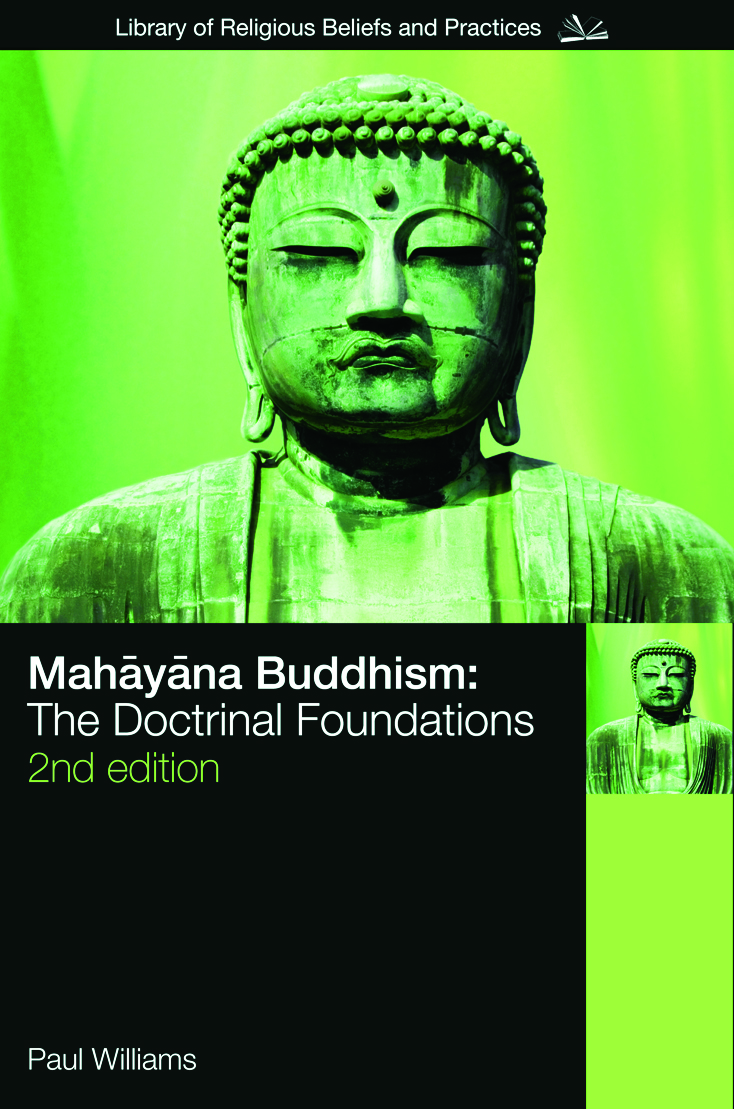
Originating in India, Mahayana Buddhism spread across Asia, becoming the prevalent form of Buddhism in Tibet and East Asia. Over the last twenty-five years Western interest in Mahayana has increased considerably, reflected both in the quantity of scholarly material produced and in the attraction of Westerners towards Tibetan Buddhism and Zen. Paul Williams’ Mahayana Buddhism is widely regarded as the standard introduction to the field, used internationally for teaching and research and has been translated into several European and Asian languages. This new edition has been fully revised throughout in the light of the wealth of new studies and focuses on the religion’s diversity and richness. It includes much more material on China and Japan, with appropriate reference to Nepal, and for students who wish to carry their study further there is a much-expanded bibliography and extensive footnotes and cross-referencing. Everyone studying this important tradition will find Williams’ book the ideal companion to their studies. (Source: Routledge)
Books1991About this item
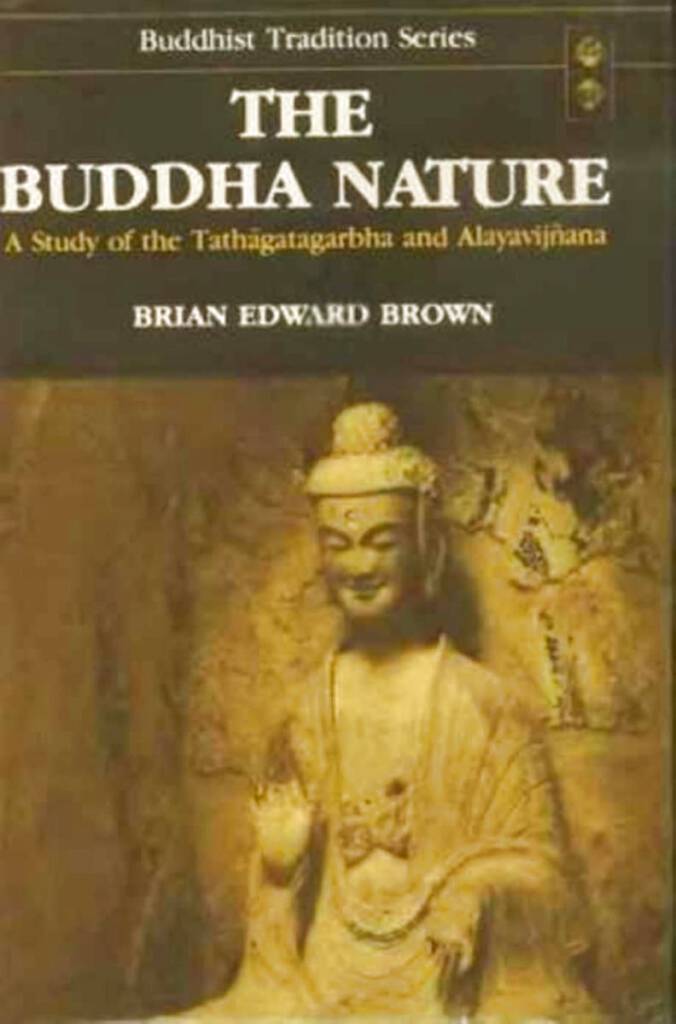
One of the fundamental tenets of Mahayana Buddhism animating and grounding the doctrine and discipline of its spiritual path, is the inherent potentiality of all animate beings to attain the supreme and perfect enlightenment of Buddhahood. This book examines the ontological presuppositions and the corresponding soteriological-epistemological principles that sustain and define such a theory. Within the field of Buddhist studies, such a work provides a comprehensive context in which to interpret the influence and major insights of the various Buddhist schools. Thus, the dynamics of the Buddha Nature, though non-thematic and implicit, is at the heart of Zen praxis, while it is a significant articulation in Kegon, Tendai, and Shingon thought. More specifically, the book seeks to establish a coherent metaphysics of absolute suchness (Tathatā), synthesizing the variant traditions of the Tathagata-embryo (Tathāgatagarbha) and the Storehouse Consciousness (Ālayavijñāna).


The book's contribution to the broader field of the History of Religions rests in its presentation and analysis of the Buddhist Enlightenment as the salvific-transformational moment in which Tathatā 'awakens' to itself, comes to perfect self-realization as the Absolute suchness of reality, in and through phenomenal human consciousness. The book is an interpretation of the Buddhist Path as the spontaneous self-emergence of 'embryonic' absolute knowledge as it comes to free itself from the concealments of adventitious defilements, and possess itself in fully self-explicitated self-consciousness as the 'Highest Truth' and unconditional nature of all existence; it does so only in the form of omniscient wisdom. (Source: Book jacket inside cover)
Dissertations1981About this item
The present dissertation identifies the ontological presuppositions and the corresponding soteriological-epistemological principles that sustain and define the Mahāyāna Buddhist belief in the inherent potentiality of all animate beings to attain the supreme and perfect enlightenment of Buddhahood. More specifically, the study establishes a coherent metaphysic of Absolute Suchness (Tathatā), synthesizing the variant traditions of the Tathāgata-embryo (Tathāgatagarbha) and the Storehouse Consciousness (Ālayavijñāna).
      The dissertation interprets the Buddhist enlightenment as the salvific-transformational moment in which Tathatā "awakens" to itself,

comes to perfect self-realization as the Absolute Suchness of reality, in and through phenomenal human consciousness. It is an interpretation of the Buddhist Path as the spontaneous self-emergence of "embryonic" absolute knowledge as it comes to free itself from the concealments of adventitious defilements, and possess itself in fully self-explicitated self-consciousness as the "Highest Truth" and unconditional nature of all existence; it does so only in the form of omniscient wisdom.
      Aside from Ruegg's La Theorie du Tathāgatagarbha et du Gotra and Verdu's study of the Ālayavijñāna in Dialectical Aspects in Buddhist Thought, Western scholarship treating of the subject is negligible. And while both sources are excellent technical treatises, they fail to integrate in any detailed analysis the dual concepts as complementary modes of each other. Thus, the dissertation, while adopting the methodology of textual analysis, has as its emphasis a thematic-interpretive study of its sources. Conducting a detailed analysis into the structure of the texts, the dissertation delineates and appropriates the inherent ontological, soteriological and epistemological foci which they themselves assume as their natural form.
      Structurally, the dissertation is divided into three major parts. The first focuses on the Tathāgatagarbha, the second on the Ālayavijñāna, the third on their relation and deeper significance in the human thought tradition. The first two parts are sub-divided into seven and four chapters respectively. The former seven chapters establish the ontological identity of the Tathāgata-embryo (Tathagātagarbha) through a critical examination of the major sūtral authority for the concept, i.e., the Śrī-Mālā-Sūtra, and the primary śāstral elaboration inspired by it, viz., the Ratnagotravlbhāga.
      Following the same pattern, the four chapters of part 2 note the role of the Laṅk¯āvatāra Sūtra as a principal scriptural advocate for the theory of the Storehouse Consciousness (Ālayavijñāna), while detailing the scholastic amplification of it in Hsüan Tsang's Ch'eng Wei-Shih Lun. Part 3 concludes the study by recapitulating the principal developments in the emergent complementarity of the two concepts, arguing that any adequate discussion of the Buddha Nature must be informed on the one hand by the theory of the Tathāgatagarbha which grounds and authenticates its ontological status, and on the other by the Ālayavijñāna, its noetic-cognitive determination. While the former tends to elucidate the process towards, and experience of enlightenment as a function of Absolute Suchness (Tathatā), the latter adopts the reciprocal perspective and examines the subject in the light and function of phenomenal consciousness.
      By way of comparison with Western thought, the chapter likewise demonstrates the analogous dynamic in the bilateral theory of the Tathāgatagarbha-Ālayavijñāna and the Hegelian Absolute Spirit in-and-for-itself. Focusing upon The Phenomenology of Spirit, the chapter notes that the self-becoming process in and through which consciousness realizes its own plenitude is strikingly homologous to the theory of Buddhist enlightenment presented through the concept of the Tathāgatagarbha-Ālayavijñāna. It suggests that these two representative thought systems

mutually illumine each other, and together illustrate a correspondent framework within which the relationship of the Absolute and relative may gain a more universal conception and therefore, a more comprehensive resolution.
Books2020About this item
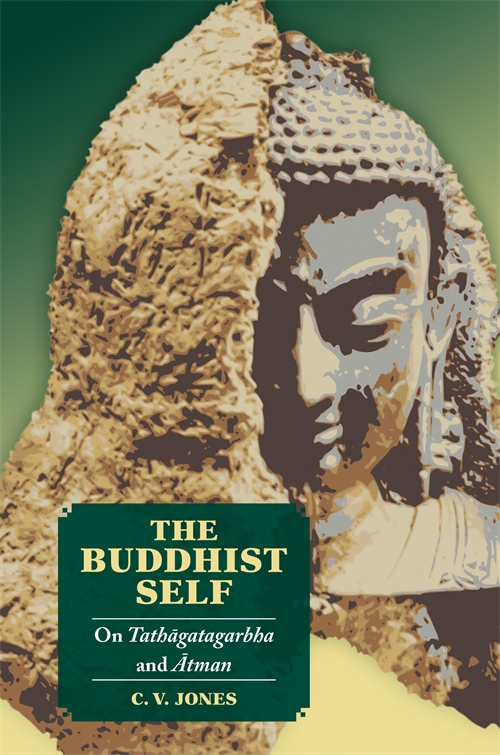
The assertion that there is nothing in the constitution of any person that deserves to be considered the self (ātman)—a permanent, unchanging kernel of personal identity in this life and those to come—has been a cornerstone of Buddhist teaching from its inception. Whereas other Indian religious systems celebrated the search for and potential discovery of one’s “true self,” Buddhism taught about the futility of searching for anything in our experience that is not transient and ephemeral. But a small yet influential set of Mahāyāna Buddhist texts, composed in India in the early centuries CE, taught that all sentient beings possess at all times, and across their successive lives, the enduring and superlatively precious nature of a Buddha. This was taught with reference to the enigmatic expression tathāgatagarbha—the “womb” or “chamber” for a Buddha—which some texts refer to as a person’s true self.

The Buddhist Self is a methodical examination of Indian teaching about the tathāgatagarbha (otherwise the presence of one's “Buddha-nature”) and the extent to which different Buddhist texts and authors articulated this in terms of the self. C. V. Jones attends to each of the Indian Buddhist works responsible for explaining what is meant by the expression tathāgatagarbha, and how far this should be understood or promoted using the language of selfhood. With close attention to these sources, Jones argues that the trajectory of Buddha-nature thought in India is also the history and legacy of a Buddhist account of what deserves to be called the self: an innovative attempt to equip Mahāyāna Buddhism with an affirmative response to wider Indian interest in the discovery of something precious or even divine in one's own constitution. This argument is supplemented by critical consideration of other themes that run through this distinctive body of Mahāyānist literature: the relationship between Buddhist and non-Buddhist teachings about the self, the overlap between the tathāgatagarbha and the nature of the mind, and the originally radical position that the only means of becoming liberated from rebirth is to achieve the same exalted status as the Buddha. (Source: University of Hawai'i Press)

6 A topic of
Books2000About this item
All sentient beings, without exception, have buddha nature, the inherent purity and perfection of the mind, untouched by changing mental states. The Mahayana Uttaratantra Shastra, one of the "Five Treatises" said to have been dictated to Asanga by the Bodhisattva Maitreya, presents the Buddha's definitive teachings on how we should understand this ground of enlightenment and clarifies the nature and qualities of buddhahood. This seminal text details with great clarity the view which forms the basis for Vajrayana, and especially Mahamudra, practice. Thus it builds a bridge between the Sutrayana and the Vajrayana levels of the Buddha's teaching, elaborated here in Jamgön Kongtrül's commentary. (Source: Shambhala Publications)
Books2009About this item
Originating in India, Mahayana Buddhism spread across Asia, becoming the prevalent form of Buddhism in Tibet and East Asia. Over the last twenty-five years Western interest in Mahayana has increased considerably, reflected both in the quantity of scholarly material produced and in the attraction of Westerners towards Tibetan Buddhism and Zen. Paul Williams’ Mahayana Buddhism is widely regarded as the standard introduction to the field, used internationally for teaching and research and has been translated into several European and Asian languages. This new edition has been fully revised throughout in the light of the wealth of new studies and focuses on the religion’s diversity and richness. It includes much more material on China and Japan, with appropriate reference to Nepal, and for students who wish to carry their study further there is a much-expanded bibliography and extensive footnotes and cross-referencing. Everyone studying this important tradition will find Williams’ book the ideal companion to their studies. (Source: Routledge)
Books1991About this item
One of the fundamental tenets of Mahayana Buddhism animating and grounding the doctrine and discipline of its spiritual path, is the inherent potentiality of all animate beings to attain the supreme and perfect enlightenment of Buddhahood. This book examines the ontological presuppositions and the corresponding soteriological-epistemological principles that sustain and define such a theory. Within the field of Buddhist studies, such a work provides a comprehensive context in which to interpret the influence and major insights of the various Buddhist schools. Thus, the dynamics of the Buddha Nature, though non-thematic and implicit, is at the heart of Zen praxis, while it is a significant articulation in Kegon, Tendai, and Shingon thought. More specifically, the book seeks to establish a coherent metaphysics of absolute suchness (Tathatā), synthesizing the variant traditions of the Tathagata-embryo (Tathāgatagarbha) and the Storehouse Consciousness (Ālayavijñāna).


The book's contribution to the broader field of the History of Religions rests in its presentation and analysis of the Buddhist Enlightenment as the salvific-transformational moment in which Tathatā 'awakens' to itself, comes to perfect self-realization as the Absolute suchness of reality, in and through phenomenal human consciousness. The book is an interpretation of the Buddhist Path as the spontaneous self-emergence of 'embryonic' absolute knowledge as it comes to free itself from the concealments of adventitious defilements, and possess itself in fully self-explicitated self-consciousness as the 'Highest Truth' and unconditional nature of all existence; it does so only in the form of omniscient wisdom. (Source: Book jacket inside cover)
Dissertations1981About this item
The present dissertation identifies the ontological presuppositions and the corresponding soteriological-epistemological principles that sustain and define the Mahāyāna Buddhist belief in the inherent potentiality of all animate beings to attain the supreme and perfect enlightenment of Buddhahood. More specifically, the study establishes a coherent metaphysic of Absolute Suchness (Tathatā), synthesizing the variant traditions of the Tathāgata-embryo (Tathāgatagarbha) and the Storehouse Consciousness (Ālayavijñāna).
      The dissertation interprets the Buddhist enlightenment as the salvific-transformational moment in which Tathatā "awakens" to itself,

comes to perfect self-realization as the Absolute Suchness of reality, in and through phenomenal human consciousness. It is an interpretation of the Buddhist Path as the spontaneous self-emergence of "embryonic" absolute knowledge as it comes to free itself from the concealments of adventitious defilements, and possess itself in fully self-explicitated self-consciousness as the "Highest Truth" and unconditional nature of all existence; it does so only in the form of omniscient wisdom.
      Aside from Ruegg's La Theorie du Tathāgatagarbha et du Gotra and Verdu's study of the Ālayavijñāna in Dialectical Aspects in Buddhist Thought, Western scholarship treating of the subject is negligible. And while both sources are excellent technical treatises, they fail to integrate in any detailed analysis the dual concepts as complementary modes of each other. Thus, the dissertation, while adopting the methodology of textual analysis, has as its emphasis a thematic-interpretive study of its sources. Conducting a detailed analysis into the structure of the texts, the dissertation delineates and appropriates the inherent ontological, soteriological and epistemological foci which they themselves assume as their natural form.
      Structurally, the dissertation is divided into three major parts. The first focuses on the Tathāgatagarbha, the second on the Ālayavijñāna, the third on their relation and deeper significance in the human thought tradition. The first two parts are sub-divided into seven and four chapters respectively. The former seven chapters establish the ontological identity of the Tathāgata-embryo (Tathagātagarbha) through a critical examination of the major sūtral authority for the concept, i.e., the Śrī-Mālā-Sūtra, and the primary śāstral elaboration inspired by it, viz., the Ratnagotravlbhāga.
      Following the same pattern, the four chapters of part 2 note the role of the Laṅk¯āvatāra Sūtra as a principal scriptural advocate for the theory of the Storehouse Consciousness (Ālayavijñāna), while detailing the scholastic amplification of it in Hsüan Tsang's Ch'eng Wei-Shih Lun. Part 3 concludes the study by recapitulating the principal developments in the emergent complementarity of the two concepts, arguing that any adequate discussion of the Buddha Nature must be informed on the one hand by the theory of the Tathāgatagarbha which grounds and authenticates its ontological status, and on the other by the Ālayavijñāna, its noetic-cognitive determination. While the former tends to elucidate the process towards, and experience of enlightenment as a function of Absolute Suchness (Tathatā), the latter adopts the reciprocal perspective and examines the subject in the light and function of phenomenal consciousness.
      By way of comparison with Western thought, the chapter likewise demonstrates the analogous dynamic in the bilateral theory of the Tathāgatagarbha-Ālayavijñāna and the Hegelian Absolute Spirit in-and-for-itself. Focusing upon The Phenomenology of Spirit, the chapter notes that the self-becoming process in and through which consciousness realizes its own plenitude is strikingly homologous to the theory of Buddhist enlightenment presented through the concept of the Tathāgatagarbha-Ālayavijñāna. It suggests that these two representative thought systems

mutually illumine each other, and together illustrate a correspondent framework within which the relationship of the Absolute and relative may gain a more universal conception and therefore, a more comprehensive resolution.
Books2020About this item
The assertion that there is nothing in the constitution of any person that deserves to be considered the self (ātman)—a permanent, unchanging kernel of personal identity in this life and those to come—has been a cornerstone of Buddhist teaching from its inception. Whereas other Indian religious systems celebrated the search for and potential discovery of one’s “true self,” Buddhism taught about the futility of searching for anything in our experience that is not transient and ephemeral. But a small yet influential set of Mahāyāna Buddhist texts, composed in India in the early centuries CE, taught that all sentient beings possess at all times, and across their successive lives, the enduring and superlatively precious nature of a Buddha. This was taught with reference to the enigmatic expression tathāgatagarbha—the “womb” or “chamber” for a Buddha—which some texts refer to as a person’s true self.

The Buddhist Self is a methodical examination of Indian teaching about the tathāgatagarbha (otherwise the presence of one's “Buddha-nature”) and the extent to which different Buddhist texts and authors articulated this in terms of the self. C. V. Jones attends to each of the Indian Buddhist works responsible for explaining what is meant by the expression tathāgatagarbha, and how far this should be understood or promoted using the language of selfhood. With close attention to these sources, Jones argues that the trajectory of Buddha-nature thought in India is also the history and legacy of a Buddhist account of what deserves to be called the self: an innovative attempt to equip Mahāyāna Buddhism with an affirmative response to wider Indian interest in the discovery of something precious or even divine in one's own constitution. This argument is supplemented by critical consideration of other themes that run through this distinctive body of Mahāyānist literature: the relationship between Buddhist and non-Buddhist teachings about the self, the overlap between the tathāgatagarbha and the nature of the mind, and the originally radical position that the only means of becoming liberated from rebirth is to achieve the same exalted status as the Buddha. (Source: University of Hawai'i Press)

Books2014About this item
"Buddha nature" (tathāgatagarbha) is the innate potential in all living beings to become a fully awakened buddha. This book discusses a wide range of topics connected with the notion of buddha nature as presented in Indo-Tibetan Buddhism and includes an overview of the sūtra sources of the tathāgatagarbha teachings and the different ways of explaining the meaning of this term. It includes new translations of the Maitreya treatise Mahāyānottaratantra (Ratnagotravibhāga), the primary Indian text on the subject, its Indian commentaries, and two (hitherto untranslated) commentaries from the Tibetan Kagyü tradition. Most important, the translator’s introduction investigates in detail the meditative tradition of using the Mahāyānottaratantra as a basis for Mahāmudrā instructions and the Shentong approach. This is supplemented by translations of a number of short Tibetan meditation manuals from the Kadampa, Kagyü, and Jonang schools that use the Mahāyānottaratantra as a work to contemplate and realize one’s own buddha nature. (Source: Shambhala Publications)