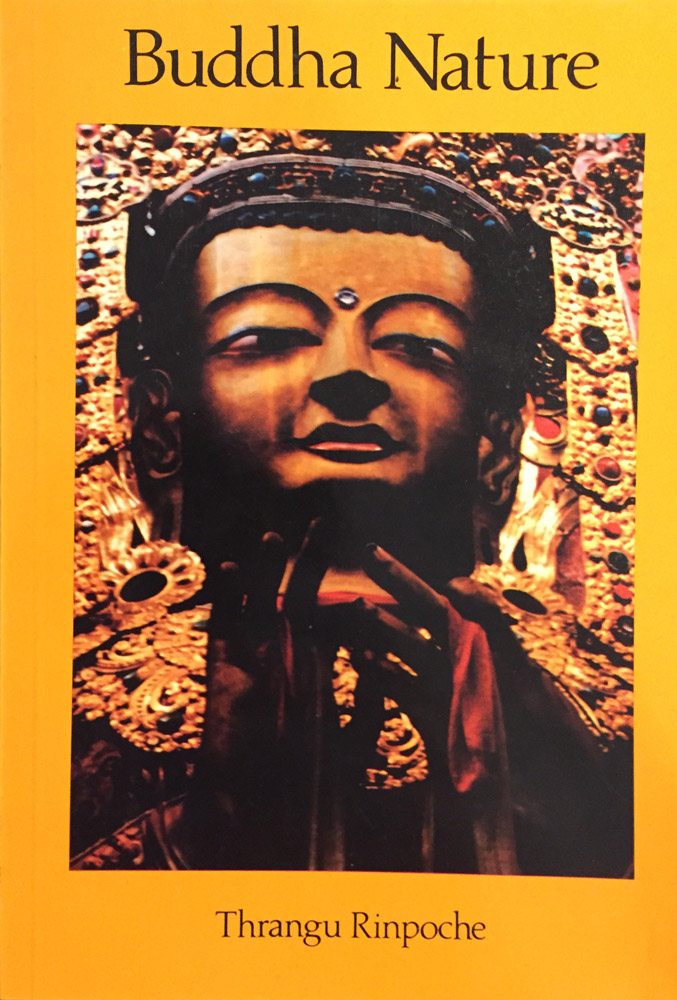
Buddha Nature: Ten Teachings on the Uttaratantra Shastra
From Bodhicitta
< BooksBooks/Buddha Nature: Ten Teachings on the Uttaratantra Shastra
| 🤓 Admin Zone 🛠️ hidden to non-admins | |
Buddha Nature: Ten Teachings on the Uttara Tantra Shastra
Book
Please note that many items in our library are simply pages that represent a detailed library catalog entry and citation of someone else's work, presentation, or performance. Read our General Disclaimer for more information.

Description
In this short book, a teaching given by Thrangu Rinpoche and translated by Erik Pema Kunsang, Thrangu Rinpoche uses the Uttaratantrashastra to outline ten points of focus, including the seven vajra points. Each chapter contains comments related to each point and a transcript of questions from the participants and answers from Thrangu Rinpoche.
Citation
Thrangu Rinpoche. Buddha Nature: Ten Teachings on the Uttara Tantra Shastra. Translated by Erik Pema Kunsang. Edited by S. Lhamo. Hong Kong: Rangjung Yeshe Publications, 1988. http://bodhitraining.com/wp-content/uploads/2017/05/Buddha-Nature-Commentary-to-Uttaratantra-Shastra-by-Thrangu-Rinpoche.pdf.
Table of contents
- Foreword 7
- Introduction 9
- The Buddha 21
- The Dharma 37
- The Sangha 47
- Buddha Nature 55
- Enlightenment 91
- Qualities 105
- Buddha Activity 121
- Conclusion 133
- Glossary137
Interconnections
1 Teaching based on
.jpg)
The Ratnagotravibhāga, commonly known as the Uttaratantra, or Gyu Lama in Tibetan, is one of the main Indian scriptural sources for buddha-nature theory. It was likely composed during the fifth century, by whom we do not know. Comprised of verses interspersed with prose commentary, it systematizes the buddha-nature teachings that were circulating in multiple sūtras such as the Tathāgatagarbhasūtra, the Mahāparinirvāṇasūtra, and the Śrīmaladevisūtra. The Tibetan tradition attributes the verses to the Bodhisattva Maitreya and the commentary to Asaṅga, and treats the two as separate texts, although this division is not attested to in surviving Indian versions. The Chinese tradition attributes the text to *Sāramati (娑囉末底), but the translation itself does not include the name of the author, and the matter remains unsettled. It was translated into Chinese in the early sixth century by Ratnamati and first translated into Tibetan by Atiśa, although this text is not known to survive. Ngok Loden Sherab translated it a second time based on teachings from the Kashmiri Pandita Sajjana, and theirs remains the standard translation. It has been translated into English several times, and recently into French. See the Ratnagotravibhāgavyākhyā, read more about the Ratnagotravibhāga, or take a look at the most complete English translation in When the Clouds Part by Karl Brunnholzl.