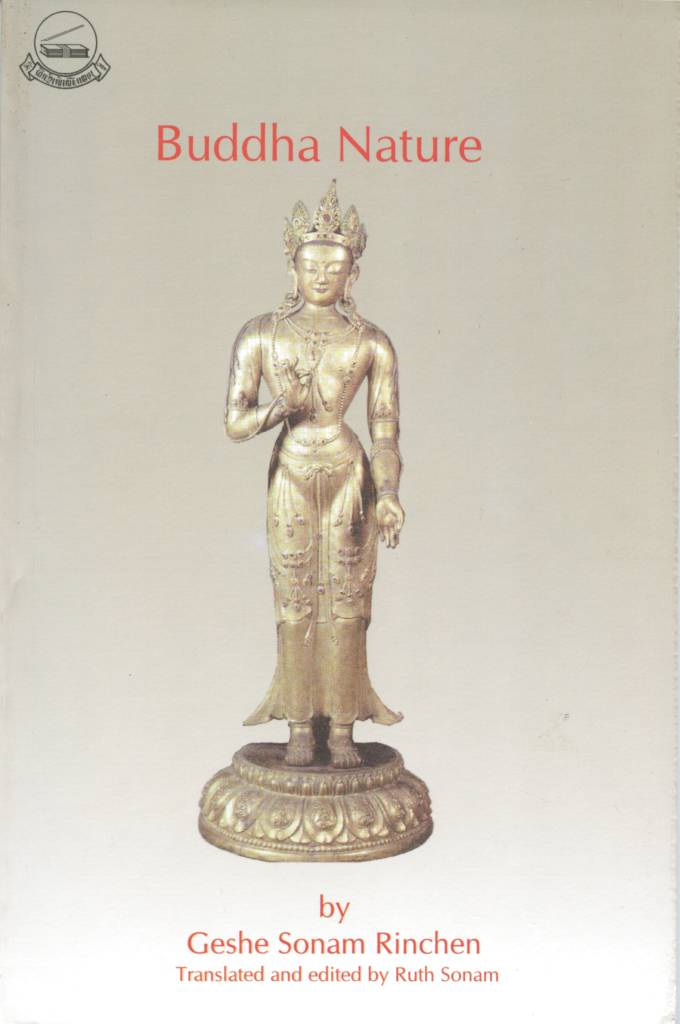
Buddha Nature (Geshe Sonam Rinchen)
From Bodhicitta
< BooksBooks/Buddha Nature (Geshe Sonam Rinchen)
| 🤓 Admin Zone 🛠️ hidden to non-admins | |
Buddha Nature
Book
Please note that many items in our library are simply pages that represent a detailed library catalog entry and citation of someone else's work, presentation, or performance. Read our General Disclaimer for more information.
-front.jpg)
Description
Do all living beings ultimately become enlightened? Do we have Buddha nature, the seed of enlightenment? These questions concerning an ordinary living being's potential to become a Buddha, the purest form of existence, are the main topic of this book. Based on the views of the three major Buddhist schools of Buddhist philosophy — Vaibhasika, Cittamatrin and Madhyamaka — Geshe Sonam Rinchen explains how our minds, though stained by temporary defilements, are innately pure, luminous and cognizant and how we can become aware of the mind's clear light nature. (Source: back cover)
Citation
Sonam, Ruth, trans. and ed. Buddha Nature: Oral Teachings by Geshe Sonam Rinchen. New Delhi: Library of Tibetan Works and Archives, 2003.
Table of contents
- Translator's Prefacevii
- Publisher's Noteix
- 1. Our Precious Disposition1
- 2. Understanding our Disposition7
- 3. The Clear Light Nature of the Mind19
- 4. The Reality of the Mind29
- 5. Uncovering our Hidden Treasure37
- 6. Overcoming Obstacles47
- Notes51
Interconnections
2 Teaching based on

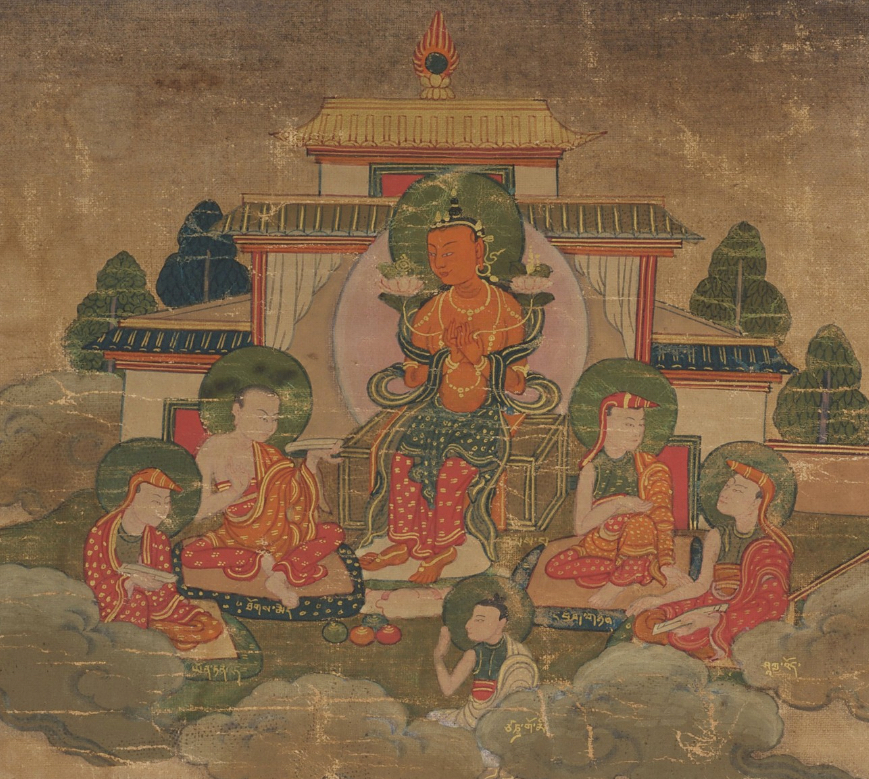
In Sanskrit, the “Ornament for the Mahāyāna Sūtras”; one of the Five Dharma Treatises of Maitreya (byams chos sde lnga) said to have been presented to Asaṅga by the bodhisattva Maitreya in the Tuṣita heaven. Written in verse, the text offers a systematic presentation of the practices of the bodhisattva from the standpoint of the Yogācāra school and is one of the most important of the Indian Mahāyāna śāstras. Its twenty-one chapters deal with (1) the proof that the Mahāyāna sūtras are the word of the Buddha; (2) taking refuge in the three jewels (ratnatraya); (3) the lineage (gotra) of enlightenment necessary to undertake the bodhisattva path; (4) the generation of the aspiration to enlightenment (bodhicittotpāda); (5) the practice of the bodhisattva; (6) the nature of reality, described from the Yogācāra perspective; (7) the attainment of power by the bodhisattva; (8) the methods of bringing oneself and others to maturation; (9) enlightenment and the three bodies of a buddha (trikāya); (10) faith in the Mahāyāna; (11) seeking complete knowledge of the dharma; (12) teaching the dharma; (13) practicing in accordance with the dharma; (14) the precepts and instructions received by the bodhisattva; (15) the skillful methods of the bodhisattva; (16) the six perfections (pāramitā) and the four means of conversion (saṃgrahavastu), through which bodhisattvas attract and retain disciples; (17) the worship of the Buddha; (18) the constituents of enlightenment (bodhipākṣikadharma); (19) the qualities of the bodhisattva; and (20-21) the consummation of the bodhisattva path and the attainment of buddhahood. (Source: The Princeton Dictionary of Buddhism, p. 514)
.jpg)
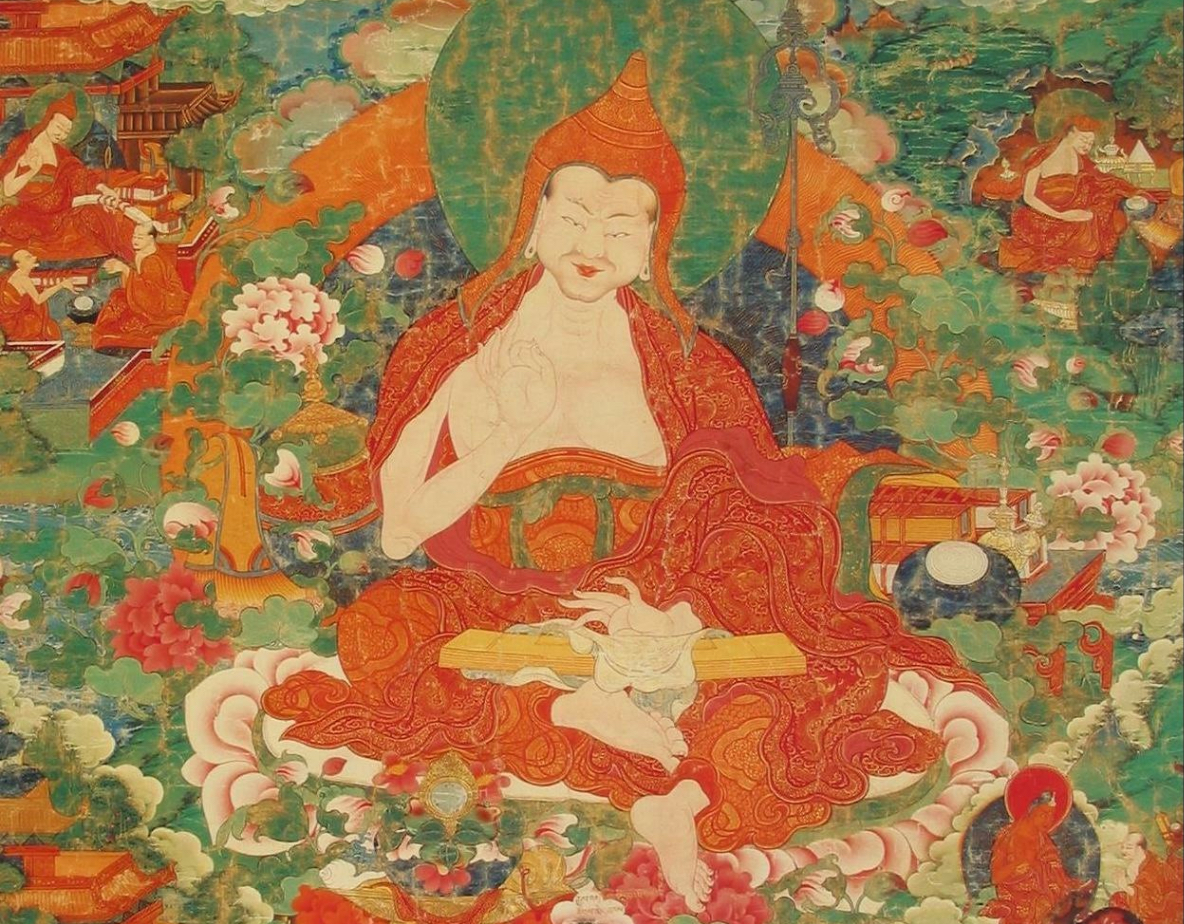
The Ratnagotravibhāga, commonly known as the Uttaratantra, or Gyu Lama in Tibetan, is one of the main Indian scriptural sources for buddha-nature theory. It was likely composed during the fifth century, by whom we do not know. Comprised of verses interspersed with prose commentary, it systematizes the buddha-nature teachings that were circulating in multiple sūtras such as the Tathāgatagarbhasūtra, the Mahāparinirvāṇasūtra, and the Śrīmaladevisūtra. The Tibetan tradition attributes the verses to the Bodhisattva Maitreya and the commentary to Asaṅga, and treats the two as separate texts, although this division is not attested to in surviving Indian versions. The Chinese tradition attributes the text to *Sāramati (娑囉末底), but the translation itself does not include the name of the author, and the matter remains unsettled. It was translated into Chinese in the early sixth century by Ratnamati and first translated into Tibetan by Atiśa, although this text is not known to survive. Ngok Loden Sherab translated it a second time based on teachings from the Kashmiri Pandita Sajjana, and theirs remains the standard translation. It has been translated into English several times, and recently into French. See the Ratnagotravibhāgavyākhyā, read more about the Ratnagotravibhāga, or take a look at the most complete English translation in When the Clouds Part by Karl Brunnholzl.