| 🤓 Admin Zone 🛠️ hidden to non-admins | |


Description


The Introduction chapter of this book, Rulu's seventh, explores the origin of the concept of the Tathagata store, and discusses how teachings on the Tathagata store have come to be accepted in China as the mainstream of Mahayana teachings and a distinct school of thought, standing apart from and along with the Madhyamaka School and the Yogacara School. Highlights of teachings on the Tathagata store presented in this chapter include why all sentient beings possess the Tathagata store, meanings of the dharma body and its four virtues, a comparison between the self claimed by those on non-Buddhist paths and a true self taught by the Buddha, meanings of one's Buddha nature, and how one's Tathagata store and alaya consciousness (alaya-vijnana) are unified.
This book presents the English translations of six sutras selected from the Chinese Buddhist Canon. The Mahavaipulya Sutra of the Tathagata Store gives a basic teaching and describes by nine analogies that one's Tathagata store is shrouded by one's afflictions. The Sutra of Neither Increase Nor Decrease reveals that the Tathagata store is a Tathagata's dharma body, and that the realm of sentient beings neither increases nor decreases. The Sutra of Shrimala's Lion’s Roar gives teachings on one's afflictions that shroud one's Tathagata store and inspires all sentient beings to ride the One Vehicle to attain Buddhahood. The Mahayana version of the Sutra of Angulimalika reveals that as one's Tathagata store transcends all dharmas, all dharmas are one's Tathagata store. The Sutra of the Unsurpassed Reliance teaches one to rely on one's Tathagata store in order to walk the bodhi path to Buddhahood. The Sutra of the Vajra Samadhi reveals that one's inherent awareness, the pure awareness of one's true mind, has a mass of benefits. This book will benefit readers at all levels and can serve as a basis for scholarly research. (Source: Author House)
The MPNS-G declares or suggests the non-emptiness of the tathāgata. This is reinterpretation of the pratītyasamutpāda and the śūnyatā idea, and follows the rule of the historical Buddhist hermeneutics. It is especially worthwhile to note that the MBhS, like the Saṃdhinirmocanasūtra in the Vijñāptimātra idea, devaluates the śūnyatā idea as imperfect. This quite negative attitude toward the śūnyatā idea does not appear in any other Indian texts on the tathāgatagarbha idea including the MPNS and the AMS. Aiming at establishing the theory that every sentient being is able to perform religious efforts and become buddha on account of the nonemptiness and the eternalness of the tathāgata, the MBhS must reject any sūtra concerning the śūnyatā idea as imperfect. Though the MPNS is a pioneer in reinterpretation of the the śúnyatā idea, the MPNS cannot devaluate it perfectly because the śūnyatā idea is one of the main backgrounds to the MPNS. The MBhS's decisive attitude toward the śūnyatā idea devaluation becomes possible by having the MPNS as its basis. (Source: UTokyo Repository)

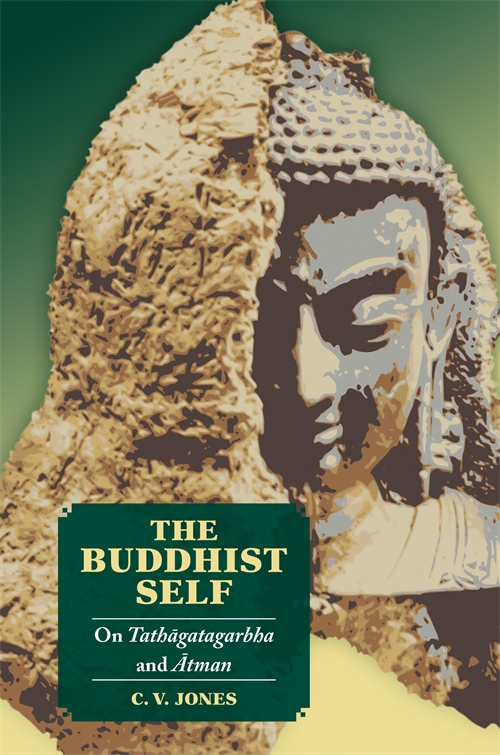
The Buddhist Self is a methodical examination of Indian teaching about the tathāgatagarbha (otherwise the presence of one's “Buddha-nature”) and the extent to which different Buddhist texts and authors articulated this in terms of the self. C. V. Jones attends to each of the Indian Buddhist works responsible for explaining what is meant by the expression tathāgatagarbha, and how far this should be understood or promoted using the language of selfhood. With close attention to these sources, Jones argues that the trajectory of Buddha-nature thought in India is also the history and legacy of a Buddhist account of what deserves to be called the self: an innovative attempt to equip Mahāyāna Buddhism with an affirmative response to wider Indian interest in the discovery of something precious or even divine in one's own constitution. This argument is supplemented by critical consideration of other themes that run through this distinctive body of Mahāyānist literature: the relationship between Buddhist and non-Buddhist teachings about the self, the overlap between the tathāgatagarbha and the nature of the mind, and the originally radical position that the only means of becoming liberated from rebirth is to achieve the same exalted status as the Buddha. (Source: University of Hawai'i Press)
The MPNS-G declares or suggests the non-emptiness of the tathāgata. This is reinterpretation of the pratītyasamutpāda and the śūnyatā idea, and follows the rule of the historical Buddhist hermeneutics. It is especially worthwhile to note that the MBhS, like the Saṃdhinirmocanasūtra in the Vijñāptimātra idea, devaluates the śūnyatā idea as imperfect. This quite negative attitude toward the śūnyatā idea does not appear in any other Indian texts on the tathāgatagarbha idea including the MPNS and the AMS. Aiming at establishing the theory that every sentient being is able to perform religious efforts and become buddha on account of the nonemptiness and the eternalness of the tathāgata, the MBhS must reject any sūtra concerning the śūnyatā idea as imperfect. Though the MPNS is a pioneer in reinterpretation of the the śúnyatā idea, the MPNS cannot devaluate it perfectly because the śūnyatā idea is one of the main backgrounds to the MPNS. The MBhS's decisive attitude toward the śūnyatā idea devaluation becomes possible by having the MPNS as its basis. (Source: UTokyo Repository)
The Buddhist Self is a methodical examination of Indian teaching about the tathāgatagarbha (otherwise the presence of one's “Buddha-nature”) and the extent to which different Buddhist texts and authors articulated this in terms of the self. C. V. Jones attends to each of the Indian Buddhist works responsible for explaining what is meant by the expression tathāgatagarbha, and how far this should be understood or promoted using the language of selfhood. With close attention to these sources, Jones argues that the trajectory of Buddha-nature thought in India is also the history and legacy of a Buddhist account of what deserves to be called the self: an innovative attempt to equip Mahāyāna Buddhism with an affirmative response to wider Indian interest in the discovery of something precious or even divine in one's own constitution. This argument is supplemented by critical consideration of other themes that run through this distinctive body of Mahāyānist literature: the relationship between Buddhist and non-Buddhist teachings about the self, the overlap between the tathāgatagarbha and the nature of the mind, and the originally radical position that the only means of becoming liberated from rebirth is to achieve the same exalted status as the Buddha. (Source: University of Hawai'i Press)
The Introduction chapter of this book, Rulu's seventh, explores the origin of the concept of the Tathagata store, and discusses how teachings on the Tathagata store have come to be accepted in China as the mainstream of Mahayana teachings and a distinct school of thought, standing apart from and along with the Madhyamaka School and the Yogacara School. Highlights of teachings on the Tathagata store presented in this chapter include why all sentient beings possess the Tathagata store, meanings of the dharma body and its four virtues, a comparison between the self claimed by those on non-Buddhist paths and a true self taught by the Buddha, meanings of one's Buddha nature, and how one's Tathagata store and alaya consciousness (alaya-vijnana) are unified.
This book presents the English translations of six sutras selected from the Chinese Buddhist Canon. The Mahavaipulya Sutra of the Tathagata Store gives a basic teaching and describes by nine analogies that one's Tathagata store is shrouded by one's afflictions. The Sutra of Neither Increase Nor Decrease reveals that the Tathagata store is a Tathagata's dharma body, and that the realm of sentient beings neither increases nor decreases. The Sutra of Shrimala's Lion’s Roar gives teachings on one's afflictions that shroud one's Tathagata store and inspires all sentient beings to ride the One Vehicle to attain Buddhahood. The Mahayana version of the Sutra of Angulimalika reveals that as one's Tathagata store transcends all dharmas, all dharmas are one's Tathagata store. The Sutra of the Unsurpassed Reliance teaches one to rely on one's Tathagata store in order to walk the bodhi path to Buddhahood. The Sutra of the Vajra Samadhi reveals that one's inherent awareness, the pure awareness of one's true mind, has a mass of benefits. This book will benefit readers at all levels and can serve as a basis for scholarly research. (Source: Author House)