Prince Shōtoku's Commentary on the Śrīmālā Sutra
| 🤓 Admin Zone 🛠️ hidden to non-admins | |

Description
Volume 56
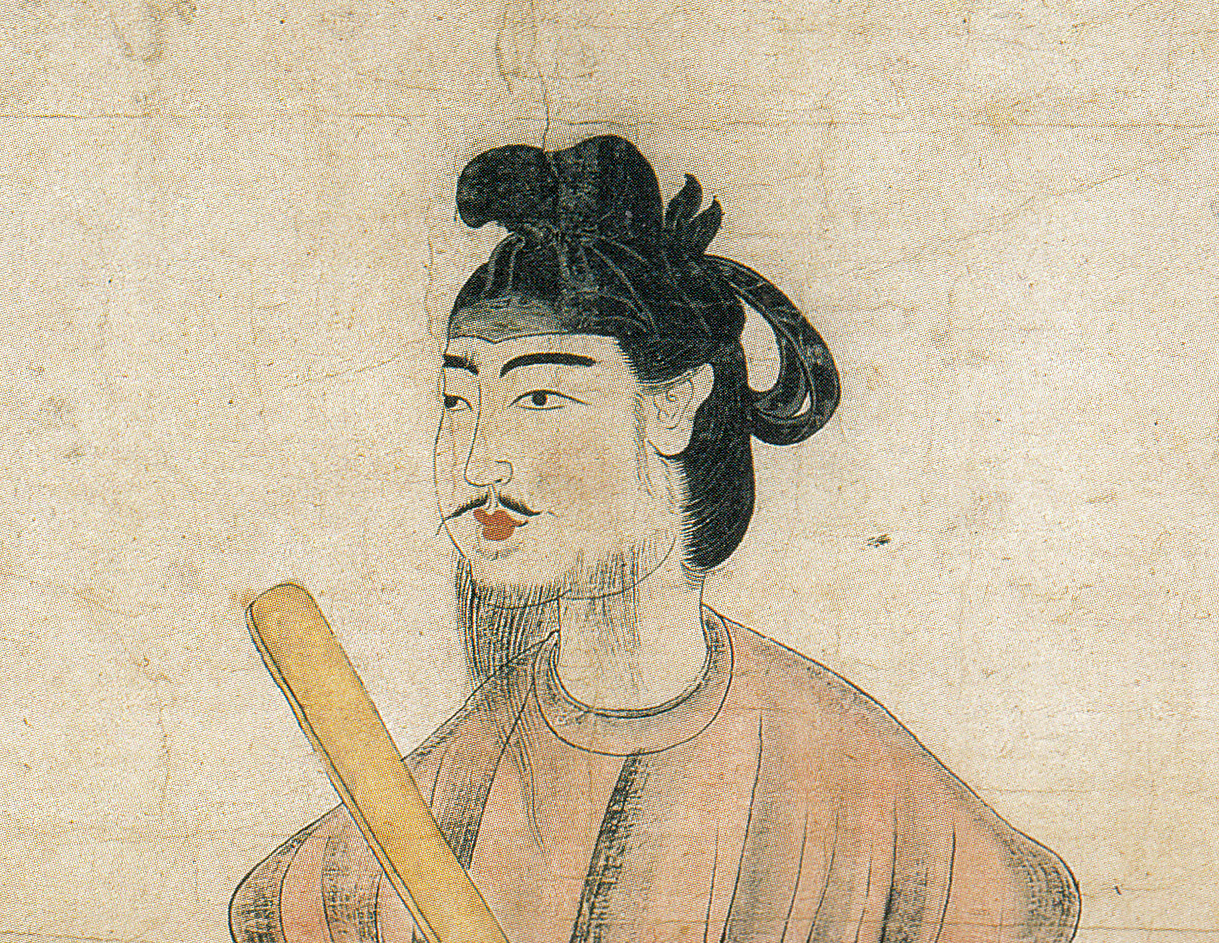
This work is a commentary on the Śrīmālā-sūtra (Taisho No.16), and is considered to be the earliest of the "Commentaries on Three Sūtras" (Jp. San-gyō-gi-sho) composed by Prince Shōtoku. The Nihon-shoki ("Chronicles of Japan") records that Prince Shōtoku gave a discourse on the Śrīmālā-sūtra for Empress Suiko. It is considered that Prince Shōtoku chose this particular sūtra as the subject of his discourse to the Empress probably because the protagonist of the Śrīmālā-sūtra is a woman, Śrīmālā, and Empress Suiko was the first Empress in Japanese history. The present work was then put together in book-form in Chinese at a later date. Be that as it may, there is no changing the fact that this was the first written work composed by a Japanese.
Source
Jp. Shōmangyō gisho (勝鬘經義疏), attributed to Prince Shōtoku. 1 fascicle. (Source: BDK America)
- A Message on the Publication of the English Tripiṭaka, NUMATA Yehanv
- Editorial Foreword, MAYEDA Sengakuvii
- Publisher's Foreword, John R. McRaeix
- Translator's Introduction, Mark W. Dennisxiii
- Conventions for the Translationxix
- Prince Shōtoku's Commentary on the Śrīmālā Sutra
- Introduction
- The Contents of the Sutra3
- The Title of the Sutra3
- The Three Divisions of Buddhist Sutras4
- Part I. Commentary on the Introductory Teaching
- The General Introduction7
- The Specific Introduction9
- Part II. Commentary on the Main Teaching
- Chapter One: Praising the True Merits of the Tathāgata13
- Chapter Two: The Ten Main Ordination Vows21
- Chapter Three: The Three Great Vows29
- Chapters Four and Five: "Other-Practice"30
- Chapter Four: Embracing the True Dharma31
- Divisions of Chapter Four32
- Chapter Five: The One Vehicle51
- Part Two of the Sutra's Main Teaching93
- The General Explanation94
- Chapter Six: The Unlimited Noble Truths94
- Chapter Seven: The Tathāgatagarbha97
- Chapter Eight: The Dharma Body107
- Chapter Nine: The Concealed Truth: The Meaning of Emptiness109
- The Specific Explanation111
- Chapter Ten: The One Noble Truth112
- Chapter Eleven: The One Refuge115
- Chapter Twelve: The Distorted Truths117
- Chapter Thirteen: The Intrinsically Pure121
- Chapter Fourteen: The True Children of the Tathāgata128
- Part III. The Propagation of the Teaching
- Propagation of the Teaching 1: The Buddha Returns to Śrāvastī131
- Propagation of the Teaching 2: Transmitting the Sutra131
- Propagation of the Teaching 3: The Sixteen Names for the Sutra132
- Notes135
- Glossary137
- Bibliography151
- Index157
- A List of the Volumes of the BDK English Tripiṭaka (First Series)167