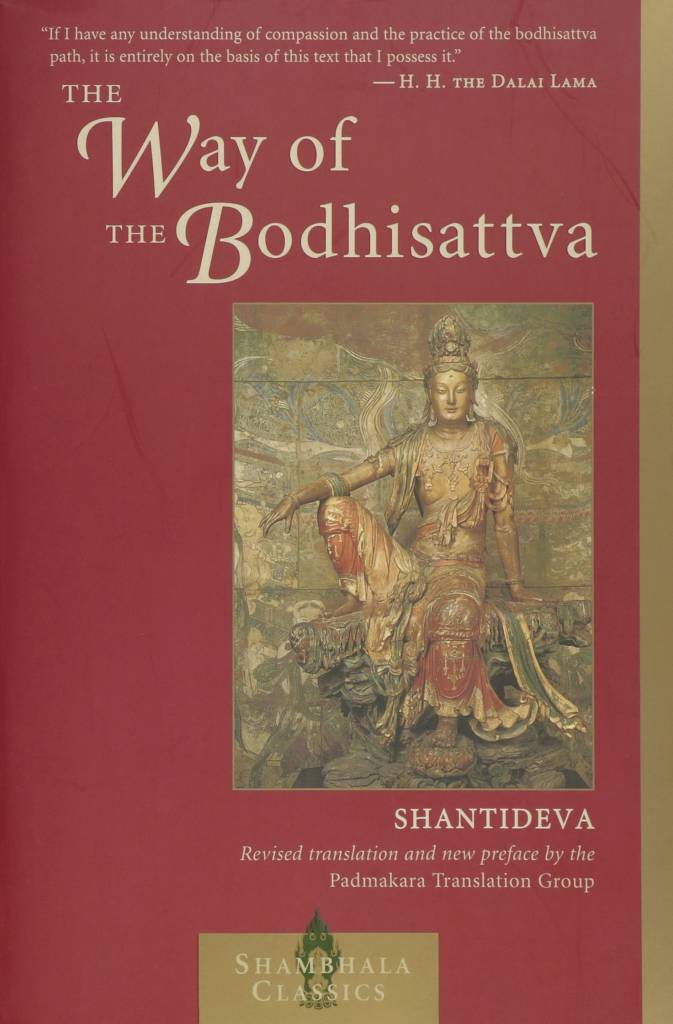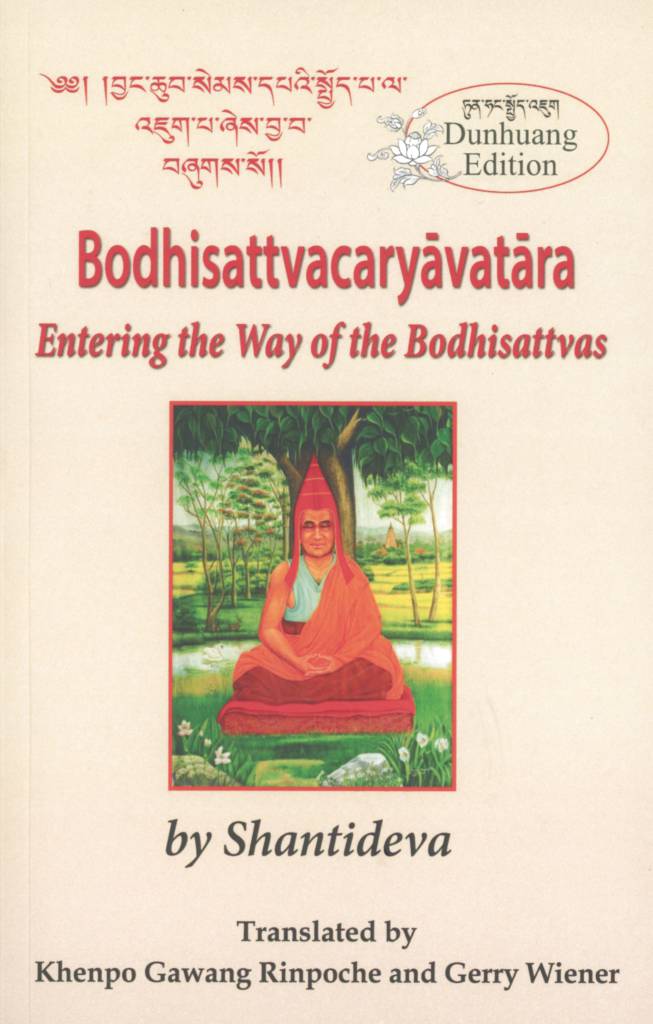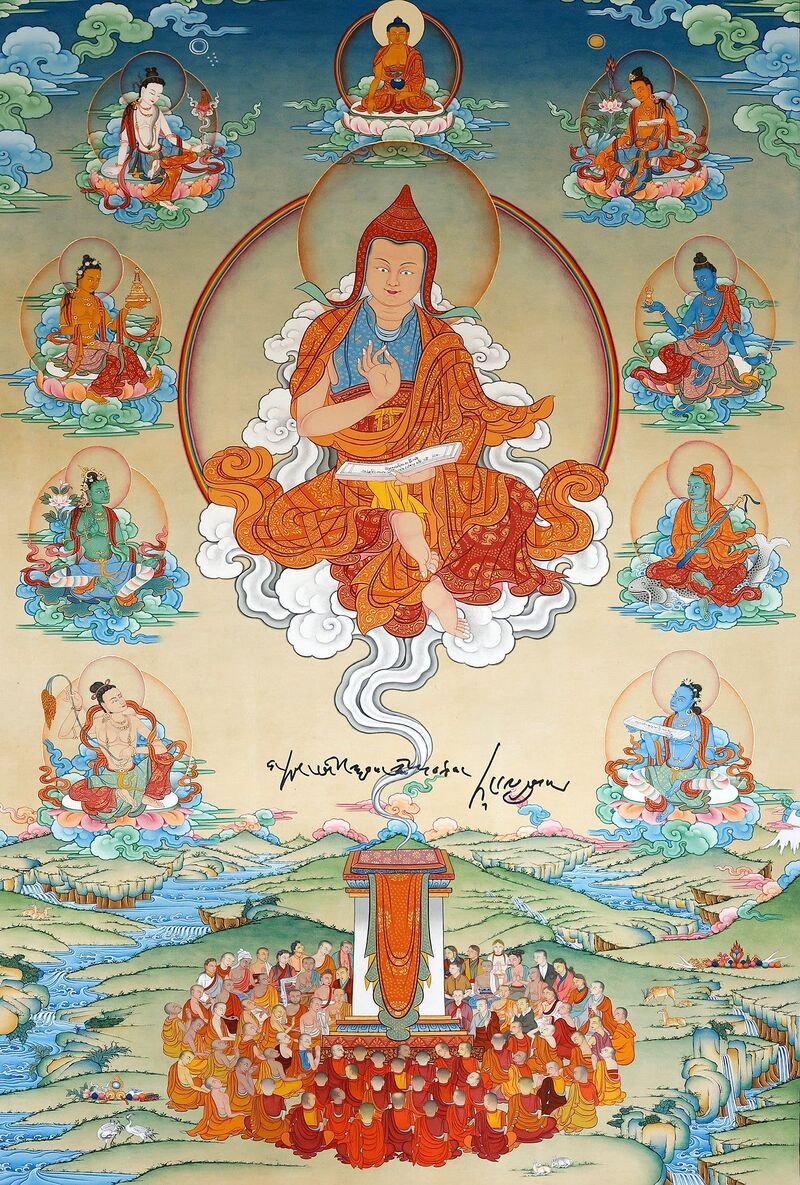
Śāntideva's Bodhisattvacaryāvatāra (Bodhicaryāvatāra for short) is a masterwork of world literature and an example of wisdom and compassion in action, lighting the way to Buddhahood for the sake of all beings. Written down in ancient India in the Sanskrit language, it became popular in Tibetan translation and made its way into modern languages in the nineteenth and twentieth centuries. It remains one of the favorite books of many leading Buddhist students, teachers, and writers today.
About the text
Bodhicaryāvatāra · byang chub sems dpa'i spyod pa la 'jug pa
The Way of the Bodhisattva
On this page you will find everything about Śāntideva's famous text, the Bodhicaryāvatāra (The Way of the Bodhisattva). The information below explores the text's various titles and versions, its complex authorship and historical context, its profound influence on Indian and Tibetan Buddhist traditions, its central role in systematizing the cultivation of bodhicitta, and essential resources for further study and practice.
From here you can read the text in English, Tibetan, French, Spanish, or Sanskrit. You can compare commentaries from different traditions on each verse or you can listen to the verses chanted or watch videos of Buddhist teachers or scholars talking about the text and its meaning.
This comprehensive resource serves scholars, practitioners, and curious readers alike, offering both academic depth and practical guidance for engaging with one of Buddhism's most cherished texts. The page brings together centuries of commentary, translation, and scholarly research to provide a comprehensive digital resource for studying and practicing the Bodhicaryāvatāra.
Read the text
Loading...
Loading recensions...
Loading...
Loading translations...
Loading...
Loading commentaries...
Loading...
Loading teachings...
Loading...
Loading media...
Loading...
Loading related scholarship...
Scroll to...

Part 1: About the Text
Śāntideva's Works in India and Beyond
This section provides a comprehensive examination of Śāntideva's Bodhicaryāvatāra, one of the most influential texts in Mahāyāna Buddhism. The materials below cover the historical development, textual transmission, and global reception of this eighth-century guide to bodhisattva practice. They explore the text's structural organization around the cultivation of bodhicitta (the awakening mind) and the six perfections, analyze manuscript traditions and variant editions found across different cultures, and trace the work's journey from ancient Indian monasteries through Tibetan, Chinese, and Mongolian Buddhist communities to modern academic and religious contexts worldwide. The collection examines both the Bodhicaryāvatāra itself, discussing its themes of ethical training and spiritual transformation, while also addressing scholarly debates about textual authenticity, translation challenges, and the contemporary relevance of Śāntideva's teachings on compassion and wisdom in both academic and popular Buddhist circles.
A Brief Overview of Śāntideva's Bodhicaryāvatāra and Śikṣāsamuccaya
The Bodhicaryāvatāra and the Śikṣāsamuccaya both discuss the generation of the mind of enlightenment for the benefit of sentient beings and prescribe practices one must perform in order to attain buddhahood. As such, both texts are designed to elicit a transformation in the reader. While they are stylistically and structurally unique, the two texts are thought to be mutually illuminating, and for this reason it is often recommended that they be studied together.
Resource
In-Depth Chapter Overviews
This comprehensive resource provides a detailed, chapter-by-chapter analysis of Śāntideva's Way of the Bodhisattva (Bodhicaryāvatāra), one of the most influential texts in Mahāyāna Buddhist literature. Each chapter features a scholarly essay that examines Śāntideva's teachings through the lens of key Buddhist concepts, supported by extensive academic resources, relevant links, and multimedia content. The material is organized according to the traditional Tibetan framework of generating, protecting, and perfecting bodhicitta, offering students a structured approach to understanding this foundational work on the bodhisattva path. Supplementing the presentation of verses from the Bodhicaryāvatāra are excerpts from numerous commentaries on the text by scholars from multiple traditions, including those by Patrul Rinpoche, Khenpo Kunga Wangchuk, Sonam Tsemo, Gyalse Tokme Zangpo, Khenpo Kunzang Palden, Gyaltsap Je, and many more. Written in a practical and down-to-earth style, these essays are designed to present the heart of Śāntideva's teachings to a broad audience. Each chapter also includes numerous hyperlinked notes to allow one to continue their discovery of other primary and secondary sources associated with this fascinating text.
Protecting Bodhicitta
In chapters 4-6, Śāntideva emphasizes that once this awakened heart of bodhicitta is cultivated, it must be protected with the same care one would guard a priceless jewel.
Click to expand
Perfecting Bodhicitta
These chapters reveal how diligence, meditative concentration, and wisdom work together to transform compassionate intention into the fully realized bodhicitta of a bodhisattva.
Click to expand
Dedication
The Bodhicaryāvatāra ends with a concluding prayer, in which Śāntideva makes a dedication for the benefit of others, for the benefit of oneself, and for the flourishing of the teachings.
Chapter Ten
Explore the Bodhicaryāvatāra
A new, interactive way to navigate the text via its outline and related themes and chapters. This visual map allows you to explore the interconnected structure of the Bodhicaryāvatāra and discover how different concepts and practices relate to one another throughout the work. The interactive format makes it easy to jump between related topics and gain a comprehensive overview of Śāntideva's systematic approach to the bodhisattva path.

Part 2: About the Author
Śāntideva's Life and Works
Explore Śāntideva's life stories and his historical context. What do we know about the life of Śāntideva? What kind of world did he live in? How did his works become so influential? And why do his works continue to inspire generations of practitioners and scholars? This section provides a brief overview of Śāntideva's cultural milieu and the influence his writings have had in India and beyond.
Śāntideva's Life: History and Legend
Śāntideva's life is shrouded in legend, as most of what we know about him comes from the various hagiographies written in the centuries after his time. But much can be understood about his life based on his religious and cultural environment and the education he received at the famed Buddhist university of Nālandā, in northern India.
Explore
Part 3: Text Significance and Reception
The Commentaries of the Bodhicaryāvatāra: A Timeline
Travel through the centuries in this visual timeline of the commentaries of the Bodhicaryāvatāra. Beginning with the first major Indian commentary by Prajñākaramati, the Bodhicaryāvatārapañjikā, to over a dozen commentaries written in the twentieth century, including a compilation of teachings by the Fourteenth Dalai Lama, this collection is a testament to the profound impact and significance of Śāntideva's text.
Keeping the Flame of the Bodhicaryāvatāra Alive: From 9th-Century India to 19th-Century Tibet
Śāntideva's Bodhicaryāvatāra gave rise to a vibrant commentarial tradition in India and Tibet. In this section, we will learn more about 10 centuries of teachings drawn from this text. This section is still being developed. We will keep you posted as we add new materials, articles, and resources.
Śāntideva's Works in India and Nepal
This short overview gives an account of the Bodhicaryāvatāra 's history from its origins in India to its transmission in Nepal. It discusses the text's authorship, traditionally attributed to Śāntideva in 7th century India, and explores various commentaries and abbreviated versions produced by Indian scholars.
Resource
A Tale of Two Traditions? The Indian Commentarial Tradition on Śāntideva's Bodhicaryāvatāra
This essay offers a comprehensive overview of the Indian commentaries on the Bodhicaryāvatāra (BCA). It details thirteen commentaries composed by Indian authors, highlighting how the BCA was used both as a Mahāyāna practice manual and a debate manual.
Resource
The Transmission of the Bodhicaryāvatāra: China and Mongolia
This essay explores the transmission and influence of Śāntideva's Bodhicaryāvatāra in China and Mongolia. He examines the Chinese translation of the text during the Sòng dynasty, and highlights the related political context and translation processes.
Resource
A Short Account of the Commentarial Tradition in Tibet
This article provides a concise overview of the commentarial tradition surrounding Śāntideva's Bodhicaryāvatāra in Tibet. It traces the text's introduction to Tibet in the 8th century, highlighting its rapid translation and subsequent revisions. The study also outlines the development of Tibetan commentaries on the text.
Resource
The Explanation Lineage of Teachers of the Bodhisattva-caryāvatāra through Butön
Andreas Kretschmar, in his translation of Khenpo Kunpal's Drops of Nectar, a commentary on the Bodhicaryāvatāra that is widely used in traditional curricula and among lay Buddhists, lists the various teaching lineages associated with the Bodhicaryāvatāra that developed in Tibet.
Resource
Part 4: Study the Text
Verse 1.5 · Sources & Translations · sample verse
Verse 1.5 · Sources & Translations · sample verse
Standard Tibetan §Padmakara used the 1990 edition printed by si khron mi rigs dpe skrun khang: Byang chub sems dpa'i spyod pa la 'jug pa rtsa ba dang 'grel pa (1990). Also found in Derge Tengyur D3871, dbu ma, vol. 105, la 1b1–40a7.
ཇི་ལྟར་མཚན་མོ་མུན་ནག་སྤྲིན་རུམ་ན* ནས། in the source text. ། །
གློག་འགྱུ་སྐད་ཅིག་རབ་སྣང་སྟོན་པ་ལྟར། ། དེ་བཞིན་སངས་རྒྱས་མཐུ་ཡིས་བརྒྱ་ལམ་ན། །
འཇིག་རྟེན་བསོད་ནམས་བློ་གྲོས་ཐང་འགའ་འབྱུང་། །Just as on a dark night black with clouds,
The sudden lightning glares and all is clearly shown, Likewise rarely, through the Buddhas’ power,
Virtuous thoughts rise, brief and transient, in the world.
Standard Tibetan §Padmakara used the 1990 edition printed by si khron mi rigs dpe skrun khang: Byang chub sems dpa'i spyod pa la 'jug pa rtsa ba dang 'grel pa (1990). Also found in Derge Tengyur D3871, dbu ma, vol. 105, la 1b1–40a7. - Other translations
Comme un éclair déchire la nuit
En révélant avec éclat ce que les ténèbres voilaient, Il arrive exceptionnellement que, par le pouvoir des bouddhas,
Une pensée méritoire surgisse dans le monde quelques instants.
Como un relámpago con su resplandor ilumina
por un instante una oscura noche nublada, aparecen en el mundo, por el poder del Buda,
pensamientos virtuosos, rara y fugazmente.
Just like a flash of lightening illuminates the
Dark clouded night sky for a moment, Likewise sometimes, through the power of the Buddha,
Worldly beings receive wisdom and merit occasionally.Hence, virtue is always meek

Just as a flash of lightning on a dark, cloudy night
For an instant brightly illuminates all, Likewise, occasionally by the power of the Buddha,
A rare virtuous thought occurs in the world.
shift + scroll / swipe
Dūnhuáng §This version is extracted from the book Bodhisattvacaryāvatāra: Entering the Way of the Bodhisattvas (2022, Khenpo Gawang and Wiener), a translation of an edition of the text created from three Dūnhuáng manuscripts. A description and sample pages of these can be found on the Early Tibet Blog. Scans of the actual manuscripts themselves can be found at http://idp.bl.uk (v. 1.2)
ཇི་ལྟར་མཚན་མོ་མུན་ནག་སྤྲིན་རུམ་ནས། །
གློག་འགྱུ་སྐད་ཅིག་རབ་སྣང་སྟོན་པ་ལྟར། ། དེ་བཞིན་སངས་རྒྱས་མཐུ་ཡིས་བརྒྱ་ལམ་ན། །
འཇིག་རྟེན་བསོད་ནམས་བློ་གྲོས་ཐང་འགའ་འབྱུང༌། ། This version differs from it's counterparts.

The Tibetan late 19th-Century Debates on the Bodhicaryāvatāra's Wisdom Chapter
Learn more about the debates regarding the meaning of the ninth chapter of Śāntideva's Bodhicaryāvatāra!
The ninth chapter presents the Perfection of Wisdom (prajñāpāramitā) through a rigorous philosophical analysis of emptiness (śūnyatā), establishing the ultimate nature of reality within the bodhisattva path. The interpretation of this profound text became the object of nineteenth-century Tibetan philosophical debates. The controversy began when Mipham Rinpoche of the Nyingma tradition authored his Norbu Ketaka commentary, proposing a synthetic interpretation that harmonized Prāsaṅgika and Yogācāra Madhyamaka approaches. This drew strong criticism from Geluk scholars like Drakar Tulku, who defended Tsongkhapa's stricter Prāsaṅgika position, while Pari Rabsel offered nuanced critiques of both interpretations. These exchanges centered on fundamental hermeneutical questions regarding the proper understanding of conventional and ultimate truth, the role of consciousness in perceiving emptiness, and correct Madhyamaka reasoning methods. The debates reflect broader tensions between Tibetan Buddhist schools regarding philosophical methodology and interpretative approaches while illuminating crucial issues in Buddhist soteriology about how philosophical understanding relates to direct meditative realization.
The Way of the Bodhisattva Illuminated: Narrative Commentaries and Recitation Guide
This collection presents Buddhist narratives illustrating key verses of Śāntideva's Bodhicaryāvatāra (The Way of the Bodhisattva). These instructive tales feature kings, merchants, animals, and divine beings to illuminate the bodhisattva path and to explain the transformative power of bodhicitta, the superiority of spiritual wealth over material possessions, and how bodhisattvas transform adversity into opportunity for spiritual development. This section offers three complementary resources for deepening your engagement with Śāntideva's teachings: narrative tales that bring the verses to life, detailed commentary that explains their meaning, and guidance for incorporating the text into recitation practice.
Tales of Engaging in the Way of the Bodhisattva
Narrative Commentary on The Way of the Bodhisattva
Part 5: Practice the Text
The Practice (སྒོམ་ལུགས་) Traditions
The Gomluk Traditions (སྒོམ་ལུགས་, sgom lugs), or Practice Tradtions (meditation traditions) was a significant contemplative tradition in Tibetan Buddhism that developed a unique approach to studying and practicing the Bodhicaryāvatāra, Śāntideva's classic eighth-century text on the bodhisattva path.
The Gomluk approach emphasized the meditative implementation of the Bodhicaryāvatāra rather than purely scholastic analysis. Its practitioners were known for integrating the text's teachings—particularly on bodhicitta (awakened mind), śamatha (calm abiding), and vipaśyanā (insight meditation)—directly into their contemplative practice.
This tradition was especially prominent in the 11th-13th centuries during the later spread of Buddhism in Tibet, with notable practitioners in the Kadam and early Kagyu lineages. The Gomluk teachers developed distinctive meditation manuals and techniques for embodying the Bodhicaryāvatāra's core ethical and philosophical principles, especially those found in the patience, meditation, and wisdom chapters.
What distinguished the Gomluk approach was its experiential focus—treating the Bodhicaryāvatāra not merely as a philosophical text to be analyzed, but as a practical guidebook for transformation through meditation and daily application.
This section traces the development of this tradition and the lives and works of the prominent teachers who upheld it.
Living Traditions of Practice
Patrul Rinpoche
Patrul Rinpoche
Patrul Rinpoche (1808-1887) revolutionized how Śāntideva's Bodhicaryāvatāra was taught and practiced in Tibet. His accessible teaching style transformed this profound Buddhist text from an elite monastic study into a practical guide that ordinary practitioners could understand and apply on the bodhisattva path.
Part 6: Resources & References for Further Exploration
The Literature (Primary and Secondary sources)
Events
The Bodhisattva's Way of Life
with His Holiness Ratna Vajra Rinpoche the 42nd Sakya Trizin
with His Holiness Ratna Vajra Rinpoche the 42nd Sakya Trizin
A 6-month weekly online course on the timeless authoritative manual for spiritual development in Mahayana Buddhism.
His Holiness Ratna Vajra Rinpoche the 42nd Sakya Trizin imparts the precious teachings of the Bodhisattvacaryāvatāra, composed by the eighth-century Mahāsiddha Śāntideva and cherished for centuries by all the great lamas of Tibet. To accompany your learning, Venerable Khenpo Jordan provides monthly live Q&A review sessions online and in English.
🗓️ Starts on 20 of September 2025
Participate in this teaching by enrolling for free now!
Other Resources

The Shantideva App by Christian Steinert with Berzin Archives content. This app displays one verse a day from Śāntideva's text and allows you to read through the entire text in MANY languages. You can choose to see the text in Chinese, English, Tibetan, Sanskrit, Dutch, German, Arabic, etc. Amazing!

Bodhisvara: Melodies of Awakening by Christian Bernert and Prof. Kashinath Nyaupane. This website presents Prof. Nyaupane's beautiful recordings of Sanskrit verses from the Bodhicaryāvatāra and other classical Indian texts. The project represents over two years of dedicated work. The Bodhicaryāvatāra project took over two years to complete. With the generous permission of Prof. Nyaupane, the verses are available to listen to within the Bodhicaryāvatāra Verse pages section of this website.