Bodhisattvabhūmi
On this page you will find everything about the Mahāyāna tradition's most comprehensive manual on the practice and training of bodhisattvas, the Bodhisattvabhūmiḥ (The Stage of a Bodhisattva). The information below explores the text's various titles and versions, its complex authorship and historical context, its profound influence on Indian and Tibetan Buddhist traditions, its central role in systematizing the cultivation of bodhicitta, and essential resources for further study and practice.
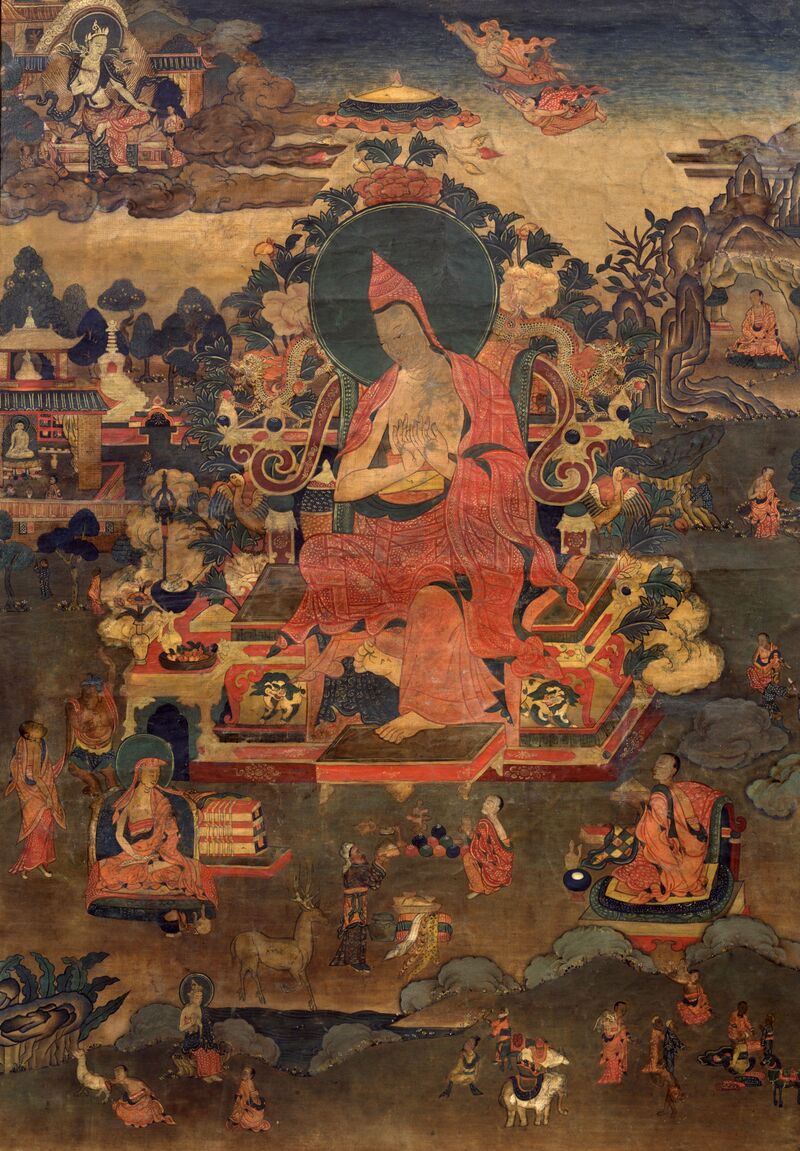
Traditionally attributed to Ārya Asaṅga (c. fourth–fifth century CE) through revelation from the future buddha Maitreya, the text likely represents a compilation of earlier materials (c. 230–300 CE) that predates the fully developed Yogācāra philosophical system. Its existence in multiple Chinese translations from the early fifth century onward confirms its early date and widespread influence across Asian Buddhism.
Traditionally attributed to Ārya Asaṅga (c. fourth–fifth century CE) through revelation from the future buddha Maitreya, the text likely represents a compilation of earlier materials (c. 230–300 CE) that predates the fully developed Yogācāra philosophical system. Its existence in multiple Chinese translations from the early fifth century onward confirms its early date and widespread influence across Asian Buddhism.

Part 1: About the Text
The Foundational Framework of the Bodhisattvabhūmi
This initial section provides a comprehensive introduction to the Bodhisattvabhūmi, which lies at the heart of the Yogācāra tradition, covering its various titles and their significance, its purpose and historical context as a foundational Mahāyāna text, and the complex question of its authorship.
Titles of the Text
The Bodhisattvabhūmi is known by several titles across its transmission history in Sanskrit, Tibetan, and Chinese. Each name reveals a facet of its identity and historical reception, highlighting its role as both a systematic treatise and a source of profound spiritual authority.[1]
The Primary Sanskrit Title: Bodhisattvabhūmiḥ
The principal Sanskrit title is Bodhisattvabhūmiḥ (बोधिसत्त्वभूमिः), which translates as "The Stage of a Bodhisattva" or "The Foundation of a Bodhisattva." In works like the Daśabhūmikasūtra (Sūtra on the Ten Stages), bhūmi clearly denotes a "stage" or "level" on a progressive spiritual path. The Bodhisattvabhūmi likewise meticulously details such a progression through its schemas of thirteen vihāras (abodes) and seven or ten bhūmis. However, the Sanskrit term bhūmi is polysemic, and both of its primary meanings are operative in this context. The term's etymological root suggests both a "ground" or "foundation." In this sense, the text serves as the foundational treatise (ādhāra) for the entire bodhisattva career. As noted by scholars such as Florin Deleanu, the primary sense of bhūmi in the titles of the Bodhisattvabhūmi and the related Śrāvakabhūmi was probably "foundation" in their earliest phases of composition. This foundational role is central to the text's purpose: to provide a comprehensive and stable ground upon which the entire edifice of a bodhisattva's training can be built.
The Bodhisattvabhūmi is formally situated within a much larger work, as indicated by the title Yogācārabhūmau Bodhisattvabhūmiḥ, or The Bodhisattva Stage within the Stages of the Yoga Practitioner. It is explicitly identified as the fifteenth of seventeen sections, or "stages," that constitute the massive encyclopedic treatise known as the Yogācārabhūmi (The Stages of Spiritual Practice). While it circulated and was translated independently, its canonical position within this larger compendium frames it as the Mahāyāna culmination of a comprehensive map of Buddhist spiritual paths.
Tibetan Title: བྱང་ཆུབ་སེམས་དཔའི་ས།
The Tibetan translation, བྱང་ཆུབ་སེམས་དཔའི་ས་ (Byang chub sems dpa'i sa), is a direct and literal rendering of the Sanskrit Bodhisattvabhūmi. It is located within the Mind-Only (སེམས་ཙམ་) section of the Tengyur (བསྟན་འགྱུར་), since it was considered to be authored by Asaṅga, the founder of the Yogācāra school. Note the common scholarly abbreviation བྱང་ས་ (byang sa) found in Tibetan literature and catalogues, the text is commonly referred to by the shortened form byang sa, formed by taking the first syllable of བྱང་ཆུབ་ (byang chub) and appending ས་ (sa) — a convention well attested across Tibetan commentary literature and citation traditions.
Chinese Titles and Their Historical Implications
The Chinese tradition preserves three distinct translations, whose titles offer significant clues about the text's early status and perceived authority. The shift in title from jīng (經, sūtra) in the early fifth-century translations to its inclusion in a lùn (論, śāstra) in the seventh century is not merely a terminological change. It reflects a significant evolution in the text's reception and the construction of its authority.
- 1. Púsà Dì Chí Jīng (菩薩地持經): Translator: Dharmakṣema (曇無讖, 385–433 CE); Date: ~410–420 CE; Taishō No.: T. 1581 (Note: The source text incorrectly lists this as T. 1582). This is an early and complete translation of the Bodhisattvabhūmi in 10 scrolls. It circulated as an independent sūtra and was highly influential.
- 2. Púsà Shàn Jiè Jīng (菩薩善戒經): Translator: Guṇavarman (求那跋摩, 367–431 CE); Date: 431 CE; Taishō No.: T. 1582. This 9-scroll work is another independent translation, confirming the text's importance in the fifth century.
- 3. Púsà Shàn Jiè Jīng . . . Shòu Jiè Fǎ (菩薩善戒經...受戒法): Translator: Guṇavarman (求那跋摩, 367–431 CE); Date: 431 CE; Taishō No.: T. 1583. This single scroll, detailing the ritual for bodhisattva ordination, was originally part of Guṇavarman's main translation (T. 1582). Due to its practical importance for Chinese Buddhists, it was detached and circulated as a separate text.
- 4. Yújiā Shī Dì Lùn (瑜伽師地論): Bodhisattva Section; Translator: Xuanzang (玄奘, 602–664 CE); Date: ~646–648 CE; Taishō No.: T. 1579. This is considered the most accurate and complete translation. The Bodhisattvabhūmi (Púsà Dì, 菩薩地) is not a standalone text here but is fully integrated as Book 15 within the massive Yogācārabhūmi (The Discourse on the Stages of Yogic Practice).
Modern English and Japanese Titles
In modern English-language scholarship and translation, the text is often referred to by its full Sanskrit name, but the first complete translation by Artemus B. Engle is titled The Bodhisattva Path to Unsurpassed Enlightenment, reflecting the text's ultimate soteriological aim. In Japanese scholarship, the text is known as Bosatsu-ji (菩薩地), and it was published in the annotated Japanese translation of the entire canon, the Kokuyaku issaikyō.
Versions and Recensions of the Bodhisattvabhūmi
The rich and complex textual history of the Bodhisattvabhūmi is attested by its survival in Sanskrit, Tibetan, and multiple Chinese translations. These different versions are not merely copies but are historical artifacts that provide crucial evidence for the text's evolution, dating, and early reception across Asia. Studying these recensions allows scholars to trace the development of Mahāyāna thought and understand how this foundational manual for the bodhisattva was adapted and transmitted through different cultural and linguistic lenses.[2]
| Version | Title (Original Script & Translit.) | Translator(s) | Date | Canonical Number |
|---|---|---|---|---|
| Sanskrit | Bodhisattvabhūmiḥ (बोधिसत्त्वभूमिः) | N/A | (Extant MS c. 8th C.) | N/A |
| Chinese 1 | Púsà Dì Chí Jīng (菩薩地持經) | Dharmakṣema (曇無讖) | c. 418–420s CE | T. 1581 |
| Chinese 2 | Púsà Shàn Jiè Jīng (菩薩善戒經) | Guṇavarman (求那跋摩) | Mid-5th C. CE | T. 1582 |
| Chinese 3 | Púsà Shàn Jiè Jīng (菩薩善戒經) | Guṇavarman (求那跋摩 | Mid-5th C. CE | T. 1583 (single scroll) |
| Chinese 4 | Yújiā Shī Dì Lùn (瑜伽師地論) | Xuanzang (玄奘) | c. 646–648 CE | T. 1579 (scrolls 35–50) |
| Tibetan | Byang chub sems dpa'i sa (བྱང་ཆུབ་སེམས་དཔའི་ས་) | Jinamitra & Ye shes sde | Early 9th C. | Toh. 4037 |
The Sanskrit Recensions
The Sanskrit text of the Bodhisattvabhūmi has survived in manuscripts discovered primarily in Nepal and Tibet, which formed the basis for modern critical editions. The existence of these manuscripts is a testament to the text's enduring importance in the final centuries of Indian Buddhism and its preservation in the Himalayan region.
- Manuscript Witnesses: The most significant extant Sanskrit witness is an eighth-century palm-leaf manuscript from Nepal, currently housed at Cambridge University Library (MS Add. 1702). This manuscript, though missing folios 1–3, 20, 30, 41, and 51, is remarkably complete and served as the primary basis for modern scholarly editions. Its physical characteristics and paleography provide invaluable data about scribal practices and text production in medieval Nepal. Other fragments and manuscripts are preserved in various collections, but the Cambridge manuscript remains the cornerstone of the Sanskrit tradition. Originally dated to the ninth century, modern paleographic analysis has revised this to the eighth century.
- Modern Critical Editions: Modern scholarship relies on two primary critical editions that collate these manuscript witnesses:
- 1. The Wogihara Edition (1930–1936): The pioneering critical edition by the Japanese scholar Unrai Wogihara was a landmark achievement in twentieth-century Buddhist studies. It made the Sanskrit text accessible to the global academic community for the first time.
- 2. The Dutt Edition (1966; revised 1978): A later edition by Nalinaksha Dutt, published as part of the Tibetan Sanskrit Works Series, incorporated additional manuscript evidence and remains a standard reference for scholars today.
- Direct Link to Sanskrit Text: The Göttingen Register of Electronic Texts in Indian Languages (GRETIL) provides an electronic version of the Sanskrit text, based on the critical edition by Nalinaksha Dutt. This is an essential resource for scholarly work.
The Chinese Translations
The existence of three separate and chronologically distinct Chinese translations is of paramount importance for understanding the text's history. These versions demonstrate that the Bodhisattvabhūmi was circulating as a major, independent work long before the entire Yogācārabhūmi was translated, and they provide a firm timeline for its composition.
Dharmakṣema's translation from around 418 CE provides a firm terminus ante quem, proving that a mature version of the text had already been composed, had achieved significant renown, and had traveled from India to China by the early fifth century. Its classification as a jīng (經), or sūtra, further speaks to its elevated status. The translation by Guṇabhadra in the mid-fifth century confirms that the text was circulating widely and was considered important enough to warrant multiple translation efforts in a short period. Furthermore, the extraction of the chapter on discipline as a separate work shows how significant its teachings on the bodhisattva precepts and vows were at an early stage.
Finally, the most famous and influential translation was produced by Xuanzang between 646 and 648 CE as part of his monumental project to translate the entire Yogācārabhūmi. In this version (T. 1579), the Bodhisattvabhūmi comprises scrolls 35–50. Having studied the text at Nālandā University under the master Śīlabhadra, Xuanzang's translation is considered the most polished, complete, and terminologically precise, reflecting what was likely the final, fully redacted form of the Sanskrit original.
The chronological evidence provided by these translations strongly supports the modern compilation hypothesis. The fact that a text of this length and complexity was already translated into Chinese by 418 CE makes it highly improbable that it was composed ex nihilo by Asaṅga late in his career.
- Direct Link to Chinese Texts: The Chinese Buddhist Electronic Text Association (CBETA) provides searchable access to the entire Taishō Tripiṭaka.
- Link: CBETA Online Reader for the Yogācārabhūmi (T. 1579); (T. 1581); (T. 1582); (T. 1583)
The Tibetan Translation
The Tibetan translation of the Bodhisattvabhūmi represents a crucial moment in the transmission of Indian Buddhism to Tibet and has served as the primary version for Tibetan scholasticism for over a millennium.
- Translation and Translators: The translation was undertaken during the first period of the Tibetan empire's systematic translation of Buddhist texts from Sanskrit. It was completed in the early ninth century by the Indian paṇḍita Jinamitra and the renowned Tibetan editor-translator (Lotsāwa) Yeshe De. This team was part of a royally sponsored project to create a comprehensive and accurate Tibetan Buddhist canon.
- Character and Significance: The Tibetan version is generally considered a highly faithful and literal rendering of the Sanskrit. The translators adhered to a standardized lexicon developed at the time to ensure consistency and precision, making the Tibetan text an invaluable witness for reconstructing and understanding the original Sanskrit. It became the definitive version for the subsequent development of Tibetan scholasticism and is the basis for the vast commentarial tradition that flourished in Tibet.
- Canonical Location: The text, titled Byang chub sems dpa'i sa, is located within the Mind-Only section of the Tengyur, the canonical collection of translated Indian treatises. It is catalogued as Toh. 4037 in the Derge edition.
- Direct Link to Tibetan Text: The Resources for Kanjur and Tanjur Studies (rKTs) is the primary online archive for accessing scanned editions of the Tibetan canon.
The Bodhisattvabhūmi within the Yogācārabhūmi Corpus
The Bodhisattvabhūmi constitutes the fifteenth of seventeen bhūmis, or stages, that form the Maulībhūmi (Basic Section) of the Yogācārabhūmi.
The seventeen stages are:
- Pañcavijñānakāyasamprayuktābhūmi
- Manobhūmi
- Savitarkāsavicārābhūmi
- Avitarkāvicāramātrābhūmi
- Avitarkāvicārābhūmi
- Samāhitābhūmi
- Asamāhitābhūmi
- Sacittikābhūmi
- Acittikābhūmi
- Śrutamayībhūmi
- Cintāmayībhūmi
- Bhāvanāmayībhūmi
- Śrāvakabhūmi
- Pratyekabuddhabhūmi
- Bodhisattvabhūmi
- Sopadhikābhūmi
- Nirupadhikābhūmi
The Text's Core Purpose: A Systematic Manual for the Bodhisattva
The Bodhisattvabhūmi stands as one of the most comprehensive and systematic expositions of the Mahāyāna Buddhist path from classical India. It is an encyclopedic manual that details the entire spiritual trajectory of a bodhisattva—an individual who vows to attain enlightenment for the benefit of all sentient beings. The text meticulously charts this course from the initial arising of the "mind of awakening" (bodhicitta) to the final fruition of perfect buddhahood.
The primary purpose of the Bodhisattvabhūmi is pedagogical. It seeks to distill, organize, and systematize the vast, and often diffuse, teachings on the bodhisattva ideal found throughout Mahāyāna scripture into a single, coherent curriculum. Early Mahāyāna sūtras, such as those of the Prajñāpāramitā corpus, presented the bodhisattva ideal in a powerful, inspirational, and often narrative-driven manner. However, they generally lacked a single, step-by-step training manual comparable to the systematic Abhidharma treatises of the non-Mahāyāna traditions.
The Bodhisattvabhūmi fills precisely this gap. Its author describes the work as a mātṛkā—a "manual" or "matrix"—for the entire Bodhisattva Piṭaka (the collection of Mahāyāna sūtras), intended to provide a systematic presentation of the teachings. This systematization was not merely an academic exercise; it was crucial for the establishment of institutionalized monastic training centers like Nālandā, which required a clear and rigorous curriculum for training bodhisattva aspirants. The Bodhisattvabhūmi is therefore not a collection of disparate essays but a meticulously structured and systematic curriculum. Its internal logic follows a clear, progressive trajectory that mirrors the spiritual development of a bodhisattva. The entire work is designed as a comprehensive manual, moving the practitioner from the foundational prerequisites for the path to the final attainment of perfect buddhahood.
The text is organized into three main books, or yogasthānas (stations of spiritual practice), which represent the three overarching phases of the bodhisattva's career:
- 1. The Support (Ādhārayogasthāna): The foundation or basis of the path. This section details everything a practitioner needs to establish the ground for their journey, from innate potential and the initial vow to the core practices and philosophical views that support them.
- 2. The Qualities That Accord with the Support (Ādhārānudharmayogasthāna): The path of progression. Building on the foundation, this section describes the recognizable signs of a true bodhisattva and maps out the progressive stages they traverse.
- 3. The Perfection of the Support (Ādhāraniṣṭhāyogasthāna): The fruition of the path. This final section describes the ultimate result of the training: the qualities, activities, and preeminent state of a fully enlightened buddha.
This tripartite structure—foundation, path, and fruition—is a classic pedagogical framework in Buddhist thought. The logic is clear: one must first establish the cause (the support), then engage in the process of transformation (the path), to finally achieve the result (the fruition).
Chapter Summaries: A Detailed Breakdown of Chapters and Their Summaries
Below is a chapter-by-chapter summary of the text, following its division into the three main books.
Book I: The Support (Ādhārayogasthāna) – The Foundation of the Path
This first and largest book comprises eighteen chapters that lay out the essential prerequisites and foundational practices for an aspiring bodhisattva.
- I.1. Gotrapaṭala (The Chapter on the Spiritual Lineage): This chapter establishes the fundamental basis for the path: the gotra, or spiritual potential. It defines the innate capacity for enlightenment that makes one a suitable vessel for the Mahāyāna, distinguishing between the naturally present lineage (prakṛtisthaṃ gotraṃ) and the lineage developed through virtuous practice (samudānītaṃ gotraṃ).
- I.2. Cittotpādapaṭala (The Chapter on Generating the Enlightenment Mind): This chapter provides a detailed analysis of the pivotal event of generating bodhicitta. It defines this "mind of awakening" as the foundational vow to attain buddhahood for the welfare of all beings and outlines its causes, contributing factors, strengths, and profound benefits.
- I.3. Svaparārthapaṭala (The Chapter on the Benefit of Self and Other): This chapter explains the core Mahāyāna principle that a bodhisattva's actions must harmoniously benefit both oneself and others. It clarifies how personal cultivation (self-benefit) is undertaken for the ultimate purpose of being able to effectively help all beings (other-benefit).
- I.4. Tattvārthapaṭala (The Chapter on the Nature of Reality): This is the philosophical heart of the entire treatise. It presents a sophisticated epistemology that critiques naive realism, arguing that our perception of the world is constructed through language and concepts. It introduces the crucial concept of the "thing-in-itself" (vastumātra) as the ineffable reality that remains after conceptual overlays are removed, advocating for a "rightly grasped emptiness" that avoids both eternalism and nihilism.
- I.5. Prabhāvapaṭala (The Chapter on Powers): This chapter details the five supernatural powers or abilities that a bodhisattva cultivates through meditation. These powers are not for self-aggrandizement but are tools to be used skillfully and compassionately for the benefit of others.
- I.6. Paripākapaṭala (The Chapter on Maturation): This chapter discusses the process of spiritual maturation (paripāka). It explains how a bodhisattva matures their own spiritual qualities and, crucially, how they help other sentient beings to mature their potential for enlightenment.
- I.7. Bodhipaṭala (The Chapter on Awakening): This chapter provides a definition of the goal of the path: unsurpassed, perfect, and complete enlightenment (anuttarā samyaksaṃbodhi). It describes the nature of a Buddha's wisdom and the purity that characterizes this ultimate state.
- I.8. Balagotrapaṭala (The Chapter on the Lineage of Strength): This chapter elaborates on the gotra concept, focusing on the specific strengths and capacities inherent in the bodhisattva lineage. It details the powers of study, reflection, and meditation that enable a bodhisattva to persevere on the long path.
- I.9. Dānapaṭala (The Chapter on the Perfection of Generosity): The first of six chapters dedicated to the pāramitās. It provides an exhaustive analysis of generosity, classifying it into the giving of material things, the giving of the Dharma, and the giving of fearlessness.
- I.10. Śīlapaṭala (The Chapter on the Perfection of Morality): This is the longest and one of the most influential chapters in the entire text. It provides a complete teaching on the discipline of bodhisattvas, detailing the three collections of precepts: restraining from evil, gathering virtuous dharmas, and working for the welfare of sentient beings. This chapter is the primary source for the Yogācāra tradition of the bodhisattva vow.
- I.11. Kṣāntipaṭala (The Chapter on the Perfection of Patience): This chapter explains the practice of patience, classifying it into the patience of enduring hardship, the patience of accepting injury from others, and the patience of definitively ascertaining the Dharma (i.e., enduring the profound truth of emptiness without fear).
- I.12. Vīryapaṭala (The Chapter on the Perfection of Effort): This chapter details the practice of joyful and unflagging effort. It describes the "armor-like" effort of the initial vow, the effort of gathering virtue, and the effort of working for others, emphasizing perseverance in the face of all obstacles.
- I.13. Dhyānapaṭala (The Chapter on the Perfection of Meditative Absorption): This chapter provides a systematic account of the meditative states a bodhisattva must master. It covers the classical absorptions (dhyānas and samāpattis) but frames them within a Mahāyāna context, explaining how they are used not for personal bliss but as a basis for wisdom and compassionate activity.
- I.14. Prajñāpaṭala (The Chapter on the Perfection of Wisdom): This chapter explains the cultivation of wisdom, the directing force of all other perfections. It focuses on the wisdom that understands the five sciences (pañcavidyāsthāna) as a tool for helping others and, most importantly, the ultimate wisdom that realizes the nature of reality (tattvārtha) as described in chapter I.4.
- I.15. Saṃgrahavastupaṭala (The Chapter on the Means of Gathering): This chapter details the four "means of gathering disciples": giving, kind speech, acting for others' benefit, and being consistent in conduct. These are the primary methods a bodhisattva uses to attract beings to the Dharma and guide them effectively.
- I.16. Pūjāsevāpramāṇapaṭala (The Chapter on Worship, Service, and the Immeasurables): This chapter combines devotional practices, such as making offerings and showing respect to the Three Jewels, with the contemplative cultivation of the four immeasurable states of mind: loving-kindness, compassion, joy, and equanimity.
- I.17. Bodhipakṣyapaṭala (The Chapter on the Factors Conducive to Enlightenment): This chapter provides the bodhisattva's unique understanding and application of the thirty-seven factors of enlightenment, a classical list of practices (including the four foundations of mindfulness, the eightfold path, etc.) shared across Buddhist traditions.
- I.18. Bodhisattvaguṇapaṭala (The Chapter on the Qualities of a Bodhisattva): This chapter serves as a summary of the foundational section, enumerating the extraordinary qualities of mind, speech, and body that a bodhisattva develops through the preceding practices.
Book II: The Qualities That Accord with the Support (Ādhārānudharmayogasthāna) – The Path of Progression
This shorter book builds upon the foundation, describing the recognizable signs of a bodhisattva and the progressive stages they traverse.
- II.1. Liṅgapaṭala (The Chapter on the Signs): This chapter explains the characteristic signs or marks of a true bodhisattva. It focuses on internal qualities like compassion, courage, and wisdom, which manifest externally as signs that can be recognized by others.
- II.2. Pakṣapaṭala (The Chapter on Factions/Orientation): This chapter discusses the different categories of bodhisattvas, primarily distinguishing between lay householder bodhisattvas and ordained monastic bodhisattvas, outlining the specific practices and commitments appropriate to each.
- II.3. Adhyāśayapaṭala (The Chapter on the Special Intention): This chapter delves into the profound and pure motivation that underlies all of a bodhisattva's actions. This "special intention" is a stable and powerful form of bodhicitta that is free from all selfish concerns.
- II.4. Vihārapaṭala (The Chapter on the Abodes): This is the central chapter of Book II and a major structural element of the entire text. It outlines a comprehensive map of the bodhisattva's journey through thirteen progressive stages or "abodes" (vihāras), from the "abode of the lineage" to the "supreme abode" just prior to buddhahood. This schema provides a more detailed map of the path than the ten bhūmis alone.
Book III: The Perfection of the Support (Ādhāraniṣṭhāyogasthāna) – The Fruition of the Path
This final book describes the ultimate result of the path: the state of a fully enlightened buddha.
- III.1. Upapattipaṭala (The Chapter on Birth): This chapter explains how an advanced bodhisattva, through their mastery and compassion, consciously chooses their place and circumstances of rebirth in order to be of greatest benefit to sentient beings.
- III.2. Parigrahapaṭala (The Chapter on Assistance): This chapter details the various ways in which a bodhisattva actively assists and takes responsibility for sentient beings, guiding them toward maturation and liberation.
- III.3. Bhūmipaṭala (The Chapter on the Stages): This chapter presents another schema of seven bodhisattva stages (bhūmis). It correlates this seven-stage model with the thirteen vihāras from Book II, offering a different heuristic for understanding the bodhisattva's development and mapping it onto more classical schemas.
- III.4. Caryāpaṭala (The Chapter on Activity): This chapter describes the four types of enlightened activity that a bodhisattva perfects: the activity of the perfections, the activity of the means of gathering, the activity of benefiting beings, and the activity of ripening beings.
- III.5. Lakṣaṇānuvyañjanapaṭala (The Chapter on the Major and Minor Marks): This chapter details the thirty-two major and eighty minor physical marks of a buddha. It explains that these are not merely physical features but are the karmic result of countless eons of perfecting virtuous conduct.
- III.6. Pratiṣṭhāpaṭala (The Chapter on Preeminence/Attainment): This concluding chapter describes the final state of unsurpassed, perfect, and complete enlightenment. It details the one hundred and forty unique qualities of a buddha, including the ten powers (daśabala), four forms of intrepid confidence (vaiśāradya), and other extraordinary attributes that define the fruition of the bodhisattva path.
Part 2: About the Author
The Asaṅga-Maitreya Nexus
The question of the Bodhisattvabhūmi's authorship is one of the most complex and debated topics in Yogācāra studies, involving a dynamic interplay between traditional hagiography and modern textual-critical analysis.
The Traditional Narrative: Divine Revelation
The traditional narrative, preserved in both Chinese and Tibetan sources, presents a collaborative origin for the text involving a human master and a celestial bodhisattva:
- Ārya Asaṅga (c. fourth–fifth century CE): Born in Gandhāra (modern-day Pakistan/Afghanistan), he is universally regarded as a foundational figure of the Yogācāra school. Hagiographies by the sixth-century translator Paramārtha and the seventh-century pilgrim Xuanzang recount that Asaṅga began his monastic career in a non-Mahāyāna school—either the Sarvāstivāda or, as Alex Wayman argues, the Mahīśāsaka—but grew dissatisfied with their teachings.
- Bodhisattva Maitreya: Hagiographies by the sixth-century translator Paramārtha (T. 2049) and the seventh-century pilgrim Xuanzang (T. 2087) recount that Asaṅga, dissatisfied with non-Mahāyāna teachings, engaged in intense meditation that culminated in his gaining the ability to travel to the Tuṣita Heaven, the celestial abode of the future buddha, Maitreya. There, he received the teachings of the Yogācārabhūmi, including the Bodhisattvabhūmi, directly from Maitreya himself. Maitreya is also said to have descended to earth at night to recite the text for Asaṅga to transcribe and then teach to others during the day. This narrative frames the text not as a human composition but as a divine revelation, thereby granting it an authority second only to the sūtras spoken by Śākyamuni Buddha.
Modern Scholarly Perspectives
Modern scholarship has applied historical and textual-critical methods to this traditional account, leading to a consensus that diverges significantly from the hagiographical narrative regarding authorship issues related to the Yogācārabhūmi in general. From this standpoint, the Yogācārabhūmi, including the Bodhisattvabhūmi, is not the work of a single author but is a multilayered, composite text. It contains heterogeneous materials from different authors and periods, likely assembled over more than a century.
The Bodhisattvabhūmi itself represents one of the earliest and most coherent strata within this compilation. Based on the date of its first Chinese translation (fifth century CE) and its internal doctrinal content, scholars like Florin Deleanu propose a formation period for the text between approximately 230 and 300 CE. This conclusion is supported by the pre-ālayavijñāna doctrinal content of the Bodhisattvabhūmi and the terminus ante quem of Dharmakṣema's ca. 420 CE translation. This places it in a "middle phase" of Mahāyāna thought, bridging the early Prajñāpāramitā sūtras and the later, mature philosophical systems of the Yogācāra school.
With regard to the authorship of the Yogācārabhūmi, historical and textual-critical methods led to several interpretations of "Maitreya":
- Historical Teacher Theory: Early twentieth-century scholars like Ui Hakuju and Erich Frauwallner proposed that Asaṅga had a human guru named Maitreya or Maitreyanātha, who was later apotheosized in the tradition. This theory is now a minority view due to a lack of corroborating evidence.
- Mystical Experience Theory: This interpretation, advanced by scholars like Paul Demiéville, suggests that Asaṅga's attribution stemmed from a genuine and profound mystical or meditative experience (samādhi), a recognized method within religious traditions for legitimizing new doctrines.
- Pretextual Authority: Scholar Shinjō Suguro proposes that "Maitreya" was used not as a historical person but as the name of the bodhisattva who was only second to the Buddha and who, as such, represented the collective authority of all high-level bodhisattvas. Martin Delhey likewise suggests the attribution was a strategic attempt to lend greater authority to the new teachings of the Yogācāras.
The "Maitreya problem" is thus more than a historical puzzle; it is central to understanding how the nascent Yogācāra school established its authority in a competitive doctrinal landscape. The school introduced novel doctrines that required a source of authority equal to or greater than existing traditions. Attributing the teachings to Maitreya—the future buddha, whose authority is recognized across Buddhist traditions—was a brilliant strategic move to ground the teachings in a superhuman, infallible source and provide them with a pan-Buddhist legitimacy. For modern scholarship, whether Maitreya was a historical person, a visionary experience, or a strategic attribution, the function of the name is mainly perceived to solve a problem of legitimation.
The Compilation Hypothesis: A Multilayered Text
The current scholarly consensus, pioneered by Lambert Schmithausen and further developed by scholars like Florin Deleanu and Robert Kritzer, holds that the Yogācārabhūmi is not the work of a single author but is a multilayered compilation. It contains heterogeneous materials from different authors and periods, likely assembled over more than a century. The Bodhisattvabhūmi itself represents one of the earliest and most coherent work within this massive collection of teachings. Based on the date of its first Chinese translation (c. 420 CE) and its internal doctrinal content (which predates mature Yogācāra concepts), scholars accept that the text’s formation period could have spanned from approximately 230 to 300 CE. Within the compilation framework, Asaṅga's role is reenvisioned as that of a final, brilliant redactor, compiler, or late-stage author who unified this vast collection of material, gave the corpus its definitive shape, and likely initiated its attribution to Maitreya to grant it supreme authority. This view reconciles the text's apparent heterogeneity with its remarkable internal coherence. While textual analysis reveals distinct doctrinal layers—for instance, the Bodhisattvabhūmi stratum lacks mature Yogācāra concepts, suggesting an early origin—the Yogācārabhūmi as a whole contains extensive and systematic internal cross-references, suggesting it was conceived as a unified work. This apparent paradox is resolved by positing a masterful final redactor (Asaṅga) who likely took a century or more of preexisting, evolving materials from a community of Yogācāra practitioners and masterfully wove them into a single, encyclopedic, and internally consistent curriculum. This redefines "authorship" in this context from "originator" to "master architect."
Asaṅga's Historical Context and Other Works
Asaṅga's other major works, such as the Mahāyānasaṃgraha and the Abhidharmasamuccaya, show a later, more developed stage of Yogācāra thought, featuring concepts like the ālayavijñāna that are absent in the Bodhisattvabhūmi. This further supports the view of the Bodhisattvabhūmi as an earlier work, either composed by Asaṅga in an earlier phase of his career or compiled by him from preexisting materials before he fully developed his mature philosophical system. His famous conversion of his younger half-brother, Vasubandhu, to the Mahāyāna path marks the consolidation of the Yogācāra school as a major intellectual force in Indian Buddhism. According to Paramārtha's biography, Vasubandhu was initially a brilliant Sarvāstivāda master and a critic of the Mahāyāna. Asaṅga, fearing his brother's intellect would be used to harm the Mahāyāna, feigned illness to summon him. Upon their meeting, Asaṅga had his students recite Mahāyāna sūtras, which moved Vasubandhu to see the profundity of the path, repent his former criticisms, and become one of its greatest proponents.
Asaṅga's Doctrinal Formation and Early Affiliation
Traditional sources are conflicted regarding Asaṅga's early monastic school, with Paramārtha naming the Sarvāstivāda and Xuanzang naming the Mahīśāsaka. The scholar Alex Wayman has mounted a significant and influential argument for the Mahīśāsaka affiliation, a thesis that offers a potential key to understanding the doctrinal soil from which Yogācāra grew. Wayman's evidence is threefold:
- Reliance on Āgamas: Asaṅga's works, particularly the Cintāmayībhūmi and Bodhisattvabhūmi, show extensive reliance on Āgama scriptures that were specifically recited by the Mahīśāsakas, most notably the Arthavargīya.
- Doctrinal Parallels: Specific Mahīśāsaka tenets align closely with doctrines found in Asaṅga's works. These include the view of dhyāna as a mundane path, the understanding of karman as primarily mental volition (cetanā), and, most importantly, the tenet of an "aggregate that lasts until the end of saṃsāra," which is a possible doctrinal precursor to the ālayavijñāna.
- Conceptual Link: Wayman proposes a conceptual link between the name "Mahīśāsaka" (teacher of the earth) and Asaṅga's systematic use of the term bhūmi (earth/stage) to structure his entire encyclopedia.
If Asaṅga, the great systematizer of Yogācāra, was trained in a school that already possessed these proto-Yogācāra ideas, it provides a more direct and logical developmental path for the school's core doctrines. This theory suggests that Yogācāra was not a radical break but an evolution from specific doctrinal threads within the non-Mahāyāna schools.
Part 3: The Bodhisattvabhūmi's Significance and Relevance to Bodhicitta
The text's relevance to the study of bodhicitta is unparalleled. It is arguably the single most important classical source for a deep, multifaceted understanding of this core Mahāyāna concept in relation to the entire bodhisattva path. The entire treatise is structured around the generation (cittotpāda) and cultivation of the "mind of awakening." The initial arising of bodhicitta is the gateway to the path, and the subsequent chapters on the six perfections, the stages of development, and ethical conduct provide the practical roadmap for actualizing this foundational vow. The text distinguishes between two types of bodhisattvas: those who are bodhisattvas by an innate, natural lineage (prakṛtisthaṃ gotraṃ) existing from time immemorial, and those who become bodhisattvas through dedicated practice and the accumulation of virtuous deeds (samudānītaṃ gotraṃ). For both, the defining act is the firm generation of the mind of enlightenment.
A Bridge to Mature Yogācāra: Doctrinal Content and Omissions
The Bodhisattvabhūmi is a cornerstone for the academic study of Mahāyāna Buddhism for several reasons. First, it is the primary classical source for understanding the systematic training of a bodhisattva. Second, its curriculum-like structure provides invaluable insight into the pedagogical methods of great Indian monastic universities like Nālandā, where it was a key part of the curriculum. Finally, its teachings directly inform the development of later, highly influential practice traditions, most notably the Tibetan ལམ་རིམ་ lam rim (stages of the path) genre and East Asian bodhisattva precept traditions.
From the perspective of its doctrinal content, the Bodhisattvabhūmi is significant for what it lacks as much as for what it contains.The doctrinal lacunae in the text—the fully developed theories that would later define the Yogācāra school, such as the storehouse consciousness (ālayavijñāna), the three natures (trisvabhāva), the three bodies of the Buddha (trikāya), and the notion of false imagination (abhūtaparikalpa)—are not incidental. In contradistinction to the Bodhisattvabhūmi, later Yogācāra texts, like the Saṃdhinirmocanasūtra and Asaṅga's own Mahāyānasamgraha, are indeed structured around these concepts as their core. This absence is therefore not a sign of incompleteness but is positive evidence for its chronological and philosophical position. The fact that the Bodhisattvabhūmi builds a complete and comprehensive path without recourse to these specific technical terms strongly implies that it represents a stage of Yogācāra thought before these concepts were fully formulated or became central. As such it is used as a key piece of evidence by scholars to establish the text's early date and its position as a foundational stratum of Yogācāra thought, predating the school's mature philosophical system.
The text thus provides a unique snapshot of "proto-Yogācāra" or "foundational Yogācāra," allowing scholars to see what problems the school was trying to solve before it developed its most famous solutions.
The Doctrine of "Rightly Grasped Emptiness" and Vastumātra
The philosophical heart of the Bodhisattvabhūmi is its doctrine of emptiness (śūnyatā), presented in its Tattvārthapaṭala (Chapter on the Nature of Reality). The text actively critiques what it considers nihilistic misinterpretations of emptiness, which it describes as "wrongly grasped." It argues for a "rightly grasped emptiness" (sugṛhītā śūnyatā), which avoids both the extreme of reifying concepts (eternalism) and the extreme of denying all reality (nihilism). This doctrine posits that a phenomenon is empty of wrong conceptual and linguistic attributions but not of "that which actually exists there." This underlying, ineffable reality is termed the "thing-in-itself" or "bare substance" (vastumātra) and is identified with the inexpressible ultimate reality (tathatā).
This formulation can be understood as a direct philosophical response to the perceived interpretive challenges posed by Nāgārjuna's Madhyamaka. Nāgārjuna's purely apophatic (negative) approach was susceptible to being misinterpreted as nihilism. The Bodhisattvabhūmi's doctrine of vastumātra offers a hermeneutic refinement: it preserves the core Mahāyāna insight of the emptiness of concepts and false projections while positing a positive, albeit ineffable, ontological ground (vastu). This provides a philosophical framework less vulnerable to nihilistic interpretation and offers a more concrete object for meditative insight.
The Bodhisattva's Curriculum: From Ethics to Contemplation
The Bodhisattvabhūmi is fundamentally a practical manual, a curriculum for training. Three key components of this curriculum stand out for their innovative and comprehensive nature.
- 1. The Śīlapaṭala (Chapter on Morality): This is the longest and one of the most influential chapters in the entire text. It provides a complete code of ethics for bodhisattvas, detailing the three collections of precepts: (1) restraining from evil, (2) gathering virtuous dharmas, and (3) working for the welfare of sentient beings. This chapter is the primary source for the Yogācāra tradition of the bodhisattva vow, including the famous eighteen root and forty-six branch precepts that became the standard for Tibetan Buddhism.
- 2. The "Five Sciences" (pañcavidyāsthāna): The text mandates that a bodhisattva must master five fields of knowledge: grammar (śabdavidyā), logic (hetuvidyā), medicine (cıkitsāvidyā), arts and crafts (śilpakarmavidyā), and inner spirituality (ādhyātmavidyā). The inclusion of these secular sciences is a radical and defining feature of the Bodhisattvabhūmi's vision. It embodies the principle of skillful means (upāya), arguing that to be truly effective, a bodhisattva's compassion must be paired with practical knowledge. This doctrine provided the philosophical justification for the comprehensive, "liberal arts" curriculum of monastic universities like Nālandā, where both religious and secular subjects were taught.
- 3. The "Four Investigations" (catasraḥ paryeṣaṇāḥ): The text provides a practical contemplative method for realizing its view of emptiness. This technique involves the systematic deconstruction of naive realism by investigating: (1) names (nāma), seeing them as mere conventions; (2) things (vastu), apprehending the "thing-in-itself" apart from its name; (3) designation of an essential nature (svabhāvaprajñapti), seeing that "essence" is a mental construct; and (4) designation of distinguishing characteristics (viśeṣaprajñapti), seeing that perceived differences are also conceptual designations. This practice leads to the "four correct cognitions" (catvāri yathābhūtaparijñānāni), a stable, nonconceptual understanding of reality.
Part 2: Influence and Significance of the Bodhisattvabhūmi in India and Tibet
The profound influence of the Bodhisattvabhūmi is clearly demonstrated by the rich commentarial tradition it inspired in both India and Tibet, cementing its status as a foundational text for Mahāyāna scholasticism. These commentaries are not mere academic exercises; they are living interpretations that show how the text was understood, practiced, and integrated into the philosophical and contemplative systems of different lineages. The Bodhisattvabhūmi also deeply influenced the way bodhicitta was taught and practiced across the main Tibetan schools.
The Indian Commentarial Foundation
Several important Indian commentaries, now preserved primarily in their Tibetan translations in the Tengyur, provide the earliest layers of exegesis.
- Guṇaprabha (c. fifth century CE): A major early commentator, likely a direct or near-direct disciple in Vasubandhu's lineage. He authored two key works specifically on the Bodhisattvabhūmi:
- Bodhisattvabhūmivṛtti (D 4044): A commentary (vṛtti) on various parts of the text.
- Bodhisattvaśīlaparivartabhāṣya (D 4045): A specific commentary (bhāṣya) on the tenth chapter, the Śīlapaṭala (Chapter on Morality).
- Jinaputra: Authored the Bodhisattvaśīlaparivartaṭīkā (D 4046), a subcommentary (ṭīkā) that further elucidates Guṇaprabha's work on the Morality Chapter.
- Sthiramati (c. 510–570 CE): A major Indian Yogācāra master who wrote a massive subcommentary on the Mahāyānasūtrālaṃkāra and is also credited with a commentary on the Bodhisattvabhūmi, though only fragments of the latter survive in Tibetan translation.
- Lost Chinese Commentaries: Chinese historical records also allude to now-lost commentaries by figures like Nanda and disciples of the great master Dharmapāla, indicating a vibrant exegetical tradition in China that did not survive.
- * Sāgaramegha/Samudramegha (c. eighth century CE): Authored an extensive commentary, the Yogācārabhūmaubodhisattvabhūmivyākhyā (D 4047). This work is a crucial resource for clarifying difficult passages in the root text, and Artemus Engle's modern English translation relies on it heavily.
The existence of two dedicated Indian commentaries on the Morality Chapter alone is remarkable. It highlights the central importance of ethics (śīla) as the bedrock of the bodhisattva's path within the Yogācāra system. This emphasis on rigorous ethical training, detailed with Abhidharmic precision, was clearly a point of major interest for both Asaṅga himself and for the subsequent scholastic tradition.
The Bodhisattvabhūmi in Tibetan Scholasticism
The Bodhisattvabhūmi became a cornerstone of Mahāyāna study in Tibet from the time of the early propagation of Buddhism there. It was particularly central to the Kadampa school and its intellectual successor, the Geluk, but its influence permeates the literature of all major Tibetan traditions.
The Kadam Tradition: The Bodhisattvabhūmi as the Heart of the Path
The Kadam school, which flourished in Tibet from the eleventh to the fourteenth centuries, represents one of the most significant and influential developments in Tibetan Buddhist history. It was not merely another sectarian school but a reform movement that sought to purify Buddhist practice by grounding it firmly in the authentic, systematic teachings of the great Indian monastic universities like Nālandā and Vikramaśīla. At the very heart of the Kadam tradition's curriculum and contemplative system lay Ārya Asaṅga's Bodhisattvabhūmi. For the Kadampa masters, this text was not just a philosophical treatise; it was the definitive architectural blueprint for the bodhisattva's career and the ultimate sourcebook for the practical cultivation of bodhicitta.
Atiśa and the Transmission of an Integrated Path
The genesis of the Kadam school is inseparable from the arrival of the great Indian paṇḍita Atiśa Dīpaṃkara Śrījñāna (982–1054) in Tibet in 1042. Atiśa arrived during Tibet's "second propagation" of Buddhism, a period of revival following an era of fragmentation. He brought with him the integrated and complete Mahāyāna tradition that had been preserved and systematized in India's great monastic centers.
A central feature of Atiśa's teaching was his synthesis of the two great streams of Mahāyāna practice:
- 1. The Lineage of Vast Conduct (rgya chen spyod brgyud): This lineage, focused on the cultivation of compassion and the practical methods of the bodhisattva path, traces its origin to the bodhisattva Maitreya and its chief systematizer, Ārya Asaṅga.
- 2. The Lineage of Profound View (zab mo lta brgyud): This lineage, focused on the wisdom realizing emptiness, traces its origin to the bodhisattva Mañjuśrī and its chief systematizer, Ācārya Nāgārjuna.
Atiśa taught that a practitioner must unite these two streams—method and wisdom, compassion and emptiness—to traverse the Mahāyāna path. The foundational and most comprehensive text for the Lineage of Vast Conduct was, without question, the Bodhisattvabhūmi. It provided the detailed, step-by-step instructions for everything from the initial generation of bodhicitta to the perfection of the six pāramitās.
The "Six Scriptures of the Kadam": The Core Curriculum
Under the guidance of Atiśa and his principal Tibetan disciple, Dromtönpa Gyalwe Jungne, the early Kadampa masters established a core curriculum based on what became known as the "Six Scriptures of the Kadam" (Bka' gdams gzhung drug). These six Indian treatises were considered the essential pillars of Mahāyāna study and practice. The Bodhisattvabhūmi was the first and most foundational of these texts. The complete list is:
- 1. Bodhisattvabhūmi (The Bodhisattva Stages) by Maitreya/Asaṅga: The primary text on the bodhisattva's path and conduct.
- 2. Mahāyānasūtrālaṃkāra (The Ornament of Mahāyāna Sūtras) by Maitreya/Asaṅga: A text that elaborates on the thematic principles of the Mahāyāna path.
- 3. Śikṣāsamuccaya (A Compendium of Training) by Śāntideva: A manual that gathers quotations from numerous sūtras to illustrate the bodhisattva's training.
- 4. Bodhicaryāvatāra (The Way of the Bodhisattva) by Śāntideva: An inspirational and practical guide to cultivating bodhicitta and the six perfections.
- 5. Jātakamālā (A Garland of Birth Stories) by Āryaśūra: A collection of stories of the Buddha's previous lives as a bodhisattva, used to inspire compassionate action.
- 6. Udānavarga (The Collected Verses): A collection of the Buddha's essential sayings, comparable to the Pāli Dhammapada, providing the ethical foundation.
The placement of the Bodhisattvabhūmi at the head of this list underscores its preeminence. It was considered the root text (gzhung) from which the others branched. While the Bodhicaryāvatāra provided poetic inspiration and the Śikṣāsamuccaya provided scriptural support, the Bodhisattvabhūmi provided the comprehensive, systematic, and encyclopedic structure for the entire path. It was the reference manual that explained the why and how of every aspect of a bodhisattva's training in meticulous detail. Tsangnakpa Tsöndrü Senge (twelfth century), a famed scholar of the Kadam tradition associated with Sangphu Neuthok Monastery, authored a commentary specifically on the difficult points of the Bodhisattvabhūmi, the Byang chub sems dpa'i sa'i dka' 'grel.
Bodhicitta and the Lamrim Legacy
The Kadam school's most enduring legacy is its pedagogical innovation: the lam rim (gradual path) genre. The Kadampa masters recognized that while texts like the Bodhisattvabhūmi were encyclopedic and profound, their sheer volume and complexity could be daunting for practitioners. Their genius lay in distilling the essential, practical instructions from these vast treatises into a graduated, sequential framework that a single individual could practice from beginning to end.
The prototype for this entire genre is Atiśa's own masterwork, the Bodhipathapradīpa (Lamp for the Path to Enlightenment). This short text is, in essence, a condensed summary of the entire path laid out in the Bodhisattvabhūmi. It organizes the path according to the capacity of three types of individuals (lower, middling, and higher), culminating in the higher capacity individual who generates bodhicitta and engages in the bodhisattva's deeds, providing thereby a gradual path based on one’s intention and motivation. The structure of the Lamp—and all subsequent lam rim texts—directly reflects the structure of the Bodhisattvabhūmi:
- It begins with establishing a proper motivation.
- It proceeds to the generation of aspirational and engaged bodhicitta.
- It details the training in the bodhisattva discipline (drawn from the Śīlapaṭala of the Bodhisattvabhūmi).
- It outlines the practice of the six perfections.
- It culminates in the union of calm abiding (śamatha) and special insight (vipaśyanā) to realize emptiness.
Thus, the Lamrim tradition can be seen as the living, practical application of the Bodhisattvabhūmi. It takes as its basis Asaṅga's scholastic masterpiece and transforms it into a direct, personal, and meditative guide. When Kadampa masters taught in the way of the Lamrim tradition, they were teaching the essential meaning of the Bodhisattvabhūmi.
From Kadam to Geluk
The Kadam tradition did not disappear but was mainly absorbed by the reform movement of Je Tsongkhapa (1357–1419), who founded the Geluk school. Tsongkhapa saw himself as reviving the pure tradition of Atiśa and the early Kadampas. His magnum opus, the Lamrim Chenmo (Great Treatise on the Stages of the Path to Enlightenment), is the ultimate fulfillment of the Kadam project.
The Lamrim Chenmo is saturated with the content, structure, and direct quotations of the Bodhisattvabhūmi. Tsongkhapa repeatedly cites the Bodhisattvabhūmi as his primary authority when explaining:
- The benefits of bodhicitta.
- The ritual for taking the bodhisattva vow.
- The specific details of the six perfections.
- The qualities of the bodhisattva stages.
Furthermore, as noted previously, Tsongkhapa wrote a specific and highly detailed commentary on the Bodhisattvabhūmi's Morality Chapter, titled An Explanation of the Bodhisattva's Morality: The Central Path to Enlightenment (Byang chub sems dpa'i tshul khrims kyi rnam bshad byang chub gzhung lam).
The role of the Bodhisattvabhūmi in the Lamrim tradition was therefore absolute and foundational. It was not merely one text among many but the doctrinal and practical heart of their entire system. It provided the authority, the structure, and the detailed content for their signature teaching—the gradual path.
This central role of the Bodhisattvabhūmi in Geluk thought continued to be recognized by later scholars, with figures like the eighteenth-century master Thüken Losang Chökyi Nyima (Thu'u bkwan Blo bzang chos kyi nyi ma, 1737–1802) writing detailed analyses of how Asaṅga's treatise functions as the interpretive key to understanding the entire Mahāyāna path. In his work The Sun That Illuminates the Excellent Path of the Great Vehicle (Theg chen lam bzang gsal ba'i nyi ma), he explains in detail how Asaṅga's Bodhisattvabhūmi serves as a commentary that supplements the Ornament of Mahāyāna Sūtras by expanding abbreviated teachings, clarifying complex topics, and presenting doctrinal points from the practitioner's perspective.
The Sakya Tradition
The Sakya tradition, renowned for its profound scholarship, engaged deeply with the principles of the bodhisattva path. While direct, full-length commentaries are less prominent, the text's influence is clear in the works of the following figures of this tradition:
- Sakya Paṇḍita Kunga Gyaltsen (1182–1251): His work Thub pa'i dgongs gsal (Clarifying the Sage's Intent) is a comprehensive Sakya exposition of the bodhisattva path that parallels the scope and depth of the Bodhisattvabhūmi. His other famous work, the Sdom gsum rab dbye (Differentiation of the Three Vows), extensively analyzes the bodhisattva's discipline, drawing heavily on the ethical framework established by Asaṅga.
- Gorampa Sonam Senge (1429–1489): A pivotal Sakya philosopher, his composition, The Ten Great Aspirations (Smon lam chen po bcu tshigs bcad du bsdebs pa), explicitly states that its contents follow the intent of the Bodhisattvabhūmi and the Mahāyānasūtrālaṃkāra, showing a direct and conscious lineage of thought.
The Kagyu Tradition
The Kagyu school traces its lineage of "Vast Conduct" (rgya chen spyod brgyud) directly to Maitreya and Asaṅga, making the Bodhisattvabhūmi a foundational ancestral text:
- Gampopa (1079–1153): His masterwork, the Thar pa rin po che'i rgyan (The Jewel Ornament of Liberation), functions as a de facto practical commentary on the bodhisattva path. It systematically presents the path from the initial generation of bodhicitta through the six perfections to final buddhahood, in a structure that clearly echoes the Bodhisattvabhūmi. It serves to make Asaṅga's vast scholasticism accessible as a direct, step-by-step guide for practitioners.
- Jamgön Kongtrül Lodrö Thaye (1813–1899): A towering figure of the nonsectarian (ris med) movement, his encyclopedic Shes bya kun khyab (The Treasury of Knowledge) synthesizes the teachings of all schools. His presentation of the sūtra path draws heavily on the entire Maitreya-Asaṅga corpus, including the Bodhisattvabhūmi.
The Nyingma Tradition
While best known for the Dzogchen teachings, the Nyingma tradition grounds this advanced practice in the common Mahāyāna path of the bodhisattva:
- Longchen Rabjam (1308–1364): His monumental works, such as the Trilogy of Rest, present the Dzogchen path as the culmination of the Mahāyāna, which requires the foundational cultivation of bodhicitta and the six perfections. In explaining this common Mahāyāna foundation, his writings reflect the same systematic path for which the Bodhisattvabhūmi is the most detailed and authoritative Indian source.
- Jamgön Mipham Rinpoche (1846–1912): His influential commentaries on key Mahāyāna texts, such as Śāntideva's Bodhicaryāvatāra and Asaṅga's Mahāyānasūtrālaṃkāra, illuminate the Nyingma understanding of the bodhisattva path. His work on the Mahāyānasūtrālaṃkāra in particular shows his deep engagement with the Maitreya-Asaṅga corpus, the same body of literature from which the Bodhisattvabhūmi originates.
- Khenpo Shenga (1871–1927): His famous annotated commentaries (mchan 'grel) on the "Thirteen Great Indian Treatises"—the standard curriculum for many Tibetan monastic colleges—provide an accessible entry point into Indian Buddhist scholasticism. While this curriculum does not include the Bodhisattvabhūmi itself, it features two other core texts from the Maitreya-Asaṅga corpus: the Mahāyānasūtrālaṃkāra and the Abhidharmasamuccaya, thus grounding students in the same foundational Yogācāra worldview.
In summary, the Indian commentarial tradition focused on scholastic clarification, particularly of the text's rigorous ethical system. The Tibetan traditions, while also engaging in scholastic analysis, integrated the Bodhisattvabhūmi's principles and teachings on bodhicitta into their unique pedagogical and contemplative systems—the Lamrim of the Geluk, the Lamdre (path and fruition) framework of the Sakya, the Mahāmudrā preliminaries of the Kagyu, and the foundational training for Dzogchen in the Nyingma school.
Part 4: Study the Text: A Guide to Key Sections and Concepts
The Bodhisattvabhūmi is a vast and meticulously structured work. Its organization into three main books maps the entire trajectory of the bodhisattva: the foundation, the path of progression, and the final fruition. This section provides a guide to the most significant chapters and concepts within this framework, offering summaries, key quotes, and pointers to essential scholarly resources for deeper study.
Book I: The Support (Ādhārayogasthāna) – The Foundation of the Path
This first and largest section, comprising eighteen chapters, lays out the essential prerequisites and foundational practices for any aspiring bodhisattva.
1. The Entry Point: Spiritual Lineage (Gotra) and Generating Bodhicitta (Cittotpāda)
- Summary: The path begins not with action, but with the spiritual lineage of the bodhisattva, the gotra. Chapter 1, the Gotrapaṭala, establishes this spiritual lineage as the basis for the path. This technical term refers to the innate potential for enlightenment that exists within beings. Asaṅga distinguishes between the naturally present lineage (prakṛtisthaṃ gotraṃ), an inherent quality of one's being, and the developed lineage (samudānītaṃ gotraṃ), which is cultivated through virtuous practice. This lineage is what makes one a suitable vessel for the Mahāyāna path.
- Chapter 2, the Cittotpādapaṭala, details the pivotal event of generating bodhicitta. It is defined as the foundational "correct aspirational prayer" (samyakpraṇidhāna), a wish to attain unsurpassed enlightenment for the welfare of all beings. The text provides a forensic analysis of its causes (e.g., seeing the power of a buddha), its strengths (e.g., the influence of a spiritual friend), and its profound benefits, which are said to instantly elevate the practitioner to the status of a "child of the buddhas."
- For Further Study:
- Translation: Engle, Artemus B., trans. The Bodhisattva Path to Unsurpassed Enlightenment: A Complete Translation of the Bodhisattvabhūmi. By Ārya Asaṅga. Boulder, CO: Snow Lion Publications, 2016. See pages 1–21.
- Scholarship: Dayal, Har. The Bodhisattva Doctrine in Buddhist Sanskrit Literature. Delhi: Motilal Banarsidass, 1970. Dayal's work provides extensive context on the historical development of the gotra and cittotpāda concepts.
2. The Philosophical Heart: The Nature of Reality (Tattvārthapaṭala)
- Summary: This fourth chapter is the philosophical core of the entire treatise and a crucial document in the history of Yogācāra thought. It presents a sophisticated epistemology that predates the full-fledged notion of "nothing but representation" (vijñaptimātra) doctrine. Its central project is to define a "rightly grasped emptiness" (sugṛhītā śūnyatā) that avoids the two extremes of eternalism (reifying concepts) and nihilism (denying all reality).
- The chapter argues that our perception of the world is constructed through arbitrary linguistic conventions and conceptual thought (vikalpa), which superimpose false characteristics onto a pure, underlying reality. This ineffable reality is termed the vastumātra—the "thing-in-itself" or "bare substance." The goal of a bodhisattva's wisdom is to see through the conceptual proliferation (prapañca) to apprehend this vastumātra directly.
- The Four Investigations and Four Correct Cognitions: To realize this nonconceptual truth, the chapter introduces two key sets of analytical tools that function as a practical method of meditation:
- 1. The Four Investigations (catasraḥ paryeṣaṇāḥ): A systematic method for deconstructing naive realism by investigating:
- Names (nāma): Seeing that names are merely conventional labels.
- Substances/Things (vastu): Seeing the "thing-in-itself" apart from its name.
- Designation of an Essential Nature (svabhāvaprajñapti): Seeing that the "essence" we attribute to things is a mental construct.
- Designation of Distinguishing Characteristics (viśeṣaprajñapti): Seeing that the differences we perceive are also conceptual designations.
- 2. The Four Forms of Thorough Knowledge (catvāri yathābhūtaparijñānāni): The correct cognitions that result from each of the four investigations, leading to a stable, nonconceptual understanding of reality.
- For Further Study:
- Translation: Willis, Janice D., trans. On Knowing Reality: The Tattvārtha Chapter of Asaṅga’s Bodhisattvabhūmi. New York: Columbia University Press, 1979. This is a dedicated, in-depth translation and study of this single, crucial chapter.
- Scholarship: Florin, Deleanu, "Meditative Practices in the Bodhisattvabhūmi: Quest for and Liberation through the Thing-In-Itself." In The Foundation for Yoga Practitioners: The Buddhist Yogācārabhūmi Treatise and Its Adaptation in India, East Asia, and Tibet, edited by Ulrich Timme Kragh, 884–919. Cambridge, MA: Harvard University Press, 2013. This article provides a brilliant analysis of the Tattvārtha chapter's philosophy and its practical application as a set of contemplative techniques.
3. The Practical Core: The Six Perfections (Pāramitās)
- Summary: Chapters 9 through 14 provide exhaustive and practical details on the cultivation of the six perfections: generosity (dāna), morality (śīla), patience (kṣānti), effort (vīrya), meditative absorption (dhyāna), and wisdom (prajñā). These are presented as the primary activities through which a bodhisattva actualizes their bodhicitta vow. Each perfection is analyzed according to a systematic schema, detailing its essence, classifications, methods of practice, and ultimate purpose.
- The Śīlapaṭala (Chapter on Morality) is the longest and one of the most influential chapters in the entire text. It provides a complete code of ethics for bodhisattvas, detailing the three collections of precepts:
- 1. The precept of restraining from evil conduct.
- 2. The precept of gathering all virtuous dharmas.
- 3. The precept of working for the welfare of all sentient beings. This chapter is the primary canonical source for the Yogācāra tradition of the bodhisattva discipline, including the famous eighteen root and forty-six branch precepts that became the standard for Tibetan Buddhism.
- For Further Study:
- Translation (Śīla Chapter): Tatz, Mark, trans. Asaṅga’s Chapter on Ethics, with the Commentary of Tsong-kha-pa, The Basic Path to Awakening, The Complete Bodhisattva. Lewiston, NY: Edwin Mellen Press, 1986. This work provides a complete translation of the Morality Chapter along with the authoritative Tibetan commentary by Je Tsongkhapa.
- Translation (Dhyāna Chapter): Demiéville, Paul, trans. "Le chapitre du Bodhisattvabhūmi sur la Perfection du Dhyāna." In Choix d'études bouddhiques (1929-1970), 300–319. Leiden: Brill, 1973. This remains a classic study of the Meditation Chapter.
Book II: The Qualities That Accord with the Support (Ādhārānudharmayogasthāna)
This book describes the signs of a genuine bodhisattva and the progressive stages of the path they traverse.
- Summary: The central chapter of this book is the Vihārapaṭala (The Chapter on the Abodes). It outlines a comprehensive map of the bodhisattva's journey through thirteen progressive stages or "abodes" (vihāras). This schema is a distinct Yogācāra contribution that parallels and elaborates upon the more widely known ten bhūmis of texts like the Daśabhūmikasūtra. The path begins with the "abode of the lineage" (gotravihāra) and progresses through stages of increasing moral (adhiśīla), mental (adhicitta), and wisdom-based (adhiprajñā) cultivation, culminating in the "supreme pleasurable state" just prior to attaining buddhahood. This detailed map provides the practitioner with clear signposts of their spiritual development.
- For Further Study:
- Scholarship: Florin Deleanu's work provides a detailed analysis of the relationship between the vihāra model and the bhūmi model, arguing that the vihāra schema is the original contribution of the Bodhisattvabhūmi.
Book III: The Perfection of the Support (Ādhāraniṣṭhāyogasthāna)
This final book describes the ultimate result of the path: the state of a fully enlightened buddha.
- Summary: This section details the fruition of the bodhisattva's eons of practice. The Pratiṣṭhāpaṭala (Chapter on Preeminence/Attainment) describes the one hundred and forty unique qualities of a buddha, including the ten powers (daśabala), four forms of intrepid confidence (vaiśāradya), and the thirty-two major and eighty minor physical marks. This chapter serves to inspire the practitioner by providing a vivid and detailed portrait of the ultimate goal of the path.
- For Further Study:
- Translation: The final chapters are translated in full in Artemus B. Engle's The Bodhisattva Path to Unsurpassed Enlightenment.
Part 5: Practicing the Text: From Scholastic Manual to Contemplative Path
While the Bodhisattvabhūmi is a dense scholastic work, it is fundamentally a practical manual. Its teachings were not meant for mere intellectual curiosity but were designed to be internalized and actualized through a rigorous and integrated program of ethical training, contemplative practice, and compassionate action. The text's influence is most clearly seen in how its principles were adapted into living practice traditions, most notably the Lamrim (Stages of the Path) tradition of Tibetan Buddhism.
The eighteenth-century Geluk master Thüken Losang Chökyi Nyima provides a powerful framework for using the Bodhisattvabhūmi as a practical guide for spiritual development. In his work The Sun That Illuminates the Excellent Path of the Great Vehicle, Thüken identifies Asaṅga's text as the highest form of a "meaning commentary" (don 'grel). He argues that its primary function is not to be read in isolation, but to be studied as an essential companion to foundational texts like the Ornament of Mahāyāna Sūtras. According to Thüken, the Bodhisattvabhūmi brilliantly supplements these other works by expanding on abbreviated topics, clarifying difficult points, and, most importantly, reframing abstract concepts from the direct perspective of a practitioner. For instance, where the Ornament might describe an antidote, the Bodhisattvabhūmi explains the corresponding quality to be abandoned, thereby grounding the teaching in the immediate reality of the practitioner's mind.
Thüken's approach transforms this combined study into a direct contemplative practice. He instructs the student to first learn the theoretical categories from a text like the Ornament—for example, the different types of spiritual lineage. Then, the practitioner should turn to the Bodhisattvabhūmi to understand the essential nature and observable signs of that lineage from an experiential viewpoint. The final and most crucial step is to synthesize these perspectives and use them as a tool for introspection. By reflecting on the detailed descriptions in the Bodhisattvabhūmi, practitioners can assess their own mental state, recognize the signs of progress, and identify the specific methods needed to cultivate their potential. For Thüken, this active integration of textual knowledge with self-examination is the "genuine purpose" of study, ensuring the Bodhisattvabhūmi becomes a living blueprint for spiritual transformation rather than a mere object of intellectual analysis.
Cultivating the Mind of Enlightenment: The Practice of Bodhicitta
The Bodhisattvabhūmi provides the foundational framework for the practical cultivation of bodhicitta:
- Generating the Aspiration: The text emphasizes that bodhicitta arises from a foundation of great compassion, which in turn arises from seeing the suffering of sentient beings. Later traditions, such as the Kadam school, systematized this into specific contemplative sequences. The famous seven-point cause-and-effect method (recognizing all beings as one's mother, remembering their kindness, wishing to repay their kindness, love, compassion, the special intention, and finally bodhicitta) is a direct practical elaboration of the principles found in the Cittotpāda Chapter. Practitioners would meditate on these points sequentially to generate a genuine and heartfelt altruistic motivation.
- The Role of the Four Immeasurables: The text explicitly links the practice of the four immeasurables (loving-kindness, compassion, joy, and equanimity) to the bodhisattva's training. These were not seen as separate practices but as essential supports for strengthening and sustaining bodhicitta. A practitioner would dedicate specific meditation sessions to cultivating these four states of mind toward all beings without exception.
The Bodhisattva's Ethical Training: The Practice of the Discipline (Śīla)
The Bodhisattvabhūmi's most direct and enduring impact on practice is through its codification of the bodhisattva’s discipline.
- The Ordination Ceremony: The text's Śīlapaṭala provided the scriptural basis for the formal ceremony of taking the bodhisattva vow. In this ritual, which is still performed today in Tibetan Buddhist traditions, a practitioner formally generates bodhicitta in the presence of a qualified master and vows to adhere to the precepts.
- Daily Practice of Mindfulness and Restraint: For a practitioner who has taken the bodhisattva vow, the Śīlapaṭala serves as a daily rulebook. The eighteen root and forty-six branch precepts, as taught in the Tibetan tradition, become the object of mindfulness. A practitioner is expected to guard their conduct of body, speech, and mind, constantly checking to see if their actions align with their vow.
- Confession and Purification: The text also provides the basis for the practice of confession (deśanā). If a precept is transgressed, the practitioner is instructed to generate regret and purify the infraction through a formal confession ritual, often performed in the presence of their master or a representation of the buddhas. This ensures that the ethical foundation of the path remains intact.
Developing the Right View: The Practice of Analytical Meditation (Vipaśyanā)
The philosophical heart of the Bodhisattvabhūmi, the Tattvārtha Chapter, is not just a theory of reality but a direct instruction on the practice of analytical meditation (vipaśyanā). Practitioners were expected to use its concepts as a guide for contemplative inquiry.
The Four Investigations as a Meditative Technique
The four investigations provide a step-by-step method for deconstructing one's naive realist perception of the world. A practitioner would use this framework in meditation as follows:
- Investigation of the Name (nāmaparyeṣaṇā): One takes an object of attachment (e.g., a person, a possession) and mentally separates the object from its name. One reflects on how the name is merely a conventional sound, a label, and not the thing itself. This practice is designed to loosen the grip of linguistic reification.
- Investigation of the Thing (vastuparyeṣaṇā): Having separated the name, one attempts to apprehend the object as a "bare substance" (vastumātra), a preconceptual given, free from the overlay of language and concepts. This is the investigation into the object as it is, prior to our mental projections.
- Investigation of the Designation of Essence (svabhāvaprajñaptiparyeṣaṇā): One then investigates the "essence" or "identity" that one projects onto the object. For example, when looking at a collection of wood and metal parts, one designates its essence as "a chair." This practice involves seeing that this perceived essence is not inherent in the object but is a mental designation (prajñapti) based on function and convention.
- Investigation of the Designation of Distinctions (viśeṣaprajñaptiparyeṣaṇā): This is the fourth investigation. One examines the qualities and distinctions that one projects onto the object. For example, "a good chair," "a large chair," or "a chair that is different from a table." This practice involves recognizing that these distinctions and value judgments are also mental designations, not intrinsic properties of the object itself.
Together, these four analytical steps form a comprehensive contemplative practice. They are designed to systematically dismantle the layers of conceptual and linguistic construction that create our seemingly solid and independent world, leading the practitioner to a more direct and nonconceptual understanding of reality as described in the Tattvārtha Chapter.
The Three Contemplations (Samādhis) as Advanced Practice
For advanced practitioners, the text reinterprets the classical Buddhist triad of emptiness (śūnyatā), signlessness (ānimitta), and wishlessness (apraṇihita) as specific meditative states for directly experiencing the vastumātra.
- The contemplation of emptiness is the practice of seeing the "thing-in-itself" as free from all verbal expressions.
- The contemplation of signlessness is the practice of seeing it as free from all conceptual characteristics (nimitta).
- The contemplation of wishlessness is the practice of observing it without any future-oriented grasping or desire (apraṇihita).
Through these three "gates of liberation," the practitioner learns to stabilize the mind in a nonconceptual apprehension of reality, which is the perfection of wisdom.
The Lamrim Legacy: The Bodhisattvabhūmi as a Meditative Sequence
The most significant historical application of the Bodhisattvabhūmi as a practice manual is its transformation into the lam rim (stages of the path) genre by the Kadam and Geluk schools of Tibetan Buddhism.
- From Encyclopedia to Roadmap: The Kadampa masters, beginning with Atiśa, recognized that the Bodhisattvabhūmi's encyclopedic structure could be distilled into a graduated, sequential framework that a single individual could practice from beginning to end. Atiśa's Lamp for the Path to Enlightenment and Tsongkhapa's Great Treatise on the Stages of the Path to Enlightenment are, in essence, practical, meditation-oriented restatements of the Bodhisattvabhūmi.
- How a Practitioner Uses the Lamrim: A practitioner following the Lamrim tradition uses the text as a guide for a series of analytical meditations. They would proceed through the topics in the prescribed order, which mirrors the structure of the Bodhisattvabhūmi:
- 1. They begin with foundational contemplations on the preciousness of human life and the reality of suffering to generate a motivation for practice.
- 2. They then engage in the specific meditations for generating bodhicitta, such as the seven-point cause-and-effect method.
- 3. Having generated the aspiration, they study and take the bodhisattva vow.
- 4. They then train in the six perfections, dedicating specific sessions to contemplating and cultivating generosity, patience, effort, and so on.
- 5. Finally, they engage in the advanced practices of calm abiding (śamatha) and special insight (vipaśyanā) to realize emptiness, directly applying the methods of the Tattvārtha Chapter.
In this way, the Lamrim tradition takes the vast scholasticism of the Bodhisattvabhūmi and transforms it into a living, personal, and contemplative path. Studying and practicing the Lamrim is, in essence, a way of practicing the core instructions of the Bodhisattvabhūmi in a structured and accessible format.
Part 6: Other Resources: A Guide for Further Exploration
For students and researchers wishing to engage with the Bodhisattvabhūmi directly, a wealth of high-quality resources is available, from digital canons to foundational scholarly works.
Primary Texts: Critical Editions and Digital Canons
Accessing the text in its original and translated forms is the essential first step for any serious study.
- Sanskrit:
- Göttingen Register of Electronic Texts in Indian Languages (GRETIL): Provides a searchable electronic version of the Sanskrit text, based on the critical edition by Nalinaksha Dutt.
- Tibetan:
- Resources for Kanjur and Tanjur Studies (rKTs): The most comprehensive online archive for accessing high-quality scanned editions of the Tibetan canon, including the Bodhisattvabhūmi (Byang chub sems dpa'i sa, Toh. 4037).
- Chinese:
- Chinese Buddhist Electronic Text Association (CBETA): An indispensable resource for accessing the Chinese translations of the text, particularly Xuanzang's T. 1579, as well as the earlier versions by Dharmakṣema (T. 1581) and Guṇabhadra (T. 1582).
Critical Editions
These are the foundational materials for any study of the Bodhisattvabhūmi.
- Dutt, Nalinaksha, ed. Bodhisattvabhūmi. Tibetan Sanskrit Works Series 7. Patna: K.P. Jayaswal Research Institute, 1966 (rev. 1978).
- A standard critical edition of the Sanskrit text in Devanagari script. It is based on a more complete manuscript than Wogihara's and includes a useful, though brief, chapter-by-chapter analysis in its introduction.
- Wogihara, Unrai, ed. Bodhisattvabhūmi: A Statement of the Whole Course of the Bodhisattva. Tokyo: Sankibo Buddhist Book Store, 1930–1936.
- The pioneering critical edition of the Sanskrit text in Roman script. Based primarily on the eighth-century Cambridge manuscript, it was a landmark publication that made the Sanskrit text widely accessible to the international academic community.
Key Scholarly Translations
While reading in the original languages is ideal, several excellent translations provide access for a wider audience.
- Complete English Translation:
- Engle, Artemus B., trans. The Bodhisattva Path to Unsurpassed Enlightenment: A Complete Translation of the Bodhisattvabhūmi. Boulder, CO: Snow Lion, 2016. This is the first and only complete, scholarly translation of the entire Bodhisattvabhūmi into English. Made from the original Sanskrit with close reference to the Tibetan translation and commentaries, it is the indispensable starting point for English-language research.
- Important Partial Translations:
- Willis, Janice D., trans. On Knowing Reality: The Tattvārtha Chapter of Asaṅga's Bodhisattvabhūmi. New York: Columbia University Press, 1979. A dedicated, in-depth translation and study of the text's crucial fourth chapter on the nature of reality (Tattvārthapaṭala). It remains a key resource for understanding the text's core philosophy.
- Tatz, Mark, trans. Asaṅga's Chapter on Ethics: With the Commentary of Tsong-kha-pa. Lewiston, NY: Edwin Mellen Press, 1986. A complete translation of the Śīlapaṭala (Chapter on Morality), the longest and most influential chapter, which is the primary source for the bodhisattva’s discipline and conduct in the Yogācāra tradition. It includes the authoritative Tibetan commentary by Je Tsongkhapa.
Foundational Scholarly Overviews and Collections
For contextualizing the Bodhisattvabhūmi, these works are indispensable.
- Brill's Encyclopedia of Buddhism: Contains authoritative, peer-reviewed articles on Ārya Asaṅga, the Yogācārabhūmi, and related topics.
- Deleanu, Florin. "Bodhisattvabhūmi." In Oxford Bibliographies Online: Buddhism. An expertly curated and annotated bibliography that serves as the best starting point for navigating the vast secondary literature on the text. See here.
. "Meditative Practices in the Bodhisattvabhūmi: Quest for and Liberation through the Thing-In-Itself." In The Foundation for Yoga Practitioners, edited by Ulrich Timme Kragh, 884–919. Cambridge, MA: Harvard University Press, 2013. A brilliant analysis of the Tattvārtha Chapter's philosophy and its practical application as a set of contemplative techniques, including the "four investigations."
- Kragh, Ulrich Timme, ed. The Foundation for Yoga Practitioners: The Buddhist Yogācārabhūmi Treatise and Its Adaptation in India, East Asia, and Tibet. Harvard Oriental Series 75. Cambridge, MA: Harvard University Press, 2013. A monumental two-volume collection of essays by over 30 leading specialists. It is the single most comprehensive resource on the Yogācārabhūmi corpus, with a detailed overview of the Bodhisattvabhūmi section.
- Schmithausen, Lambert. Ālayavijñāna: On the Origin and the Early Development of a Central Concept of Yogācāra Philosophy. 2 parts. Tokyo: The International Institute for Buddhist Studies, 1987. A seminal work that establishes the textual stratigraphy of the Yogācārabhūmi, arguing that the Bodhisattvabhūmi represents an early layer that predates the development of the ālayavijñāna doctrine.
- Wayman, Alex. "Doctrinal Affiliation of the Buddhist Master Asaṅga." In Untying the Knots in Buddhism: Selected Essays. Delhi: Motilal Banarsidass, 1997. Presents the influential and detailed argument that Asaṅga's early monastic affiliation was with the Mahīśāsaka school, based on doctrinal parallels and textual evidence found within the Yogācārabhūmi.
Digital Archives and Manuscript Repositories
For advanced researchers interested in the primary source materials, these digital archives are essential.
- Cambridge University Digital Library: Provides high-resolution, zoomable images of the eighth-century Sanskrit manuscript (MS Add. 1702) that is a cornerstone of modern editions. This allows for direct paleographical study.
- The Digital Sanskrit Buddhist Canon (DSBC): A project aiming to create a comprehensive digital canon of Sanskrit Buddhist texts, including the Yogācārabhūmi.
- 84000: Translating the Words of the Buddha: While focused on the Kangyur (the words of the Buddha), this project's extensive glossaries and resources are invaluable for understanding the technical terminology shared between sūtras and śāstras like the Bodhisattvabhūmi.
Selected Bibliography
The following list includes the primary scriptural translations and key scholarly works that informed the analysis presented in this essay.
- Deleanu, Florin. "Meditative Practices in the Bodhisattvabhūmi: Quest for and Liberation through the Thing-In-Itself." In The Foundation for Yoga Practitioners: The Buddhist Yogācārabhumi Treatise and Its Adaptation in India, East Asia, and Tibet, edited by Ulrich Timme Kragh, 884–919. Cambridge, MA: Harvard University Press, 2013. go to page
. "Bodhisattvabhūmi." In Oxford Bibliographies Online: Buddhism. Last reviewed 29 September 2021. go to page
. "The Bodhisattvabhūmi: A Brief Bibliographical Survey." Online version of an abridged version published in 2018 by the Oxford Bibliographies in Buddhism. N.P.: N.D. go to page- Delhey, Martin. "Asaṅga/Maitreya(nātha)." In Brill's Encyclopedia of Buddhism, Vol. 2: Lives, edited by Jonathan A. Silk et al., 73–80. Leiden: Brill, 2019. go to page
- Engle, Artemus B., trans. The Bodhisattva Path to Unsurpassed Enlightenment: A Complete Translation of the Bodhisattvabhūmi. Boulder, CO: Snow Lion, 2016. go to page
- Kritzer, Robert. Vasubandhu and the Yogācārabhūmi: Yogācāra Elements in the Abhidharmakośabhāṣya. Tokyo: The International Institute for Buddhist Studies, 2005. go to page
- Mullens, James. "Buddhist Educational Principles and Practices in Asaṅga's Bodhisattvabhūmi." PhD diss., University of Toronto, 1994. (Extracts) go to page
- Suguro, Shinjō. Studies on Early Vijñaptimātra Philosophy. Tokyo: Shunjūsha, 1989. go to page
- Wayman, Alex. "Doctrinal Affiliation of the Buddhist Master Asaṅga." In Untying the Knots in Buddhism, 89-114. Delhi: Motilal Banarsidass, 1997. go to page
Additional Bibliographical Resources
- Anālayo, Bhikkhu. Superiority Conceit in Buddhist Traditions: A Historical Perspective. Boston: Wisdom Publications, 2021. go to page
- Apple, James B. Jewels of the Middle Way: The Madhyamaka Legacy of Atiśa and His Early Tibetan Followers. Boston: Wisdom Publications, 2019. go to page
- Brunnhölzl, Karl. A Compendium of the Mahāyāna: Asaṅga's Mahāyānasaṃgraha and Its Indian and Tibetan Commentaries. 3 volumes. Boulder, CO: Snow Lion, 2019. go to page
- Buddhavacana Translation Group. Unraveling the Intent. Translated by Gregory Forgues et al. 84000: Translating the Words of the Buddha, 2020. https://read.84000.co/translation/toh106.html. go to page
- Clayton, Barbra. "The Changing Way of the Bodhisattva." In The Oxford Handbook of Buddhist Ethics, edited by Daniel Cozort and James Mark Shields, 116–33. Oxford: Oxford University Press, 2018. go to page
- Deleanu, Florin. The Chapter on the Mundane Path (Laukikamārga) in the Śrāvakabhūmi: A Trilingual Edition (Sanskrit, Tibetan, Chinese), Annotated Translation, and Critical Study. 2 volumes. Tokyo: The International Institute for Buddhist Studies, 2006. go to page
- Drewes, David. "Mahāyāna Sūtras in Recent Scholarship." The Canadian Journal of Buddhist Studies, no. 16 (2021): 47–98. go to page
- Frauwallner, Erich. On the Date of the Buddhist Master of the Law Vasubandhu. Rome: Istituto Italiano per il Medio ed Estremo Oriente, 1951. go to page
- Groner, Paul. "Bodhisattva Precepts." In The Oxford Handbook of Buddhist Ethics, edited by Daniel Cozort and James Mark Shields, 237–57. Oxford: Oxford University Press, 2018. go to page
- Harris, Stephen E. Buddhist Ethics and the Bodhisattva Path: Śāntideva on Virtue and Well-Being. London: Bloomsbury Academic, 2023. go to page
- Lusthaus, Dan. Buddhist Phenomenology: A Philosophical Investigation of Yogācāra Buddhism and the Ch'eng Wei-shih Lun. London: RoutledgeCurzon, 2002. go to page
- Nattier, Jan. A Few Good Men: The Bodhisattva Path According to The Inquiry of Ugra. Honolulu: University of Hawaii Press, 2003. go to page
- Powers, John, trans. Wisdom of Buddha: The Saṃdhinirmocana Mahāyāna Sūtra. Berkeley, CA: Dharma Publishing, 1995. go to page
- Schmithausen, Lambert. Ālayavijñāna: On the Origin and the Early Development of a Central Concept of Yogācāra Philosophy. Part I: Text. Tokyo: The International Institute for Buddhist Studies, 1987. go to page
. Ālayavijñāna: On the Origin and the Early Development of a Central Concept of Yogācāra Philosophy. Part 2: Notes, Bibliography and Indices. Tokyo: The International Institute for Buddhist Studies, 1987. go to page- Tucci, Giuseppe. On Some Aspects of the Doctrines of Maitreya[nātha] and Asaṅga. Calcutta: University of Calcutta, 1930. go to page
- Ui, Hakuju. "Maitreya as an Historical Personage." In Indian Studies in Honor of Charles Rockwell Lanman, 95–100. Cambridge, MA: Harvard University Press, 1929. go to page
- Wayman, Alex. "Doctrinal Affiliation of the Buddhist Master Asaṅga." In Untying the Knots in Buddhism: Selected Essays, 89–114. Delhi: Motilal Banarsidass, 1997. go to page
- Willis, Janice D. On Knowing Reality: The Tattvārtha Chapter of Asaṅga's Bodhisattvabhūmi. New York: Columbia University Press, 1979. go to page
- Wogihara, Unrai, ed. Bodhisattvabhūmi: A Statement of Whole Course of the Bodhisattva (Being Fifteenth Section of Yogācārabhūmi). Tokyo: Sankibo Buddhist Book Store, 1971. Reprint of 1930-1936 edition. go to page
Notes
- ↑ On the different titles (Sanskrit, Tibetan, and Chinese) and their implications, see Jonathan A. Silk, Oskar von Hinüber, and Vincent Eltschinger, eds. "Yogacārābhūmi," in Brill's Encyclopedia of Buddhism, vol. 1, Literature and Languages (Leiden: Brill, 2015), 597–8; Florin Deleanu, "Meditative Practices in the Bodhisattvabhūmi: Quest for and Liberation through the Thing-In-Itself," in The Foundation for Yoga Practioners: The Buddhist Yogācārabhūmi Treatise and Its Adaptation in India, East Asia, and Tibet, ed. Ulrich Timme Kragh (Cambridge, MA: Harvard University Press, 2013), 904n60, 888, 906.
- ↑ On the different versions of the text, see Robert Kritzer, Vasubandhu and the Yogācārabhūmi: Yogācāra Elements in the Abhidharmakośabhāṣya (Tokyo: The International Institute for Buddhist Studies, 2005), xiii, xv, xviii; Deleanu, "Meditative Practices", sII.1, 892n698, 905n61, 913; James Mullens, "Principles and Practices of Buddhist Education in Asaṅga's Bodhisattvabhūmi," (PhD diss., McMaster University, 1994), 27–28, 55; Shinjō Suguro, Studies on Early Vijñaptimātra Philosophy (Tōkyō: Shunjū-sha, 1989), 10. Silk, von Hinüber, and Eltschinger, Brill's Encyclopedia of Buddhism, vol. 1, 598–9; Alex Wayman, "Doctrinal Affiliation of the Buddhist Master Asaṅga," in Untying the Knots in Buddhism: Selected Essays (Delhi: Motilal Banarsidass, 1997), 92n12.

