Thirty-Seven Practices of a Bodhisattva
On this page you will find everything about The Thirty-Seven Practices of a Bodhisattva (རྒྱལ་སྲས་ལག་ལེན་སོ་བདུན་མ།, Rgyal sras lag len so bdun ma), the celebrated fourteenth-century guide to the bodhisattva path composed by Tokme Zangpo (1295–1369). The information below explores the text's titles and composition during Tokme Zangpo's retreat at Ngulchu Chodzong, its textual transmission across multiple editions, and Tokme Zangpo's life and spiritual training across Kadam and Sakya lineages. You'll discover the text's distinctive pedagogical contributions, including its interpretation of Śāntideva's exchange practice and its systematic integration of aspiration and application bodhicitta frameworks, alongside its significance for understanding the union of wisdom and compassion. The page documents its exceptional cross-sectarian reception, with commentaries spanning six centuries across all four major Tibetan schools, plus comprehensive resources for academic study and contemplative practice.

The text's cross-sectarian adoption testifies to its skillful grounding in Indian Mahāyāna sources—particularly the Bodhicaryāvatāra and works attributed to Asaṅga and Vasubandhu. Gloria Chien's research demonstrates how Tokme Zangpo consciously emphasized Kadam sources and Indian Yogācāra philosophers, creating a work that multiple Tibetan traditions could claim while maintaining doctrinal authority. This universality explains the remarkable oral lineage and commentarial heritage spanning six centuries: from Ngorchen Kunga Zangpo through Dilgo Khyentse Rinpoche and the Fourteenth Dalai Lama, masters from Nyingma, Kagyu, Sakya, and Geluk schools have produced expositions adapted to their distinctive philosophical emphases.
The present study examines The Thirty-Seven Practices as both historical artifact and living tradition, exploring the text's composition and transmission, the life and legacy of its author Tokme Zangpo, and The Thirty-Seven Practices' distinctive contributions to bodhicitta studies, its rich commentarial traditions, and its continued relevance for contemporary practitioners seeking to cultivate the awakening mind.
Part 1: About the Text
Titles of the Text
The work under examination carries several titles across different linguistic traditions. In Tibetan, the text is most commonly known as རྒྱལ་སྲས་ལག་ལེན་སོ་བདུན་མ། (Rgyal sras lag len so bdun ma), though variant spellings appear in different manuscript and print traditions, including རྒྱལ་བའི་སྲས་ཀྱི་ལག་ལེན་སུམ་ཆུ་སོ་བདུན་མ། (Rgyal ba'i sras kyi lag len sum chu so bdun ma). The title's etymology reveals the work's essential nature. The term རྒྱལ་སྲས་ (rgyal sras) combines རྒྱལ་བ་ (rgyal ba), meaning "victorious one" (a designation for the Buddha), and སྲས་ (sras), meaning "son" or "child," yielding "son of the victorious one," a poetic synonym for bodhisattva that emphasizes the spiritual lineage connecting these awakening beings to the Buddha. The term ལག་ལེན་ (lag len) denotes "practice" or "application," specifically referring to the practical implementation of teachings in daily life. The complete title thus conveys "The Thirty-Seven Practical Applications of Teachings by the Bodhisattvas."
In English, the work is therefore commonly rendered as "The Thirty-Seven Practices of a Bodhisattva," "The Thirty-Seven Practices of Bodhisattvas," or "The Thirty-Seven Verses on the Practice of a Bodhisattva." However, the author himself may have not included the numerical designation "Thirty-Seven" in the original title, referring to it simply as རྒྱལ་སྲས་ལག་ལེན་ (Rgyal sras lag len), literally "Practices of the Bodhisattvas," as evidenced in his biographical accounts. The number could have been added by editors to distinguish this particular text within the broader genre of bodhisattva practice literature.
Composition and Historical Context
Tokme Zangpo composed The Thirty-Seven Practices during the mid-fourteenth century, likely between 1337 and 1361, while in retreat at Ngulchu Chodzong in the Tsang region of Tibet. This period proved extraordinarily productive for the master, as he composed numerous works addressing various aspects of Buddhist practice and philosophy. The precise dating remains approximate, though scholars generally place the composition during the earlier part of his extended retreat period based on references in his biographical materials. According to these accounts, the composition occurred during a period of great material hardship. When others suggested he perform rituals to gain financial support, he instead chose to compose this comprehensive guide to the bodhisattva path, making the text itself a profound statement on prioritizing authentic practice over worldly gain. This decision embodied the very principles the text would teach—abandoning the eight worldly concerns and dedicating oneself to benefiting others through genuine Dharma transmission.
The text emerged within a remarkably open and ecumenical religious environment. Fourteenth-century Tibet existed before the sectarian boundaries that would characterize later developments had fully crystallized. Tokme Zangpo himself studied with masters from multiple traditions—receiving core Sakya teachings due to his proximity to Sakya Monastery while simultaneously engaging deeply with the Kadam tradition's mind training lineages. This cross-traditional study enabled him to synthesize teachings in ways that would prove accessible across sectarian lines. His conscious decision to ground the text in Indian Mahāyāna sources—particularly the Bodhicaryāvatāra and works attributed to Asaṅga and Vasubandhu—rather than in distinctively Tibetan innovations further enhanced its universal appeal.
The political landscape during Tokme Zangpo's life encompassed significant transitions. The Mongol Yuan dynasty maintained varying degrees of influence over Tibetan affairs throughout this period, with Sakya holding favored status through most of the thirteenth and early fourteenth centuries before Phagmodru power gradually ascended. Yet Tokme Zangpo's focus remained consistently on spiritual practice and transmission rather than political involvement. This positioning as primarily a contemplative master rather than an institutional power broker contributed to his text's cross-sectarian appeal in later generations.
The literary context proves equally significant. By the fourteenth century, the mind training (lojong) genre had become well-established in Tibet, with Chekawa Yeshe Dorje's Seven-Point Mind Training serving as a primary reference point. Tokme Zangpo's contribution involved synthesizing mind training instructions with the graduated path (lam rim) framework and presenting them through accessible verse form. His text neither replicated existing works nor departed radically from established teachings, but rather distilled essential principles into a format that facilitated memorization and practical application.
Textual Heritage and Transmission
The transmission history of The Thirty-Seven Practices encompasses both oral lineage and written preservation across multiple editions. The oral transmission lineage (lung) began immediately upon composition, with Tokme Zangpo teaching the verses to his direct disciples during his lifetime. His student Lochen Jangchub Tsemo (1303–1380) received this transmission and subsequently passed it to Grubchen Buddhaśrī, who transmitted it to Ngorchen Kunga Zangpo (1382–1456), ensuring its preservation within the Sakya tradition. This chain of transmission established the foundational reading lineage that continues to the present day.
Scholarly investigation identifies at least four significant historical editions containing the text or parts thereof: the Bhutan Fragmentary Collected Works, a 1975 reprint of a potentially fourteenth- or fifteenth-century xylograph; the Drepung Manuscript, a partial copy likely dating before the late seventeenth century; the Derge Collected Works, an eighteenth-century xylograph considered the most complete; and the Labrang Collected Works, a 2011 typeset edition based on the Derge edition. An additional Ngulchu edition, likely from the nineteenth century or later, also exists. Each of these editions exhibits minor textual variants in spelling and phrasing, though the substantive content remains remarkably consistent across witnesses.
Ngorchen Kunga Zangpo's collection, known as the "107 Titles," records titles attributed to Tokme Zangpo's Fragmentary Collected Works, providing documentary evidence of the early collection's scope. The first major printing of Tokme Zangpo's collected works, known as the "113 Texts," occurred in 1446 (the Fire Tiger year) and was sponsored by an unknown patron with Gendün Kyap from Bodong serving as copyist. This early standardization of Tokme Zangpo's corpus proved crucial for preserving textual integrity across subsequent transmissions. The Derge edition of the collected works, printed before 1738 with patronage from Sonam Gonpo, represents the most complete edition available. This version includes both the original "113 Texts" collection and the Mind Training Hearing Transmission (Blo sbyong snyan brgyud), making it the standard reference edition for scholars and practitioners. The Derge edition's careful woodblock carving and systematic organization have made it the basis for most subsequent reproductions. The Labrang edition from the late eighteenth century followed the Derge text with regional adaptations, while various other editions—including the Bhutan edition reprinted in 1975 and the Drepung manuscript of uncertain date—preserve alternative witnesses to the textual tradition.
Table 1: Witness and Transmission Register
| Witness/Edition | Date/Provenance | Notable Features |
|---|---|---|
| Oral transmission lineage | 1369 onward (post-composition) | Lochen Jangchub Tsemo → Grubchen Buddhaśrī → Ngorchen Kunga Zangpo |
| Ngorchen's transmission record | Early 15th century | Lists 107 titles from Tokme Zangpo's works |
| "113 Texts" first printing | 1446 (Fire Tiger year) | Sponsored by unknown patron; copyist Gendun Kyap from Bodong |
| Derge Collected Works | Before 1738 (patron: Sonam Gonpo) | Most complete edition; includes "113 Texts" + Mind Training Hearing Transmission |
| Labrang edition | Late 18th century | Based on Derge edition with local adaptations |
| Drepung manuscript | Date uncertain; cataloged by 2004 | Fragmentary; headless (dbu med) script; library cataloging marks |
| Bhutan edition | 1975 | Modern reprint combining earlier sources |
Content and Thematic Structure
The Thirty-Seven Practices presents a comprehensive guide to the Mahāyāna Buddhist path through thirty-seven verse instructions, framed by opening and closing verses that establish context and dedicate merit. The work's structure reflects a carefully designed progression from preliminary practices through advanced realizations, synthesizing complex philosophical teachings into accessible practical guidance. Each verse concludes with the refrain ". . . is the practice of a bodhisattva," creating both rhythmic unity and pedagogical reinforcement throughout the text. For example: "To abandon my native land is the practice of a bodhisattva," "To rely on solitude is the practice of a bodhisattva," "To give up the concerns of this life is the practice of a bodhisattva."
The opening homage verses establish the work's authority by paying respect to Avalokiteśvara, the bodhisattva of compassion, whom Tokme Zangpo identifies as his lodestar guiding him on the path. From this perspective, Avalokiteśvara embodies both the ultimate wisdom realizing emptiness and the compassionate activity striving solely for beings' welfare. The author's promise to compose follows, wherein he expresses his aspiration to distill the essence of bodhisattva teachings.
The thirty-seven practices are thematically presented in progressive segments, though the text does not mark these divisions explicitly. Verses 1–9 establish the preliminary foundations necessary for generating authentic bodhicitta. These preliminaries emphasize recognition of the precious human birth's rare opportunity, cultivation of renunciation by contemplating impermanence and cyclic existence's defects, and taking refuge in the Three Jewels as reliable protection from suffering. Without these foundations firmly established, subsequent bodhisattva practices would lack their necessary grounding in understanding and motivation.
Verse 10 explicitly generates aspiration bodhicitta through the fundamental Mahāyāna contemplation that all sentient beings have, throughout beginningless time, served as one's parents and have shown incomparable kindness. This recognition naturally gives rise to the heartfelt wish to liberate all beings from suffering and establish them in enlightenment's happiness.
The subsequent practices, verses 11–29, detail specific conducts and attitudes that characterize authentic bodhisattva practice, including exchanging self and others through giving and taking (tonglen), abandoning the eight worldly concerns, cultivating the four immeasurables, and systematically training in the six perfections. Each verse follows a consistent structural pattern: presenting a situation or challenge, prescribing the bodhisattva's appropriate response, and concluding with the identifying refrain. This repetitive formula serves multiple pedagogical functions—reinforcing thematic unity, aiding memorization for traditional practitioners who commit the entire text to memory, and creating a rhythmic quality that supports contemplative recitation suitable for liturgical use.
The later practices, verses 30–36, address increasingly subtle aspects of the path, including perfecting the union of compassion and wisdom, avoiding afflictive emotions in one's community, and applying antidotes to mental obscurations. These verses presuppose significant development in earlier practices and speak more directly to advanced practitioners who have stabilized their bodhicitta through years of training. The text culminates in verse 37, which emphasizes dedicating all merit accumulated through these practices toward the enlightenment of all beings, with the dedication itself performed with wisdom purified of the three concepts of subject, object, and action. This final verse thus unites the relative bodhicitta of compassionate aspiration, which has motivated all preceding practices, with the absolute bodhicitta of emptiness realization, which purifies all actions of clinging to inherent existence.
Following the thirty-seven practices proper, the text includes a colophon wherein Tokme Zangpo identifies himself, states his motivation for composing the work, and acknowledges his reliance on the teachings of masters as well as the scriptural tradition. Significantly, he refers to himself as "the monk Tokme (Asaṅga)," invoking the epithet that linked him to the great Indian Yogācāra master and demonstrating that this was not merely a nickname bestowed by others but an identity he embraced in his authorial voice. The colophon's humility and attribution to lineage sources reflect the genuine recognition that these teachings do represent not personal innovation but faithful transmission of the Buddha's intent as preserved through the Mahāyāna tradition.
Part 2: About the Author
Biographical Profile
Gyalse Tokme Zangpo, the author of The Thirty-Seven Practices, stands among fourteenth-century Tibet's most revered spiritual masters. Traditional biographical sources present him as an exemplar of the bodhisattva ideal he articulated in his writings, a figure whose life demonstrated the very practices he taught. Understanding his biographical context illuminates both the text's composition and its enduring significance within Tibetan Buddhist traditions.
Tokme Zangpo's birth occurred in 1295 (the Wood Sheep year of the fifth sexagenary cycle) in a small locality called Puljung Drakya near Sakya Monastery in the Tsang region of central Tibet. His parents, Könchok Pal and Bumdron, were described in biographical accounts as possessing pure minds and great faith in the Dharma. They named their son Könchok Zangpo, meaning "Excellence of the Three Jewels."
Childhood narratives preserved in his earliest biography emphasize innate compassion from his first years. As a toddler on his mother's lap, he once saw a leaf whirled into the air by wind and began crying intensely, pointing at the disappearing leaf and lamenting that "an animal has been carried away into the sky." On another occasion, after learning to walk, he went outside and returned naked, having given his clothing to cover a frost-covered bush he mistook for someone suffering from cold, carefully placing stones at the coat's corners to prevent it flying away. These stories establish the hagiographic topos of the compassionate child predestined for bodhisattva activity.
Tokme Zangpo's childhood was marked by successive bereavements. His mother died when he was three years old, his father when he was five, and his grandmother who subsequently cared for him passed away when he was nine. These early losses potentially contributed to his later profound understanding of suffering and impermanence. Following his grandmother's death, his maternal uncle Rinchen Tashi assumed responsibility for his care and provided his initial education. Recognizing saṃsāric pleasures as being "like a dreadful burning pit of red-hot embers," he took novice monastic vows at age fourteen in 1308, receiving the name Zangpo Pal.
His formal Buddhist education began at age fifteen (1309) when he entered Bodong Ewamling Monastery under Lama Kunga Gyaltsen's guidance. His curriculum encompassed core Mahāyāna scholastic texts: the Abhidharmasamuccaya, the five treatises of Maitreya, Śāntideva's Bodhicaryāvatāra, and the six treatises of Madhyamaka philosophy. His aptitude manifested extraordinarily; biographical sources claim he would advance more in one month of meditation and study than others achieved in three years. His intellectual brilliance particularly emerged during Abhidharma examinations when he provided sophisticated explanations of difficult concepts. This display of understanding earned him the epithet "Tokme" (Thogs med), meaning "nonobstructed" or "unimpeded," drawing comparison to the great Indian master Asaṅga (Tokme in Tibetan). By age nineteen, teachers were calling him "a second Asaṅga."
At twenty-one (1315), Tokme Zangpo began teaching while continuing his own studies. He traveled to Sakya Monastery to study epistemology (tshad ma), particularly the seven treatises of pramāṇa, under Lama Zhönu Gyaltsen. At twenty-three (1317), he participated in public debates throughout numerous monasteries in Tsang, earning widespread recognition. His teachers during this period included Rinchen Sonam Drak (1273–1345), an important Lojong master, and Butön Rinchen Drup (1290–1364), the renowned Sakya historian and systematizer.
He received full monastic ordination at age thirty (1324) at the Monastery of E. Biographical sources emphasize his meticulous observance of Vinaya precepts throughout his life, noting he never neglected even minor rules and carefully avoided clothes made from animal furs and skins out of concern for negative karma.
In 1326, at age thirty-two, Jamyang Donyo Gyaltsen (1310–1344) requested Tokme Zangpo to assume the abbot position at the great Bodong E Monastery. He served in this capacity for nine years (some sources indicate seven), from 1326 to 1335. His teaching style during this period combined profound scholarship with emotional authenticity; contemporary accounts describe him weeping while teaching, displaying sensitivity that contrasted with his contemporary Butön Rinchen Drup, known for making audiences laugh. His effectiveness derived from his ability to tailor teachings precisely to each individual's capacity and circumstances while embodying the teachings through personal conduct.
Following his abbacy, Tokme Zangpo entered an extended retreat at Ngulchu Chodzong beginning in 1337, where he remained for over two decades until 1361. During this intensive period, he composed most of his major works, including The Thirty-Seven Practices. His students from this period included several figures who would become important lineage holders: Rendawa Zhönu Lodrö (1349–1412), who later became Tsongkhapa's teacher; Nugo Gyelwa Rinchen (1328–1386); and Drubchen Sangye Pal (aka Buddhaśrī 1339–1420), who later taught Ngorchen Kunga Zangpo (1382–1456). These connections ensured the transmission of his teachings across the major Tibetan Buddhist schools.
Traditional sources emphasize his living embodiment of the teachings he transmitted. Narratives of him as an adult describe him caring for a flea-infested beggar by hosting him overnight and then wearing the beggar's infested clothing rather than risk killing the fleas. Another account describes him allowing lice to feed on his body rather than removing them. While these stories may be hagiographic exaggerations, they established Tokme Zangpo's reputation as a realized bodhisattva who actually implemented the practices of patient acceptance and cherishing others that he taught.
He earned the epithet "Gyalse" (Rgyal sras, literally "son of the victorious one"), meaning bodhisattva, acknowledging his attainment of authentic bodhicitta. He is also known as "Ngulchu Tokme" after his retreat location. Tradition counts Tokme Zangpo as the seventy-third lineage holder in the Lamrim (stages of the path) transmission, situating him within one of Tibetan Buddhism's most prestigious teaching lineages descending from Atiśa. His death occurred in 1369 (the Earth Bird year of the sixth sexagenary cycle) at age seventy-five.
Table 2: Key Biographical Information
| Birth year | 1295 CE |
| Birth location | Puljung Drakya near Sakya |
| Death year | 1369 CE |
| Parents' names | Könchok Pal (father), Bumdron (mother) |
| Ordination name | Zangpo Pal (Bzang po dpal) |
| Epithet "Tokme" origin | Given after brilliant Abhidharma examinations at age ~19 |
| Abbacy at Bodong E | 1326–1335 (9 years) |
| Retreat at Ngulchu Chodzong | 1337–1361 (primary period) |
| Major teachers | Kunga Gyaltsen, Rinchen Sonam Drak, Butön Rinchen Drup |
| Major students | Rendawa Zhönu Lodrö, Sangye Pal |
Doctrinal Contributions and Scholarly Interpretations
Modern scholarship on Tokme Zangpo has produced rich interpretive frameworks for understanding his life, works, and historical significance. While scholars agree on fundamental facts regarding authorship, dating, and textual integrity, they offer varying emphases that illuminate different aspects of his achievement.
Importance of the Kadam Tradition and the Lojong Lineage
Gloria I-Ling Chien's comprehensive dissertation and subsequent 2016 article in Revue d'Etudes Tibétaines constitute the most detailed modern scholarly engagement with Tokme Zangpo's corpus. Chien's analysis of his sectarian affiliation reveals a complex picture. While Tokme Zangpo lived near Sakya Monastery and received teachings from Sakya masters, his own Lojong lineage presentation, as recorded in his collected works, notably excludes Sakya patriarchs while emphasizing Kadam masters. Chien interprets this as Tokme Zangpo consciously crafting a lineage presentation that prioritized Kadam sources and Indian Yogācāra philosophers, possibly reflecting his own spiritual identity formation distinct from his institutional affiliation.
Hermeneutic Shift Regarding Śāntideva
In her 2018 doctoral dissertation, Judith Stenzel provides a crucial analysis of how Tokme Zangpo reinterpreted the practice of exchanging self and other from Śāntideva's Bodhicaryāvatāra. Śāntideva's original approach embedded tonglen practice within a sophisticated philosophical framework that required practitioners to meditate on the emptiness of self and the ultimate identity between self and other. In the Bodhicaryāvatāra, the exchange practice appears as part of advanced training that presupposes understanding ultimate reality—specifically, that the distinction between self and other lacks inherent existence. This represented a more radical philosophical approach, situating compassion cultivation within the context of ultimate truth.
Tokme Zangpo transformed this by extracting the exchange practice from its ultimate truth context and repositioning it as conventional application bodhicitta accessible to beginning practitioners. Stenzel observes that in his Thirty-Seven Practices of Bodhisattvas, Tokme Zangpo deliberately brackets the equalizing meditation and philosophical aspects, allowing the practice to operate entirely within the dualistic mindset of a novice bodhisattva. Rather than requiring practitioners to first comprehend the emptiness of self or the identity of self and other—which Śāntideva presented as foundational—Tokme Zangpo made tonglen available as an initial compassion training exercise at the level of relative truth. This pedagogical innovation democratized the practice, making the bodhisattva path accessible beyond monastic and scholastic elites while maintaining a structured progression where ultimate bodhicitta and the six perfections could be addressed later in training. Stenzel's analysis, drawing on scholarship by Thupten Jinpa identifying exchange of self and other as one of Śāntideva's distinctive practices, illuminates how Tokme Zangpo achieved this translation of profound philosophy into concrete daily practice applicable to practitioners of all levels.
Scholarly Discussions and Debates
The genre classification of The Thirty-Seven Practices has generated scholarly discussion. Some scholars emphasize its character as a lamrim (stages of path) text, noting its systematic progression through preliminary practices, bodhicitta generation, and the six perfections. Others classify it primarily as a lojong (mind training) work, emphasizing its focus on transforming adverse circumstances and cultivating bodhicitta through specific contemplative techniques. The emerging scholarly consensus recognizes it as a hybrid form integrating both traditions—presenting a graduated path structure while centering on mind training methods, particularly the exchange of self and others.
Chien's work also addresses Tokme Zangpo's creativity with regard to his own tradition. Her analysis demonstrates that he creatively synthesized Kadam teachings with broader Mahāyāna sources while explicitly positioning himself as transmitting rather than inventing. This creative transmission helps explain the text's remarkable cross-school adoption—by grounding instructions in citations from Indian sources and early Kadam masters, Tokme Zangpo created a work that could be claimed by multiple Tibetan traditions while maintaining doctrinal authority.
Part 3: Significance and Relevance to Bodhicitta
Tokme Zangpo's Thirty-Seven Practices holds exceptional importance for understanding bodhicitta as both a philosophical doctrine and a practical cultivation method. This section examines the text's distinctive contributions to how Tibetan Buddhism conceptualizes and teaches the awakening mind, exploring the relationship between aspiration and application, the centrality of the exchange practice, and the essential union of wisdom and compassion.
Bodhicitta: Aspiration, Application, Relative, and Absolute
The Thirty-Seven Practices holds exceptional pedagogical value for bodhicitta studies through its systematic integration of complementary typological frameworks. Rather than treating these classifications as separate doctrinal categories, Tokme Zangpo weaves them into a unified practical curriculum that demonstrates how different dimensions of the awakening mind function together in actual training. This integrated presentation makes the text particularly valuable for understanding how traditional Buddhist typologies translate into lived practice.
The text's treatment of the aspiration/application distinction (smon pa'i sems bskyed and 'jug pa'i sems bskyed) illuminates a critical transition in Mahāyāna practice—the movement from initial intention to embodied conduct. By grounding aspiration bodhicitta in the contemplation of universal kinship while immediately connecting it to specific behavioral prescriptions, the text prevents the common pitfall of maintaining bodhicitta as a mere abstract wish disconnected from daily conduct. This pedagogical strategy proves particularly significant because it addresses the perennial challenge of translating philosophical commitment into consistent ethical action. The text essentially demonstrates that aspiration without application remains sterile, while application without proper aspiration lacks the transformative power of genuine altruistic motivation.
The relative/absolute framework (kun rdzob sems bskyed and don dam sems bskyed) receives equally sophisticated treatment, revealing the text's contribution to understanding how compassion and wisdom unite in actual practice rather than remaining separate philosophical principles. The text's significance here lies in its resistance to treating these dimensions sequentially, as if practitioners first perfect relative bodhicitta before approaching absolute realization. Instead, the integration throughout the practice instructions shows how compassionate activity and wisdom realization mutually reinforce each other at every stage of the path. This simultaneous cultivation prevents two pitfalls: compassion that reinforces dualistic fixation through unreflective activity, and wisdom realization that becomes cold detachment through insufficient connection to altruistic concern.
For contemporary bodhicitta studies and contemplative studies, the text offers a case study in how Indian Mahāyāna typologies underwent a creative synthesis in fourteenth-century Tibet. Tokme Zangpo's achievement lies not in doctrinal innovation but in demonstrating how these frameworks address practical training challenges. Scholars examining how Buddhist philosophical categories function in contemplative pedagogy find in this text a clear example of theory serving practice—the typologies exist not as ends in themselves but as tools for guiding practitioners through predictable difficulties in cultivating the awakening mind. The text thus reveals the pragmatic foundations underlying what might otherwise appear as merely scholastic classification systems.
For practitioners, the text's significance lies in providing clear frameworks for self-diagnosis and course correction. The aspiration/application distinction helps practitioners recognize when their practice has become either mere wishful thinking or mechanical behavior lacking proper motivation. The relative/absolute framework enables practitioners to identify when compassionate activity is reinforcing ego-clinging or when meditation on emptiness is producing intellectual understanding divorced from genuine concern for beings. These typologies thus function as diagnostic tools, allowing practitioners to assess their current state and adjust accordingly—a practical application that explains the text's sustained relevance across seven centuries of Buddhist practice.
The Centrality of Tonglen (Exchanging Self and Others)
Verse 11 presents the text's most radical and transformative instruction:
All suffering without exception arises from desiring happiness for oneself, While perfect buddhahood is born from the thought of benefiting others. Therefore, to really exchange My own happiness for the suffering of others is the practice of bodhisattvas.
This verse articulates the core lojong practice of tonglen (giving and taking), which directly reverses ordinary self-cherishing attitudes.
The verse makes an extraordinary causal claim: self-cherishing causes all suffering, while cherishing others creates all happiness and ultimately buddhahood itself. This inverts common-sense psychology, which assumes that pursuing self-interest naturally produces well-being, while altruism requires self-sacrifice. The Buddhist analysis underlying this verse traces all afflictive emotions—desire, anger, jealousy, pride—to self-grasping and its resulting self-cherishing. The conception of an independent, truly existing self that must be protected and enhanced directly causes the very misery one seeks to avoid. Conversely, cherishing others and seeking their welfare naturally generates the attitudes and actions leading to genuine happiness and enlightenment.
The practice itself involves two complementary techniques. First, practitioners cultivate the sincere wish to take upon themselves all beings' sufferings while sending out to beings all their own happiness, virtue, and fortunate circumstances. Though Tokme Zangpo does not detail the full technique in his root verses, the commentarial tradition makes clear that this practice realizes the profound implication of genuine exchange. Second, practitioners train in actually viewing situations from others' perspectives, imaginatively placing themselves in others' positions while putting others in their own place, thereby breaking down the habitual self-other distinction that fuels self-cherishing.
Traditional commentators emphasize that tonglen requires proper grounding. Practitioners should first develop equanimity toward all beings—eliminating the distinctions of friend, enemy, and stranger that prevent impartial compassion. They should then cultivate loving-kindness (wishing all beings to possess happiness) and compassion (wishing all beings to be free from suffering) before attempting the full exchange practice. Without this foundation, the radical instruction to exchange one's happiness for others' suffering may seem psychologically impossible or even harmful.
The practice also protects the practitioner's progress on the path. By continuously redirecting merit and virtue toward others while accepting suffering and defilements upon oneself, practitioners undermine the very self-cherishing that makes spiritual accomplishment into another possession of the ego. This ensures that the accumulation of merit and wisdom serves genuine liberation rather than reinforcing the sense of self those accumulations should ultimately dissolve.
Trauma-informed contemporary teachers emphasize that practices like tonglen require careful pacing. Those dealing with significant trauma should not immediately practice taking on others' suffering, as doing so can trigger retraumatization. Instead, teachers recommend beginning with gentle loving-kindness practices, establishing safety and stability, and only gradually introducing tonglen when practitioners have developed sufficient resilience.
The Union of Wisdom and Compassion
The Thirty-Seven Practices makes its most significant doctrinal contribution to bodhicitta literature through its presentation of the inseparability of wisdom and compassion. This text's enduring influence stems from its success in demonstrating how these dimensions function as mutually corrective forces rather than separate attainments to be cultivated sequentially. Understanding this contribution requires examining not merely what the text says about wisdom and compassion, but why its particular approach proved so pedagogically effective that it became foundational across all Tibetan Buddhist schools.
By establishing Avalokiteśvara as inseparable from the root teacher—embodying both the realization that phenomena have no inherent existence and the ceaseless activity for beings' welfare—the text signals from its opening that authentic bodhicitta transcends the false choice between philosophical profundity and compassionate engagement.
The text's practical contribution is illustrated through its concept of practices being "purified of the three concepts" (rnam pa gsum dag pa)—freed from reifying agent, action, and object. This formula, applied throughout the instructions, demonstrates how wisdom transforms compassionate activity from worldly virtue into transcendent practice (pāramitā). Rather than treating emptiness realization as a separate philosophical achievement unrelated to ethical conduct, the text shows how understanding noninherent existence changes the very nature of bodhisattva activity. Actions continue, compassion functions, beings are served—but without the grasping that would bind these activities to cyclic existence. This integration proves crucial for understanding how bodhisattvas can engage fully in activity while remaining free from karmic bondage.
From the perspective of bodhicitta practice, the text illuminates how classical Madhyamaka philosophy translates into contemplative practice. The potential misunderstanding of mind-only language—that external reality doesn't exist or that one merely imagines everything—receives clarification through the commentarial tradition's emphasis on how conceptual elaboration structures experience rather than how consciousness creates material reality. This careful philosophical positioning prevents practitioners from falling into solipsistic idealism while maintaining the Madhyamaka insight that phenomena lack the independent, self-sufficient existence ordinary perception attributes to them. The text thus serves as a case study in how sophisticated philosophical views can be communicated to practitioners without requiring technical philosophical training. In regard to this, it is important to note that the text's cross-sectarian adoption testifies to its success in presenting this union in ways that remain compatible with different schools' philosophical emphases.
Part 4: Study the Text
Key Verses
While all thirty-seven verses contribute essential instructions, certain verses hold particular significance due to their concentrated expression of core teachings, their widespread citation in Buddhist discourse, or their practical utility for addressing common challenges. Examining these key verses illuminates the text's essential messages and demonstrates how concise formulations can contain profound implications. They can be understood as outlining the complete path, from generating the initial motivation to the final dedication of merit.
The Foundation: Aspiration and Exchange
Verse 10 generates aspiration bodhicitta:
If all the mothers who have loved me since beginningless time are suffering, What is the use of my own happiness? So, with the aim of liberating limitless sentient beings, To set my mind on enlightenment is the practice of a bodhisattva.
This verse presents the fundamental Mahāyāna reorientation from self-concern to universal concern. The reasoning proceeds from recognizing all beings as former mothers who showed incomparable kindness, through the logical conclusion that their happiness matters more than one's own, to the commitment to attain enlightenment as the most effective means for liberating them. This verse captures the essential logic underlying all bodhicitta cultivation—personal liberation alone proves unsatisfactory when countless beings suffer, making universal liberation the only logical aspiration.
Verse 11 introduces the practice of exchanging self with others:
All suffering without exception arises from desiring happiness for oneself, While perfect buddhahood is born from the thought of benefiting others. Therefore, to really exchange My own happiness for the suffering of others is the practice of a bodhisattva.
As explained in detail above, this verse makes the radical claim that self-cherishing causes all suffering while cherishing others creates all happiness. The practice of exchanging oneself with others (tonglen) thus represents not merely moral aspiration but a profound psychological transformation based on understanding causality. The verse's stark formulation challenges practitioners to question their most fundamental assumption—that self-interest produces happiness—and consider the counterintuitive possibility that the path to genuine well-being lies precisely in abandoning self-concern.
Compassion in Action: Transforming Adversity
Verse 16 addresses responding to betrayal:
Even if one I’ve lovingly cared for like my own child Regards me as an enemy, To love him even more, As a mother loves a sick child, is the practice of a bodhisattva.
This verse presents perhaps the most challenging instruction: responding to betrayal not with hurt or anger but with increased compassion. The simile of a mother caring for a sick child illuminates the required attitude. Parents naturally intensify care when children are ill, recognizing that the sickness itself prevents the child from acting normally. Similarly, bodhisattvas recognize that harmful actions arise from the sickness of afflictive emotions, warranting increased compassion rather than retaliation.
Verse 17 reframes criticism:
Even if my peers or my inferiors Out of pride do all they can to debase me, To respectfully consider them like my teachers On the crown of my head is the practice of a bodhisattva.
This verse challenges the instinctive response to criticism—defensiveness or counterattack—by suggesting that insults function as spiritual teachings. The practice of receiving criticism as though from one's guru transforms potentially harmful interactions into opportunities for growth. Criticism reveals pride, tests patience, and provides chances to practice equanimity. By viewing insulters as benefactors who expose faults one might otherwise ignore, practitioners turn adversity into advantage.
Verse 20 identifies the true enemy:
If one does not conquer one’s own hatred, The more one fights outer enemies, the more they will increase. Therefore, with the armies of loving-kindness and compassion, To tame one’s own mind is the practice of a bodhisattva.
This verse pivots from responding to external harm to conquering the internal source of all conflict. It teaches the futility of trying to defeat every external foe, an endless and impossible task. The true enemy is one's own hatred. The only effective strategy is to turn inward and deploy the "armies" of loving-kindness and compassion to tame the mind itself. This is the ultimate victory.
The Wisdom That Liberates
Verse 21 reveals the nature of attachment:
Sense pleasures and desirable things are like salt water— The more one tastes them, the more one’s thirst increases. To abandon promptly All objects which arouse attachment is the practice of a bodhisattva.
This verse addresses the pervasive obstacle of attachment to sensory pleasures. The powerful simile of salt water illustrates that indulging in craving does not lead to satisfaction but only intensifies thirst. It points to the self-perpetuating cycle of desire. The instruction is not necessarily ascetic rejection but a clear-eyed perception of pleasure's unreliable and ultimately frustrating nature, which naturally leads to relinquishing obsessive craving.
Verse 22 introduces the nature of mind:
All that appears is the work of one’s own mind; The nature of mind is primordially free from conceptual limitations. To recognize this nature And not to entertain concepts of subject and object is the practice of a bodhisattva.
This is one of the text's most profound verses on wisdom. It presents a twofold instruction: first, to recognize that all appearances are mind-dependent, not independently existing external realities. Second, to realize that the nature of this mind itself is primordially pure, open, and free from the dualistic concepts of a grasping "subject" and a grasped "object." This is the practice of realizing ultimate bodhicitta, the direct perception of emptiness.
Verse 30 establishes the necessity of wisdom:
In the absence of wisdom, perfect enlightenment cannot be attained Through the other five perfections alone. Therefore, to cultivate wisdom combined with skillful means And free from the three concepts is the practice of a bodhisattva.
This verse emphasizes that without wisdom realizing emptiness, even virtuous practices like generosity and discipline cannot lead to complete liberation. They may produce pleasant rebirths, but they do not cut the root of ignorance that perpetuates samsara. Only wisdom, complemented by the skillful means of the other perfections, can accomplish this. Compassion and wisdom are the two wings of enlightenment; neither can fly alone.
Integrating the Path: Mindfulness and Dedication
Verse 36 prescribes continuous mindfulness:
In short, wherever I am, whatever I do, To be continually mindful and alert, Asking, ""What is the state of my mind?" And accomplishing the good of others is the practice of a bodhisattva.
This verse provides the key to integrating all other practices into every moment of life. It distills the path into a simple, continuous self-inquiry: "What is my mind doing right now?" This constant, gentle awareness allows one to apply the appropriate antidotes, cultivate compassion, and ensure that every action is oriented toward the benefit of others. It transforms the Dharma from a set of ideas into a living, moment-to-moment reality.
Verse 37 concludes with ultimate dedication:
Dedicating to enlightenment Through wisdom purified of the three concepts All merit achieved by such endeavor, To remove the suffering of numberless beings, is the practice of a bodhisattva.
This final verse demonstrates that bodhisattva practice culminates not in personal attainment but in universal dedication. All merit is offered for the liberation of all beings. This is done with the "wisdom purified of the three concepts," meaning a nongrasping awareness that sees the emptiness of the one dedicating (the self), the act of dedication, and the beings to whom it is dedicated. This nongrasping dedication perfects generosity and prevents attachment to virtue, ensuring that all efforts genuinely serve the limitless path of the bodhisattva.
These key verses represent concentration points where the text's essential teachings achieve particularly powerful expression. Together, they form a complete path from preliminary practices through bodhicitta generation to wisdom realization to final dedication, showing how each element supports and completes the others in the comprehensive training that defines bodhisattva practice.
The Commentarial Tradition and Reception
The Thirty-Seven Practices has generated an extraordinarily rich commentarial tradition spanning over six centuries and encompassing all four major schools of Tibetan Buddhism. This universal adoption—remarkable for a text composed by a single author in the fourteenth century—demonstrates both the work's skillful presentation and the presectarian foundations upon which it rests. This section examines how different lineages have interpreted and transmitted Tokme Zangpo's teaching, highlighting both shared understandings and distinctive emphases.
Early Reception and the Kadam/Sakya Context
The text's initial reception occurred within the overlapping spheres of the Kadam and Sakya traditions, both of which claimed Tokme Zangpo as their own while emphasizing different aspects of his legacy. His student Penden Yeshe directly inherited his Lojong lineage, ensuring preservation within the Kadam context that had originally nurtured Tokme Zangpo's mind training education.
Sakya teachers often interpret the text within the Lamdre framework. The early verses of The Thirty Practices, such as those on renunciation, can easily be related to the "three visions" structure that organizes the Lamdre path. Later verses concerning emptiness and wisdom can be explained in relation to Sakya teachings on the ultimate view and nondual wisdom. While Tokme Zangpo himself notably excluded Sakya masters from his specific Lojong lineage presentation in Lineage of Mahāyāna Lojong Masters, prominent Sakya scholars still revered him. For example, the great philosopher Gorampa Sönam Senge admired Tokme Zangpo and his transmission lineage from Atiśa. The fifteenth-century Sakya anthologists Zhönu Gyelchok and Könchok Gyeltsen included lojong texts in their collection, creating one of the first major repositories of mind training materials. Notably, their compilation included Sakya patriarchs whom Tokme Zangpo had left out of his own lineage presentation, suggesting they recognized his distinctive emphasis on Kadam sources while reclaiming him for Sakya institutional memory.
By the sixteenth century, the text had achieved sufficient circulation that commentaries began appearing from multiple lineages. Marking the lineage's formal entry into Geluk transmission, the Fifth Dalai Lama (1617–1682) adopted the Lojong lineage originating from Tokme Zangpo, specifically accepting the version that had been slightly modified by Tokme's student, Penden Yeshe. This adoption proved crucial for the text's subsequent prominence, as the Geluk school's dominance in Tibet from the seventeenth century onward ensured that The Thirty-Seven Practices reached wide audiences through the Geluk network of monastic institutions.
Geluk School
Geluk commentaries characteristically emphasize analytical precision, systematic organization through the Lamrim (graduated path) framework, and cross-referencing with authoritative sources like Tsongkhapa's works and the Bodhicaryāvatāra.
Drakar Lobzang Palden Tenyän Drak (1866–1928), a Geluk scholar, authored an outline commentary (sa bcad) providing a structural analysis of the text within the Geluk analytical tradition.[1]
The Fourteenth Dalai Lama, more recently, has taught The Thirty-Seven Practices numerous times throughout his decades of public teaching, producing multiple commentaries that have achieved global circulation. His earliest published commentary appears in the Tibet Journal (1981), demonstrating engagement with the text from early in his exile period. His Commentary on the Thirty Seven Practices of a Bodhisattva (2004) presents a systematic exposition suitable for both Asian and Western audiences, explicating each verse with analytical precision while providing contemporary examples. His teaching at Leh, Ladakh addressed real-world challenges and modern ethics, showing how traditional Buddhist instructions on overcoming attachment and cultivating universal compassion apply to contemporary situations.[2]
The Dalai Lama's teaching style combines traditional Geluk analytical methods with spontaneous practical examples from current events. He characteristically maps the text's verses onto the Lamrim framework: verses 1–9 correspond to preliminary practices shared with the initial scope; verse 10 marks entry to the great scope through bodhicitta generation; verses 11–29 detail the six perfections and related practices constituting application bodhicitta; and verses 30–37 address advanced topics like unifying method and wisdom. This systematic organization helps practitioners understand how each instruction fits within the comprehensive path structure.
Geshe Sonam Rinchen, working at the Library of Tibetan Works and Archives in Dharamsala, produced an influential English-language commentary (1997) that has become the standard for Western students. His presentation follows traditional Geluk expository methods—providing word-by-word explanations, philosophical background from Indian sources, and detailed practice instructions. He cross-references extensively with other authoritative texts, particularly Tsongkhapa's Great Treatise on the Stages of the Path, showing how The Thirty-Seven Practices' concise instructions connect to elaborate philosophical treatments.
Geshe Jampa Tegchok's Transforming Adversity into Joy and Courage (2005) pairs The Thirty-Seven Practices with The Eight Verses of Training the Mind, demonstrating the textual relationships within the lojong genre. His presentation emphasizes practical application for Western lay practitioners while maintaining connection to traditional Geluk scholastic methods. He addresses modern psychological issues—depression, anxiety, low self-esteem—showing how Buddhist practices address these challenges without requiring belief in Buddhist cosmology or accepting all traditional cultural assumptions.
Nyingma School
The Nyingma school, as Tibet's oldest Buddhist lineage, has particularly treasured Tokme Zangpo's Thirty-Seven Practices as harmonizing naturally with its emphasis on bodhicitta and the Dzogchen view. Nyingma commentators characteristically emphasize how the text's instructions serve both as standalone practices and as supports for Dzogchen training, interpreting the verses through frameworks that unite relative and absolute dimensions.
Dilgo Khyentse Rinpoche (1910–1991), one of the twentieth century's most influential Nyingma masters, gave extensive oral teachings on The Thirty-Seven Practices in 1984, which were translated and published as The Heart of Compassion by the Padmakara Translation Group. His commentary follows a systematic structure, dividing the text's verses into distinct sections: preliminary practices (verses 1–7) covering topics like precious human birth, renunciation, solitude, impermanence, spiritual friends, and refuge; the main teachings organized according to paths for beings of lesser, medium, and superior capacity; and a detailed exposition of both relative and absolute bodhicitta. In explaining relative bodhicitta, he presents the meditation practice of exchanging oneself and others alongside post-meditation instructions for using unfavorable circumstances on the path. For absolute bodhicitta, he discusses remaining in a state free of conceptual elaborations and abandoning belief in objects as truly existing. According to Dilgo Khyentse's commentary, correctly engaging in relative bodhicitta—the compassionate path—means absolute bodhicitta, the wisdom realizing emptiness, is already implicitly present and will eventually fully manifest through that practice. Throughout the work, Khyentse Rinpoche abundantly quotes Śāntideva's Bodhicaryāvatāra, demonstrating the textual relationship between Tokme Zangpo's concise verses and Śāntideva's more elaborate instructions.
The Nyingma commentarial tradition extends from earlier masters into the modern period. Dza Rongphu Tulku Ngawang Tenzin Norbu (1867–1940), a renowned Nyingma master, authored multiple works on The Thirty-Seven Practices, including both a formal commentary and a lineage supplication text.[3] Lakla Sönam Chödrub (1862–1944) produced a concise meaning commentary titled Bsdus don rab gsal snang ba, extracting essential points for practitioners.[4]
Khangsar Tenpa'i Wangchuk (1938–2014) represents the modern revival of Nyingma scholarship after the Cultural Revolution. Born in Golok, eastern Tibet, he was recognized as a tertön (treasure revealer) and became learned in the rigorous Geluk scholastic curriculum despite being a Nyingma monk. During twelve years of imprisonment during the Cultural Revolution, he continued dedicated practice alongside other great masters. Upon release, he focused on teaching, writing commentaries, and restoring Khangsar Taklung and Panak monasteries in Golok. His collected writings, currently being translated by the Padmakara Translation Group, include two works on The Thirty-Seven Practices: a concise meaning commentary (bsdus don) and a detailed word commentary (tshig 'grel).[5] Minling Khenchen Tsewang Rigdzin (b. 1958), continuing this lineage, authored a commentary titled Clouds of Bodhicitta (Byang chub sems sprin).[6]
Khenpo Sodargye, a contemporary Nyingma teacher associated with Larung Gar, has produced perhaps the most extensive modern commentary through a fifty-three-part video teaching series distributed globally online. His teachings reach massive audiences in China and worldwide through digital platforms, representing a new mode of transmission adapted to twenty-first-century technology. His presentations characteristically combine traditional Nyingma scholastic methods with contemporary examples, making ancient instructions relevant to modern practitioners facing urban life's specific challenges. He emphasizes the text's practical applicability for lay practitioners, showing how verses on patience, contentment, and cherishing others can transform responses to workplace conflicts, family difficulties, and social media interactions.
Kagyu School
The Kagyu school has produced numerous important commentaries emphasizing The Thirty-Seven Practices's experiential and devotional dimensions. Kagyu presentations characteristically highlight tonglen practice as the heart of the teaching, integrating mind training with Mahāmudrā understanding to show how relative and absolute practices support each other.
Contemporary Kagyu teachers continue this tradition. Khenchen Thrangu Rinpoche (1933–2023) represents one of the Kagyu school's most prolific commentators. Born in Kham, eastern Tibet, he was recognized at age five as the ninth incarnation of the Thrangu tulku. He received full ordination from the Sixteenth Karmapa and fled to India in 1959. At age thirty-five, he was awarded the degree of Geshe Lharampa (the highest Geluk degree) and subsequently received the Khenchen degree of the Kagyu tradition. He served as Abbot of Rumtek Monastery and the Nalanda Institute, training the younger tulkus of the lineage including the Seventeenth Karmapa, whose personal tutor he became. He established monasteries, nunneries, and Dharma centers throughout Asia, Europe, and North America, authoring over forty-five books in English. His commentary on The Thirty-Seven Practices, titled Easy Explanation (Go bder bkral ba), serves Kagyu monastic college (shedra) studies with methodical elucidation of each practice.[7] He passed away on June 4, 2023, on the full moon of Saga Dawa, the anniversary of Buddha Śākyamuni's parinirvāṇa.
The Seventeenth Karmapa, Ogyen Trinley Dorje, has taught The Thirty-Seven Practices extensively, with his commentaries emphasizing contemporary social values and environmental ethics. He interprets verses on contentment and abandoning acquisitiveness as addressing modern consumerism and ecological destruction, showing how ancient instructions speak to twenty-first-century challenges. His teaching style combines the traditional Kagyu devotional emphasis with a sophisticated philosophical analysis, making the text accessible to diverse audiences.
The Drukpa Kagyu lineage's engagement is documented through Drukje Khenpo Gedun Rinchen (1926–1997), the 69th Je Khenpo of Bhutan, who authored an outline commentary (sa bcad) providing a structural analysis of verse relationships.[8] From the Kamtsang Kagyu, Sangye Nyenpa Gelek Drubpe Nyima (b. 1964) produced a root text with short commentary (Rtsa ba dang 'grel chung, making the teachings accessible for study and practice.[9]
Garchen Rinpoche has produced recent teachings (published 2024) emphasizing the tonglen practice as the core method for actualizing bodhicitta. His presentations characteristically stress the importance of guru devotion and lineage connection, viewing the text not merely as instructions to be understood intellectually but as a transmission from realized masters that carries spiritual blessing. This devotional emphasis represents a distinctive Kagyu contribution—treating the study of the text as part of practice itself rather than mere preparation for practice.
The Kagyu school's integration of The Thirty-Seven Practices into its educational systems, particularly within shedras (monastic colleges), ensures systematic transmission. Students memorize the verses, debate their meanings, and receive detailed explanations from qualified teachers before attempting to apply the instructions. This ensures that practices like tonglen, which could be psychologically destabilizing if attempted prematurely, are undertaken with proper preparation and guidance.
The Rime Tradition
The nineteenth-century Rime (nonsectarian) tradition played a pivotal role in preserving The Thirty-Seven Practices as a universal teaching, creating a bridge between the classical Kadam tradition and the text's modern, global synthesis. Rime masters like Dilgo Khyentse Rinpoche emphasized drawing upon sources that preceded later divisions, viewing texts like The Thirty-Seven Practices as embodying essential Buddhist principles that transcended institutional boundaries.
Minyak Kunzang Sönam (1823–1905), a Rime master who trained extensively with Patrul Rinpoche after beginning in the Geluk tradition, authored The Excellent Vase of Nectar, a commentary on The Thirty-Seven Practices of a Bodhisattva.[10] This work, translated into English by Heidi Köppl, provides detailed instructions for practice sessions, showing how to integrate study with meditation and daily conduct. He emphasizes that scriptures (representing the scholastic tradition) and oral instructions (representing the practice lineage) ultimately teach the same essential path, with differences reflecting a skillful adaptation to various capacities rather than a fundamental disagreement.
Other Commentators
Beyond the masters discussed above, additional commentators continue enriching the tradition. Bumthang Geshe Tsultrim Palzang (born nineteenth century) authored an annotated commentary titled Dispelling Mental Darkness (Mchan 'grel yid kyi mun sel).[11] Sempa Dorje (1929–2022) produced a commentary called Adorned with Glorious Lamp ('Grel pa dpal gyi sgron ma).[12]
Additional oral commentaries continue appearing, with contemporary masters from all schools offering teachings adapted to modern educational contexts while maintaining fidelity to the lineage of The Thirty-Seven Practices.
Part 5: Practice the Text
Traditional Applications
As just mentioned above, traditional Tibetan monastic education incorporates The Thirty-Seven Practices as foundational mind training across all major schools. Monks memorize the verses during preliminary training, establishing the text in memory for ready application throughout life. This memorization serves multiple functions: making the teachings immediately accessible when facing specific situations, creating mental frameworks for interpreting experience, and providing liturgical material for daily recitation.
Recitation and Memorization
Daily recitation forms the bedrock of traditional practice. Monks recite the verses during morning practices, often in conjunction with refuge, bodhicitta generation, and preliminary prayers. This daily repetition gradually internalizes the teachings, making specific instructions spontaneously arise when relevant circumstances occur. Lay practitioners likewise commit key verses to memory, particularly those addressing common challenges like responding to insults, dealing with loss, or maintaining equitable attitudes toward friends and enemies. The text's consistent verse structure—situation, response, concluding refrain—supports memorization through its predictable pattern.
Analytical Meditation
Beyond recitation, practitioners engage in analytical meditation using individual verses as contemplation objects. A typical session might focus on a single verse, with the practitioner first analyzing the situation described, then considering how the prescribed response differs from ordinary reactions, examining the underlying Buddhist principles justifying this response, and finally generating heartfelt determination to implement the instruction when facing similar circumstances. This analytical phase gradually shifts into meditation, where the practitioner rests in the insight generated through analysis, allowing the understanding to sink deeply into consciousness.
For example, a practitioner contemplating verse 12—which instructs giving everything to someone who steals one's possessions—might analyze: (1) the normal response of anger and desire for retaliation, (2) how this response perpetuates cycles of harm, (3) how viewing the thief as repaying a karmic debt transforms the situation, (4) how practicing patience accumulates the merit of forbearance perfection, and (5) how the thief actually benefits oneself by providing an opportunity for practice. Through repeated contemplation, this counterintuitive perspective gradually becomes more accessible, eventually arising spontaneously when facing actual theft or loss.
Tonglen Practice
The practice of giving and taking (tonglen) formed a core application of verse 11's instruction to exchange one's happiness for others' suffering. Though Tokme Zangpo doesn't detail the technique in the root text, traditional commentaries provide step-by-step instructions. Practitioners visualize taking upon themselves—through breathing in dark smoke or other imagery—all beings' sufferings, causes of suffering, and karmic obscurations. They then send out—through breathing out white light or similar imagery—all their own happiness, merit, fortunate circumstances, and realizations. This practice directly counters self-cherishing by reversing habitual patterns of seeking pleasure and avoiding pain for oneself while remaining indifferent to others' experiences.
Traditional teachers emphasize that tonglen requires proper preparation. Practitioners should first develop equanimity, eliminating preferential attitudes toward friends and aversion toward enemies that prevent impartial compassion. They should then cultivate loving-kindness and compassion through graduated contemplations before attempting the full exchange. When properly grounded, however, it becomes powerfully transformative, gradually dissolving the self/other distinction that perpetuates suffering.
Retreat and Daily Life Integration
Retreat practitioners can also use The Thirty-Seven Practices as contemplation frameworks during intensive periods. A practitioner might spend an entire retreat session contemplating a single verse, or work systematically through all verses over days or weeks. Retreat settings provide ideal conditions for this intensive work—minimal distraction, supportive environment, and extended time for repeated contemplation allowing insights to deepen.
The text's genius lies in making retreat insights applicable to ordinary circumstances. Verses address situations practitioners encounter regularly: receiving praise or criticism, gaining or losing possessions, facing health challenges, dealing with difficult people. By providing specific instructions for these common situations, the text bridges the gap many practitioners experience between formal meditation practice and daily conduct. A verse recalled in the moment of receiving criticism can transform one's response, converting a potentially harmful reaction into an opportunity for patience practice.
The practice of self-examination (verse 31) is a standard evening reflection in traditional settings. Before sleep, practitioners review the day's activities, honestly acknowledging instances where they failed to embody bodhisattva conduct. Rather than self-flagellation, this examination aims at honest assessment and resolve to improve, combined with appreciation for whatever virtuous actions occurred. This daily audit gradually increases awareness of mental patterns, making it easier to recognize and counter afflictive emotions before they solidify into harmful actions.
Contemporary Relevance and Global Adaptation
The Thirty-Seven Practices has achieved remarkable global reach in the late twentieth and early twenty-first centuries, with translations into numerous languages and commentaries adapted for modern audiences. This contemporary dissemination represents both continuity with traditional transmission and creative adaptation to new cultural contexts.
Translation and Accessibility
The first English translation of the text appeared in 1973 (see the chronological bibliographical list of translations below), with a revised edition in 1985. Multiple additional English translations and commentaries proliferated from the 1990s onward. Each translation brings distinctive emphases—some prioritizing literal accuracy, others emphasizing poetic readability, still others aiming for accessibility to beginners. The Padmakara Translation Group's rendering in Dilgo Khyentse Rinpoche's The Heart of Compassion achieved wide circulation, as did translations by Geshe Sonam Rinchen and various Geluk teachers. These translations enabled practitioners without Tibetan language skills to engage deeply with the text.
Digital dissemination has transformed access patterns. The text appears on numerous Buddhist websites, with some offering parallel Tibetan-English presentations allowing language students to study the original while checking translations. Video teachings—most notably Khenpo Sodargye's fifty-three-part series mentioned above—reach global audiences through platforms like YouTube, enabling practitioners anywhere with internet access to receive detailed instructions from qualified teachers.
Contemporary Applications
Modern teachers emphasize the text's relevance to contemporary challenges while maintaining fidelity to traditional meanings. Instructions on contentment and abandoning acquisitiveness address consumer culture's endless stimulation of desire. Teachings on patience and transforming enemies speak to political polarization and social media's amplification of outrage. Verses on examining one's own faults rather than judging others challenge the blame-focused discourse dominating much public conversation.
Environmental applications have emerged as particularly relevant. Teachers interpret verses on contentment, nonharm, and cherishing all beings as supporting ecological consciousness and sustainable living. The instruction to view all beings as former parents extends naturally to recognizing interdependence with the entire web of life. Several contemporary teachers explicitly connect the text's teachings to environmental ethics, showing how ancient bodhisattva principles address modern ecological crises.
The text's instructions on dealing with adversity speak powerfully to practitioners facing modern stressors. Practitioners of the text who deal with workplace conflicts, competitive pressures, and work-life balance challenges find practical guidance in verses on patience, contentment, and maintaining bodhicitta despite difficulties. Parents apply verses on cherishing others and transforming adverse circumstances to the challenges of child-rearing. Healthcare workers use instructions on taking and giving to process the suffering they encounter professionally while maintaining compassion without burning out.
Appendix: Selected Tibetan-Language Commentaries
The following table documents a selection of Tibetan-language commentaries on The Thirty-Seven Practices, demonstrating the text's continued vitality within Tibetan Buddhist scholarly and practice communities across all major schools. These works are cataloged in the Buddhist Digital Resource Center (BDRC) and represent formal published commentaries, though many additional treatments exist in oral transmission, monastic curricula, and regional teaching lineages.
Table 3: Tibetan-Language Commentaries with BDRC Documentation
| Author (Wylie) |
Author (Romanized) |
Dates | Tradition | Commentary Focus | BDRC ID |
|---|---|---|---|---|---|
| Glag bla bsod nams chos 'grub | Lakla Sönam Chödrub | 1862–1944 | Nyingma | Concise meaning (bsdus don rab gsal snang ba) | MW22389 |
| Khang sar bstan pa'i dbang phyug | Khangsar Tenpa'i Wangchuk | 1938–2014 | Nyingma | Concise meaning (bsdus don) | WA0XLAEAEF109F879 |
| Khang sar bstan pa'i dbang phyug | Khangsar Tenpa'i Wangchuk | 1938–2014 | Nyingma | Word commentary (tshig 'grel) | WA0XL3CC778368EBC |
| Rdza rong phu sprul sku ngag dbang bstan 'dzin nor bu | Dza Rongphu Tulku Ngawang Tenzin Norbu | 1867–1940 | Nyingma | Lineage supplication (bla brgyud gsol 'debs) | WA0XL8D96846975D5 |
| Rdza rong phu sprul sku ngag dbang bstan 'dzin nor bu | Dza Rongphu Tulku Ngawang Tenzin Norbu | 1867–1940 | Nyingma | Commentary ('grel pa) | WA9680 |
| Smin gling mkhan chen tshe dbang rig 'dzin | Minling Khenchen Tsewang Rigdzin | b. 1958 | Nyingma | Commentary Clouds of Bodhicitta (Byang chub sems sprin) | WA1KG12304 |
| Brag dkar blo bzang dpal ldan bstan snyan grags | Drakar Lobzang Palden Tenyän Drak | 1866–1928 | Geluk | Outline commentary (sa bcad) | WA0XL9B18A03F75F0 |
| TA la'i bla ma 14, Bstan 'dzin rgya mtsho | 14th Dalai Lama, Tenzin Gyatso | 1935 | Geluk | Teaching at Ladakh (la dwags zhi ba'i tshal) | WA0XL1A59373532D1 |
| 'Brug rje mkhan po 69 dge 'dun rin chen | Drukje Khenpo 69 Gedün Rinchen | 1926–1997 | Drukpa Kagyu | Outline commentary (sa bcad) | WA0XL702F39718EBC |
| Sangs rgyas mnyan pa dge legs grub pa'i nyi ma | Sangye Nyenpa Gelek Drubpe Nyima | b. 1964 | Kamtsang Kagyu | Root text with short commentary (rtsa ba dang 'grel chung) | WA2KG5062 |
| Mkhan chen khra 'gu rin po che | Khenchen Thrangu Rinpoche | 1933–2023 | Kamtsang Kagyu | Easy Explanation (Go bder bkral ba) | WA4CZ295073 |
| 'Bum thang dge bshes tshul khrims dpal bzang | Bumthang Geshe Tsultrim Palzang | b. 19th c. | unspecified | Annotated commentary Dispelling Mental Darkness (Mchan 'grel yid kyi mun sel) | WA29664 |
| Sems dpa' rdo rje | Sempa Dorje | 1929–2022 | unspecified | Commentary Adorned with Glorious Lamp ('Grel pa dpal gyi sgron ma) | WA8LS76728 |
Notes on Commentary Types:
- bsdus don (Concise Meaning): Summaries extracting essential points
- tshig 'grel (Word Commentary): Detailed explanations of terminology
- sa bcad (Outline Commentary): Structural analysis showing verse relationships
- 'grel pa (Commentary): General explanatory works
- bla brgyud gsol 'debs (Lineage Supplication): Prayer texts invoking transmission lineage
The concentration of Nyingma commentaries in the modern period (late nineteenth–twenty-first centuries) reflects this school's particular emphasis on the text within its preliminary and ngöndro practices. The Kagyu commentaries, especially from the Kamtsang and Drukpa subschools, demonstrate continued engagement with the text's lojong methods. The Geluk tradition's extensive oral teaching tradition and numerous Western-language publications (detailed in Section 4.4) are not fully captured in this Tibetan-language survey. The Sakya school's integration of the text within its Lamdre curriculum often occurs through oral instruction rather than through standalone commentaries, though several important works exist.
Additional commentaries continue to appear, with contemporary masters from all schools producing new works adapted to modern educational contexts while maintaining fidelity to traditional interpretations. The digital accessibility of these materials through BDRC represents an unprecedented democratization of access to the commentarial tradition, enabling scholars and practitioners worldwide to engage with the full richness of this six-century interpretive legacy.
Part 6: Bibliographical Resources
The following resources have been used to compose this paper:
- Berzin, Alexander, trans. "37 Bodhisattva Practices." By Tokme Zangpo. Study Buddhism by Berzin Archives. https://studybuddhism.com/en/tibetan-buddhism/original-texts/sutra-texts/37-bodhisattva-practices. go to page
- Chodron, Thubten. The Thirty-Seven Practices of Bodhisattvas. By Tokme Zangpo. Commentary by Bhikshuni Thubten Chodron. Root text translated by Ruth Sonam. Singapore: Kong Meng San Phor Kark See Monastery, 2009. go to page
- Dalai Lama, 14th (Tenzin Gyatso). "A Discourse on 'Thirty-Seven Bodhisattva Practices' and 'The Three Principal Paths.'" Tibet Journal 6, no. 2 (Summer 1981): 3–40. go to page
. Commentary on the Thirty Seven Practices of a Bodhisattva. Translated by Acharya Nyima Tsering. Edited by Vyvyan Cayley and Mike Gilmore. Dharamsala: Library of Tibetan Works and Archives, 1995. Reprint, 2004. go to page- Dhargyey, Geshe Ngawang, Sherpa Tulku, Khamlung Tulku, Alexander Berzin, and Jonathan Landaw, trans. and ed. The Thirty-Seven Practices of All Buddhas' Sons and the Prayer of the Virtuous, Beginning, Middle, and End. By Thogs med bzang po and Tsong kha pa. Dharamsala: Library of Tibetan Works and Archives, 1973. go to page
, trans. and ed. The Thirty-Seven Practices of All Buddhas' Sons and the Prayer of the Virtuous, Beginning, Middle, and End. By Thogs med bzang po and Tsong kha pa. Rev. ed. Dharamsala: Library of Tibetan Works and Archives, 1975. go to page- Garchen Rinpoche. The Path to Inner Peace: Teachings on "The Thirty-Seven Practices of Bodhisattvas" by Thogme Sangpo. Translated from German by Liane Pitsos. Munich: Edition Garchen Stiftung, 2024. go to page
- Gawang, Khenpo, and Gerry Wiener, trans. The Thirty-Seven Practices of a Bodhisattva. Memphis, TN: Jeweled Lotus Publishing, 2010. go to page
- Gyatrul Rinpoche. Path of the Bodhisattva. Translated by Sangye Khandro. Ashland, OR: Vimala Publishing, 2008. go to page
- Gyeltsen, Tsultim. Keys to Great Enlightenment: Commentaries on Kadam Geshe Langri Tangpa's "Eight Verses of Thought Training" and Bodhisattva Togmey Zangpo's "The Thirty-Seven Bodhisattva Practices." Los Angeles: Thubten Dhargye Ling Publications, 1989. go to page
- Karmapa, 17th (Ogyen Trinley Dorje). Traveling the Path of Compassion: A Commentary on "The Thirty-Seven Practices of a Bodhisattva." Woodstock, NY: KTD Publications, 2009. go to page
- Khyentse, Dilgo. The Heart of Compassion: Instructions on Ngulchu Thogme's Thirty-Sevenfold Practice of a Bodhisattva. Translated by Padmakara Translation Group. New Delhi: Shechen Publications, 2006. go to page
- Köppl, Heidi I., trans. Uniting Wisdom and Compassion: Illuminating The Thirty-Seven Practices of a Bodhisattva. By Chökyi Dragpa. Boston: Wisdom Publications, 2004. go to page
- Ngawang Tenzin Norbu, Dzatrul. The Excellent Vessel of Ambrosia: A Commentary on the Thirty-Seven Practices of Bodhisattvas. Translated by Julia Wilson. New Delhi: Library of Tibetan Works and Archives, 2016. go to page
. A Guide to the Thirty-Seven Practices of a Bodhisattva. Translated by Christopher Stagg. Boulder, CO: Shambhala Publications, 2020. go to page- Palmo, Jetsunma Tenzin. The Heroic Heart: Awakening Unbound Compassion. Boulder, CO: Shambhala Publications, 2022. go to page
- Pearcey, Adam. trans. The Thirty-Seven Practices of All the Bodhisattvas. By Gyalse Tokme Zangpo. Lotsawa House, 2006. https://www.lotsawahouse.org/tibetan-masters/gyalse-thogme-zangpo/37-practices-all-bodhisattvas. go to page
- Rinchen, Sonam. The Thirty-Seven Practices of Bodhisattvas. Translated and edited by Ruth Sonam. Ithaca, NY: Snow Lion Publications, 1997. go to page
- Sodargye, Khenpo. The Thirty-Seven Practices of a Bodhisattva. By Ngulchu Thogme Zangpo. Commentary by Khenpo Sodargye. E-book. 2016. https://www.khenposodargye.org/books-by-khenpo/the-thirty-seven-practices-of-a-bodhisattva/. go to page
- Tegchok, Jampa. Transforming Adversity into Joy and Courage: An Explanation of the Thirty-Seven Practices of Bodhisattvas. Edited by Thubten Chodron. Ithaca, NY: Snow Lion Publications, 2005. go to page
- Thrangu Rinpoche. The 37 Practices of a Bodhisattva of Ngülchu Thogme: A Commentary by Thrangu Rinpoche. Translated by Yeshe Gyamtso and Michele Martin. Crestone, CO: Namo Buddha Publications, 2020. go to page
Timeline of Translations


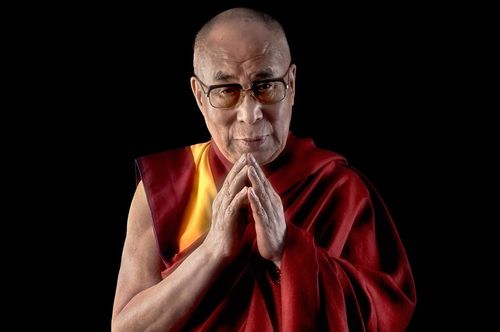





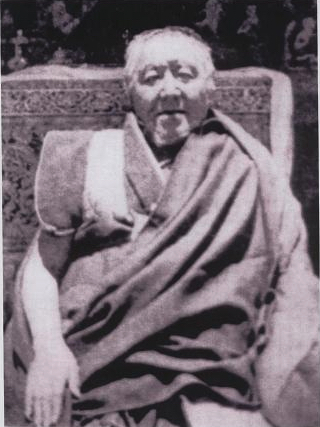

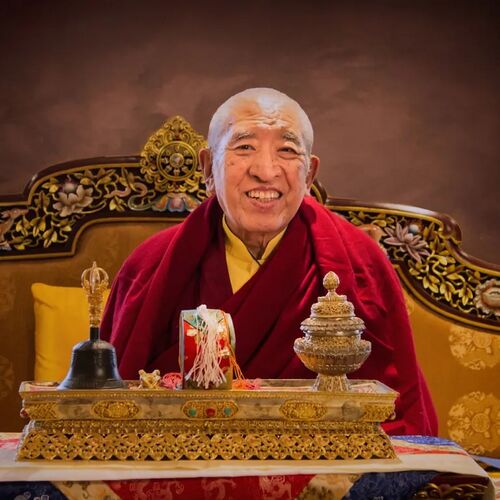
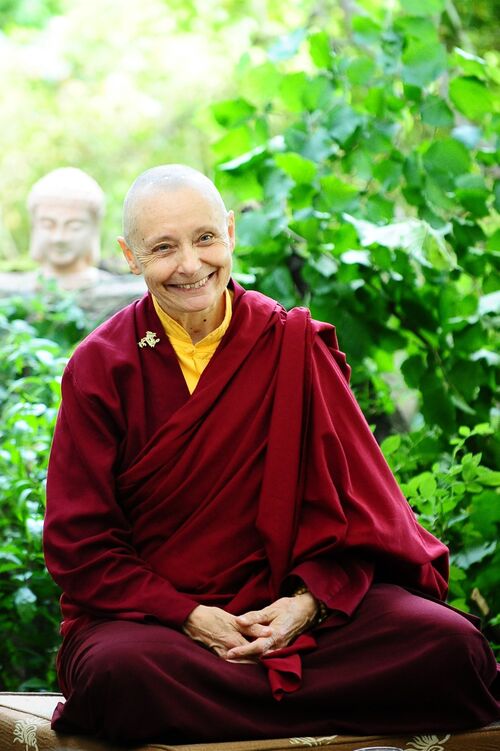

Notes
- ↑ See Brag dkar blo bzang dpal ldan bstan snyan grags, "Rgyal sras lag len so bdun ma'i sa bcad rgyal sras gyi dgongs spyod las phyi rol tu ma gyur pa," in Gsung 'bum blo bzang dpal ldan bstan 'dzin snyan grags (Khreng tu'u: Dmangs khrod dpe dkon sdud sgrig khang nas spel, 2001), 4:947–54, Buddhist Digital Resource Center (BDRC), http://purl.bdrc.io/resource/MW23608_9B18A0.
- ↑ See "La dwags zhi ba'i tshal du rgyal sras lag len so bdun ma'i bka' 'khrid skabs rigs rus kyi skor bka' slob stsal ba," in Gong sa skyabs mgon chen po mchog nas stsal ba'i bka' slob phyogs bsdebs (Dharamsala, H.P.: Bod gzhung phyi dril las khungs, 2000), 3:522–24, http://purl.bdrc.io/resource/MW1KG5005_1A5937.
- ↑ His works are catalogued in the Buddhist Digital Resource Center. See Rdza rong phu sprul sku ngag dbang bstan 'dzin nor bu, Rgyal sras lag len so bdun ma'i 'grel pa, 1 vol., http://purl.bdrc.io/resource/MW9680. See also "Rgyal sras lag len so bdun ma'i bla brgyud byin rlabs dpung zhu (bla brgyud gsol 'debs)," in Gsung 'bum ngag dbang bstan 'dzin nor bu (Kathmandu: Ngagyur Dongak Choling Monastery, 2004), 5:145–46, http://purl.bdrc.io/resource/MW29036_8D9684.
- ↑ See Glag bla bsod nams chos 'grub, "Rgyal sras lag len so bdun ma'i bsdus don rab gsal snang ba," in Gsung 'bum bsod nams chos 'grub (Delhi: Dkon mchog lha bris, 1997), 2:663–72, http://purl.bdrc.io/resource/MW22389_E0979F.
- ↑ For the meaning commentary, see Khang sar bstan pa'i dbang phyug, "Rgyal sras lag len so bdun ma'i bsdus don," in Gsung 'bum bstan pa'i dbang phyug (khang sar), Par gzhi dang po (Pe cin: Mi rigs dpe skrun khang, 2005), 2:154–58, http://purl.bdrc.io/resource/MW29513_AEAEF1. For the word commentary, see "Rgyal sras lag len so bdun ma'i tshig 'grel," in Gsung 'bum bstan pa'i dbang phyug (khang sar), Par gzhi dang po (Pe cin: Mi rigs dpe skrun khang, 2005), 2:17–153, http://purl.bdrc.io/resource/MW29513_3CC778.
- ↑ See Smin gling mkhan chen tshe dbang rig 'dzin, Rgyal sras lag len so bdun ma'i 'grel pa byang chub sems sprin, 1st ed., 1 vol. (Clement Town, Dehra Dun, U.a.: Ngagyur Nyingma College, 2005), http://purl.bdrc.io/resource/MW1KG12304.
- ↑ For this commentary, see Mkhan chen khra 'gu rin po che, Lag len so bdun ma'i 'grel pa go bder bkral ba, 1 vol. (Sarnath, Varanasi, U.P.: Vajra Vidya Institute, 2014), http://purl.bdrc.io/resource/MW4CZ295073.
- ↑ See 'Brug rje mkhan po 69 dge 'dun rin chen. "(Pha)rgyal sras lag len so bdun ma'i sa bcad," in Gsung 'bum dge 'dun rin chen (Rewalsar, Distt. Mandi, H.P.: Sherab Gyaltse Lama And Acharya Shedup Tenzin, 1985–1991), 3:549–56. v. 125-129, 171-174, http://purl.bdrc.io/resource/MW10206_702F39.
- ↑ See Rgyal sras thogs med bzang po, and Sangs rgyas mnyan pa dge legs grub pa'i nyi ma, Rgyal sras lag len so bdun ma'i rtsa ba dang 'grel chung gzhan phan 'jug sgo, 1st ed., 1 vol. (Pharping, Kathmandu: Benchen Sungrab Gyunpel Khang, 2014), http://purl.bdrc.io/resource/MW2KG5062.
- ↑ See Rgyal sras thogs med bzang po, and Dhārma kirti kun bzang bsod nams, Rgyal sras lag len rtsa 'grel, Par gzhi dang po, 1 vol., Dpal sa skya'i rig mdzod, pod 05 (Lha sa: Bod ljongs mi dmangs dpe skrun khang, 2012), http://purl.bdrc.io/resource/MW3CN5574.
- ↑ See Rgyal sras thogs med bzang po, and 'Bum thang dge bshes tshul khrims dpal bzang, Rgyal sras lag len so bdun ma dang de yi mchan 'grel yid kyi mun sel, 1 vol. (Bylakuppe, Karnataka: Namdroling Monastic Jr. High School, 2000), http://purl.bdrc.io/resource/MW29664.
- ↑ See Rgyal sras thogs med bzang po, and Sems dpa' rdo rje, Rgyal sras lag len so bdun ma dang 'grel pa dpal gyi sgron mas brgyan pa, 1 vol. (Sarnath, Varanasi: Nyingmapa Students Welfare Committee, 1988), http://purl.bdrc.io/resource/MW8LS76728.