The Excellent Vessel of Ambrosia
From Bodhicitta
| 🤓 Admin Zone 🛠️ hidden to non-admins | |
The Excellent Vessel of Ambrosia: A Commentary on The Thirty-Seven Practices of Bodhisattvas
Book
Please note that many items in our library are simply pages that represent a detailed library catalog entry and citation of someone else's work, presentation, or performance. Read our General Disclaimer for more information.

Description
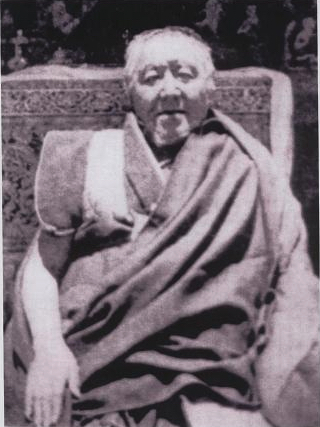
In this elegant and lucid commentary, Dzatrul Ngawang Tenzin Norbu provides us with practical guidelines to cultivate the stages of the Buddhist path--from the fundamental contemplations to advanced mind training exercises and meditation. The guidelines are derived from the author's personal experience, with reference to the sutras and tantras as well as Indian commentaries and those of Tibetan Buddhist masters of all major traditions.
Citation
Norbu, Ngawang Tenzin. The Excellent Vessel of Ambrosia: A Commentary on The Thirty-Seven Practices of Bodhisattvas. Translated by Julia Wilson. New Delhi: Library of Tibetan Works and Archives, 2016.
Table of contents
- Introduction vii
- One: Prelude
- Relating the Title of the Root Text 3
- Homage Verses 3
- The Author's Promise to Compose the Text 4
- Two: Main Body
- Part 1: The Way of Engaging in the Preliminary Practices 7
- Verse 1: The Difficulty of Obtaining a Life of Leisure and Endowment 7
- Verse 2: Leaving One's Homeland 16
- Verse 3: Relying on Seclusion 18
- Verse 4: Recollection of Impermanence 20
- Verse 5: Giving Up Bad Companions 25
- Verse 6: Relying on Good Companions 28
- Verse 7: Taking Refuge 37
- Part 2: The Path of the Three Types of Individuals 43
- The Path of the Individual of the Small Scope
- Verse 8: The Path of the Individual of the Small Scope 43
- The Path of the Individual of the Middle Scope
- Verse 9: Nonattached to Samsaric Pleasures and Seeking Liberation 56
- The Path of the Individual of the Great Scope
- Verse 10: The Attitude: Generating the Mind of Supreme Enlightenment 60
- Verse 11: Meditation on Equalizing and Exchanging Oneself for Others 68
- Verse 12: Taking Not Finding What You Wish for onto the Path 71
- Verse 13: Taking Suffering onto the Path 72
- Verse 14: Taking Defamation onto the Path 74
- Verse 15: Taking Degradation onto the Path 75
- Verse 16: Taking Ingratitude onto the Path 77
- Verse 17: Taking Disparagement onto the Path 78
- Verse 18: Taking Decline onto the Path 80
- Verse 19: Taking Prosperity onto the Path 83
- Verse 20: Taking an Object of Hatred onto the Path 86
- Verse 21: Taking an Object of Attachment onto the Path 88
- Verse 22: The Cultivation of Non-conceptuality Free of Elaboration during Meditative Equipoise 96
- Verse 23: The Abandonment of Clinging to an Object of Attachment as Truly Existent in the Postmeditative Period 98
- Verse 24: The Abandonment of Attachment to an Object of Hatred as Truly Existent in the Postmeditative Period 99
- Three: Conclusion
- Part 1. Training in the Precepts of the Mind of Enlightenment 101
- Verse 25: Training in Transcendent Generosity 102
- Verse 26: Training in Transcendent Ethical Discipline 106
- Verse 27: Training in Transcendent Patience 111
- Verse 28: Training in Transcendent Enthusiastic Effort 116
- Verse 29: Training in Transcendent Concentration 121
- Verse 30: The Way of Training in Transcendent Wisdom 125
- Verse 31: The Abandonment of Your Own Faults Having Examined Them Yourself 139
- Verse 32: The Abandonment of Speaking of the Faults of Other Bodhisattvas 141
- Verse 33: The Abandonment of Attachment to the Household of the Benefactor 144
- Verse 34: The Abandonment of Speaking Harsh Words 145
- Verse 35: Training in the Way of Eliminating the Afflictive Emotions 147
- Verse 36: Training in Benefitting Others Conjoined with Mindfulness and Introspection 150
- Verse 37: The Dedication of Virtue to Perfect Enlightenment 152
- Part 2. The Summary 157
- The Author's Purpose for Composing this Text 157
- The Author's Demonstration of the Authenticity of the Practices 157
- The Author's Expression of Humility and Apology 158
- The Author's Dedication of the Virtue of Composing this Work to Great Enlightenment 158
- The Author Pens His Name Associated with the Four Complete Attributes 159
- Endnotes 163
- Root Text 183
- Extended Outline 191
- Bibliography 199
- Index 207
Interconnections
2 Full translation of

Gyalse Tokme Zangpo's (1295–1369) highly influential work on Mind Training (blo sbyong) that outlines the training of a bodhisattva in a series of thirty-seven verses is still very popular today with Buddhist practitioners around the world. The colophon states: "This was composed at the Jewel Cave of Ngulchu by the monk Tokme [Zangpo], expounder of scripture and reasoning, for the benefit of myself and others." Since he gathered together all the paths of the bodhisattvas and composed them in the form of thirty-seven verses, the title is clearly fitting.

Ngawang Tendzin Norbu's commentary of Gyalse Thokme Zangpo's famous Thirty Seven Practices of the Bodhisattva