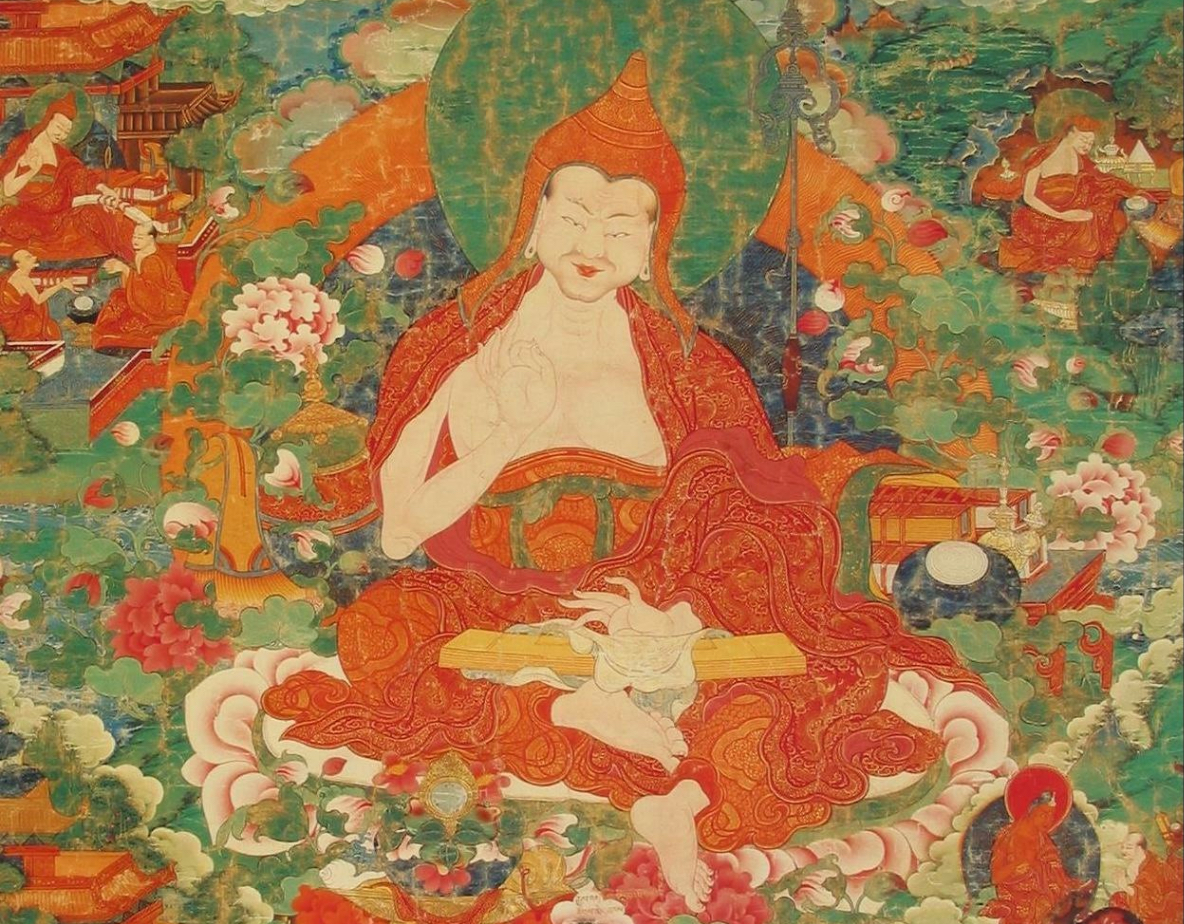
Meditative Practices in the Bodhisattvabhūmi: Quest for and Liberation through the Thing-In-Itself

From Bodhicitta
LibraryArticlesMeditative Practices in the Bodhisattvabhūmi: Quest for and Liberation through the Thing-In-Itself
< Articles
(Redirected from Meditative Practices in the Bodhisattvabhūmi: Quest for and Liberation through the Thing-In-Itself)
Articles/Meditative Practices in the Bodhisattvabhūmi: Quest for and Liberation through the Thing-In-Itself

Meditative Practices in the Bodhisattvabhūmi: Quest for and Liberation through the Thing-In-Itself
Chapter in a Book


Please note that many items in our library are simply pages that represent a detailed library catalog entry and citation of someone else's work, presentation, or performance. Read our General Disclaimer for more information.

Description

The textual history of the Yogācāra tradition begins with the Śrāvakabhūmi, an exposition of the theory and praxis of the spiritual path along lines common to a few Northern Śrāvakayāna schools, most notably the Sarvāstivāda. In less than a century from the conclusion of its formation, this work became part of the Yogācārabhūmi, a monumental encyclopedic treatise which laid the foundations of a brand-new Mahāyāna tradition — the school of meditation adepts (yogācāra), mainly known for its theory on consciousness (vijñānavāda) According to it, our common representation (vijñapti) of the world is the only (mātra) entity actually existing. And to make things worse, its workings distort the possibility of a true insight into Reality (tathatā). Though far from being spelled out in all its details, the first clearly identifiable statement of this new view is found in the Saṃdhinirmocanasūtra, a scripture which seems to have been independently compiled but was later incorporated into the Yogācārabhūmi.

What made this new school, with part of its roots strongly anchored in an orthodox Śrāvakayāna tradition, develop a totally new outlook? Obviously, the answer is not simple, and the origins of this novel perspective are complex. From the standpoint of the textual history, however, one could reasonably argue that what lies between the traditional views of the Śrāvakabhūmi and the revolutionary ideas presented in the Saṃdhinirmocanasūtra are the Bodhisattvabhūmi and the earlier parts of the Viniścayasaṃgrahaṇī The former is a treatise (or rather anthology) dedicated to the philosophy and practice of the ideal Mahāyāna virtuoso (bodhisattva) treading along the messianic path of liberating all sentient beings and of perfecting himself for the attainment of the Awakening. Like the Śrāvakabhūmi, this text also became part of the Yogācārabhūmi. The Viniścaya-saṃgrahaṇī is the auto-commentarial portion of the Yogācārabhūmi which glosses and elaborates upon terms and subjects in the preceding (and most likely, earlier) parts of the text.

It is tempting to refer to the Bodhisattvabhūmi as a 'missing link'. 'Link' it is but 'missing' would be an overstatement. Modern scholars, mainly in Japan, have examined many of its philosophical and philological facets. Nevertheless, to the best of my knowledge, a systematic examination of the meditative practices in the Bodhisattvabhūmi has not been undertaken so far. The present paper attempts to fill in this gap, albeit in a very limited fashion and scope. (Source: "Meditative Practices in the Bodhisattvabhūmi," 884–85)

Citation
Deleanu, Florin. "Meditative Practices in the Bodhisattvabhūmi: Quest for and Liberation through the Thing-In-Itself." In The Foundation for Yoga Practitioners: The Buddhist Yogācārabhumi Treatise and Its Adaptation in India, East Asia, and Tibet, edited by Ulrich Timme Kragh, 884–919. Cambridge, MA: Harvard University Press, 2013.


Chapter or part of

 
The Foundation for Yoga Practitioners
A monumental two-volume collection of essays by over 30 leading specialists. It is the single most comprehensive resource on the Yogācārabhūmi corpus, with a detailed overview of the Bodhisattvabhūmi section.
Book

Scholarship on

 
The Bodhisattvabhūmi (literally "The Stage of a Bodhisattva") stands as one of the most comprehensive and systematic expositions of the Mahāyāna Buddhist path from classical India. Formally the fifteenth section of the massive Yogācārabhūmi corpus, this foundational treatise provides an encyclopedic manual detailing the entire spiritual trajectory of a bodhisattva—from the initial arising of the "mind of awakening" (bodhicitta) to the ultimate attainment of perfect buddhahood.

Traditionally attributed to Ārya Asaṅga (c. fourth–fifth century CE) through revelation from the future buddha Maitreya, the text likely represents a compilation of earlier materials (c. 230–300 CE) that predates the fully developed Yogācāra philosophical system. Its existence in multiple Chinese translations from the early fifth century onward confirms its early date and widespread influence across Asian Buddhism.

The work's meticulously structured curriculum unfolds across three main books: The Support (ādhāra), the foundational prerequisites for the path; The Qualities That Accord with the Support (ādhārānudharma), the progressive stages of development; and The Perfection of the Support (ādhāraniṣṭhā), the ultimate fruition of buddhahood. At its philosophical heart lies the Tattvārthapaṭala (Chapter on Reality), which articulates a nuanced doctrine of "rightly grasped emptiness" that avoids both nihilism and eternalism. The text's longest and most influential section, the Śīlapaṭala (Chapter on Morality), codifies the complete ethical discipline of bodhisattvas through the famous system of bodhisattva precepts that became standard in Tibetan Buddhism.
Text