The Foundation for Yoga Practitioners
| 🤓 Admin Zone 🛠️ hidden to non-admins | |

Description
- Foreword8
- Acknowledgements10
- Preface16
- The Yogācārabhūmi and Its Adaptation: Introductory Essay with a Summary of the Basic Section by Ulrich Timme KRAGH22
- I. THE YOGĀCĀRABHŪMI BACKGROUND AND ENVIRONMENT
- Tilmann VETTER
- Early Mahāyāna and The Bodhisattva of the Ten Directions290
- Noriaki Hakamaya
- Serving and Served Monks in the Yogācārabhūmi312
- Hidenori S. Sakuma
- Remarks on the Lineage of Indian Masters of the Yogācāra School: Maitreya, Asaṅga, and Vasubandhu330
- Hartmut BUESCHER
- Distinguishing the Two Vasubandhus, the Bhāsyakāra and the Kośakāra, as Yogācāra-Vijñānavāda Authors368
- Noritoshi ARAMAKI
- Two Notes on the Formation of the Yogācārabhūmi Text-Complex398
- Lambert SCHMITHAUSEN
- Kuśala and Akuśala: Reconsidering the Original Meaning of a Basic Pair of Terms of Buddhist Spirituality and Ethics and Its Development up to Early Yogācāra440
- II. THE YOGĀCĀRABHŪMI: THE TEXT
- Martin DELHEY
- The Yogācārabhūmi Corpus: Sources, Editions, Translations, and Reference Works498
- II.1 The YOGĀCĀRABHŪMI: THE BASIC SECTION (*MAULYO BHŪMAYAḤ)
- Kōichi TAKAHASHI
- The Premise of Vastu in the Manobhūmi564
- Dan LUSTHAUS
- A Note on Medicine and Psychosomatic Relations in the First Two Bhūmis of the Yogācārabhūmi578
- Nobuyoshi YAMABE
- Parallel Passages between the Manobhūmi and the *Yogācārabhūmi of Saṃgharakṣa596
- Robert KRITZER
- Garbhāvakrāntau ('In the Garbhāvakrānti'): Quotations from the Garbhāvakrāntisūtra in Abhidharma Literature and the Yogācārabhūmi738
- Peter Skilling
- Nets of Intertextuality: Embedded Scriptural Citations in the Yogācārabhūmi772
- Yasunori SUGAWARA
- The Bhāvanāmayī Bhūmiḥ: Contents and Formation792
- Alexander VON ROSPATT
- Remarks on the Bhāvanāmayī Bhūmiḥ and Its Treatment of Practice852
- Michael ZlMMERMANN
- The Chapter on Right Conduct in the Bodhisattvabhūmi872
- Florin DELEANU
- Meditative Practices in the Bodhisattvabhūmi: Quest for and Liberation through the Thing-In-Itself884
- II.2 THE YOGĀCĀRABHŪMI: THE SUPPLEMENTARY SECTION (SAṂGRAHAṆĪ)
- William S. WALDRON
- Ālayavijñāna as Keystone Dharma: The Ālaya Treatise of the Yogācārabhūmi922
- Kazunobu MATSUDA
- Sanskrit Fragments of the Saṃdhinirmocanasūtra938
- III. THE INDIAN YOGĀCĀRA RECEPTION
- Changhwan Park
- What are Ācāryas or *Yaugācārabhūmikas Doing in Abhidharmakośabhāṣya 3-28ab?948
- Jowita Kramer
- A Study of the Saṃskāra Section of Vasubandhu's Pañcaskandhaka with Reference to Its Commentary by Sthiramati986
- Harunaga ISAACSON
- Yogācāra and Vajrayāna according to Ratnākaraśānti1036
- IV. THE EAST ASIAN YOGĀCĀRA RECEPTION
- Bing Chen
- Reflections on the Revival of Yogācāra in Modern Chinese Buddhism1054
- Eyal Aviv
- The Root that Nourishes the Branches: The Role of the Yogācārabhūmi in 20th-Century Chinese Scholastic Buddhism1078
- Lawrence Y.K. LAU
- Chinese Scholarship on Yogācāra Buddhism since 19491092
- Sangyeob CHA
- The Yogācārabhūmi Meditation Doctrine of the 'Nine Stages of Mental Abiding' in East and Central Asian Buddhism1166
- A. Charles MULLER
- The Contribution of the Yogācārabhūmi to the System of the Two Hindrances1192
- Sungdoo AHN
- Theories of the Darśanamārga in the Yogācārabhūmi and Their Chinese Interpretations1212
- Makoto YOSHIMURA
- The Wéishì School and the Buddha-Nature Debate in the Early Táng Dynasty1234
- Seongcheol Kim
- A Brief History of Studies on the Yogācāra School in Modern Korea1254
- Leslie S. KAWAMURA
- Gadjin M. Nagao on MSA I.1 and I.21296
V. THE TIBETAN YOGĀCĀRA RECEPTION
- Dorji WANGCHUK
- On the Status of the Yogācāra School in Tibetan Buddhism1316
- Orna Almogi
- Yogācāra in the Writings of the Eleventh-Century Rnying ma Scholar Rong zom Chos kyi bzang po1330
- Ulrich Timme KRAGH
- All Mind, No Text — All Text, No Mind: Tracing Yogācāra in the Early Bka' brgyud Literature of Dags po1362
- Leonard W.J. VAN DER KUIJP
- Notes on Jñānamitra’s Commentary on the Abhidharmasamuccaya1388

What made this new school, with part of its roots strongly anchored in an orthodox Śrāvakayāna tradition, develop a totally new outlook? Obviously, the answer is not simple, and the origins of this novel perspective are complex. From the standpoint of the textual history, however, one could reasonably argue that what lies between the traditional views of the Śrāvakabhūmi and the revolutionary ideas presented in the Saṃdhinirmocanasūtra are the Bodhisattvabhūmi and the earlier parts of the Viniścayasaṃgrahaṇī The former is a treatise (or rather anthology) dedicated to the philosophy and practice of the ideal Mahāyāna virtuoso (bodhisattva) treading along the messianic path of liberating all sentient beings and of perfecting himself for the attainment of the Awakening. Like the Śrāvakabhūmi, this text also became part of the Yogācārabhūmi. The Viniścaya-saṃgrahaṇī is the auto-commentarial portion of the Yogācārabhūmi which glosses and elaborates upon terms and subjects in the preceding (and most likely, earlier) parts of the text.
It is tempting to refer to the Bodhisattvabhūmi as a 'missing link'. 'Link' it is but 'missing' would be an overstatement. Modern scholars, mainly in Japan, have examined many of its philosophical and philological facets. Nevertheless, to the best of my knowledge, a systematic examination of the meditative practices in the Bodhisattvabhūmi has not been undertaken so far. The present paper attempts to fill in this gap, albeit in a very limited fashion and scope. (Source: "Meditative Practices in the Bodhisattvabhūmi," 884–85).jpg)
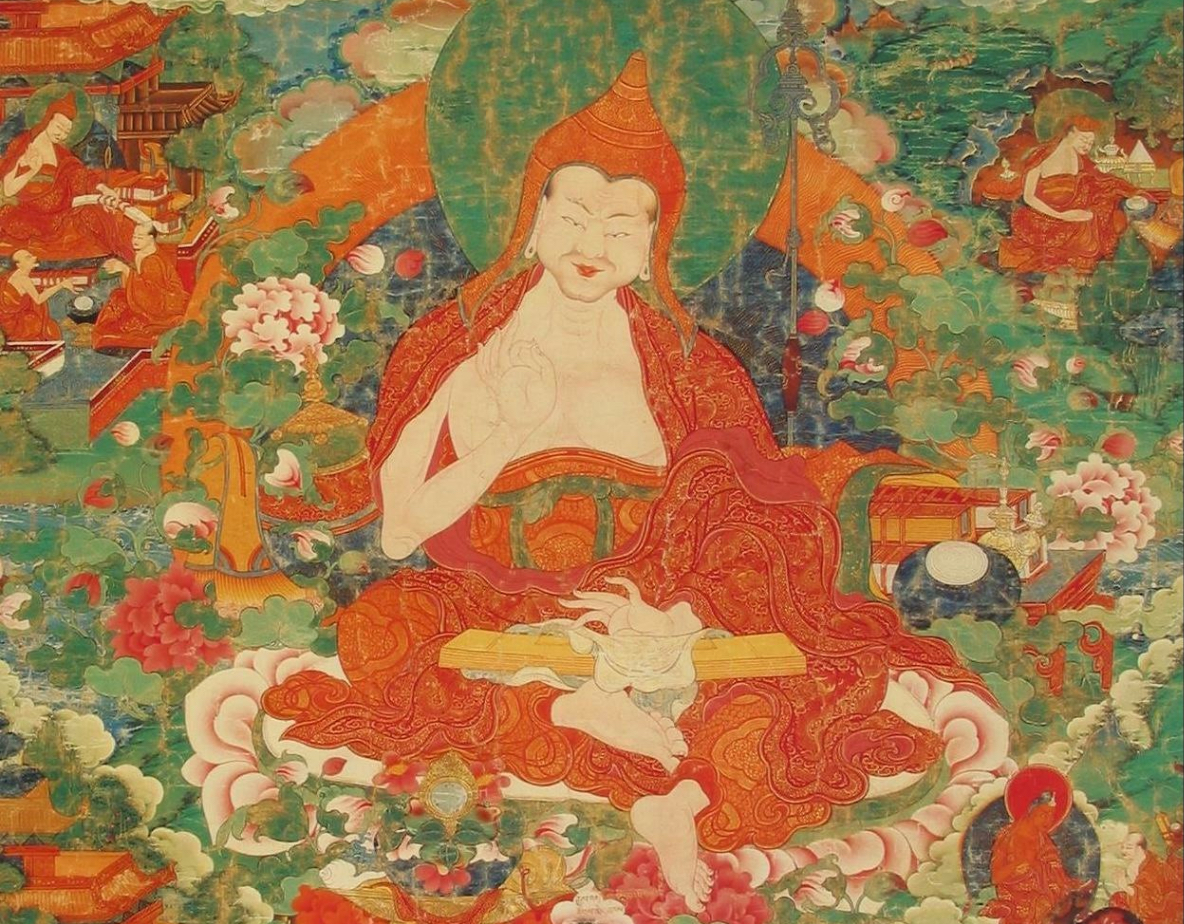
Traditionally attributed to Ārya Asaṅga (c. fourth–fifth century CE) through revelation from the future buddha Maitreya, the text likely represents a compilation of earlier materials (c. 230–300 CE) that predates the fully developed Yogācāra philosophical system. Its existence in multiple Chinese translations from the early fifth century onward confirms its early date and widespread influence across Asian Buddhism.
- Library Items
- Books
- Kawamura, L.
- Kuijp, L.
- Rospatt, A. Von
- Lusthaus, D.
- Kritzer, R.
- Kragh, U.
- Park, C.
- Takahashi, Kōichi
- Almogi, O.
- Kramer, J.
- Wangchuk, Dorji
- Isaacson, H.
- Sakuma, H.
- Schmithausen, L.
- Hakamaya, N.
- Vetter, T.
- Skilling, P.
- Matsuda, K.
- Aramaki, N.
- Buescher, Harmut
- Sugawara, Ysunori
- Zimmermann, Michael, Deleanu, Florin
- Chen, Bing
- Aviv, Eyal
- Lau, Lawrence
- Muller, A.
- Ahn, Sungdoo
- Yoshimura, Makoto
- Kim, Seongcheol
- Waldron, W.
- Yamabe, N.
- Delhey, M.
- Cha, S.
- Harvard University Press
- Decade: 2010s