Bodhipathapradīpa

From Bodhicitta
Texts/Bodhipathapradīpa

🤓 Admin Zone 🛠️ hidden to non-admins
बोधिपथप्रदीप
Bodhipathapradīpa
བྱང་ཆུབ་ལམ་གྱི་སྒྲོན་མ།
byang chub lam gyi sgron ma
A Lamp for the Path to Enlightenment
Text


Please note that many items in our library are simply pages that represent a detailed library catalog entry and citation of someone else's work, presentation, or performance. Read our General Disclaimer for more information.

Description

Bodhipathapradīpa. (T. Byang chub lam gyi sgron ma). In Sanskrit, "Lamp for the Path to Enlightenment"; a work composed by the Indian scholar Atiśa Dīpamkaraśrījñāna at Tho ling gtsug lag khang shortly after he arrived in Tibet in 1042. Tibetan histories often note that Atiśa wrote this text in order to clarify problematic points of Buddhist practice, especially tantra, which were thought to have degenerated and become distorted, and to show that tantra did not render basic Buddhist practice irrelevant. The Bodhipathapradīpa emphasizes a gradual training in the practices of the Mahāyāna and vajrayāna and became a prototype and textual basis first for the bstan rim, or "stages of the teaching" genre, and then for the genre of Tibetan religious literature known as lam rim, or "stages of the path." It is also an early source for the instructions and practice of blo sbyong, or "mind training." Atiśa wrote his own commentary (pańjikā) (Commentary on the Difficult Points of the Lamp for the Path to Enlightenment) to the text. The text says bodhisattvas must first follow one of the sets of prātimokṣa disciplinary rules; based on those precepts, they practice the six perfections (pāramitā); with those perfections as a solid foundation, they finally practice Buddhist tantra. (Source: "Bodhipathapradīpa." In The Princeton Dictionary of Buddhism, 133. Princeton University Press, 2014. http://www.jstor.org/stable/j.ctt46n41q.27.)
Quoted in the aligned translations
Reference
Atīśa Dīpaṃkaraśrījñāna (slob dpon chen po dpal mar me mdzad ye shes). Bodhipathapradīpa [बोधिपथप्रदीप]. byang chub lam gyi sgron ma [བྱང་ཆུབ་ལམ་གྱི་སྒྲོན་མ།]. [A Lamp for the Path to Enlightenment]. Tengyur, RKTST 3288 http://www.rkts.org/cat.php?id=3288&typ=2.
Interconnections
All 52Books 33Articles 8Classical Works 3Multimedia 4Tibetan Publications 4
3 Recensions
Books1978About this item
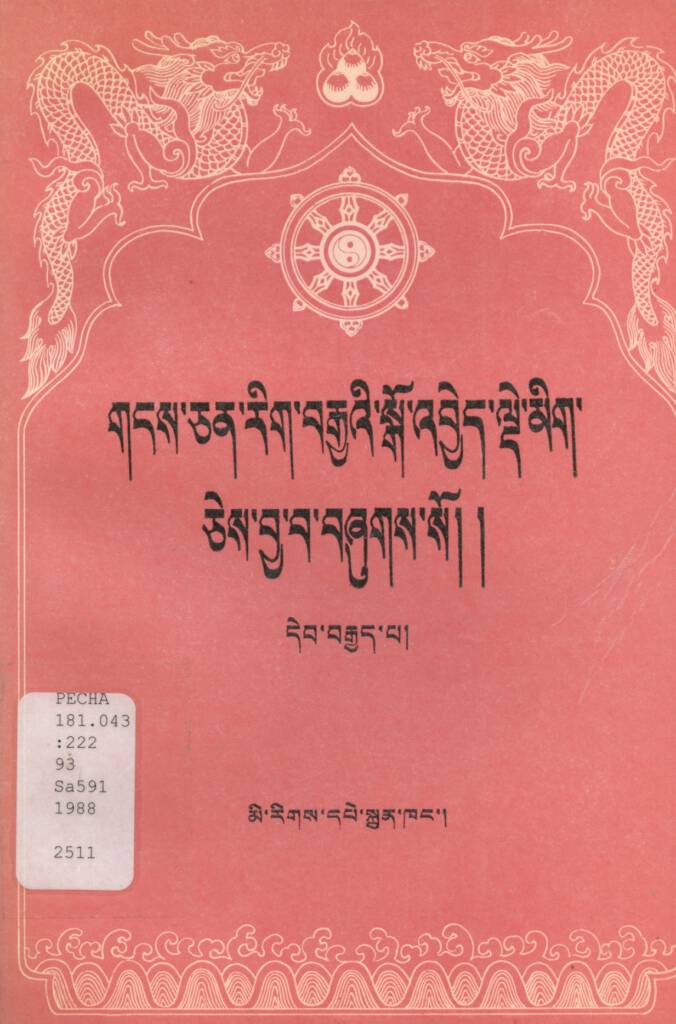
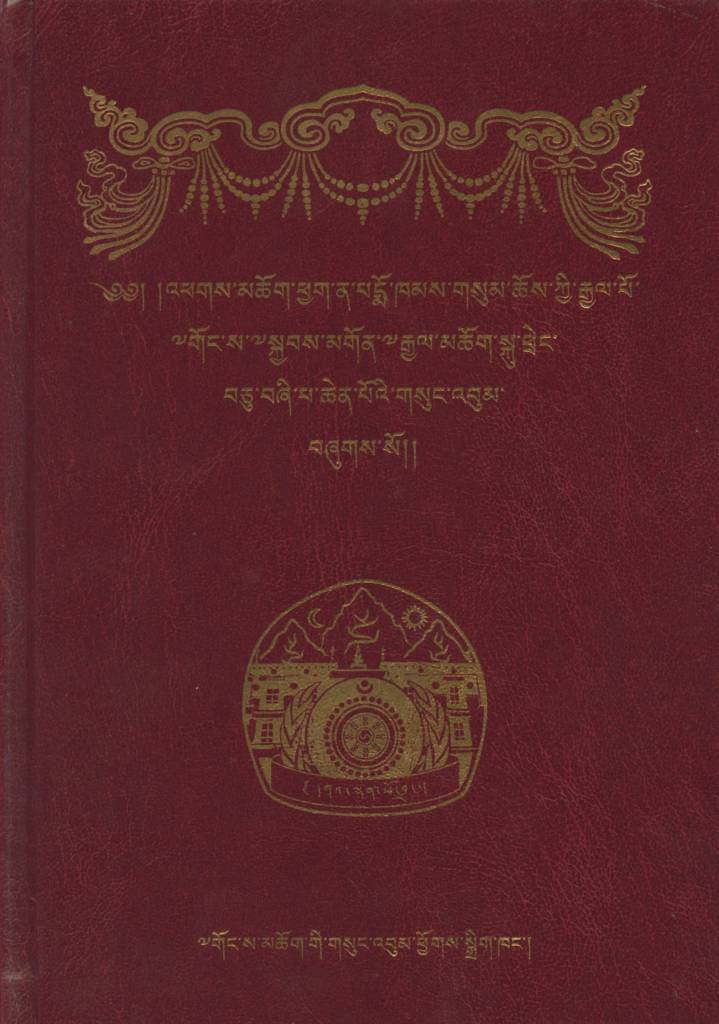
This 1978 critical edition presents Atiśa Dīpaṃkaraśrījñāna's Bodhipathapradīpa (Lamp for the Path to Enlightenment) as preserved in the Tibetan transmission, accompanied by a German translation. The volume includes as an appendix the commentary Byang chub lam gyi sgron ma'i 'grel pa gzhung don gsal ba'i nyi ma by Brag dkar sprul sku Blo bzang dpal ldan bstan 'dzin snyan grags. Atiśa's Bodhipathapradīpa is a central text for the Lamrim, or Stages of the Path tradition and reconciles the doctrines of many various Buddhist schools and philosophies, notable for its introduction of the three levels of spiritual aspiration. Eimer's scholarly edition provides critical textual apparatus essential for the study of this foundational work of Tibetan Buddhism, which became instrumental in the second transmission of Buddhism in Tibet and the development of the Geluk tradition.
Books2021About this item
This is a summary of the subject matter of the root text titled The Lamp for the Path to Enlightenment—composed by the glorious Lord Atiśa at the request of Lha Lama Jangchup Ö—which condenses the entire systematic presentation of the stages of the path for the practice of the three types of individuals and teaches the complete systems of the outer, inner, and secret Sūtra and Mantra without exception. It has been compiled by Kyabjé Sangye Nyenpa Rinpoche, arranged according to topical outlines and expressed in the colloquial language for easy understanding.
12 Full translations
Books1983About this item
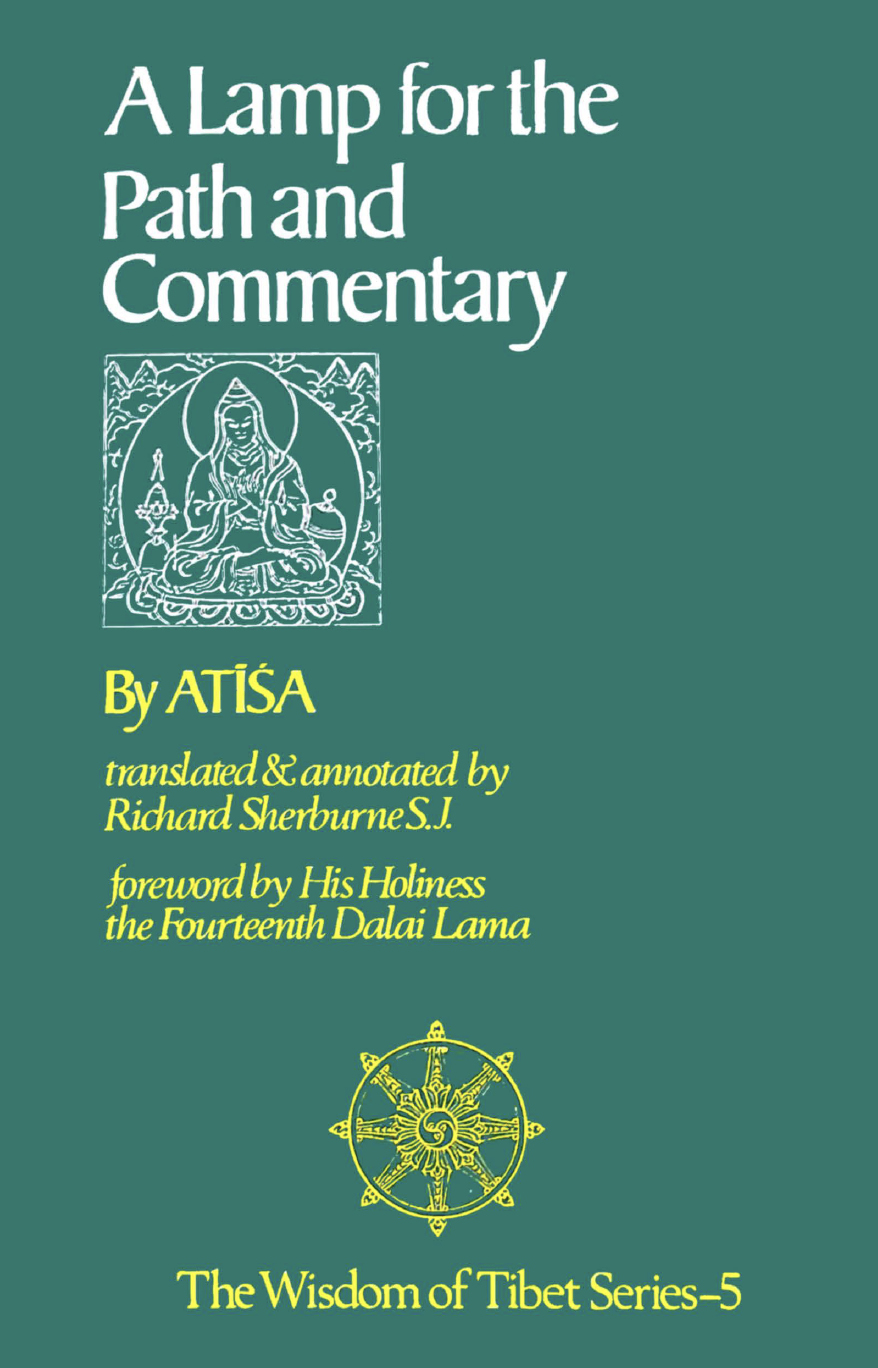
The Lamp for the Enlightenment Path and its Commentary are eleventh-century Buddhist texts which were written at Tho-ling ("High-flying") Monastery in the central Himalayas near Mount Kailas. Although little known to "outsiders", these texts have been used and cherished by the Buddhist communities within Tibet and inner Asia for well over nine centuries. The monk who composed them wrote originally in Sanskrit (now lost) while simultaneously translating them into Tibetan, and they were included as authentic commentary in the earliest canon of Mahāyāna scripture. (Sherburne, introduction, x)
Books2018About this item
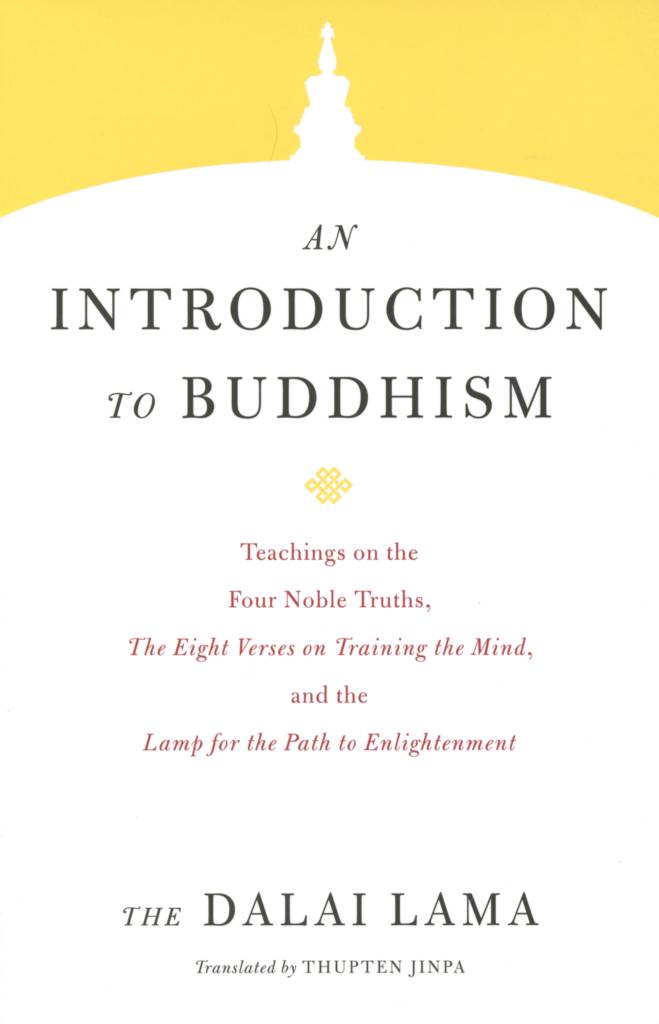
There is no one more suited to introduce beginners—and remind seasoned practitioners—of the fundamentals of Tibetan Buddhism than His Holiness the Dalai Lama. Speaking to an audience of Western students, the Dalai Lama shows us how to apply basic Buddhist principles to our day-to-day lives. Starting with the very foundation of Buddhism, the Four Noble Truths, he provides the framework for understanding the Buddha’s first teachings on suffering, happiness, and peace. He follows with commentary on two of Buddhism’s most profound texts: The Eight Verses on Training the Mind and Atisha’s Lamp for the Path to Enlightenment, often referring to the former as one of his main sources of inspiration for the practice of compassion. With clear, accessible language and the familiar sense of humor that infuses nearly all of his work, the Dalai Lama invites us all to develop innermost awareness, a proper understanding of the nature of reality, and heartfelt compassion for all beings. (Source: Shambhala Publications) Note: This book was previously published under the title Lighting the Way.
Books1997About this item
Atisha, the eleventh-century Indian Buddhist scholar and saint, came to Tibet at the invitation of the king of Western Tibet, Lha Lama Yeshe Wo, and his nephew, Jangchub Wo. His coming initiated the period of the second transmission of Buddhism to Tibet, formative for the Sakya Kagyu and Gelug traditions of Tibetan Buddhism. Atisha's most celebrated text, Lamp for the Path to Enlightenment, sets forth the entire Buddhist path within the framework of three levels of motivation on the part of the practitioner. Atisha's text thus became the source of the lamrim tradition, or graduated stages of the path to enlightenment, an approach to spiritual practice incorporated within all schools of Tibetan Buddhism. (Source: Shambhala Publications)
Books2019About this item
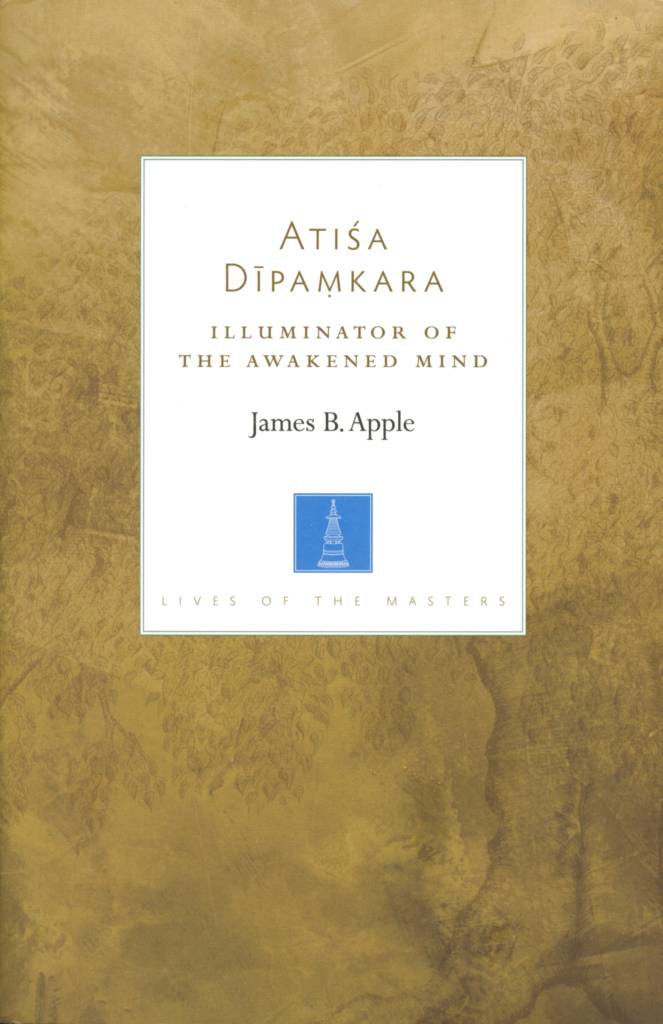
This book contains useful translations of parts of eleven of Atiśa's works, along with an introduction to the times and places of his life, with a succinct biography.

Few figures in the history of Buddhism in Tibet have had as far-reaching and profound an influence as the Indian scholar and adept Atiśa Dīpaṃkara (982–1054). Originally from Bengal, Atiśa was a tantric Buddhist master during Vajrayana Buddhism’s flowering in India and traveled extensively, eventually spending the remaining twelve years of his life revitalizing Buddhism in Tibet. Revered by all the schools of Tibetan Buddhism, Atiśa and his students founded what came to be known as the Kadam school, whose teachings have influenced countless Buddhist masters. These teachings, cherished by all major traditions, are preserved by the Geluk in particular, the school of the Dalai Lamas.

Although Atiśa was an influential practitioner and scholar of Tantra, he is best known for introducing many of the core Mahayana teachings that are widely practiced throughout the Tibetan Buddhist world, including the Stages of the Path to Awakening and Mind Training (lojong), as well as having contributed to highly influential commentaries on Madhyamaka that synthesize various schools of thought. This succinct biography of Atiśa’s life, together with a collection of translations, represents for the first time the full range of Atiśa’s contribution to Buddhism. As the most comprehensive work available on this essential Buddhist figure, this book is an indispensable resource for scholars and Buddhist practitioners alike. (Source: Shambhala Publications)
Books2023About this item
Atīśa and the Bodhipathapradīpa pairs a Bengali translation of Atiśa Dīpaṃkara's Bodhipathapradīpa with an introductory account of the transmission of Buddhism to Tibet, framing the historical circumstances that led to Atiśa's invitation there. The introduction covers the traditional narrative of the mysterious box of sacred objects said to have fallen onto the roof of the palace of the 27th Tibetan king Lha Thothori Nyentsen, the reigns of the 33rd king Songtsen Gampo (617–698) and of Trisong Detsen (742–797), the latter's invitation of Padmasambhava and Śāntarakṣita and the founding of Samye, the early Tibetan translation effort involving figures such as Vairocana, Yeshé Dé, and Kawa Paltsek, and the persecution of Buddhism under Langdarma before its later restoration. The volume was translated from Tibetan into Bengali with the assistance of Shibashish Mal and Ritiman Das, with language review by Sampa Das (Bengali) and Dashayita Thakur (English), and was published with the support of the Foundation for the Preservation of the Mahayana Tradition (FPMT).
Books1978About this item
This 1978 critical edition presents Atiśa Dīpaṃkaraśrījñāna's Bodhipathapradīpa (Lamp for the Path to Enlightenment) as preserved in the Tibetan transmission, accompanied by a German translation. The volume includes as an appendix the commentary Byang chub lam gyi sgron ma'i 'grel pa gzhung don gsal ba'i nyi ma by Brag dkar sprul sku Blo bzang dpal ldan bstan 'dzin snyan grags. Atiśa's Bodhipathapradīpa is a central text for the Lamrim, or Stages of the Path tradition and reconciles the doctrines of many various Buddhist schools and philosophies, notable for its introduction of the three levels of spiritual aspiration. Eimer's scholarly edition provides critical textual apparatus essential for the study of this foundational work of Tibetan Buddhism, which became instrumental in the second transmission of Buddhism in Tibet and the development of the Geluk tradition.
Books2026About this item
This book has recently been updated. The second edition is available for free online and will soon be available in print as well.

About one thousand years ago, the great Indian pandit and yogi, Dipamkara Shrijnana (Atisha), was invited to Tibet to re-establish the Buddhadharma, which had been suppressed and corrupted for almost two centuries. One of Atisha's main accomplishments in Tibet was his writing of the seminal text, A Lamp for the Path to Enlightenment, in which he extracted the essence of all 84,000 teachings of the Buddha and organized them into a clear, step-like arrangement that makes it easy for any individual practitioner to understand and practice the Dharma. This genre of teachings is known as lamrim, or steps of the path, and forms an essential part of every school of Tibetan Buddhism.

In this book, His Holiness the Dalai Lama gives a commentary to not only Atisha's revolutionary work but also to Lines of Experience, a short text written by Lama Tsongkhapa, who was perhaps the greatest of all Tibetan lamrim authors. In bringing together Atisha, Lama Tsongkhapa and His Holiness the Dalai Lama, this book offers readers one of the clearest and most authoritative expositions of the Tibetan Buddhist path ever published, and it is recommended for those at the beginning of the path, the middle and the end. This is the first time a major teaching by the Dalai Lama has been published for free distribution. (Source Accessed August 24, 2026)
Books2024About this item
Details of the 18 texts translated here can be seen on the Damngak Dzo website. The Treasury of Precious Instructions by Jamgön Kongtrul Lodrö Taye, one of Tibet’s greatest Buddhist masters, is a shining jewel of Tibetan literature, presenting essential teachings from the entire spectrum of practice lineages that existed in Tibet. In its eighteen volumes, Kongtrul brings together some of the most important texts on key topics of Buddhist thought and practice as well as authoring significant new sections of his own. The third volume of this series covers the teachings and practices of the Kadam lineage. This tradition is based on the teachings of the Indian master Atiśa, who traveled to Tibet in the early eleventh century and stayed for twelve years transmitting teachings that would be embraced by many traditions of Tibetan Buddhism. The three categories of teachings covered here and in the fourth volume of the series—Stages of the Path, Mind Training, and esoteric instructions—correspond to three root texts: Atiśa’s Lamp for the Path to Enlightenment, the aphorisms of the Seven-Point Mind Training, and Atiśa's Bodhisattva's Jewel Garland. This volume also contains ritual texts on the bodhisattva vow conferral, as well as commentaries by Tsongkhapa, Tāranātha, Jamyang Khyentse Wangpo, and Jamgön Kongtrul, himself. The fourth volume of The Treasury of Precious Instructions series extends these commentaries and includes material on the esoteric instructions known as the Sixteen Drops. (Source: Shambhala Publications)
Books2004About this item
This book by the 14th Dalai Lama contains teachings on the four noble truths and teachings and translations of Langri Thangpa's The Eight Verses on Training the Mind and Atiśa's Lamp for the Path to Enlightenment. It has been edited by Thupten Jinpa.
Books2019About this item
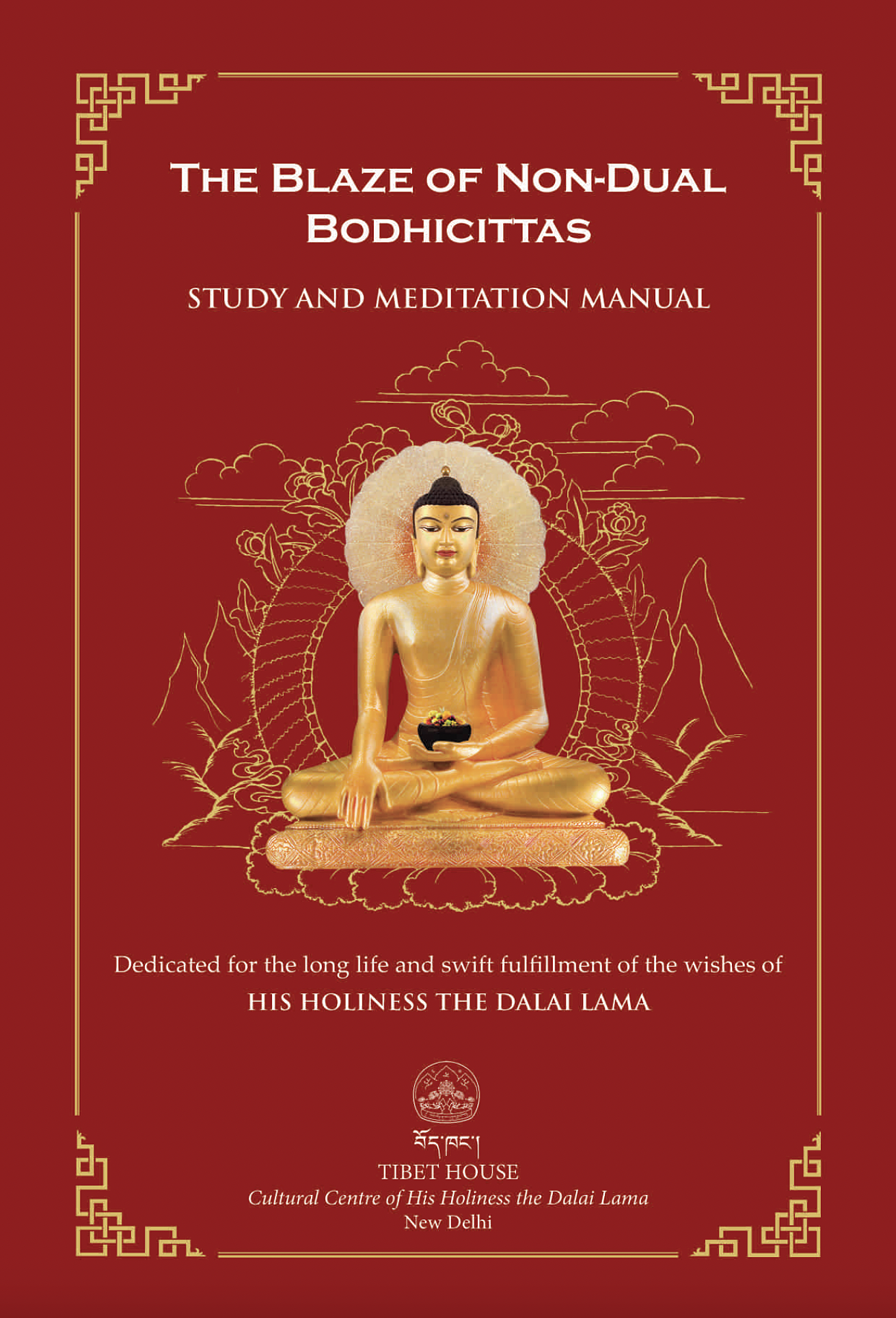
The initial idea for this study, reflection and meditation manual took seed in 2004, when I first started to translate for His Holiness the Dalai Lama. I found many of the Nalanda texts frequently taught by His Holiness to be very useful; it occurred to me that a compilation of these in the English language would greatly benefit many seekers who might otherwise lack the opportunity to access them. It is only now, after many years of sharing the working drafts of this manual at Tibet House in New Delhi, as well as in many other places that the idea has finally come to fruition.

The book is divided into five parts:

I. Daily Recitation and Practice
II. Selected Texts for Study, Reflection and Meditation
III. Additional Prayers, Vows and Commitments
IV. Daily Dedication Prayers
V. Appendix

Part I and Part IV serve as a useful guide for all, who have an inclination towards dharma practice, but do not know how to start and design a daily practice session. It is also useful for those seekers who might be misguided and surmise that dharma practice comprises only of mantra recitation and so forth, thereby missing its essence.

Part II helps strengthen the practitioner’s dharma practice on the basis of selected compositions of great scholars and yogis. The actual breakthrough in the mental transformation happens through changes in the thought process, for which study and reflection are the cornerstones. Any of these profound texts and short extracts may be selected for study, reflection or meditation, on an on-going basis.

Part III reinforces and rejuvenates dharma practice and to that end, may be undertaken on a regular or occasional basis.

Part V introduces the reader to meditation practices, both shamatha (calm abiding) and vipasyana (special insight), including meditation on the breath, as well as methods to cultivate Bodhicitta and the wisdom of emptiness. While there are many texts on the wisdom of emptiness, the meditation included here is designed for all those who are not thoroughly introduced to this subject and still want to familiarise and habituate themselves with the wisdom of emptiness.

Brief notes, Endnotes and Glossary have been added to help the readers unfold the meanings of the texts with ease. (preface, xiv–xv)
Books2009About this item
The complete works of Atīśa Śrī Dīpaṁkara Jñāna, Jo-bo-rje : The lamp for the path and commentary, together with the newly translated Twenty-five key texts (Tibetan and English texts)
Articles2021About this item
Translator"s Introduction

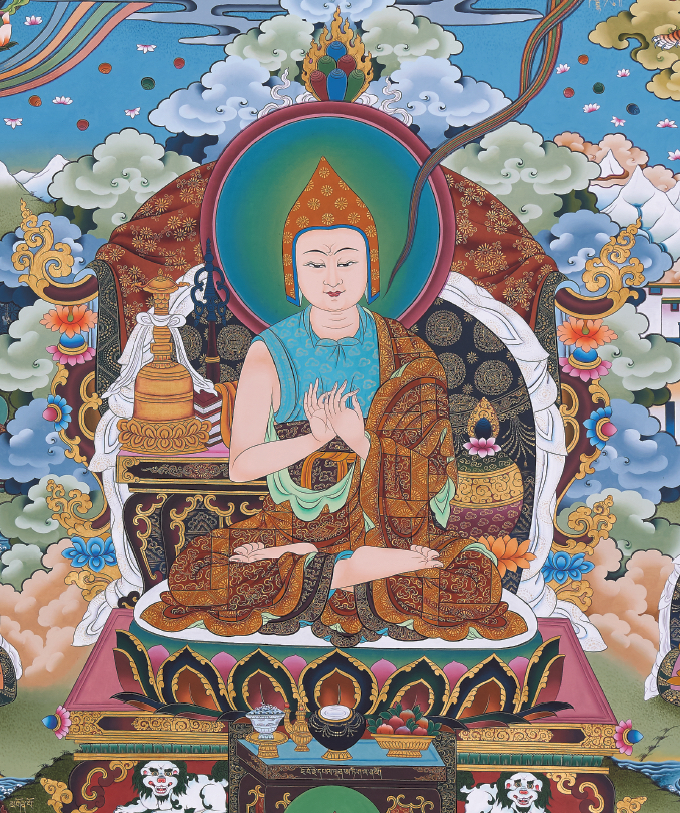
Few figures in the transmission of the Dharma from India to Tibet hold as central of a role as the great master Atiśa Dīpaṃkara Śrījñāna (982–1055?). Often referred to in Tibetan simply by the epithet of “Lord” (Tib. jo bo rje), Atiśa is the individual most associated with the eleventh-century revival of Buddhism in Tibet, which followed the tumultuous era of fragmentation (sil bu’i dus) that began with the 842 collapse of the Tibetan Empire. His impact on the Tibetan Buddhist Dharma continues to reverberate to this day, nearly a full millennium after he first arrived in the Land of Snows, and his teachings have inspired millions of Buddhists in Central Asia and now the world over. A brief introduction to his life and activities may shed light on this foundational text.

Atiśa was born in 982 as the second son of a royal house in Bengal, eastern India. On the eve of an adolescent marriage, he experienced a powerful vision of Tārā that motivated him to renounce the worldly life, even at this young age, and embark on the Buddhist path. He wandered through the jungles and mountains of India seeking the instruction of Buddhist masters, and he is said to have studied under a great number of mahāsiddhas. There are also accounts that he may have practiced the tantric sexual yogas at this time.

He received the bodhisattva vows from the master Bodhibhadra at the great Indian monastic university of Nālandā. At twenty-nine, the same age that Siddhartha left the palace, Atiśa had a dream in which he was urged by the Buddha himself to ordain, prompting him to take full monastic vows at a monastery in Bodh Gaya. Upon ordination, he was given the name Dīpaṃkara Śrījñāna, “He Whose Deep Awareness Acts as a Lamp.” With his relatively late ordination and scholarly pursuits, Atiśa’s biography is an inverse of Indian mahāsiddhas such as Nāropa, who only disrobed to practice tantra after many years living as a pure monk and scholar. Atiśa’s full monastic ordination after nearly two decades spent as a wandering yogi demonstrates the tremendous esteem with which he held the Vinaya and monastic discipline, values reflected in the Lamp for the Path and his broader missionary activities in Tibet.

Continue reading here . . .
2 Classical commentaries
Classical WorksAbout this item
Atiśa's commentary on the difficult points of his Lamp for the Path to Enlightenment. The text says bodhisattvas must first follow one of the sets of prātim okṣa disciplinary rules; based on those precepts, they practice the six perfections (pāramitā); with those perfections as a solid foundation, they finally practice Buddhist tantra. (Source: "Bodhimārgapradīpa." In The Princeton Dictionary of Buddhism, 133. Princeton University Press, 2014. http://www.jstor.org/stable/j.ctt46n41q.27.)
3 Modern commentaries
Articles2015About this item
This is Khunu Lama Tenzin Gyaltsen's 1975 teaching on Atiśa's Lamp for the Path to Enlightenment (Lam drön), a foundational eleventh-century text that became the basis for all Tibetan Buddhist lamrim (graduated path) teachings across all schools.

The commentary explains Atiśa's presentation of the three levels of practitioners: those of small capacity (seeking better rebirth), medium capacity (seeking liberation from samsara), and higher capacity (seeking enlightenment for all beings). Khunu Lama emphasizes the centrality of bodhicitta—the aspiration to attain enlightenment for the benefit of all sentient beings—as the defining feature of Mahāyāna Buddhism that distinguishes it from other spiritual paths.

The teaching covers the essential practices: generating bodhicitta, observing moral conduct, developing single-pointed concentration, and cultivating the wisdom realizing emptiness. Khunu Lama stresses that both method (compassion and skillful means) and wisdom must be practiced together to achieve enlightenment. He concludes by encouraging his Western students to study Dharma deeply, learn Tibetan, and spread these teachings, noting that concern for others' welfare rather than one's own is the fundamental distinction of the Mahāyāna path.
Books2021About this item
This is a summary of the subject matter of the root text titled The Lamp for the Path to Enlightenment—composed by the glorious Lord Atiśa at the request of Lha Lama Jangchup Ö—which condenses the entire systematic presentation of the stages of the path for the practice of the three types of individuals and teaches the complete systems of the outer, inner, and secret Sūtra and Mantra without exception. It has been compiled by Kyabjé Sangye Nyenpa Rinpoche, arranged according to topical outlines and expressed in the colloquial language for easy understanding.
Tibetan Publications2018About this item
A set of short texts compiled from H.H. the 14th Dalai Lama's teachings on three main texts: 1) A Lamp for the Path to Enlightenment (Bodhipathapradīpa, བྱང་ཆུབ་ལམ་གྱི་སྒྲོན་མ།, byang chub lam gyi sgron ma), Elucidating the Sage's Intent (ཐུབ་པའི་དགོངས་པ་རབ་ཏུ་གསལ་བ།, thub pa'i dgongs pa rab tu gsal ba), and Distinguishing the Three Vows (སྡོམ་གསུམ་རབ་དབྱེ།, sdom gsum rab dbye). Created by the Centre for Compilation and Editing of His Holiness The 14th Dalai Lama's Writings and Discourses. Edited by Sogan Tulku Pema Lodoe and others.
1 Readings
MultimediaAbout this item
Bodhipathapradipa बोधिपथप्रदीप A Lamp for the Path to Enlightenment by Acharya Atisha Dipankara Srijnana.
1 Teachings
MultimediaAbout this item
Morning session of first day of His Holiness the Dalai Lama's four day teaching on Atisha's Lamp for the Path to Enlightenment given at the request of a group from Taiwan at the Main Tibetan Temple in Dharamsala, India, on October 1-4, 2012. His Holiness speaks in Tibetan followed by an English translation. (www.dalailama.com)
4 Works containing teachings
Books2018About this item
There is no one more suited to introduce beginners—and remind seasoned practitioners—of the fundamentals of Tibetan Buddhism than His Holiness the Dalai Lama. Speaking to an audience of Western students, the Dalai Lama shows us how to apply basic Buddhist principles to our day-to-day lives. Starting with the very foundation of Buddhism, the Four Noble Truths, he provides the framework for understanding the Buddha’s first teachings on suffering, happiness, and peace. He follows with commentary on two of Buddhism’s most profound texts: The Eight Verses on Training the Mind and Atisha’s Lamp for the Path to Enlightenment, often referring to the former as one of his main sources of inspiration for the practice of compassion. With clear, accessible language and the familiar sense of humor that infuses nearly all of his work, the Dalai Lama invites us all to develop innermost awareness, a proper understanding of the nature of reality, and heartfelt compassion for all beings. (Source: Shambhala Publications) Note: This book was previously published under the title Lighting the Way.
Books1997About this item
Atisha, the eleventh-century Indian Buddhist scholar and saint, came to Tibet at the invitation of the king of Western Tibet, Lha Lama Yeshe Wo, and his nephew, Jangchub Wo. His coming initiated the period of the second transmission of Buddhism to Tibet, formative for the Sakya Kagyu and Gelug traditions of Tibetan Buddhism. Atisha's most celebrated text, Lamp for the Path to Enlightenment, sets forth the entire Buddhist path within the framework of three levels of motivation on the part of the practitioner. Atisha's text thus became the source of the lamrim tradition, or graduated stages of the path to enlightenment, an approach to spiritual practice incorporated within all schools of Tibetan Buddhism. (Source: Shambhala Publications)
Books2026About this item
This book has recently been updated. The second edition is available for free online and will soon be available in print as well.

About one thousand years ago, the great Indian pandit and yogi, Dipamkara Shrijnana (Atisha), was invited to Tibet to re-establish the Buddhadharma, which had been suppressed and corrupted for almost two centuries. One of Atisha's main accomplishments in Tibet was his writing of the seminal text, A Lamp for the Path to Enlightenment, in which he extracted the essence of all 84,000 teachings of the Buddha and organized them into a clear, step-like arrangement that makes it easy for any individual practitioner to understand and practice the Dharma. This genre of teachings is known as lamrim, or steps of the path, and forms an essential part of every school of Tibetan Buddhism.

In this book, His Holiness the Dalai Lama gives a commentary to not only Atisha's revolutionary work but also to Lines of Experience, a short text written by Lama Tsongkhapa, who was perhaps the greatest of all Tibetan lamrim authors. In bringing together Atisha, Lama Tsongkhapa and His Holiness the Dalai Lama, this book offers readers one of the clearest and most authoritative expositions of the Tibetan Buddhist path ever published, and it is recommended for those at the beginning of the path, the middle and the end. This is the first time a major teaching by the Dalai Lama has been published for free distribution. (Source Accessed August 24, 2026)
Books2004About this item
This book by the 14th Dalai Lama contains teachings on the four noble truths and teachings and translations of Langri Thangpa's The Eight Verses on Training the Mind and Atiśa's Lamp for the Path to Enlightenment. It has been edited by Thupten Jinpa.
3 Scholarship
Articles1986About this item
This paper examines the textual transmission and Sanskrit restoration of Atiśa's Bodhipathapradīpa (Byang chub lam gyi sgron ma), one of his most important works composed in Western Tibet around 982-1054 CE. The author evaluates Losang Norbu Shastri's 1984 Sanskrit restoration, comparing it with earlier attempts by Mrinalkanti Gangopadhyaya.

Eimer demonstrates that the Tibetan text is transmitted through three distinct lines: (a) the Madhyamaka sections of Tengyur xylographs, (b) the Jo bo'i chos chung sections of various Tengyurs, and (c) paracanonical manuscripts and blockprints. Through detailed textual criticism, he identifies numerous variant readings and problematic renderings in Shastri's edition, providing corrections based on multiple canonical and noncanonical sources.

The paper highlights significant challenges in Sanskrit restoration from Tibetan translations, including issues with meter, word choice, and technical terminology. Eimer shows that while traditional translation dictionaries like the Mahāvyutpatti provide guidelines, many of Shastri's Sanskrit equivalents deviate from standard conventions. A key contribution is the presentation of the original Sanskrit version of lines 229-232, preserved in manuscripts of the Avikalpapraveśadhāraṇī, which demonstrates how multiple restoration attempts can differ significantly from the authentic text.
Books1978About this item
This 1978 critical edition presents Atiśa Dīpaṃkaraśrījñāna's Bodhipathapradīpa (Lamp for the Path to Enlightenment) as preserved in the Tibetan transmission, accompanied by a German translation. The volume includes as an appendix the commentary Byang chub lam gyi sgron ma'i 'grel pa gzhung don gsal ba'i nyi ma by Brag dkar sprul sku Blo bzang dpal ldan bstan 'dzin snyan grags. Atiśa's Bodhipathapradīpa is a central text for the Lamrim, or Stages of the Path tradition and reconciles the doctrines of many various Buddhist schools and philosophies, notable for its introduction of the three levels of spiritual aspiration. Eimer's scholarly edition provides critical textual apparatus essential for the study of this foundational work of Tibetan Buddhism, which became instrumental in the second transmission of Buddhism in Tibet and the development of the Geluk tradition.
Articles1981About this item
This article, published in 1981, provides a research report on the life and work of Atiśa (Dīpaṃkaraśrījñāna), a significant figure in Indo-Tibetan intellectual history. It primarily reviews and evaluates Helmut Eimer's extensive three-volume work on Atiśa's biographies and the Bodhipathapradīpa. Hahn highlights Eimer's methodological rigor in analyzing a vast amount of biographical material, emphasizing the application of Western historical principles to Central Asian sources.
23 A topic of
MultimediaAbout this item
Morning session of first day of His Holiness the Dalai Lama's four day teaching on Atisha's Lamp for the Path to Enlightenment given at the request of a group from Taiwan at the Main Tibetan Temple in Dharamsala, India, on October 1-4, 2012. His Holiness speaks in Tibetan followed by an English translation. (www.dalailama.com)
Books1983About this item
The Lamp for the Enlightenment Path and its Commentary are eleventh-century Buddhist texts which were written at Tho-ling ("High-flying") Monastery in the central Himalayas near Mount Kailas. Although little known to "outsiders", these texts have been used and cherished by the Buddhist communities within Tibet and inner Asia for well over nine centuries. The monk who composed them wrote originally in Sanskrit (now lost) while simultaneously translating them into Tibetan, and they were included as authentic commentary in the earliest canon of Mahāyāna scripture. (Sherburne, introduction, x)
Articles2015About this item
This is Khunu Lama Tenzin Gyaltsen's 1975 teaching on Atiśa's Lamp for the Path to Enlightenment (Lam drön), a foundational eleventh-century text that became the basis for all Tibetan Buddhist lamrim (graduated path) teachings across all schools.

The commentary explains Atiśa's presentation of the three levels of practitioners: those of small capacity (seeking better rebirth), medium capacity (seeking liberation from samsara), and higher capacity (seeking enlightenment for all beings). Khunu Lama emphasizes the centrality of bodhicitta—the aspiration to attain enlightenment for the benefit of all sentient beings—as the defining feature of Mahāyāna Buddhism that distinguishes it from other spiritual paths.

The teaching covers the essential practices: generating bodhicitta, observing moral conduct, developing single-pointed concentration, and cultivating the wisdom realizing emptiness. Khunu Lama stresses that both method (compassion and skillful means) and wisdom must be practiced together to achieve enlightenment. He concludes by encouraging his Western students to study Dharma deeply, learn Tibetan, and spread these teachings, noting that concern for others' welfare rather than one's own is the fundamental distinction of the Mahāyāna path.
Articles1986About this item
This paper examines the textual transmission and Sanskrit restoration of Atiśa's Bodhipathapradīpa (Byang chub lam gyi sgron ma), one of his most important works composed in Western Tibet around 982-1054 CE. The author evaluates Losang Norbu Shastri's 1984 Sanskrit restoration, comparing it with earlier attempts by Mrinalkanti Gangopadhyaya.

Eimer demonstrates that the Tibetan text is transmitted through three distinct lines: (a) the Madhyamaka sections of Tengyur xylographs, (b) the Jo bo'i chos chung sections of various Tengyurs, and (c) paracanonical manuscripts and blockprints. Through detailed textual criticism, he identifies numerous variant readings and problematic renderings in Shastri's edition, providing corrections based on multiple canonical and noncanonical sources.

The paper highlights significant challenges in Sanskrit restoration from Tibetan translations, including issues with meter, word choice, and technical terminology. Eimer shows that while traditional translation dictionaries like the Mahāvyutpatti provide guidelines, many of Shastri's Sanskrit equivalents deviate from standard conventions. A key contribution is the presentation of the original Sanskrit version of lines 229-232, preserved in manuscripts of the Avikalpapraveśadhāraṇī, which demonstrates how multiple restoration attempts can differ significantly from the authentic text.
Books2018About this item
There is no one more suited to introduce beginners—and remind seasoned practitioners—of the fundamentals of Tibetan Buddhism than His Holiness the Dalai Lama. Speaking to an audience of Western students, the Dalai Lama shows us how to apply basic Buddhist principles to our day-to-day lives. Starting with the very foundation of Buddhism, the Four Noble Truths, he provides the framework for understanding the Buddha’s first teachings on suffering, happiness, and peace. He follows with commentary on two of Buddhism’s most profound texts: The Eight Verses on Training the Mind and Atisha’s Lamp for the Path to Enlightenment, often referring to the former as one of his main sources of inspiration for the practice of compassion. With clear, accessible language and the familiar sense of humor that infuses nearly all of his work, the Dalai Lama invites us all to develop innermost awareness, a proper understanding of the nature of reality, and heartfelt compassion for all beings. (Source: Shambhala Publications) Note: This book was previously published under the title Lighting the Way.
Books1997About this item
Atisha, the eleventh-century Indian Buddhist scholar and saint, came to Tibet at the invitation of the king of Western Tibet, Lha Lama Yeshe Wo, and his nephew, Jangchub Wo. His coming initiated the period of the second transmission of Buddhism to Tibet, formative for the Sakya Kagyu and Gelug traditions of Tibetan Buddhism. Atisha's most celebrated text, Lamp for the Path to Enlightenment, sets forth the entire Buddhist path within the framework of three levels of motivation on the part of the practitioner. Atisha's text thus became the source of the lamrim tradition, or graduated stages of the path to enlightenment, an approach to spiritual practice incorporated within all schools of Tibetan Buddhism. (Source: Shambhala Publications)
Books2019About this item
This book contains useful translations of parts of eleven of Atiśa's works, along with an introduction to the times and places of his life, with a succinct biography.

Few figures in the history of Buddhism in Tibet have had as far-reaching and profound an influence as the Indian scholar and adept Atiśa Dīpaṃkara (982–1054). Originally from Bengal, Atiśa was a tantric Buddhist master during Vajrayana Buddhism’s flowering in India and traveled extensively, eventually spending the remaining twelve years of his life revitalizing Buddhism in Tibet. Revered by all the schools of Tibetan Buddhism, Atiśa and his students founded what came to be known as the Kadam school, whose teachings have influenced countless Buddhist masters. These teachings, cherished by all major traditions, are preserved by the Geluk in particular, the school of the Dalai Lamas.

Although Atiśa was an influential practitioner and scholar of Tantra, he is best known for introducing many of the core Mahayana teachings that are widely practiced throughout the Tibetan Buddhist world, including the Stages of the Path to Awakening and Mind Training (lojong), as well as having contributed to highly influential commentaries on Madhyamaka that synthesize various schools of thought. This succinct biography of Atiśa’s life, together with a collection of translations, represents for the first time the full range of Atiśa’s contribution to Buddhism. As the most comprehensive work available on this essential Buddhist figure, this book is an indispensable resource for scholars and Buddhist practitioners alike. (Source: Shambhala Publications)
Books2023About this item
Atīśa and the Bodhipathapradīpa pairs a Bengali translation of Atiśa Dīpaṃkara's Bodhipathapradīpa with an introductory account of the transmission of Buddhism to Tibet, framing the historical circumstances that led to Atiśa's invitation there. The introduction covers the traditional narrative of the mysterious box of sacred objects said to have fallen onto the roof of the palace of the 27th Tibetan king Lha Thothori Nyentsen, the reigns of the 33rd king Songtsen Gampo (617–698) and of Trisong Detsen (742–797), the latter's invitation of Padmasambhava and Śāntarakṣita and the founding of Samye, the early Tibetan translation effort involving figures such as Vairocana, Yeshé Dé, and Kawa Paltsek, and the persecution of Buddhism under Langdarma before its later restoration. The volume was translated from Tibetan into Bengali with the assistance of Shibashish Mal and Ritiman Das, with language review by Sampa Das (Bengali) and Dashayita Thakur (English), and was published with the support of the Foundation for the Preservation of the Mahayana Tradition (FPMT).
Classical WorksAbout this item
Atiśa's commentary on the difficult points of his Lamp for the Path to Enlightenment. The text says bodhisattvas must first follow one of the sets of prātim okṣa disciplinary rules; based on those precepts, they practice the six perfections (pāramitā); with those perfections as a solid foundation, they finally practice Buddhist tantra. (Source: "Bodhimārgapradīpa." In The Princeton Dictionary of Buddhism, 133. Princeton University Press, 2014. http://www.jstor.org/stable/j.ctt46n41q.27.)
MultimediaAbout this item
Bodhipathapradipa बोधिपथप्रदीप A Lamp for the Path to Enlightenment by Acharya Atisha Dipankara Srijnana.
Books1978About this item
This 1978 critical edition presents Atiśa Dīpaṃkaraśrījñāna's Bodhipathapradīpa (Lamp for the Path to Enlightenment) as preserved in the Tibetan transmission, accompanied by a German translation. The volume includes as an appendix the commentary Byang chub lam gyi sgron ma'i 'grel pa gzhung don gsal ba'i nyi ma by Brag dkar sprul sku Blo bzang dpal ldan bstan 'dzin snyan grags. Atiśa's Bodhipathapradīpa is a central text for the Lamrim, or Stages of the Path tradition and reconciles the doctrines of many various Buddhist schools and philosophies, notable for its introduction of the three levels of spiritual aspiration. Eimer's scholarly edition provides critical textual apparatus essential for the study of this foundational work of Tibetan Buddhism, which became instrumental in the second transmission of Buddhism in Tibet and the development of the Geluk tradition.
Books2021About this item
This is a summary of the subject matter of the root text titled The Lamp for the Path to Enlightenment—composed by the glorious Lord Atiśa at the request of Lha Lama Jangchup Ö—which condenses the entire systematic presentation of the stages of the path for the practice of the three types of individuals and teaches the complete systems of the outer, inner, and secret Sūtra and Mantra without exception. It has been compiled by Kyabjé Sangye Nyenpa Rinpoche, arranged according to topical outlines and expressed in the colloquial language for easy understanding.
Tibetan Publications2018About this item
A set of short texts compiled from H.H. the 14th Dalai Lama's teachings on three main texts: 1) A Lamp for the Path to Enlightenment (Bodhipathapradīpa, བྱང་ཆུབ་ལམ་གྱི་སྒྲོན་མ།, byang chub lam gyi sgron ma), Elucidating the Sage's Intent (ཐུབ་པའི་དགོངས་པ་རབ་ཏུ་གསལ་བ།, thub pa'i dgongs pa rab tu gsal ba), and Distinguishing the Three Vows (སྡོམ་གསུམ་རབ་དབྱེ།, sdom gsum rab dbye). Created by the Centre for Compilation and Editing of His Holiness The 14th Dalai Lama's Writings and Discourses. Edited by Sogan Tulku Pema Lodoe and others.
Books2026About this item
This book has recently been updated. The second edition is available for free online and will soon be available in print as well.

About one thousand years ago, the great Indian pandit and yogi, Dipamkara Shrijnana (Atisha), was invited to Tibet to re-establish the Buddhadharma, which had been suppressed and corrupted for almost two centuries. One of Atisha's main accomplishments in Tibet was his writing of the seminal text, A Lamp for the Path to Enlightenment, in which he extracted the essence of all 84,000 teachings of the Buddha and organized them into a clear, step-like arrangement that makes it easy for any individual practitioner to understand and practice the Dharma. This genre of teachings is known as lamrim, or steps of the path, and forms an essential part of every school of Tibetan Buddhism.

In this book, His Holiness the Dalai Lama gives a commentary to not only Atisha's revolutionary work but also to Lines of Experience, a short text written by Lama Tsongkhapa, who was perhaps the greatest of all Tibetan lamrim authors. In bringing together Atisha, Lama Tsongkhapa and His Holiness the Dalai Lama, this book offers readers one of the clearest and most authoritative expositions of the Tibetan Buddhist path ever published, and it is recommended for those at the beginning of the path, the middle and the end. This is the first time a major teaching by the Dalai Lama has been published for free distribution. (Source Accessed August 24, 2026)
Books2024About this item
Details of the 18 texts translated here can be seen on the Damngak Dzo website. The Treasury of Precious Instructions by Jamgön Kongtrul Lodrö Taye, one of Tibet’s greatest Buddhist masters, is a shining jewel of Tibetan literature, presenting essential teachings from the entire spectrum of practice lineages that existed in Tibet. In its eighteen volumes, Kongtrul brings together some of the most important texts on key topics of Buddhist thought and practice as well as authoring significant new sections of his own. The third volume of this series covers the teachings and practices of the Kadam lineage. This tradition is based on the teachings of the Indian master Atiśa, who traveled to Tibet in the early eleventh century and stayed for twelve years transmitting teachings that would be embraced by many traditions of Tibetan Buddhism. The three categories of teachings covered here and in the fourth volume of the series—Stages of the Path, Mind Training, and esoteric instructions—correspond to three root texts: Atiśa’s Lamp for the Path to Enlightenment, the aphorisms of the Seven-Point Mind Training, and Atiśa's Bodhisattva's Jewel Garland. This volume also contains ritual texts on the bodhisattva vow conferral, as well as commentaries by Tsongkhapa, Tāranātha, Jamyang Khyentse Wangpo, and Jamgön Kongtrul, himself. The fourth volume of The Treasury of Precious Instructions series extends these commentaries and includes material on the esoteric instructions known as the Sixteen Drops. (Source: Shambhala Publications)
Articles1981About this item
This article, published in 1981, provides a research report on the life and work of Atiśa (Dīpaṃkaraśrījñāna), a significant figure in Indo-Tibetan intellectual history. It primarily reviews and evaluates Helmut Eimer's extensive three-volume work on Atiśa's biographies and the Bodhipathapradīpa. Hahn highlights Eimer's methodological rigor in analyzing a vast amount of biographical material, emphasizing the application of Western historical principles to Central Asian sources.
Books2004About this item
This book by the 14th Dalai Lama contains teachings on the four noble truths and teachings and translations of Langri Thangpa's The Eight Verses on Training the Mind and Atiśa's Lamp for the Path to Enlightenment. It has been edited by Thupten Jinpa.
Books2015About this item
This anthology presents teachings on all aspects of Buddhism given by various great lamas in India (mainly at Tushita Mahāyāna Meditation Centre) and Nepal during the 1970s and 1980s. The book was originally published as Teachings at Tushita in 1981, co-edited by Nicholas Ribush and Glenn H. Mullin.

The collection was made possible during a remarkable period when most of the great lamas who had fled Tibet were still alive and teaching, allowing fortunate students in India and Nepal to receive direct instruction from these masters. Many teachings were given at Tushita Mahāyāna Meditation Centre in New Delhi, which Ribush established at Lama Yeshe's request in 1977 and directed until 1983.

The book features an introductory overview of the path to enlightenment by the editor, followed by teachings from luminaries including Khunu Lama Rinpoche, His Holiness the Dalai Lama, Kyabje Ling Rinpoche, Lama Yeshe, Lama Zopa Rinpoche, and numerous other renowned Geluk masters. The teachings cover fundamental Buddhist topics including refuge, bodhicitta, the graduated path, the four noble truths, renunciation, emptiness, concentration, tantra, and thought transformation.

This revised second edition (2015) includes editorial improvements and is distributed freely to benefit all sentient beings and support the preservation of Mahayana Buddhism.
Books2009About this item
This book contains two teachings, one on taking refuge in the Three Jewels and one on the development of bodhichitta or enlightenment mind. The teachings are translations of two texts from the Collected Works of the Hermit of Mandong. The hermit was a Kagyu master who lived in caves in the Mandong area of Tibet during the latter half of the 20th century, after the Communist Chinese invasion. He is not known to most Westerners but is quite famous amongst Tibetans these days. Why? Well, he was very learned and highly accomplished, but, over and above that, he was famous for his love and compassion for the very impoverished people of his area. In the darkness following the Chinese destruction of Tibet, he went out of his way to ensure that the poor and downtrodden people of his area not only received Buddhist teachings but received teachings from the heart that they really could understand and practice. The two teachings in this book are texts written specifically to assist those people and are very potent because of it. The compassion of the Hermit of Mandong comes through very clearly.

The Hermit was a follower of the Kagyu lineage, a lineage that gained the complete Kadampa teachings on refuge and bodhicitta as taught by Atisha through the early Kagyu master Gampopa. The two teachings here come from that tradition. Because of the Hermit’s ways explained above, the teachings are not dry expositions at all, but are very heartfelt and wonderful to read. Moreover, they contain many stories and quotes from the early Kadampa masters and from Kagyu masters such as Milarepa, Karmapa, and so on. What is really fascinating about both teachings is that they were given for a thoroughly traditional audience, so they talk about hell realms and so on in a traditional way. However, the teachings are intensely personal and practical, so they go from what could be teachings that many Westerners would not find relevant to being thought-provoking teachings on love and compassion. This feature on top of all the other features of the teachings makes this a very interesting book.

Books like this tend to be overlooked these days because these days people are forgetting about refuge and bodhicitta and seeking only the hot topic of Dzogchen. Refuge and bodhicitta are indispensable for all according to the Buddha, and this little book brings those two teachings right to the fore in a very compelling way.

The book contains translations of the following texts:

  • From the Stages of the Path to Enlightenment: A small instruction on Taking Refuge called "The Great Entrance to the Excellent House of the Conqueror’s Precious Teaching"
  • From the Stages of the Path to Enlightenment: For Beginners in the Great Vehicle, The Method of Meditating on Compassion that References Sentient Beings called "An Ornament for the Minds of Young Conquerors’ Sons" (Source Accessed Jan 16, 2025)
Books2019About this item
The initial idea for this study, reflection and meditation manual took seed in 2004, when I first started to translate for His Holiness the Dalai Lama. I found many of the Nalanda texts frequently taught by His Holiness to be very useful; it occurred to me that a compilation of these in the English language would greatly benefit many seekers who might otherwise lack the opportunity to access them. It is only now, after many years of sharing the working drafts of this manual at Tibet House in New Delhi, as well as in many other places that the idea has finally come to fruition.

The book is divided into five parts:

I. Daily Recitation and Practice
II. Selected Texts for Study, Reflection and Meditation
III. Additional Prayers, Vows and Commitments
IV. Daily Dedication Prayers
V. Appendix

Part I and Part IV serve as a useful guide for all, who have an inclination towards dharma practice, but do not know how to start and design a daily practice session. It is also useful for those seekers who might be misguided and surmise that dharma practice comprises only of mantra recitation and so forth, thereby missing its essence.

Part II helps strengthen the practitioner’s dharma practice on the basis of selected compositions of great scholars and yogis. The actual breakthrough in the mental transformation happens through changes in the thought process, for which study and reflection are the cornerstones. Any of these profound texts and short extracts may be selected for study, reflection or meditation, on an on-going basis.

Part III reinforces and rejuvenates dharma practice and to that end, may be undertaken on a regular or occasional basis.

Part V introduces the reader to meditation practices, both shamatha (calm abiding) and vipasyana (special insight), including meditation on the breath, as well as methods to cultivate Bodhicitta and the wisdom of emptiness. While there are many texts on the wisdom of emptiness, the meditation included here is designed for all those who are not thoroughly introduced to this subject and still want to familiarise and habituate themselves with the wisdom of emptiness.

Brief notes, Endnotes and Glossary have been added to help the readers unfold the meanings of the texts with ease. (preface, xiv–xv)
Books2009About this item
The complete works of Atīśa Śrī Dīpaṁkara Jñāna, Jo-bo-rje : The lamp for the path and commentary, together with the newly translated Twenty-five key texts (Tibetan and English texts)
Articles2021About this item
Translator"s Introduction

Few figures in the transmission of the Dharma from India to Tibet hold as central of a role as the great master Atiśa Dīpaṃkara Śrījñāna (982–1055?). Often referred to in Tibetan simply by the epithet of “Lord” (Tib. jo bo rje), Atiśa is the individual most associated with the eleventh-century revival of Buddhism in Tibet, which followed the tumultuous era of fragmentation (sil bu’i dus) that began with the 842 collapse of the Tibetan Empire. His impact on the Tibetan Buddhist Dharma continues to reverberate to this day, nearly a full millennium after he first arrived in the Land of Snows, and his teachings have inspired millions of Buddhists in Central Asia and now the world over. A brief introduction to his life and activities may shed light on this foundational text.

Atiśa was born in 982 as the second son of a royal house in Bengal, eastern India. On the eve of an adolescent marriage, he experienced a powerful vision of Tārā that motivated him to renounce the worldly life, even at this young age, and embark on the Buddhist path. He wandered through the jungles and mountains of India seeking the instruction of Buddhist masters, and he is said to have studied under a great number of mahāsiddhas. There are also accounts that he may have practiced the tantric sexual yogas at this time.

He received the bodhisattva vows from the master Bodhibhadra at the great Indian monastic university of Nālandā. At twenty-nine, the same age that Siddhartha left the palace, Atiśa had a dream in which he was urged by the Buddha himself to ordain, prompting him to take full monastic vows at a monastery in Bodh Gaya. Upon ordination, he was given the name Dīpaṃkara Śrījñāna, “He Whose Deep Awareness Acts as a Lamp.” With his relatively late ordination and scholarly pursuits, Atiśa’s biography is an inverse of Indian mahāsiddhas such as Nāropa, who only disrobed to practice tantra after many years living as a pure monk and scholar. Atiśa’s full monastic ordination after nearly two decades spent as a wandering yogi demonstrates the tremendous esteem with which he held the Vinaya and monastic discipline, values reflected in the Lamp for the Path and his broader missionary activities in Tibet.

Continue reading here . . .