Bodhipathapradīpa/Full text
From Bodhicitta
< Texts | BodhipathapradīpaTexts/Bodhipathapradīpa/Full text
बोधिपथप्रदीप
Bodhipathapradīpa
A Lamp for the Path to Enlightenment
FULL TEXT
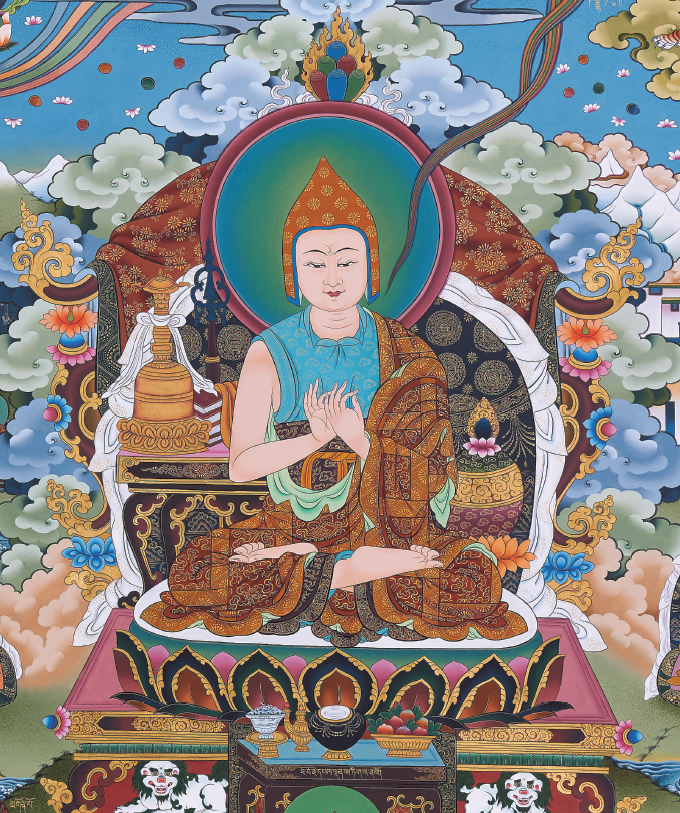
Description
Bodhipathapradīpa. (T. Byang chub lam gyi sgron ma). In Sanskrit, "Lamp for the Path to Enlightenment"; a work composed by the Indian scholar Atiśa Dīpamkaraśrījñāna at Tho ling gtsug lag khang shortly after he arrived in Tibet in 1042. Tibetan histories often note that Atiśa wrote this text in order to clarify problematic points of Buddhist practice, especially tantra, which were thought to have degenerated and become distorted, and to show that tantra did not render basic Buddhist practice irrelevant. The Bodhipathapradīpa emphasizes a gradual training in the practices of the Mahāyāna and vajrayāna and became a prototype and textual basis first for the bstan rim, or "stages of the teaching" genre, and then for the genre of Tibetan
religious literature known as lam rim, or "stages of the path." It is also an early source for the instructions and practice of blo sbyong, or "mind training." Atiśa wrote his own commentary (pańjikā) (Commentary on the Difficult Points of the Lamp for the Path to Enlightenment) to the text. The text says bodhisattvas must first follow one of the sets of prātimokṣa disciplinary rules; based on those precepts, they practice the six perfections (pāramitā); with those perfections as a solid foundation, they finally practice Buddhist tantra. (Source: "Bodhipathapradīpa." In The Princeton Dictionary of Buddhism, 133. Princeton University Press, 2014. http://www.jstor.org/stable/j.ctt46n41q.27.)
| Reference | Atīśa Dīpaṃkaraśrījñāna (slob dpon chen po dpal mar me mdzad ye shes). Bodhipathapradīpa [बोधिपथप्रदीप]. byang chub lam gyi sgron ma [བྱང་ཆུབ་ལམ་གྱི་སྒྲོན་མ།]. [A Lamp for the Path to Enlightenment]. Tengyur, RKTST 3288 http://www.rkts.org/cat.php?id=3288&typ=2. |
|---|---|
| People | Atiśa, Gewai Lodrö |
