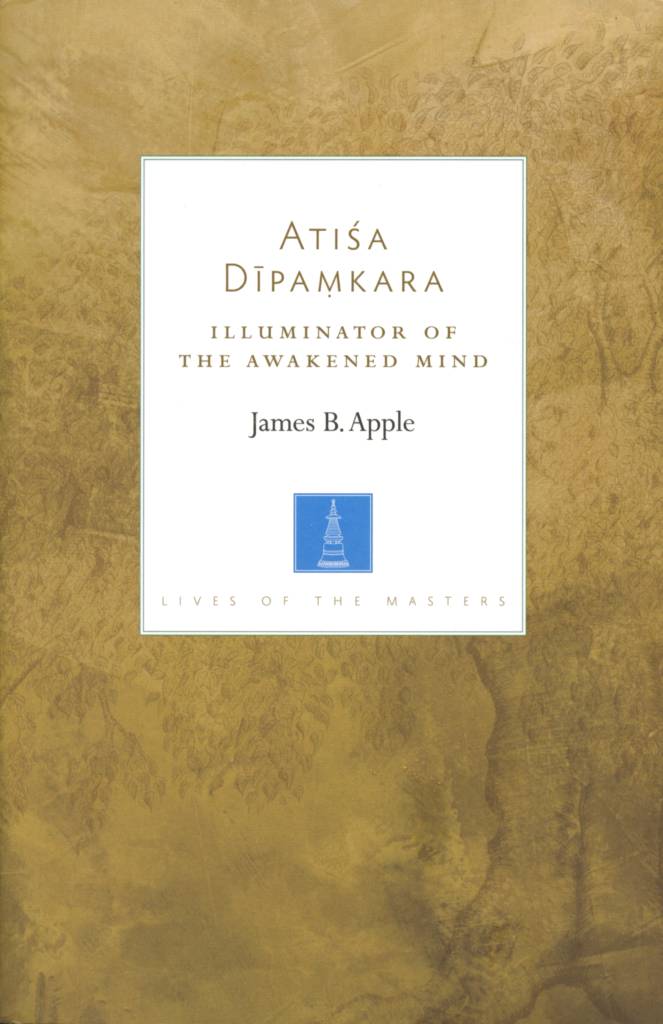
Atiśa Dīpamkara: Illuminator of the Awakened Mind
| 🤓 Admin Zone 🛠️ hidden to non-admins | |

Description
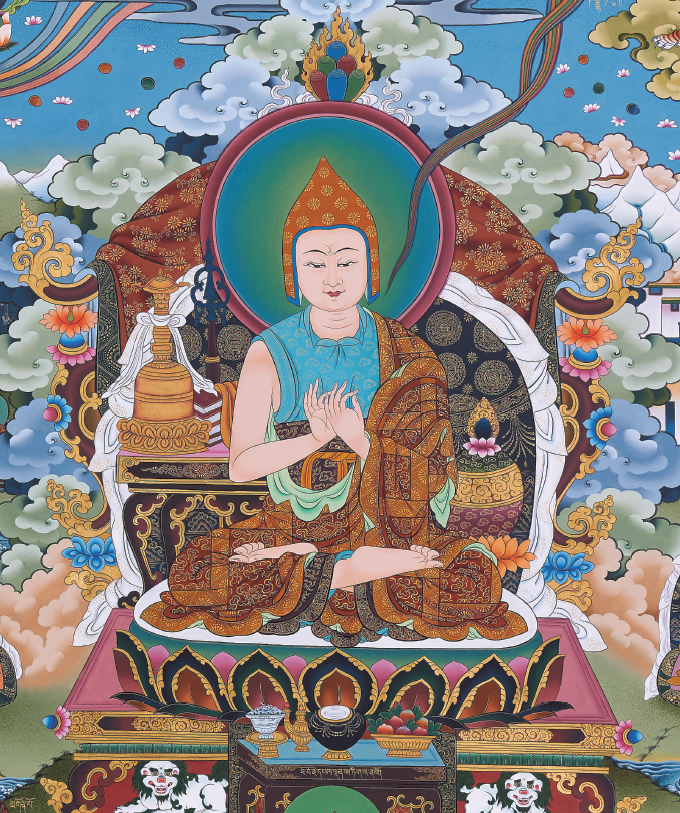
Few figures in the history of Buddhism in Tibet have had as far-reaching and profound an influence as the Indian scholar and adept Atiśa Dīpaṃkara (982–1054). Originally from Bengal, Atiśa was a tantric Buddhist master during Vajrayana Buddhism’s flowering in India and traveled extensively, eventually spending the remaining twelve years of his life revitalizing Buddhism in Tibet. Revered by all the schools of Tibetan Buddhism, Atiśa and his students founded what came to be known as the Kadam school, whose teachings have influenced countless Buddhist masters. These teachings, cherished by all major traditions, are preserved by the Geluk in particular, the school of the Dalai Lamas.
Although Atiśa was an influential practitioner and scholar of Tantra, he is best known for introducing many of the core Mahayana teachings that are widely practiced throughout the Tibetan Buddhist world, including the Stages of the Path to Awakening and Mind Training (lojong), as well as having contributed to highly influential commentaries on Madhyamaka that synthesize various schools of thought. This succinct biography of Atiśa’s life, together with a collection of translations, represents for the first time the full range of Atiśa’s contribution to Buddhism. As the most comprehensive work available on this essential Buddhist figure, this book is an indispensable resource for scholars and Buddhist practitioners alike. (Source: Shambhala Publications)
- Series Introduction by Kurtis Schaeffervii
- Prefaceix
- Acknowledgmentsxiii
- Introduction1
- 1. India11
- 2. Tibet35
- 3. The Buddhism of Atiśa Dīpaṃkaraśrījñāna77
- 4. On the Awakening Mind, from Open Basket of Jewels97
- 5. Entry to the Two Realities127
- 6. The Song with a Vision for the Realm of Reality133
- 7. Lamp for the Summary of Conduct159
- 8. Special Instructions on Unique Mindfulness165
- 9. Bodhisattva's Jewel Garland169
- 10. Middle Way Special Instructions for Cultivating All the Qualities in the Scriptures175
- 11. Lamp for the Path to Awakening181
- 12. Stages of the Path to Awakening, Selections193
- 13. Tārā, the Savioress, Selections233
- 14. Essential Condensed Summary of the Special Instructions on Coemergent Union245
- Notes251
- Table of Tibetan Transliterations273
- Bibliography279
- Index290

According to Thupten Jinpa,
"Although this text appears in the Tengyur (Toh 3951) as a self-standing work, it also exists almost in its entirety in another of Atiśa's works, entitled Letter of Unblemished Precious Jewels (Toh 4188), a letter sent by Atiśa to the Indian Bengali royalty Nayapāla from Nepal. Noting this, the Tibetan historian Pawo Tsuklak Trengwa asserts that Bodhisattva's Jewel Garland may actually have been compiled by Dromtönpa by drawing from Atiśa's writings. See his Joyful Feast for the Learned (Mkas pa'i dga' ston), p. 709." (Source Accessed Mar 14, 2025)Key practices include: moderating food intake and dividing meals into offerings to deities, dharma protectors, and all beings; balancing seated meditation with walking, circumambulation, and study; maintaining awareness that all phenomena are illusion-like; and adapting one's practice based on the stability of one's meditation.
The text concludes with practical advice about conforming to social conventions when necessary and maintaining good intentions even when engaging with worldly matters. Written in Nepal at a friend's request, this guide represents Atiśa's integration of sūtra and tantra approaches, offering a balanced daily routine for serious Buddhist practitioners seeking enlightenment through the bodhisattva path.to a great number of Indian Buddhist texts when he composed this work.
Date and Place of Authorship
According to the colophon of the canonical version of Open Basket of Jewels, the text was written in the great temple of Vikramaśīla, under the patronage of King Devapāla. The colophon explains that Atiśa composed the work at the requests of his Tibetan disciple and translation partner Tsultrim Gyalwa. The colophon also mentions that the translation was redacted by Atiśa, Tsultrim Gyalwa, and the layperson Tsöndrü Sengé. Therefore the text must have been composed before Atiśa left for Tibet circa 1040, as Tsöndrü Sengé passed away in Nepal on the journey to Tibet (Chattopadhyaya 1981, 302). This information also demonstrates the pedagogical relationship Atiśa had with his Tibetan students in India, in that Atiśa composed Open Basket of Jewels as an introduction for them to understand his Madhyamaka lineage, its source texts, and its primary practices. (Apple, Jewels of the Middle Way, 63)
Nearly a millennium ago, the great Indian Buddhist master Atisa Dipamkarasrijñana (ca. 982–1054) wrote a guidebook for realizing all the stages to awakening at the repeated request of his closest Tibetan disciple. Atisa is famously the author of the Lamp for the Path to Awakening (Bodhipathapradipa), a short work in verse, but this longer prose work has been virtually unknown, even in Tibet—until now.
Atisa's Stages of the Path Awakening (Bodhipathakrama), translated here, synthesizes all aspects of Buddhist practice, from the very beginning of the path—reflecting on the fortunate opportunity of human rebirth—up through to attaining omniscient buddhahood by nondual meditation. The Indian master’s faithful disciple Dromtönpa kept these teachings secret, and they were only transmitted to select disciples in a closely guarded transmission, but the lineage died out centuries ago, after Dromtönpa's Kadam school was eclipsed by history.
Now this significant work of Buddhist path literature has become available owing to recently recovered manuscripts of the Kadampas. This book offers a study and complete translation from the Tibetan of this monument of guidance on the Buddhist path accompanied by the commentaries and ritual texts that were transmitted alongside Atisa's text. Apple's substantial introduction includes a structural comparison with Atisa's famous work, charts the transmission lineage for the present work before it died out, and explores various hypotheses for why their fates diverged. Recovered from the contingencies of history, this book brings to life one of the most holistic and integrated approaches to the highest realizations of the Indian Buddhist path ever transmitted in Tibet. (Source: Simon and Schuster)