| 🤓 Admin Zone 🛠️ hidden to non-admins | |

Description

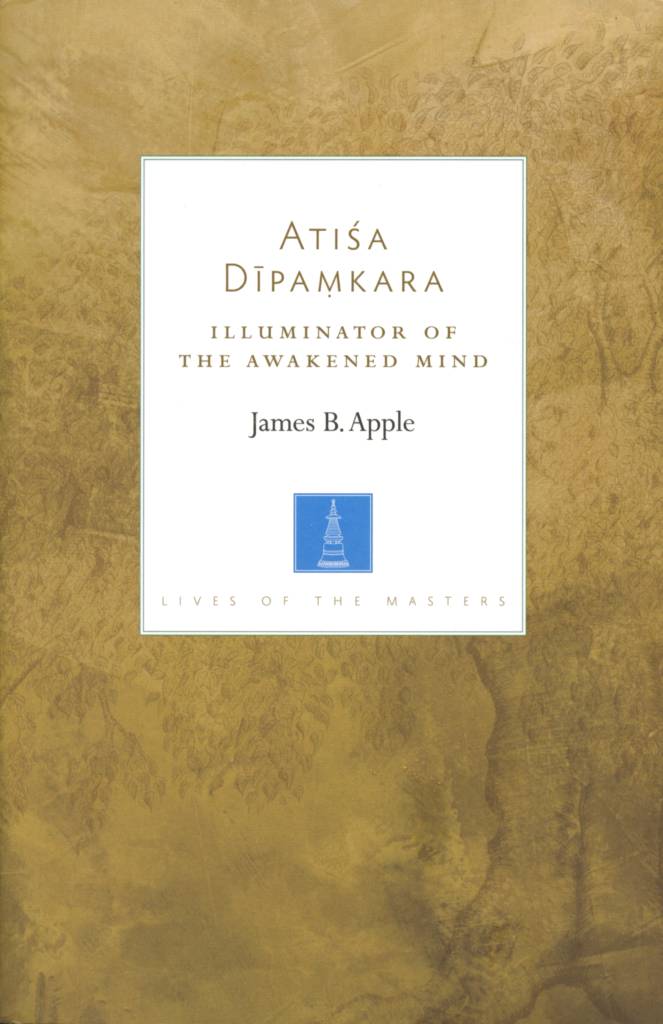
Nearly a millennium ago, the great Indian Buddhist master Atisa Dipamkarasrijñana (ca. 982–1054) wrote a guidebook for realizing all the stages to awakening at the repeated request of his closest Tibetan disciple. Atisa is famously the author of the Lamp for the Path to Awakening (Bodhipathapradipa), a short work in verse, but this longer prose work has been virtually unknown, even in Tibet—until now.
Atisa's Stages of the Path Awakening (Bodhipathakrama), translated here, synthesizes all aspects of Buddhist practice, from the very beginning of the path—reflecting on the fortunate opportunity of human rebirth—up through to attaining omniscient buddhahood by nondual meditation. The Indian master’s faithful disciple Dromtönpa kept these teachings secret, and they were only transmitted to select disciples in a closely guarded transmission, but the lineage died out centuries ago, after Dromtönpa's Kadam school was eclipsed by history.
Now this significant work of Buddhist path literature has become available owing to recently recovered manuscripts of the Kadampas. This book offers a study and complete translation from the Tibetan of this monument of guidance on the Buddhist path accompanied by the commentaries and ritual texts that were transmitted alongside Atisa's text. Apple's substantial introduction includes a structural comparison with Atisa's famous work, charts the transmission lineage for the present work before it died out, and explores various hypotheses for why their fates diverged. Recovered from the contingencies of history, this book brings to life one of the most holistic and integrated approaches to the highest realizations of the Indian Buddhist path ever transmitted in Tibet. (Source: Simon and Schuster)
Few figures in the history of Buddhism in Tibet have had as far-reaching and profound an influence as the Indian scholar and adept Atiśa Dīpaṃkara (982–1054). Originally from Bengal, Atiśa was a tantric Buddhist master during Vajrayana Buddhism’s flowering in India and traveled extensively, eventually spending the remaining twelve years of his life revitalizing Buddhism in Tibet. Revered by all the schools of Tibetan Buddhism, Atiśa and his students founded what came to be known as the Kadam school, whose teachings have influenced countless Buddhist masters. These teachings, cherished by all major traditions, are preserved by the Geluk in particular, the school of the Dalai Lamas.
Although Atiśa was an influential practitioner and scholar of Tantra, he is best known for introducing many of the core Mahayana teachings that are widely practiced throughout the Tibetan Buddhist world, including the Stages of the Path to Awakening and Mind Training (lojong), as well as having contributed to highly influential commentaries on Madhyamaka that synthesize various schools of thought. This succinct biography of Atiśa’s life, together with a collection of translations, represents for the first time the full range of Atiśa’s contribution to Buddhism. As the most comprehensive work available on this essential Buddhist figure, this book is an indispensable resource for scholars and Buddhist practitioners alike. (Source: Shambhala Publications)Nearly a millennium ago, the great Indian Buddhist master Atisa Dipamkarasrijñana (ca. 982–1054) wrote a guidebook for realizing all the stages to awakening at the repeated request of his closest Tibetan disciple. Atisa is famously the author of the Lamp for the Path to Awakening (Bodhipathapradipa), a short work in verse, but this longer prose work has been virtually unknown, even in Tibet—until now.
Atisa's Stages of the Path Awakening (Bodhipathakrama), translated here, synthesizes all aspects of Buddhist practice, from the very beginning of the path—reflecting on the fortunate opportunity of human rebirth—up through to attaining omniscient buddhahood by nondual meditation. The Indian master’s faithful disciple Dromtönpa kept these teachings secret, and they were only transmitted to select disciples in a closely guarded transmission, but the lineage died out centuries ago, after Dromtönpa's Kadam school was eclipsed by history.
Now this significant work of Buddhist path literature has become available owing to recently recovered manuscripts of the Kadampas. This book offers a study and complete translation from the Tibetan of this monument of guidance on the Buddhist path accompanied by the commentaries and ritual texts that were transmitted alongside Atisa's text. Apple's substantial introduction includes a structural comparison with Atisa's famous work, charts the transmission lineage for the present work before it died out, and explores various hypotheses for why their fates diverged. Recovered from the contingencies of history, this book brings to life one of the most holistic and integrated approaches to the highest realizations of the Indian Buddhist path ever transmitted in Tibet. (Source: Simon and Schuster)