| 🤓 Admin Zone 🛠️ hidden to non-admins | |
बोधिमार्गप्रदीपपञ्जिका
Bodhimārgapradīpapañjikā
བྱང་ཆུབ་ལམ་གྱི་སྒྲོན་མའི་དཀའ་འགྲེལ།
byang chub lam gyi sgron ma'i dka' 'grel
Commentary on the Difficult Points of the "A Lamp for the Path to Enlightenment" (84000)
Text
Please note that many items in our library are simply pages that represent a detailed library catalog entry and citation of someone else's work, presentation, or performance. Read our General Disclaimer for more information.


Description
Atiśa's commentary on the difficult points of his Lamp for the Path to Enlightenment. The text says bodhisattvas must first follow one of the sets of prātim okṣa disciplinary rules; based on those precepts, they practice the six perfections
(pāramitā); with those perfections as a solid foundation, they finally practice Buddhist tantra. (Source: "Bodhimārgapradīpa." In The Princeton Dictionary of Buddhism, 133. Princeton University Press, 2014. http://www.jstor.org/stable/j.ctt46n41q.27.)
Quoted in the aligned translations
Reference
Atiśa (ཇོ་བོ་རྗེ་ཨ་ཏི་ཤ་). Bodhimārgapradīpapañjikā [बोधिमार्गप्रदीपपञ्जिका]. byang chub lam gyi sgron ma'i dka' 'grel [བྱང་ཆུབ་ལམ་གྱི་སྒྲོན་མའི་དཀའ་འགྲེལ།]. [Commentary on the Difficult Points of the "A Lamp for the Path to Enlightenment" (84000)]. Tengyur, RKTST 3289 http://www.rkts.org/cat.php?id=3289&typ=2.
Interconnections
2 Full translations

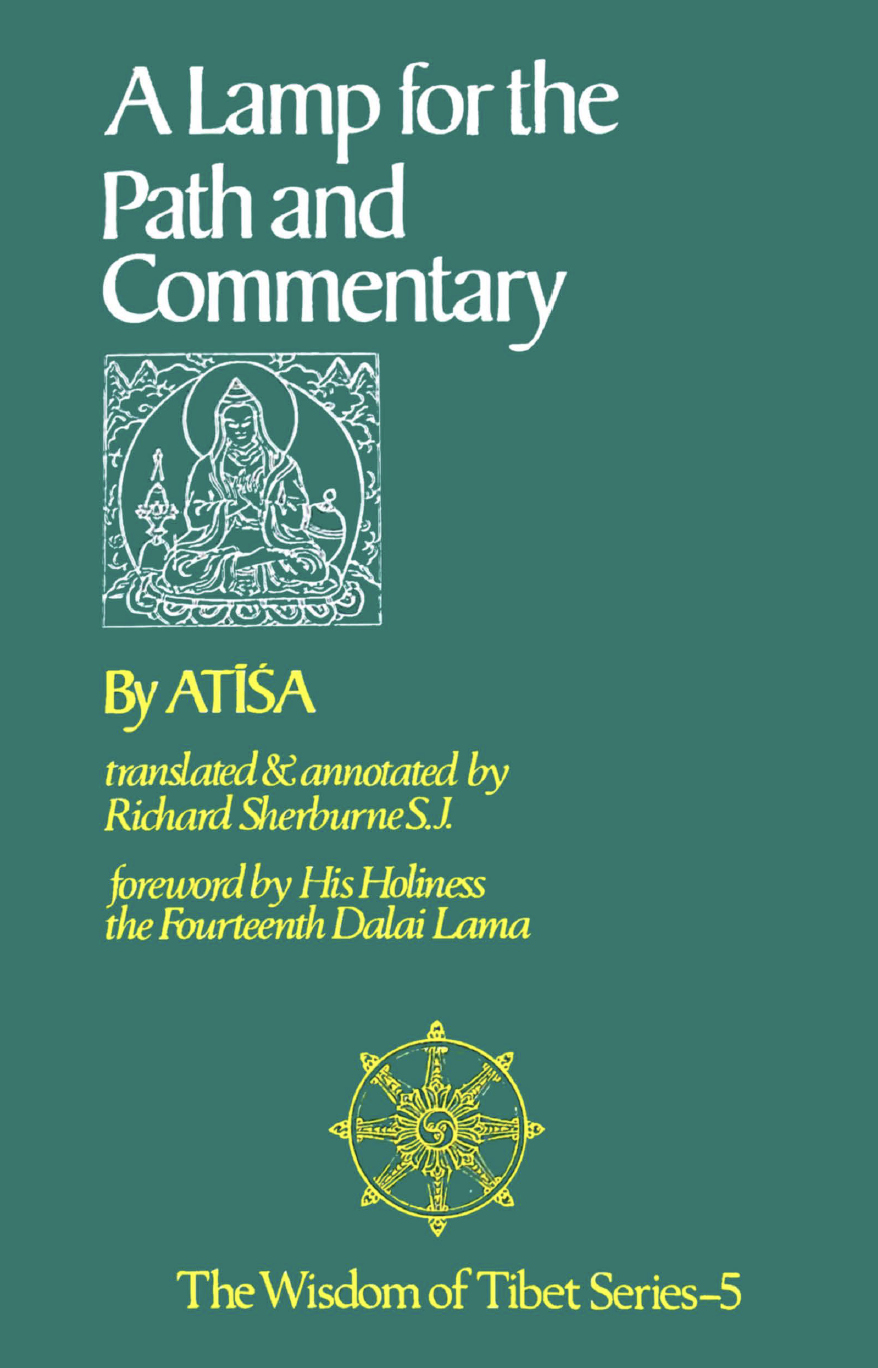
The Lamp for the Enlightenment Path and its Commentary are eleventh-century Buddhist texts which were written at Tho-ling ("High-flying") Monastery in the central Himalayas near Mount Kailas. Although little known to "outsiders", these texts have been used and cherished by the Buddhist communities within Tibet and inner Asia for well over nine centuries. The monk who composed them wrote originally in Sanskrit (now lost) while simultaneously translating them into Tibetan, and they were included as authentic commentary in the earliest canon of Mahāyāna scripture. (Sherburne, introduction, x)

The complete works of Atīśa Śrī Dīpaṁkara Jñāna, Jo-bo-rje : The lamp for the path and commentary, together with the newly translated Twenty-five key texts (Tibetan and English texts)
1 Classical commentary of

Bodhipathapradīpa. (T. Byang chub lam gyi sgron ma). In Sanskrit, "Lamp for the Path to Enlightenment"; a work composed by the Indian scholar Atiśa Dīpamkaraśrījñāna at Tho ling gtsug lag khang shortly after he arrived in Tibet in 1042. Tibetan histories often note that Atiśa wrote this text in order to clarify problematic points of Buddhist practice, especially tantra, which were thought to have degenerated and become distorted, and to show that tantra did not render basic Buddhist practice irrelevant. The Bodhipathapradīpa emphasizes a gradual training in the practices of the Mahāyāna and vajrayāna and became a prototype and textual basis first for the bstan rim, or "stages of the teaching" genre, and then for the genre of Tibetan
religious literature known as lam rim, or "stages of the path." It is also an early source for the instructions and practice of blo sbyong, or "mind training." Atiśa wrote his own commentary (pańjikā) (Commentary on the Difficult Points of the Lamp for the Path to Enlightenment) to the text. The text says bodhisattvas must first follow one of the sets of prātimokṣa disciplinary rules; based on those precepts, they practice the six perfections (pāramitā); with those perfections as a solid foundation, they finally practice Buddhist tantra. (Source: "Bodhipathapradīpa." In The Princeton Dictionary of Buddhism, 133. Princeton University Press, 2014. http://www.jstor.org/stable/j.ctt46n41q.27.)
3 A topic of
The Lamp for the Enlightenment Path and its Commentary are eleventh-century Buddhist texts which were written at Tho-ling ("High-flying") Monastery in the central Himalayas near Mount Kailas. Although little known to "outsiders", these texts have been used and cherished by the Buddhist communities within Tibet and inner Asia for well over nine centuries. The monk who composed them wrote originally in Sanskrit (now lost) while simultaneously translating them into Tibetan, and they were included as authentic commentary in the earliest canon of Mahāyāna scripture. (Sherburne, introduction, x)

This article, "Atiśa (Dīpamkaraśrījñāna)—His Philosophy, Practice and its Sources" by Miyazaki Izumi, offers an in-depth examination of Atiśa's philosophy and practical teachings, with a particular focus on the diverse sources he utilized, especially in his non-tantric works. Miyazaki highlights Atiśa's pragmatic approach. The paper meticulously traces how Atiśa integrated various prominent Indian Buddhist texts, such as Asaṅga's Yogācārabhūmi and Śāntideva's Bodhicaryāvatāra, into his system, demonstrating a rich intellectual heritage that he synthesized for the benefit of his disciples.
Miyazaki also addresses several complex and debated aspects of Atiśa's thought, particularly his nuanced stance on philosophical classifications. For instance, while later Tibetan doxographies often categorized Atiśa within specific Madhyamika subdivisions, the article suggests that Atiśa himself did not rigidly adhere to such distinctions in his own writings. It further investigates the apparent discrepancies in his reliance on different sources for distinct aspects of practice, such as Asaṅga for śīla and Bodhibhadra for dhyāna, and his unique views on the role of logical inference in realizing ultimate truth. The article concludes by identifying areas for further scholarly inquiry, aiming to clarify Atiśa's genuine philosophical position by privileging his original texts over subsequent interpretations, thereby contributing to a more precise understanding of this pivotal figure in Indo-Tibetan Buddhism.
The complete works of Atīśa Śrī Dīpaṁkara Jñāna, Jo-bo-rje : The lamp for the path and commentary, together with the newly translated Twenty-five key texts (Tibetan and English texts)