Illuminating the Path to Enlightenment
| 🤓 Admin Zone 🛠️ hidden to non-admins | |
-front.jpg)
Description
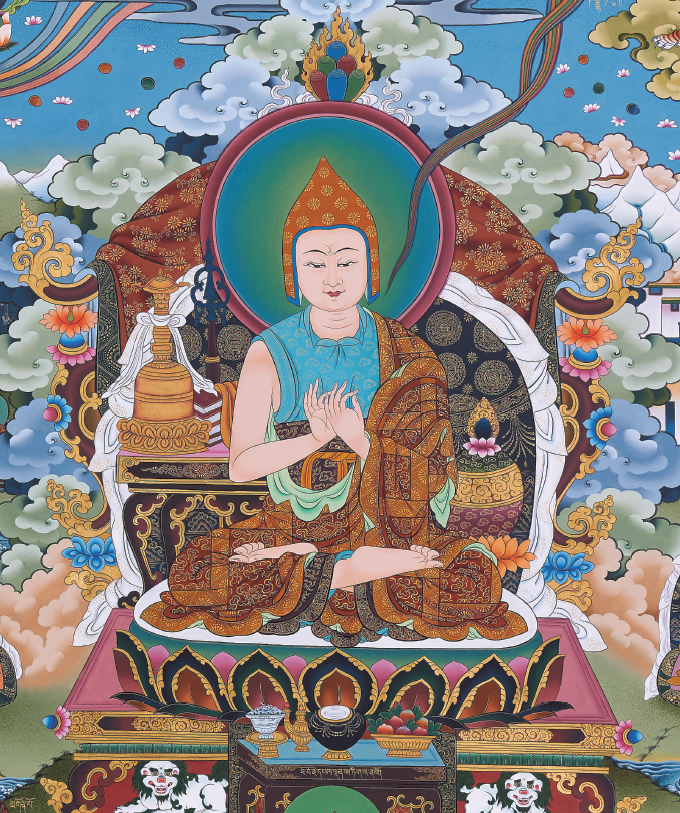
About one thousand years ago, the great Indian pandit and yogi, Dipamkara Shrijnana (Atisha), was invited to Tibet to re-establish the Buddhadharma, which had been suppressed and corrupted for almost two centuries. One of Atisha's main accomplishments in Tibet was his writing of the seminal text, A Lamp for the Path to Enlightenment, in which he extracted the essence of all 84,000 teachings of the Buddha and organized them into a clear, step-like arrangement that makes it easy for any individual practitioner to understand and practice the Dharma. This genre of teachings is known as lamrim, or steps of the path, and forms an essential part of every school of Tibetan Buddhism.
In this book, His Holiness the Dalai Lama gives a commentary to not only Atisha's revolutionary work but also to Lines of Experience, a short text written by Lama Tsongkhapa, who was perhaps the greatest of all Tibetan lamrim authors. In bringing together Atisha, Lama Tsongkhapa and His Holiness the Dalai Lama, this book offers readers one of the clearest and most authoritative expositions of the Tibetan Buddhist path ever published, and it is recommended for those at the beginning of the path, the middle and the end. This is the first time a major teaching by the Dalai Lama has been published for free distribution. (Source Accessed August 24, 2026)
- FOREWORD
- by Geshe Tsultim Gyeltsenxi
- PROLOGUE
- Universal Responsibilityxxiii
- Question and answer periodxxx
- 1. GENERAL INTRODUCTION1
- The purpose of Dharma practice3
- Intellectual and experiential understanding6
- The basis for transformation7
- Investigating the nature of reality10
- 2. FEATURES OF THE LAM-RIM TEACHINGS13
- Atisha’s Lamp for the Path to Enlightenment13
- Lamp for the Path: Verse 113
- The meaning of the title14
- The objects of salutation15
- The two truths17
- The Four Noble Truths18
- The Three Jewels: Buddha, Dharma and Sangha21
- Lama Tsong Khapa’s Lines of Experience22
- The origin of the lam-rim teachings: the greatness of the authors25
- Lines of Experience: Verse 127
- Lines of Experience: Verse 230
- Lines of Experience: Verse 331
- Lines of Experience: Verse 434
- Lines of Experience: Verse 537
- The greatness of the lam-rim teachings39
- Lines of Experience: Verses 6 & 739
- Question and answer period42
- 3. RELYING ON A SPIRITUAL TEACHER47
- The qualities of a teacher47
- Lines of Experience: Verse 847
- The practice of reliance52
- Lines of Experience: Verse 952
- The qualities of the spiritual teacher53
- The qualities of the student57
- Establishing proper reliance60
- Question and answer period62
- 4. BECOMING INSPIRED TO PRACTICE DHARMA67
- Levels of spiritual trainees67
- Lamp for the Path: Verse 267
- Lamp for the Path: Verse 369
- Developing faith in karma69
- The three levels of refuge71
- The value and transient nature of human existence72
- Lines of Experience: Verse 1072
- Meditation: cultivating mental discipline73
- Death and rebirth78
- The twelve links81
- 5. REFUGE, KARMA AND PRECEPTS83
- Taking refuge83
- Lines of Experience: Verse 1183
- Observing the law of karma85
- Lines of Experience: Verse 1288
- Purification of negative karma: the four opponent powers89
- Question and answer period91
- 6. SEEKING FREEDOM FROM CYCLIC EXISTENCE93
- Renunciation93
- Lamp for the Path: Verse 493
- Understanding the nature of cyclic existence94
- Lines of Experience: Verse 1394
- Question and answer period100
- 7. CULTIVATING THE ALTRUISTIC INTENTION OF BODHICITTA103
- Lamp for the Path: Verse 5103
- Lines of Experience: Verse 14104
- Lamp for the Path: Verse 6105
- Lamp for the Path: Verses 7 to 18106
- The importance of bodhicitta108
- 8. THE CEREMONY FOR GENERATING BODHICITTA113
- Introduction113
- The seven-limb practice114
- Homage115
- Offering115
- Confessing115
- Rejoicing116
- Requesting117
- Beseeching118
- Dedication118
- The actual ceremony for generating bodhicitta118
- 9. BODHISATTVA OUTLOOK AND ACTION121
- Taking the bodhisattva vows121
- Lamp for the Path: Verse 18121
- Lamp for the Path: Verse 19122
- Lamp for the Path: Verse 20122
- Lamp for the Path: Verse 21123
- Lamp for the Path: Verse 22124
- Lamp for the Path: Verse 23124
- Lamp for the Path: Verse 24125
- Lamp for the Path: Verses 25 through 31125
- Lamp for the Path: Verse 32126
- The practice of the first five perfections127
- The perfection of generosity127
- Lines of Experience: Verse 15127
- The perfection of ethical discipline128
- Lines of Experience: Verse 16128
- The perfection of forbearance128
- Lines of Experience: Verse 17128
- The perfection of joyous effort129
- Lines of Experience: Verse 18129
- The perfection of concentration130
- Lamp for the Path: Verses 33 through 38130
- Lines of experience: Verse 19132
- Lamp for the Path: Verses 39 & 40133
- 10. THE PERFECTION OF WISDOM139
- The importance of the perfection of wisdom139
- Lamp for the Path: Verse 41139
- Lamp for the Path: Verse 42139
- Lamp for the Path: Verses 43 through 46140
- Lines of Experience: Verse 20140
- The nature of wisdom142
- Lamp for the Path: Verse 47142
- Emptiness according to different Buddhist schools142
- Dependent origination146
- Establishing emptiness through reasoning148
- Lamp for the Path: Verses 48 through 50148
- Meditation on emptiness154
- Lamp for the Path: Verses 51 through 54155
- The non-conceptual understanding of emptiness156
- Lamp for the Path: Verses 55 through 59157
- The union of calm abiding and penetrative insight158
- Lines of Experience: Verse 21158
- Lines of Experience: Verse 22159
- Lines of Experience: Verse 23160
- The Vajrayana path161
- Lamp for the Path: Verse 60161
- Lamp for the Path: Verses 61 through 67161
- Lines of Experience: Verse 24162
- Question and answer period163
- Dedication165
- Lamp for the Path: Verse 68165
- Lines of Experience: Verse 25165
- APPENDICES
- Appendix 1. A Lamp for the Path to Enlightenment167
- Appendix 2. Lines of Experience179
- NOTES187
- BIBLIOGRAPHY191
- GLOSSARY195