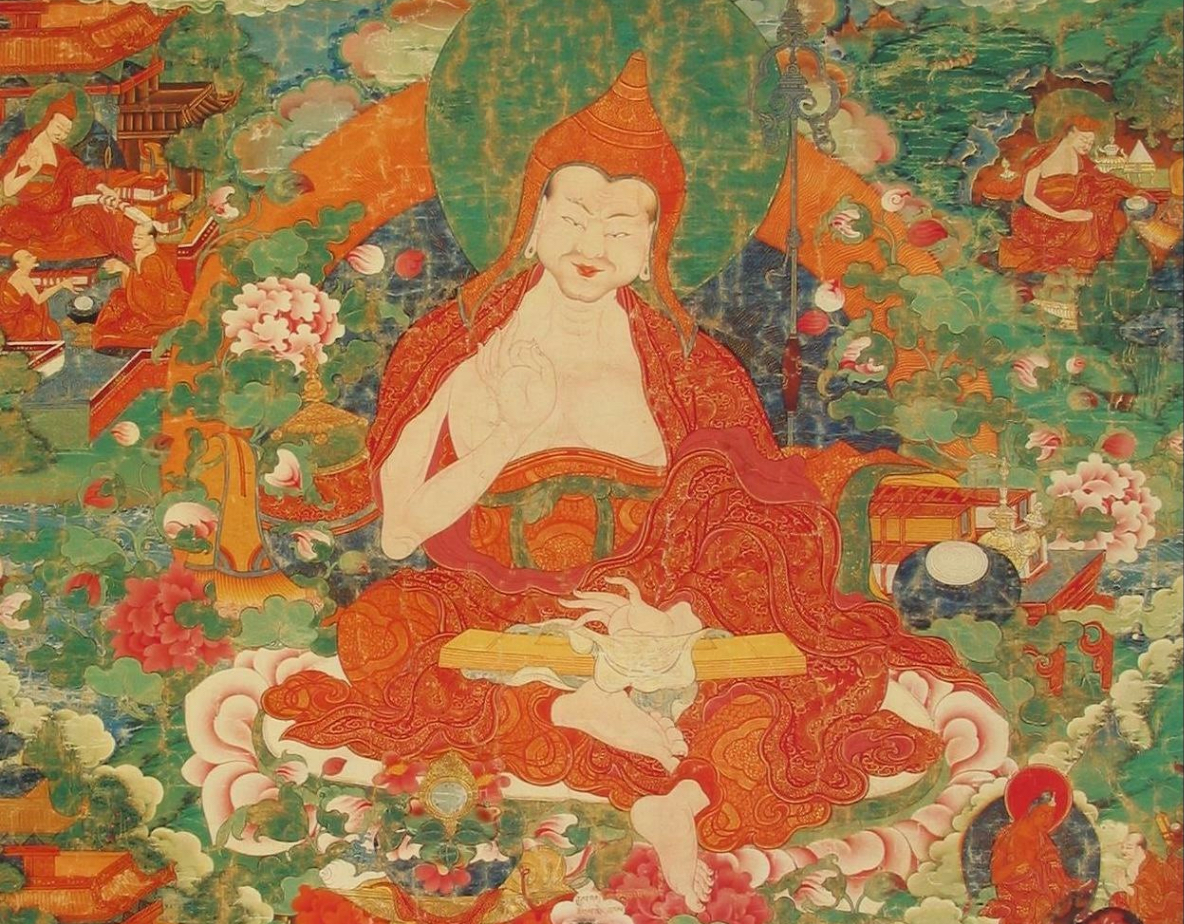
Buddhist Educational Principles and Practices in Asaṅga's Bodhisattvabhūmi
Dissertations/Buddhist Educational Principles and Practices in Asaṅga's Bodhisattvabhūmi
| 🤓 Admin Zone 🛠️ hidden to non-admins | |

Description
The Bodhisattvabhūmi contains a systematic description of the bodhisattva path of practice (bodhisattva-śikṣāmārga) that emphasises broad knowledge and general education in the pursuit of enlightenment and liberation. The subjects of that education are the "five sciences" (pañcavidyāsthānāni) which range from Buddhist textual scholarship to the study of non-Buddhist religious literature and secular subjects, including works on grammar, logic, medicine and crafts.
The historical accounts of the seventh century Chinese pilgrim travellers Hsüan-Tsang and I-Tsing confirm that these five sciences were the basis for the curriculum at Nālandā Mahāvihāra, India's most renowned monastic university. Corroborating information indicates that the Bodhisattvabhūmi was studied at Nālandā Mahāvihāra and that its views and values were influential in Nālandā's approach to education.
The inclusion of non-traditional subjects as valid areas of "liberating knowledge" for Buddhists required an innovative philosophy of education. This was achieved in the Bodhisattvabhūmi by reformulating certain key Buddhist concepts, most notably dharma ("teachings"), prajñā ("wisdom-insight") and bodhi ("enlightenment"). The result was a comprehensive vision of religious education that encouraged a quest for general learning and broadened the range of knowledge deemed necessary for attainment of complete enlightenment (anuttarasamyaksambodhi).
To illustrate the importance of education and embody principles of its acquisition and proper application, the Bodhisattvabhūmi also developed portrayals of role types. These include the bodhisattva depicted as a novice beginner, teacher, and mentor; and the Tathāgata Buddha portrayed as the personification of "all-knowledge" and defender of the faith. The Chinese travellers' accounts confirm that the students and masters of Nālandā Mahāvihāra were involved, in their daily lives, in activities that corresponded to these roles.

Traditionally attributed to Ārya Asaṅga (c. fourth–fifth century CE) through revelation from the future buddha Maitreya, the text likely represents a compilation of earlier materials (c. 230–300 CE) that predates the fully developed Yogācāra philosophical system. Its existence in multiple Chinese translations from the early fifth century onward confirms its early date and widespread influence across Asian Buddhism.