Śāntideva's Life: History and Legend
| 🤓 Admin Zone 🛠️ hidden to non-admins | |
Featured on
It is generally accepted that Śāntideva (lit. Peaceful Deity or Lord of Peace) was a Mahāyāna monk who lived in Northern India. However, like many figures of his time, we have very little material about his life that is historically reliable, and his exact dates are unknown. Despite this, and utilizing what evidence they do have, some scholars have attempted to determine when he may have actually lived. For example, Embar Krishnamacharya has noted the fact that the philosopher Śāntarakṣita (725-788 CE), whom we have some record of in Tibetan historical accounts, quotes a verse from the Bodhicaryāvatāra in his Tattvasiddhi, believed to have been written before his second trip to Tibet and his founding of Samye monastery in 763, suggesting that Śāntideva must have lived and composed the text before this time.[1] Still other scholars have pointed to non-Indian observers' accounts of Nālandā, where Śāntideva is believed to have studied and taught, specifically to the writings of the Chinese pilgrims Xuanzang and Yijing, who visited Nālandā between 629–645 and 673–685 respectively.[2] B. Bhattacarya, for example, notes that in the writings of these two figures, which spoke of the famous teachers of the period, the name Śāntideva is notably absent, and he therefore suggests that Śāntideva likely flourished after the departure of Yijing, but before 763.[3] While Śāntideva's dates remain a matter of speculation, it is generally accepted among most scholars that he lived sometime between the late 7th to mid-8th centuries.[4]
Nālandā
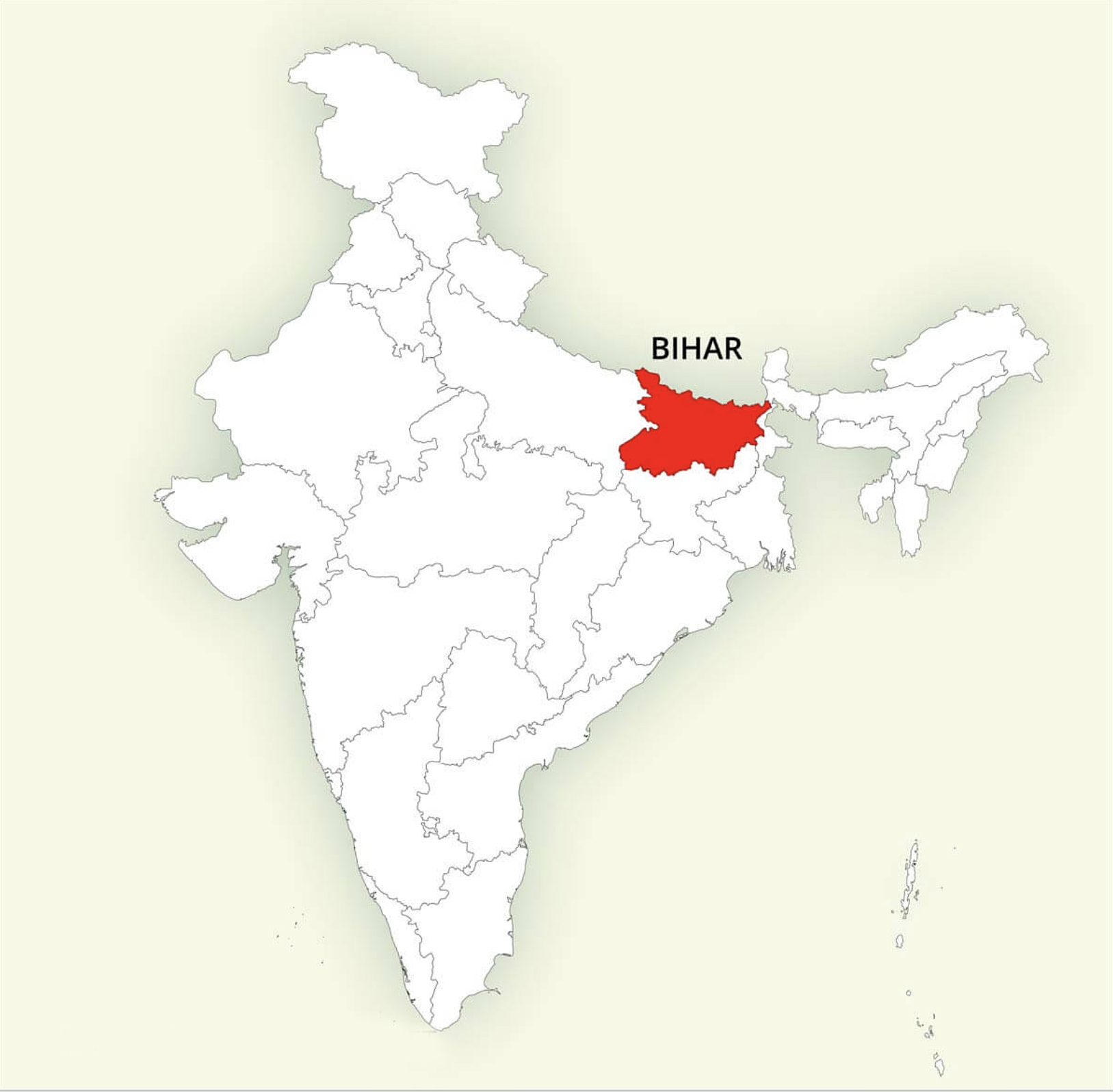
If we can place him somewhere this period in Northern India, then Śāntideva would have lived in a time of political transition and a general decline in Buddhist monasticism. This was a period marked by the end of Harṣa's empire (647 CE) and the rise of the Pāla dynasty (c. 750 CE) and a period in which Buddhist institutions once supported by a thriving Buddhist merchant class would start to see that support wane as a result of competition from Arab merchants who took control of trade along the Indian Ocean.[5] That a general monastic decline occurred during this time is all but confirmed in the writings of Xuanzang, who visited Bihar in the last years of Harṣa's reign.[6] But this overall diminishment in monastic support does not seem to have affected the larger institutions, including Nālandā, one of the most celebrated centers of learning in ancient India.[7]

While Mahāyāna Buddhist philosophy was reputedly a compulsory subject, the curriculum also included other Buddhist literature; both Mahāyāna and Hīnyāna, as well as the Vedas (the scriptural authority of Brahmanical Hinduism), logic, grammar, medicine, magic, Sāṃkhya philosophy, and a number of other subsidiary subjects, such as art.[13]
In addition, while Nālandā must have been highly literary culture, where religious manuscripts were certainly present, pedagogically speaking, as Paul Griffiths observes, the "dominant mode of display was aural: most learning took place through the ears, and competence in learning was exhibited with the mouth."[14] Xuanzang's biographer, Griffiths continues, notes that "scholarly achievement is ranked according to the number of works that someone is capable of explaining."[15] Yijing in particular describes (and was impressed by) the process and measure of learning as one of memorization, retention, and the ability of some monks to recall orally what was heard only once.[16] This mode of learning through the memorization of texts—and then through debating the content of those texts from memory—of course, continues to this day in Tibetan Buddhist monasteries.
While from his writings we know that Śāntideva championed a Mahāyāna point of view, particularly that of the Prāsaṅgika-Madhyamaka, which uses the logic of reductio ad absurdum to refute the nature of existence of the self and all phenomena,[17] it was this rich environment of diverse philosophical views and perspectives which Śāntideva would have found himself in and been conversant with. Moreover, it was this culture of aural learning, memorization, recitation, and performance which would come to play a major role in the traditional materials recounting Śāntideva's life.
Modern Western scholars have little confidence in their historical accuracy, nevertheless most of what we know about Śāntideva's life comes from his hagiographies, written centuries after his time, by figures such as Vibhūticandra (1170–1230), Bu ston, (1290–1364) Tāranātha (1575–1608?), Sum pa mKhan po Ye shes dPal 'byor (1704–88), and others.[18] The different versions of his story vary on the details and the order of events, but much of the heart of the story, especially that pertaining to his time at Nālandā, is generally the same.
In brief, and what in some ways parallels Buddha Śākyamuni's own life story, we are told that Śāntideva was born the son of King Kalyanavarman of Saurāṣṭra in Gujarat. Expected to follow in his father's footsteps as a ruler, on the eve of his coronation, he received a vision from Mañjuśrī, who would tell him that this was not his destiny. Thus, he fled, and eventually he entered Nālandā and took ordination under Jayadeva, successor to Dharmapāla.

Although we may not be able to separate historical fact from legend, Śāntideva's life and works would have a profound impact in India and especially in Tibet in the centuries that followed, being translated several times, inspiring numerous commentaries, and shaping the way the Mahāyāna path was understood and taught. We invite you to explore the numerous variations of his life story, as well as books, essays, and videos by leading scholars and teachers that provide more context to the life of this extraordinary Buddhist figure.
Notes
- ↑ Charles Goodman, trans., The Training Anthology of Santideva: A Translation of the Śikṣā-samuccaya (New York: Oxford University Press, 2016), ix.
- ↑ Paul Griffiths, Religious Reading: The Place of Reading in the Practice of Religion (New York: Oxford University Press, 1999), 118–19.
- ↑ Barbra Clayton, Moral Theory in Śāntideva's Śikṣāsamucaya: Cultivating the Fruits of Virtue (London: Routledge, 2006), 32.
- ↑ For an interesting discussion of Śāntideva's potential dates, see Clayton, Moral Theory, 31–32.
- ↑ Goodman, Training Anthology, x.
- ↑ Griffiths, Religious Reading, 118.
- ↑ Griffiths, Religious Reading, 118.
- ↑ Griffiths, Religious Reading, 119.
- ↑ Griffiths, Religious Reading, 120.
- ↑ Griffiths, Religious Reading, 118.
- ↑ Griffiths, Religious Reading, 119
- ↑ Griffiths, Religious Reading, 120–21.
- ↑ Kate Crosby and Andrew Skilton, trans. The Bodhicaryāvatāra: A Guide to the Buddhist Path to Awakening (Oxford: Oxford University Press, 1996), xxviii.
- ↑ Griffiths, Religious Reading, 121.
- ↑ Griffiths, Religious Reading, 121.
- ↑ Griffiths, Religious Reading, 122.
- ↑ A method of proving the falsity of a premise by showing that its logical consequence is absurd or contradictory.
- ↑ According to Andreas Kretschmar, "Variations on the basic themes of Śāntideva's life can be found in the writings of Butön Rinchen Drup (1290-1364), Sazang Mati Panchen Jamyang Lodro (1294-1376), Sönam Gyaltsen Pal Zangpo (1312-1374), Möndrub Sherab, Pawo Tsuglak Trengwa (1504-1566), Tāranātha (1575-1634), Sumpa Khenpo Yeshe Paljor (1704-1788), Tsechok Ling Yongdzin Yeshe Gyaltsen (1713-1793), Khenpo Kunpal (1862-1943), Khetsün Zangpo, and others." See Andreas Kretschmar, trans., Drops of Nectar: Khenpo Kunpal's Commentary on Shantideva's Entering the Conduct of the Bodhisattvas. Vol. 1 (Kathmandu: Padma Karpo Translation Committee, 2004), 6.
- ↑ This summary is primarily from Tāranātha's History of Buddhism in India. See Alaka Chattopadhyaya and Lama Chimpa, trans., Tāranātha's History of Buddhism in India (Delhi: Motilal Banarsidass, Humanities Press, 1990), 215–20.