- [[<span class="smw-highlighter" data-type="4" data-state="inline" data-title="Warning" title="Some use of "|]]
- "
- In your query was not closed by a matching "
- "
- [[.">Some use of "" in your query was not closed by a matching "".|]]
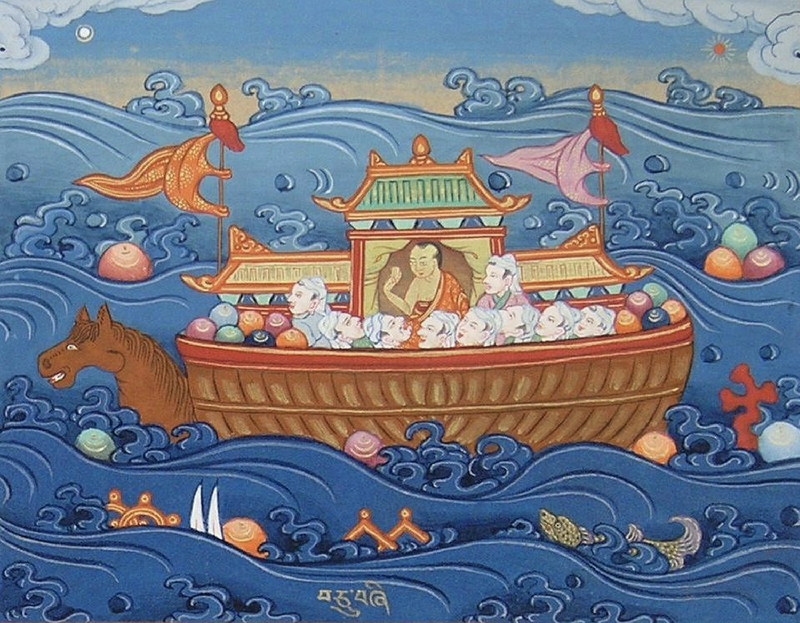
These tales illustrate key verses from chapter 5 of Śāntideva's Bodhicaryāvatāra, focusing on mental discipline, compassion, and ethical conduct. The stories demonstrate how subduing the mind protects from external dangers, how compassionate intent brings immense merit, and how true discipline comes from mental rather than merely physical restraint. They showcase bodhisattva principles through examples of selfless sacrifice, such as a ship captain killing a would-be murderer to protect others, a destitute woman offering her only possession, and an elephant sacrificing his life to save stranded travelers. Throughout these parables, the text emphasizes that proper motivation and mental cultivation are more important than external actions, and that extreme generosity—even breaking conventional moral codes—can be virtuous when performed with pure compassionate intent for the benefit of all beings.
The stories presented here were translated by Gregory Forgues and Khenpo Könchok Tamphel.
Subduing Fears
By simple binding of this mind alone, All these things are likewise bound. By simple taming of this mind alone, All these things are likewise tamed.
Page(s) 62
Blankleder, Helena, and Wulstan Fletcher (Padmakara Translation Group), trans. The Way of the Bodhisattva: A Translation of the Bodhicharyāvatāra. By Śāntideva. Rev. ed. Shambhala Classics. Boston: Shambhala Publications, 2006.
སེམས་འདི་གཅིག་པུ་བཏགས་པ་ཡིས། །
དེ་དག་ཐམས་ཅད་བཏགས་པར་འགྱུར། ། སེམས་འདི་གཅིག་པུ་བཏུལ་བ་ན། །* བཏུལ་བས in the source text.
དེ་དག་ཐམས་ཅད་ཐུལ་བར་འགྱུར། །sems 'di gcig pu btags pa yis/_/
de dag thams cad btags par 'gyur/_/ sems 'di gcig pu btul ba na/_/* btul bas[ in the source text. ]
de dag thams cad thul bar 'gyur/_/The statement "All these things are likewise tamed" teaches that if one protects and subdues one's own mind from afflictive emotions, then even the fears of tigers, lions, demonesses, and other dangers will not arise.
Once, a bodhisattva who had become a ship captain journeyed across the ocean in search of precious jewels. Along the way, he lost his bearings and accidentally landed on an island called Singhala, which was actually a city of demonesses. One of these terrifying demonesses took him as her husband, and he began living with her, unaware of the danger.
One day, a compassionate local man approached him and warned, "Great captain, you must not remain here! This is a city of demonesses. Later, they will take you to that city in the distance and kill you."
Hearing this, the captain was struck with intense fear. "Is there any way to escape from this place?" he asked desperately.
The man replied, "Tomorrow at dawn, a horse will emerge from the ocean and roll on the golden sand. It will announce: 'Those who wish to return to Jambudvīpa, climb onto my back!' When this happens, either mount the horse or at least grasp its tail, and you will be saved."
The next morning, the captain watched the shore. Just as foretold, a magnificent horse appeared from the waters. He quickly climbed onto its back, and the horse carried him to safety, returning him to his homeland.
The Compassionate Thought
A clear intent can fructify And bring us birth in such as Brahmā’s realm. The acts of body and of speech are less— They do not generate a like result.
Page(s) 63
Blankleder, Helena, and Wulstan Fletcher (Padmakara Translation Group), trans. The Way of the Bodhisattva: A Translation of the Bodhicharyāvatāra. By Śāntideva. Rev. ed. Shambhala Classics. Boston: Shambhala Publications, 2006.
སེམས་གསལ་གཅིག་བསྐྱེད་འབྲས་བུ་གང་། །
ཚངས་ལ་སོགས་པ་ཡིན་པ་ལྟར། ། ལུས་ངག་བཅས་པའི་འབྲས་བུ་ཡང་། །
སྤྱོད་པ་ཞན་པས་དེ་ལྟ་མིན། །sems gsal gcig bskyed 'bras bu gang /_/
tshangs la sogs pa yin pa ltar/_/ lus ngag bcas pa'i 'bras bu yang /_/
spyod pa zhan pas de lta min/_/The statement "A clear intent can fructify . . ." teaches that even a momentary thought of compassion toward others produces immeasurable merit.
In ancient times, a woman was crossing the Ganges River while carrying her young child in her arms. Suddenly, the powerful current swept them away, and she realized they were both about to drown. In that critical moment, rather than focusing on her own fate, she developed overwhelming compassion for her child.
"Alas!" she thought. "My own death matters little, but for this innocent child, I feel such deep pity and compassion."
With this selfless thought uppermost in her mind as she died, it is said that she was immediately reborn in the Brahma realm, one of the highest heavenly abodes.
Guarding the Mind
Therefore I will take in hand
And well protect this mind of mine.
What use to me are many disciplines,
If I can’t guard and discipline my mind?[p.64]The Way of the Bodhisattva (2006)
Blankleder, Helena, and Wulstan Fletcher (Padmakara Translation Group), trans. The Way of the Bodhisattva: A Translation of the Bodhicharyāvatāra. By Śāntideva. Rev. ed. Shambhala Classics. Boston: Shambhala Publications, 2006.
Page(s) 63
Blankleder, Helena, and Wulstan Fletcher (Padmakara Translation Group), trans. The Way of the Bodhisattva: A Translation of the Bodhicharyāvatāra. By Śāntideva. Rev. ed. Shambhala Classics. Boston: Shambhala Publications, 2006.
The statement "What use to me are many disciplines, if I can't guard and discipline my mind . . ." teaches that vows are properly maintained only when the mind is equipped with powerful antidotes to afflictive emotions.
Long ago, there lived a bodhisattva named Meaningful to Behold, a novice monk whose moral discipline was completely pure. Indra, the lord of the gods, decided to test this monk's resolve. He manifested as a strikingly beautiful young woman adorned with various ornaments and jewelry.
This illusory woman approached the novice monk, smiling seductively and displaying affection toward him in various ways. Disturbed by her advances, the monk fled from one place to another, trying to escape temptation. Yet the woman persistently followed him wherever he went.
Finally, she spoke these profound words:
- Abandon me with your mind!
What is the use of fleeing with your body?
O steadfast one, by fleeing with the body,
You cannot abandon desire.
Having delivered this teaching, the illusory woman vanished into thin air, revealing the true nature of Indra's test and the wisdom it contained.
The Merchant's Noble Transformation
Extol their qualities discreetly; When they’re praised by others, praise them too. But when the qualities they praise are yours, Reflect upon their skill in recognizing qualities.
Page(s) 72
Blankleder, Helena, and Wulstan Fletcher (Padmakara Translation Group), trans. The Way of the Bodhisattva: A Translation of the Bodhicharyāvatāra. By Śāntideva. Rev. ed. Shambhala Classics. Boston: Shambhala Publications, 2006.
ལྐོག་ན་ཡོན་ཏན་བརྗོད་བྱ་ཞིང་། །
ཡོན་ཏན་བརྗོད་ན་རྗེས་སུ་བརྗོད། ། རང་གི་ཡོན་ཏན་བརྗོད་ན་དེ། །
ཡོན་ཏན་ཤེས་པར་རིག་པར་བྱ། །lkog na yon tan brjod bya zhing /_/
yon tan brjod na rjes su brjod/_/ rang gi yon tan brjod na de/_/
yon tan shes par rig par bya/_/The statement "Reflect upon their skill in recognizing qualities . . ." means that when exceptional qualities are mentioned about oneself, if they truly exist, one should think, "In this world, there are indeed those who recognize qualities in those who possess them." If these qualities do not exist within oneself, one should strive diligently to cultivate them.
Once, a bodhisattva took birth as a merchant endowed with immeasurable qualities. It was said of him:
- He naturally embodies the Dharma,
Adorned with virtues of deep listening and more.
He has become worthy of respect and honor
From most beings in the world.
One day, while the merchant was attending to business at the king's palace, his mother-in-law, wishing to see her daughter, visited his home. After offering her daughter food and drink, she asked, "Daughter, are you well? Is your husband kind to you? Does he possess excellent qualities?"
The daughter lowered her head and replied softly, "Such discipline, qualities, and conduct are found in those who have become ordained monks."
The mother, being elderly with diminished senses, and due to her daughter speaking so quietly, misheard her words. She thought, "My son-in-law has abandoned my daughter and has become an ordained monk!" Immediately, she cried out and began to weep.
The daughter, misinterpreting her mother's reaction, thought, "She must have heard that my husband has become a monk, so she came to ease my sorrow." Overcome with grief at this misunderstanding, she too cried out loudly and fainted.
Hearing the commotion, all the servants, attendants, and townspeople gathered at the house and joined in the lamentation. Meanwhile, the merchant returned from the king's palace. Seeing the crowd gathered around his home, he instructed his attendant, "Go see what all these people are doing."
The attendant investigated and reported:
- Hearing, sir, that you abandoned your prosperous home
And became an ordained monk,
These people from various places
Have gathered out of their affection for you.
Upon hearing this, the bodhisattva was inspired. He thought, "Aha! It is good that people have such expectations of me. Now, I will not return home." Instead, he went back to the king and requested permission to take ordination as a monk.
The king asked, "What do you lack that you seek ordination and wish to go to the forest? I will give you whatever you need."
The merchant replied, "I lack nothing. I wish to be ordained because many people already believe it to be so." After explaining further, the king granted his permission. The merchant received ordination and prepared to depart for the forest.
Soon, his friends, relatives, and attendants arrived with tears of grief filling their eyes. Some grasped his feet and hands, refusing to let go. Others joined their palms in prayer, pleading for him not to leave. A few blocked his path and sat down in protest, while others tried to persuade him with gentle words to stay. Some even scolded him harshly, desperately begging him not to go.
Looking at their tear-filled faces as they tried to prevent him from pursuing this noble path, he spoke many verses explaining how continued association with them would only lead to negative conduct. He emphasized the immense benefits of ordination and retreating to the forest. With that, he departed for the forest.
Compassionate Action Beyond Boundaries
Therefore understand this well, And always labor for the benefit of beings. The Compassionate One farsightedly permits, To this end, even what has been proscribed.63According to Mahāyāna teaching, in extreme circumstances and when the motives are exclusively those of compassion, actions of body and speech (though not of mind), normally proscribed in the list of ten nonvirtues (see note 44) may be performed.
Page(s) 73
Blankleder, Helena, and Wulstan Fletcher (Padmakara Translation Group), trans. The Way of the Bodhisattva: A Translation of the Bodhicharyāvatāra. By Śāntideva. Rev. ed. Shambhala Classics. Boston: Shambhala Publications, 2006.
དེ་ལྟར་རིག་བྱས་གཞན་དོན་ལ། །
རྟག་ཏུ་བརྩོན་པར་གནས་པར་བྱ། ། ཐུགས་རྗེ་མངའ་བ་རིང་གཟིགས་པས། །
བཀག་པ་རྣམས་ཀྱང་དེ་ལ་གནང་། །de ltar rig byas gzhan don la/_/
rtag tu brtson par gnas par bya/_/ thugs rje mnga' ba ring gzigs pas/_/
bkag pa rnams kyang de la gnang /_/The statement "The Compassionate One farsightedly permits, to this end, even what has been proscribed" means that if one sees an opportunity to bring great benefit to sentient beings, even engaging in "naturally blameworthy actions" that are prohibited for hearers (śrāvakas), such as taking life, will not result in fault. In fact, the benefits accrued will be extremely great. This is called being skilled in the means of serving as a support and protector of sentient beings.
Once there was a ship captain named Great Compassion, who possessed the awakening mind (bodhicitta). He gathered many travelers and prepared a large vessel for a journey. He equipped the ship with trading goods, conch shells and crows to ward off sea monsters, silk banners to raise when favorable winds arose, iron blocks for anchoring, and all other necessary provisions. With everything properly prepared, he set sail to collect precious jewels.
The travelers reached an island in the ocean where they obtained many wish-fulfilling jewels. Among the group, however, a merchant named Clad in Black Cloak developed a malicious thought: "I will kill all these travelers and take these jewels for myself."
A sea deity revealed this evil plot to Captain Great Compassion in a dream. The captain reflected, "It would be most unfortunate if these people were deprived of accomplishing their mission. Even if I must suffer in hell as a consequence, it is better that I act now to help these people."
With this selfless motivation, he thrust a spear at Clad in Black Cloak and killed him. Remarkably, this act did not bring any fault upon the captain; instead, his merit increased immensely.
The Buddha's Compassion for the Hungry Ghosts
Eat only what is needful; Share with those who have embraced the discipline, With those who are defenseless or have fallen into evil states. Give everything except the three robes of religion.
Page(s) 73
Blankleder, Helena, and Wulstan Fletcher (Padmakara Translation Group), trans. The Way of the Bodhisattva: A Translation of the Bodhicharyāvatāra. By Śāntideva. Rev. ed. Shambhala Classics. Boston: Shambhala Publications, 2006.
ལོག་པར་ལྟུང་དང་མགོན་མེད་དང་། །
བརྟུལ་ཞུགས་གནས་ལ་བགོ་བྱ་ཞིང་། ། རན་པ་ཙམ་དུ་བཟའ་བྱ་སྟེ། །
ཆོས་གོས་གསུམ་མ་གཏོགས་པ་སྦྱིན། །log par ltung dang mgon med dang /_/
brtul zhugs gnas la bgo bya zhing /_/ ran pa tsam du bza' bya ste/_/
chos gos gsum ma gtogs pa sbyin/_/The statement "With those who are defenseless or have fallen into evil states . . ." teaches that yogis should give a portion of their food to hungry ghosts (pretas); this is also a precept established by the Teacher.
There once was a king of hungry ghosts named Robber, who had five hundred sons. Every night, they killed and devoured five hundred human children. The Buddha, intending to subdue them and end this suffering, stole Robber's eldest son, named Lovely Delighter Bud, and concealed him in his begging bowl.
The mother searched frantically throughout Jambudvīpa, even to the shores of the ocean, but could not find her son. Extremely distressed, she approached the Buddha and asked, "Have you seen my son?"
The Buddha responded, "If you, with so many sons, feel such intense love and concern for just this one child, how do you think those parents with only one or a few children feel when you take them? From now on, if you observe the five precepts and refrain from killing children, it will bring benefit to all."
She replied, "I will do as you say." Thereupon, the Buddha returned her son to her. To provide for their sustenance, the Teacher's disciples then vowed to perform the ritual of offering two portions of food each to these hungry ghosts.
The Offering of a Humble Cloth
Eat only what is needful; Share with those who have embraced the discipline, With those who are defenseless or have fallen into evil states. Give everything except the three robes of religion.
Page(s) 73
Blankleder, Helena, and Wulstan Fletcher (Padmakara Translation Group), trans. The Way of the Bodhisattva: A Translation of the Bodhicharyāvatāra. By Śāntideva. Rev. ed. Shambhala Classics. Boston: Shambhala Publications, 2006.
ལོག་པར་ལྟུང་དང་མགོན་མེད་དང་། །
བརྟུལ་ཞུགས་གནས་ལ་བགོ་བྱ་ཞིང་། ། རན་པ་ཙམ་དུ་བཟའ་བྱ་སྟེ། །
ཆོས་གོས་གསུམ་མ་གཏོགས་པ་སྦྱིན། །log par ltung dang mgon med dang /_/
brtul zhugs gnas la bgo bya zhing /_/ ran pa tsam du bza' bya ste/_/
chos gos gsum ma gtogs pa sbyin/_/The statement "Give everything except the three robes of religion" means that when a bodhisattva sees sentient beings without clothing and suffering from the cold, they should give them everything they possess, except for the three Dharma robes if they are ordained monks. When one gives whatever one possesses, the benefits are immeasurable.
Once in the past, a Buddha named Refuge of Merit appeared in the world. All the people made generous offerings to him. At that time, there lived a desperately poor woman named Partially Covered. She and her husband possessed only a single piece of cloth between them, with no other clothing. When one of them needed to go out to attend to tasks, the other would remain naked, hidden among the tall grass.
One day, a monk who was a disciple of the Teacher and who worked diligently for the benefit of others, came to the woman's door and met her. He said, "You should prostrate to the Buddha, offer him gifts, and listen to the Dharma." He explained the rarity and preciousness of having obtained a human rebirth with all the necessary freedoms and endowments, and he described the immense benefits of generosity.
The woman replied, "Venerable one, please wait just a moment."
She turned to her husband and said, "There is a monk at the door asking me to prostrate to the Buddha, listen to the Dharma, and make offerings. In our previous lives, we failed to practice generosity, which is why we have become so poor and destitute now. What can we do to create merit for our future lives?"
The husband asked, "It is right to make offerings, but since we are so poor, what do we have to give?"
The wife replied, "I will make an offering. Please grant your permission."
The husband, wondering if she had some hidden wealth, said, "Then go ahead and make the offering."
She said, "I will offer this cloth."
Surprised, the husband asked, "If you give away this cloth, what will I wear? What will I use when attending to tasks? Will we both have to stay at home? What will we do?"
She answered resolutely, "Since we are going to die soon anyway, we can do without it. Our future lives are more important, so I will offer it."
The husband, though displeased, reluctantly gave his permission. The woman then said to the monk, "Venerable one, please do not look for a moment. I will make my offering."
The monk replied, "Give it directly with your hand, and I will recite verses on the virtues of generosity."
She explained, "I have no other clothes than this single cloth. It would not be appropriate for you to see the impure body of a woman, so I will offer it from inside." And so she made her offering from behind the door.
The monk recited verses on generosity, accepted the cloth, and brought it to where the Blessed One was staying. The Buddha instructed, "Bring forth the cloth offered by the woman." The monk presented it to the Buddha, who received it with his own hand. The king and his retinue who were present were displeased by this seemingly insignificant offering. Knowing their thoughts, the Buddha said, "As I see it, none among this entire retinue has made an offering purer than this one."
The assembly was amazed by these words. Moved by the woman's sacrifice, the queen immediately removed her own clothes and ornaments and gave them to the woman. The king, likewise, removed his royal garments and ornaments and sent them to the woman's husband, along with an invitation for the couple to join the royal retinue.
In her next life, this woman was reborn as the daughter of a wealthy householder. From the moment of her birth, she was wrapped in soft, fine cloth. Indeed, for ninety-one kalpas thereafter, wherever she was reborn, she was born with clothes already adorning her body and enjoyed perfect prosperity in all her lives.
The Elephant's Selfless Sacrifice
They should not give up their bodies Whose compassionate thoughts are not yet pure. But let them be surrendered when, both now and in their futures lives, Great benefit is thereby gained.
Page(s) 73
Blankleder, Helena, and Wulstan Fletcher (Padmakara Translation Group), trans. The Way of the Bodhisattva: A Translation of the Bodhicharyāvatāra. By Śāntideva. Rev. ed. Shambhala Classics. Boston: Shambhala Publications, 2006.
སྙིང་རྗེའི་བསམ་པ་མ་དག་པར། །
ལུས་འདི་གཏང་བར་མི་བྱ་སྟེ། ། ཅི་ནས་འདི་དང་གཞན་དུ་ཡང་། །
དོན་ཆེན་སྒྲུབ་པའི་རྒྱུར་གཏང་ངོ་། །snying rje'i bsam pa ma dag par/_/
lus 'di gtang bar mi bya ste/_/ ci nas 'di dang gzhan du yang /_/
don chen sgrub pa'i rgyur gtang ngo /_/The statement "But let them be surrendered when, both now and in their futures lives, great benefit is thereby gained" teaches that a bodhisattva, upon seeing an opportunity to bring great benefit to sentient beings, gives even their own body and life without hesitation.
Between Bangala in eastern India and Potala in the south, there stands a high mountain called Dza bar ti'u. This mountain was covered with abundant trees, fruits, and fragrant plants. There lived a magnificent elephant king named Compassionate Mind, who was not only beautiful in form but also, through his great compassion, served as the protector and refuge of all sentient beings in the region.
One day, as the elephant gazed across the landscape, he spotted many people struggling through a vast desert. He thought, "These people have either been punished by their king or are travelers who have lost their way." He ran toward them, causing the travelers to become extremely frightened. They thought, "We have already been punished by the king, and now a wild elephant will kill us as well!"
The elephant, speaking in a human voice, asked, "O good people, have you lost your way, or have you been punished by the king? What has happened to bring you here?" The people could not answer, as they were exhausted, tired, and their mouths were parched from thirst.
The elephant led them to water, where after drinking, they cried out in distress and explained, "We were punished by the king, and about a thousand people were exiled. Approximately three hundred have already died from hunger and exhaustion. There are about seven hundred of us remaining."
The compassionate elephant then allowed the people to eat the various fruits growing on the mountain, particularly one called Braggo. However, being unaccustomed to such food, they became ill. The elephant inquired, "Are you well and happy?" They replied, "We are people who eat human food, and these fruits have made us sick."
The elephant said, "Tomorrow, go to the foot of that great cliff over there. At its base, you will find the corpse of a recently deceased elephant. If you eat its flesh, the sickness from the fruits will be cured. Carry the meat as provisions for your journey. Make water containers from its intestines and bladder. Continue on your way, and by the time these provisions are exhausted, you will have reached a human settlement." Having said this, he made a solemn aspiration, jumped off the cliff, and died.
When the people went to the cliff the next day and found the elephant's corpse, some said, "This appears to be the same elephant who was so kind to us." Some argued, "If that is so, it would not be appropriate to eat its flesh. We should cremate the body instead." Others countered, "He sacrificed himself thinking of our benefit, so it is appropriate to use his body as he intended." They prepared provisions from the flesh and continued their journey, eventually reaching the great kingdom of Vetala, where they settled.
Their population grew, and even today, there exists a great community of people called the Elephant Community. Out of profound gratitude, these people, from that time until the present, neither eat elephant meat nor place burdens on elephants.
Because this act was so wondrous, the gods spoke in verse:
- The great elephant, with great compassion,
Seeing the suffering of others,
Was able to give up even his own life.
Oh, how amazing and wondrous!
