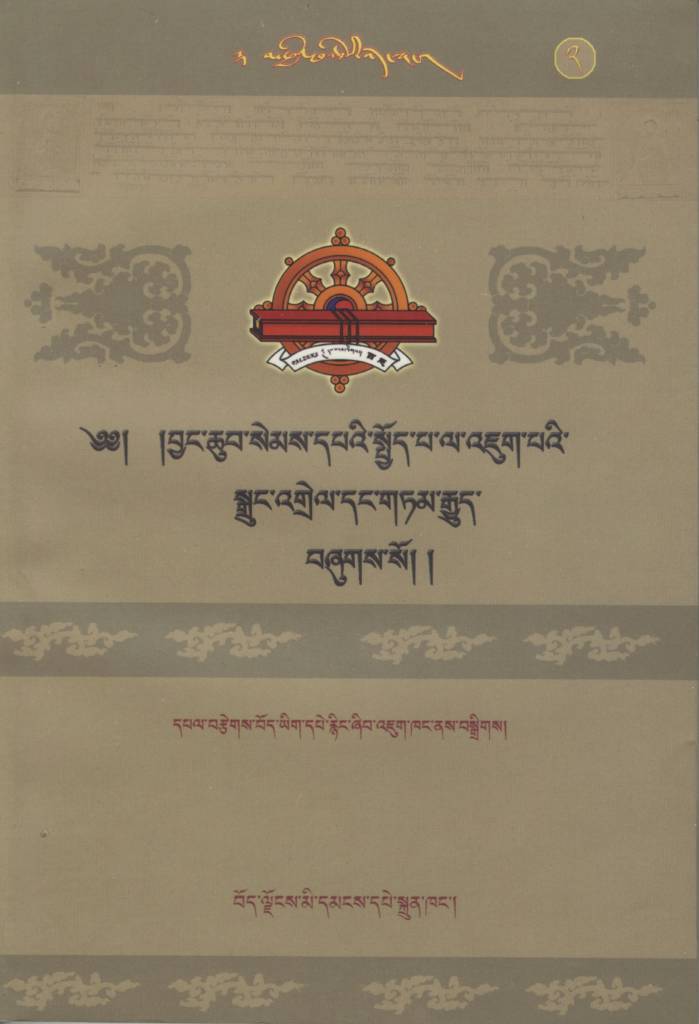
Byang chub sems dpa'i spyod pa la 'jug pa'i gtam rgyud
From Bodhicitta
< Texts
Texts/Byang chub sems dpa'i spyod pa la 'jug pa'i gtam rgyud| 🤓 Admin Zone 🛠️ hidden to non-admins | |
བྱང་ཆུབ་སེམས་དཔའི་སྤྱོད་པ་ལ་འཇུག་པའི་གཏམ་རྒྱུད།
byang chub sems dpa'i spyod pa la 'jug pa'i gtam rgyud
Tales Related to Entering into the Conduct of the Bodhisattva
Text
Please note that many items in our library are simply pages that represent a detailed library catalog entry and citation of someone else's work, presentation, or performance. Read our General Disclaimer for more information.

Description
This is a collection of anecdotes that are relevant to various points or topics taught in the Bodhicaryāvatāra.
Type of Commentary: all of the stories referenced in the Bodhicaryāvatāra
Length: 44
Tradition: Kadam
Length: 44
Tradition: Kadam
Reference
Mtsho sna ba shes rab bzang po (མཚོ་སྣ་བ་ཤེས་རབ་བཟང་པོ་). byang chub sems dpa'i spyod pa la 'jug pa'i gtam rgyud [བྱང་ཆུབ་སེམས་དཔའི་སྤྱོད་པ་ལ་འཇུག་པའི་གཏམ་རྒྱུད།]. [Tales Related to Entering into the Conduct of the Bodhisattva].
Recensions
| Tibetan | Mtsho sna ba shes rab bzang po. བྱང་ཆུབ་སེམས་དཔའི་སྤྱོད་པ་ལ་འཇུག་པའི་གཏམ་རྒྱུད།, (Byang chub sems dpa'i spyod pa la 'jug pa'i gtam rgyud).
|
|---|

Interconnections
All 11Editorial Content 9Classical Works 1Tibetan Publications 1
1 Recensions

This book is combined with two works that relate to Bodhicaryavatara. The first work is བྱང་ཆུབ་སེམས་དཔའི་སྤྱོད་པ་ལ་འཇུག་པའི་སྒྲུང་འགྲེལ་ལས་འབྲས་གསལ་བའི་མེ་ལོང་ཞེས་བྱ་བ་(byang chub sems dpa'i spyod pa la 'jug pa'i sgrung 'grel las 'bras gsal ba'i me long zhes bya ba), and the second work is བྱང་ཆུབ་སེམས་དཔའི་སྤྱོད་པ་ལ་འཇུག་པའི་གཏམ་རྒྱུད་(byang chub sems dpa'i spyod pa la 'jug pa'i gtam rgyud). Even the author is anonymous, but these works well captured the core realization of Bodhicaryavatara.
The first writing mainly interprets narratives that reveals directly or indirectly in the textual system, for deepening the understanding of essential context. All the narratives are composed with plain but vivid language, easy to remember, and very inspiring. The second writing also collected Bodhicaryavatara-relevant narratives and short summaries.
1 Classical commentary of

An "Introduction to Bodhisattva Practice," the Bodhisattvacaryāvatāra is a poem about the path of a bodhisattva, in ten chapters, written by the Indian Buddhist Śāntideva (fl. c. 685–763). One of the masterpieces of world literature, it is a core text of Mahāyāna Buddhism and continues to be taught, studied, and commented upon in many languages and by many traditions around the world. The main subject of the text is bodhicitta, the altruistic aspiration for enlightenment, and the path and practices of the bodhisattva, the six perfections (pāramitās). The text forms the basis of many contemporary discussions of Buddhist ethics and philosophy.
9 A topic of

These Buddhist parables which draw upon verses in chapter 8 of the Bodhicaryāvatāra illustrate key spiritual principles: abandoning harmful associations (even with familiar people) for spiritual progress; the value of forest seclusion over worldly distractions; a bodhisattva's willingness to endure suffering for others' benefit; the destructive consequences of desire, which can lead even to patricide; the insatiable nature of craving, exemplified by a king whose ambition causes his downfall; and the superiority of contentment over wealth, shown when a poor man recognizes a king's spiritual poverty despite his riches. Each tale demonstrates how attachment creates suffering while renunciation and compassion lead to liberation.
The stories presented here were translated by Gregory Forgues and Khenpo Könchok Tamphel.
The stories presented here were translated by Gregory Forgues and Khenpo Könchok Tamphel.

These tales illustrate key verses from chapter 5 of Śāntideva's Bodhicaryāvatāra, focusing on mental discipline, compassion, and ethical conduct. The stories demonstrate how subduing the mind protects from external dangers, how compassionate intent brings immense merit, and how true discipline comes from mental rather than merely physical restraint. They showcase bodhisattva principles through examples of selfless sacrifice, such as a ship captain killing a would-be murderer to protect others, a destitute woman offering her only possession, and an elephant sacrificing his life to save stranded travelers. Throughout these parables, the text emphasizes that proper motivation and mental cultivation are more important than external actions, and that extreme generosity—even breaking conventional moral codes—can be virtuous when performed with pure compassionate intent for the benefit of all beings.
The stories presented here were translated by Gregory Forgues and Khenpo Könchok Tamphel.
The stories presented here were translated by Gregory Forgues and Khenpo Könchok Tamphel.

The two stories presented here illustrate contrasting approaches to the bodhisattva path as referenced in chapter 4 of the Bodhicaryāvatāra. In "The Lion's Compassion," a lion king exemplifies perfect commitment to his promises by offering his own life to save two monkey cubs from a vulture, demonstrating the ideal of maintaining bodhisattva vows at any cost. Conversely, "Abandoning Bodhicitta" presents the cautionary tale of King Moonlight who, after an ungrateful demon disrespects his self-sacrificing gift of his own hand, becomes discouraged and abandons his bodhicitta, revealing the dangers of relinquishing the awakening mind. Together, these stories highlight both the supreme virtue of unwavering commitment to compassionate vows and the grave consequences of abandoning the bodhisattva path due to discouragement.
The stories presented here were translated by Gregory Forgues and Khenpo Könchok Tamphel.
The stories presented here were translated by Gregory Forgues and Khenpo Könchok Tamphel.

These two tales, based on verses from chapter 9 of the Bodhicaryāvatāra (the Wisdom Chapter), highlight the enduring power of aspirations and the inevitability of karmic consequences. In "The Power of Aspirations," the altruistic vow of the brahmin Śaṅku leads to the creation of a healing shrine that benefits others long after his death, showing that selfless intentions can have lasting effects. "The Ripening of Past Actions" tells how the Arhat Maudgalyāyana, though enlightened, still experienced the painful results of past negative karma, illustrating that all actions must bear fruit, even for the liberated. Together, these stories stress the transformative potential of virtuous intentions and the certainty of karmic results.
The stories presented here were translated by Gregory Forgues and Khenpo Könchok Tamphel.
The stories presented here were translated by Gregory Forgues and Khenpo Könchok Tamphel.

This collection presents exemplary Buddhist narratives illustrating key verses from the first chapter of Śāntideva's Bodhicaryāvatāra (The Way of the Bodhisattva). Each tale demonstrates profound Buddhist principles such as the importance of respecting all worthy beings, the rarity of human rebirth, and the transformative power of bodhicitta (the awakening mind). These morally instructive stories feature kings, merchants, animals, and divine beings to illuminate the path of the bodhisattva—one who dedicates themselves to achieving enlightenment for the benefit of all sentient beings. The tales consistently emphasize the superiority of spiritual wealth over material possessions and demonstrate how bodhisattvas transform adversity into opportunity for both their own spiritual development and that of others.
The stories presented here were translated by Gregory Forgues and Khenpo Könchok Tamphel.
The stories presented here were translated by Gregory Forgues and Khenpo Könchok Tamphel.

The parable presented here tells of a king's test to determine spiritual superiority between Buddhist monks and non-Buddhist ascetics. While the ascetics respond with extremes of praise and criticism to different meals, the Buddhist monks maintain perfect equanimity. When questioned about their apparent indifference to entertainment, the monks propose a demonstration—a subject carrying a brimming oil jar under threat of death for spilling a single drop, surrounded by distractions. Like this focused oil-bearer who notices nothing beyond his precarious task, the monks illustrate how genuine spiritual practitioners maintain unwavering mindfulness of their ethical precepts, treating them with the same vigilance as one would protect their very life.
The stories presented here were translated by Gregory Forgues and Khenpo Könchok Tamphel.
The stories presented here were translated by Gregory Forgues and Khenpo Könchok Tamphel.

This collection of tales, drawn from verses in chapter 6 of the Bodhicaryāvatāra, illustrate key virtues on the path to enlightenment. The first demonstrates how a single instance of anger can destroy accumulated good karma. The second reveals the power of patience through the story of a sage who maintained equanimity even when mutilated by a jealous king, eventually becoming Śākyamuni Buddha and teaching his former tormentor. The third contrasts worldly and spiritual rewards, showing how a king could only offer material wealth, while serving sentient beings leads to the supreme goal of buddhahood.
The stories presented here were translated by Gregory Forgues and Khenpo Könchok Tamphel.
The stories presented here were translated by Gregory Forgues and Khenpo Könchok Tamphel.

These tales which draw upon verses from chapter 3 of the Bodhicaryāvatāra illustrate the bodhisattva's complete selflessness and dedication to helping others. In "Medicine for the Suffering," a divine being transforms into a creature whose flesh heals all disease without diminishing. In "Generosity in the Face of Famine," King Great Power becomes a massive fish to feed starving people. "The Generosity of King Moonlight" portrays a king who sacrifices his own head to perfect the practice of generosity. "Becoming a Ship and a Bridge" features the nāga king Elāpatra, whose story demonstrates karmic consequences and the long path to liberation. Together, these narratives exemplify the bodhisattva ideal of offering one's body, possessions, and virtue for others' benefit without reservation.
The stories presented here were translated by Gregory Forgues and Khenpo Könchok Tamphel.
The stories presented here were translated by Gregory Forgues and Khenpo Könchok Tamphel.

This collection illustrates key philosophical themes from chapter 2 of the Bodhicaryāvatāra (The Way of the Bodhisattva). The first narrative uses the metaphor of a "broken beehive" to demonstrate the impermanence of worldly possessions and the futility of attachment, leading a wealthy householder and his son to renounce material wealth for spiritual practice. The second employs the parable of a man clinging to grass while suspended over an ocean—distracted by honey while mice gnaw his lifeline—symbolizing how humans ignore impending death while pursuing fleeting pleasures. The final story reveals how sincere refuge in the Three Jewels (Buddha, Dharma, and Saṅgha) can transform one's destiny, as demonstrated by a dying deity who escapes an unfavorable rebirth through the power of taking refuge. Together, these tales emphasize core Buddhist teachings on impermanence, the urgency of spiritual practice, and the transformative power of sincere refuge.
The stories presented here were translated by Gregory Forgues and Khenpo Könchok Tamphel.
The stories presented here were translated by Gregory Forgues and Khenpo Könchok Tamphel.