- [[<span class="smw-highlighter" data-type="4" data-state="inline" data-title="Warning" title="Some use of "|]]
- "
- In your query was not closed by a matching "
- "
- [[.">Some use of "" in your query was not closed by a matching "".|]]
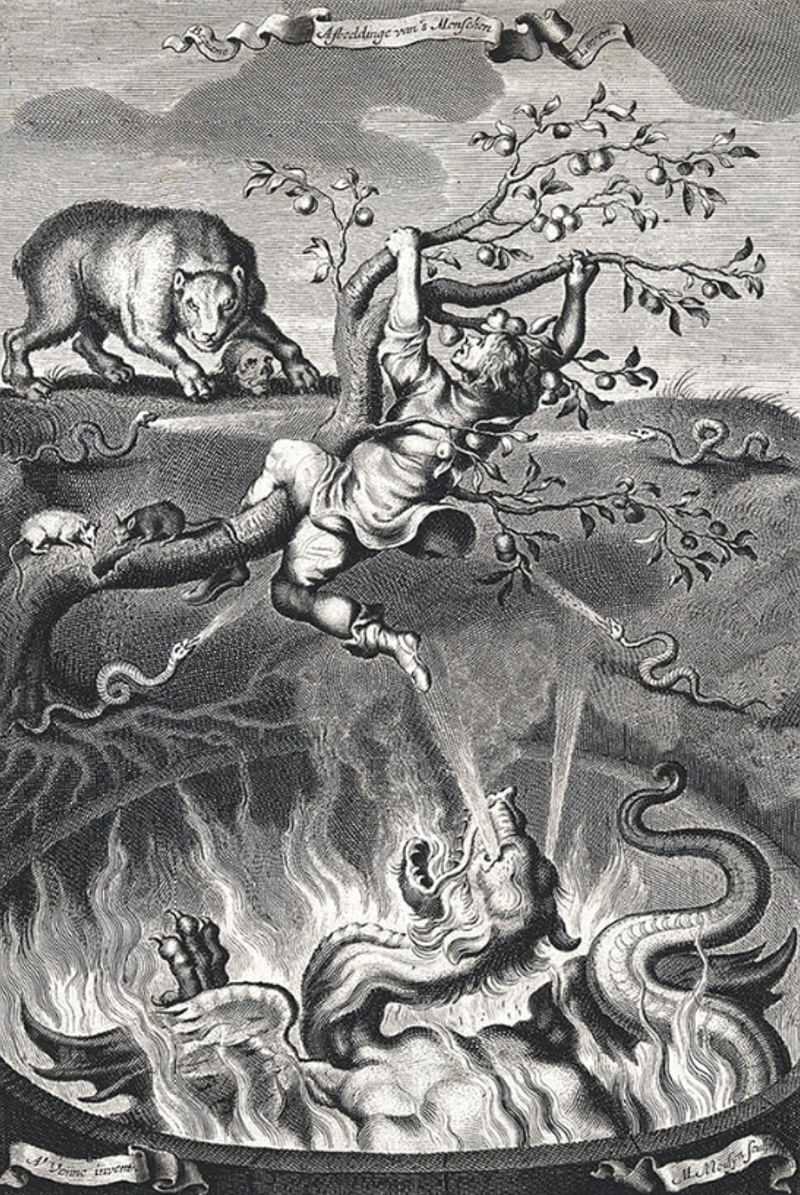
This collection illustrates key philosophical themes from chapter 2 of the Bodhicaryāvatāra (The Way of the Bodhisattva). The first narrative uses the metaphor of a "broken beehive" to demonstrate the impermanence of worldly possessions and the futility of attachment, leading a wealthy householder and his son to renounce material wealth for spiritual practice. The second employs the parable of a man clinging to grass while suspended over an ocean—distracted by honey while mice gnaw his lifeline—symbolizing how humans ignore impending death while pursuing fleeting pleasures. The final story reveals how sincere refuge in the Three Jewels (Buddha, Dharma, and Saṅgha) can transform one's destiny, as demonstrated by a dying deity who escapes an unfavorable rebirth through the power of taking refuge. Together, these tales emphasize core Buddhist teachings on impermanence, the urgency of spiritual practice, and the transformative power of sincere refuge.
The stories presented here were translated by Gregory Forgues and Khenpo Könchok Tamphel.
Renunciation of the World
And we must pass away, forsaking all. But I, devoid of understanding, Have, for sake of friend and foe alike, Provoked and brought about so many wrongs.
Page(s) 42
Blankleder, Helena, and Wulstan Fletcher (Padmakara Translation Group), trans. The Way of the Bodhisattva: A Translation of the Bodhicharyāvatāra. By Śāntideva. Rev. ed. Shambhala Classics. Boston: Shambhala Publications, 2006.
The statement "And we must pass away, forsaking all" refers to the need to avoid attachment to anything, such as engaging in various misdeeds by mistaking impermanent phenomena as permanent.
Once in central India, there lived a householder named Gautama who had a son called Parrot, a young man whose wealth rivaled that of Vaiśravaṇa's son. One day, this wealthy young householder came upon a place where many people were harvesting honey from a beehive. He observed them collecting honey, killing bees—including some of the mother bees—while others fled. Seeing this, he reflected, "The household life with its people and possessions is just like this broken beehive." Growing weary of worldly existence, he abandoned his farming work and gave away his wealth and possessions to others.
When he did this, his father said, "Son, do not abandon your farming, and be careful not to squander your wealth and possessions."
The son replied, "Great householder, what is the point of accumulating? Everything is like a broken beehive."
The father asked, "How is it like that?"
The son answered, "We are awaiting an undefeatable enemy along the way."
The father inquired, "Have you received any sign of the enemy's approach? What is it like?"
The son explained, "White hair, wrinkles, and other signs are evident, but no one seems to recognize them. The body is like dew on the verge of falling. The breath is ready to vanish like mist. The mind is fleeting, like lightning. Enjoyments may be seen, but they are nonexistent by nature, like an illusion. In short, everything is like a broken beehive."
The father asked, "Who has the skill to subdue that enemy?"
The son replied, "The Buddha possesses the skill to subdue that enemy."
They went before the Buddha to inquire, and he answered with these verses:
- Samsara is impermanent, like a broken beehive;
All who grasp at permanence will be doomed.
But those who give rise to weariness of impermanence
Will be freed from suffering and transcend sorrow.
Upon hearing this, the householder and his son relinquished all their wealth and possessions and embraced the practice of Dharma.
The Fleeting Nature of Life
Never halting night or day,
My life drains constantly away,
And from no other source does increase come.
How can there not be death for such as me?[p.43]The Way of the Bodhisattva (2006)
Blankleder, Helena, and Wulstan Fletcher (Padmakara Translation Group), trans. The Way of the Bodhisattva: A Translation of the Bodhicharyāvatāra. By Śāntideva. Rev. ed. Shambhala Classics. Boston: Shambhala Publications, 2006.
Page(s) 42
Blankleder, Helena, and Wulstan Fletcher (Padmakara Translation Group), trans. The Way of the Bodhisattva: A Translation of the Bodhicharyāvatāra. By Śāntideva. Rev. ed. Shambhala Classics. Boston: Shambhala Publications, 2006.
ཉིན་མཚན་སྡོད་པ་ཡོང་མེད་པར། །
ཚེ་འདི་རྟག་ཏུ་གོད་འགྱུར་ཞིང་། །
སྣོན་པ་གུད་ནས་འོང་མེད་ན། །[p.15]Byang chub sems dpa'i spyod pa la 'jug pa rtsa ba dang 'grel pa (1990)
Slob dpon zhi ba lha and Mkhan po kun dpal. Byang chub sems dpa'i spyod pa la 'jug pa rtsa ba dang 'grel pa. Khreng tu'u: Si khron mi rigs dpe skrun khang, 1990. 
nyin mtshan sdod pa yong med par/_/
tshe 'di rtag tu god 'gyur zhing /_/
snon pa gud nas 'ong med na/_/[p.15]Byang chub sems dpa'i spyod pa la 'jug pa rtsa ba dang 'grel pa (1990)
Slob dpon zhi ba lha and Mkhan po kun dpal. Byang chub sems dpa'i spyod pa la 'jug pa rtsa ba dang 'grel pa. Khreng tu'u: Si khron mi rigs dpe skrun khang, 1990.
The statement "Never halting night or day" means that life is short and impermanent.
Consider this parable:
A man falls from a precipice, below which lies a vast ocean. As he plummets, he manages to grasp a tuft of grass and reeds growing from the cliff face, and there he hangs, suspended. While clinging desperately, a drop of honey falls from above into his mouth, and he becomes momentarily captivated by its sweetness. Meanwhile, two mice—one white and one black—take turns gnawing at the roots of the grass to which he clings. As the grass gradually wears away, the man faces certain doom—he will fall into the ocean below. If, in this precarious situation, the man makes no effort to climb up to safety and takes no measures to guard against the mice, he would be acting with extreme foolishness.
This parable illustrates our human condition: the ocean represents samsara (the cycle of rebirth); the precipice symbolizes the danger of falling into the lower realms; the drop of honey represents our attachment to the fleeting pleasures of sensual desires; the present moment represents our rare and precious human life with its leisures and endowments; and the white and black mice represent day and night ceaselessly eroding our lifespan. Despite the certainty of death and the constant passing of time, we fail to practice the Dharma—this is the height of foolishness.
The Power of Refuge
And in the Dharma they have realized in their hearts, Which drives away the terrors of saṃsāra, And in all the host of Bodhisattvas Likewise I will perfectly take refuge.
Page(s) 44
Blankleder, Helena, and Wulstan Fletcher (Padmakara Translation Group), trans. The Way of the Bodhisattva: A Translation of the Bodhicharyāvatāra. By Śāntideva. Rev. ed. Shambhala Classics. Boston: Shambhala Publications, 2006.
དེ་ཡིས་ཐུགས་སུ་ཆུད་པའི་ཆོས། །
འཁོར་བའི་འཇིགས་པ་སེལ་བ་དང་། ། བྱང་ཆུབ་སེམས་དཔའི་ཚོགས་ལ་ཡང་། །
དེ་བཞིན་ཡང་དག་སྐྱབས་སུ་མཆི། །de yis thugs su chud pa'i chos/_/
'khor ba'i 'jigs pa sel ba dang /_/ byang chub sems dpa'i tshogs la yang /_/
de bzhin yang dag skyabs su mchi/_/The verse "Likewise I will perfectly take refuge" means that taking refuge sincerely, from the depths of one's heart, yields immense benefits.
In the realm of the Thirty-Three Gods, a deity was nearing the end of his life. The five signs of impending death appeared: his flower garland withered, sweat formed on his body, his clothes became soiled, he could no longer bear to sit on his own seat, and he was abandoned by his divine companions—both gods and goddesses. He had only seven days left to live.
Using his clairvoyance, he saw that he was destined to be reborn as a piglet in Rājagṛha, in Jambudvīpa. Overcome with despair, he lamented, "Alas, the realm of the Thirty-Three Gods!" His suffering was as intense as a fish flailing on hot sand.
Indra, lord of the gods, noticed his distress and asked, "What troubles you?" The deity recounted everything as described above. Seeing his anguish, Indra guided him to take refuge in the Three Jewels. Then, upon his passing, he was not reborn as a piglet but instead took birth as a god in the Tuṣita heaven.
Indra, however, was unaware of this, as the mind of a being in a lower realm cannot perceive the existence of those in a higher one. He searched but could not find him in the three lower realms, the four continents of the human world, the realm of the Four Great Kings, or even within the [realm of the] Thirty-Three Gods.
Puzzled, Indra approached the Blessed One and asked, "A god passed away from the realm of the Thirty-Three Gods seven days ago. Where has he been reborn?"
The Blessed One replied, "He has been reborn as a god in the Tuṣita heaven."
Astonished, Indra exclaimed:
- Those who take refuge in the Buddha
Will never fall into the lower realms.
Having abandoned the human body,
They will attain the form of a god.
The same applies to taking refuge in the Dharma and the Saṅgha.

