The Bodhicaryāvatāra Piṇḍārthas of Suvarṇadvīpa Dharmakīrti: Foundations of a Meditation Tradition
| 🤓 Admin Zone 🛠️ hidden to non-admins | |
Featured on
Serlingpa's Life and Historical Significance
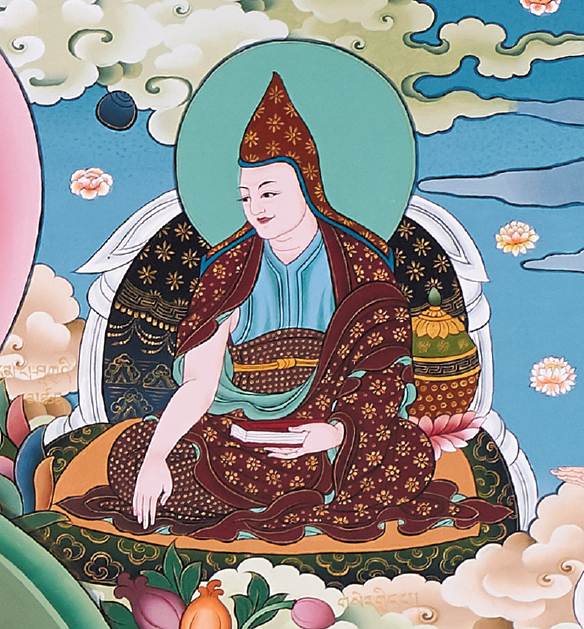
Suvarṇadvīpa Dharmakīrti (hereafter "Serlingpa") was born between 930–940 CE into a royal family in the Golden Isles (Suvarṇadvīpa).[1] Recent scholarship has located his primary base of activity in Kedah on the Malay Peninsula, rather than Sumatra as previously assumed. The region was known as the "Golden Isles" (Suvarṇadvīpa) and was part of the Śrīvijaya maritime confederation.[2] Specifically, evidence points to the Lembah Bujang area of Kedah, which featured prominent Buddhist sites such as Gunung Jerai Mountain. This location aligns with details from Atiśa's account of his journey, including landmarks like mangroves, wetlands, and a western-facing estuary. The colophon of Serlingpa's Durbodhālokā confirms it was composed in *Śrīvijayapura under the patronage of King Cūḍāmaṇivarman of Kedah around 999 CE.
Born as Senasena (Si na si na), his conversion to Buddhism was inspired by discovering a gilt statue of Śākyamuni in a cave. This led him to undertake a pilgrimage to India, where he studied under various masters. During his spiritual quest in India, he visited major pilgrimage sites, including Lumbini, the Nairanjana River, and Varanasi. At times he contemplated abandoning his religious pursuits, but two significant encounters strengthened his resolve: he heard two girls singing about the futility of worldly attachments, and during a ritual at Bodhgaya, an old woman spoke to him about impermanence.[3]
His principal teacher was *Mahāśrīratna, whom he met at Bodhgaya during a significant gathering that included Sinhalese monks. After receiving extensive teachings, particularly on bodhicitta and Śāntideva's works (the Śikṣāsamuccaya and Bodhicaryāvatāra), he was given the name "Dharmakīrti of the Golden Isles" (Gser gling pa chos kyi grags pa). The exact Sanskrit form of his name would have been Suvarṇadvīpīya Dharmakīrti, as evidenced by a recently discovered document referring to a "Suvarṇadvīpīya Sugataśrīmitra."[4] Later in his life, Serlingpa maintained significant connections with both the Cōḻa Dynasty of South India and the Song Court of China. There is evidence suggesting he may have visited the Song Court in 1001 CE, where a *Dharmakīrti (Chinese: Facheng 法称) presented eight Sanskrit manuscripts and a bodhi-tree seed rosary. He likely had involvement with the Cūḍāmaṇivihāra in Nagapattinam, a monastery founded in 1006 CE and dedicated to his patron, King Cūḍāmaṇivarman of Kedah.[5]
Serlingpa's reputation attracted several eminent Indian scholars, including Ratnākaraśānti (fl. c. 970–1045), Atiśa Dīpaṃkaraśrījñāna (982–1054), Jñānaśrīmitra, and Ratnakīrti (both fl. late 10th–early 11th c.). These students later resided at Vikramaśīla Monastery, collectively forming an "intellectual sequence" in Buddhist philosophical development.[6] Atiśa and a group of 125 monks undertook a perilous thirteen-month journey to study with Serlingpa amid mounting instability in northeastern India linked to the Ghaznavid invasions. The journey to study with him was fraught with danger—Atiśa's voyage alone took thirteen months and faced numerous difficulties.[7]
Serlingpa occupied a singular role among Atiśa's teachers, as demonstrated by Atiśa’s deep emotional bond—he is said to have wept simply at the mention of Serlingpa's name. Atiśa attributed his own profound capacity for compassion to Serlingpa’s influence. The nature of the tradition he passed to Atiśa is reflected in the six works ascribed to him in the Tengyur, notably his commentary on Maitreya's Abhisamayālaṃkāra and his treatises on Śāntideva's writings.[8] Further evidence of his expertise appears in the Durbodhālokā, where Serlingpa offers direct quotations from the Bodhicaryāvatāra and the Śikṣāsamuccaya, thus attesting to his detailed engagement with Śāntideva's works.[9]
Through Atiśa's transmission to Tibet, Serlingpa's teachings became foundational to the Kadam school's mind training tradition. His emphasis on the exchange of self and others (bdag gzhan mnyam brje) was perceived as very specific to his teaching in the early Kadam tradition.[10] While his direct influence in Southeast Asia ended with the collapse of Buddhist civilization in Kedah following Rājendra Cōḻa's 1025 naval campaign, his teachings flourished in Tibet, where his relics, enshrined by Atiśa at Reting (Rwa sgreng) Monastery, became objects of veneration.[11] Serlingpa indeed appears to have passed away during Atiśa's stay in the Golden Isles, most likely before the coronation of Saṃgrāmavijayottuṅgavarman, the last king of Śrīvijayan Kedah. His bodily relics were then taken by Atiśa to Tibet and enshrined in a small stūpa topped by a silver umbrella at Reting Monastery. This stūpa was considered Atiśa's most precious spiritual object.[12]
Through Atiśa's teaching activities in Tibet, Serlingpa's lineage contributed to shaping the early Kadam tradition. From the early eleventh century onward, his instructions on bodhicitta and practice stood at the heart of Tibetan mind training. This influence intensified when Sharawa (Sha ra ba yon tan grags, 1070–1141) and Chekawa Yeshe Dorje ('Chad kha pa ye shes rdo rje, 1101–75) encapsulated these instructions into a seven-point system. By the fifteenth century, Chekawa's Seven-Point Mind Training (Blo sbyong don bdun ma) had become nearly synonymous with mind training itself for many authors.[13] Systematizing these practice instructions in a concise form ensured their enduring transmission in the Kadam tradition and throughout Tibetan Buddhism more broadly, with Atiśa serving as the essential conduit from Serlingpa's teachings to Tibet.
Works and Textual Corpus
Among the works definitively attributed to Serlingpa, the Durbodhālokā (Light on the Hard-to-Illuminate) stands as his most significant philosophical contribution.[14] This subcommentary on Haribhadra's Abhisamayālaṃkāraśāstravṛtti was completed in Kedah around 999 CE under the patronage of King Cūḍāmaṇivarman. A Sanskrit manuscript of this work, preserved at Sakya (Sa skya) Monastery and photographed by both Rāhula Sāṅkṛtyāyana and Giuseppe Tucci, demonstrates Serlingpa's extensive knowledge of Buddhist philosophical literature. Throughout the text, he draws from a wide range of sources, including Dharmakīrti's Pramāṇavārttika, the Mahāyānasūtrālaṃkāra, Śāntarakṣita's Madhyamakālaṃkāra, Vasubandhu's Abhidharmakośa, and various works of Nāgārjuna. His familiarity with both of Śāntideva's major works is evident through his citations.
The second definitively attributed work is the *Āryācalasādhana (D3059), a tantric invocation manual for the deity Acala. This text presents a unique iconographic tradition featuring ten wrathful deities and was transmitted to Tibet through Atiśa, who composed three related works. The text's significance is underscored by archaeological evidence suggesting Acala worship in Kedah itself, and its artistic legacy is preserved in numerous Tibetan paintings and sculptures. The work's connection to the broader Buddhist tradition is evidenced by its incorporation of mantras that also appear in Śāntideva's Śikṣāsamuccaya.
In the realm of mind training (blo sbyong) literature, two texts are attributed to Serlingpa: The Stages of the [Bodhisattva's] Mind (Sems dpa'i rim pa, *Cittakrama), comprising 102 verses,[15] and Fourfold Factors Pertaining to the Untamed of the Borderlands (Mtha' 'khob 'dul ba'i chos bzhi, *Pratyantavaineyadharmacatuṣṭaya),[16] containing ten verses. Both works emphasize the cultivation of mental discipline and the abandonment of self-attachment, showing clear influence from the eighth chapter of the Bodhicaryāvatāra.[17] The instructions on awakening mind (bodhicitta) that Atiśa received encompassed three different approaches. According to Dromtönpa's account, Dharmarakṣita first taught a gradual method of equalizing self and others before exchanging them. Another method, attributed to Maitrīyogi by Chekawa and emphasized by Thokme Sangpo (Thogs med bzang po, 1297–1371), involved first equalizing and then exchanging self and others.[18] By contrast, Serlingpa favored starting with the direct exchange of self and others. Sinclair observes that the core practice of "exchange of self and others" (parātmaparivartana) became one of Serlingpa's most distinctive contributions to the later mind training tradition.
Several other works bearing the name Dharmakīrti require further research to confirm their attribution. The Rūpāvatāra, an elementary Sanskrit grammar manual endorsed by King Rājendra Cōḻa, suggests possible connections to South Indian Buddhist educational circles. The Vajrasūcī, an anticaste polemic attributed to Dharmakīrti in its Chinese translation but later attributed to Aśvaghoṣa in Sanskrit versions, may represent an early work if indeed it was composed by Serlingpa.[19] Various tantric works, including the *Gaṇapatikrodhasādhana, *Gaṇapatimahācakrasādhana, and *Sarvadurgatipariśodhana–rasahomamaṇḍalopāyikā, lack clear evidence connecting them to Serlingpa.[20]
Serlingpa and the Bodhicaryāvatāra
According to The Extensive Life Story (Rnam thar rgyas pa), Serlingpa received comprehensive teachings on Śāntideva's works, particularly the Bodhicaryāvatāra and Śikṣāsamuccaya, from his teacher *Mahāśrīratna at Bodhgaya.[21] The authenticity of this transmission is corroborated by evidence in his major philosophical work, the Durbodhālokā, where he demonstrates knowledge of both texts through direct quotations.[22] His familiarity with Śāntideva's works is further confirmed by his use of a quote from the Śikṣāsamuccaya in his *Āryācalasādhana (D3059).[23]
The influence of the Bodhicaryāvatāra, particularly its eighth chapter on meditation and mental discipline, is evident in two mind training texts definitively attributed to Serlingpa: The Stages of the [Bodhisattva's] Mind and Fourfold Factors Pertaining to the Untamed of the Borderlands.[24] These texts emphasize the abandonment of self-attachment and the cultivation of bodhicitta through exchanging self and others, a practice explicitly taught in Bodhicaryāvatāra 7.18 and 8.120 and referenced in the Durbodhālokā (D3794, 206a).[25] This specific connection between Serlingpa's mind training teachings and the Bodhicaryāvatāra became foundational to the later Kadam tradition of mind training in Tibet through Atiśa's transmission.
Two anthologies of the Bodhicaryāvatāra traditionally attributed to Serlingpa are found in the Tibetan canon as the Bodhisattvacaryāvatārapiṇḍārtha (D3879) and its expanded version Bodhisattvacaryāvatāraṣaṭṭriṃśatpiṇḍārtha (D3878).[26] Both anthologies were translated into Tibetan by Atiśa Dīpaṃkara and Tsultrim Gyalwa (Tshul khrims rgyal ba, 1011–1064.[27]
While the anthologies refer to thirty-six sections drawn from eleven main points, and thereby systematically reorganize Śāntideva's work according to an eleven-point structure (gtso bo'i don bcu gcig), the precise nature of these points remain unclear until one reads Atiśa's and Kyotön's commentaries on the Bodhicaryāvatāra, in which these points are explained in detail.[28]
While drawing from all ten chapters of Śāntideva's original text, the anthologies notably prioritize practical application over theoretical exposition, as evidenced by their selective treatment of chapter 9 on wisdom, from which they extract only the opening four verses despite the chapter's extensive philosophical content. The Tibetan translation used to produce these anthologies in Tibetan must have been Rinchen Zangpo's since the Tibetan found in these two short texts deviates—sometimes substantially—from both Kawa Paltsek's and Ngok Loden Sherab's translations. As noted by Eimer in relation to the latter, the Sanskrit manuscript used for the Tibetan text of the anthologies differs significantly in a few cases, indicating that the translation Vorlage must have been different.
The shorter anthology (Bodhisattvacaryāvatārapiṇḍārtha) is about thirty verses long and incorporates material from all ten chapters of the Bodhicaryāvatāra:[29]
- Chapter 1: 5 verses (1.4, 1.5, 1.6, 1.7, 1.8)
- Chapter 2: 1 verse (2.1)
- Chapter 3: 4 verses (3.23, 3.24, 3.25, 3.26)
- Chapter 4: 1 verse (4.1)
- Chapter 5: 4 verses (5.1, 5.23, 5.30, 5.102)
- Chapter 6: 2 verses (6.1, 6.2)
- Chapter 7: 3 verses (7.1, 7.2ab, 7.16)
- Chapter 8: 7 verses (8.1, 8.2, 8.3, 8.90, 8.113, 8.120, 8.187)
- Chapter 9: 4 verses (9.1, 9.2, 9.3, 9.4ab)
- Chapter 10: 1 verse (10.1)
The longer anthology (~eighty verses) reproduces the content of the shorter version and adds further selections that expand on bodhicitta cultivation, ethical conduct, and the perfection of patience:
- Chapter 1: 17 verses (1.4, 1.5, 1.6, 1.7, 1.8, 1.9, 1.10, 1.15, 1.16, 1.17, 1.18, 1.19, 1.27, 1.28, 1.29, 1.30, 1.34)
- Chapter 2: 6 verses (2.1, 2.23, 2.26, 2.27, 2.28, 2.29)
- Chapter 3: 8 verses (3.1, 3.5, 3.6, 3.7, 3.23, 3.24, 3.25, 3.26)
- Chapter 4: 6 verses (4.1, 4.2, 4.3, 4.4, 4.27cd, 4.28)
- Chapter 5: 6 verses (5.1, 5.23, 5.30, 5.102, 5.103cd, 5.104ab)
- Chapter 6: 10 verses (6.1, 6.2, 6.11, 6.12, 6.22, 6.25, 6.31, 6.35, 6.37, 6.38)
- Chapter 7: 14 verses (7.1, 7.2, 7.3, 7.16, 7.31a, 7.32a, 7.32b–d, 7.33, 7.34ab, 7.35, 7.46cd, 7.47, 7.63, 7.68, 7.69, 7.70)
- Chapter 8: 7 verses (8.1, 8.2, 8.3, 8.90, 8.113, 8.120, 8.187)
- Chapter 9: 4 verses (9.1, 9.2, 9.3, 9.4ab)
- Chapter 10: 4 verses (10.1, 10.2, 10.3, 10.4)
An Anthology of Key Verses from The Bodhisattva's Way of Life
In Sanskrit: Bodhisattvacaryāvatārapiṇḍārtha
In Tibetan: Byang chub sems dpa'i spyod pa la 'jug pa'i don bsdus pa
[In English: An Anthology of Key Verses from The Bodhisattva's Way of Life]
Homage to all Buddhas and Bodhisattvas!
[Chapter 1]
So hard to find the ease and wealth Whereby the aims of beings may be gained If now I fail to turn it to my profit, How could such a chance be mine again? 1.4
Just as on a dark night black with clouds, The sudden lightning glares and all is clearly shown, Likewise rarely, through the Buddhas' power, Virtuous thoughts rise, brief and transient, in the world. 1.5
Virtue, thus, is weak; and always Evil is of great and overwhelming strength Except for perfect bodhichitta, What other virtue is there that can lay it low? 1.6
For many aeons deeply pondering, The mighty Sages saw its benefits, Whereby unnumbered multitudes Are brought with ease to supreme joy. 1.7
Those who wish to crush the many sorrows of existence, Who wish to quell the pain of living beings, Who wish to have experience of a myriad joys Should never turn away from bodhichitta. 1.8
[Chapter 2]
To the Buddhas, those thus gone, And to the sacred Dharma, spotless and supremely rare, And to the Buddha's offspring, oceans of good qualities, That I might gain this precious attitude, I make a perfect offering. 2.1
[Chapter 3]
Just as all the Buddhas of the past Have brought forth the awakened mind, And in the precepts of the Bodhisattvas Step-by-step abode and trained, 3.23
Likewise, for the benefit of beings, I will bring to birth the awakened mind, And in those precepts, step-by-step, I will abide and train myself. 3.24
Those who thus with clear intelligence Take hold of the awakened mind with bright and lucid joy, That they may now increase what they have gained, Should lift their hearts with praises such as these: 3.25
"Today my life has given fruit This human state has now been well assumed Today I take my birth in Buddha's line, And have become the Buddha's child and heir." 3.26
[Chapter 4]
The children of the Conqueror who thus Have firmly grasped this bodhichitta, Should never turn aside from it, Strive never to transgress its disciplines. 4.1
[Chapter 5]
Those who wish to keep the trainings Must with perfect self-possession guard their minds. Without this guard upon the mind, The trainings cannot be preserved. 5.1
All you who would protect your minds, Maintain your mindfulness and introspection; Guard them both, at cost of life and limb, I join my hands, beseeching you. 5.23
Through fear, and by the counsels of their abbots, And staying ever in their teacher's company— In those endowed with fortune and devotion Mindfulness is cultivated easily. 5.30
Never, at the cost of life or limb, Forsake your virtuous friend, your teacher, Learned in the doctrine of the Mahāyāna, Supreme in Bodhisattva discipline. 5.102
[Chapter 6]
All the good works gathered in a thousand ages, Such as deeds of generosity, And offerings to the Blissful Ones— A single flash of anger shatters them. 6.1
No evil is there similar to anger, No austerity to be compared with patience. Steep yourself, therefore, in patience, In various ways, insistently. 6.2
[Chapter 7]
Thus with patience I will strive with diligence For in such diligence enlightenment is found. If no wind blows, then nothing stirs, And neither is there merit without diligence. 7.1
Diligence means joy in virtuous ways. Its contraries have been defined as laziness. 7.2ab
Do not be downcast, but marshal all your powers; Make an effort; be the master of yourself! Practice the equality of self and other; Practice the exchange of self and other. 7.16[30]
[Chapter 8]
Cultivating diligence as just described, In concentration I will place my mind. For those whose minds are slack and wandering Are caught between the fangs of the afflictions. 8.1
In solitude, the mind and body Are not troubled by distraction. Therefore leave this worldly life And totally abandon mental wandering. 8.2
Because of loved ones and desire for gain, We fail to turn away from worldly things. These, then, are the first things to renounce The prudent should conduct themselves like this. 8.3
Strive at first to meditate Upon the sameness of yourself and others. In joy and sorrow all are equal; Thus be guardian of all, as of yourself. 8.90
Perceiving now the faults possessed by "I," The ocean of good qualities that are in "other," I shall lay aside all love of self And gain the habit of adopting other beings. 8.113
Those desiring speedily to be A refuge for themselves and others Should make the interchange of "I" and "other," And thus embrace a sacred mystery. 8.120
Therefore, to clear away obscurations, I shall withdraw my mind from wrong paths, And on the correct object Hold my mind steadfast always. 8.187[31]
[Chapter 9]
Thus, all these [perfections] The Sage taught for the sake of wisdom; Therefore, those who desire Nirvāṇa and happiness should generate wisdom. 9.1[32]
Ultimate and conventional— These exist as the two truths. The ultimate is not within the reach of the intellect, Intellect and language are conventional. 9.2[33]
In light of this, two kinds of worldly people are considered: Yogis and ordinary people. In this regard, yogis who are still in the world Refute the views of the ordinary world. 9.3[34]
[Among yogis,] those with a higher level [of realization], Refute those below them. 9.4ab[35]
[Chapter 10]
By all the virtue I have now amassed By composition of this book, which speaks Of entry to the Bodhisattva way, May every being tread the path to Buddhahood. 10.1
At the request of the devoted disciples Kamalarakṣita and Dīpaṃkara Śrījñāna to Master Dharmapāla of Suvarṇadvīpa, this summary in the eleven main points of The Way of the Bodhisattva is completed. [This text] was translated by the Indian master Dīpaṃkara and the Tibetan translator Tshultrim Gyalba (Tshul khrims rgyal ba).
An Anthology of Key Verses from The Bodhisattva's Way of Life in Thirty-Six Points[36]
In Sanskrit: Bodhisattvacaryāvatāraṣaṭtriṃśatpiṇḍārtha
In Tibetan: Byang chub sems dpa'i spyod pa la 'jug pa'i don sum cu rtsa drug bsdus pa
[In English: An Anthology of Key Verses from the Bodhisattva's Way of Life in Thirty-Six Points]
Homage to all Buddhas and Bodhisattvas!
[Chapter 1]
So hard to find the ease and wealth Whereby the aims of beings may be gained If now I fail to turn it to my profit, How could such a chance be mine again? 1.4
Just as on a dark night black with clouds, The sudden lightning glares and all is clearly shown, Likewise rarely, through the Buddhas' power, Virtuous thoughts rise, brief and transient, in the world. 1.5
Virtue, thus, is weak; and always Evil is of great and overwhelming strength Except for perfect bodhichitta, What other virtue is there that can lay it low? 1.6
For many aeons deeply pondering, The mighty Sages saw its benefits, Whereby unnumbered multitudes Are brought with ease to supreme joy. 1.7
Those who wish to crush the many sorrows of existence, Who wish to quell the pain of living beings, Who wish to have experience of a myriad joys Should never turn away from bodhichitta. 1.8
Should bodhichitta come to birth In those who suffer, chained in prisons of saṃsāra, In that instant they are called the children of the Blissful One, Revered by all the world, by gods and humankind. 1.9
For like the supreme substance of the alchemists, It takes our impure flesh and makes of it The body of a Buddha, jewel beyond all price Such is bodhichitta. Let us grasp it firmly! 1.10
Bodhichitta, the awakened mind, Is known in brief to have two aspects: First, aspiring, bodhichitta in intention; Then active bodhichitta, practical engagement. 1.15
As corresponding to the wish to go And then to setting out, The wise should understand respectively The difference that divides these two. 1.16
From bodhichitta in intention Great results arise for those still turning in the wheel of life; Yet merit does not rise from it in ceaseless streams As is the case with active bodhichitta. 1.17
For when, with irreversible intent, The mind embraces bodhichitta, Willing to set free the endless multitudes of beings, In that instant, from that moment on, 1.18
A great and unremitting stream, A strength of wholesome merit, Even during sleep and inattention, Rises equal to the vastness of the sky. 1.19
If the simple thought to be of help to others Exceeds in worth the worship of the Buddhas, What need is there to speak of actual deeds That bring about the weal and benefit of beings? 1.27
For beings long to free themselves from misery, But misery itself they follow and pursue. They long for joy, but in their ignorance Destroy it, as they would their foe. 1.28
But those who fill with bliss All beings destitute of joy, Who cut all pain and suffering away From those weighed down with misery, 1.29
Who drive away the darkness of their ignorance— What virtue could be matched with theirs? What friend could be compared to them? What merit is there similar to this? 1.30
All those who harbor evil in their minds Against such lords of generosity, the Buddha's heirs, Will stay in hell, the mighty Sage has said, For ages equal to the moments of their malice. 1.34
But joyous and devoted thoughts Will yield abundant fruits in greater strength Even in great trouble, Bodhisattvas Never bring forth wrong; their virtues naturally increase. 1.35
[Chapter 2]
To the Buddhas, those thus gone, And to the sacred Dharma, spotless and supremely rare, And to the Buddha's offspring, oceans of good qualities, That I might gain this precious attitude, I make a perfect offering. 2.1
To those who possess oceans of qualities, I offer as many melodious expressions of worship As there are particles in the [buddha]fields, And with pleasant words of homage, I offer praise. 2.23[37]
Until the essence of enlightenment is reached, I go for refuge to the Buddhas. Also I take refuge in the Dharma And in all the host of Bodhisattvas. 2.26
To perfect Buddhas and to Bodhisattvas, In all directions where they may reside, To them who are the sovereigns of great mercy, I press my palms together, praying thus: 2.27
"In this and all my other lives, While turning in the round without beginning, Blindly I have brought forth evil, And incited others to commit the same. 2.28
"Deceived and overmastered by my ignorance, I have taken pleasure in such sin, And seeing now the blame of it, O great protectors, I confess it earnestly!" 2.29
[Chapter 3]
With joy I celebrate the virtue that relieves all beings From the sorrows of the states of loss, Exulting in the happy states enjoyed By those who yet are suffering. 3.1
And so I join my hands and pray The Buddhas who reside in every quarter: Kindle now the Dharma's light For those who grope, bewildered, in the dark of pain! 3.5
I join my hands beseeching the enlightened ones Who wish to pass into nirvāṇa: Do not leave us wandering in blindness, Stay among us for unnumbered ages! 3.6
Through these actions now performed And all the virtues I have gained, May all the pain of every living being Be wholly scattered and destroyed! 3.7
Just as all the Buddhas of the past Have brought forth the awakened mind, And in the precepts of the Bodhisattvas Step-by-step abode and trained, 3.23
Likewise, for the benefit of beings, I will bring to birth the awakened mind, And in those precepts, step-by-step, I will abide and train myself. 3.24
Those who thus with clear intelligence Take hold of the awakened mind with bright and lucid joy, That they may now increase what they have gained, Should lift their hearts with praises such as these: 3.25
"Today my life has given fruit This human state has now been well assumed Today I take my birth in Buddha's line, And have become the Buddha's child and heir." 3.26
[Chapter 4]
The children of the Conqueror who thus Have firmly grasped this bodhichitta, Should never turn aside from it, Strive never to transgress its disciplines. 4.1
Whatever was begun without due heed, And all that was not properly conceived, Although a promise and a pledge were given, It is right to reconsider: Shall I act or not? 4.2
Yet what the Buddhas and their heirs Have scrutinized in their great wisdom, I myself have probed and scrutinized Why should I now procrastinate? 4.3
For if I bind myself with promises But fail to carry out my words in deed, Then every being will have been betrayed What destiny must lie in store for me? 4.4
I do not know what dulls my wits O what is it that has me in its grip? 4.27cd
Anger, lust, these enemies of mine, Are limbless and devoid of faculties. They have no bravery, no cleverness; How then have they reduced me to such slavery? 4.28
[Chapter 5]
Those who wish to keep the trainings Must with perfect self-possession guard their minds. Without this guard upon the mind, The trainings cannot be preserved. 5.1
All you who would protect your minds, Maintain your mindfulness and introspection; Guard them both, at cost of life and limb, I join my hands, beseeching you. 5.23
Through fear, and by the counsels of their abbots, And staying ever in their teacher's company— In those endowed with fortune and devotion Mindfulness is cultivated easily. 5.30
Never, at the cost of life or limb, Forsake your virtuous friend, your teacher, Learned in the doctrine of the Mahāyāna, Supreme in Bodhisattva discipline. 5.102
This and other teachings of the Buddha You should understand by reading in the sūtras. 5.103cd
Indeed within these sūtras all the practices are found; Therefore read and study them. 5.104ab
[Chapter 6]
All the good works gathered in a thousand ages, Such as deeds of generosity, And offerings to the Blissful Ones— A single flash of anger shatters them. 6.1
No evil is there similar to anger, No austerity to be compared with patience. Steep yourself, therefore, in patience, In various ways, insistently. 6.2
Pain, humiliation, insults, or rebukes— We do not want them Either for ourselves or those we love For those we do not like, it’s the reverse! 6.11
The cause of happiness is rare, And many are the seeds of suffering! But if I have no pain, I'll never long for freedom; Therefore, O my mind, be steadfast! 6.12
I am not angry with my bile and other humors— Fertile source of suffering and pain! So why should living beings give offence, They likewise are impelled by circumstance? 6.22
All defilements of whatever kind, The whole variety of evil deeds Are brought about by circumstances: None is independent, none autonomous. 6.25
All things, then, depend on other things, And these likewise depend; they are not independent. Knowing this, we will not be annoyed At things that are like magical appearances. 6.31
Yet carelessly, all unaware, They tear themselves on thorns; And ardent in pursuit of wives and goods, They starve themselves of nourishment. 6.35
When, under the power of afflictions, One would even kill oneself, How at such times could they fail To cause harm to others' bodies? 6.37[38]
Although we almost never feel compassion For those who, through defilement, Bring about their own perdition, What purpose does our anger serve? 6.38
[Chapter 7]
Thus with patience I will strive with diligence For in such diligence enlightenment is found. If no wind blows, then nothing stirs, And neither is there merit without diligence. 7.1
Diligence means joy in virtuous ways. Its contraries have been defined as laziness, An inclination for unwholesomeness, Defeatism and self-contempt. 7.2
A taste for idle pleasure And a craving for repose and sleep, No qualms about the sorrows of saṃsāra: Laziness indeed is born from these. 7.3
Do not be downcast, but marshal all your powers; Make an effort; be the master of yourself! Practice the equality of self and other; Practice the exchange of self and other. 7.16[39]
Therefore leaving everything that is adverse to it, 7.32a In order to accomplish the good of beings, 7.31a I'll labor to increase my diligence, Through aspiration and self-confidence, relinquishment and joy, By strength of earnest application and exertion of control. 7.32b–d[40]
The boundless evils of myself and others— I must bring them all to nothing, Even though a single of these ills May take unnumbered ages to exhaust! 7.33
In that endeavor to exhaust all wrongs, I will not look at even the slightest effort of mine. 7.34ab[41]
The many qualities of myself and others I must strive to accomplish; Even if it takes infinite ages To master but a single quality. 7.35[42]
And with the method stated in the Vajradhvaja, I will train in confident assurance. 7.46cd
Let me first consider my reserves— To start or not to start accordingly. It might be better not to start, But once begun, I should not then withdraw. 7.47
Like those who take great pleasure in their games, Whatever task the Bodhisattvas do, Let them devote themselves without reserve, With joyfulness that never knows satiety. 7.63
Actions that will result in future suffering, Should be abandoned as soon as one recognizes them. Even if one has fully completed such actions, One should abandon the desire to repeat them. 7.66?[43]
As seasoned fighters face the swords Of enemies upon the battle line, I’ll lightly dodge the weapons of defilement, And strike my enemy upon the quick. 7.68
If, in the fray, the soldier drops his sword, In fright, he swiftly takes it up again. So likewise, if the arm of mindfulness is lost, In fear of hell, I’ll quickly get it back! 7.69
Just as poison fills the body, Borne on the current of the blood, Likewise evil, when it finds its chance, Will spread and permeate the mind. 7.70
[Chapter 8]
Cultivating diligence as just described, In concentration I will place my mind. For those whose minds are slack and wandering Are caught between the fangs of the afflictions. 8.1
In solitude, the mind and body Are not troubled by distraction. Therefore leave this worldly life And totally abandon mental wandering. 8.2
Because of loved ones and desire for gain, We fail to turn away from worldly things. These, then, are the first things to renounce The prudent should conduct themselves like this. 8.3
Strive at first to meditate Upon the sameness of yourself and others. In joy and sorrow all are equal; Thus be guardian of all, as of yourself. 8.90
Perceiving now the faults possessed by "I,” The ocean of good qualities that are in "other,” I shall lay aside all love of self And gain the habit of adopting other beings. 8.113
Those desiring speedily to be A refuge for themselves and others Should make the interchange of "I" and "other," And thus embrace a sacred mystery. 8.120
Therefore, to clear away obscurations, I shall withdraw my mind from wrong paths, And on the correct object Hold my mind steadfast always. 8.187[44]
[Chapter 9]
Thus, all these [perfections] The Sage taught for the sake of wisdom; Therefore, those who desire Nirvāṇa and happiness should generate wisdom. 9.1[45]
Ultimate and conventional— These exist as the two truths. The ultimate is not within the reach of the intellect, Intellect and language are conventional. 9.2[46]
In light of this, two kinds of worldly people are considered: Yogis and ordinary people. In this regard, yogis who are still in the world Refute the views of ordinary world. 9.3[47]
[Among yogis,] those with a higher level [of realization], Refute those below them. 9.4ab[48]
[Chapter 10]
By all the virtue I have now amassed By composition of this book, which speaks Of entry to the Bodhisattva way, May every being tread the path to Buddhahood. 10.1
May beings everywhere who suffer Torment in their minds and bodies Have, by virtue of my merit, Joy and happiness in boundless measure. 10.2
As long as they may linger in saṃsāra, May their joy be undiminished; May they taste of unsurpassed beatitude In constant and unbroken continuity. 10.3
Throughout the spheres and reaches of the world, In hellish states as many as there are, May beings who abide there taste The bliss and peace of Sukhāvatī! 10.4
At the request of the devoted disciples Kamalarakṣita and Dīpaṃkara to Master Dharmapāla of Suvarṇadvīpa (Gser gling), this separate composition of thirty-six points elaborated from the eleven main points of the Bodhicaryāvatāra is completed. It was translated, edited, and finalized by Paṇḍita Dīpaṃkara and the translator Tsultrim Gyalwa (Tshul khrims rgyal ba).
The Tibetan Text of Serlingpa's Anthologies
Chapter 1
dal 'byor 'di ni shin tu rnyed par dka'/ / skyes bu don grub thob par gyur pa la/ / gal te 'di la phan pa ma bsgrubs na/ / phyis 'di yang dag 'byor par ga la 'gyur/ / 1.4
ji ltar mtshan mo mun nag sprin rum na/ / glog 'gyu skad cig rab snang ston pa ltar/ / de bzhin sangs rgyas mthu yis brgya lam na/ / 'jig rten bsod nams blo gros thang 'ga' 'byung / / 1.5
de ltar dge ba nyam chung nyid la rtag / / sdig pa stobs chen shin tu mi bzad pa/ / de ni rdzogs pa'i byang chub sems min pa/ / dge gzhan gang gis zil gyis non par 'gyur/ / 1.6
bskal pa du mar rab dgongs mdzad pa yi/ / thub dbang rnams kyis 'di nyid phan par gzigs/ / 'dis ni tshad med skye bo'i tshogs rnams kyi/ / bde mchog bde blag nyid du thob par byed/ / 1.7
'jigs dang sdug bsngal brgya phrag gzhom 'dod cing / / sems can mi bde bsal bar 'dod pa dang / / bde mang brgya phrag spyod par 'dod pas kyang / / byang chub sems nyid rtag tu btang mi bya/ / 1.8
byang chub sems skyes gyur na skad cig gi / / 'khor ba'i btson rar bsdams pa'i nyam thag rnams/ / bde gshegs rnams kyi sras zhes brjod bya zhing / / 'jig rten lha mir bcas pas phyag byar 'gyur/ / 1.9
gser 'gyur rtsi yi rnam pa mchog lta bur/ / mi gtsang lus 'di blangs nas rgyal ba'i sku/ / rin chen rin thang med par sgyur bas na/ / byang chub sems zhes bya bar rab brtan bzung / / 1.10
byang chub sems de mdor bsdu na/ / rnam pa gnyis su shes bya ste/ / byang chub smon pa'i sems dang ni/ / byang chub 'jug pa nyid yin no/ / 1.15
'gro bar 'dod dang 'gro ba yi/ / bye brag ji ltar shes pa ltar/ / de bzhin mkhas pas 'di gnyis kyi/ / bye brag rim bzhin shes par bya/ / 1.16
byang chub smon pa'i sems las ni/ / 'khor tshe 'bras bu che 'byung yang / / ji ltar 'jug pa'i sems bzhin du/ / bsod nams rgyun chags 'byung ba min/ / 1.17
gang nas bzung ste sems can khams/ / mtha' yas rab tu bsgral ba'i phyir/ / mi ldog pa yi sems kyis su/ / sems de yang dag blangs gyur pa/ / 1.18
de nas bzung ste gnyid log gam/ / bag med gyur kyang bsod nams shugs/ / rgyun mi 'chad par du ma zhig / / nam mkha' mnyam par rab tu 'byung / / 1.19
phan par bsams pa tsam gyis kyang / / sangs rgyas mchod las khyad 'phags na/ / sems can ma lus thams cad kyi/ / bde don brtson pa smos ci dgos/ / 1.27
sdug bsngal 'dor 'dod sems yod kyang / / sdug bsngal nyid la mngon par rgyug / / bde ba 'dod kyang gti mug pas/ / rang gi bde ba dgra ltar 'joms/ / 1.28
gang zhig bde bas phongs pa dang / / sdug bsngal mang ldan de dag la/ / bde ba kun gyis tshim pa dang / / sdug bsngal thams cad gcod byed cing / / 1.29
gti mug kyang ni sel byed pa/ / de dang dge mtshungs ga la yod/ / de 'dra'i sems kyang ga la yod/ / bsod nams de 'dra 'ang ga la yod/ / 1.30
gang zhig de 'dra'i rgyal sras sbyin bdag la/ / gal te ngan sems skyed par byed pa de/ / ngan sems bskyed pa'i grangs bzhin bskal par ni/ / dmyal bar gnas par 'gyur zhes thub pas gsungs/ / 1.34
'on te gang zhig yid rab dang byed pa/ / de yi 'bras bu de bas lhag par 'phel/ / rgyal sras rnams la do gal chen pos kyang / / sdig pa mi 'byung dge ba ngang gis 'phel/ / 1.35
Chapter 2
rin chen sems de gzung bar bya ba'i phyir/ / de bzhin gshegs pa rnams dang dam pa'i chos/ / dkon mchog dri ma med dang sangs rgyas sras/ / yon tan rgya mtsho rnams la legs par mchod/ / 2.1
yon tan rgya mtsho can dag la/ / zhing rdul kun gyi grangs snyed kyi/ / phyag 'tshal dbyangs kyi yan lag ni/ / phyag 'tshal dbyangs kyi bstod pas bstod/ / 2.23
byang chub snying por mchis kyi bar/ / sangs rgyas rnams la skyabs su mchi/ / chos dang byang chub sems dpa' yi/ / tshogs la 'ang de bzhin skyabs su mchi/ / 2.26
phyogs rnams kun na bzhugs pa yi/ / rdzogs sangs rgyas dang byang chub sems/ / thugs rje chen po mnga' rnams la/ / thal mo sbyar te gsol ba ni/ / 2.27
thog ma med ldan 'khor ba nas/ / tshe rabs 'di 'am gzhan dag la/ / bdag gis ma 'tshal sdig bgyis pa 'am/ / bgyid du stsal ba nyid dang ni/ / 2.28
gti mug 'khrul pas bdag non te/ / rjes su yi rang gang bgyis pa/ / nongs pa de ni mthong bgyis nas/ / bsam pa thag pas mgon la bshags/ / 2.29
Chapter 3
sems can kun gyi ngan song gi / / sdug bsngal ngal so'i dge ba dang / / sdug bsngal can dag bder gnas la/ / dga' bas rjes su yi rang ngo / / 3.1
phyogs rnams kun gyi sangs rgyas la/ / thal mo sbyar te gsol ba ni/ / sems can sdug bsngal mun 'thoms la/ / chos kyi sgron me sbar du gsol/ / 3.5
rgyal ba mya ngan 'das bzhed la/ / thal mo sbyar te gsol ba ni/ / 'gro 'di ldongs par mi dgod cing / / bskal pa grangs med bzhugs par gsol/ / 3.6
de ltar 'di dag kun byas te/ / dge ba bdag gis bsags pa gang / / des ni sems can thams cad kyi/ / sdug bsngal thams cad bsal bar shog / / 3.7
ji ltar sngon gyi bde gshegs kyis/ / byang chub thugs ni bskyed pa dang / / byang chub sems dpa'i bslab pa la/ / de dag rim bzhin gnas pa ltar/ / 3.23
de bzhin 'gro la phan don du/ / byang chub sems ni bskyed bgyi zhing / / de bzhin du ni bslab pa la'ang / / rim pa bzhin du bslab par bgyi/ / 3.24
de ltar blo dang ldan pa yis/ / rab dang byang chub sems bzung nas/ / mjug kyang rgyas par bya ba'i phyir/ / sems ni 'di ltar gzengs bstod do/ / 3.25
de tshe bdag tshe 'bras bu yod/ / mi yi srid pa legs par thob/ / de ring sangs rgyas rigs su skyes/ / sangs rgyas sras su da gyur to/ / 3.26
Chapter 4
[rgyal ba'i sras kyis de lta bur/ /] byang chub sems rab brtan bzung nas/ / g.yel ba med par rtag tu yang / / bslab las mi 'da' 'bad par bya/ / 4.1
bab col brtsams pa gang yin pa'am/ / gang zhig legs par rab brtags pa/ / de ni dam bcas byas gyur kyang / / bya ba 'am gtang zhes brtags par rigs/ / 4.2
sangs rgyas rnams dang de yi sras/ / shes rab chen pos gang brtags shing / / bdag nyid kyis kyang brtags brtags pa/ / de la bshol du ci zhig yod/ / 4.3
gal te de ltar dam bcas nas/ / las kyis bsgrub par ma byas na/ / sems can de dag kun bslus na/ / bdag gi 'gro ba ci 'drar 'gyur/ / 4.4
cis rmongs dag kyang ma shes na/ / bdag gi khong na ci zhig yod/ / 4.27cd
zhe sdang sred sogs dgra rnams ni/ / rkang lag la sogs yod min yang / / dpa' mdzangs min yang ci zhig ltar/ / de dag gis bdag bran bzhin byas/ / 4.28
Chapter 5
bslab pa bsrung bar 'dod pa yis/ / rab tu bsgrims nas sems bsrung ste/ / sems ni bsrung bar ma byas na/ / bslab pa bsrung bar yong mi nus/ / 5.1
sems bsrung 'dod pa rnams la ni/ / dran pa dang ni shes bzhin dag / / srog la bab kyang srungs shig ces/ / bdag ni de skad 'doms par byed/ / 5.23
bla ma dang ni 'grogs pa dang / / mkhan pos rjes su bstan pa las/ / 'jigs pas skal ldan gus byed la/ / dran pa shin tu skye bar 'gyur/ / 5.30
rtag par dge ba'i bshes gnyen ni/ / theg chen don la mkhas pa dang / / byang chub sems dpa'i brtul zhugs mchog / / srog gi phyir yang mi gtong ba'o/ / 5.102
'di dang sangs rgyas bka' stsal gzhan/ / mdo sde bklags nas shes par bya/ / 5.103cd
mdo sde rnams las bslab pa snang / / de bas mdo sde bklag par bya/ / 5.104ab
Chapter 6
bskal pa stong du bsags pa yi/ / sbyin dang bde gshegs mchod la sogs/ / legs spyad gang yin de kun yang / / khong khro gcig gis 'joms par byed/ / 6.1
zhe sdang lta bu'i sdig pa med/ / bzod pa lta bu'i dka' thub med/ / de bas bzod la nan tan du/ / sna tshogs tshul gyis bsgom par bya/ / 6.2
bdag gam bdag gis bshes rnams la/ / sdug bsngal brnyas dang tshig rtsub dang / / mi snyan pa yi mi 'dod 'byung / / dgra la de las bzlog pa 'byung / / 6.11
bde ba'i rgyu ni res 'ga' 'byung / / sdug bsngal rgyu ni shin tu mang / / sdug bsngal med par nges 'byung med/ / de bas sems khyod brtan par gnos/ / 6.12
mkhris pa la sogs sdug bsngal gyi/ / 'byung gnas che la mi khro na/ / sems yod rnams la ci ste khro/ / de dag kun kyang rkyen gyis bskul/ / 6.22
nyes pa ji snyed thams cad dang / / sdig pa rnam pa sna tshogs pa/ / de kun rkyen gyi stobs las byung / / rang dbang yod pa ma yin no/ / 6.25
de ltar thams cad gzhan gyi dbang / / de yi dbang gis de dbang med/ / de ltar shes na sbrul lta bu'i/ / dngos po kun la khro mi bya/ / 6.31
bag med pas na bdag la 'ang bdag / / tsher ma la sogs gnod par byed/ / bud med la sogs thob bya'i phyir/ / rngam zhing zas gcod la sogs byed/ / 6.35
gang tshe nyon mongs dbang gyur pas/ / bdag nyid kyang ni gsod byed pa/ / de tshe de dag gzhan lus la/ / gnod mi byed par ji lta bur/ / 6.37
nyon mongs skyes pas de lta bur/ / bdag gsod la sogs zhugs pa la/ / snying rje brgya la ma skyes na'ang / / khro bar 'gyur ba ci tha tshig / / 6.38
Chapter 7
de ltar bzod pas brtson 'grus brtsam/ / 'di ltar brtson la byang chub gnas/ / rlung med g.yo ba med pa bzhin/ / bsod nams brtson 'grus med mi 'byung / / 7.1
brtson gang dge la spro ba ste/ / de yi mi mthun phyogs bshad bya/ / le lo ngan la zhen pa dang / / sgyid lug bdag nyid brnyas pa'o/ / 7.2
snyom las bde ba'i ro myong nas/ / gnyid la brten pa'i sred pa dang / / 'khor ba'i sdug bsngal mi skyo las/ / le lo nye bar skye bar 'gyur/ / 7.3
sgyid lug med dang dpung tshogs dang / / lhur blang bdag nyid dbang bya ste/ / bdag dang gzhan du mnyam pa dang / / bdag dang gzhan du brje bar gyis/ / 7.16
de ltar mi mthun phyogs spangs te/ / 7.32a sems can don bsgrub bya phyir du/ / 7.31a mos brtan dga' dang dor ba dang / / lhur len dbang sgyur stobs kyis ni/ / brtson 'grus spel phyir 'bad par bya/ / 7.32b–d
bdag dang gzhan gyi nyes pa ni/ / dpag med bdag gis gzhom bya ste/ / nyes pa re re tsam la yang / gang du bskal pa rgya mtshor zad/ / 7.33
nyes zad rtsom pa de la ni/ / bdag gi cung zad tsam mi blta/ / 7.34ab
bdag dang gzhan gyi yon tan ni/ / mang po bdag gis bsgrub bya ste/ / gang du'ang yon tan re re zhig/ / bskal pa rgya mtshos lobs na'ang rung / / 7.35
rdo rje rgyal mtshan cho ga yis/ / brtan par brtsam zhing bsgom par bya/ / 7.46cd
dang por 'byor pa brtags nas ni/ / brtsam mam yang na mi brtsam bya/ / ma brtsams pa ni mchog yin te/ / brtsams nas ldog par mi bya'o/ / 7.47
rtsed mo'i bde 'bras 'dod pa ltar/ / 'di yis bya ba'i las gang yin/ / las de la ni zhen bya ste/ / las des mi ngoms dga' bar bya/ / 7.63
rjes su mi bder 'gyur ba'i las/ / rig 'gyur de ma thag tu gtang / / de ni shin tu rdzogs nas yang / / phyi phyir byed 'dod spang bar bya/ / 7.66?
'thab rnying dgra dang lhan cig tu/ / g.yul ngor ral kha lhags pa bzhin/ / nyon mongs mtshon las bzur bya zhing / / nyon mongs dgra rnams 'joms par brtag / 7.68
g.yul du ral gri lhung gyur na/ / 'jigs pas myur du len pa ltar/ / de bzhin dran pa'i mtshon shor na/ / dmyal ba'i 'jigs dran myur du blang / / 7.69
ji ltar shing bal 'gro ba dang / / 'ong ba rlung gi dbang gyur pa/ / de bzhin 'byor pa mos pa yis/ / dbang du gyur pas myur du 'grub/ / 7.70
Chapter 8
de ltar brtson 'grus bskyed nas ni/ / yid ni ting nge 'dzin la bzhag / / sems ni rnam par g.yeng ba'i mi/ / nyon mongs mche ba'i phrag na gnas/ / 8.1
lus dang sems ni dben pa yis/ / rnam par g.yeng ba mi 'byung ngo / / de bas 'jig rten spang bya zhing / / rnam par rtog pa'ang yongs su dor/ / 8.2
chags pa'i phyir dang rnyed sogs la/ / sred pas 'jig rten mi spangs te/ / de bas 'di dag yongs spongs la/ / mkhas pas 'di dag dpyad par bya/ / 8.3
bdag dang gzhan du mnyam pa ni/ / dang po nyid du 'bad de bsgom/ / bde dang sdug bsngal mnyam pas na/ / thams cad bdag bzhin bsrung bar bya/ / 8.90
bdag nyid skyon bcas gzhan la yang / / yon tan rgya mtshor shes byas nas/ / bdag 'dzin yongs su dor ba dang / / gzhan blang bar ni bsgom par bya/ / 8.113
gang zhig bdag dang gzhan rnams ni/ / myur du bskyab par 'dod pa des/ / bdag dang gzhan du brje bya ba/ / gsang ba'i dam pa spyad par bya/ / 8.120
de bas sgrib pa bsal ba'i phyir/ / log pa'i lam las sems blan zhing / / yang dag dmigs la rtag tu yang / / yid ni brtan por gzung bar bya/ / 8.187
Chapter 9
de ltar de dag thams cad kyang / / shes rab don du thub pas gsungs/ / de bas mya ngan 'das pa dang / / bde ba 'dod pas shes rab bskyed/ / 9.1
don dam dang ni kun rdzob ste/ / 'di ni bden pa gnyis su gnas/ / don dam blo yi spyod yul min/ / blo dang sgra ni kun rdzob yin/ / 9.2
de la 'jig rten rnam gnyis mthong / / rnal 'byor pa dang de bzhin phal/ / de la rnal 'byor 'jig rten gyis/ / 'jig rten phal pa sun yang 'byin/ / 9.3
gong ma gong ma'i khyad par gyis/ / rnal 'byor pa yang sun 'byin to/ / 9.4ab
Chapter 10
bdag gis byang chub spyod pa la/ / 'jug pa rnam par bsams pa yis/ / dge ba gang des 'gro ba kun/ / byang chub spyod la 'jug par shog/ / 10.1
phyogs rnams kun na lus dang sems/ / sdug bsngal nad pa ji snyed pa/ / de dag bdag gi bsod nams kyis/ / bde dga' rgya mtsho thob par shog / / 10.2
de dag sangs rgyas bde thob kyi/ / rab tu bde ba nyams ma gyur/ / 'gro bas bla na med pa yi/ / bde ba rgyun mi 'chad thob shog / / 10.3
'jig rten khams na dmyal ba dag / / gang dag ji snyed yod pa rnams/ / de dag tu ni lus can rnams/ / bde can bde bas dga' bar shog / 10.4
.
Notes
- ↑ The Tibetan tradition generally refers to as Suvarṇadvīpa Dharmakīrti as Serlingpa (Gser gling pa), which is a direct translation into Tibetan of the Sanskrit "Suvarṇadvīpa"—namely, "The One from the Golden Isles." On Serlingpa's life, dating, and location, see Iain Sinclair, "Dharmakīrti of Kedah: His Life, Work and Troubled Times," Temasek Working Paper 2 (2021): 1–5. The dating suggested by Sinclair is supported by evidence that he met the Sinhalese teacher Ratnaśrī at Bodhgaya in the mid-tenth century.
- ↑ This same location is independently attested in a 1015 CE Nepalese manuscript that depicts an Avalokiteśvara shrine at "Suvarṇapura, Śrīvijayapura." See Sinclair, "Dharmakīrti of Kedah," 8.
- ↑ See Sinclair, "Dharmakīrti of Kedah," 3.
- ↑ Sinclair, "Dharmakīrti of Kedah," 4.
- ↑ Sinclair, "Dharmakīrti of Kedah," 6.
- ↑ Sinclair, "Dharmakīrti of Kedah," 5.
- ↑ See Sinclair, "Dharmakīrti of Kedah," 26–27, and Thupten Jinpa, trans. and ed., Mind Training: The Great Collection, comp. Shönu Gyalchok (Gzhon nu rgyal mchog) and Könchok Gyaltsen (Dkon mchog rgyal mtshan) (Boston: Wisdom Publications, 2006), 57ff.
- ↑ Jinpa, Mind Training, 9.
- ↑ Sinclair, "Dharmakīrti of Kedah," 14–15.
- ↑ Jinpa, Mind Training, 8.
- ↑ Sinclair, "Dharmakīrti of Kedah," 28.
- ↑ Sinclair, "Dharmakīrti of Kedah," 28.
- ↑ Jinpa, Mind Training, 8–9.
- ↑ For a detailed account of Serlingpa's works, see Sinclair, "Dharmakīrti of Kedah," 13–25.
- ↑ Translated in Jinpa, Mind Training, 177–95.
- ↑ Translated in Jinpa, Mind Training, 195–6.
- ↑ Sinclair, "Dharmakīrti of Kedah," 23.
- ↑ Jinpa, Mind Training, 8.
- ↑ Sinclair, "Dharmakīrti of Kedah," 19–21.
- ↑ Sinclair, "Dharmakīrti of Kedah," 17–19.
- ↑ Sinclair, "Dharmakīrti of Kedah," 4.
- ↑ Sinclair, "Dharmakīrti of Kedah," 14.
- ↑ Sinclair, "Dharmakīrti of Kedah," 15.
- ↑ Sinclair, "Dharmakīrti of Kedah," 23.
- ↑ Sinclair, "Dharmakīrti of Kedah," 23.
- ↑ The term piṇḍārtha—meaning "condensed" or "summary meaning"—derives from Buddhist Hybrid Sanskrit, signifying a specifically Buddhist type of digest text. Sinclair notes that these anthologies may have been actually composed by another author, Dharmapāla (i.e., King Māravijayottuṅgavarman) of Suvarṇadvīpa. See Sinclair, "Dharmakīrti of Kedah," 22. However, the fact that Atiśa’s commentary on the Bodhicaryāvatāra explicitly refers to the eleven and thirty-six points mentioned in these anthologies makes this hypothesis somewhat implausible.
- ↑ The colophons in the two Derge manuscripts confirm the anthologies' compilation and translation history:
- Colophon of Derge 3878 (Extended Version): "At the request of the devoted students Kamalarakṣita and Dīpaṃkara to Guru Dharmapāla of the Golden Isles, [this] well-arranged summary of thirty-six points extracted from the eleven main points of the Bodhicaryāvatāra is completed. [This was] translated, edited, and finalized by Paṇḍita Dīpaṃkara and translator Tshul khrims rgyal ba."
- Colophon of Derge 3879 (Shorter Version): "At the request of the devoted students Kamalarakṣita and Dīpaṃkaraśrījñāna to Guru Dharmapāla of the Golden Isles, [this] summary of eleven main points of the Bodhicaryāvatāra is completed. [This was] translated by the Indian preceptor Dīpaṃkara and the Tibetan translator Tshul khrims rgyal ba." These remarks confirm Dharmapāla's role as the principal author and affirm that Atiśa played a central part in transmitting and editing the anthologies.
- ↑ Eimer did not examine this text to unravel the nature of these key points structuring the content of the Bodhicaryāvatāra (see Helmut Eimer, "Suvarṇadvīpa's 'Commentaries' on the Bodhicaryāvatāra," in Studien zum Jainismus und Buddhismus: Gedenkschrift für Ludwig Alsdorf, ed. Klaus Bruhn and Albrecht Wezler (Wiesbaden: Franz Steiner, 1981). Eimer, in his article on these two anthologies, suggests that this issue may be elucidated by consulting other works of Suvarṇadvīpa preserved in the Tengyur (Eimer, "Suvarṇadvīpa's 'Commentaries'," 78). However, the key texts to make sense of this outline are all related to Atiśa's tradition of the Mtshon cha'i 'khor lo expounded in his two-part commentary on the Bodhicaryāvatāra. The eleven key points summarizing the Bodhicaryāvatāra are meant for practitioners of middling capacity: (1) Recognition of Precious Human Birth as Foundation; (2) Cultivation of Proper Intention (Chapter 1 of the Bodhicaryāvatāra); (3) Development of Bodhicitta as Precious Mind (Chapter 2); (4) Formation of Proper Aspirations (Chapter 3); (5) Mindfulness in Preservation of Bodhicitta (Chapter 4); (6) Protection of Bodhicitta through Training Commitments (Chapter 5); (7) Application of Patience Over Time (Chapter 6); (8) Exertion Toward Perfect Accomplishment (Chapter 7); (9) Accumulation of Causes for Wisdom's Realization (Chapter 8); (10) Manifestation of Wisdom as Result (Chapter 9); (11) Effortless Engagement in Others' Benefit (Chapter 10). For beginning practitioners, the text provides an extensive framework of thirty-six key topics derived from these eleven points to offer more detailed guidance (numbering according to BCA chapter): (1) The Nature of Bodhicitta (Essential Nature of Bodhicitta, Two Modes of Path Engagement, Marvel of Awakened Intent, Transformation of Intent into Offerings, Wish-Removing Nature of Suffering, Object of Great Compassion); (2) The Perfect Intention (Supreme Objects of Offering, Ocean of Awakened Qualities, Heart of Enlightenment as Refuge, Purification of All Obscurations, Joy in Beings' Virtue, Supplication in All Directions); (3) The Nature of Aspiration (Aspiration for Others' Benefit, Aspiration for Dual Benefit, Aspiration to Provisional Meaning); (4) The Armor of Commitment (Armor of Sacred Pledge, Armor Against Faults, Armor of Reasoning); (5) The Nature of Practice (Two Doors of Mental Protection, Guardians of Mindfulness and Awareness, Reliance on Friend and Scripture); (6) The Nature of Patience (Willing Acceptance of Suffering, Unborn Nature of Phenomena, Universal Scope of Compassion); (7) The Perfect Practice (Transformation through Faith, Stabilization through Ritual, Joy in Virtue, Power of Reasoning, Conquest of Laziness, Mastery through Persistence); (8) The Nature of Concentration (Dual Accumulation, Merit Accumulation, Two Doors of Wisdom); (9) The Nature of Wisdom (Nature of Mind and Phenomena, Freedom from Conceptual Obstacles); (10) The Benefit of Beings (Universal Benefit, Happiness of All Realms).
- ↑ Eimer, in his study, points out that verse numbering can differ between the Tibetan and Sanskrit editions of the Bodhicaryāvatāra, reflecting varying textual lineages and versions of the text. For instance, verses labeled 62, 66–68 in chapter 7 in one version correspond to 64, 68–70 in another. Additionally, differences between the Narthang and Derge editions account for some of the discrepancies in verse numbering. See Eimer, "Suvarṇadvīpa's 'Commentaries'," 76 and 78.
- ↑ This verse is missing from the extended version (D3878) of Serlingpa's anthologies. However, it is found in the shorter anthology and therefore should be included in the longer version too, as its omission most probably results from a scribal mistake in the transmission line of the text.
- ↑ The Sanskrit Vorlage used to produce this translation differs from the ones used for the other translations of the text (see Eimer, "Suvarṇadvīpa's 'Commentaries'," 77n38): de bas sgrib pa bsal ba'i phyir/ / log pa'i lam las sems blan zhing / / yang dag dmigs la rtag tu yang / / yid ni brtan por gzung bar bya/ /.
- ↑ This verse also differs from the standard translation of the BCA and the Dunhuang version: de ltar de dag thams cad kyang / / shes rab don du thub pas gsungs/ / de bas mya ngan 'das pa dang / / bde ba 'dod pas shes rab bskyed/ /.
- ↑ This translation differs from both extant Tibetan translations: don dam dang ni kun rdzob ste/ / 'di ni bden pa gnyis su gnas/ / don dam blo yi spyod yul min/ / blo dang sgra ni kun rdzob yin/ /.
- ↑ The Tibetan of this verse is close to the Dunhuang version of the BCA: de la 'jig rten rnam gnyis mthong / / rnal 'byor pa dang de bzhin phal/ / de la rnal 'byor 'jig rten gyis/ / 'jig rten phal pa sun yang 'byin/ /.
- ↑ Here also, the Tibetan of this verse is close to the Dunhuang version of the BCA: gong ma gong ma'i khyad par gyis/ / rnal 'byor pa yang sun 'byin to/ /.
- ↑ In the following translations of Serlingpa's shorter and longer anthologies, I use Padmakara's translation of the Bodhicaryāvatāra whenever it is possible to provide a common basis with this popular translation of Śāntideva's work. I translated the few verses that substantially deviate from the standard version of the Bodhicaryāvatāra.
- ↑ The Tibetan translation of the last line of this verse differs substantially from Ngok Loden Sherab's and Kawa Paltsek's translations: yon tan rgya mtsho can dag la/ / zhing rdul kun gyi grangs snyed kyi/ / phyag 'tshal dbyangs kyi yan lag ni/ / phyag 'tshal dbyangs kyi bstod pas bstod/ /.
- ↑ The Tibetan of this verse differs from extant translations, see Eimer, "Suvarṇadvīpa's 'Commentaries'," 76n32: gang tshe nyon mongs dbang gyur pas/ / bdag nyid kyang ni gsod byed pa/ / de tshe de dag gzhan lus la/ / gnod mi byed par ji lta bur/ /.
- ↑ This verse is missing from the extended version (D3878) of Serlingpa's anthologies. However, it is found in the shorter anthology and therefore should be included in the longer version too, as its omission most probably results from a scribal mistake in the transmission line of the text.
- ↑ This entire passage seems to be a concatenation of several verses.
- ↑ These two lines differ from extant translations: nyes zad rtsom pa de la ni/ / bdag gi cung zad tsam mi blta/ /.
- ↑ The last two lines of this verse differ from Ngok Loden Sherab's and Kawa Paltsek's translations: bdag dang gzhan gyi yon tan ni/ / mang po bdag gis bsgrub bya ste/ / gang du'ang yon tan re re zhig/ / bskal pa rgya mtshos lobs na'ang rung/ /.
- ↑ This verse is completely different from the other translations, which can probably be explained by the Sanskrit text used to produce this particular translation, see Eimer, "Suvarṇadvīpa's 'Commentaries'," 76n35: rjes su mi bder 'gyur ba'i las/ / rig 'gyur de ma thag tu gtang / / de ni shin tu rdzogs nas yang / / phyi phyir byed 'dod spang bar bya/ /.
- ↑ The Sanskrit Vorlage used to produce this translation differs from the ones used for the other translations of the text (see Eimer, "Suvarṇadvīpa's 'Commentaries'," 77n38): de bas sgrib pa bsal ba'i phyir/ / log pa'i lam las sems blan zhing / / yang dag dmigs la rtag tu yang / / yid ni brtan por gzung bar bya/ /.
- ↑ This verse also differs from the standard translation of the BCA and the Dunhuang version: de ltar de dag thams cad kyang / / shes rab don du thub pas gsungs/ / de bas mya ngan 'das pa dang / / bde ba 'dod pas shes rab bskyed/ /.
- ↑ This translation differs from both extant Tibetan translations: don dam dang ni kun rdzob ste/ / 'di ni bden pa gnyis su gnas/ / don dam blo yi spyod yul min/ / blo dang sgra ni kun rdzob yin/ /.
- ↑ The Tibetan of this verse is close to the Dunhuang version of the BCA: de la 'jig rten rnam gnyis mthong / / rnal 'byor pa dang de bzhin phal/ / de la rnal 'byor 'jig rten gyis/ / 'jig rten phal pa sun yang 'byin/ /.
- ↑ Here also, the Tibetan of this verse is close to the Dunhuang version of the BCA: gong ma gong ma'i khyad par gyis/ / rnal 'byor pa yang sun 'byin to/ /.