| 🤓 Admin Zone 🛠️ hidden to non-admins | |
आर्यराष्ट्रपालपरिपृच्छानाममहायानसूत्र
Rāṣṭrapālaparipṛcchāsūtra
འཕགས་པ་ཡུལ་འཁོར་སྐྱོང་གིས་ཞུས་པ་ཞེས་བྱ་བ་ཐེག་པ་ཆེན་པོའི་མདོ།
'phags pa yul 'khor skyong gis zhus pa zhes bya ba theg pa chen po'i mdo
The Sūtra of Rāṣṭrapāla's Questions (84000)
Text
Please note that many items in our library are simply pages that represent a detailed library catalog entry and citation of someone else's work, presentation, or performance. Read our General Disclaimer for more information.


Description
Rāṣṭrapālaparipṛcchā (T. Yul 'khor skyong gis zhus pa; C. Huguo pusahui [jing]; J. Gokoku bosatsue[kyō]; K. Hoguk posal hoe [kyǒng] 護國菩薩會[經]). In Sanskrit, "The Questions of Rāṣṭrapāla," one of the earliest Mahāyāna sūtras; the terminus ad quem for its composition is the third century CE, when Dharmarakṣa (c. 233–310) translated the sūtra into Chinese (c. 270 CE), probably following a manuscript from the Gandhāra region in the Kharoṣṭhī script. (The extant Sanskrit recension is much later.) There are also two later Chinese translations, one made c. 585–600 by Jnānagupta and other c. 980 by Dānapāla. The Raṣṭrapāla represents a strand of early Mahāyāna (found also in such sūtras as the Kāśyapaparivarta and the Ugraparipṛcchā) that viewed the large urban monasteries as being ill-suited to serious spiritual cultivation because of their need for constant fund-raising from the laity and their excessive entanglements in local politics. The Rāṣṭrapāla strand of early Mahāyāna instead dedicated itself to forest dwelling . . . away from the cities, like the "rhinoceros" (khaḍgaviṣāṇa), and advocated a return to the rigorous asceticism (S. dhūtaguṇa) . . . that was thought to characterize the early saṃgha. To the Rāṣṭrapāla author(s), the Buddha's own infinitely long career as a bodhisattva was an exercise in self-sacrifice and physical endurance, which they in turn sought to emulate through their own asceticism. The physical perfection the Buddha achieved through this long training, as evidenced in his acquisition of the thirty-two major marks of the superman (mahāpuruṣalakṣaṇa), receives special attention in the sūtra. This approach is in marked contrast to other early Mahāyāna sūtras, such as the Aṣṭasāhasrikāprajñāpāramitā, which were suspicious of the motives of forest dwellers and supportive of cenobitic monasticism in the towns and cities, where monks and nuns would be in a better position to serve the laity by preaching the dharma to them. (Source: "Rāṣṭrapālaparipṛcchā." In The Princeton Dictionary of Buddhism, 700. Princeton University Press, 2014. http://www.jstor.org/stable/j.ctt46n41q.27.)
Quoted in the aligned translations
Reference
Rāṣṭrapālaparipṛcchāsūtra [आर्यराष्ट्रपालपरिपृच्छानाममहायानसूत्र]. 'phags pa yul 'khor skyong gis zhus pa zhes bya ba theg pa chen po'i mdo [འཕགས་པ་ཡུལ་འཁོར་སྐྱོང་གིས་ཞུས་པ་ཞེས་བྱ་བ་ཐེག་པ་ཆེན་པོའི་མདོ།]. [The Sūtra of Rāṣṭrapāla's Questions (84000)]. Translated by Jinamitra, Dānaśīla, Munivarman, Ye shes sde, Jñānagupta, Dānapāla, Dharmarakṣa. Kangyur, RKTSK 62 http://www.rkts.org/cat.php?id=62&typ=1.
Interconnections
All 19Books 13Articles 6
2 Recensions

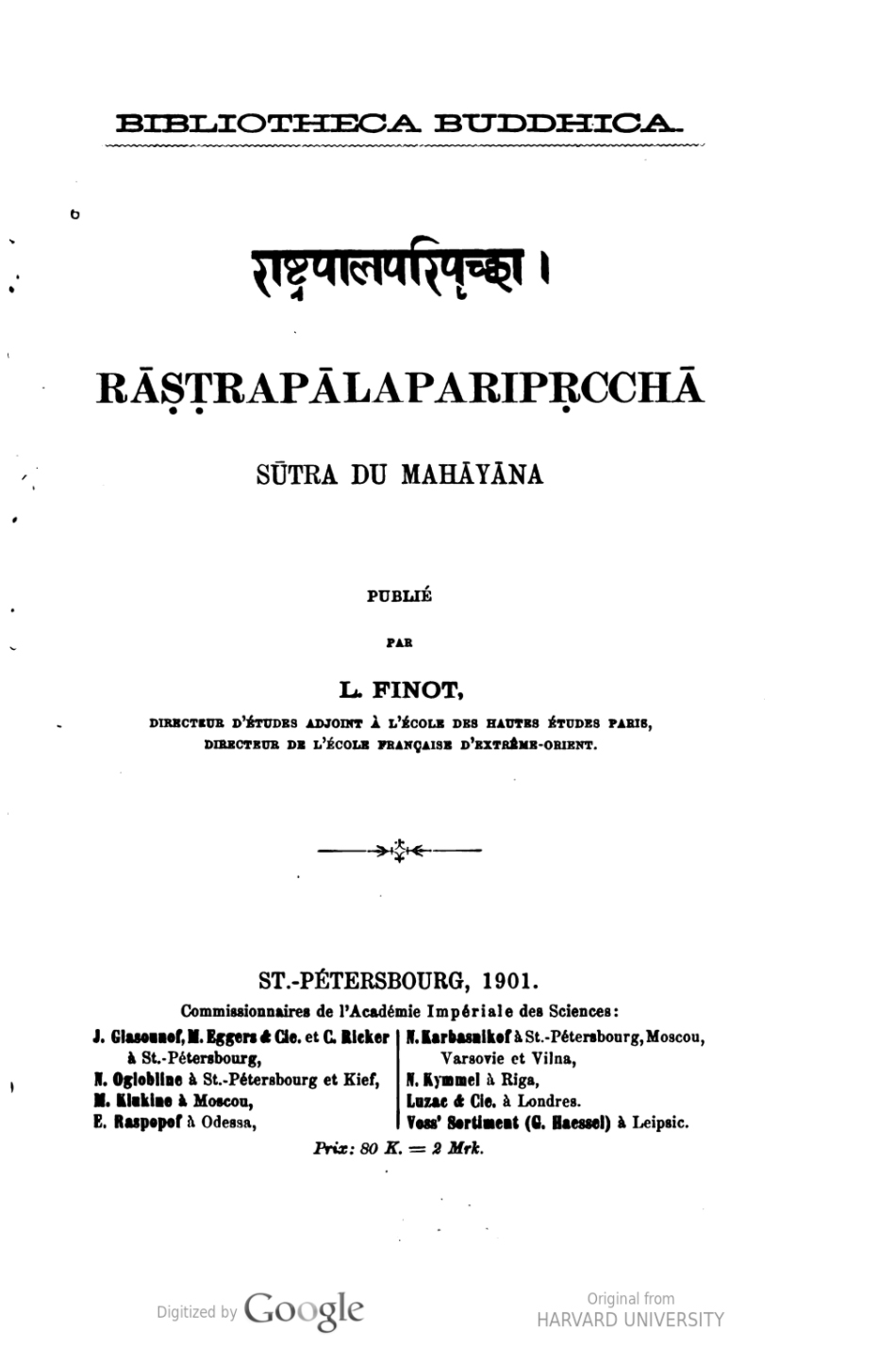
A critical Sanskrit edition of the Rāṣṭrapālaparipṛcchāsūtra edited by Louis Finot, with an introduction in French. Published in 1901.

Critical Sanskrit edition of the Rāṣṭrapālaparipṛcchāsūtra edited by Louis Finot, with an introduction in French.
3 Full translations

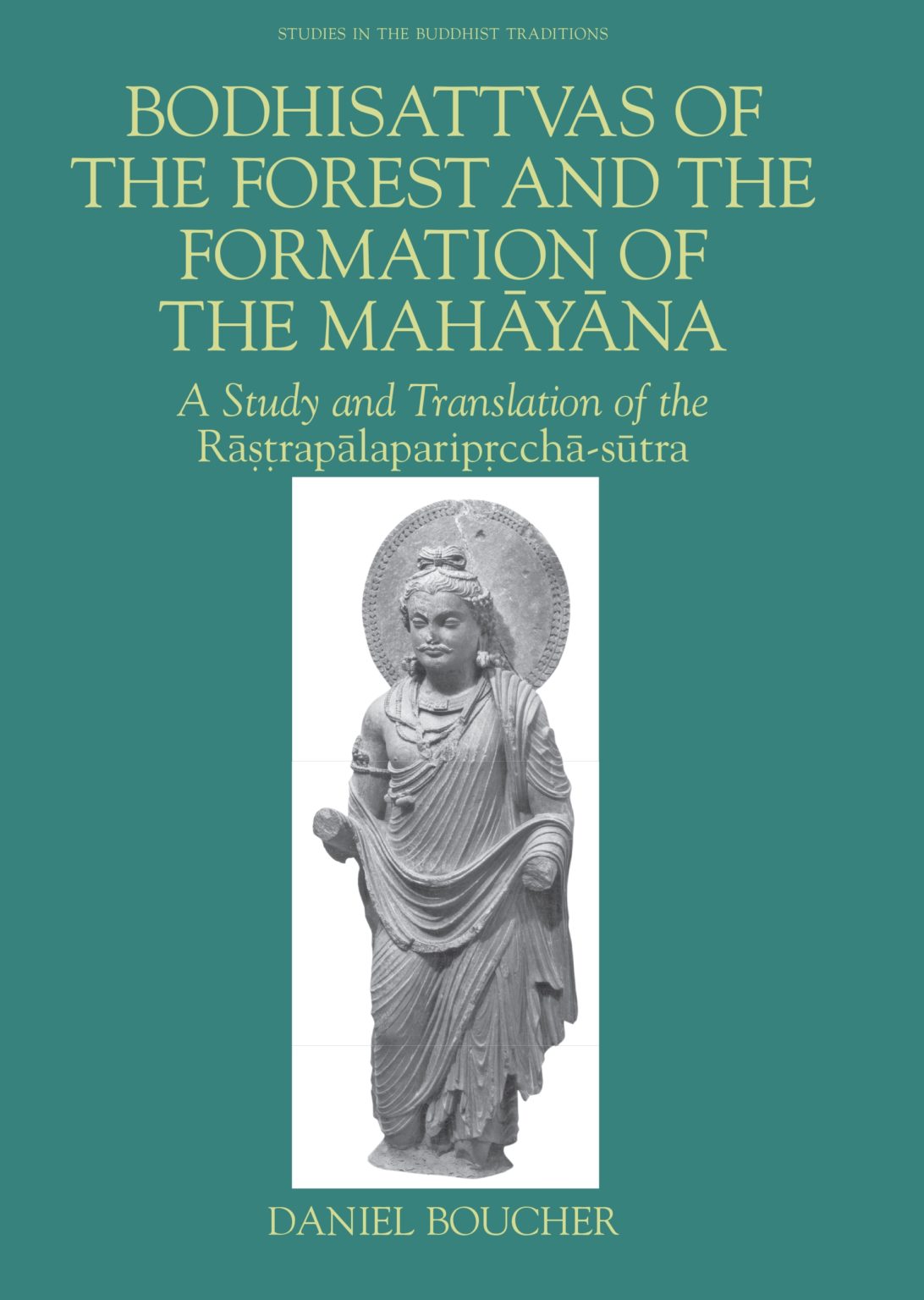
A detailed study and translation of the Rastrapalapariprccha-sutra (Questions of Rastrapala), a Buddhist text circulating in India during the first half of the first millennium C.E.

An English translation of Louis Finot's critical Sanskrit edition of the Raṣṭrapālaparipṛcchāsūtra (1901) containing a brief introduction. In English and Sanskrit.

An English translation of the Rāṣṭrapālaparipṛcchāsūtra by the Vienna Buddhist Translation Studies Group. Published by 84000: Translating the Words of the Buddha.
6 Scholarship
A detailed study and translation of the Rastrapalapariprccha-sutra (Questions of Rastrapala), a Buddhist text circulating in India during the first half of the first millennium C.E.

De Jong, Jan Willem. "Remarks on the Text of the Rāṣṭrapālaparipṛcchā." Adyar Library Bulletin 31-32 (1968): 1–7.
A critical Sanskrit edition of the Rāṣṭrapālaparipṛcchāsūtra edited by Louis Finot, with an introduction in French. Published in 1901.
Critical Sanskrit edition of the Rāṣṭrapālaparipṛcchāsūtra edited by Louis Finot, with an introduction in French.

Waldschmidt, Ernst. "The Rāṣṭrapālasūtra in Sanskrit Remnants from Central Asia". In Indianisme et Bouddhisme: Mélanges offerts à Mgr Etienne Lamotte, 359–74. Publications de l'Institut orientaliste de Louvain 23. Louvain-la-Neuve, Belgium: Université catholique de Louvain, Institut Orientaliste, 1980.

No abstract given. Here are the first relevant paragraphs:
This paper is but a brief prospectus of a larger, ongoing study of an early Mahāyāna sūtra, the Raṣṭrapālaparipṛcchā. My interest in this text stems both from its provocative content and from the availability of an early Chinese translation that promises to tell us much about its Indian history. I will sketch some of the more interesting features of the text as well as note some of the data from the earliest Chinese translation that provide evidence for the shape of the Indian text in the late third century. (Boucher, preliminary remarks, 93)
8 A topic of
A detailed study and translation of the Rastrapalapariprccha-sutra (Questions of Rastrapala), a Buddhist text circulating in India during the first half of the first millennium C.E.
De Jong, Jan Willem. "Remarks on the Text of the Rāṣṭrapālaparipṛcchā." Adyar Library Bulletin 31-32 (1968): 1–7.
A critical Sanskrit edition of the Rāṣṭrapālaparipṛcchāsūtra edited by Louis Finot, with an introduction in French. Published in 1901.
Critical Sanskrit edition of the Rāṣṭrapālaparipṛcchāsūtra edited by Louis Finot, with an introduction in French.
An English translation of Louis Finot's critical Sanskrit edition of the Raṣṭrapālaparipṛcchāsūtra (1901) containing a brief introduction. In English and Sanskrit.
An English translation of the Rāṣṭrapālaparipṛcchāsūtra by the Vienna Buddhist Translation Studies Group. Published by 84000: Translating the Words of the Buddha.
Waldschmidt, Ernst. "The Rāṣṭrapālasūtra in Sanskrit Remnants from Central Asia". In Indianisme et Bouddhisme: Mélanges offerts à Mgr Etienne Lamotte, 359–74. Publications de l'Institut orientaliste de Louvain 23. Louvain-la-Neuve, Belgium: Université catholique de Louvain, Institut Orientaliste, 1980.
No abstract given. Here are the first relevant paragraphs:
This paper is but a brief prospectus of a larger, ongoing study of an early Mahāyāna sūtra, the Raṣṭrapālaparipṛcchā. My interest in this text stems both from its provocative content and from the availability of an early Chinese translation that promises to tell us much about its Indian history. I will sketch some of the more interesting features of the text as well as note some of the data from the earliest Chinese translation that provide evidence for the shape of the Indian text in the late third century. (Boucher, preliminary remarks, 93)