Maitreyavimokṣa

From Bodhicitta
< TextsTexts/Maitreyavimokṣa

🤓 Admin Zone 🛠️ hidden to non-admins
मैत्रेयविमोक्ष
Maitreyavimokṣa
བྱམས་པའི་རྣམ་པར་ཐར་པ།
byams pa'i rnam par thar pa
Liberation of Maitreya
Text


Please note that many items in our library are simply pages that represent a detailed library catalog entry and citation of someone else's work, presentation, or performance. Read our General Disclaimer for more information.

Description

According to Paul Harrison in his essay "Śāntideva: The Author and His Project" in Readings of Santideva's Guide to Bodhisattva Practice (2019), the Maitreyavimokṣa is chapter 54 of the Gaṇḍavyūhasūtra (see page 39). He explains that verse 1.14 of the Guide makes mention of Maitreya's commendation of the aspiration to awakening to Sudhana, which is a reference to a sequence of verses in chapter 54 (Maitreyavimokṣa) of the Gaṇḍavyūha. The relevant verses are given in full in the Anthology (See B101-104:G103-106; cf. also B9:G11).
Quoted in the aligned translations
Reference
Maitreyavimokṣa [मैत्रेयविमोक्ष]. byams pa'i rnam par thar pa [བྱམས་པའི་རྣམ་པར་ཐར་པ།]. [Liberation of Maitreya]. Translated by Jinamitra, Surendrabodhi, Ye shes sde, Prajñā (translator), Sheng-chien, Divākara. Kangyur, D44, chap. 45. http://www.rkts.org/cat.php?id=44-45&typ=1.

Recensions

Gaṇḍavyūhasūtra (The Sūtra called "The Stem Array"). Recension information:
Sanskrit गण्डव्यूहसूत्र, Gaṇḍavyūhasūtra.
Tibetan ཤིན་ཏུ་རྒྱས་པ་ཆེན་པོའི་མདོ་སངས་རྒྱས་ཕལ་པོ་ཆེ་ཞེས་བྱ་བ་ལས་སྡོང་པོས་བརྒྱན་པའི་ལེའུ་སྟེ་བཞི་བཅུ་རྩ་ལྔ་པའོ།, (shin tu rgyas pa chen po'i mdo sangs rgyas phal po che zhes bya ba las sdong pos brgyan pa'i le'u ste bzhi bcu rtsa lnga pa'o). rKTs (Resources for Kanjur and Tanjur Studies) Link: https://www.istb.univie.ac.at/kanjur/rktsneu/verif/verif2.php?id=44-45.
Chinese
Interconnections
2 Member of
Jinamitra translator.jpg
Classical WorksAbout this item
In this lengthy final chapter of the Avataṃsaka Sūtra, while the Buddha Śākyamuni is in meditation in Śrāvastī, Mañjuśrī leaves for South India, where he meets the young layman Sudhana and instructs him to go to a certain kalyāṇamitra or "good friend," who then directs Sudhana to another such friend. In this way, Sudhana successively meets and receives teachings from fifty male and female, child and adult, human and divine, and monastic and lay kalyāṇamitras, including night goddesses surrounding the Buddha and the Buddha’s wife and mother. The final three in the succession of kalyāṇamitras are the three bodhisattvas Maitreya, Mañjuśrī, and Samantabhadra. Samantabhadra’s recitation of the Samantabhadracaryāpraṇidhāna ("The Prayer for Completely Good Conduct") concludes the sūtra. (Source: 84000)
Jinamitra translator.jpg
Classical WorksAbout this item
One of the longest works in the entire Buddhist canon, the Buddhāvataṃsakasūtra is widely considered to be a compilation of independent scriptures, which was expanded upon over the course of time. It was extremely influential in East Asia, where it was preserved in an eighty-scroll recension. The Tibetan translation of this work fills four volumes in the Derge Kangyur. Though only two sections—namely, the Gaṇḍavyūhasūtra and the Daśabhūmikasūtra—have survived in Sanskrit, both of which have also circulated as independent works.
1 Scholarship
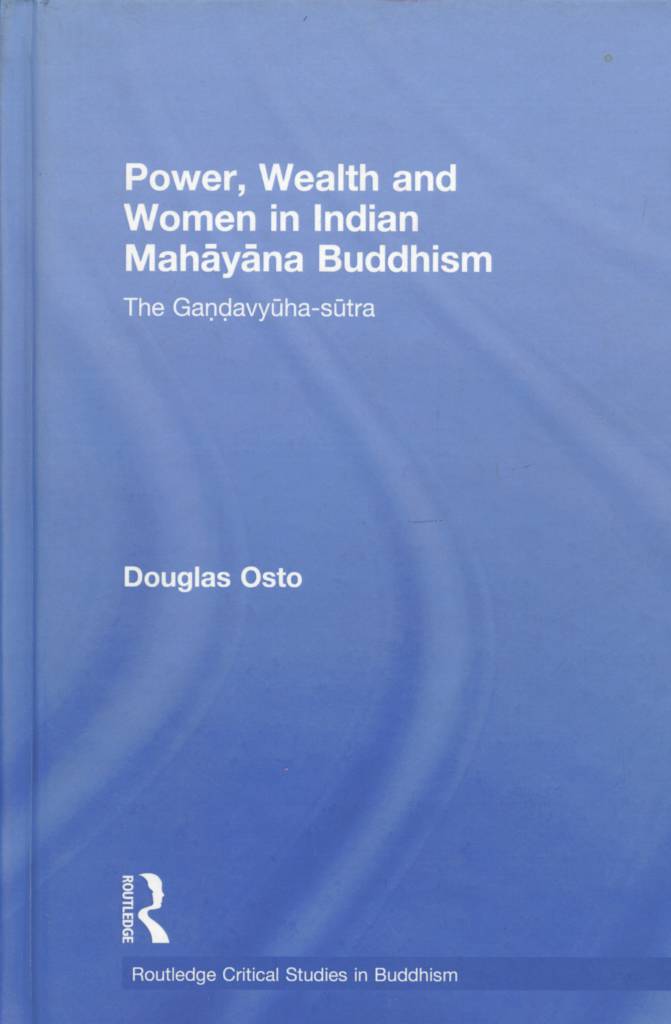
Power, Wealth and Women in Indian Mahāyāna Buddhism-front.jpg
Books2008About this item
This book examines the concepts of power, wealth and women in the important Mahayana Buddhist scripture known as the Gandavyuha-sutra, and relates these to the text’s social context in ancient Indian during the Buddhist Middle Period (0–500 CE).

Employing contemporary textual theory, worldview analysis and structural narrative theory, the author puts forward a new approach to the study of Mahayana Buddhist sources, the ‘systems approach’, by which literature is viewed as embedded in a social system. Consequently, he analyses the Gandavyuha in the contexts of reality, society and the individual, and applies these notions to the key themes of power, wealth and women. The study reveals that the spiritual hierarchy represented within the Gandavyuha replicates the political hierarchies in India during Buddhism’s Middle Period, that the role of wealth mirrors its significance as a sign of spiritual status in Indian Buddhist society, and that the substantial number of female spiritual guides in the narrative reflects the importance of royal women patrons of Indian Buddhism at the time.

This book will appeal to higher-level undergraduates, postgraduates and scholars of religious studies, Buddhist studies, Asian studies, South Asian studies and Indology. (Source: Routledge)

1 A topic of
Power, Wealth and Women in Indian Mahāyāna Buddhism-front.jpg
Books2008About this item
This book examines the concepts of power, wealth and women in the important Mahayana Buddhist scripture known as the Gandavyuha-sutra, and relates these to the text’s social context in ancient Indian during the Buddhist Middle Period (0–500 CE).

Employing contemporary textual theory, worldview analysis and structural narrative theory, the author puts forward a new approach to the study of Mahayana Buddhist sources, the ‘systems approach’, by which literature is viewed as embedded in a social system. Consequently, he analyses the Gandavyuha in the contexts of reality, society and the individual, and applies these notions to the key themes of power, wealth and women. The study reveals that the spiritual hierarchy represented within the Gandavyuha replicates the political hierarchies in India during Buddhism’s Middle Period, that the role of wealth mirrors its significance as a sign of spiritual status in Indian Buddhist society, and that the substantial number of female spiritual guides in the narrative reflects the importance of royal women patrons of Indian Buddhism at the time.

This book will appeal to higher-level undergraduates, postgraduates and scholars of religious studies, Buddhist studies, Asian studies, South Asian studies and Indology. (Source: Routledge)