| 🤓 Admin Zone 🛠️ hidden to non-admins | |


Description


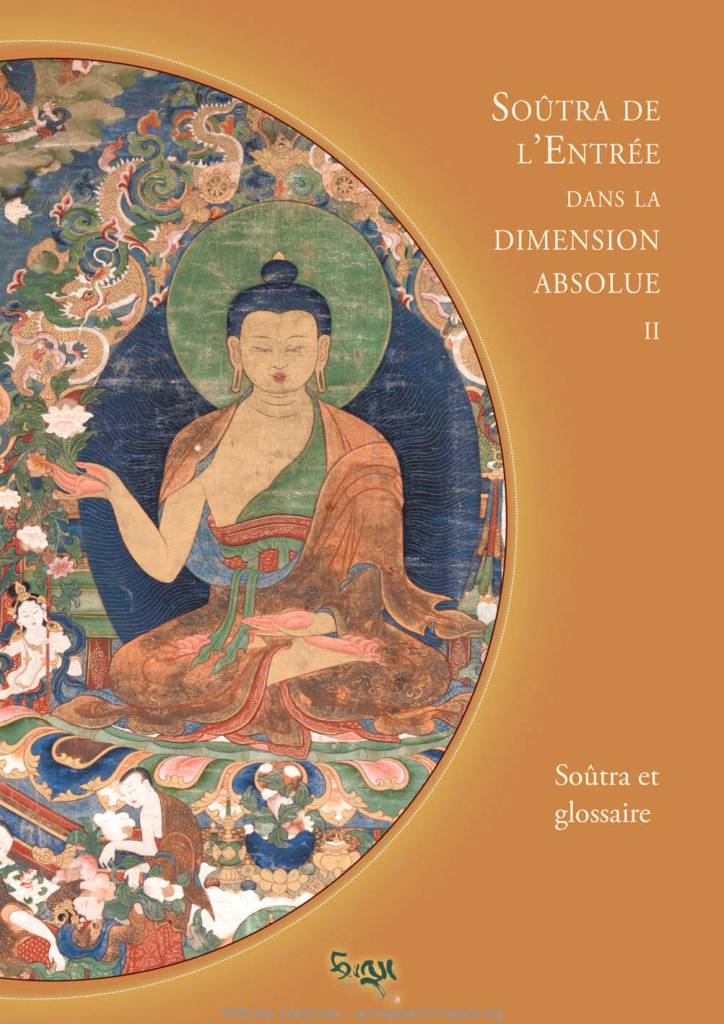
What does it mean to dedicate yourself to the spiritual path with the innocence of a child? The answers to that are revealed in the story of a child named Sudhana, protagonist of the longest chapter in one of the oldest and most prominent Mahāyāna Buddhist sūtras. In Search of the Bodhisattva Way is Kōsei Morimoto’s summary of “Entering the Dharma Realm,” the final chapter of the Avatamsaka Sūtra, which also circulated separately as the Gandavyūha Sūtra. The story is illustrated with images from the twelfth-century Painting Scroll of the Fifty-Five Avatamsaka Sites, a National Treasure of Japan. Morimoto’s detailed introduction and annotations reveal the religious, literary, and economic dimensions of the sūtra’s place within South Asian history.
The early Indian Mahāyāna cosmology and doctrine represented in these narratives are grounded in the idea of emptiness but also an expansive, infinite notion of enlightened mind illuminating everywhere. The core of the book consists of fifty-five short chapters, each of which centers around a different “wondrous friend,” from whom Sudhana seeks guidance on the bodhisattva path. It is only at the end of his journey that Sudhana is shown the direct path to enlightenment by the bodhisattvas Maitreya and Samantabhadra. (Source: Shambhala Publications)
The King of Aspiration Prayers: Samantabhadra’s “Aspiration to Good Actions” (Zangchö Mönlam) from the Gaṇḍavyūha chapter of the Avataṃsaka Sūtra. Many translations of this text exist as it is regularly chanted around the world in many different traditions. For an example, see Lotsawa House.
Bhadracarīpranidhāna. (T. Bzang po spyod pa'i smon lam; C. Puxian pusa xingyuan zan; J. Fugen bosatsu gyōgansan; K. Pohyǒn posal haengwǒn ch'an 普賢菩薩行願讚). In Sanskrit, "Vows of Good Conduct," the last section of the Gaṇḍavyūha in the Avataṃsakasūtra and one of the most beloved texts in all of Mahāyāna Buddhism; also known as the Samantabhadracarīpraṇidhānarāja. The Bhadracarīpraṇidhāna focuses on the ten great vows (praṇidhāna) taken by Samantabhadra to realize and gain access to the dharmadhātu, which thereby enable him to benefit sentient beings. The ten vows are: (1) to pay homage to all the buddhas, (2) to praise the tathāgatas, (3) to make unlimited offerings, (4) to repent from one's transgressions in order to remove karmic hindrances (cf. karmāvaraṇa), (5) to take delight in others' merit, (6) to request the buddhas to turn the wheel of dharma (dharmacakrapravartana), (7) to request the buddhas to continue living in the world, (8) always to follow the teachings of the Buddha, (9) always to comply with the needs of sentient beings, and (10) to transfer all merit to sentient beings for their spiritual edification. The text ends with a stanza wishing that sentient beings still immersed in evil be reborn in the Pure Land of Amitābha. The text was translated into Chinese in 754 by Amoghavajra (705–774). Other Chinese recensions appear in the Wenshushili fayuan jing ("Scripture on the Vows made by Mañjuśrī"), translated in 420 by Buddhabhadra (359–429), which corresponds to the verse section from Ru busiyi jietuo jingjie Puxian xingyuan pin, the last roll of the forty-roll recension of the Huayan jing translated by Prajña in 798. (There is no corresponding version in either the sixty- or the eighty-roll translations of the
Huajan jing.) The verses are also called the "Précis of the Huayan jing (Lüe Huayan jing), because they are believed to constitute the core teachings of the Avataṃsakasūtra. In the main Chinese recension by Amoghavajra, the text consists of sixty-two stanzas, each consisting of quatrains with lines seven Sinographs in length, thus giving a total number of 1,736 Sinographs. In addition to the sixty-two core stanzas, Amoghavajra's version adds ten more stanzas of the Bada pusa zan ("Eulogy to the Eight Great Bodhisattvas") from the Badapusa mantuluo jing ("Scripture of the Maṇḍalas of the Eight Great Bodhisattvas") . . . Buddhabhadra's version consists of forty-four stanzas with 880 Sinographs, each stanza consisting of a quatrain with lines five Sinographs in length. Prajña's version contains fifty-two stanzas with each quatrain consisting of lines seven Sinographs in length. There are five commentaries on the text attributed to eminent Indian exegetes, including Nāgārjuna, Dignāga, and Vasubandhu, which are extant only in Tibetan translation. In the Tibetan tradition, the prayer is called the "king of prayers" (smon lam gyi rgyal po). It is incorporated into many liturgies; the opening verses of the prayer are commonly incorporated into a Tibetan's daily recitation. (Source: "Bhadracarīpraṇidhāna." In The Princeton Dictionary of Buddhism, 106. Princeton University Press, 2014. http://www.jstor.org/stable/j.ctt46n41q.27.)

In the classical Mahāyāna thought the basic mental attitude of bodhisattvas bodhicitta ('mind of awakening')—is usually defined as consisting of two parts: praṇidhicitta ('mind of resolution') and prasthānacitta ('mind of progress'). In three classical and most revered works of later Mahāyāna-Śāntideva's Bodhicaryāvatāra and Śikṣāsamuccaya) and Kamalaśīla's Bhāvanākrama—almost identical definitions of the twofold nature of the bodhicitta are to be found. . . .
The Gaṇḍavyūhasūtra instead seems to be one of the most authoritative source in the discussion on the bodhicitta "theory" for the authors of later Mahāyāna. In the sutra itself, however, the very term bodhicitta occurs in very few occasions clearly having a secondary meaning while the main subject of discussion is the
person's attitude towards and activity in a certain state of mind that is called anuttturā samyaksaṃbodhi ('supreme perfect awakening') . . . (Läänemets, 113–15)
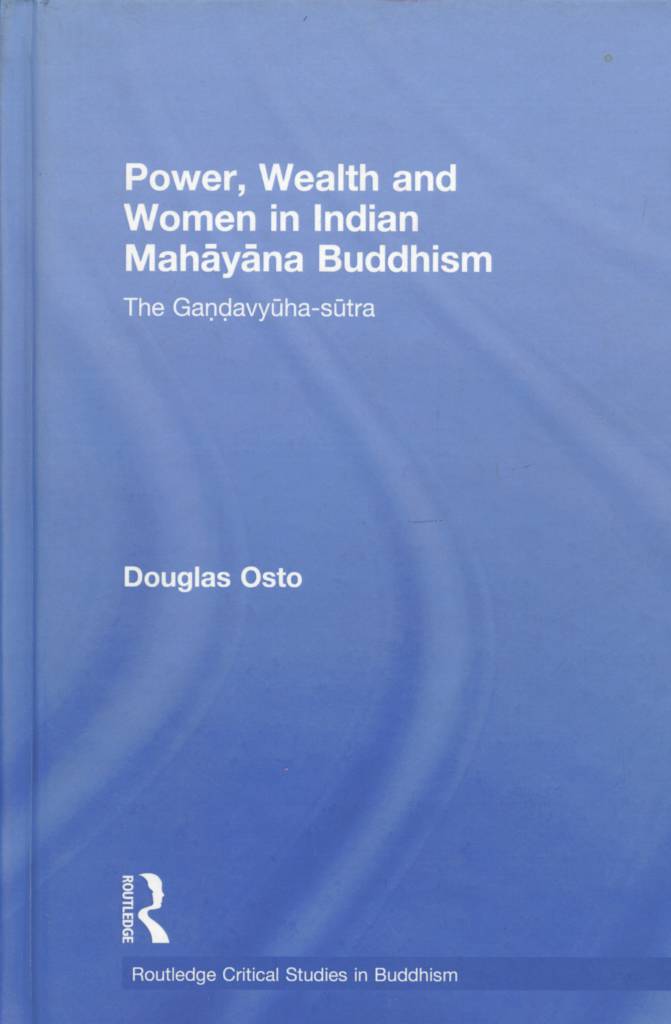
Employing contemporary textual theory, worldview analysis and structural narrative theory, the author puts forward a new approach to the study of Mahayana Buddhist sources, the ‘systems approach’, by which literature is viewed as embedded in a social system. Consequently, he analyses the Gandavyuha in the contexts of reality, society and the individual, and applies these notions to the key themes of power, wealth and women. The study reveals that the spiritual hierarchy represented within the Gandavyuha replicates the political hierarchies in India during Buddhism’s Middle Period, that the role of wealth mirrors its significance as a sign of spiritual status in Indian Buddhist society, and that the substantial number of female spiritual guides in the narrative reflects the importance of royal women patrons of Indian Buddhism at the time.
This book will appeal to higher-level undergraduates, postgraduates and scholars of religious studies, Buddhist studies, Asian studies, South Asian studies and Indology. (Source: Routledge)
The King of Aspiration Prayers: Samantabhadra’s “Aspiration to Good Actions” (Zangchö Mönlam) from the Gaṇḍavyūha chapter of the Avataṃsaka Sūtra. Many translations of this text exist as it is regularly chanted around the world in many different traditions. For an example, see Lotsawa House.
Bhadracarīpranidhāna. (T. Bzang po spyod pa'i smon lam; C. Puxian pusa xingyuan zan; J. Fugen bosatsu gyōgansan; K. Pohyǒn posal haengwǒn ch'an 普賢菩薩行願讚). In Sanskrit, "Vows of Good Conduct," the last section of the Gaṇḍavyūha in the Avataṃsakasūtra and one of the most beloved texts in all of Mahāyāna Buddhism; also known as the Samantabhadracarīpraṇidhānarāja. The Bhadracarīpraṇidhāna focuses on the ten great vows (praṇidhāna) taken by Samantabhadra to realize and gain access to the dharmadhātu, which thereby enable him to benefit sentient beings. The ten vows are: (1) to pay homage to all the buddhas, (2) to praise the tathāgatas, (3) to make unlimited offerings, (4) to repent from one's transgressions in order to remove karmic hindrances (cf. karmāvaraṇa), (5) to take delight in others' merit, (6) to request the buddhas to turn the wheel of dharma (dharmacakrapravartana), (7) to request the buddhas to continue living in the world, (8) always to follow the teachings of the Buddha, (9) always to comply with the needs of sentient beings, and (10) to transfer all merit to sentient beings for their spiritual edification. The text ends with a stanza wishing that sentient beings still immersed in evil be reborn in the Pure Land of Amitābha. The text was translated into Chinese in 754 by Amoghavajra (705–774). Other Chinese recensions appear in the Wenshushili fayuan jing ("Scripture on the Vows made by Mañjuśrī"), translated in 420 by Buddhabhadra (359–429), which corresponds to the verse section from Ru busiyi jietuo jingjie Puxian xingyuan pin, the last roll of the forty-roll recension of the Huayan jing translated by Prajña in 798. (There is no corresponding version in either the sixty- or the eighty-roll translations of the
Huajan jing.) The verses are also called the "Précis of the Huayan jing (Lüe Huayan jing), because they are believed to constitute the core teachings of the Avataṃsakasūtra. In the main Chinese recension by Amoghavajra, the text consists of sixty-two stanzas, each consisting of quatrains with lines seven Sinographs in length, thus giving a total number of 1,736 Sinographs. In addition to the sixty-two core stanzas, Amoghavajra's version adds ten more stanzas of the Bada pusa zan ("Eulogy to the Eight Great Bodhisattvas") from the Badapusa mantuluo jing ("Scripture of the Maṇḍalas of the Eight Great Bodhisattvas") . . . Buddhabhadra's version consists of forty-four stanzas with 880 Sinographs, each stanza consisting of a quatrain with lines five Sinographs in length. Prajña's version contains fifty-two stanzas with each quatrain consisting of lines seven Sinographs in length. There are five commentaries on the text attributed to eminent Indian exegetes, including Nāgārjuna, Dignāga, and Vasubandhu, which are extant only in Tibetan translation. In the Tibetan tradition, the prayer is called the "king of prayers" (smon lam gyi rgyal po). It is incorporated into many liturgies; the opening verses of the prayer are commonly incorporated into a Tibetan's daily recitation. (Source: "Bhadracarīpraṇidhāna." In The Princeton Dictionary of Buddhism, 106. Princeton University Press, 2014. http://www.jstor.org/stable/j.ctt46n41q.27.)What does it mean to dedicate yourself to the spiritual path with the innocence of a child? The answers to that are revealed in the story of a child named Sudhana, protagonist of the longest chapter in one of the oldest and most prominent Mahāyāna Buddhist sūtras. In Search of the Bodhisattva Way is Kōsei Morimoto’s summary of “Entering the Dharma Realm,” the final chapter of the Avatamsaka Sūtra, which also circulated separately as the Gandavyūha Sūtra. The story is illustrated with images from the twelfth-century Painting Scroll of the Fifty-Five Avatamsaka Sites, a National Treasure of Japan. Morimoto’s detailed introduction and annotations reveal the religious, literary, and economic dimensions of the sūtra’s place within South Asian history.
The early Indian Mahāyāna cosmology and doctrine represented in these narratives are grounded in the idea of emptiness but also an expansive, infinite notion of enlightened mind illuminating everywhere. The core of the book consists of fifty-five short chapters, each of which centers around a different “wondrous friend,” from whom Sudhana seeks guidance on the bodhisattva path. It is only at the end of his journey that Sudhana is shown the direct path to enlightenment by the bodhisattvas Maitreya and Samantabhadra. (Source: Shambhala Publications)In the classical Mahāyāna thought the basic mental attitude of bodhisattvas bodhicitta ('mind of awakening')—is usually defined as consisting of two parts: praṇidhicitta ('mind of resolution') and prasthānacitta ('mind of progress'). In three classical and most revered works of later Mahāyāna-Śāntideva's Bodhicaryāvatāra and Śikṣāsamuccaya) and Kamalaśīla's Bhāvanākrama—almost identical definitions of the twofold nature of the bodhicitta are to be found. . . .
The Gaṇḍavyūhasūtra instead seems to be one of the most authoritative source in the discussion on the bodhicitta "theory" for the authors of later Mahāyāna. In the sutra itself, however, the very term bodhicitta occurs in very few occasions clearly having a secondary meaning while the main subject of discussion is the
person's attitude towards and activity in a certain state of mind that is called anuttturā samyaksaṃbodhi ('supreme perfect awakening') . . . (Läänemets, 113–15)Employing contemporary textual theory, worldview analysis and structural narrative theory, the author puts forward a new approach to the study of Mahayana Buddhist sources, the ‘systems approach’, by which literature is viewed as embedded in a social system. Consequently, he analyses the Gandavyuha in the contexts of reality, society and the individual, and applies these notions to the key themes of power, wealth and women. The study reveals that the spiritual hierarchy represented within the Gandavyuha replicates the political hierarchies in India during Buddhism’s Middle Period, that the role of wealth mirrors its significance as a sign of spiritual status in Indian Buddhist society, and that the substantial number of female spiritual guides in the narrative reflects the importance of royal women patrons of Indian Buddhism at the time.
This book will appeal to higher-level undergraduates, postgraduates and scholars of religious studies, Buddhist studies, Asian studies, South Asian studies and Indology. (Source: Routledge)