| 🤓 Admin Zone 🛠️ hidden to non-admins | |
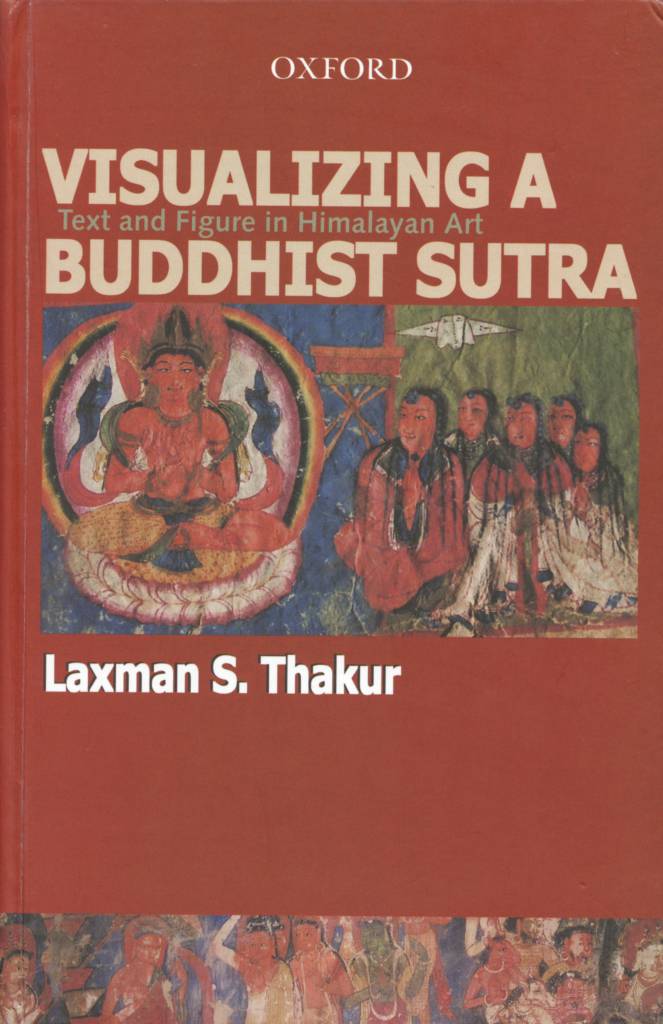
Visualizing a Buddhist Sutra: Text and Figure in Himalayan Art
Book
Please note that many items in our library are simply pages that represent a detailed library catalog entry and citation of someone else's work, presentation, or performance. Read our General Disclaimer for more information.

Description
This book discusses the analysis of Gaṇḍavyūhasūtra. The Gaṇḍavyūhasūtra is a grand scripture covering a number of complicated themes and intricate Buddhist ideas. The study is confined to the principal idea of Bodhisattvahood versus Śrāvakahood, the concept of dharmadhātu: The realm of reality, and the Bodhisattva’s ten stages. It also describes the schematic arrangement of surviving inscriptional panels, and the eleven manuscripts of the Avataṁsakasūtra. In addition, the methodology and dialectics between form and contents as well as the interconnection between murals and inscriptions are elaborated. Finally, it summarizes the functionality of both murals and inscriptions. (Source: Oxford Scholarship Online)
Citation
Thakur, Laxman S. Visualizing a Buddhist Sutra: Text and Figure in Himalayan Art. New Dehli: Oxford University Press, 2006.
Table of contents
- List of Platesx
- List of Figuresxii
- Abbreviationsxiii
- Note on Transcription and Sign Criticsxiv
- 1. Prologue: A Study of the Gandavyuhasutra1
- 2. Enframed Inscriptional Panel and Tibetan Manuscript18
- 3. The Pilgrim's Progress: The Narrative Pictorials51
- 4. The Inscriptional Text79
- 5. Epilogue: The Cultural Heritage of Tabo120
- Appendices129
- Bibliography148
- Index156
Interconnections
1 Scholarship on

In this lengthy final chapter of the Avataṃsaka Sūtra, while the Buddha Śākyamuni is in meditation in Śrāvastī, Mañjuśrī leaves for South India, where he meets the young layman Sudhana and instructs him to go to a certain kalyāṇamitra or "good friend," who then directs Sudhana to another such friend. In this way, Sudhana successively meets and receives teachings from fifty male and female, child and adult, human and divine, and monastic and lay kalyāṇamitras, including night goddesses surrounding the Buddha and the Buddha’s wife and mother. The final three in the succession of kalyāṇamitras are the three bodhisattvas Maitreya, Mañjuśrī, and Samantabhadra. Samantabhadra’s recitation of the Samantabhadracaryāpraṇidhāna ("The Prayer for Completely Good Conduct") concludes the sūtra. (Source: 84000)