Vinayasūtra

From Bodhicitta
< TextsTexts/Vinayasūtra

🤓 Admin Zone 🛠️ hidden to non-admins
विनयसूत्र
Vinayasūtra
འདུལ་བའི་མདོ།
'dul ba'i mdo
Aphorisms on Monastic Discipline (84000)
Text


Please note that many items in our library are simply pages that represent a detailed library catalog entry and citation of someone else's work, presentation, or performance. Read our General Disclaimer for more information.

Description

Vinayasūtra. (T. 'Dul ba'i mdo). In Sanskrit, "Discourse on Discipline"; a work on the monastic code by the Indian master Guṇaprabha, who is dated between the fifth and seventh century CE. Despite its title, the work is not a sūtra (in the sense of a discourse ascribed to the Buddha), but instead is an authored work composed of individual aphoristic statements (sūtras). The text offers a summary or condensation of the massive Mūlasarvāstivāda vinaya. At approximately one quarter the length of this massive vinaya collection, Guṇaprabha's abridgment seems to have functioned as a kind of primer on the monastic code, omitting lengthy passages of scripture and providing the code of conduct to which monks were expected to subscribe. In this sense, the text is an important work for determining what monastic practice may actually have been like in medieval India. The Vinayasūtra became the most important vinaya text for Tibetan Buddhism, being studied in all of the major sects. In the Dge lugs, it is one of the five books (gzhung lnga) that served as the basis of the monastic curriculum. The detailed commentaries on the Vinayasūtra by the Pāla dynasty writer Dharmamitra (early ninth century) and the Bka' gdam pa master Tsho sna ba Shes rab bzang po's (b. thirteenth century) were widely studied. (Source: "Vinayasūtra." In The Princeton Dictionary of Buddhism, 976. Princeton University Press, 2014. http://www.jstor.org/stable/j.ctt46n41q.27.)
Quoted in the aligned translations
Reference
Guṇaprabha. vinayasūtra [विनयसूत्र]. 'dul ba'i mdo [འདུལ་བའི་མདོ།]. [Aphorisms on Monastic Discipline (84000)]. Tengyur, RKTST 3455 http://www.rkts.org/cat.php?id=3455&typ=2.
Interconnections
All 20Articles 4Classical Works 14Dissertations 2
7 Classical commentaries
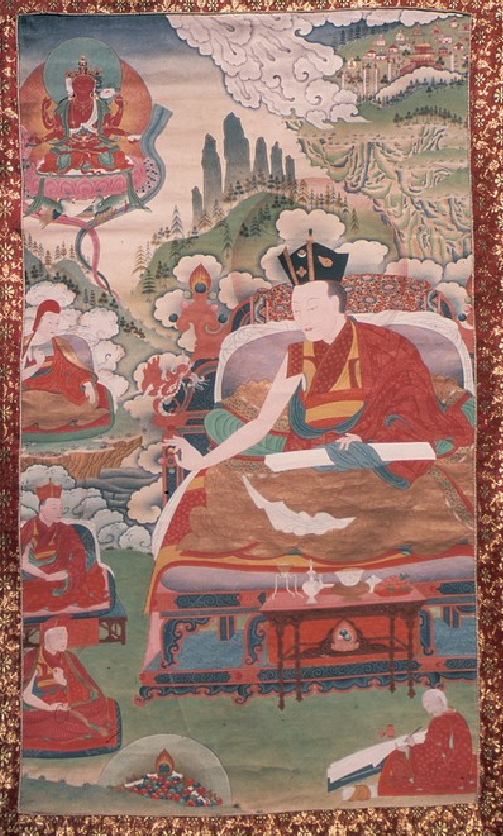
Karmapa 8th.jpg
'dul ba mdo rtsa ba'i rgya cher 'grel spyi'i don mtha' dpyad dang bsdus don sa bcad dang 'bru yi don mthar chags su gnyer ba bcas 'dzam bu'i gling gsal bar byed pa'i rgyan nyi ma'i dkyil 'khor zhes bya ba glegs bam dang po [འདུལ་བ་མདོ་རྩ་བའི་རྒྱ་ཆེར་འགྲེལ་སྤྱིའི་དོན་མཐའ་དཔྱད་དང་བསྡུས་དོན་ས་བཅད་དང་འབྲུ་ཡི་དོན་མཐར་ཆགས་སུ་གཉེར་བ་བཅས་འཛམ་བུའི་གླིང་གསལ་བར་བྱེད་པའི་རྒྱན་ཉི་མའི་དཀྱིལ་འཁོར་ཞེས་བྱ་བ་གླེགས་བམ་དང་པོ།]. [The First Volume of The Solar Mandala: An Ornament Illuminating the World, Which Provides a Comprehensive Analysis of the General Meaning, a Topical Outline of the Condensed Points, and a Word-by-Word Commentary on the Vinayasūtra].
Classical WorksAbout this item
The Eighth Karmapa Mikyö Dorje's commentary on Guṇaprabha's Vinayasūtra (T. 'Dul ba'i mdo). The Vinayasūtra offers a summary or condensation of the massive Mūlasarvāstivāda vinaya. At approximately one quarter the length of this massive vinaya collection, Guṇaprabha's abridgment seems to have functioned as a kind of primer on the monastic code, omitting lengthy passages of scripture and providing the code of conduct to which monks were expected to subscribe. Mikyö Dorje's commentary spans 3 volumes (7–9) of his Collected Works. This is the first volume.


  • For a discussion of meat in tantric ritual offerings, see pages 541–44.
Sutra portrait.jpg
Classical WorksAbout this item
The Vinayasūtravyākhyāna ('Dul ba mdo'i rnam par bshad pa) is a commentary on Guṇaprabha's Vinayasūtra composed by the Indian scholar Prajñākara, about whom very little biographical information survives. Along with the anonymous Vṛtti, the Vinayasūtravyākhyāna is written in clear, concise prose and does not reproduce the Vinayasūtra and its autocommentary in full; rather, it closely follows the root text's line of reasoning while paraphrasing the original—a style distinct from Dharmamitra's Ṭīkā, which hews more literally to the source. The Vyākhyāna is one of several major Indian commentaries that, together with Guṇaprabha's root Vinayasūtra, came to occupy a central place in the Tibetan scholastic curriculum as part of the traditional "thirteen great texts" (gzhung chen bcu gsum). (Source: Nietupski, Paul K. "Guṇaprabha's Vinayasūtra Corpus: Texts and Contexts." Journal of the International Association of Tibetan Studies 5, 2009)
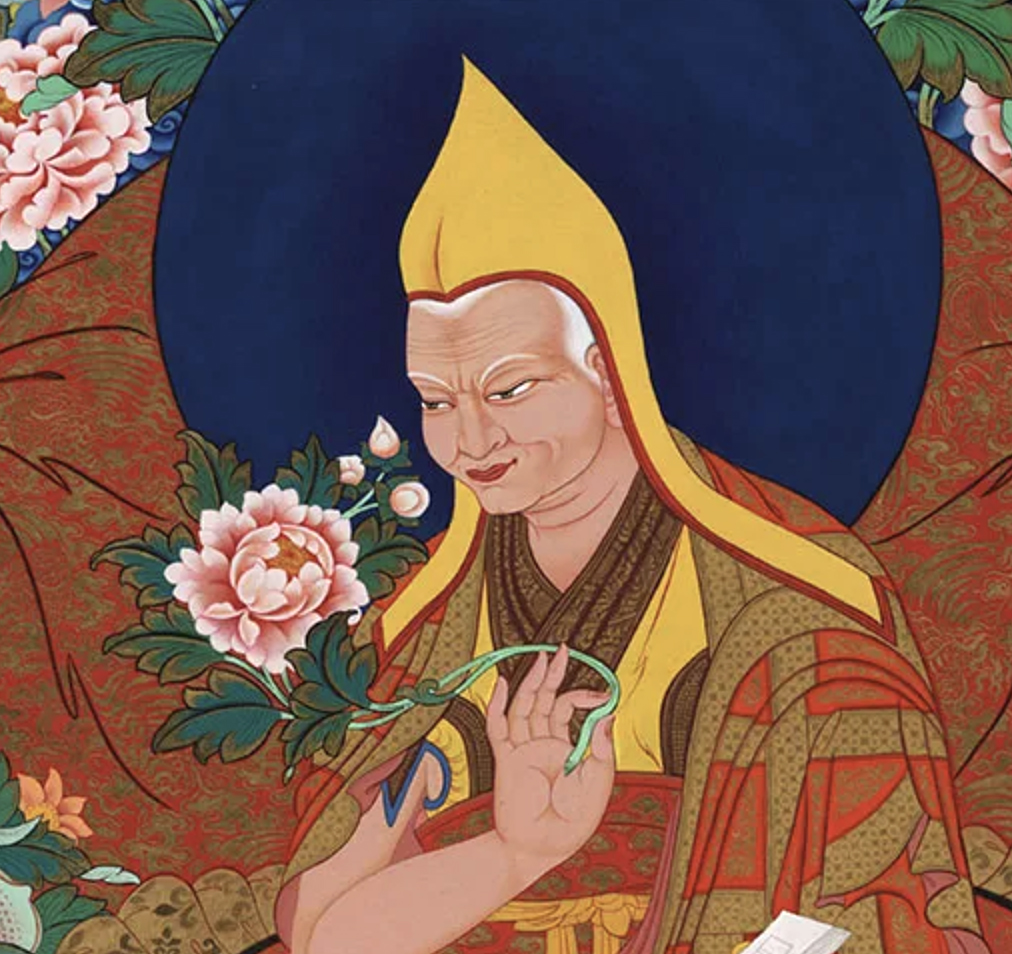
Gunaprabha Rigpa Wiki.jpg
Classical WorksAbout this item
The Vinayasūtravṛtti ('Dul ba'i mdo'i 'grel pa) is attributed to Guṇaprabha, the author of the root Vinayasūtra itself, though its colophon indicates it was actually a compilation produced by several scholars rather than a single-author work. It is the third major text in the Vinayasūtra corpus, following the root Vinayasūtra and Guṇaprabha's own autocommentary. Stylistically, the Vṛtti stands apart from those two texts: where the Vinayasūtra and autocommentary are terse and technical, the Vṛtti is wordy and explicit, and its general vocabulary differs both from Guṇaprabha's other works and from Dharmamitra's Ṭīkā. Along with three other major commentaries, the Vṛtti came to occupy a central place in the Tibetan scholastic curriculum alongside the root Vinayasūtra. (Source: Nietupski, Paul K. "Guṇaprabha's Vinayasūtra Corpus: Texts and Contexts." Journal of the International Association of Tibetan Studies 5 (2009): 1-19)
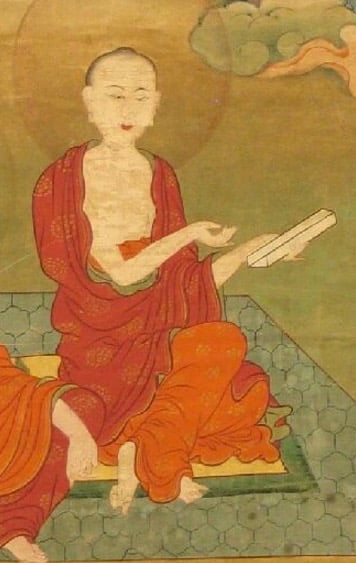
Jinamitra translator.jpg
Classical WorksAbout this item
The Vinayasūtraṭīkā ('Dul ba'i mdo'i rgya cher 'grel pa) is an extensive commentary on Guṇaprabha's Vinayasūtra, composed by Dharmamitra (Tib. Slob dpon chos kyi bshes gnyen), a scholar who flourished between 850 and 899 CE—distinct from the earlier Indian master of the same name sometimes associated with Guṇaprabha's own era. According to BDRC, this Dharmamitra studied under Ācārya Chos kyi 'byung gnas and counted among his students Paṇchen Vi khyA ta de va and Ācārya Śākya 'od. His commentary was translated into Tibetan by Cog ro Klu'i rgyal mtshan and is preserved in the Tengyur (Bstan 'gyur) across multiple editions. The Vinayasūtra itself is one of the "thirteen great texts" (gzhung chen bcu gsum) forming the core of the Vinaya curriculum in Tibetan shedras, and Dharmamitra's ṭīkā offers a detailed exposition of its terse root verses.
3 Scholarship
Schopen UCLA.jpg
Articles2013About this item
No matter where one looks in Buddhist monastic literature there are indications that the monks who wrote it were concerned in a variety of ways with safe childbirth and sick children, and had devised a number of practices to deal with both. Several examples are given here, but the main focus is on a practice for which the converted demonness Hārītī is presented as the model. Although she is said to be the protector of children in the secondary literature, in an important account that has been largely overlooked but can be shown to have circulated in India, Hārītī herself is said to have given her own children to the monastic community when they were in need of protection. Buddhist monks and nuns are represented as the real protectors of children. Detailed instructions are provided for sending threatened children to monks and nuns and how the children should be treated. (Source Accessed Sep 8, 2026)
Articles.jpeg
Articles2009About this item
This essay is a study of the corpus of texts associated with the Vinayasūtra, written by ninth-century Indian scholar Guṇaprabha, and included in the Tibetan Tengyur. The essay begins with consideration of the sūtra format of the texts, the myths associated with the author, and continues to examine the Indian and Chinese Vinayas available to the Tibetans and their choice of the Mūlasarvāstivāda and Guṇaprabha’s Vinayasūtra corpus. These are followed with a brief discussion of the problems of manuscript availability and translation into Tibetan. The essay concludes with a brief review of the texts and their translators. The Tibetans' choice of these texts as core documents for Tibetan Buddhism is relevant to the study of canon formation, to the institutionalization of monasticism, the place of monastic life in Tibetan Buddhism in relation to philosophical inquiry and tantric ritual, and to the Tibetans' preference for Indian sources.
The Master and the Apprentice-front.jpg
Dissertations2023About this item
In this dissertation I attempt to recreate through thick description a picture of monastic mentorship, i.e. the niśraya apprenticeship, as it is depicted by the compilers of and commentators on the Mūlasarvāstivāda Vinaya (MSV). I interpret the emerging picture of the niśraya apprenticeship using a philologically-based post-critical method for reading literary forms and a theoretical language derived from French and American sociology. On a theoretical level, my interest is to better understand how the person of a new Buddhist monk or nun is shaped by the ("obligatory") 5– to 10–year niśraya apprenticeship and how that shaping process can be understood as a form of self-care, a technology of the self that harnesses discipline as an instrument in a larger project of self-perfection.

In my introduction, I briefly explain how I came to the topic of niśraya and wonder whether L.A. Waddell's Lāmaism prejudiced those in his wake to think the guru-disciple relationship was intrinsically Tantric. I then explain the theoretical language and critical lenses that I use in this study before giving a brief social history of ancient and medieval India, with special attention to the gurukula, where the Vedic student serves their ācārya or guru in exchange for which, the disciple receives the instruction they need to become an ācārya or guru themself. Interpreting the niśraya apprenticeship as a Buddhist gurukula, I then consider the Vinaya's intertwined development with the Dharmaśāstric literature, drawing upon recent scholarship to argue that the dharmas early Buddhist monastics were debating are better regarded as "rules" than "laws". In closing, I review previous scholarship on the niśraya apprenticeship and Guṇaprabha's Vinayasūtra.

In chapter 1, I demonstrate, with a close reading of the extant canonical vinayas in Sanskrit, Pāli, Chinese, and Tibetan, that all Indian Buddhist monasticisms shared a model of and vocabulary for monastic training, generally introduced with the ordination rite under the rubric niśraya.

In chapter 2, I introduce Guṇaprabha's first sūtra, consider the claim about the Vinaya he makes with it, and examine Guṇaprabha's appropriation of the sūtra form from his Buddhist rivals in medieval India's other philosophico-religious disciplines. I then attempt a genealogy of śīla, as Guṇaprabha uses it in his own comments on the first sūtra, first, surveying the opinions of MSV commentators, followed by contemporary opinions on śīla and its relation to the Vinaya, and an examination of the Vaibhāṣika and Sautrāntika takes on śīla with Vasubandhu's Abhidharmakośa and Abhidharmakośabhāṣya as my guide. I reflect briefly on the Vaibhāṣika interpretation of śīla, considering it a reflection of a more fundamental sense of śīla, śīla-as-habitus. To close the chapter, I discuss how Dharmamitra's Vinayasūtraṭīkā demonstrates the exegetical principles stipulated by Vasubandhu in his Vyākhyāyukti and consider Dharmamitra's style as an instance of the Buddhist śāstric or "scholastic" style. The formal and stylistic choices made by Guṇaprabha and Dharmamitra are best understood against the background of Mathurā's contested Sanskrit culture, which I discuss briefly before closing the chapter.

In chapter 3, I focus on Guṇaprabha's digest of the Pravrajyāvastu's niśraya section (sūtras 70–77) and use thick description—drawing especially upon narratives and rulings from the Kṣudrakavastu and the Uttaragrantha—to construct a picture of the master-apprentice relationship as it is prescribed in the Mūlasarvāstivāda Vinaya. I examine the niśraya master's and the niśrita apprentice's duties to one another, their daily routines and monthly calendars, their environment, and the official curriculum that are to follow, etc. Drawing upon the recent work of Gregory Schopen and in the Dharmaśāstric literature, I argue that the saṅgha functioned as a guild of ascetics whose skills-in-trade were learning and the possession of śīla. I thus consider how the niśraya apprenticeship affords for monastic apprentices to gain the knowledge and practical mastery of saṅgha culture they need to secure independence and become masters themselves. From a theoretical perspective, I consider the structures, forms, rhythms, and hierarchies I discuss in this chapter as instrumental to the monastic's acquisition of practical mastery. In chapter 4, I discuss those ways in which the monastic apprenticeship describes the process of becoming "learned".

In chapter 4, I focus on sūtras 78–102 of Guṇaprabha's Vinayasūtra, which present 21 pentads of qualities that comprise the niśraya master's qualifications. I close read Guṇaprabha's auto-commentary alongside commentaries by his Indic heirs and the main Tibetan Vinaya authorities, Tshonawa, Buton Rinchen Drub, the First Dalai Lama, and the Eighth Karmapa. I examine in these sūtras, patterns of Buddhism's "culture of oral transmission" and the importance of recitation in the Vinaya's model of learning. Taken in sum, I notice the 21 pentads emphasize three things, the niśraya's master's need for knowledge of the Vinaya, practical mastery of saṅgha culture, and ten years of experience under a mentor.

In conclusion, I briefly survey the Tibetan reception of the niśraya, noticing that the

main titles for niśraya masters (i.e. khenpo, lobpon, and geshe) are the very same titles awarded by contemporary Tibetan monasteries in recognition of a monastic completing their scholastic studies.
10 A topic of
Karmapa 8th.jpg
'dul ba mdo rtsa ba'i rgya cher 'grel spyi'i don mtha' dpyad dang bsdus don sa bcad dang 'bru yi don mthar chags su gnyer ba bcas 'dzam bu'i gling gsal bar byed pa'i rgyan nyi ma'i dkyil 'khor zhes bya ba glegs bam dang po [འདུལ་བ་མདོ་རྩ་བའི་རྒྱ་ཆེར་འགྲེལ་སྤྱིའི་དོན་མཐའ་དཔྱད་དང་བསྡུས་དོན་ས་བཅད་དང་འབྲུ་ཡི་དོན་མཐར་ཆགས་སུ་གཉེར་བ་བཅས་འཛམ་བུའི་གླིང་གསལ་བར་བྱེད་པའི་རྒྱན་ཉི་མའི་དཀྱིལ་འཁོར་ཞེས་བྱ་བ་གླེགས་བམ་དང་པོ།]. [The First Volume of The Solar Mandala: An Ornament Illuminating the World, Which Provides a Comprehensive Analysis of the General Meaning, a Topical Outline of the Condensed Points, and a Word-by-Word Commentary on the Vinayasūtra].
Classical WorksAbout this item
The Eighth Karmapa Mikyö Dorje's commentary on Guṇaprabha's Vinayasūtra (T. 'Dul ba'i mdo). The Vinayasūtra offers a summary or condensation of the massive Mūlasarvāstivāda vinaya. At approximately one quarter the length of this massive vinaya collection, Guṇaprabha's abridgment seems to have functioned as a kind of primer on the monastic code, omitting lengthy passages of scripture and providing the code of conduct to which monks were expected to subscribe. Mikyö Dorje's commentary spans 3 volumes (7–9) of his Collected Works. This is the first volume.


  • For a discussion of meat in tantric ritual offerings, see pages 541–44.
Schopen UCLA.jpg
Articles2013About this item
No matter where one looks in Buddhist monastic literature there are indications that the monks who wrote it were concerned in a variety of ways with safe childbirth and sick children, and had devised a number of practices to deal with both. Several examples are given here, but the main focus is on a practice for which the converted demonness Hārītī is presented as the model. Although she is said to be the protector of children in the secondary literature, in an important account that has been largely overlooked but can be shown to have circulated in India, Hārītī herself is said to have given her own children to the monastic community when they were in need of protection. Buddhist monks and nuns are represented as the real protectors of children. Detailed instructions are provided for sending threatened children to monks and nuns and how the children should be treated. (Source Accessed Sep 8, 2026)
Articles.jpeg
Articles2009About this item
This essay is a study of the corpus of texts associated with the Vinayasūtra, written by ninth-century Indian scholar Guṇaprabha, and included in the Tibetan Tengyur. The essay begins with consideration of the sūtra format of the texts, the myths associated with the author, and continues to examine the Indian and Chinese Vinayas available to the Tibetans and their choice of the Mūlasarvāstivāda and Guṇaprabha’s Vinayasūtra corpus. These are followed with a brief discussion of the problems of manuscript availability and translation into Tibetan. The essay concludes with a brief review of the texts and their translators. The Tibetans' choice of these texts as core documents for Tibetan Buddhism is relevant to the study of canon formation, to the institutionalization of monasticism, the place of monastic life in Tibetan Buddhism in relation to philosophical inquiry and tantric ritual, and to the Tibetans' preference for Indian sources.
The Master and the Apprentice-front.jpg
Dissertations2023About this item
In this dissertation I attempt to recreate through thick description a picture of monastic mentorship, i.e. the niśraya apprenticeship, as it is depicted by the compilers of and commentators on the Mūlasarvāstivāda Vinaya (MSV). I interpret the emerging picture of the niśraya apprenticeship using a philologically-based post-critical method for reading literary forms and a theoretical language derived from French and American sociology. On a theoretical level, my interest is to better understand how the person of a new Buddhist monk or nun is shaped by the ("obligatory") 5– to 10–year niśraya apprenticeship and how that shaping process can be understood as a form of self-care, a technology of the self that harnesses discipline as an instrument in a larger project of self-perfection.

In my introduction, I briefly explain how I came to the topic of niśraya and wonder whether L.A. Waddell's Lāmaism prejudiced those in his wake to think the guru-disciple relationship was intrinsically Tantric. I then explain the theoretical language and critical lenses that I use in this study before giving a brief social history of ancient and medieval India, with special attention to the gurukula, where the Vedic student serves their ācārya or guru in exchange for which, the disciple receives the instruction they need to become an ācārya or guru themself. Interpreting the niśraya apprenticeship as a Buddhist gurukula, I then consider the Vinaya's intertwined development with the Dharmaśāstric literature, drawing upon recent scholarship to argue that the dharmas early Buddhist monastics were debating are better regarded as "rules" than "laws". In closing, I review previous scholarship on the niśraya apprenticeship and Guṇaprabha's Vinayasūtra.

In chapter 1, I demonstrate, with a close reading of the extant canonical vinayas in Sanskrit, Pāli, Chinese, and Tibetan, that all Indian Buddhist monasticisms shared a model of and vocabulary for monastic training, generally introduced with the ordination rite under the rubric niśraya.

In chapter 2, I introduce Guṇaprabha's first sūtra, consider the claim about the Vinaya he makes with it, and examine Guṇaprabha's appropriation of the sūtra form from his Buddhist rivals in medieval India's other philosophico-religious disciplines. I then attempt a genealogy of śīla, as Guṇaprabha uses it in his own comments on the first sūtra, first, surveying the opinions of MSV commentators, followed by contemporary opinions on śīla and its relation to the Vinaya, and an examination of the Vaibhāṣika and Sautrāntika takes on śīla with Vasubandhu's Abhidharmakośa and Abhidharmakośabhāṣya as my guide. I reflect briefly on the Vaibhāṣika interpretation of śīla, considering it a reflection of a more fundamental sense of śīla, śīla-as-habitus. To close the chapter, I discuss how Dharmamitra's Vinayasūtraṭīkā demonstrates the exegetical principles stipulated by Vasubandhu in his Vyākhyāyukti and consider Dharmamitra's style as an instance of the Buddhist śāstric or "scholastic" style. The formal and stylistic choices made by Guṇaprabha and Dharmamitra are best understood against the background of Mathurā's contested Sanskrit culture, which I discuss briefly before closing the chapter.

In chapter 3, I focus on Guṇaprabha's digest of the Pravrajyāvastu's niśraya section (sūtras 70–77) and use thick description—drawing especially upon narratives and rulings from the Kṣudrakavastu and the Uttaragrantha—to construct a picture of the master-apprentice relationship as it is prescribed in the Mūlasarvāstivāda Vinaya. I examine the niśraya master's and the niśrita apprentice's duties to one another, their daily routines and monthly calendars, their environment, and the official curriculum that are to follow, etc. Drawing upon the recent work of Gregory Schopen and in the Dharmaśāstric literature, I argue that the saṅgha functioned as a guild of ascetics whose skills-in-trade were learning and the possession of śīla. I thus consider how the niśraya apprenticeship affords for monastic apprentices to gain the knowledge and practical mastery of saṅgha culture they need to secure independence and become masters themselves. From a theoretical perspective, I consider the structures, forms, rhythms, and hierarchies I discuss in this chapter as instrumental to the monastic's acquisition of practical mastery. In chapter 4, I discuss those ways in which the monastic apprenticeship describes the process of becoming "learned".

In chapter 4, I focus on sūtras 78–102 of Guṇaprabha's Vinayasūtra, which present 21 pentads of qualities that comprise the niśraya master's qualifications. I close read Guṇaprabha's auto-commentary alongside commentaries by his Indic heirs and the main Tibetan Vinaya authorities, Tshonawa, Buton Rinchen Drub, the First Dalai Lama, and the Eighth Karmapa. I examine in these sūtras, patterns of Buddhism's "culture of oral transmission" and the importance of recitation in the Vinaya's model of learning. Taken in sum, I notice the 21 pentads emphasize three things, the niśraya's master's need for knowledge of the Vinaya, practical mastery of saṅgha culture, and ten years of experience under a mentor.

In conclusion, I briefly survey the Tibetan reception of the niśraya, noticing that the

main titles for niśraya masters (i.e. khenpo, lobpon, and geshe) are the very same titles awarded by contemporary Tibetan monasteries in recognition of a monastic completing their scholastic studies.

Sutra portrait.jpg
Classical WorksAbout this item
The Vinayasūtravyākhyāna ('Dul ba mdo'i rnam par bshad pa) is a commentary on Guṇaprabha's Vinayasūtra composed by the Indian scholar Prajñākara, about whom very little biographical information survives. Along with the anonymous Vṛtti, the Vinayasūtravyākhyāna is written in clear, concise prose and does not reproduce the Vinayasūtra and its autocommentary in full; rather, it closely follows the root text's line of reasoning while paraphrasing the original—a style distinct from Dharmamitra's Ṭīkā, which hews more literally to the source. The Vyākhyāna is one of several major Indian commentaries that, together with Guṇaprabha's root Vinayasūtra, came to occupy a central place in the Tibetan scholastic curriculum as part of the traditional "thirteen great texts" (gzhung chen bcu gsum). (Source: Nietupski, Paul K. "Guṇaprabha's Vinayasūtra Corpus: Texts and Contexts." Journal of the International Association of Tibetan Studies 5, 2009)
Gunaprabha Rigpa Wiki.jpg
Classical WorksAbout this item
The Vinayasūtravṛtti ('Dul ba'i mdo'i 'grel pa) is attributed to Guṇaprabha, the author of the root Vinayasūtra itself, though its colophon indicates it was actually a compilation produced by several scholars rather than a single-author work. It is the third major text in the Vinayasūtra corpus, following the root Vinayasūtra and Guṇaprabha's own autocommentary. Stylistically, the Vṛtti stands apart from those two texts: where the Vinayasūtra and autocommentary are terse and technical, the Vṛtti is wordy and explicit, and its general vocabulary differs both from Guṇaprabha's other works and from Dharmamitra's Ṭīkā. Along with three other major commentaries, the Vṛtti came to occupy a central place in the Tibetan scholastic curriculum alongside the root Vinayasūtra. (Source: Nietupski, Paul K. "Guṇaprabha's Vinayasūtra Corpus: Texts and Contexts." Journal of the International Association of Tibetan Studies 5 (2009): 1-19)
Jinamitra translator.jpg
Classical WorksAbout this item
The Vinayasūtraṭīkā ('Dul ba'i mdo'i rgya cher 'grel pa) is an extensive commentary on Guṇaprabha's Vinayasūtra, composed by Dharmamitra (Tib. Slob dpon chos kyi bshes gnyen), a scholar who flourished between 850 and 899 CE—distinct from the earlier Indian master of the same name sometimes associated with Guṇaprabha's own era. According to BDRC, this Dharmamitra studied under Ācārya Chos kyi 'byung gnas and counted among his students Paṇchen Vi khyA ta de va and Ācārya Śākya 'od. His commentary was translated into Tibetan by Cog ro Klu'i rgyal mtshan and is preserved in the Tengyur (Bstan 'gyur) across multiple editions. The Vinayasūtra itself is one of the "thirteen great texts" (gzhung chen bcu gsum) forming the core of the Vinaya curriculum in Tibetan shedras, and Dharmamitra's ṭīkā offers a detailed exposition of its terse root verses.