| 🤓 Admin Zone 🛠️ hidden to non-admins | |
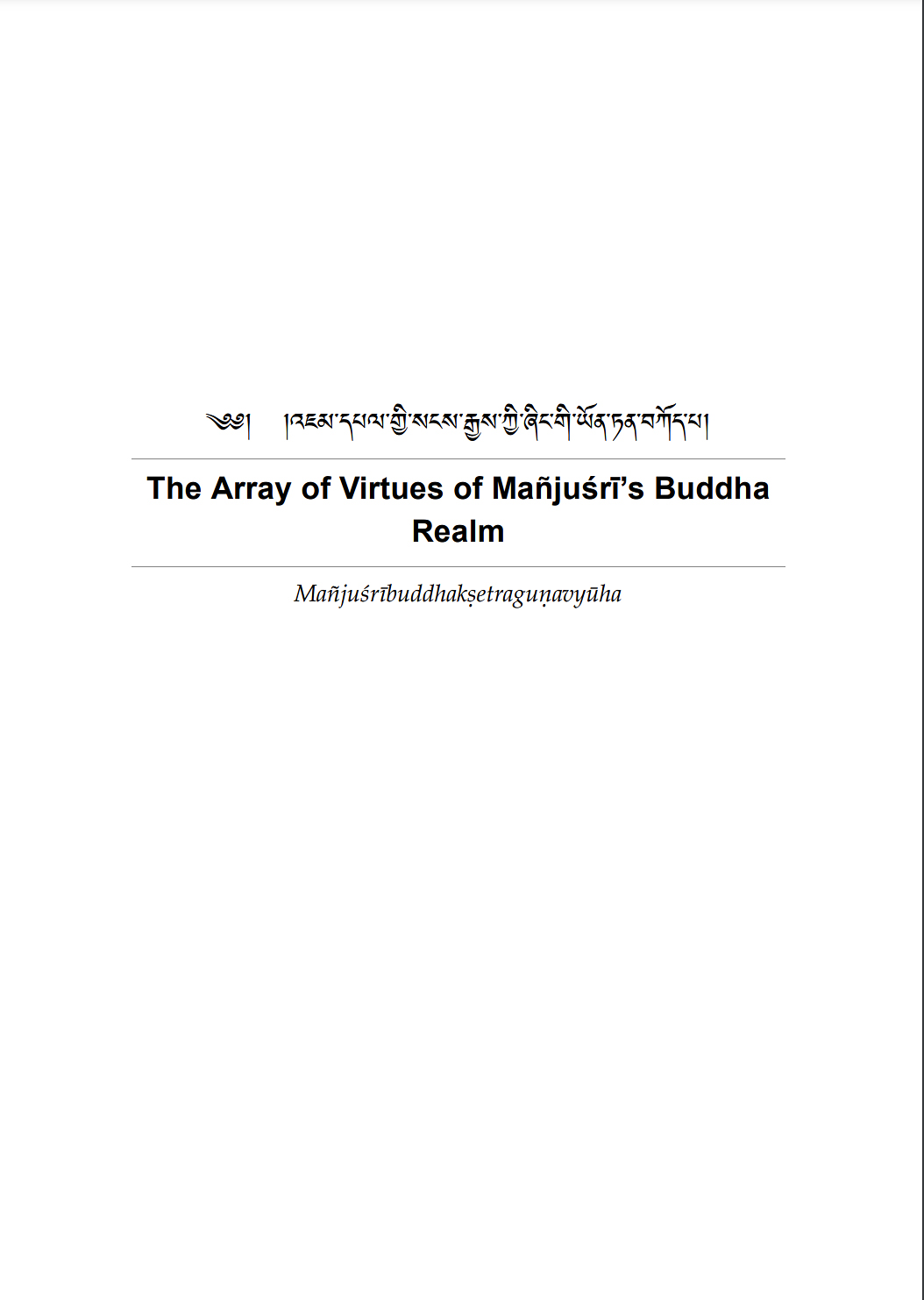
आर्यमञ्जुश्रीबुद्धक्षेत्रगुणव्यूहनाममहायानसूत्र
Mañjuśrībuddhakṣetraguṇavyūhasūtra
འཕགས་པ་འཇམ་དཔལ་གྱི་སངས་རྒྱས་ཀྱི་ཞིང་གི་ཡོན་ཏན་བཀོད་པ་ཞེས་བྱ་བ་ཐེག་པ་ཆེན་པོའི་མདོ།
'phags pa 'jam dpal gyi sangs rgyas kyi zhing gi yon tan bkod pa zhes bya ba theg pa chen po'i mdo
The Array of Virtues of the Mañjuśrī Buddha Realm (84000)
Text
Please note that many items in our library are simply pages that represent a detailed library catalog entry and citation of someone else's work, presentation, or performance. Read our General Disclaimer for more information.


Description
In this sūtra, the Buddha Śākyamuni explains the connection between the bodhisattvas' aspirations and the virtues of their future buddha realms. He describes the various qualities that help bodhisattvas bring their aspirations to fulfillment. After bodhisattvas arrive from all directions to hear his teachings on the virtues of the buddha realms, the Buddha Śākyamuni recounts the story of how Mañjuśrī first engendered the mind set on awakening. Finally, the Buddha reveals the extraordinariness of Mañjuśrī’s bodhisattva aspirations, and how they will contribute to the exceptional qualities of his future buddha realm. (Source: 84000)
Quoted in the aligned translations
Reference
Mañjuśrībuddhakṣetraguṇavyūhasūtra [आर्यमञ्जुश्रीबुद्धक्षेत्रगुणव्यूहनाममहायानसूत्र]. 'phags pa 'jam dpal gyi sangs rgyas kyi zhing gi yon tan bkod pa zhes bya ba theg pa chen po'i mdo [འཕགས་པ་འཇམ་དཔལ་གྱི་སངས་རྒྱས་ཀྱི་ཞིང་གི་ཡོན་ཏན་བཀོད་པ་ཞེས་བྱ་བ་ཐེག་པ་ཆེན་པོའི་མདོ།]. [The Array of Virtues of the Mañjuśrī Buddha Realm (84000)]. Translated by Amoghavajra, Śīlendrabodhi, Jinamitra, Ye shes sde, Śikṣānanda, Dharmarakṣa. Kangyur, RKTSK 59 http://www.rkts.org/cat.php?id=59&typ=1.
Interconnections
4 Full translations


Nepali translation of the Mañjuśrībuddhakṣetraguṇavyūhālāṅkārasūtra (The Prediction of Mañjuśrī's Attainment of Buddhahood) by Mīnabahādura Śākya

An English translation of the Mañjuśrībuddhakṣetraguṇavyūhasūtra by Timothy Hinkle. Published by 84000: Translating the Words of the Buddha.

An English translation of the Mañjuśrībuddhakṣetraguṇavyūhasūtra from the Chinese edition by Śikṣānanda; published in A Treasury of Mahāyāna Sūtras.
1 Scholarship

This landmark study is one of the most extensive single treatments of the bodhisattva Mañjuśrī in Western Buddhist scholarship. Lamotte opens by situating Mañjuśrī among the major figures of Mahāyāna and tantric Buddhism, examining his name and epithets (Mañjughoṣa, Mañjusvara, Vāgīśvara) as expressions of his role as embodiment of sacred eloquence and wisdom, and his standard iconography—the five-pointed crown, the sword that cuts through ignorance, the book containing all knowledge, and the lion mount. Drawing on Marcelle Lalou's earlier work, Lamotte develops a comparative argument tracing Mañjuśrī's mythological origins through the Gandharva king Pañcaśikha and the Brahmanical deity Kārttikeya, before proceeding through Mañjuśrī's canonical status as a tenth-stage bodhisattva, his eventual buddhahood and buddha-field, and his textual, iconographic, and cultic attestations across India, Central Asia, China (including an extended treatment of his cult at Mount Wutai), and Nepal. In building this account, Lamotte contains scholarship on a range of Mahāyāna sūtras associated with Mañjuśrī—including the Mañjuśrībuddhakṣetraguṇavyūhasūtra and the Mañjuśrīparinirvāṇasūtra—surveying their translation history and translating select passages. Originally conceived as part of Lamotte's unfinished second volume of his Histoire du bouddhisme indien, the piece was published independently when that larger project did not come to completion, and remains a foundational reference for later studies of Mañjuśrī and the cult of celestial bodhisattvas.
5 A topic of
Contains 22 of the 49 Sūtras of the Mahāratnakūṭa (or "Treasury") Sūtra, many translated for the first time in a Western language
This landmark study is one of the most extensive single treatments of the bodhisattva Mañjuśrī in Western Buddhist scholarship. Lamotte opens by situating Mañjuśrī among the major figures of Mahāyāna and tantric Buddhism, examining his name and epithets (Mañjughoṣa, Mañjusvara, Vāgīśvara) as expressions of his role as embodiment of sacred eloquence and wisdom, and his standard iconography—the five-pointed crown, the sword that cuts through ignorance, the book containing all knowledge, and the lion mount. Drawing on Marcelle Lalou's earlier work, Lamotte develops a comparative argument tracing Mañjuśrī's mythological origins through the Gandharva king Pañcaśikha and the Brahmanical deity Kārttikeya, before proceeding through Mañjuśrī's canonical status as a tenth-stage bodhisattva, his eventual buddhahood and buddha-field, and his textual, iconographic, and cultic attestations across India, Central Asia, China (including an extended treatment of his cult at Mount Wutai), and Nepal. In building this account, Lamotte contains scholarship on a range of Mahāyāna sūtras associated with Mañjuśrī—including the Mañjuśrībuddhakṣetraguṇavyūhasūtra and the Mañjuśrīparinirvāṇasūtra—surveying their translation history and translating select passages. Originally conceived as part of Lamotte's unfinished second volume of his Histoire du bouddhisme indien, the piece was published independently when that larger project did not come to completion, and remains a foundational reference for later studies of Mañjuśrī and the cult of celestial bodhisattvas.
Nepali translation of the Mañjuśrībuddhakṣetraguṇavyūhālāṅkārasūtra (The Prediction of Mañjuśrī's Attainment of Buddhahood) by Mīnabahādura Śākya
An English translation of the Mañjuśrībuddhakṣetraguṇavyūhasūtra by Timothy Hinkle. Published by 84000: Translating the Words of the Buddha.
An English translation of the Mañjuśrībuddhakṣetraguṇavyūhasūtra from the Chinese edition by Śikṣānanda; published in A Treasury of Mahāyāna Sūtras.