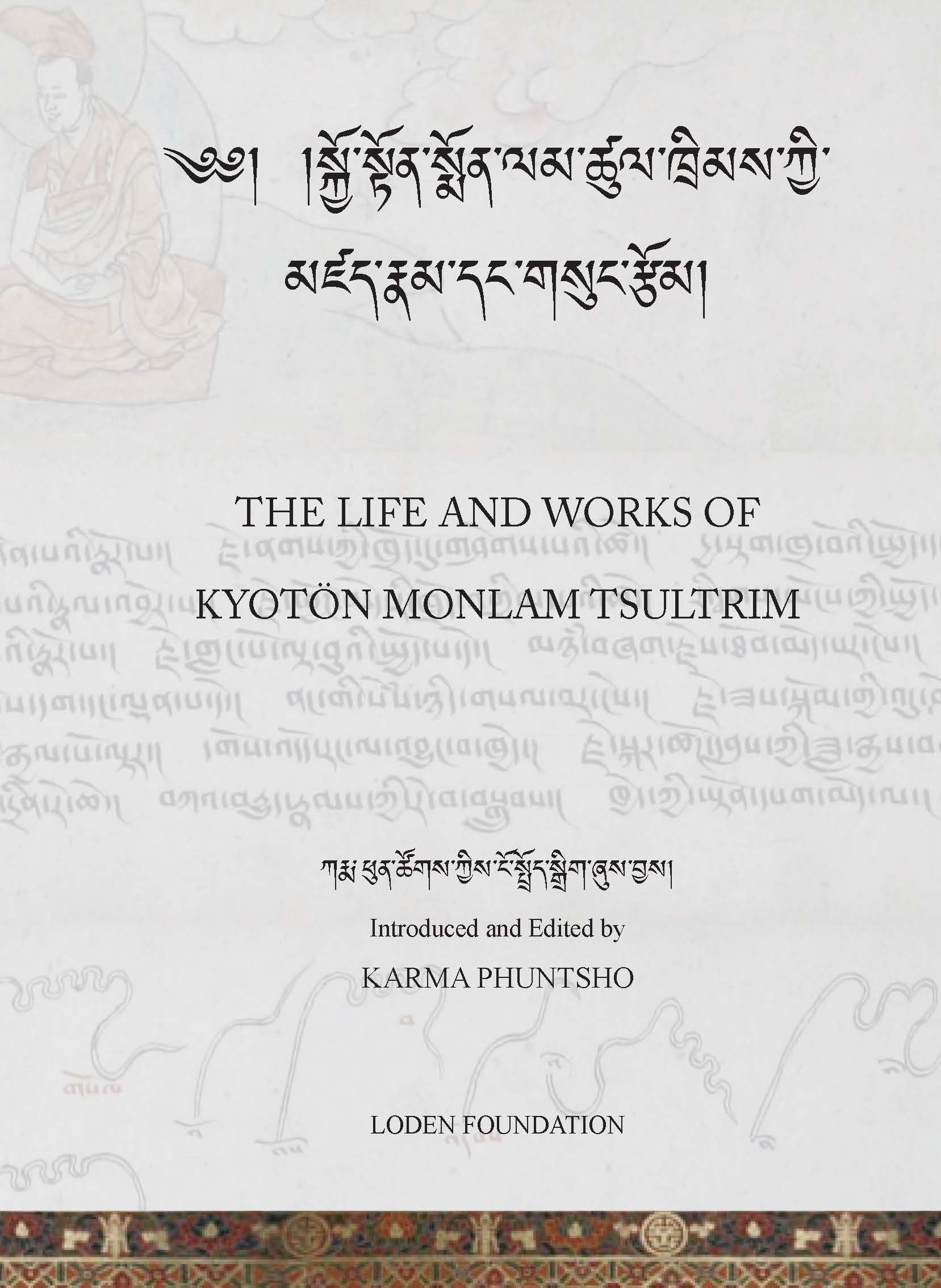
The Life and Works of Kyotön Monlam Tsultrim publishes the collected works of the early
Kadam master Kyoton in clear
Uchen (
dbu can) type based on the manuscripts in the Bka gdams gsung 'bum, which are very difficult to decipher in the old
Ume (
dbu med) scripts. The book contains many short works on buddha-nature and several other important subjects. It also includes a detailed introduction from Karma Phuntsho about the life and works of Kyotön. This publication was supported by Tsadra Foundation.
Kyotön Monlam Tsultrim, the abbot who led Narthang monastery at the peak of its history, was an illustrious figure of his time in Central Tibet. A resolute monk, a meditation master, a learned scholar, author, and public figure, he epitomized the high ideals, practices, and approaches of the Kadam school and championed its traditions of scriptural exegesis and meditation instructions. A Kadam luminary, he also left behind religious writings which hold great significance for Tibetan Buddhist scholarship and practice today.
The writings of Kyotön Monlam Tsultrim appear in volume 50 of the second batch and volume 61 of the third batch of the Collected Works of Kadam series published in 2007 and 2009 by Paltsek Bodyig Penying Zhibjugkhang and Sichuan People's Publishing House. (Source: Karma Phuntsho, Preface, page iii.)
You can download a digital copy of the book for free on the
Buddha-Nature website སྐྱོ་སྟོན་སྨོན་ལམ་ཚུལ་ཁྲིམས་ནི། བཀའ་གདམས་གཞུང་པའི་དགོན་སྡེ་ཆེན་པོ་དཔལ་སྣར་ཐང་གི་གདན་རབས་བརྒྱད་པ་ཡིན་ཅིང་། མཁས་པའི་ཡོན་ཏན་ཚུལ་དགུ་ཡིས་བརྒྱན་པ། ཇོ་བོ་བཀའ་གདམས་པའི་ཆོས་བརྒྱུད་གཞུང་པ་དང་མན་ངག་པ་གཉིས་ཀའི་རྩ་ལག་ཏུ་གྱུར་པ་སྟེ། གསན་ཡིག་ རྩོམ་ཆོས་དང་ ཉམས་ལེན་མཛད་རྗེས་སོགས་ལ་དཔག་ན་བོད་བརྒྱུད་ནང་བསྟན་སྤྱི་དང་། ལྷག་པར་བཀའ་གདམས་གཞུང་པ་དང་མན་ངག་པའི་ཆོས་ཚུལ་ལ་བཀའ་དྲིན་དང་ཕན་ནུས་ཤིན་ཏུ་ཆེ་བ་ཡིན།
སྐྱོ་སྟོན་གྱི་གསུང་རྩོམ་རིགས་ཉེ་ཆར་དཔལ་བརྩེགས་བོད་ཡིག་དཔེ་རྙིང་ཞིབ་འཇུག་ཁང་གི་འགོ་འདྲེན་ཐོག་ བོད་འབྲས་སྤུངས་དགོན་པའི་གནས་བཅུ་ལྷ་ཁང་ནས་ཡིག་རྙིང་མང་དུ་རྙེད་དེ་དཔར་བསྐྲུན་བྱས་པའི་གྲལ་དུ། བཀའ་གདམས་གསུང་འབུམ་ཕྱོགས་བསྒྲིགས་པོད་ ༥༠ ་པ་དང་ ༦༡ ་པའི་ཁྲོད་དུ་ཡོད་ཅིང་། དེ་ཡང་ཤེར་ཕྱིན་མངོན་རྟོགས་རྒྱན་གྱི་འགྲེལ་པ། ཆོས་འཆད་ཉན་བྱ་ཐབས། རྟེན་འབྲེལ་གྱི་རྣམ་བཞག་ མཆིམས་ནམ་མཁའ་གྲགས་ཀྱི་རྣམ་ཐར་སོགས་ཆོས་ཚན་ ༣༠ ཙམ་ཡོད་ལ། ཐེག་ཆེན་རྒྱུད་བླ་མའི་གདམས་པ། ཡེ་ཤེས་ཀྱི་བཞག་ས། འོད་གསོལ་སྙིང་པོའི་དོན་སོགས་བདེ་གཤེགས་སྙིང་པོ་དང་རྒྱུད་བླ་མ་དང་འབྲེལ་བའི་མན་ངག་དང་ཞལ་གདམས་རིགས་དུ་མ་ཡོད་པས། ད་ལམ་ཙཱ་འདྲ་ཚོགས་པའི་བདེ་གཤེགས་སྙིང་པོའི་དྲྭ་མཛོད་ཆོས་སྐོར་གྱི་ལྷན་ཐབས་སུ། སྔར་དབུ་མེད་ཡིག་རྙིང་ལ་ཡོད་པའི་དཔེ་ཆ་རྣམས། ད་ལྟ་ཀློག་སླ་བའི་ཆེད་དུ་དབུ་ཅན་གློག་ཡིག་ལ་ཕབ་ནས་ཞུས་སྒྲིག་བྱས་ཤིང་། དེབ་འདིར་སྐྱོ་སྟོན་པའི་རྣམ་ཐར་དང་གསུང་རྩོམ་གྱི་ངོ་སྤྲོད་དབྱིན་ཡིག་ཏུ་བྲིས་པ་བཅས་ཡོད།
You can download a digital copy of the book for free on the
Buddha-Nature website