| 🤓 Admin Zone 🛠️ hidden to non-admins | |
आर्यललितविस्तरनाममहायानसूत्र
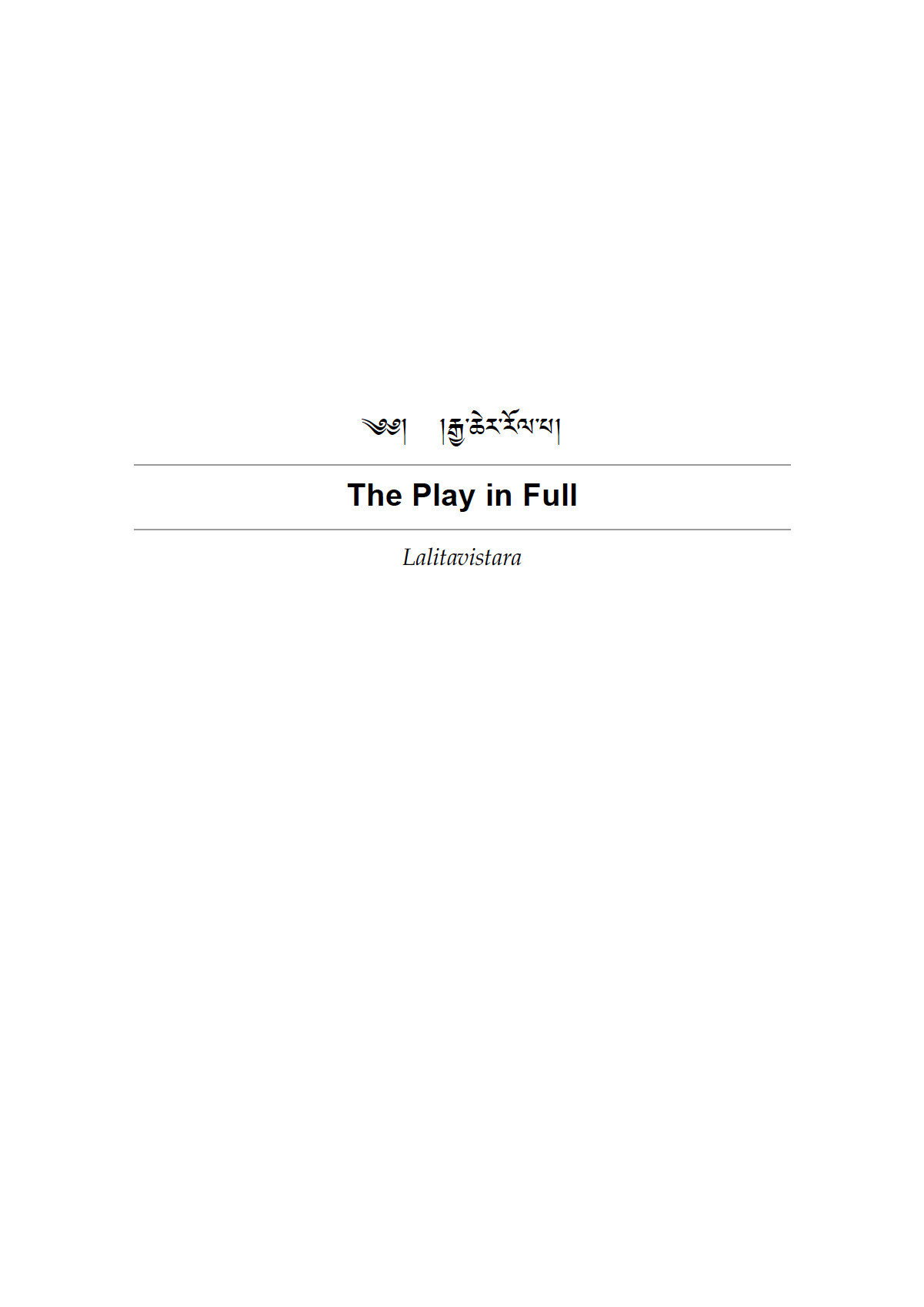
Lalitavistarasūtra
འཕགས་པ་རྒྱ་ཆེར་རོལ་པ་ཞེས་བྱ་བ་ཐེག་པ་ཆེན་པོའི་མདོ།
'phags pa rgya cher rol pa zhes bya ba theg pa chen po'i mdo
The Noble Great Vehicle Sūtra "The Play in Full" (84000)
Text
Please note that many items in our library are simply pages that represent a detailed library catalog entry and citation of someone else's work, presentation, or performance. Read our General Disclaimer for more information.


Description
The Play in Full tells the story of how the Buddha manifested in this world and attained awakening, as perceived from the perspective of the Great Vehicle. The sūtra, which is structured in twenty-seven chapters, first presents the events surrounding the Buddha’s birth, childhood, and adolescence in the royal palace of his father, king of the Śākya nation. It then recounts his escape from the palace and the years of hardship he faced in his quest for spiritual awakening. Finally the sūtra reveals his complete victory over the demon Māra, his attainment of awakening under the Bodhi tree, his first turning of the wheel of Dharma, and the formation of the very early saṅgha. (Source: 84000)
Quoted in the aligned translations
Reference
Lalitavistarasūtra [आर्यललितविस्तरनाममहायानसूत्र]. 'phags pa rgya cher rol pa zhes bya ba theg pa chen po'i mdo [འཕགས་པ་རྒྱ་ཆེར་རོལ་པ་ཞེས་བྱ་བ་ཐེག་པ་ཆེན་པོའི་མདོ།]. [The Noble Great Vehicle Sūtra "The Play in Full" (84000)]. Translated by Jinamitra, Dānaśīla, Munivarman, Ye shes sde, Divākara, Dharmarakṣa. Kangyur, RKTSK 95 http://www.rkts.org/cat.php?id=95&typ=1.
Interconnections
All 39Books 31Articles 4Classical Works 2Multimedia 2
3 Recensions

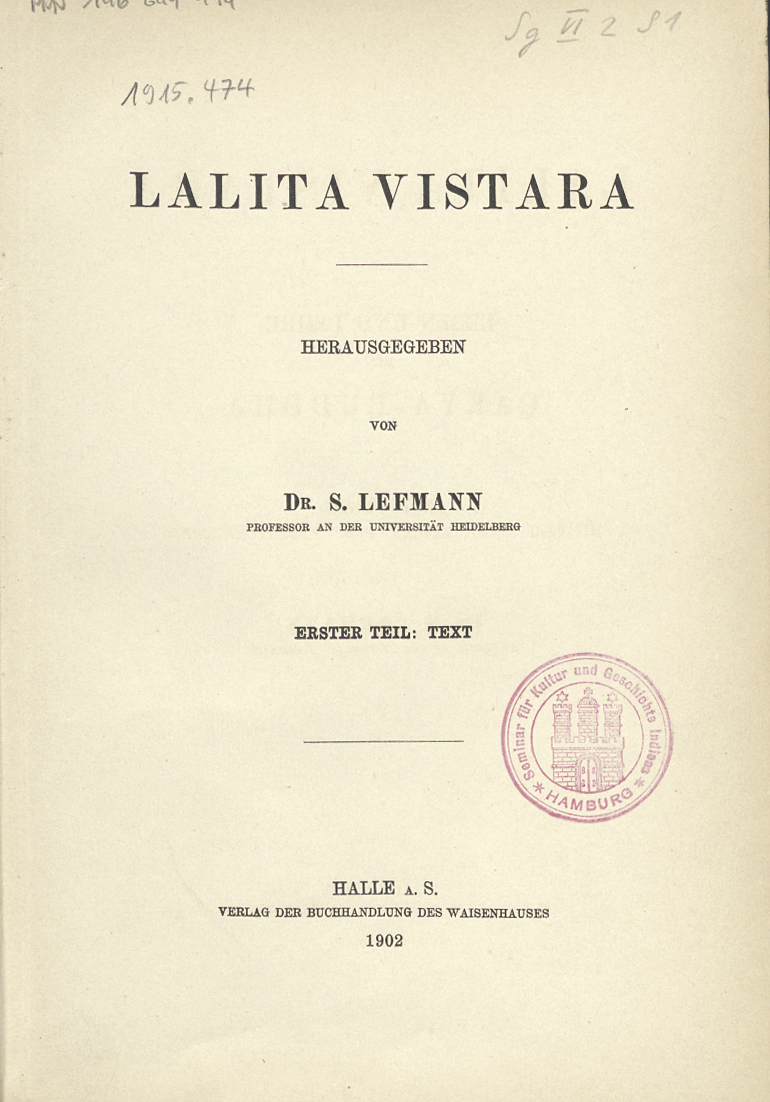
A Sanskrit critical edition of the Lalitavistarasūtra edited by Salomon Lefmann, 1902.

A critical Sanskrit edition of the Lalitavistarasūtra, edited by P. L. Vaidya. Published by The Mithila Institute of Post-Graduate Studies and Research in Sanskrit Learning, 1958.

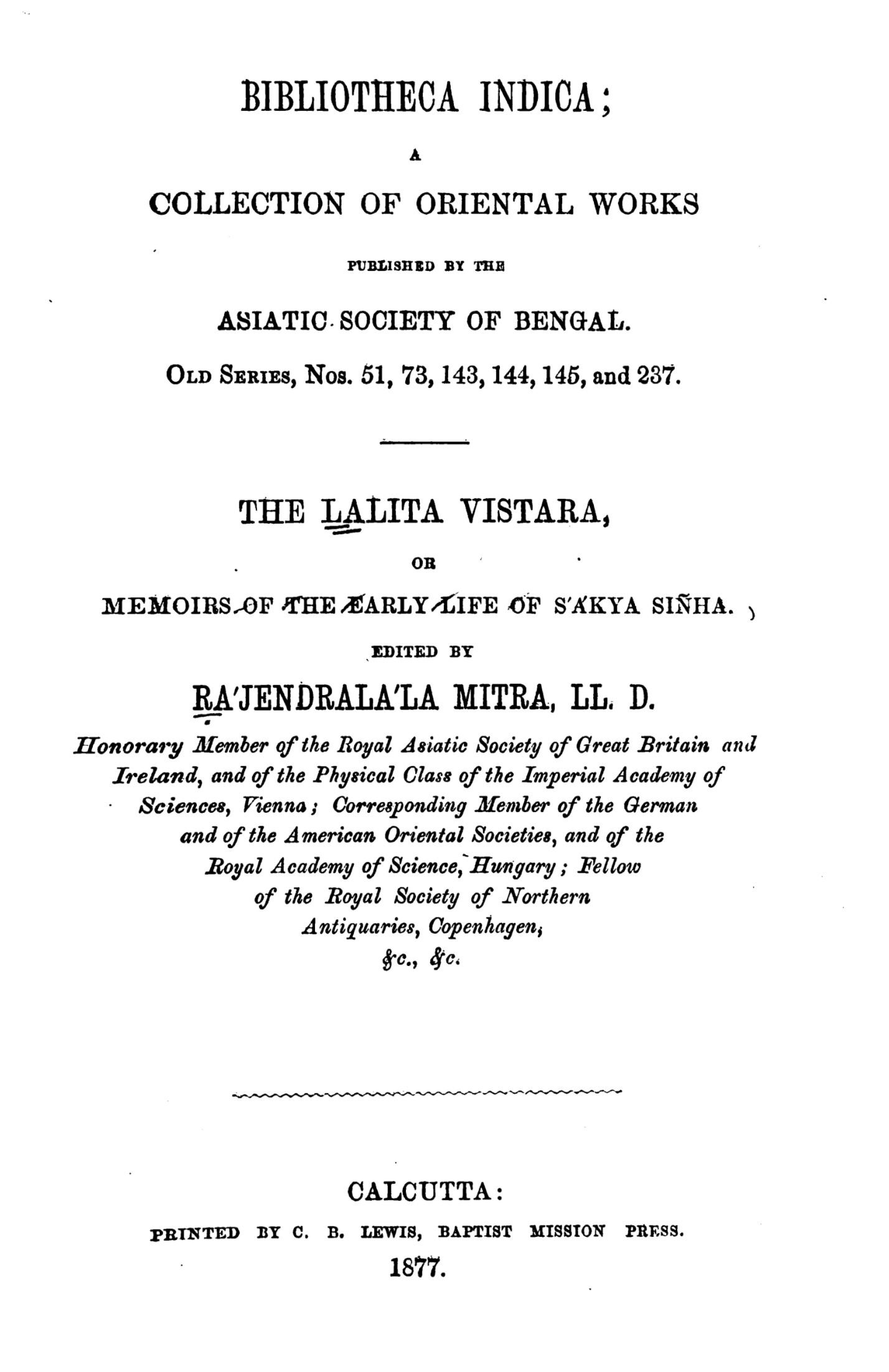
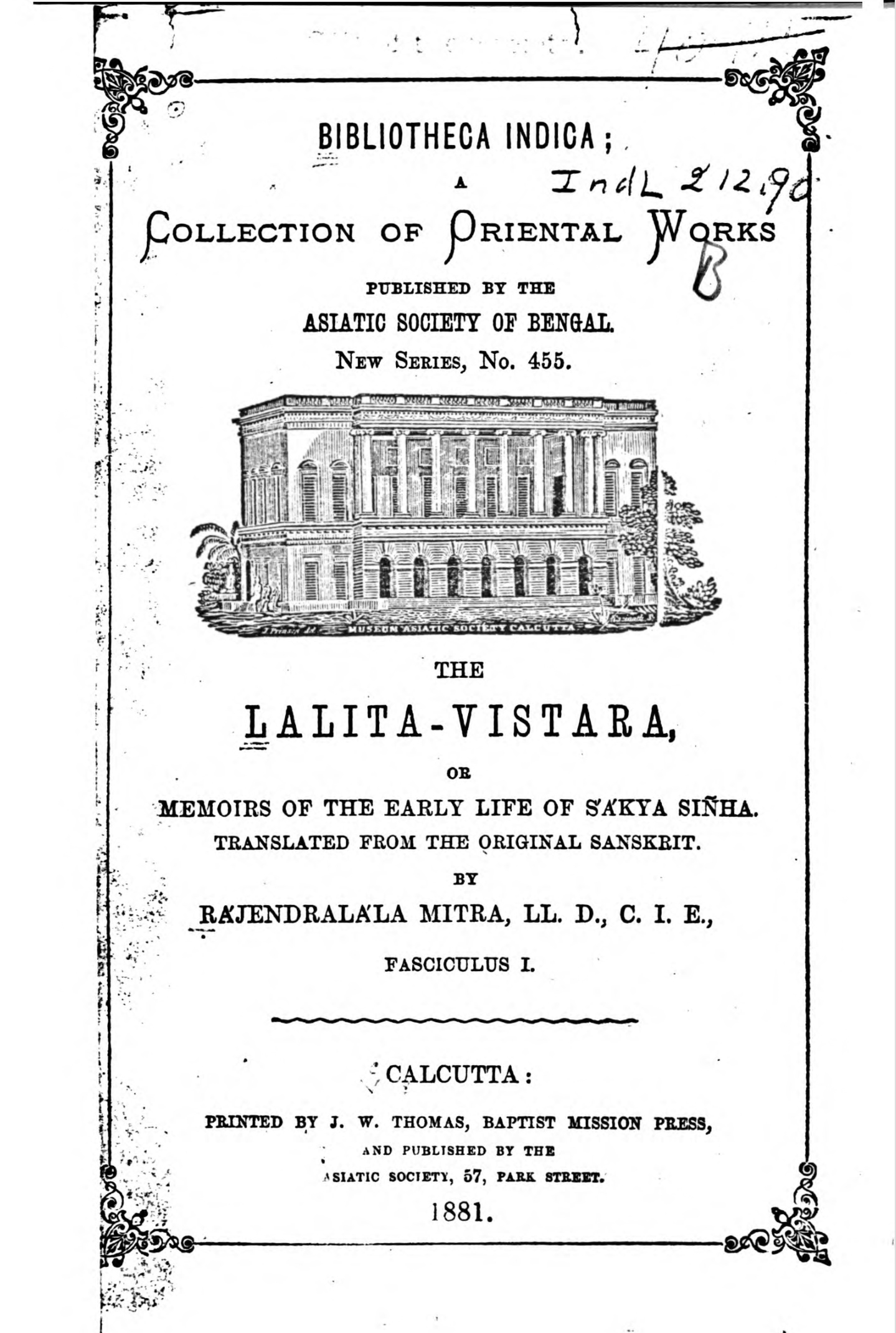
A Sanskrit critical edition of the Lalitavistarasūtra chapters 1 to 15, edited by Rajendralal Mitra.
11 Full translations

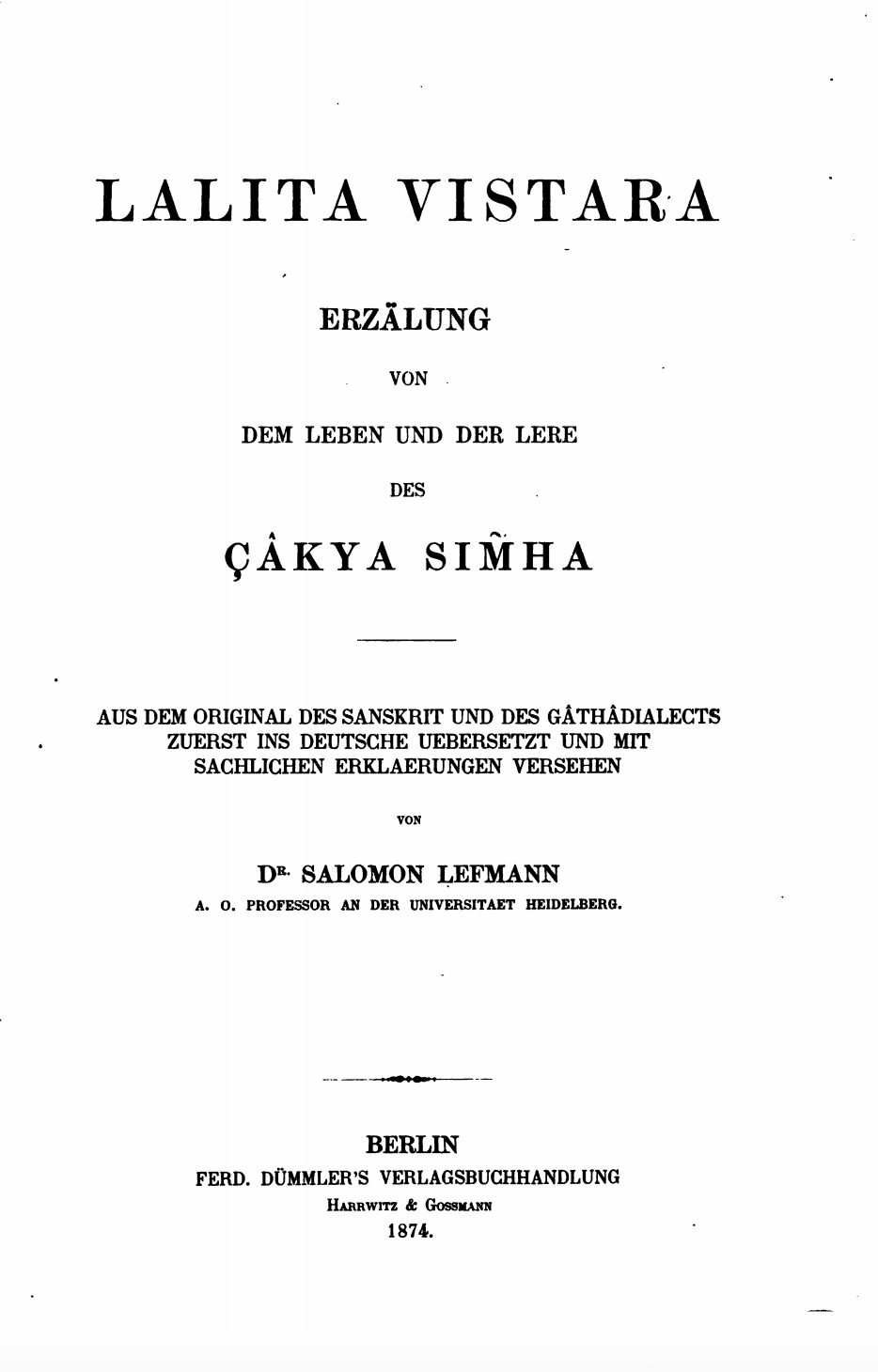
A German translation of the Lalitavistarasūtra from the original Sanskrit and the gâthâdialect, by Salomon Lefmann

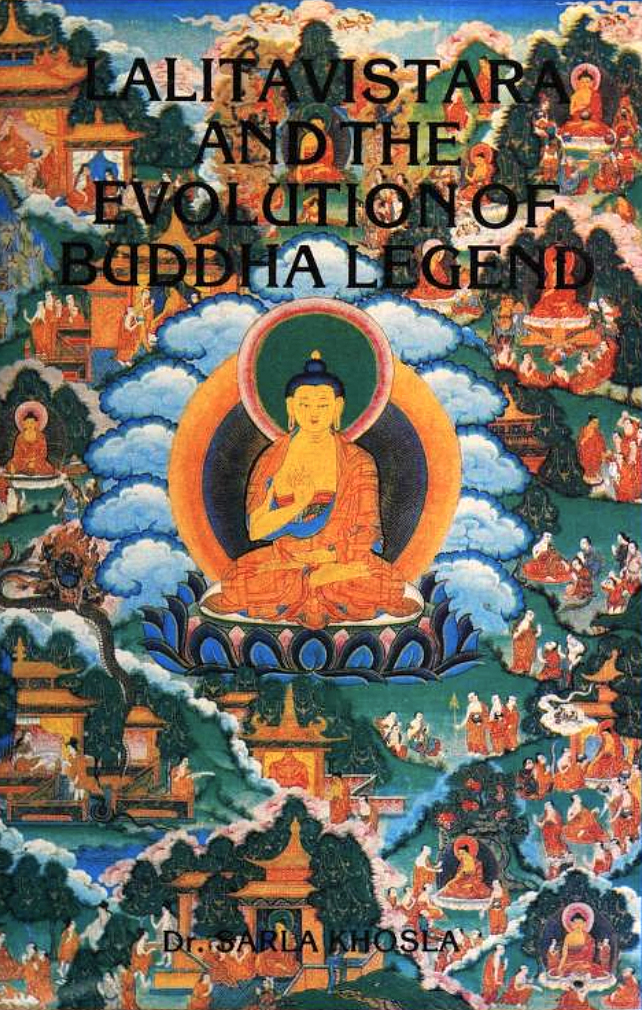
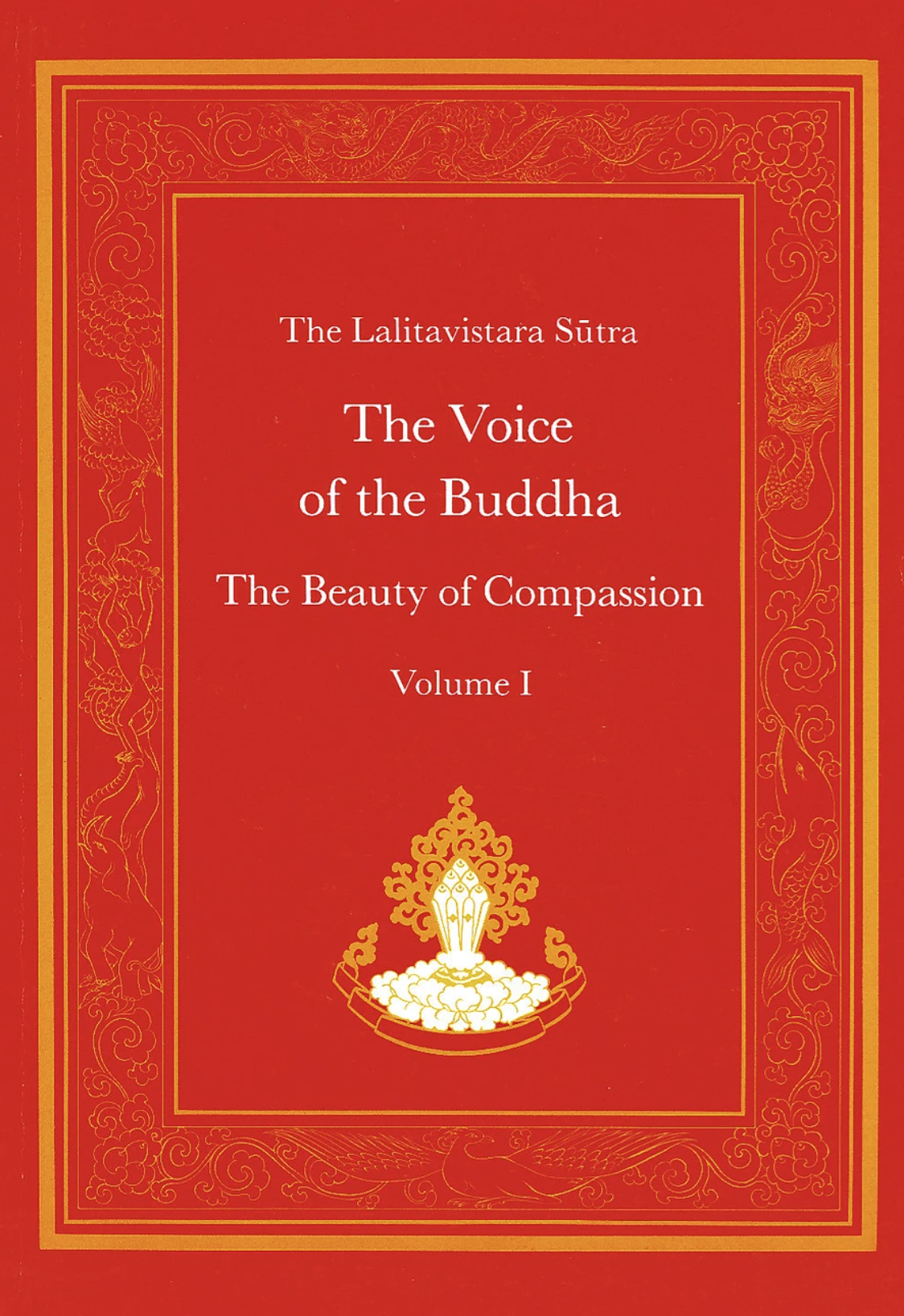
Lalitavistara once the holy book of Tibetans, deals with the life of Buddha in Mahayana. the difference of life-events of the Teacher between this and other works has been brought forth by the author Dr. Sarla Khosla with great efforts. Out of stray references she has woven the political and social conditions of the era. All the Mahayana aspects of Buddhism found in this work have also been highlighted. In Mara Legend, the author has found the different prevailing religious sects, which has perhaps been done for the first time in the history of Buddhism. (Source: back cover)

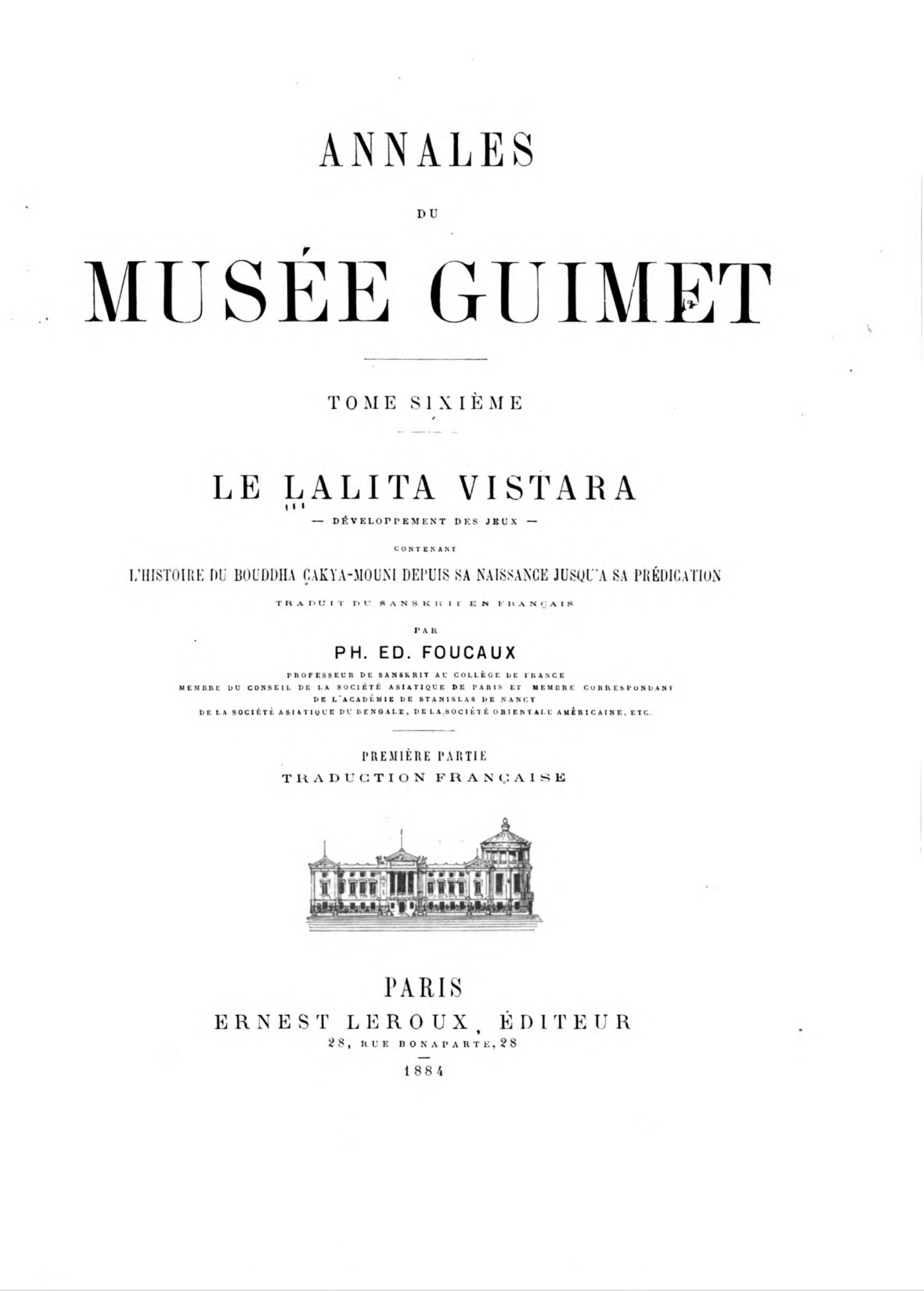
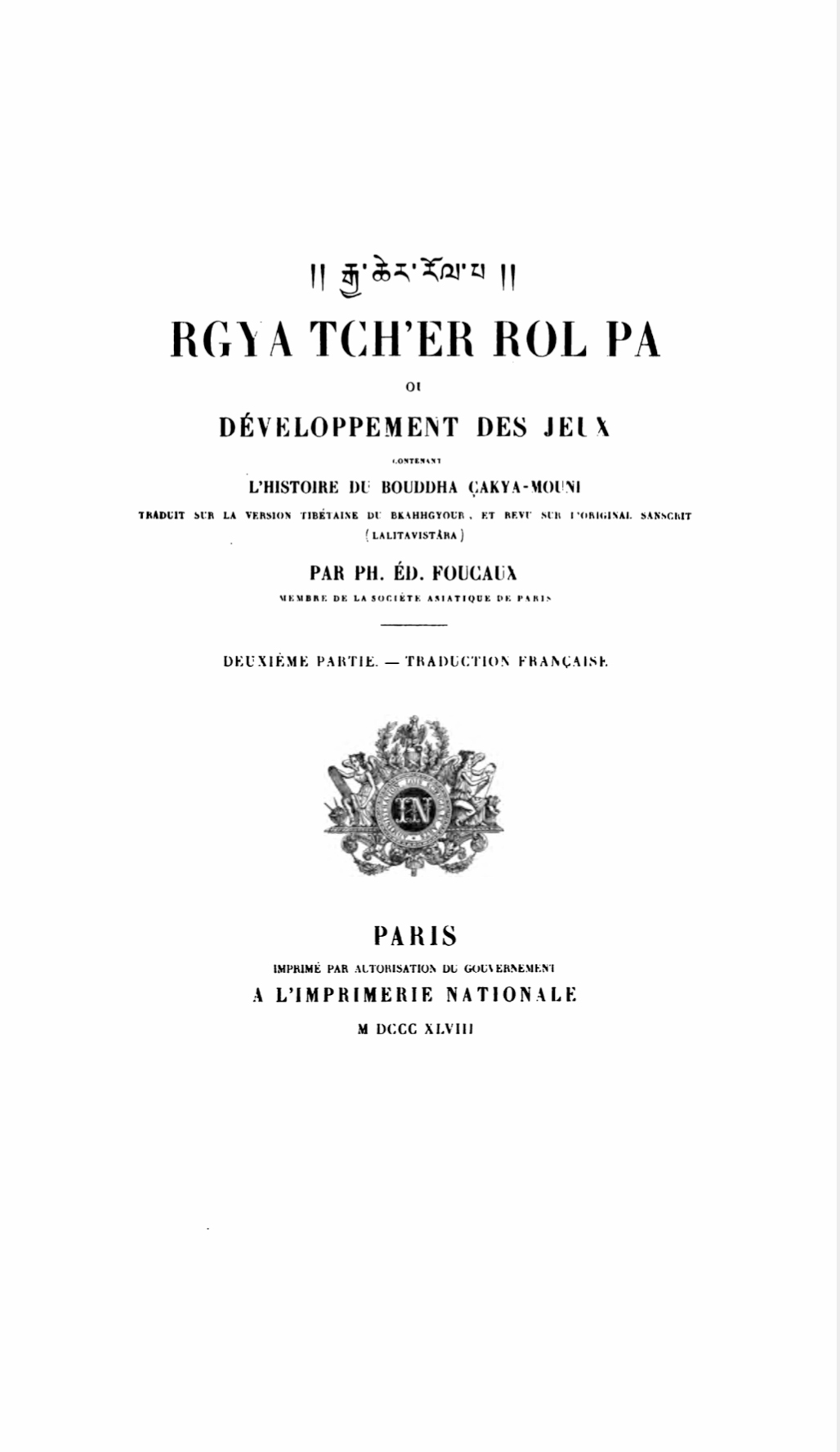
Part one of a complete translation of the Lalitavistarasūtra from Sanskrit and Tibetan into French by Philippe Edouard Foucaux

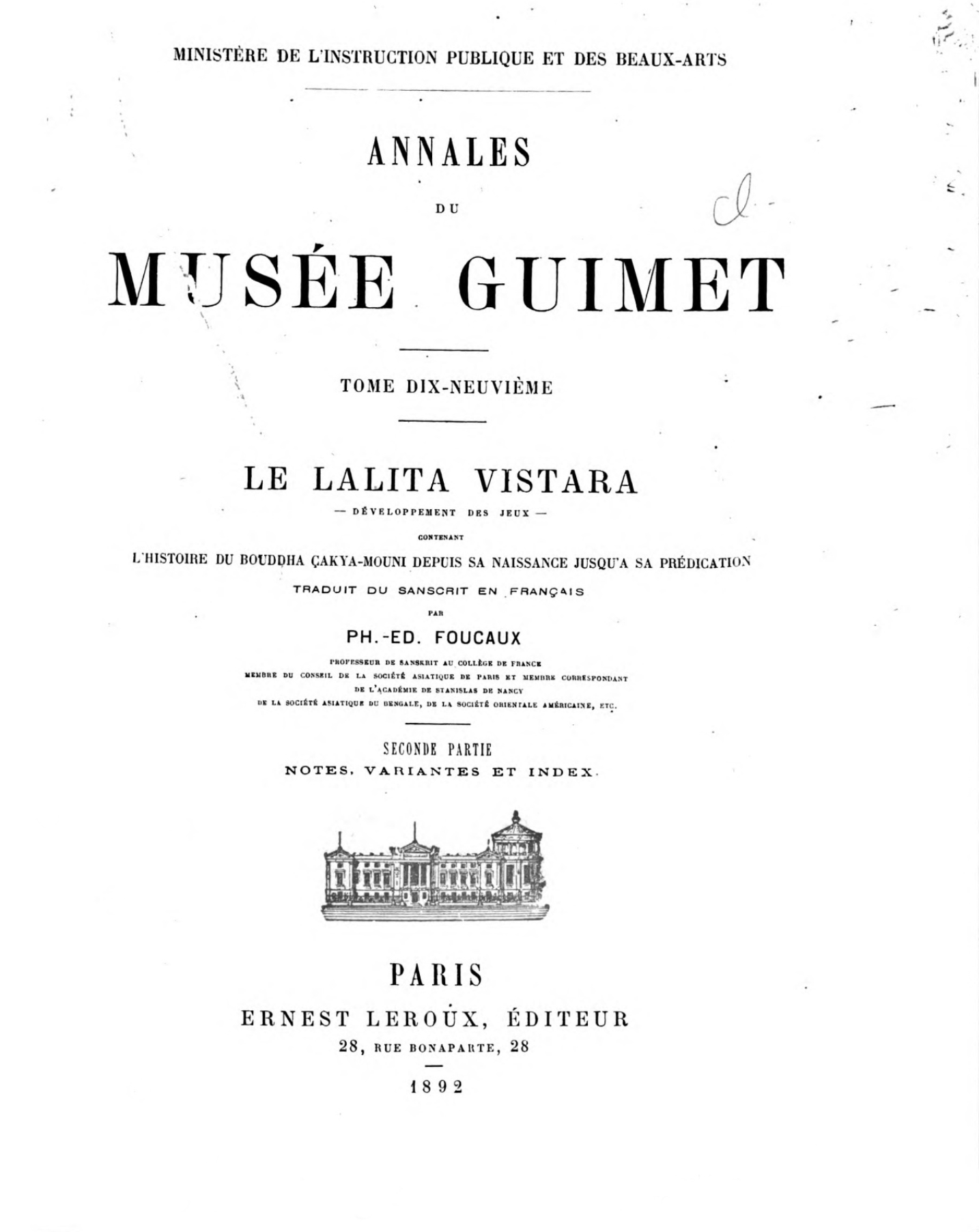
Part two of a complete translation of the Lalitavistarasūtra from Sanskrit and Tibetan into French by Philippe Edouard Foucaux; contains notes, variants of the Sanskrit text; and an index.

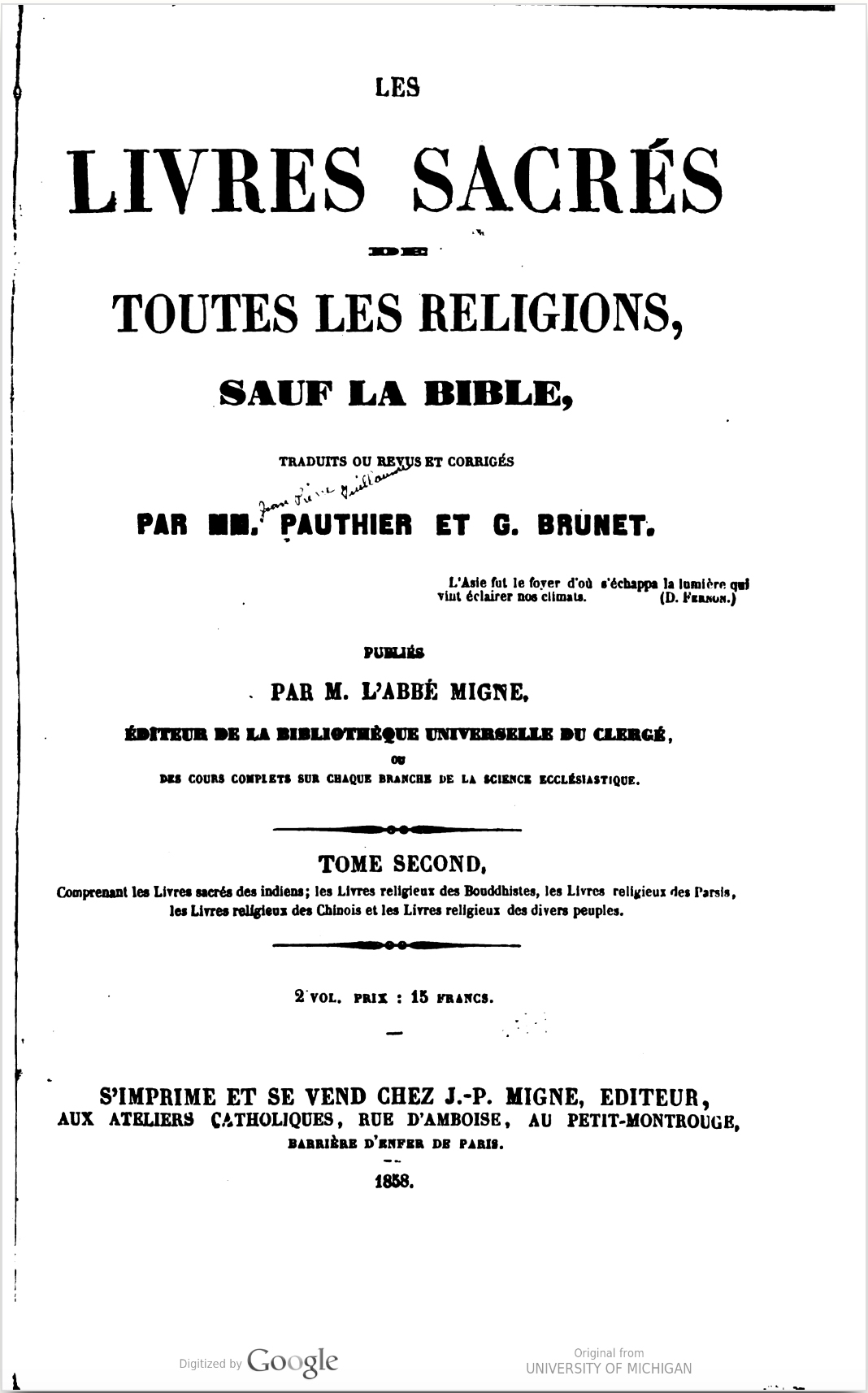
This is the second volume of a two-volume anthology assembled by Jean-Pierre Guillaume Pauthier and Pierre Gustave Brunet for the prolific Catholic publisher Abbé Jacques-Paul Migne, as part of his broader project of producing encyclopedic reference collections for the French clergy. True to its title — "The Sacred Books of All Religions, Except the Bible"—the volume surveys non-Christian scripture across several traditions, organized into five sections: the sacred books of the Indians (p. 7), the religious books of the Buddhists (p. 473), the religious books of the Parsis/Zoroastrians (p. 714), the religious books of the Chinese (p. 781), and the religious books of various other peoples (p. 796).
The Buddhist section is of particular note for Tibetan and Buddhist studies: it reprints Philippe Édouard Foucaux's pioneering 1847–48 French translation of the Lalitavistara (Tib. Rgya tch'er rol pa), including Foucaux's own original preface, in which he identifies himself as the first person to translate the Lalitavistara into a European language. Rather than presenting an independent Pauthier–Brunet rendering, this section functions as a republication of Foucaux's translation within Migne's larger comparative-religion compendium—making the volume a secondary vehicle for Foucaux's work rather than a fresh scholarly translation in its own right.

This is Philippe Édouard Foucaux's French translation of the Lalitavistarasūtra, published in vol. 2 of Les livres sacrés de toutes les religions, sauf la bible.

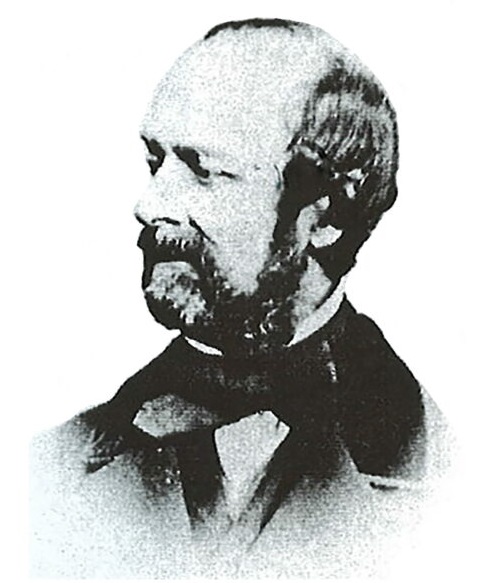
This volume is the French translation portion of the first published European rendering of the Lalitavistara—the Mahāyāna narrative of the Buddha's life from his descent from Tuṣita heaven through his first sermon at Sarnath, known in Tibetan as the Rgya cher rol pa ("The Play in Full"). It was produced by Philippe Édouard Foucaux (1811–1894), a student of Eugène Burnouf who took up Tibetan studies under the influence of Csoma de Kőrös and went on to become the first professor of Tibetan in Europe, holding a newly created chair at the École des langues orientales in Paris.
Foucaux based his translation on the Tibetan Kangyur text but cross-checked it against the Sanskrit original, making this an early example of comparative Tibetan-Sanskrit philological method applied to a Buddhist scripture in the West. The work was issued in two parts: the Tibetan text itself appeared first (Paris: Imprimerie Royale, 1847), followed by this French translation volume (Paris: Imprimerie Nationale, 1848). Foucaux would later return to the Lalitavistara directly from the Sanskrit, producing a second, Sanskrit-based French translation decades later (Le Lalita Vistara, Annales du Musée Guimet, 1884–1892)—making this 1847–48 edition his earlier, Tibetan-based pass at the same text.

An English translation of the Lalitavistarasūtra chapters 1 to 15 by Rajendralal Mitra.

An English translation of the Lalitavistarasūtra by the Dharmacakra Translation Committee. Published by 84000: Translating the Words of the Buddha.

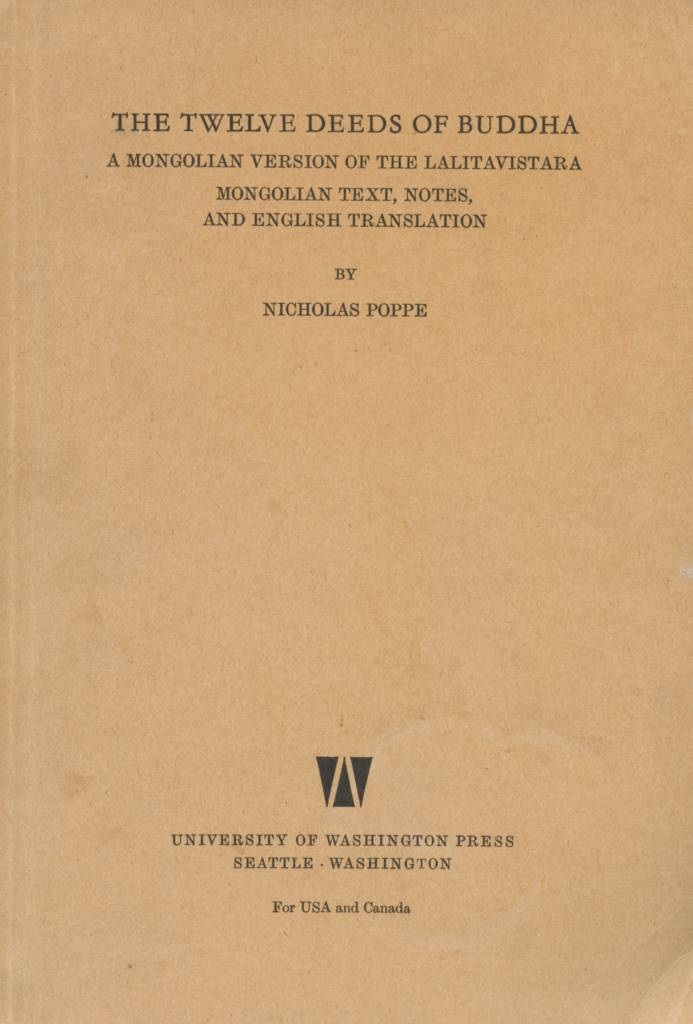
A Mongolian version of the Lalitavistarasūtra. Includes the Mongolian text, notes, and an English translation by Nicholas Poppe.

An English translation of the Lalitavistarasūtra by Gwendolyn Bays from Edouard Foucaux's French; corrected with the Tibetan and the Sanskrit original.
1 Classical commentaries

Verse work in praise of the life of Śākyamuni Buddha. Written by the First Dalai Lama Gedun Drubpa (1391–1474). (Source: BDRC)
A eulogy for the deeds of Śākyamuni, based on his biography described in the Lalitavistarasūtra. (Source: AIBS)
5 Scholarship
A Sanskrit critical edition of the Lalitavistarasūtra edited by Salomon Lefmann, 1902.

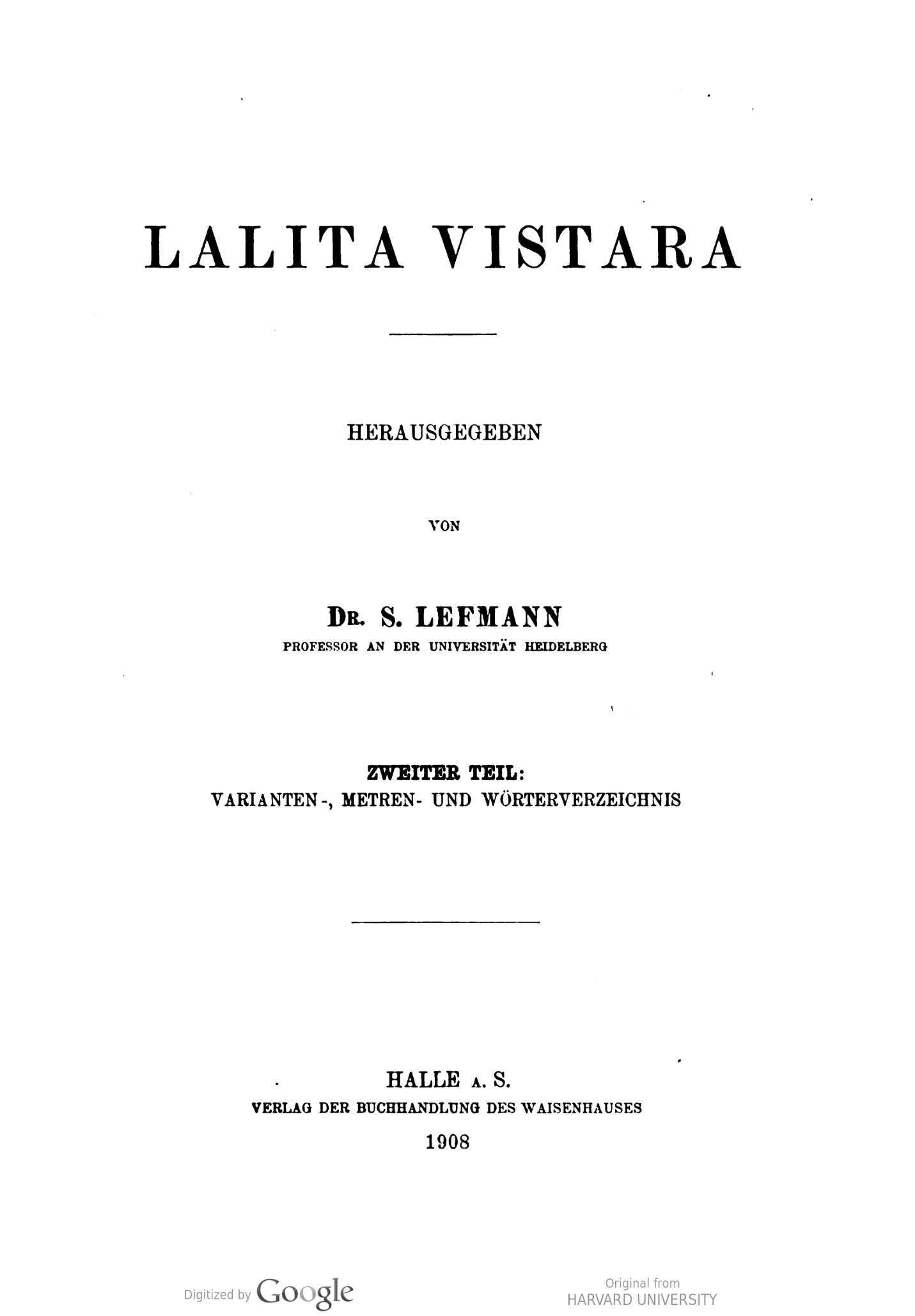
Part two of a Sanskrit critical edition of the Lalitavistarasūtra edited by Salomon Lefmann in 1902. Part 2 contains variants, meters, and dictionary. Part 1 contains the Sanskrit text.
A critical Sanskrit edition of the Lalitavistarasūtra, edited by P. L. Vaidya. Published by The Mithila Institute of Post-Graduate Studies and Research in Sanskrit Learning, 1958.
A Sanskrit critical edition of the Lalitavistarasūtra chapters 1 to 15, edited by Rajendralal Mitra.

In "Über den Lalita Vistara," Hermann Oldenberg examines the relationship between the Lalita Vistara—the well-known northern Buddhist biography of the Buddha—and the older biographical material embedded in the Pāli canon. He argues that the Pāli canon originally contained no continuous life of the Buddha, only scattered biographical fragments woven into doctrinal and monastic-rule narratives, along with a handful of old, spare "Buddha songs" preserved in texts like the Sutta-nipāta.
Oldenberg proposes that the Lalita Vistara represents the crystallization of these older songs and narrative fragments into a continuous "Buddha epic"—comparable to how the Iliad or Nibelungenlied grew from individual songs — but with the difference that the underlying Pāli sources remain directly recoverable for comparison. Through detailed textual parallels, he shows that a substantial layer of the Lalita Vistara's prose closely reproduces old Pāli tradition, while its metrical (gāthā) portions largely reflect much later, Sanskritized compositional layers built on an underlying Prākrit. An appendix offers a parallel passage from the Mahāsaccakasutta for comparison with the Lalita Vistara.
1 Interviews

Catherine Dalton, one of the translators from the Dharmachakra Translation Committee, shares about the life and deeds of the Buddha in "The Play in Full."
Catherine and her colleagues translated "The Play in Full" from Tibetan into English under a grant offered by 84000: Translating the Words of the Buddha (84000.co).
To read the text "The Play in Full" in English, visit https://84000.co/translation/toh95?toh=toh95&left=open%3Atoc&right=closed%3Aendnotes&main=open%3Acompare
Date: May 12, 2013
18 A topic of
Verse work in praise of the life of Śākyamuni Buddha. Written by the First Dalai Lama Gedun Drubpa (1391–1474). (Source: BDRC)
A eulogy for the deeds of Śākyamuni, based on his biography described in the Lalitavistarasūtra. (Source: AIBS)
Catherine Dalton, one of the translators from the Dharmachakra Translation Committee, shares about the life and deeds of the Buddha in "The Play in Full."
Catherine and her colleagues translated "The Play in Full" from Tibetan into English under a grant offered by 84000: Translating the Words of the Buddha (84000.co).
To read the text "The Play in Full" in English, visit https://84000.co/translation/toh95?toh=toh95&left=open%3Atoc&right=closed%3Aendnotes&main=open%3Acompare
Date: May 12, 2013
A German translation of the Lalitavistarasūtra from the original Sanskrit and the gâthâdialect, by Salomon Lefmann
A Sanskrit critical edition of the Lalitavistarasūtra edited by Salomon Lefmann, 1902.
Part two of a Sanskrit critical edition of the Lalitavistarasūtra edited by Salomon Lefmann in 1902. Part 2 contains variants, meters, and dictionary. Part 1 contains the Sanskrit text.
A critical Sanskrit edition of the Lalitavistarasūtra, edited by P. L. Vaidya. Published by The Mithila Institute of Post-Graduate Studies and Research in Sanskrit Learning, 1958.
Lalitavistara once the holy book of Tibetans, deals with the life of Buddha in Mahayana. the difference of life-events of the Teacher between this and other works has been brought forth by the author Dr. Sarla Khosla with great efforts. Out of stray references she has woven the political and social conditions of the era. All the Mahayana aspects of Buddhism found in this work have also been highlighted. In Mara Legend, the author has found the different prevailing religious sects, which has perhaps been done for the first time in the history of Buddhism. (Source: back cover)
Part one of a complete translation of the Lalitavistarasūtra from Sanskrit and Tibetan into French by Philippe Edouard Foucaux
Part two of a complete translation of the Lalitavistarasūtra from Sanskrit and Tibetan into French by Philippe Edouard Foucaux; contains notes, variants of the Sanskrit text; and an index.
This is the second volume of a two-volume anthology assembled by Jean-Pierre Guillaume Pauthier and Pierre Gustave Brunet for the prolific Catholic publisher Abbé Jacques-Paul Migne, as part of his broader project of producing encyclopedic reference collections for the French clergy. True to its title — "The Sacred Books of All Religions, Except the Bible"—the volume surveys non-Christian scripture across several traditions, organized into five sections: the sacred books of the Indians (p. 7), the religious books of the Buddhists (p. 473), the religious books of the Parsis/Zoroastrians (p. 714), the religious books of the Chinese (p. 781), and the religious books of various other peoples (p. 796).
The Buddhist section is of particular note for Tibetan and Buddhist studies: it reprints Philippe Édouard Foucaux's pioneering 1847–48 French translation of the Lalitavistara (Tib. Rgya tch'er rol pa), including Foucaux's own original preface, in which he identifies himself as the first person to translate the Lalitavistara into a European language. Rather than presenting an independent Pauthier–Brunet rendering, this section functions as a republication of Foucaux's translation within Migne's larger comparative-religion compendium—making the volume a secondary vehicle for Foucaux's work rather than a fresh scholarly translation in its own right.
This is Philippe Édouard Foucaux's French translation of the Lalitavistarasūtra, published in vol. 2 of Les livres sacrés de toutes les religions, sauf la bible.
This volume is the French translation portion of the first published European rendering of the Lalitavistara—the Mahāyāna narrative of the Buddha's life from his descent from Tuṣita heaven through his first sermon at Sarnath, known in Tibetan as the Rgya cher rol pa ("The Play in Full"). It was produced by Philippe Édouard Foucaux (1811–1894), a student of Eugène Burnouf who took up Tibetan studies under the influence of Csoma de Kőrös and went on to become the first professor of Tibetan in Europe, holding a newly created chair at the École des langues orientales in Paris.
Foucaux based his translation on the Tibetan Kangyur text but cross-checked it against the Sanskrit original, making this an early example of comparative Tibetan-Sanskrit philological method applied to a Buddhist scripture in the West. The work was issued in two parts: the Tibetan text itself appeared first (Paris: Imprimerie Royale, 1847), followed by this French translation volume (Paris: Imprimerie Nationale, 1848). Foucaux would later return to the Lalitavistara directly from the Sanskrit, producing a second, Sanskrit-based French translation decades later (Le Lalita Vistara, Annales du Musée Guimet, 1884–1892)—making this 1847–48 edition his earlier, Tibetan-based pass at the same text.
An English translation of the Lalitavistarasūtra chapters 1 to 15 by Rajendralal Mitra.
A Sanskrit critical edition of the Lalitavistarasūtra chapters 1 to 15, edited by Rajendralal Mitra.
An English translation of the Lalitavistarasūtra by the Dharmacakra Translation Committee. Published by 84000: Translating the Words of the Buddha.
A Mongolian version of the Lalitavistarasūtra. Includes the Mongolian text, notes, and an English translation by Nicholas Poppe.
An English translation of the Lalitavistarasūtra by Gwendolyn Bays from Edouard Foucaux's French; corrected with the Tibetan and the Sanskrit original.
In "Über den Lalita Vistara," Hermann Oldenberg examines the relationship between the Lalita Vistara—the well-known northern Buddhist biography of the Buddha—and the older biographical material embedded in the Pāli canon. He argues that the Pāli canon originally contained no continuous life of the Buddha, only scattered biographical fragments woven into doctrinal and monastic-rule narratives, along with a handful of old, spare "Buddha songs" preserved in texts like the Sutta-nipāta.
Oldenberg proposes that the Lalita Vistara represents the crystallization of these older songs and narrative fragments into a continuous "Buddha epic"—comparable to how the Iliad or Nibelungenlied grew from individual songs — but with the difference that the underlying Pāli sources remain directly recoverable for comparison. Through detailed textual parallels, he shows that a substantial layer of the Lalita Vistara's prose closely reproduces old Pāli tradition, while its metrical (gāthā) portions largely reflect much later, Sanskritized compositional layers built on an underlying Prākrit. An appendix offers a parallel passage from the Mahāsaccakasutta for comparison with the Lalita Vistara.