| 🤓 Admin Zone 🛠️ hidden to non-admins | |


Description


In this two-part teaching hosted by Siddhartha's Intent, Dzongsar Khyentse Rinpoche explores The Good Eon Sutra, a vast Mahayana text prophesying one thousand buddhas appearing in our current era. He examines why this age is considered "fortunate"—not because of worldly peace, but because of the availability of profound teachings. Rinpoche illuminates the sutra's radical invitation to see ourselves as buddhas-in-the-making, navigates complex bodhisattva practices including authentic compassion and skillful means, and reveals how these ancient texts offer wisdom that transcends ordinary logic. Throughout both sessions, he encourages approaching these teachings with curiosity rather than academic pressure, suggesting that even brief encounters can plant seeds of transformation.
Part I:
Dzongsar Khyentse Rinpoche introduces The Good Eon Sutra and its prophecy of one thousand buddhas in our current age. He explores the Buddhist concept of kalpa (vast time periods), examines Bodhisattva Supreme Joy's seventeen questions about mastering skillful means and understanding others' minds, and reveals the Mahayana path's "out of the box" invitation to view ourselves as buddhas-in-the-making rather than limited beings.
Part II:
In the second session, Dzongsar Khyentse Rinpoche examines the practical challenges of bodhisattva practice—maintaining authentic confidence and practicing compassion without hierarchy between helper and helped. He explores how samadhi (meditative absorption) allows practitioners to navigate these obstacles, details the diverse origins of the thousand buddhas and the simple acts that began their paths, and emphasizes approaching sacred texts with open curiosity rather than scholarly pressure.
The sūtra's setting and content: The text is framed as a discourse Śākyamuni delivered near Vaiśālī at the request of a bodhisattva named Promodya Rāja, on the subject of the six (and sometimes ten) pāramitās—the perfections culminating in nirvāṇa. After lengthy doctrinal exposition (leaves 4–150), the bulk of the work catalogs 1,005 buddhas said to appear within this fortunate eon—four in the past, Śākyamuni as the present, and 1,000 more to come, beginning with Maitreya. For each buddha, sixteen standardized details are given (birthplace, lineage, parents, chief disciples, size of his assembly, lifespan, and so on). Das translates these entries in full for the first six buddhas of the list (Krakuchanda, Kanaka Muni, Kāśyapa, Śākyamuni, Maitreya, and Dhṛti), then summarizes that the pattern continues for the rest.
Closing sections: He notes the final portion of the text (leaves 459–547) recounts how each of these buddhas first formed the resolve for enlightenment in past lives, and closes with reflections on the merit of devotion to a buddha.
Appended note: Das adds a bibliographic note on the physical manuscript he consulted—a worm-eaten old copy in the Asiatic Society's library, compared against a cleaner block-print edition (from 1726 CE woodblocks) owned by Sir Charles Elliott—and describes the illustrated title page, which depicts Śākyamuni and Maitreya, using their iconography to muse on stages of spiritual development and a fanciful comparison between Buddhism and Christianity.
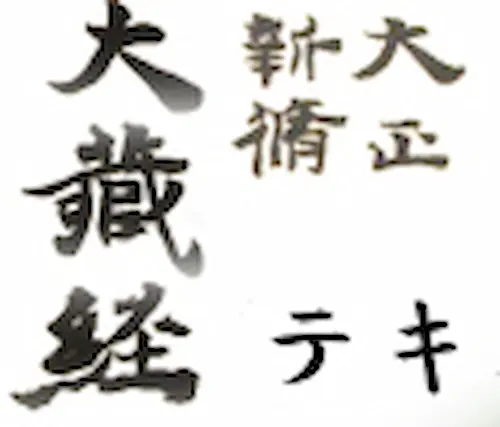
In addition to the fragment mentioned above, we have been fortunate to be able to identify a second new fragment of the lost translation in the collection of the Taito City Calligraphy Museum (台東区立書道博物館) in Tokyo.
According to Chu Sanzang Jiji (出三藏記集), as well as other catalogues, the BKS had been translated twice (if Buddhanāma-sūtras and T.649 *Sarvadharmanaya[viniścaya]-nirdeśa-sūtra 觀察諸法行經3 are not included); the first version by Dharmarakṣa (3rd–4th century) and the second by Kumārajīva (344–411?[4]). While the Dharmarakṣa's translation has been preserved to this day, as far back as the beginning of the 6th century Chu Sanzang Ji Ji recorded that the Kumārajīva's translation had disappeared.[5]
Therefore considering the translation of Kumārajīva is on record as being lost, both of the identified fragment SH.152-6 and BD14741/I probably belong to the lost translation of Kumārajīva. Furthermore, I will provide some internal evidence in this paper to support this hypothesis. (Li, preliminary remarks, 417)As Gāndhārī and Sanskrit fragments have come to light within the past few years, there has been an increasing interest in the Bhadrakalpika-sūtra (=BKS). Surveys of the primary and secondary materials have previously been provided by Inokuchi Taijun, Jan Nattier, Daniel Boucher and Peter Skilling.[1]. However, they overlooked some materials of great significance, and other new sources have been discovered since then. The present paper, in addition to the papers mentioned above, isi ntended to offer several new primary source documents to the study of this sūtra.[2]
Notes
- Cf. Inokuchi 1960, Nattier 1991: 21–14, Boucher 1996: 261, Skilling 1992, 2010, and 2014.
- For more secondary sources, cf. Li forthcoming.

Towards a literary history
The Tibetan version of the Bhadrakalpika is one of the longer Mahāyāna sūtras. The early ninth-century "Lhan dkar catalogue"[2] and the Bstan pa rgyas pa rgyan gyi nyi 'od, compiled in the late 1260s or early 1270s by Bcom ldan rig pa'i ral gri (1227–1305) at Snar thang monastery in Central Tibet,[3] give its length as 7008 śloka. The Lhan dkar ma, the nearly contemporary "'Phang thang ma catalogue", the register compiled by Bcom ldan rig ral, and the register given by Bu ston Rin chen grub (1290–1364) in his "History of Buddhism" (Chos 'byung, compiled 1322/23) all agree that the Bhadrakalpika is 26 bam po long, as do the versions available today for which I have information (Derge, Peking, Stog, and independent xylographs). Leaving aside the Prajñāpāramitā (Sher phyin) and Avataṃsaka (Phal chen) Divisions, the Bhadrakalpika is the longest text in the Mahāyāna Sūtra Division.[4] For this reason, it stands first in the early central Tibetan registers which order titles according to descending hierarchies of length within textual divisions. Such is the case, for example, in the "Lhan dkar catalogue", in the Bstan pa rgyas pa rgyan gyi nyi 'od, and in Bu ston's register. (Skilling, preliminary remarks, 195–96)In the present article, I introduce the only other major Bhadrakalpika-sūtra citation that I know - a passage that is quoted, in both cases by name, in the Sūtrasamuccaya attributed to Nāgārjuna and in Daśabalaśrīmitra's Saṃskṛtāsaṃskrta-viniścaya. I compare the citations with the Tibetan text of the Bhadrakalpika-sūtra. I also quote passages on aeons from Bu-ston's 'History of the Dharma', written in 1322, and from Kong-sprul's 'Pervasion of the Knowable', written in 1864, as examples of how the materials were transmitted in the Land of Snows. Section 1 introduces the citations and discusses them in relation to the source texts and parallel terms, phrases, and contexts. Section 2 gives translations of the relevant texts, and Section 3 gives working editions of the Tibetan source materials. The translations and working editions are tentative, based on sources accessible to the writer. They do not pretend to be exhaustive. (Skilling, preliminary remarks, 59)
The sūtra's setting and content: The text is framed as a discourse Śākyamuni delivered near Vaiśālī at the request of a bodhisattva named Promodya Rāja, on the subject of the six (and sometimes ten) pāramitās—the perfections culminating in nirvāṇa. After lengthy doctrinal exposition (leaves 4–150), the bulk of the work catalogs 1,005 buddhas said to appear within this fortunate eon—four in the past, Śākyamuni as the present, and 1,000 more to come, beginning with Maitreya. For each buddha, sixteen standardized details are given (birthplace, lineage, parents, chief disciples, size of his assembly, lifespan, and so on). Das translates these entries in full for the first six buddhas of the list (Krakuchanda, Kanaka Muni, Kāśyapa, Śākyamuni, Maitreya, and Dhṛti), then summarizes that the pattern continues for the rest.
Closing sections: He notes the final portion of the text (leaves 459–547) recounts how each of these buddhas first formed the resolve for enlightenment in past lives, and closes with reflections on the merit of devotion to a buddha.
Appended note: Das adds a bibliographic note on the physical manuscript he consulted—a worm-eaten old copy in the Asiatic Society's library, compared against a cleaner block-print edition (from 1726 CE woodblocks) owned by Sir Charles Elliott—and describes the illustrated title page, which depicts Śākyamuni and Maitreya, using their iconography to muse on stages of spiritual development and a fanciful comparison between Buddhism and Christianity.In addition to the fragment mentioned above, we have been fortunate to be able to identify a second new fragment of the lost translation in the collection of the Taito City Calligraphy Museum (台東区立書道博物館) in Tokyo.
According to Chu Sanzang Jiji (出三藏記集), as well as other catalogues, the BKS had been translated twice (if Buddhanāma-sūtras and T.649 *Sarvadharmanaya[viniścaya]-nirdeśa-sūtra 觀察諸法行經3 are not included); the first version by Dharmarakṣa (3rd–4th century) and the second by Kumārajīva (344–411?[4]). While the Dharmarakṣa's translation has been preserved to this day, as far back as the beginning of the 6th century Chu Sanzang Ji Ji recorded that the Kumārajīva's translation had disappeared.[5]
Therefore considering the translation of Kumārajīva is on record as being lost, both of the identified fragment SH.152-6 and BD14741/I probably belong to the lost translation of Kumārajīva. Furthermore, I will provide some internal evidence in this paper to support this hypothesis. (Li, preliminary remarks, 417)As Gāndhārī and Sanskrit fragments have come to light within the past few years, there has been an increasing interest in the Bhadrakalpika-sūtra (=BKS). Surveys of the primary and secondary materials have previously been provided by Inokuchi Taijun, Jan Nattier, Daniel Boucher and Peter Skilling.[1]. However, they overlooked some materials of great significance, and other new sources have been discovered since then. The present paper, in addition to the papers mentioned above, isi ntended to offer several new primary source documents to the study of this sūtra.[2]
Notes
- Cf. Inokuchi 1960, Nattier 1991: 21–14, Boucher 1996: 261, Skilling 1992, 2010, and 2014.
- For more secondary sources, cf. Li forthcoming.
Towards a literary history
The Tibetan version of the Bhadrakalpika is one of the longer Mahāyāna sūtras. The early ninth-century "Lhan dkar catalogue"[2] and the Bstan pa rgyas pa rgyan gyi nyi 'od, compiled in the late 1260s or early 1270s by Bcom ldan rig pa'i ral gri (1227–1305) at Snar thang monastery in Central Tibet,[3] give its length as 7008 śloka. The Lhan dkar ma, the nearly contemporary "'Phang thang ma catalogue", the register compiled by Bcom ldan rig ral, and the register given by Bu ston Rin chen grub (1290–1364) in his "History of Buddhism" (Chos 'byung, compiled 1322/23) all agree that the Bhadrakalpika is 26 bam po long, as do the versions available today for which I have information (Derge, Peking, Stog, and independent xylographs). Leaving aside the Prajñāpāramitā (Sher phyin) and Avataṃsaka (Phal chen) Divisions, the Bhadrakalpika is the longest text in the Mahāyāna Sūtra Division.[4] For this reason, it stands first in the early central Tibetan registers which order titles according to descending hierarchies of length within textual divisions. Such is the case, for example, in the "Lhan dkar catalogue", in the Bstan pa rgyas pa rgyan gyi nyi 'od, and in Bu ston's register. (Skilling, preliminary remarks, 195–96)In the present article, I introduce the only other major Bhadrakalpika-sūtra citation that I know - a passage that is quoted, in both cases by name, in the Sūtrasamuccaya attributed to Nāgārjuna and in Daśabalaśrīmitra's Saṃskṛtāsaṃskrta-viniścaya. I compare the citations with the Tibetan text of the Bhadrakalpika-sūtra. I also quote passages on aeons from Bu-ston's 'History of the Dharma', written in 1322, and from Kong-sprul's 'Pervasion of the Knowable', written in 1864, as examples of how the materials were transmitted in the Land of Snows. Section 1 introduces the citations and discusses them in relation to the source texts and parallel terms, phrases, and contexts. Section 2 gives translations of the relevant texts, and Section 3 gives working editions of the Tibetan source materials. The translations and working editions are tentative, based on sources accessible to the writer. They do not pretend to be exhaustive. (Skilling, preliminary remarks, 59)
In this two-part teaching hosted by Siddhartha's Intent, Dzongsar Khyentse Rinpoche explores The Good Eon Sutra, a vast Mahayana text prophesying one thousand buddhas appearing in our current era. He examines why this age is considered "fortunate"—not because of worldly peace, but because of the availability of profound teachings. Rinpoche illuminates the sutra's radical invitation to see ourselves as buddhas-in-the-making, navigates complex bodhisattva practices including authentic compassion and skillful means, and reveals how these ancient texts offer wisdom that transcends ordinary logic. Throughout both sessions, he encourages approaching these teachings with curiosity rather than academic pressure, suggesting that even brief encounters can plant seeds of transformation.
Part I:
Dzongsar Khyentse Rinpoche introduces The Good Eon Sutra and its prophecy of one thousand buddhas in our current age. He explores the Buddhist concept of kalpa (vast time periods), examines Bodhisattva Supreme Joy's seventeen questions about mastering skillful means and understanding others' minds, and reveals the Mahayana path's "out of the box" invitation to view ourselves as buddhas-in-the-making rather than limited beings.
Part II:
In the second session, Dzongsar Khyentse Rinpoche examines the practical challenges of bodhisattva practice—maintaining authentic confidence and practicing compassion without hierarchy between helper and helped. He explores how samadhi (meditative absorption) allows practitioners to navigate these obstacles, details the diverse origins of the thousand buddhas and the simple acts that began their paths, and emphasizes approaching sacred texts with open curiosity rather than scholarly pressure.