Reason and Knowledge on the Path: A Protreptic Reading of the Guide
Articles/Reason and Knowledge on the Path: A Protreptic Reading of the Guide
| 🤓 Admin Zone 🛠️ hidden to non-admins | |
- A Buddhist 'good life' Theory: Śāntideva's Bodhicaryāvatāra
- A Buddhist Carol
- A Critical Study of Ācārya Śāntideva's Bodhicaryāvatāra
- A Critical Study of Ācārya Śāntideva's Bodhicaryāvatāra (diss)
- A Fearless Heart
- A Flash of Lightning in the Dark of Night
- A Mirror Is for Reflection
- A Nirvana that Is Burning in Hell: Pain and Flourishing in Mahayana Buddhist Moral Thought
- A Note on Mahāyāna Buddhism and the Bodhicaryāvatāra
- A Response to John Pettit
- A Role for Primordial Wisdom in the Buddhist Free Will Controversy
- A Selfless Response to an Illusory World: A Comparative Study of Śāntideva and Śaṅkara
- A Short Presentation of Śāntideva's Bodhicaryāvatāra
- A Study of the Wisdom Chapter (Prajñāpāramitā Pariccheda) of the Bodhicaryāvatārapañjikā of Prajñākaramati
- A Study of the Ṡikṣasamuccaya of Āchārya Shāntideva
- Akṣayamati's Bodhisattvacaryāvatāra as Found in the Tibetan Manuscripts from Dūn-huáng
- Altruism and Reality (1998)
- Altruism and Reality-Review by Franco
- Altruism and Reality-Review by Pettit
- Altruism as Antidote to Demagoguery: Shantideva’s Bodhicharyavatara Chapter 3 as Method for Countering Identity Divisions
- Altruism in the Charnel Ground: Śāntideva and Parfit on Anātman, Reductionism and Benevolence
- An Argument for Cittamātra: Reflections on Bodhicaryāvatāra 9:28 (Tib. 27) cd
- An Inquiry into the Relationship between the Śikṣāsamuccaya and the Bodhi(sattva)caryāvatāra
- An Intoxication of Mouse Venom: Reading the Guide, Chapter 9
- An Introduction to Buddhist Ethics
- Atiśa's Introduction to the Two Truths, and Its Sources
- Becoming Bodhisattvas
- Bhadracaryāvidhi in the Śikṣāsamuccaya Chapt. 16
- Bile & Bodhisattvas: Śāntideva on Justified Anger
- Blasphemie und Sakrileg im Buddhismus in Geschichte und Gegenwart mit besonderer Berücksichtigung des Verses Bodhicaryāvatāra 6.64
- Bodhi(sattva)caryāvatāra als Lehrschrift und Vorhaben: Zum Thema Ritual, Religion, Philosophie und Mystik im Buddhismus
- Bodhi(sattva)caryāvatāra and Śikṣāsamuccaya
- Bodhicaryāvatāra (Weeraratne)
- Bodhicaryāvatāra 9:2 as a Focus for Tibetan Interpretations of the Two Truths in the Prāsangika Mādhyamika
- Bodhicaryāvatāra and Bodhicaryāvatāra-Pañjikā (Malalasekera)
- Bodhicaryāvatāra: Governing the Bodhisattvas Way of Life
- Bodhicitta: Cultivating the Compassionate Mind of Enlightenment
- Bodhisattva e Prajñāpāramitā nel Bodhicaryāvatāra di Śāntideva
- Bodhisattvacaryāvatāra: Exposition de la pratique des bodhisattvas
- Bodies and Embodiment in the Bodhicaryāvatāra
- Buddha Mind - Christ Mind
- Buddhism as Reductionism: Personal Identity and Ethics in Parfitian Readings of Buddhist Philosophy
- From Steven Collins to the Present
- Buddhist Ethics (2003)
- Buddhist Ethics in the Context of Conventional Truth: Path and Transformation
- Buddhist Mereological Analysis in the Milindapañhā, Vasubandhu's Twenty Verses, and Śāntideva's Bodhicaryāvatāra
- Buddhist Texts Through the Ages
- Built on Emptiness: Śūnyatā as a Basis for Mahāyāna Ethics, With References to Śāntideva’s Bodhicaryāvatāra
- Camino al Despertar
- Can We Kill Illusory People? Some Philosophical Reflections on Bodhi(sattva)caryāvatāra 9:11-13ab
- Comparative Confession: A Comparative Study of Confession in the Writings of Tertullian, Cassian, and Śāntideva
- Compassion and the Net of Indra
- Compassion as a Matter of Fact: The Argument from No-Self to Selflessness in Śāntideva's Śikṣāsamuccaya
- Compassion in Mahayana Buddhism
- Compassion in Our Day: Learning from Shantideva
- Compassion in Schopenhauer and Śāntideva
- Conclusion: The Socratic Paradigm
- Consequences of Compassion
- Consequences of Compassion: An Interpretation and Defense of Buddhist Ethics-Review by Meyers
- Consequentialism, Agent-Neutrality, and Mahāyāna Ethics
- Consequentialism, Particularism, and the Emptiness of Persons: A Response to Vishnu Sridharan
- Cooking Living Beings: The Transformative Effects of Encounters with Bodhisattva Bodies
- Courageous Compassion
- Critique of Self in the Early and Later Versions of the Bodhi(sattva)caryāvatāra
- Cultivating Bodhicitta: Wisdom and Compassion in Śāntideva's Introduction to the Awakened Life
- Das 7. Kapitel über die Tatkraft in Śāntidevas Bodhicaryāvatāra
- Das Ritual der Entschlussfassung im Bodhicaryāvatāra (Kap. II und III)
- Demandingness, Self-Interest and Benevolence in Santideva's Introduction to the Practice of Awakening (Bodhicaryavatara)
- Did Śāntideva Destroy the Bodhisattva Path?
- Die "Vollkommenheiten" im BCA und seinen tibetischen Kommentaren
- Die Lehre von Satyadvaya in 'Ju Mi phams Nor bu ke ta ka
- Die zwei Wahrheiten
- Die zwei Wirklichkeiten
- Does "Buddhist Ethics" Exist?
- Does Anātman Rationally Entail Altruism? On Bodhicaryāvatāra 8:101-103
- Drops of Nectar: Khenpo Kunpal's Commentary on Shantideva's Entering the Conduct of the Bodhisattvas
- Emptiness and Moral Perfection
- Epitome of the Bodhicaryāvatāra with Its Pañjikā, Chap. IX
- Ethical Revaluation in the Thought of Śāntideva
- Ethics (Garfield)
- Ethics and the Subversion of Conceptual Reification in Lévinas and Śāntideva
- Ethics in Indian and Tibetan Buddhism
- Ethics in Schopenhauer and Buddhism
- Ethics in the Śikṣāsamuccaya: A Study in Mahāyāna Morality
- Exchanging Self and Other
- Experience and Morality: Buddhist Ethics as Moral Phenomenology
- Extreme Giving: The Vessantara Jātaka and Shantideva's A Guide to the Bodhisattva Way of Life
- Facts or Fictions: Reconsidering Śāntideva's Names, Life, and Works
- Following in the Buddha's Footsteps
- Freedom from Responsibility: Agent-Neutral Consequentialism and the Bodhisattva Ideal
- From Madhyamaka to Consequentialism: A Road Map
- General Introduction: Śāntideva and His World
- Gleichheit und Mitgefühl: Prajñākaramatis Kommentar zu Bodhicaryāvatāra VIII. 89-108
- Healing Anger
- Healing Anger: The Power of Patience from a Buddhist Perspective-Review by Naga
- Hume as a Western Mādhyamika: The Case from Ethics
- Identifying the Object of Negation: On Bodhicaryāvatāra 9:140 (Tib. 139)
- Indian Madhyamaka Buddhist Philosophy after Nagarjuna, Vol. 2
- Innate Human Connectivity and Śāntideva's Cultivation of Compassion
- Internal and External Opposition to the Bodhisattva's Gift of His Body
- Introduction to Gzhan gyis brtsad pa'i lan mdor bsdus pa rigs lam rab gsal de nyid snang byed: An Answer to Blo-bzang-rab-gsal's Refutation of the Author's 'Sher le nor bu ke ta ka' and Its Defence, the Brgal lan nyin byed snang ba
- La conception de la realité dans L'Entrèe dans la voie de l'illumination de Santideva
- La légende de Śāntideva
- Le commentaire de Mi-pham au chapitre IX du Bodhicaryāvatāra de Śāntideva: Échos modernes d'une controverse du XVème siècle
- Madhyamaka Ethics
- Making and Remaking the Ultimate in Early Tibetan Readings of Śāntideva
- Mapping the Bodhicaryāvatāra
- Mental Purification (Blo sbyong): A Native Tibetan Genre of Religious Literature
- Mi pham and the Philosophical Controversies of the Nineteenth Century
- Mindfulness and Ethics: Attention, Virtue and Perfection
- Mindfulness and Moral Transformation: Awakening to Others in Śāntideva's Ethics
- Moderation or the Middle Way: Two Approaches to Anger
- Moonpaths: Ethics and Emptiness
- Moral Pluralism, Skillful Means, and Environmental Ethics
- Moral Theory in Śāntideva's Śikṣāsamuccaya
- Moral Theory in Śāntideva's Śikṣāsamuccaya-Review by Osto
- Moral Theory in Śāntideva's Śikṣāsamuccaya: Cultivating the Fruits of Virtue-Review by Goodman
- Mādhyamika: Bodhicaryāvatāra
- Nichtselbst, Leerheit und Altruistische Ethik im Bodhicaryāvatāra (Lecture Transcript)
- Nichtselbst, Leerheit und Altruistische Ethik im Bodhicaryāvatāra (Official Publication)
- Notes on the Deśanā-ritual in the Bodhicaryāvatāra: Evidence of Its Revision
- Notes on the Interpretation of Bodhi(sattva)caryāvatāra V.104–106
- Nyubosatsugyō-ron kaisetsu saisho no Shyāntidēva rikai
- Of the Progresse of the Bodhisattva: The Bodhisattvamārga in the Śikṣāsamuccaya
- On Akṣayamati's Bodhisattvacaryāvatāra
- On Altruism and Rebirth: Philosophical Comments on Bodhicaryāvatāra 8: 97-8
- On Another Sūtrasamuccaya
- On Philosophical View of the Bodhisattvacaryāvatāra
- On Prakṛtinirvāṇa-Prakṛtinirvṛta in the Bodhicaryāvatāra: A Study in the Indo-Tibetan Commentarial Tradition
- On the Classification of Śāntideva's Ethics in the Bodhicaryāvatāra
- On the Pariṇāmanā Chapter of the Bodhicaryāvatāra
- On Śāntideva's Position in the History of Mādhyamika Philosophy
- One Aspect of the Acceptance of the Bodhisattva-śīla in Tibet
- Patience and Perspective
- Peaceful Heart
- Perfecting Patience
- Perfecting Wisdom
- Practicing Wisdom
- Prolegomena to an English Translation of the Sūtrasamuccaya
- Puṇya and Pāp in Public Health: Everyday Religion, Material Culture, and Avenues of Buddhist Activism in Urban Kathmandu
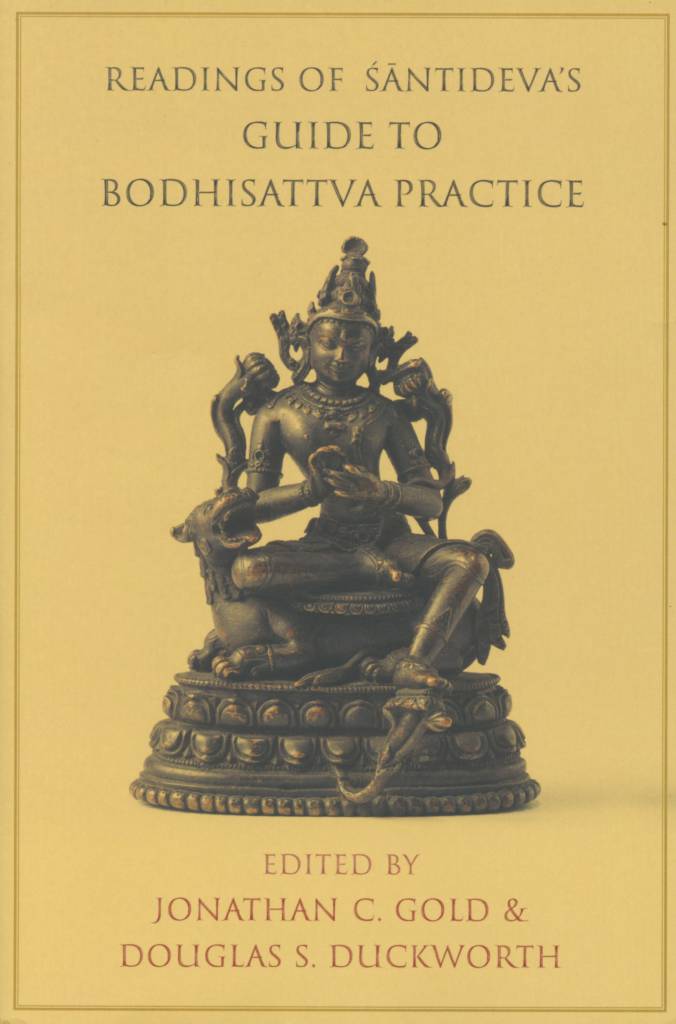
- Readings of Śāntideva's Guide to Bodhisattva Practice
- Readings of Śāntideva's Guide to Bodhisattva Practice-Review by Harris
- Readings on Yogācāra Buddhism
- Reason and Knowledge on the Path: A Protreptic Reading of the Guide
- Reason, Irrationality and Akrasia (Weakness of the Will) in Buddhism: Reflections upon Śāntideva's Arguments with Himself
- Relocation of the Verses on "The Equality of Self and Others" in the Bodhicaryāvatāra
- Remarks on an Instance of Intertextuality in the Eleventh Chapter of the Śikṣāsamuccaya and the Phrase Tṛṇagulmauṣadhivanaspati in Buddhist Sūtra Literature
- Remarks on the Philosophical Standpoint of the Anonymous Commentary, Bodhisattvacaryāvatāravyākhyāna(-pañjikā)
- René Girard, Śāntideva, and the Emptiness of Desire
- Reply to Paul Williams
- Resentment and Reality: Buddhism on Moral Responsibility
- Response to Mark Siderits' Review
- Santideva (Indian Antiquary, Vol. 42, 1913)
- Santideva's Bodhicaryāvatāra
- Santideva, un mistico del Buddhismo
- Seeing Sentient Beings: Śāntideva's Moral Phenomenology
- Self-Protection through Mindfulness, Śāntideva
- Self-Sceptical Ethics and Selfless Morality: A Historical and Cross-Cultural Overview
- Selfhood and the Metaphysics of Altruism
- Selfless Ethics: The Equality of Non-Existence
- Selflessness and Normativity: Śāntideva and Emptiness Ethics
- Seven Important Points (Marmasthāna) in the Śikṣāsamuccaya
- Shantideva (Nariman)
- Shantideva and Bodhicaryavatara: A Close Reading
- Shantideva's Bodhicaryavatara: An Internal Pilgrimage to Universal Peace and Compassion
- Shantideva's Bodhisattvacharyavatara: The Way of the Bodhisattva
- Ninth Chapter Analysis
- Spinoza through the Prism of Later 'East-West' Exchanges: Analogues of Buddhist Themes in the Ethics and the Works of Early Spinozists
- Stoics and Bodhisattvas: Spiritual Exercise and Faith in Two Philosophical Traditions
- Studies in the Philosophy of the Bodhicaryāvatāra (2000)
- Sāntideva, The Bodhicaryāvatāra, Chapter 8 (verses 89-140)
- Tant que durera l'espace
- The Absence of Self and the Removal of Pain: How Śāntideva Destroyed the Bodhisattva Path
- The Awakening Mind (Tsering 2008)
- The Bodhi-caryâvatāra and Its Monastic Aspects: On the Problem of Representation
- The Bodhisattva Guide
- The Bodhisattva Path: Śāntideva's Bodhicaryāvatāra
- The Bodhisattva and the Ideal of Moral Wisdom in Śāntideva's Śikṣāsamuccaya
- The Case of 'Ju Mi pham (1846–1912) and Dpa' ris Rab gsal (1840–1912): A Study in Dgag lan Debate
- The Case of the Vanishing Poet: New Light on Śāntideva and the Śikṣā-samuccaya
- The Center of the Sunlit Sky
- The Changing Way of the Bodhisattva: Superheroes, Saints, and Social Workers
- The Circle of Compassion: An Interpretive Study of Karuṇā in Indian Buddhist Literature
- The Compassionate Gift of Vice: Śāntideva on Gifts, Altruism, and Poverty
- The Concept of Bodhicitta in Santideva's Bodhicaryavatara
- The Concept of Bodhicitta in Śāntideva's Bodhicaryāvatāra (Diss)
- The Concept of Bodhicitta in Śāntideva's Bodhicaryāvatāra-Review by Edelglass
- The Concept of Bodhicitta in Śāntideva's Bodhicaryāvatāra-Review by Tatz
- The Connection between Ontology and Ethics in Madhyamaka Thought
- The Elusive Buddhist Self: Preliminary Reflections on Its Denial
- The Ethics of Mahāyāna Buddhism in the Bodhicaryāvatāra
- The Ethics of Śaṅkara and Śāntideva
- The Ethics of Śaṅkara and Śāntideva-Review by Abramson
- The Ethics of Śaṅkara and Śāntideva-Review by Javanaud
- The Ethics of Śaṅkara and Śāntideva-Review by O'Leary
- The Literature of the Madhyamaka School of Philosophy in India
- The Masters and Poets of the Mahāyāna
- The Meaning of Sugata in the Bodhicaryāvatārapañjikā
- The Metaphysical Basis of Śāntideva's Ethics
- The Middle Way of the Bodhisattva
- The Path of the Bodhisattva
- The Philosophical Basis of Worship in the Works of Śāntideva
- The Reality of Altruism: Reconstructing Śāntideva, A Review of Altruism and Reality: Studies in the Philosophy of the Bodhicāryāvatāra, by Paul Williams
- The Relationship between Morality and the Body in Monastic Training according to the Śikṣāsamuccaya
- The Role of Solitude (viveka) in the Eighth Chapter (Dhyānapāramitā) of the Bodhicaryāvatāra
- The Self and the Other in Bodhicaryāvatāra: Part 1
- The Self and the Suffering Other: Levinas and Śāntideva on the Ethics of Compassion
- The Selfless Removal of Pain: A Critical Glance at Śāntideva's Argument in Bodhicaryāvatāra 8: 101–3
- The Training Anthology of Śāntideva
- The Transmission of the Bodhicaryāvatāra: The History, Diffusion, and Influence of a Mahāyāna Buddhist Text
- The Way of the Bodhisattva: An Introduction and Commentary to Shantideva's The Way of Life of the Bodhisattva
- The Way of the Translators: Three Recent Translations of Śāntideva's Bodhicaryāvatāra
- The Śāntideva Passage: Bodhicaryāvatāra VIII.90–103
- Theory and Comparison in the Discussion of Buddhist Ethics
- Traces of Consequentialism and Non-Consequentialism in Bodhisattva Ethics
- Two Kinds of Saṃvṛtis in the Bodhicaryāvatārapañjikā IX 3-8
- Uncommon Happiness
- Uses of the Illusion of Agency: Why Some Buddhists Should Believe in Free Will
- Verses by Śāntideva in the Śikṣāsamuccaya: A New English Translation
- Virtuous Bodies
- Waking into Compassion: The Three Ālambana of Karuṇā
- What Is It Like to Be a Bodhisattva? Moral Phenomenology in Śāntideva's Bodhicaryāvatāra
- Where Does the Cetanic Break Take Place? Weakness of Will in Śāntideva’s Bodhicaryāvatāra
- Why War? Why Not Peace? Santideva's Answer to Einstein's Famous Question to Freud
- Zu einer zentralen philosophischen Kontroverse mit den "orthodoxen" Philosophen
- Zum Konzept der Leerheit im BCA
- Ācārya Śantideva's Humanism
- Śikṣāsamuccaya (Anthology of Instruction)
- Śikṣāsamuccaya et Sūtrasamuccaya
- Śāntideva (Internet Encyclopedia of Philosophy)
- Śāntideva (Karen Lang)
- Śāntideva (Potter, Kalupahana, and Sweet)
- Śāntideva (Stanford Encyclopedia of Philosophy)
- Śāntideva and Bodhicaryāvatāra
- Śāntideva and Kant: An East-West Comparative Study in Ethics
- Śāntideva and an Ethic of Radical Compassion
- Śāntideva and the Mādhyamika: The Prajñāpāramitā-Pariccheda of the Bodhicaryāvatāra
- Śāntideva as a Mantracarin
- Śāntideva in the History of Mādhyamika Philosophy
- Śāntideva on Developing the Thought of Awakening
- Śāntideva's Attitude towards Vijñāna Theory
- Śāntideva's Criticism of Vijñānavāda and Bodhicitta
- Śāntideva's Critique of 'I' or Self in the Early and Later Recensions of the Bodhi(sattva)caryāvatāra
- Śāntideva's Ethics of Impartial Compassion
- Śāntideva's Impartialist Ethics
- Śāntideva's Philosophy as Expressed in the Early Version of His Bodhisattvacaryāvatāra, Chapter 8
- Śāntideva, Virtue, and Consequentialism
- Śāntideva, il Bodhicaryāvatāra e le kārikā del Śikṣāsamuccaya
- Śāntideva, il Bodhicaryāvatāra e le kārikā del Śikṣāsamuccaya-Review by Pāsādika
- Śāntideva: Mystique Bouddhiste des VIIe et VIIIe siècles
- Śāntideva: Mystique Bouddhiste des VIIe et VIIIe siècles-Review by Cabezón
- Śāntideva: The Author and His Project
- Śāntidevas Bodhicaryāvatāra: Das Weiterwirken des Werkes dargestellt anhand der Überlieferungsgeschichte des Textes und seiner Kommentare
Description
- The Guide enjoins giving only vegetables and the like at first. Later, by degrees, one acts in such a way that one is even able to give up one's own flesh!
- When the understanding arises that one's own flesh is no more than a vegetable, what difficulty is there in giving away one's flesh and bones? (7.25-26)[1]
MECHANISMS OF PROTREPTIC
The Greco-Roman philosophical tradition had a genre of literature called "protreptic." Protrepsis means "turning toward," and while the genre might broadly be taken as a call to turn toward a different form of life,[2] the metaphor embedded in this term for it comes from Plato's Republic, where at issue is specifically a turning of the soul toward reality:
- The power to learn is present in everyone's soul, and the instrument with which each learns is like an eye that cannot be turned around from darkness to light without turning the whole body. This instrument cannot be turned around from that which is coming into being without turning the whole soul until it is able to study that which is and the brightest thing that is... education is the craft concerned with doing this very thing, this turning around, and with how the soul can most easily and effectively be made to do it. It isn't the craft of putting sight into the soul. Education takes for granted that sight is there but that it isn't turned the right way or looking where it ought to look, and it tries to redirect it appropriately... the virtue of reason ... never loses its power but is either useful and beneficial or useless and harmful, depending on the way it is turned. (Republic VII.518C-519A)[3]
Insofar as talk of "turning souls" refers to souls, such a phrase may seem singularly inappropriate to a Buddhist context. But there are deeper affinities in the metaphor. The very notion of protreptic as a genre contains a sense of literature that does not just say something but does something. It does something to the audience; and what it does is transform their outlook wholesale. More specifically, protreptic aims, as Plato puts it, to turn us toward reality, or reorient us toward a comprehension of reality.
There is a further, related affinity in the presumption that such reorientation—grasping reality aright, in a way one ordinarily does not—is a moral matter. Such transformation is no mere accumulation of facts; turning toward reality transforms one's engagement with the world. Thus, for Śāntideva,[4] all virtues are essentially and primarily mental. For instance, "The perfection of generosity is said to result from the mental attitude of relinquishing all that one has to all people, together with the fruit of that act. Therefore the perfection is the mental attitude itself" (5.10, emphasis mine).
And similarly with śīla (discipline, or restraint):[5] "Where can fish and other creatures be taken where I might not kill them? Yet when the mental attitude to cease from worldly acts is achieved, that is agreed to be the perfection of śīla" (5.11).
And so with anger and the rest.[6]
Such reorientation implies a revised conception of what is possible, necessary, and appropriate, which in turn issues in feelings and actions. Actions and individual choices carry moral weight, of course—in the Buddhist idiom, they have karmic consequences. But they carry these because of the intentionality and ways of seeing that they contain, express, and perpetuate. It is our ways of seeing reality that inform our conceiving of intentions to act; and so it is through seeing reality that we transform ourselves, and the quality and nature of our actions.7 This process of coming to see reality does not, for Śāntideva at least, arise suddenly and all at once.[8] It arises rather through several more minor or local revisionings, which it is the work of the Guide and other such texts and related exercises to effect.[9] The transformation of outlook, the perspective thus attained, are the core and substance of the moral life—as epitomized in the perfection of wisdom or insight (prajñā) standing at the culmination of the path.
While a great deal of modern moral theory attends to action, decision, and the principles underlying correct choice, by the time we reach the point of choosing an action we are already fairly well down the road of ethical formation and ethical thought. All the truly decisive elements occur upstream, as it were, where the world is characterized in a certain way and categorized, where meanings take shape and options emerge. At the point of choice among a few well-articulated options, we might say with Sartre, les jeux sont faits.[10]
Buddhist ethical thought, reflective and hortatory, respects this fact implicitly, and Śāntideva's Guide to Bodhisattva Practice (Bodhicaryāvatāra, hereafter Guide) exemplarily so. Rather than argue for this or that ultimate ground of normativity, the Guide aims to change the categories in which we experience the world, the perspective we take on our own experiences, and to modify quite comprehensively what is "on our minds." This emphasis on transforming experience is what makes so apt Garfield's preferred characterization of Śāntideva's ethics as "phenomenological."[11] This transformation should alter what we see as possible, necessary, and reasonable regarding action and feeling, and leave choice a theoretically quite uninteresting part of the chain of explanation.
Such protreptic texts appeal to reason and offer arguments—because after all, it is a feature of human creatures that they do also recognize and respond to these in distinctive ways. But it belongs to the very nature of the genre that such rational appeals do not swing free in some rarefied logical space (as claims like 2 + 2 = 4 seem to do). For protreptic attempts to alter what one recognizes as a reason; the "turning of the soul" consists in the recognition that what you took before to be a good reason is no reason at all, while something you had never properly seen is now appreciated as the salient rational consideration. Exactly this shifting appreciation of what counts as a reason makes the genre of protreptic an apt point of reference for a Madhyamika like Śāntideva.[12] For it allows categories and conceptualizations to be evaluated as progressively more apt, without implying commitment to any one set of categories as capturing the final and ultimate truth of the matter.
The difficulty for any Madhyamika is how to eschew any reference (or commitment) to ultimate reality and yet retain teleological notions of progress and path. Any Buddhist thinks our ordinary ways of looking at the world are terribly flawed and the cause of persistent suffering, but without recourse to some sort of "seeing things as they actually are" (in the metaphysical sense that a Madhyamika eschews), it is difficult to evaluate any ordinary conceptions as better and worse. They cannot be rejected on account of their being wrong or false, nor can changes in ordinary views be validated on the basis of being correct or closer to correct. A protreptic understanding of how Śāntideva is working here addresses the difficulty inasmuch as protreptic arguments do not aim to—and do not need to—prove that alternative positions are just plain false (in the way that 2 + 2 = 5 is just plain false), nor need they demonstrate that the preferred outlook is the only intelligible one. The everyday outlook is superseded and replaced, not proved wrong; the opening of the mind to new things as reasons counts as an improvement primarily on moral grounds (such ways of looking make us better persons and are better at ending suffering), but also on peri-epistemological grounds such as the ability of the new ways of seeing to shed more light on more of our moral lives, or to accommodate and explain the old ways of seeing and their inferiority.
To illustrate what it means to say that the Guide, like any protreptic text, deliberately alters what we recognize and respond to as a reason or argument, we will look closely at two such transformations: the first, working on the audience of the text through the course of chapters 2 to 4, transforms how we conceive of ourselves and our situation; the second examines the way a transformation of outlook is effected through the depiction of the mind as menagerie in chapter 5, and how this prepares the audience for understanding an argument in chapter 6 in the right way. While these two instances are significant, they are primarily offered as illustrative: tracing their workings should give us tools for approaching the Guide as protreptic and articulating much of the rational work done implicitly through choice of categories and metaphor, which determine where and how to focus the audience's attention. (Carpenter, "Reason and Knowledge on the Path," 45–48)
Notes
- Translations taken from Śāntideva, The Bodhicaryāvatāra, trans. Crosby and Skilton, with occasional minor emendations.
- Stowers, "Letters of Exhortation and Advice," 92.
- Grube's translation, rev. Reeve as in Cooper, ed., Plato: Complete Works.
- For the purposes of this essay, I use the name "Śāntideva" as indicating the author or authors combined with any unknown editors responsible for the text currently received under the name Bodhicaryāvatāra.
- Often translated, as in Śāntideva, The Bodhicaryāvatāra, trans. Crosby and Skilton, as "morality."
- Patience in 5.12; the famous verse at 5.13 ("where would there be leather enough to cover the entire world?") targets vīrya (zeal, resoluteness, diligence); 5.14 highlights controlling the mind in the manner of mental cultivation; and 5.15 describes the perfection of wisdom with its "no fruit comes from a dull mind that bears comparison with a sharp mind on its own."
- This reverses the consequentialist interpretation of Goodman in Consequences of Compassion, which takes action to be the means of character transformation; on the view taken here, if there is to be talk of means and ends, it will be transformations of seeing or understanding that are the means of transforming action. However, the character transformation (consisting, as it does, in increasing insight into reality) is the only part of this that could claim to be good in itself; the improved actions that follow are themselves instrumentally useful so long as one is but imperfectly enlightened, and dry up altogether (in some sense) when one has attained full understanding of reality.
- The question was apparently the great point of dispute at the legendary "Council of Lhasa" debate (supposed to have taken place at Samye Monastery in Tibet, in the late eighth century CE), as a consequence of which (so the legend goes) the Chan view of sudden enlightenment was banished from Tibet in favor of the position of the Indian faction (represented by Kamalaśīla) that enlightenment is gradual.
- See for instance Buddhaghosa's Path of Purification, which details exercises for effecting revisions of reality in specific ways, suited to specific characters. Buddhaghosa often recounts or refers to Buddhist tales to illustrate his points—that is, to get the audience to see things as he is recommending we see them. Such tales are a vast store of literature used to shape outlook and categories for experiencing the world differently.
- Not for nothing do latter-day Buddhists such as Stephen Batchelor see a common cause between existentialist and Buddhist ethics.
- See Garfield, "What It Is Like to Be a Bodhisattva," and Garfield, Engaging Buddhism, ch. 9; also, this volume.
- Śāntideva is working within the Mahayana tradition inaugurated by Nāgārjuna, called Madhyamaka. One hallmark of Nāgārjuna's approach is a thoroughgoing anti-essentialism and anti-foundationalism, which nevertheless makes use of ordinary claims and conceptions for advancing along the path toward enlightenment.