| 🤓 Admin Zone 🛠️ hidden to non-admins | |
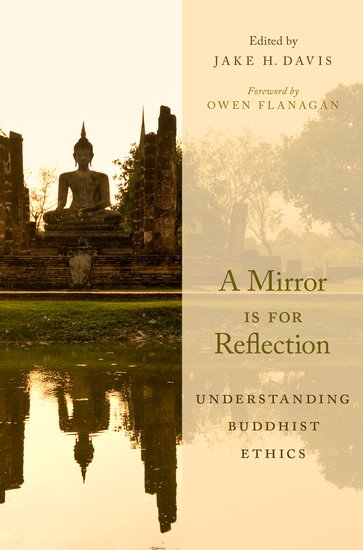
A Mirror Is for Reflection: Understanding Buddhist Ethics
Book
- A Buddhist 'good life' Theory: Śāntideva's Bodhicaryāvatāra
- A Buddhist Carol
- A Fearless Heart
- A Mirror Is for Reflection
- A Response to John Pettit
- A Role for Primordial Wisdom in the Buddhist Free Will Controversy
- A Selfless Response to an Illusory World: A Comparative Study of Śāntideva and Śaṅkara
- Altruism and Reality (1998)
- Altruism and Reality-Review by Franco
- Altruism and Reality-Review by Pettit
- Altruism as Antidote to Demagoguery: Shantideva’s Bodhicharyavatara Chapter 3 as Method for Countering Identity Divisions
- Altruism in the Charnel Ground: Śāntideva and Parfit on Anātman, Reductionism and Benevolence
- An Intoxication of Mouse Venom: Reading the Guide, Chapter 9
- An Introduction to Buddhist Ethics
- Becoming Bodhisattvas
- Bile & Bodhisattvas: Śāntideva on Justified Anger
- Bodhi(sattva)caryāvatāra als Lehrschrift und Vorhaben: Zum Thema Ritual, Religion, Philosophie und Mystik im Buddhismus
- Bodhicaryāvatāra and Tibetan Mind Training (Lojong)
- Bodies and Embodiment in the Bodhicaryāvatāra
- Buddhism as Reductionism: Personal Identity and Ethics in Parfitian Readings of Buddhist Philosophy
- From Steven Collins to the Present
- Buddhist Ethics and Globalization on the Basis of Bodhicaryavatara
- Buddhist Ethics in the Context of Conventional Truth: Path and Transformation
- Buddhist Texts Through the Ages
- Built on Emptiness: Śūnyatā as a Basis for Mahāyāna Ethics, With References to Śāntideva’s Bodhicaryāvatāra
- Can We Kill Illusory People? Some Philosophical Reflections on Bodhi(sattva)caryāvatāra 9:11-13ab
- Compassion and the Net of Indra
- Compassion as a Matter of Fact: The Argument from No-Self to Selflessness in Śāntideva's Śikṣāsamuccaya
- Compassion in Our Day: Learning from Shantideva
- Compassion in Schopenhauer and Śāntideva
- Conclusion: The Socratic Paradigm
- Consequences of Compassion
- Consequences of Compassion: An Interpretation and Defense of Buddhist Ethics-Review by Meyers
- Consequentialism, Agent-Neutrality, and Mahāyāna Ethics
- Consequentialism, Particularism, and the Emptiness of Persons: A Response to Vishnu Sridharan
- Cooking Living Beings: The Transformative Effects of Encounters with Bodhisattva Bodies
- Demandingness, Self-Interest and Benevolence in Santideva's Introduction to the Practice of Awakening (Bodhicaryavatara)
- Did Śāntideva Destroy the Bodhisattva Path?
- Does "Buddhist Ethics" Exist?
- Does Anātman Rationally Entail Altruism? On Bodhicaryāvatāra 8:101-103
- Emptiness and Moral Perfection
- Enlightenment to Go
- Ethical Revaluation in the Thought of Śāntideva
- Ethics (Garfield)
- Ethics and the Subversion of Conceptual Reification in Lévinas and Śāntideva
- Ethics in Indian and Tibetan Buddhism
- Ethics in Schopenhauer and Buddhism
- Ethics without Self, Dharma without Atman
- Experience and Morality: Buddhist Ethics as Moral Phenomenology
- Extreme Giving: The Vessantara Jātaka and Shantideva's A Guide to the Bodhisattva Way of Life
- Freedom from Responsibility: Agent-Neutral Consequentialism and the Bodhisattva Ideal
- From Madhyamaka to Consequentialism: A Road Map
- Guidance for the Spiritual Caregiver from the Bodhicaryavatara by Shantideva
- Healing Anger
- Healing Anger: The Power of Patience from a Buddhist Perspective-Review by Naga
- Hume as a Western Mādhyamika: The Case from Ethics
- Innate Human Connectivity and Śāntideva's Cultivation of Compassion
- La conception de la realité dans L'Entrèe dans la voie de l'illumination de Santideva
- Madhyamaka Ethics
- Mapping the Bodhicaryāvatāra
- Moderation or the Middle Way: Two Approaches to Anger
- Moonpaths: Ethics and Emptiness
- Moral Pluralism, Skillful Means, and Environmental Ethics
- Moral Theory in Śāntideva's Śikṣāsamuccaya
- Moral Theory in Śāntideva's Śikṣāsamuccaya-Review by Osto
- Moral Theory in Śāntideva's Śikṣāsamuccaya: Cultivating the Fruits of Virtue-Review by Goodman
- On Altruism and Rebirth: Philosophical Comments on Bodhicaryāvatāra 8: 97-8
- On Learning to Overhear the "Vanishing Poet"
- On the Classification of Śāntideva's Ethics in the Bodhicaryāvatāra
- On Śāntideva's Position in the History of Mādhyamika Philosophy
- Patience and Perspective
- Plant Seed, Pull Weed
- Puṇya and Pāp in Public Health: Everyday Religion, Material Culture, and Avenues of Buddhist Activism in Urban Kathmandu
- Readings of Śāntideva's Guide to Bodhisattva Practice
- Readings of Śāntideva's Guide to Bodhisattva Practice-Review by Harris
- Reason and Knowledge on the Path: A Protreptic Reading of the Guide
- Reason, Irrationality and Akrasia (Weakness of the Will) in Buddhism: Reflections upon Śāntideva's Arguments with Himself
- René Girard, Śāntideva, and the Emptiness of Desire
- Reply to Paul Williams
- Resentment and Reality: Buddhism on Moral Responsibility
- Response to Mark Siderits' Review
- Seeing Sentient Beings: Śāntideva's Moral Phenomenology
- Self-Sceptical Ethics and Selfless Morality: A Historical and Cross-Cultural Overview
- Selfhood and the Metaphysics of Altruism
- Selfless Ethics: The Equality of Non-Existence
- Selflessness and Normativity: Śāntideva and Emptiness Ethics
- Shantideva: How to Wake Up a Hero
- Spinoza through the Prism of Later 'East-West' Exchanges: Analogues of Buddhist Themes in the Ethics and the Works of Early Spinozists
- Stoics and Bodhisattvas: Spiritual Exercise and Faith in Two Philosophical Traditions
- Studies in the Philosophy of the Bodhicaryāvatāra (2000)
- The Absence of Self and the Removal of Pain: How Śāntideva Destroyed the Bodhisattva Path
- The Bodhi-caryâvatāra and Its Monastic Aspects: On the Problem of Representation
- The Changing Way of the Bodhisattva: Superheroes, Saints, and Social Workers
- The Compassionate Gift of Vice: Śāntideva on Gifts, Altruism, and Poverty
- The Connection between Ontology and Ethics in Madhyamaka Thought
- The Elusive Buddhist Self: Preliminary Reflections on Its Denial
- The Ethics of Mahāyāna Buddhism in the Bodhicaryāvatāra
- The Ethics of Śaṅkara and Śāntideva
- The Ethics of Śaṅkara and Śāntideva-Review by Abramson
- The Ethics of Śaṅkara and Śāntideva-Review by Javanaud
- The Ethics of Śaṅkara and Śāntideva-Review by O'Leary
- The Metaphysical Basis of Śāntideva's Ethics
- The Reality of Altruism: Reconstructing Śāntideva, A Review of Altruism and Reality: Studies in the Philosophy of the Bodhicāryāvatāra, by Paul Williams
- The Self and the Suffering Other: Levinas and Śāntideva on the Ethics of Compassion
- The Selfless Removal of Pain: A Critical Glance at Śāntideva's Argument in Bodhicaryāvatāra 8: 101–3
- The Social Message of Mahayana Buddhism
- The Training Anthology of Śāntideva
- Theory and Comparison in the Discussion of Buddhist Ethics
- Traces of Consequentialism and Non-Consequentialism in Bodhisattva Ethics
- Uses of the Illusion of Agency: Why Some Buddhists Should Believe in Free Will
- What Is It Like to Be a Bodhisattva? Moral Phenomenology in Śāntideva's Bodhicaryāvatāra
- Where Does the Cetanic Break Take Place? Weakness of Will in Śāntideva’s Bodhicaryāvatāra
- Why War? Why Not Peace? Santideva's Answer to Einstein's Famous Question to Freud
- Ācārya Śantideva's Humanism
- Śāntideva and Kant: An East-West Comparative Study in Ethics
- Śāntideva and an Ethic of Radical Compassion
- Śāntideva on Roots and Resolutions of Violence
- Śāntideva's Ethics of Impartial Compassion
- Śāntideva's Impartialist Ethics
- Śāntideva, Virtue, and Consequentialism
Please note that many items in our library are simply pages that represent a detailed library catalog entry and citation of someone else's work, presentation, or performance. Read our General Disclaimer for more information. You can find more information about this item on the publisher website.

Description
This volume offers a rich and accessible introduction to contemporary research on Buddhist ethical thought for interested students and scholars, yet also offers chapters taking up more technical philosophical and textual topics. A Mirror Is For Reflection offers a snapshot of the present state of academic investigation into the nature of Buddhist Ethics, including contributions from many of the leading figures in the academic study of Buddhist philosophy. Over the past decade many scholars have come to think that the project of fitting Buddhist ethical thought into Western philosophical categories may be of limited utility, and the focus of investigation has shifted in a number of new directions. This volume includes contemporary perspectives on topics including the nature of Buddhist ethics as a whole, karma and rebirth, mindfulness, narrative, intention, free will, politics, anger, and equanimity. (Source: Oxford University Press)
Citation
Davis, Jake H., ed. A Mirror Is for Reflection: Understanding Buddhist Ethics. New York: Oxford University Press, 2017.
Publisher Link
Table of contents
- Foreword: Cross-Cultural Philosophy and the Moral Project—Owen Flanaganxi
- Acknowledgmentsxix
- Contributorsxxi
- Introduction—Jake H. Davis1
- PART ONE: Buddhist Ethics and Western Categories
- 1. "It's Ethics, Jim, but Not as We Know It": Reflections on the Absence of Moral Philosophy in Buddhism
—Damien Keown17 - 2. The Nature of a Buddhist Path—Bronwyn Finnigan33
- 3. Buddhist Moral Thought and Western Moral Philosophy—Christopher W. Gowans53
- PART TWO: Constructing Buddhist Ethics
- 4. Zen Buddhism and the Space of Ethics—Jin Y. Park73
- 5. Buddhist Ethics: A Perspective—Graham Priest92
- 6. Breaking Good: Moral Agency, Neuroethics, and the Spontaneity of Compassion—Christian Coseru109
- PART THREE: Karma and Rebirth
- 7. Modern and Traditional Understandings of Karma—Charles Goodman131
- 8. Buddhism without Reincarnation? Examining the Prospects of a "Naturalized" Buddhism—Jan Westerhoff146
- 9. The Problems and Promise of Karma from an Engaged Buddhist Perspective—Sallie B. King166
- PART FOUR: Mindfulness, Memory, and Virtue
- 10. Ethical Reading and the Ethics of Forgetting and Remembering—Sara McClintock185
- 11. Mindfulness and Ethics: Attention, Virtue, and Perfection—Jay L. Garfield203
- 12. "When You Know for Yourselves": Mindfulness, Wisdom, and the Qualities of Heart—Jake H. Davis223
- PART FIVE: Intention and Action
- 13. The Dynamics of Intention, Freedom, and Habituation according to Vasubandhu's Abhidharmakośabhāṣya
—Karin L. Meyers239 - 14. What Do Buddhists Think about Free Will?—Riccardo Repetti257
- 15. Buddhist Reductionist Action Theory—Mark Siderits276
- PART SIX: Politics, Anger, and Equanimity
- 16. The Inherent Dignity of Empty Persons—Christopher Kelley297
- 17. Ethics without Justice: Eliminating the Roots of Resentment—Amber Carpenter315
- 18. Equanimity in Relationship: Responding to Moral Ugliness—Emily McRae336
- Index353
Interconnections