| 🤓 Admin Zone 🛠️ hidden to non-admins | |
An Introduction to Buddhist Ethics: Foundations, Values and Issues
Book
- A Buddhist 'good life' Theory: Śāntideva's Bodhicaryāvatāra
- A Buddhist Carol
- A Fearless Heart
- A Flash of Lightning in the Dark of Night
- A Mirror Is for Reflection
- A Nirvana that Is Burning in Hell: Pain and Flourishing in Mahayana Buddhist Moral Thought
- A Note on Mahāyāna Buddhism and the Bodhicaryāvatāra
- A Role for Primordial Wisdom in the Buddhist Free Will Controversy
- Altruism and Reality (1998)
- Altruism as Antidote to Demagoguery: Shantideva’s Bodhicharyavatara Chapter 3 as Method for Countering Identity Divisions
- Altruism in the Charnel Ground: Śāntideva and Parfit on Anātman, Reductionism and Benevolence
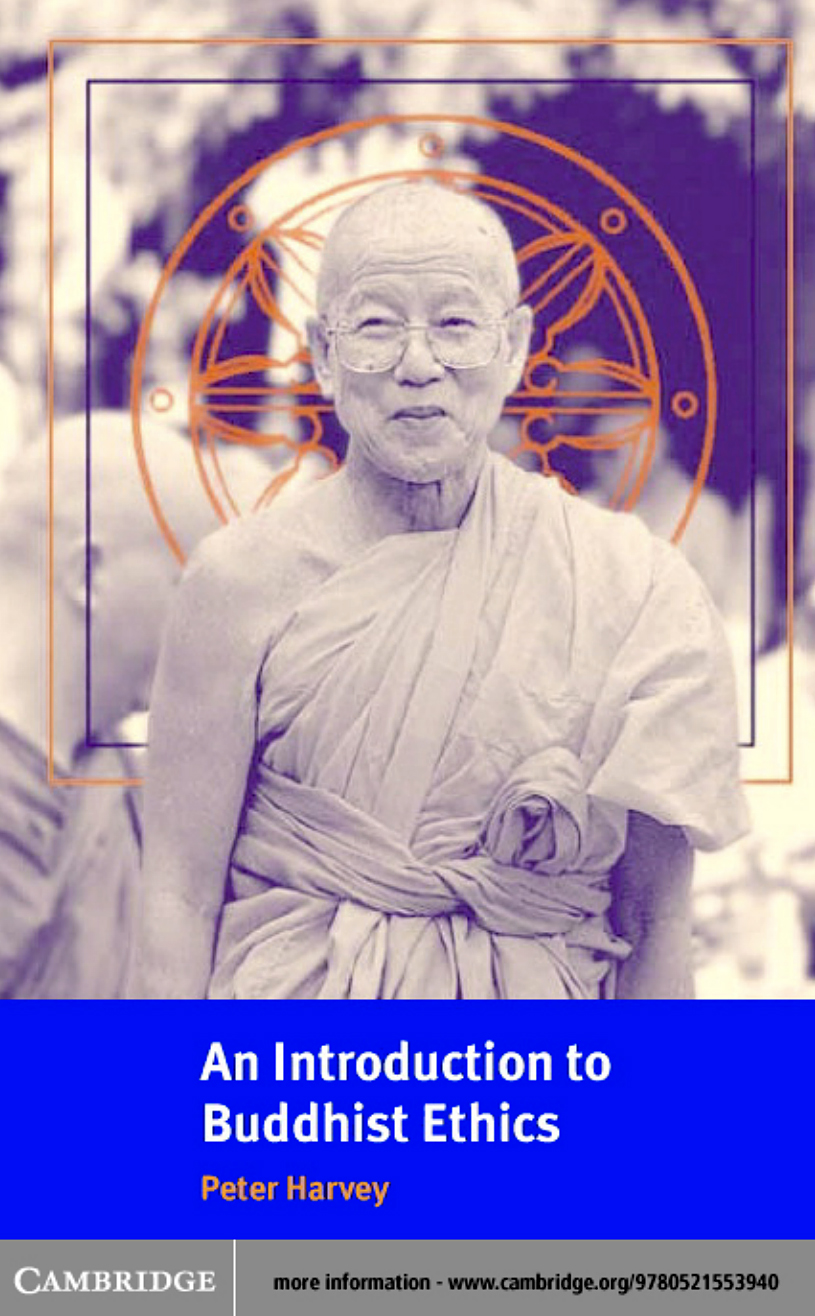
- An Introduction to Buddhist Ethics
- Becoming Bodhisattvas
- Bhadracaryāvidhi in the Śikṣāsamuccaya Chapt. 16
- Bile & Bodhisattvas: Śāntideva on Justified Anger
- Blasphemie und Sakrileg im Buddhismus in Geschichte und Gegenwart mit besonderer Berücksichtigung des Verses Bodhicaryāvatāra 6.64
- Bodhi(sattva)caryāvatāra als Lehrschrift und Vorhaben: Zum Thema Ritual, Religion, Philosophie und Mystik im Buddhismus
- Bodhicaryāvatāra and Bodhicaryāvatāra-Pañjikā (Malalasekera)
- Bodhicaryāvatāra and Tibetan Mind Training (Lojong)
- Bodhicaryāvatāra: Governing the Bodhisattvas Way of Life
- Bodhicitta: Cultivating the Compassionate Mind of Enlightenment
- Bodhisattvacaryāvatāra: Exposition de la pratique des bodhisattvas
- Bodies and Embodiment in the Bodhicaryāvatāra
- Buddhist Ethics (2003)
- Buddhist Ethics and Globalization on the Basis of Bodhicaryavatara
- Buddhist Ethics in the Context of Conventional Truth: Path and Transformation
- Buddhist Texts Through the Ages
- Built on Emptiness: Śūnyatā as a Basis for Mahāyāna Ethics, With References to Śāntideva’s Bodhicaryāvatāra
- Can We Kill Illusory People? Some Philosophical Reflections on Bodhi(sattva)caryāvatāra 9:11-13ab
- Comparative Confession: A Comparative Study of Confession in the Writings of Tertullian, Cassian, and Śāntideva
- Compassion in Mahayana Buddhism
- Compassion in Our Day: Learning from Shantideva
- Consequences of Compassion
- Consequences of Compassion: An Interpretation and Defense of Buddhist Ethics-Review by Meyers
- Consequentialism, Agent-Neutrality, and Mahāyāna Ethics
- Consequentialism, Particularism, and the Emptiness of Persons: A Response to Vishnu Sridharan
- Cooking Living Beings: The Transformative Effects of Encounters with Bodhisattva Bodies
- Courageous Compassion
- Cultivating Bodhicitta: Wisdom and Compassion in Śāntideva's Introduction to the Awakened Life
- Das 7. Kapitel über die Tatkraft in Śāntidevas Bodhicaryāvatāra
- Das Ritual der Entschlussfassung im Bodhicaryāvatāra (Kap. II und III)
- Demandingness, Self-Interest and Benevolence in Santideva's Introduction to the Practice of Awakening (Bodhicaryavatara)
- Did Śāntideva Destroy the Bodhisattva Path?
- Does "Buddhist Ethics" Exist?
- Does Anātman Rationally Entail Altruism? On Bodhicaryāvatāra 8:101-103
- Drops of Nectar: Khenpo Kunpal's Commentary on Shantideva's Entering the Conduct of the Bodhisattvas
- Emptiness and Moral Perfection
- Enlightenment to Go
- Ethical Revaluation in the Thought of Śāntideva
- Ethics (Garfield)
- Ethics and the Subversion of Conceptual Reification in Lévinas and Śāntideva
- Ethics in Indian and Tibetan Buddhism
- Ethics in Schopenhauer and Buddhism
- Ethics in the Śikṣāsamuccaya: A Study in Mahāyāna Morality
- Ethics without Self, Dharma without Atman
- Exchanging Self and Other
- Experience and Morality: Buddhist Ethics as Moral Phenomenology
- Extreme Giving: The Vessantara Jātaka and Shantideva's A Guide to the Bodhisattva Way of Life
- Following in the Buddha's Footsteps
- Freedom from Responsibility: Agent-Neutral Consequentialism and the Bodhisattva Ideal
- From Madhyamaka to Consequentialism: A Road Map
- Guidance for the Spiritual Caregiver from the Bodhicaryavatara by Shantideva
- Healing Anger
- Healing Anger: The Power of Patience from a Buddhist Perspective-Review by Naga
- Hume as a Western Mādhyamika: The Case from Ethics
- Innate Human Connectivity and Śāntideva's Cultivation of Compassion
- Internal and External Opposition to the Bodhisattva's Gift of His Body
- Madhyamaka Ethics
- Mapping the Bodhicaryāvatāra
- Mental Purification (Blo sbyong): A Native Tibetan Genre of Religious Literature
- Mindfulness and Ethics: Attention, Virtue and Perfection
- Mindfulness and Moral Transformation: Awakening to Others in Śāntideva's Ethics
- Moderation or the Middle Way: Two Approaches to Anger
- Moonpaths: Ethics and Emptiness
- Moral Pluralism, Skillful Means, and Environmental Ethics
- Moral Theory in Śāntideva's Śikṣāsamuccaya
- Moral Theory in Śāntideva's Śikṣāsamuccaya-Review by Osto
- Moral Theory in Śāntideva's Śikṣāsamuccaya: Cultivating the Fruits of Virtue-Review by Goodman
- Nichtselbst, Leerheit und Altruistische Ethik im Bodhicaryāvatāra (Lecture Transcript)
- Nichtselbst, Leerheit und Altruistische Ethik im Bodhicaryāvatāra (Official Publication)
- On Altruism and Rebirth: Philosophical Comments on Bodhicaryāvatāra 8: 97-8
- On Learning to Overhear the "Vanishing Poet"
- On the Classification of Śāntideva's Ethics in the Bodhicaryāvatāra
- One Aspect of the Acceptance of the Bodhisattva-śīla in Tibet
- Patience and Perspective
- Peaceful Heart
- Perfecting Patience
- Plant Seed, Pull Weed
- Puṇya and Pāp in Public Health: Everyday Religion, Material Culture, and Avenues of Buddhist Activism in Urban Kathmandu
- Readings of Śāntideva's Guide to Bodhisattva Practice
- Readings of Śāntideva's Guide to Bodhisattva Practice-Review by Harris
- Reason and Knowledge on the Path: A Protreptic Reading of the Guide
- René Girard, Śāntideva, and the Emptiness of Desire
- Reply to Paul Williams
- Resentment and Reality: Buddhism on Moral Responsibility
- Response to Mark Siderits' Review
- Seeing Sentient Beings: Śāntideva's Moral Phenomenology
- Self-Sceptical Ethics and Selfless Morality: A Historical and Cross-Cultural Overview
- Selfhood and the Metaphysics of Altruism
- Selfless Ethics: The Equality of Non-Existence
- Selflessness and Normativity: Śāntideva and Emptiness Ethics
- Shantideva's Bodhicaryavatara: An Internal Pilgrimage to Universal Peace and Compassion
- Shantideva: How to Wake Up a Hero
- Spinoza through the Prism of Later 'East-West' Exchanges: Analogues of Buddhist Themes in the Ethics and the Works of Early Spinozists
- Stoics and Bodhisattvas: Spiritual Exercise and Faith in Two Philosophical Traditions
- The Absence of Self and the Removal of Pain: How Śāntideva Destroyed the Bodhisattva Path
- The Awakening Mind (Tsering 2008)
- The Bodhi-caryâvatāra and Its Monastic Aspects: On the Problem of Representation
- The Bodhisattva Guide
- The Bodhisattva Path: Śāntideva's Bodhicaryāvatāra
- The Bodhisattva and the Ideal of Moral Wisdom in Śāntideva's Śikṣāsamuccaya
- The Changing Way of the Bodhisattva: Superheroes, Saints, and Social Workers
- The Circle of Compassion: An Interpretive Study of Karuṇā in Indian Buddhist Literature
- The Compassionate Gift of Vice: Śāntideva on Gifts, Altruism, and Poverty
- The Concept of Bodhicitta in Śāntideva's Bodhicaryāvatāra (Diss)
- The Connection between Ontology and Ethics in Madhyamaka Thought
- The Ethics of Mahāyāna Buddhism in the Bodhicaryāvatāra
- The Ethics of Śaṅkara and Śāntideva
- The Ethics of Śaṅkara and Śāntideva-Review by Abramson
- The Ethics of Śaṅkara and Śāntideva-Review by Javanaud
- The Ethics of Śaṅkara and Śāntideva-Review by O'Leary
- The Metaphysical Basis of Śāntideva's Ethics
- The Reality of Altruism: Reconstructing Śāntideva, A Review of Altruism and Reality: Studies in the Philosophy of the Bodhicāryāvatāra, by Paul Williams
- The Relationship between Morality and the Body in Monastic Training according to the Śikṣāsamuccaya
- The Self and the Other in Bodhicaryāvatāra: Part 1
- The Self and the Suffering Other: Levinas and Śāntideva on the Ethics of Compassion
- The Selfless Removal of Pain: A Critical Glance at Śāntideva's Argument in Bodhicaryāvatāra 8: 101–3
- The Social Message of Mahayana Buddhism
- The Training Anthology of Śāntideva
- The Śāntideva Passage: Bodhicaryāvatāra VIII.90–103
- Theory and Comparison in the Discussion of Buddhist Ethics
- Traces of Consequentialism and Non-Consequentialism in Bodhisattva Ethics
- Uncommon Happiness
- Uses of the Illusion of Agency: Why Some Buddhists Should Believe in Free Will
- Virtuous Bodies
- Waking into Compassion: The Three Ālambana of Karuṇā
- What Is It Like to Be a Bodhisattva? Moral Phenomenology in Śāntideva's Bodhicaryāvatāra
- Where Does the Cetanic Break Take Place? Weakness of Will in Śāntideva’s Bodhicaryāvatāra
- Why War? Why Not Peace? Santideva's Answer to Einstein's Famous Question to Freud
- Śāntideva (Karen Lang)
- Śāntideva (Stanford Encyclopedia of Philosophy)
- Śāntideva and Kant: An East-West Comparative Study in Ethics
- Śāntideva and an Ethic of Radical Compassion
- Śāntideva on Roots and Resolutions of Violence
- Śāntideva's Ethics of Impartial Compassion
- Śāntideva's Impartialist Ethics
- Śāntideva, Virtue, and Consequentialism
Please note that many items in our library are simply pages that represent a detailed library catalog entry and citation of someone else's work, presentation, or performance. Read our General Disclaimer for more information. You can find more information about this item on the publisher website.

Description
This systematic introduction to Buddhist ethics is aimed at anyone interested in Buddhism, including students, scholars and general readers. Peter Harvey is the author of the acclaimed Introduction to Buddhism (Cambridge, 1990), and his new book is written in a clear style, assuming no prior knowledge. At the same time it develops a careful, probing analysis of the nature and practical dynamics of Buddhist ethics in both its unifying themes and in the particularities of different Buddhist traditions. The book applies Buddhist ethics to a range of issues of contemporary concern: humanity's relationship with the rest of nature; economics; war and peace; euthanasia; abortion; the status of women; and homosexuality. Professor Harvey draws on texts of the main Buddhist traditions, and on historical and contemporary accounts of the behaviour of Buddhists, to describe existing Buddhist ethics, to assess different views within it, and to extend its application into new areas. (Source: Cambridge University Press)
Citation
Harvey, Peter. An Introduction to Buddhist Ethics: Foundations, Values and Issues. Cambridge: Cambridge University Press, 2000. https://khmersharingdocuments.files.wordpress.com/2017/06/an_introduction_to_buddhist_ethics.pdf.
Publisher Link
Table of contents
- List of plates pagepage xii
- Acknowledgementsxiii
- List of abbreviationsxiv
- A note on language and pronunciationxix
- Introduction1
- 1 THE SHARED FOUNDATIONS OF BUDDHIST ETHICS8
- Sources of guidance to Buddhists8
- Rebirth and karma11
- The realms of rebirth12
- Karma and its effects14
- The status and working of the law of karma16
- The ‘karmic fruitfulness’ of actions17
- Karmic fruitfulness and motive19
- The Saṅgha as the best ‘field of karmic fruitfulness’21
- Karma and fatalism23
- Flexibility in the working of karma24
- Delayed results of karma24
- The effect of character25
- Remorse and the acknowledgement of fault26
- Rebirth, karma and motivation28
- The Four Noble Truths31
- Suffering33
- Impermanence34
- Not-Self and respecting others36
- The Noble Eightfold Path37
- Noble persons39
- The place of ethics on the Path40
- Wise, skilful, wholesome actions42
- The Arahat as ‘beyond fruitful and deadening actions’43
- Philosophy of action46
- Criteria for differentiating good and bad actions46
- Comparisons with Western ethical systems49
- Intention, knowledge and degrees of unwholesomeness in actions52
- Conclusion58
- 2 KEY BUDDHIST VALUES60
- Giving61
- Sharing karmic fruitfulness65
- Keeping the lay precepts66
- The first precept: non-injury69
- The second precept: avoiding theft and cheating69
- The third precept: avoiding sexual misconduct71
- The fourth precept: avoiding lying and other forms of wrong speech74
- The fifth precept: sobriety77
- The nature of the precepts and precept-taking80
- Partial precept-taking and the issue of precept-breaking82
- Taking extra precepts87
- Monastic values88
- Celibacy89
- The role of monasticism91
- The monastic code of discipline92
- Harmony, sharing and spiritual companionship96
- The ethics of inter-personal relationships97
- Parents and children98
- Other relationships99
- Marriage101
- Lovingkindness and compassion103
- Social ethics109
- Social cohesion and equality109
- Engaged Buddhism112
- Political ideals113
- ‘Human rights’ and Buddhism118
- Conclusion122
- 3 MAHĀYĀNA EMPHASES AND ADAPTATIONS123
- The path of the Bodhisattva123
- Compassion and wisdom in the Mahāyāna124
- The arising of the thought of enlightenment126
- Developing the Bodhisattva perfections128
- The ethics of the Bodhisattva130
- The Bodhisattva precepts132
- Skilful means and overriding the precepts134
- Compassionate killing135
- Compassionate stealing, non-celibacy, and lying139
- Who may perform such acts, and are they obligatory?140
- Specific strands of Mahāyāna thought and practice140
- Tantra141
- Pure Land Buddhism142
- Zen143
- Nichiren Buddhism145
- Mahāyāna reassessment of monasticism146
- Conclusion148
- 4 ATTITUDE TO AND TREATMENT OF THE NATURAL WORLD150
- Humanity’s place in nature150
- Non-harming of animals156
- Animal sacrifice157
- Meat eating157
- Meat eating in early and Theravāda Buddhism159
- Meat eating in Mahāyāna Buddhism163
- Animal husbandry166
- Pest control166
- Animal experimentation168
- Positive regard, and help, for animals170
- Plants, trees and forests174
- Conservation and environmentalism177
- Conclusion185
- 5 ECONOMIC ETHICS187
- Lay economic ethics187
- Right livelihood187
- Moral and spiritual qualities aiding worldly success189
- Appropriate uses of income190
- Buddhist giving and its socio-economic impact192
- The Buddhist attitude to wealth195
- Economic ethics for rulers197
- The justice of economic distribution201
- The monastic economy203
- Buddhism and capitalism: Weber’s 'Protestant ethic' thesis206
- The case of Japan210
- 'Buddhist economics' 215
- The purpose of economics and a critique of consumerism219
- Critiques of capitalist and Marxist development models222
- Buddhism and economics in the modern world225
- The Sarvōdaya Śramadāna movement in Sri Lanka225
- Buddhist elements in the modern Japanese economy235
- Conclusion237
- 6 WAR AND PEACE239
- Buddhist analyses of the causes of conflict239
- Solutions to conflict241
- Economic means241
- Negotiation and emphasizing the mutual harm of war241
- A non-violent moral stance242
- Reflections to undermine hatred and develop patience243
- Forbearance and forgiveness246
- Defusing a situation248
- Non-violent reflections on a violent world249
- The position of the soldier253
- Buddhist 'justifications' of, and involvement in, violence255
- Sri Lanka255
- South-east Asia260
- China263
- Japan264
- Buddhist action for peace in the modern world270
- Peace activities of Japanese Nichiren-based schools271
- Sarvōdaya Śramadāna as a force for defusing conflict in Sri Lanka275
- Buddhist action to heal Cambodia278
- Conclusion283
- 7 SUICIDE AND EUTHANASIA286
- Considerations and arguments against suicide286
- Suicide and the precepts287
- Euthanasia292
- Buddhist reasons for rejecting euthanasia294
- Cases of non-intended death300
- The question of the criteria of death309
- Conclusion309
- 8 ABORTION AND CONTRACEPTION311
- Embryonic life311
- Abortion and Buddhist principles313
- Relevance of the age of the foetus315
- Possible grounds for abortion319
- Contraception326
- Abortion in Buddhist cultures328
- Among Tibetans328
- Lands of Southern Buddhism329
- Lands of Eastern Buddhism, especially Japan332
- Anti-abortion but pro-choice? The relationship between morality and law342
- Conclusion350
- 9 SEXUAL EQUALITY353
- Women in early Hinduism354
- The effect of Buddhism356
- The spiritual potential and achievement of women357
- Female Arahats357
- Mahāyāna images of female spiritual perfection361
- Gender, rebirth and the status of women368
- Views on spiritual statuses unattainable by women371
- Images of wise and wayward women376
- Ascetic wariness of the opposite sex379
- The ordination of women383
- Nuns and other female religious roles in Buddhist cultures392
- Ancient India392
- Lands of Eastern Buddhism393
- Lands of Southern Buddhism395
- Lands of Northern Buddhism399
- Laywomen in Buddhist texts401
- Laywomen in Buddhist cultures403
- Lands of Southern Buddhism403
- Lands of Eastern Buddhism406
- Lands of Northern Buddhism407
- Conclusion409
- 10 HOMOSEXUALITY AND OTHER FORMS OF 'QUEERNESS'411
- Sex-change412
- Hermaphrodites412
- Paṇḍakas413
- Sexual behaviour of paṇḍakas415
- The psychological nature and limited potential of paṇḍakas417
- Paṇḍakas and rebirth419
- Homosexual acts419
- Homosexuality in Buddhist cultures423
- Lands of Southern Buddhism423
- Tibet424
- Lands of Eastern Buddhism425
- Western Buddhism428
- Conclusion433
- Glossary and details of historical figures and texts435
- List of references439
- Useful addresses461
- Index of Buddhist texts, schools cultural areas, movements and organizations463
- Index of concepts467
- Index of names475
Interconnections