The Middle Way of the Bodhisattva
Articles/The Middle Way of the Bodhisattva
| 🤓 Admin Zone 🛠️ hidden to non-admins | |
- A Buddhist 'good life' Theory: Śāntideva's Bodhicaryāvatāra
- A Critical Study of Ācārya Śāntideva's Bodhicaryāvatāra (diss)
- A Dialogue between Thomas Merton on Agape and Shantideva on Karuna: Some Moral Dimensions of a Catholic and Mahayana Exchange
- A Flash of Lightning in the Dark of Night
- A Note on Mahāyāna Buddhism and the Bodhicaryāvatāra
- A Response to John Pettit
- A Role for Primordial Wisdom in the Buddhist Free Will Controversy
- A Selfless Response to an Illusory World: A Comparative Study of Śāntideva and Śaṅkara
- A Short Presentation of Śāntideva's Bodhicaryāvatāra
- A Study of Akṣayamati (Śāntideva)'s Bodhisattvacaryāvatāra as Found in the Tibetan Manuscripts From Tun-huang
- A Study of the Wisdom Chapter (Prajñāpāramitā Pariccheda) of the Bodhicaryāvatārapañjikā of Prajñākaramati
- A Summons to Buddhahood: The Bodhicaryavatara as Santideva's Call to Embrace the Bodhicitta
- Altruism and Reality (1998)
- Altruism and Reality-Review by Franco
- Altruism and Reality-Review by Pettit
- Altruism in the Charnel Ground: Śāntideva and Parfit on Anātman, Reductionism and Benevolence
- An Argument for Cittamātra: Reflections on Bodhicaryāvatāra 9:28 (Tib. 27) cd
- An Intoxication of Mouse Venom: Reading the Guide, Chapter 9
- Appendix B: Excerpt from A Lamp Completely Illuminating the Profound Reality of Interdependence
- Atiśa's Introduction to the Two Truths, and Its Sources
- Blasphemie und Sakrileg im Buddhismus in Geschichte und Gegenwart mit besonderer Berücksichtigung des Verses Bodhicaryāvatāra 6.64
- Bodhi(sattva)caryāvatāra als Lehrschrift und Vorhaben: Zum Thema Ritual, Religion, Philosophie und Mystik im Buddhismus
- Bodhicaryāvatāra 9:2 as a Focus for Tibetan Interpretations of the Two Truths in the Prāsangika Mādhyamika
- Bodhicaryāvatāra and Bodhicaryāvatāra-Pañjikā (Malalasekera)
- Bodhicaryāvatāra and Tibetan Mind Training (Lojong)
- Bodhicaryāvatāra no kihon seikaku: Ichininshō no imi suru mono
- Bodhicaryāvatāra: Governing the Bodhisattvas Way of Life
- Bodhicharyavatara (Rigpa Shedra Wiki)
- Bodhicitta and Bodhisattva: A Study of the Bodhicaryāvatāra of Śāntideva
- Bodhicitta: Cultivating the Compassionate Mind of Enlightenment
- Bodhisattva e Prajñāpāramitā nel Bodhicaryāvatāra di Śāntideva
- Bodhisattvacaryāvatāra: Exposition de la pratique des bodhisattvas
- Bu ston and the Bodhisattvacaryāvatāravyākhyāna (-pañjikā)
- Buddhist Ethics in the Context of Conventional Truth: Path and Transformation
- Buddhist Mereological Analysis in the Milindapañhā, Vasubandhu's Twenty Verses, and Śāntideva's Bodhicaryāvatāra
- Buddhist Texts Through the Ages
- Built on Emptiness: Śūnyatā as a Basis for Mahāyāna Ethics, With References to Śāntideva’s Bodhicaryāvatāra
- Byang chub sems dpa'i spyod pa la 'jug pa rtsa ba dang 'grel pa (si khron mi rigs dpe skrun khang)
- Byang chub sems dpa'i spyod pa la 'jug pa'i zin bris mtshungs med bla ma'i zhal rgyun (Vajra Vidya Library)
- Byang chub spyod pa'i gzhung 'grel gsal ba'i me long (Tsoknyi Gechak Ling)
- Can We Kill Illusory People? Some Philosophical Reflections on Bodhi(sattva)caryāvatāra 9:11-13ab
- Characteristics of the Buddhist Mongolian Texts: The Lineage of the Bodhicaryāvatāra
- Commentaries on Śāntideva's Bodhicaryāvatāra (Ejima 1966)
- Compassion as a Matter of Fact: The Argument from No-Self to Selflessness in Śāntideva's Śikṣāsamuccaya
- Compassion in Mahayana Buddhism
- Compassion in Our Day: Learning from Shantideva
- Comprendre la vacuité
- Consequentialism, Agent-Neutrality, and Mahāyāna Ethics
- Consequentialism, Particularism, and the Emptiness of Persons: A Response to Vishnu Sridharan
- Courageous Compassion
- Critique of Self in the Early and Later Versions of the Bodhi(sattva)caryāvatāra
- Cultivating Bodhicitta: Wisdom and Compassion in Śāntideva's Introduction to the Awakened Life
- Demandingness, Self-Interest and Benevolence in Santideva's Introduction to the Practice of Awakening (Bodhicaryavatara)
- Did Śāntideva Destroy the Bodhisattva Path?
- Die "Vollkommenheiten" im BCA und seinen tibetischen Kommentaren
- Die Lehre von Satyadvaya in 'Ju Mi phams Nor bu ke ta ka
- Die zwei Wahrheiten
- Die zwei Wirklichkeiten
- Does "Buddhist Ethics" Exist?
- Does Anātman Rationally Entail Altruism? On Bodhicaryāvatāra 8:101-103
- Drops of Nectar: Khenpo Kunpal's Commentary on Shantideva's Entering the Conduct of the Bodhisattvas
- Dīpaṃkaraśrījñāna's Commentary on the Bodhicaryāvatāra
- Emptiness and Moral Perfection
- Enlightened Vagabond
- Epitome of the Bodhicaryāvatāra with Its Pañjikā, Chap. IX
- Ethical Revaluation in the Thought of Śāntideva
- Ethics (Garfield)
- Ethics and the Subversion of Conceptual Reification in Lévinas and Śāntideva
- Ethics in Indian and Tibetan Buddhism
- Ethics in Schopenhauer and Buddhism
- Ethics in the Śikṣāsamuccaya: A Study in Mahāyāna Morality
- Experience and Morality: Buddhist Ethics as Moral Phenomenology
- Following in the Buddha's Footsteps
- For the Benefit of All Beings
- Freedom from Responsibility: Agent-Neutral Consequentialism and the Bodhisattva Ideal
- From Madhyamaka to Consequentialism: A Road Map
- General Introduction: Śāntideva and His World
- Gser gling pa's Bodhisattvacaryāvatārapiṇḍārtha and Its Thought
- Hume as a Western Mādhyamika: The Case from Ethics
- Identifying the Object of Negation: On Bodhicaryāvatāra 9:140 (Tib. 139)
- In Praise of Great Compassion
- Indian Madhyamaka Buddhist Philosophy after Nagarjuna, Vol. 2
- Innate Human Connectivity and Śāntideva's Cultivation of Compassion
- Introduction to Gzhan gyis brtsad pa'i lan mdor bsdus pa rigs lam rab gsal de nyid snang byed: An Answer to Blo-bzang-rab-gsal's Refutation of the Author's 'Sher le nor bu ke ta ka' and Its Defence, the Brgal lan nyin byed snang ba
- Jitāri, Śāntideva and Prabhākarakīrti
- L'opalescent joyau
- La conception de la realité dans L'Entrèe dans la voie de l'illumination de Santideva
- Le commentaire de Mi-pham au chapitre IX du Bodhicaryāvatāra de Śāntideva: Échos modernes d'une controverse du XVème siècle
- Madhyamaka Ethics
- Making and Remaking the Ultimate in Early Tibetan Readings of Śāntideva
- Mi pham and the Philosophical Controversies of the Nineteenth Century
- Mindfulness and Moral Transformation: Awakening to Others in Śāntideva's Ethics
- Mipham's Dialectics and the Debates on Emptiness
- Mādhyamika: Bodhicaryāvatāra
- Nachlese zum Mongolischen Turfanfragment des Bodhicaryāvatāra
- Nichtselbst, Leerheit und Altruistische Ethik im Bodhicaryāvatāra (Lecture Transcript)
- Nichtselbst, Leerheit und Altruistische Ethik im Bodhicaryāvatāra (Official Publication)
- No Time to Lose
- Notes on the Deśanā-ritual in the Bodhicaryāvatāra: Evidence of Its Revision
- Nyubosatsugyō-ron kaisetsu saisho no Shyāntidēva rikai
- Of the Progresse of the Bodhisattva: The Bodhisattvamārga in the Śikṣāsamuccaya
- On Agama and Yukti in Bu ston's Byang chub sems dpa'i spyod pa la 'jug pa'i 'grel pa
- On Altruism and Rebirth: Philosophical Comments on Bodhicaryāvatāra 8: 97-8
- On Philosophical View of the Bodhisattvacaryāvatāra
- On Prakṛtinirvāṇa-Prakṛtinirvṛta in the Bodhicaryāvatāra: A Study in the Indo-Tibetan Commentarial Tradition
- On the Classification of Śāntideva's Ethics in the Bodhicaryāvatāra
- On the Role of Vairocanarakṣita in the Later Transmission Period: A Cross-section of the "Bodhisattva theory" Tradition
- On the Sanskrit Manuscript of the Śikṣāsamuccaya
- On the Textual Problems of Śāntideva's Bodhi(sattva)caryāvatāra: With Special Reference to Chapter 9 Entitled "Perfection of Wisdom (Prajñāpāramitā)"
- On Śāntideva's Position in the History of Mādhyamika Philosophy
- One Aspect of the Acceptance of the Bodhisattva-śīla in Tibet
- Perfecting Wisdom
- Performing Text as Practice: Rdza Dpal sprul's Practice Manual on the Bodhi(sattva)caryāvatāra
- Polemics in Indo-Tibetan Scholasticism - A Late 19th-Century Debate Between 'Ju Mi pham and Dpa' ris Rab gsal
- Practicing Wisdom
- Proof of the Authenticity of the Mahāyāna in Akṣayamati's Bodhi(sattva)caryāvatāra
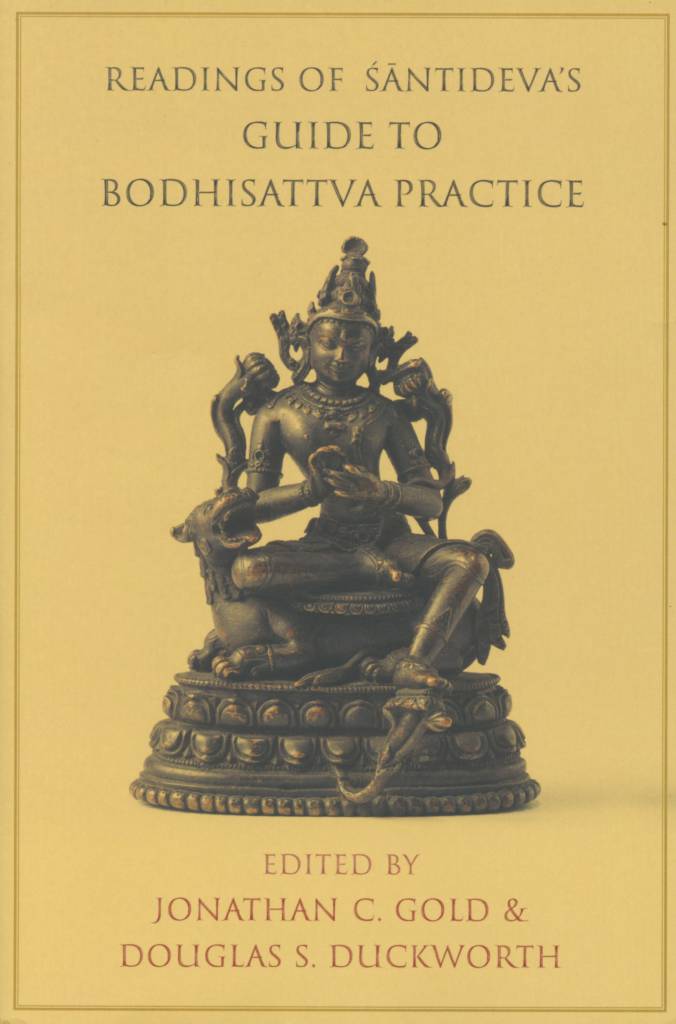
- Readings of Śāntideva's Guide to Bodhisattva Practice
- Readings of Śāntideva's Guide to Bodhisattva Practice-Review by Harris
- Readings on Yogācāra Buddhism
- Reason and Knowledge on the Path: A Protreptic Reading of the Guide
- Reason, Irrationality and Akrasia (Weakness of the Will) in Buddhism: Reflections upon Śāntideva's Arguments with Himself
- Regional Characteristics of Mongolian Buddhism: A Study on the Basis of the Bodhicaryāvatāra
- Remarks on Akṣayamati (Blo gros mi zad pa), Being the Author of the Earlier Version of the Bodhisattvacaryāvatāra
- Remarks on an Instance of Intertextuality in the Eleventh Chapter of the Śikṣāsamuccaya and the Phrase Tṛṇagulmauṣadhivanaspati in Buddhist Sūtra Literature
- Remarks on the Philosophical Standpoint of the Anonymous Commentary, Bodhisattvacaryāvatāravyākhyāna(-pañjikā)
- Remarks on the Tabo Manuscript of the Bodhisattvacaryāvatāra
- Reply to Paul Williams
- Resentment and Reality: Buddhism on Moral Responsibility
- Response to Mark Siderits' Review
- Santideva's Bodhicaryāvatāra
- Seeing Sentient Beings: Śāntideva's Moral Phenomenology
- Seeing from All Sides
- Self-Sceptical Ethics and Selfless Morality: A Historical and Cross-Cultural Overview
- Selfhood and the Metaphysics of Altruism
- Selfless Ethics: The Equality of Non-Existence
- Selflessness and Normativity: Śāntideva and Emptiness Ethics
- Shantideva and Bodhicaryavatara: A Close Reading
- Shantideva's Bodhicaryavatara: An Internal Pilgrimage to Universal Peace and Compassion
- Shantideva's Bodhisattvacharyavatara: The Way of the Bodhisattva
- Ninth Chapter Analysis
- Some New Remarks on the Bodhicaryāvatāra Chapter V
- Spinoza through the Prism of Later 'East-West' Exchanges: Analogues of Buddhist Themes in the Ethics and the Works of Early Spinozists
- Stoics and Bodhisattvas: Spiritual Exercise and Faith in Two Philosophical Traditions
- Studies in the Philosophy of the Bodhicaryāvatāra (2000)
- Suffering Made Sufferable: Śāntideva, Dzongkaba, and Modern Therapeutic Approaches to Suffering's Silver Lining
- Suvarṇadvīpa's "Commentaries" on the Bodhicaryāvatāra
- Taming Śāntideva: Tsongkhapa's Use of the Bodhicaryāvatāra
- Tangut Texts of the Five Early Translations and the Texts on the Awakening of the Bodhicitta
- Tant que durera l'espace
- Textcritical Notes on Sanskrit Texts: I. Bodhi(sattva)caryāvatāra
- The Absence of Self and the Removal of Pain: How Śāntideva Destroyed the Bodhisattva Path
- The Awakening Mind (Tsering 2008)
- The Bodhicittotpādasamādanāvidhi by Jitari
- The Bodhisattva Guide
- The Bodhisattva Path: Śāntideva's Bodhicaryāvatāra
- The Bodhisattva and the Ideal of Moral Wisdom in Śāntideva's Śikṣāsamuccaya
- The Bodistw-a Čari-a Awatar-un Tayilbur of 1312 by Čosgi Odsir
- The Buddhist Roots of Secular Compassion Training: A Comparative Study of Compassion Cultivation in Indian and Tibetan Mahāyāna Sources with the Contemporary Secular Program of Compassion Cultivation Training (CCT)
- The Case of 'Ju Mi pham (1846–1912) and Dpa' ris Rab gsal (1840–1912): A Study in Dgag lan Debate
- The Center of the Sunlit Sky
- The Changing Way of the Bodhisattva: Superheroes, Saints, and Social Workers
- The Circle of Compassion: An Interpretive Study of Karuṇā in Indian Buddhist Literature
- The Compassionate Gift of Vice: Śāntideva on Gifts, Altruism, and Poverty
- The Concept of Bodhicitta in Śāntideva's Bodhicaryāvatāra (Diss)
- The Connection between Ontology and Ethics in Madhyamaka Thought
- The Elusive Buddhist Self: Preliminary Reflections on Its Denial
- The Ethics of Mahāyāna Buddhism in the Bodhicaryāvatāra
- The Ethics of Śaṅkara and Śāntideva
- The Ethics of Śaṅkara and Śāntideva-Review by Abramson
- The Ethics of Śaṅkara and Śāntideva-Review by Javanaud
- The Ethics of Śaṅkara and Śāntideva-Review by O'Leary
- The Literature of the Madhyamaka School of Philosophy in India
- The Meaning of Sugata in the Bodhicaryāvatārapañjikā
- The Metaphysical Basis of Śāntideva's Ethics
- The Middle Way of the Bodhisattva
- The Original Bodhicaryāvatāra
- The Path of the Bodhisattva
- The Philosophical Basis of Worship in the Works of Śāntideva
- The Profound Reality of Interdependence
- The Reality of Altruism: Reconstructing Śāntideva, A Review of Altruism and Reality: Studies in the Philosophy of the Bodhicāryāvatāra, by Paul Williams
- The Reflexive Nature of Awareness (1998)
- The Self and the Other in Bodhicaryāvatāra: Part 1
- The Self and the Suffering Other: Levinas and Śāntideva on the Ethics of Compassion
- The Selfless Removal of Pain: A Critical Glance at Śāntideva's Argument in Bodhicaryāvatāra 8: 101–3
- The Tanjur Bodhicaryāvatāra Auxiliaries: A Few Collected Bibliographical Pointers
- The Transmission of the Bodhicaryāvatāra: The History, Diffusion, and Influence of a Mahāyāna Buddhist Text
- The Way of the Bodhisattva: An Introduction and Commentary to Shantideva's The Way of Life of the Bodhisattva
- The Wisdom Chapter
- The Śāntideva Passage: Bodhicaryāvatāra VIII.90–103
- Theory and Comparison in the Discussion of Buddhist Ethics
- Traces of Consequentialism and Non-Consequentialism in Bodhisattva Ethics
- Transcendent Wisdom (1988)
- Two Kinds of Saṃvṛtis in the Bodhicaryāvatārapañjikā IX 3-8
- Uncommon Happiness
- Uses of the Illusion of Agency: Why Some Buddhists Should Believe in Free Will
- Virtues-Pāramitās: St. Ignatius of Loyola and Śāntideva as Companions on the Way of Life
- Waking into Compassion: The Three Ālambana of Karuṇā
- What Is It Like to Be a Bodhisattva? Moral Phenomenology in Śāntideva's Bodhicaryāvatāra
- What Would a Sage Do?
- Where Does the Cetanic Break Take Place? Weakness of Will in Śāntideva’s Bodhicaryāvatāra
- Why War? Why Not Peace? Santideva's Answer to Einstein's Famous Question to Freud
- Wisdom: Two Buddhist Commentaries
- Zu einer zentralen philosophischen Kontroverse mit den "orthodoxen" Philosophen
- Zum Bodhisattvacāryāvatārabhāṣya des Dīpaṃkaraśrījñāna
- Zum Konzept der Leerheit im BCA
- Ācārya Śantideva's Humanism
- Śāntideva (Internet Encyclopedia of Philosophy)
- Śāntideva (Karen Lang)
- Śāntideva (Potter, Kalupahana, and Sweet)
- Śāntideva (Stanford Encyclopedia of Philosophy)
- Śāntideva and Bodhicaryāvatāra
- Śāntideva and Kant: An East-West Comparative Study in Ethics
- Śāntideva and an Ethic of Radical Compassion
- Śāntideva and the Bodhisattva Ideal
- Śāntideva and the Mādhyamika: The Prajñāpāramitā-Pariccheda of the Bodhicaryāvatāra
- Śāntideva in the History of Mādhyamika Philosophy
- Śāntideva on Developing the Thought of Awakening
- Śāntideva's Attitude towards Vijñāna Theory
- Śāntideva's Criticism of Vijñānavāda and Bodhicitta
- Śāntideva's Critique of 'I' or Self in the Early and Later Recensions of the Bodhi(sattva)caryāvatāra
- Śāntideva's Ethics of Impartial Compassion
- Śāntideva's Impartialist Ethics
- Śāntideva's Philosophy as Expressed in the Early Version of His Bodhisattvacaryāvatāra, Chapter 8
- Śāntideva, A Mystic of Buddhism
- Śāntideva, Virtue, and Consequentialism
- Śāntideva, il Bodhicaryāvatāra e le kārikā del Śikṣāsamuccaya
- Śāntideva, il Bodhicaryāvatāra e le kārikā del Śikṣāsamuccaya-Review by Pāsādika
- Śāntideva: Mystique Bouddhiste des VIIe et VIIIe siècles
- Śāntideva: Mystique Bouddhiste des VIIe et VIIIe siècles-Review by Cabezón
- Śāntidevas Bodhicaryāvatāra: Das Weiterwirken des Werkes dargestellt anhand der Überlieferungsgeschichte des Textes und seiner Kommentare
Description
Śāntideva is commonly associated with a particular interpretation of the Middle Way philosophy in Tibet, the Prāsaṅgika-Madhyamaka or "Consequence School of the Middle Way." Why might this be the case? Śāntideva's Guide (Bodhicaryāvatāra) clearly does not address a difference between the two types of argument, reductios and independent probative arguments, that form the etymological basis of what distinguishes a Prāsaṅgika ("one who uses consequences") from a Svātantrika ("one who uses independent probative arguments"). So why is Śāntideva's composition considered by Tibetans to be a Prāsaṅgika text?
An answer can be found in how one influential Tibetan author, Künzang Sönam (1823-1905), explains the issue in his nearly 1,000-page commentary on the Guide. In short, he says that "the basis of the debate between Svātantrika and Prāsaṅgika is whether or not there is something that exists on its own" (rang mtshan kyis grub pa).[1] This chapter discusses the role and implications of "existing on its own" as the main principle guiding Künzang Sönam's interpretation of Śāntideva's Guide. For him, this particular feature of the Middle Way conveys the thoroughgoing interdependence that is essential for reaching a proper understanding of Śāntideva's text. In particular, he holds that it is through this interpretation of the Middle Way that Śāntideva maintains a view of emptiness that is compatible with an altruistic ethic. (Duckworth, preliminary remarks, 180)
Notes
- Künzang Sönam, Overview of the Wisdom Chapter, 788; English trans, in The Profound Reality of Interdependence, 211. For further discussion of this topic, see Duckworth, Tibetan Buddhist Philosophy of Mind and Nature, 84-86.