| 🤓 Admin Zone 🛠️ hidden to non-admins | |
Seeing from All Sides
Chapter in a Book
- A Fearless Heart
- A Flash of Lightning in the Dark of Night
- A Study of the Wisdom Chapter (Prajñāpāramitā Pariccheda) of the Bodhicaryāvatārapañjikā of Prajñākaramati
- Altruism and Reality (1998)
- An Intoxication of Mouse Venom: Reading the Guide, Chapter 9
- Appendix B: Excerpt from A Lamp Completely Illuminating the Profound Reality of Interdependence
- Becoming Bodhisattvas
- Bodhicaryāvatāra 9:2 as a Focus for Tibetan Interpretations of the Two Truths in the Prāsangika Mādhyamika
- Bodhicaryāvatāra and Tibetan Mind Training (Lojong)
- Bodhicitta: Cultivating the Compassionate Mind of Enlightenment
- Bodhisattva e Prajñāpāramitā nel Bodhicaryāvatāra di Śāntideva
- Bodhisattvacaryāvatāra: Exposition de la pratique des bodhisattvas
- Buddhist Ethics (2003)
- Can We Kill Illusory People? Some Philosophical Reflections on Bodhi(sattva)caryāvatāra 9:11-13ab
- Compassion and Equality
- Comprendre la vacuité
- Courageous Compassion
- Das Ritual der Entschlussfassung im Bodhicaryāvatāra (Kap. II und III)
- Demandingness, Self-Interest and Benevolence in Santideva's Introduction to the Practice of Awakening (Bodhicaryavatara)
- Epitome of the Bodhicaryāvatāra with Its Pañjikā, Chap. IX
- Ethical Revaluation in the Thought of Śāntideva
- Exchanging Self and Other
- Fierce Devotion to all Beings: The Role of Emotions in Śāntideva’s Introduction to the Way of the Bodhisattva (Bodhicaryāvatāra)
- Following in the Buddha's Footsteps
- For the Benefit of All Beings
- From the Profound View of the Ultimate to Everyday Practice: Tokme Zangpo's Integration of Śāntideva's Teachings into Mind Training
- Gleichheit und Mitgefühl: Prajñākaramatis Kommentar zu Bodhicaryāvatāra VIII. 89-108
- In Praise of Great Compassion
- Indian Madhyamaka Buddhist Philosophy after Nagarjuna, Vol. 2
- Innate Human Connectivity and Śāntideva's Cultivation of Compassion
- Introduction to Gzhan gyis brtsad pa'i lan mdor bsdus pa rigs lam rab gsal de nyid snang byed: An Answer to Blo-bzang-rab-gsal's Refutation of the Author's 'Sher le nor bu ke ta ka' and Its Defence, the Brgal lan nyin byed snang ba
- L'opalescent joyau
- Le commentaire de Mi-pham au chapitre IX du Bodhicaryāvatāra de Śāntideva: Échos modernes d'une controverse du XVème siècle
- Mapping the Bodhicaryāvatāra
- Mental Purification (Blo sbyong): A Native Tibetan Genre of Religious Literature
- Mi pham and the Philosophical Controversies of the Nineteenth Century
- Mindfulness and Ethics: Attention, Virtue and Perfection
- Mindfulness and Moral Transformation: Awakening to Others in Śāntideva's Ethics
- Mipham's Dialectics and the Debates on Emptiness
- No Time to Lose
- One Aspect of the Acceptance of the Bodhisattva-śīla in Tibet
- Perfecting Patience
- Perfecting Wisdom
- Performing Text as Practice: Rdza Dpal sprul's Practice Manual on the Bodhi(sattva)caryāvatāra
- Plant Seed, Pull Weed
- Polemics in Indo-Tibetan Scholasticism - A Late 19th-Century Debate Between 'Ju Mi pham and Dpa' ris Rab gsal
- Practicing Wisdom
- Readings of Śāntideva's Guide to Bodhisattva Practice
- Readings of Śāntideva's Guide to Bodhisattva Practice-Review by Harris
- Ritual Structure and Material Culture in the Guide to Bodhisattva Practice
- Seeing from All Sides
- Self-Protection through Mindfulness, Śāntideva
- Shantideva's Bodhicaryavatara: An Internal Pilgrimage to Universal Peace and Compassion
- Suffering Made Sufferable: Śāntideva, Dzongkaba, and Modern Therapeutic Approaches to Suffering's Silver Lining
- Tant que durera l'espace
- The Awakening Mind (Tsering 2008)
- The Bodhisattva Doctrine in Buddhist Sanskrit Literature
- The Bodhisattva Guide
- The Buddhist Roots of Secular Compassion Training: A Comparative Study of Compassion Cultivation in Indian and Tibetan Mahāyāna Sources with the Contemporary Secular Program of Compassion Cultivation Training (CCT)
- The Case of 'Ju Mi pham (1846–1912) and Dpa' ris Rab gsal (1840–1912): A Study in Dgag lan Debate
- The Concept of Bodhicitta in Santideva's Bodhicaryavatara
- The Concept of Bodhicitta in Śāntideva's Bodhicaryāvatāra-Review by Edelglass
- The Concept of Bodhicitta in Śāntideva's Bodhicaryāvatāra-Review by Tatz
- The Middle Way of the Bodhisattva
- The Profound Reality of Interdependence
- The Role of Solitude (viveka) in the Eighth Chapter (Dhyānapāramitā) of the Bodhicaryāvatāra
- The Wisdom Chapter
- The Śāntideva Passage: Bodhicaryāvatāra VIII.90–103
- Transcendent Wisdom (1988)
- Uncommon Happiness
- Wisdom: Two Buddhist Commentaries
- Śāntideva (Internet Encyclopedia of Philosophy)
- Śāntideva and the Moral Psychology of Fear
- Śāntideva and the Mādhyamika: The Prajñāpāramitā-Pariccheda of the Bodhicaryāvatāra
- Śāntideva's Statement about Confession
Please note that many items in our library are simply pages that represent a detailed library catalog entry and citation of someone else's work, presentation, or performance. Read our General Disclaimer for more information.
Description
This chapter will explore Śāntideva's presentation of the practice of substituting one's own perspective on oneself with that of another. It will focus especially upon his literary strategies to create in his readers the capacity to perform this practice. A lot of the chapter will center upon the logic and the metaphors within the text itself. It will also consider some provocative statements on the different, but perhaps relevant way a master actor sees herself from the viewpoint of her audience. In this I will draw upon the writings of the renowned Japanese dramatist and theorist of Nōh Zeami Motokiyo (c. 1363-c. 1443). I want to explore the phenomenon of seeing oneself from the vantage of others both in terms of Śāntideva's goal of compassion and in terms of its larger potentials in the phenomenology and ethics of being in the world, as intimated in Zeami's artistic vision. (Gyatso, "Seeing from All Sides," 101)
Citation
Gyatso, Janet. "Seeing from All Sides." In Readings of Śāntideva's Guide to Bodhisattva Practice, edited by Jonathan C. Gold and Douglas S. Duckworth, 99–113. New York: Columbia University Press, 2019.
Interconnections
1 Chapter or part of

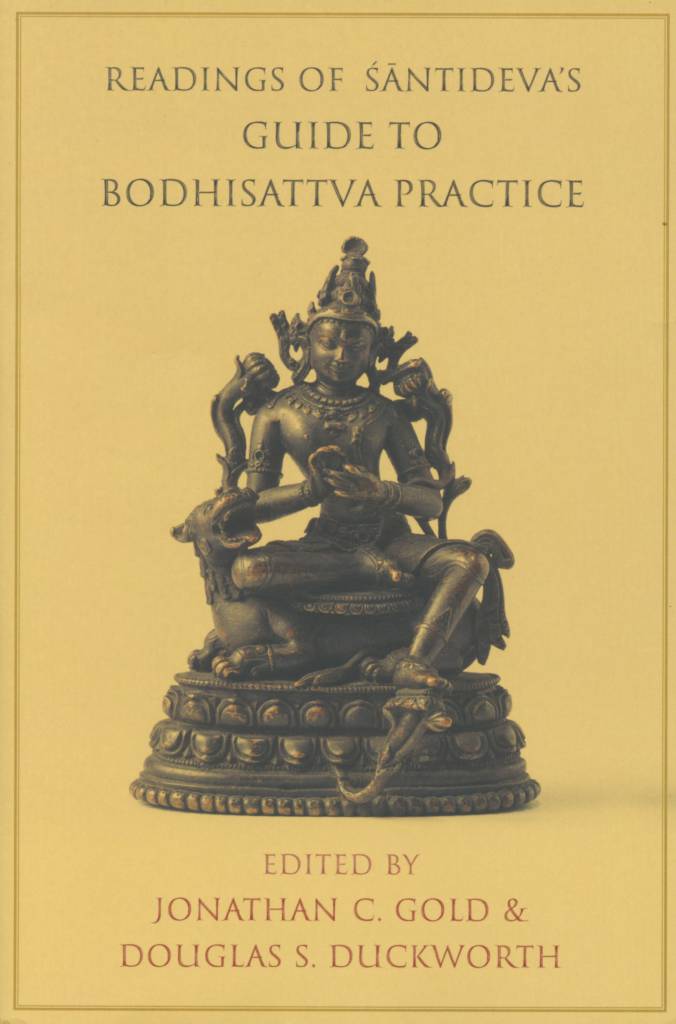
This book serves as a companion to the Bodhicaryāvatāra. The fifteen essays contained here illuminate the Guide's many philosophical, literary, ritual, and ethical dimensions.
1 Scholarship on

An "Introduction to Bodhisattva Practice," the Bodhisattvacaryāvatāra is a poem about the path of a bodhisattva, in ten chapters, written by the Indian Buddhist Śāntideva (fl. c. 685–763). One of the masterpieces of world literature, it is a core text of Mahāyāna Buddhism and continues to be taught, studied, and commented upon in many languages and by many traditions around the world. The main subject of the text is bodhicitta, the altruistic aspiration for enlightenment, and the path and practices of the bodhisattva, the six perfections (pāramitās). The text forms the basis of many contemporary discussions of Buddhist ethics and philosophy.