- Prince Mahāsattva and the Tigress
- The Boy Who Made Flowers Fall from the Sky
- The Golden Deer King
- The Golden Elephant and the Monk's Journey
- The Lamp That Changed Destiny
- The Patient Buffalo
- The Silver Tusked Savior
- The White Cloth
- The Mirror Clarifying the Results of Karma: Chapter 1
- The Mirror Clarifying the Results of Karma: Chapter 10
- The Mirror Clarifying the Results of Karma: Chapter 2
- The Mirror Clarifying the Results of Karma: Chapter 3
- The Mirror Clarifying the Results of Karma: Chapter 4
- The Mirror Clarifying the Results of Karma: Chapter 5
- The Mirror Clarifying the Results of Karma: Chapter 6
- The Mirror Clarifying the Results of Karma: Chapter 7
- The Mirror Clarifying the Results of Karma: Chapter 8
- The Mirror Clarifying the Results of Karma: Chapter 9
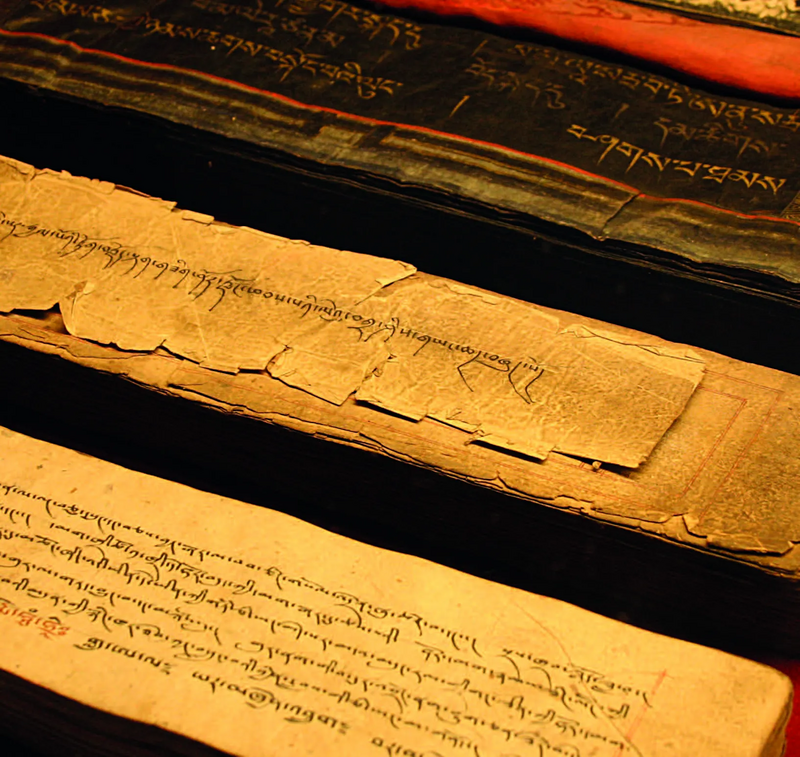
The Mirror Clarifying the Results of Karma (Byang chub sems dpa'i spyod pa la 'jug pa'i sgrung 'grel las 'bras gsal ba'i me long) is a narrative commentary on the anecdotes that appear in the ten chapters of the Bodhicaryāvatāra by Wangchuk Rinchen (c. 12th cent), who was a disciple of Latö Könchok Khar and became the abbot of Nering. The stories presented here were translated by Gregory Forgues and Khenpo Könchok Tamphel.
Chapter 8 Introduction
[In this chapter, stories are about:]
Tsang-jor Chumé, the Fisherman, and Others Lek-kar the Butcher, Chak-kyim, and Bhipo, Tayang, the Novice Monk, and Damzé too, The Lion, Lhachen, Gyal-jung, Dra-gyal, Spibo-kyé, Depa, Pen-chung, and Gom-dé, Sem-kyé and Klu-drub—these are twenty.
Story 1 of Chapter 8
"Oh I am rich and well respected; Lots of people take delight in me.” Nourish such complacency and later, After death, your fears will start!
Page(s) 111
Blankleder, Helena, and Wulstan Fletcher (Padmakara Translation Group), trans. The Way of the Bodhisattva: A Translation of the Bodhicharyāvatāra. By Śāntideva. Rev. ed. Shambhala Classics. Boston: Shambhala Publications, 2006.
Concerning the phrase, "After death, your fears will start!": The Teacher, accompanied by Ānanda, was going for alms in Rājagṛha. In a sewage-filled gully, a place where everyone discarded urine and feces, there was a worm that resembled a human, though with many limbs. It looked at the Teacher and shed tears. The retinue asked, "What is the karma of this being? How long has it been born there?”
The Teacher replied, "In the past, a householder made an offering of ghee and sesame oil to the spiritual community. When an uninvited monk arrived, the caterer saw him and said, ‘We are the host family and we know you are not invited,’ and refused him his share. The monk replied, ‘The patrons make offerings to the entire spiritual community and I am a member of that community. Please give me some.’ The steward, angered, retorted, ‘Instead of eating excrement mixed with urine, do you expect me to serve you oil from seeds?’
"As a result of speaking such harsh words, he has been continuously born in this filthy ditch for ninety billion kalpas. Therefore, you too must be vigilant and restrain the karma of your speech.”
Thus it is taught in The Sūtra on Repaying Kindness.[1]
Story 2 of Chapter 8
Indeed, O foolish and afflicted mind,
You want and crave for all and everything.
All this together will rise up
As pain itself, increased a thousandfold.[p.112]The Way of the Bodhisattva (2006)
Blankleder, Helena, and Wulstan Fletcher (Padmakara Translation Group), trans. The Way of the Bodhisattva: A Translation of the Bodhicharyāvatāra. By Śāntideva. Rev. ed. Shambhala Classics. Boston: Shambhala Publications, 2006.
Page(s) 111
Blankleder, Helena, and Wulstan Fletcher (Padmakara Translation Group), trans. The Way of the Bodhisattva: A Translation of the Bodhicharyāvatāra. By Śāntideva. Rev. ed. Shambhala Classics. Boston: Shambhala Publications, 2006.
དེ་བས་རྣམ་པར་རྨོངས་པའི་ཡིད། །
གང་དང་གང་ལ་ཆགས་གྱུར་པ། ། དེ་དང་དེ་བསྡོངས་སྟོང་འགྱུར་དུ། །
སྡུག་བསྔལ་ཉིད་དུ་གྱུར་ཞིང་ལྡང་། །de bas rnam par rmongs pa'i yid/_/
gang dang gang la chags gyur pa/_/ de dang de bsdongs stong 'gyur du/_/
sdug bsngal nyid du gyur zhing ldang /_/Concerning the phrase, "increased a thousandfold": To a wealthy merchant and his wife, a son was born under the constellation Lower Water.[2] His relatives named him Sun Lower Water. When he grew up, his father passed away, and he became the head of the household. He asked his mother for permission to become ordained, but she replied, "Be ordained after I die.”
The son offered everything he had to his mother, instructing her, "Please give alms to monks, brahmins, and beggars.” However, his mother was extremely miserly. She hid everything her son had entrusted to her and falsely claimed, "I have already given it,” thereby deceiving him. When she saw monks begging, she would say, "Why do you keep wandering through all the houses like beings reborn in the hungry ghost realm?”
She died and was reborn as a hungry ghost. Her son, having given away all forms of generosity, became ordained and eventually attained arhathood. While dwelling near the Ganges River, his mother, now in a terrifying form of a hungry ghost, appeared before him and said, "Son, for twenty-five years I have not even seen a drop of water, let alone food. Please, give me some water!”
Lower Water replied, "Mother, when you were human, did I not urge you to practice generosity?” She answered, "Son, overcome by miserliness, I hid all possessions and gave nothing, not even a little. Now, for my sake, please offer food to the Buddha and the spiritual community, and dedicate the merit in my name. Perhaps I may then be liberated from this realm of hungry ghosts where I remain as mere bone.”
Lower Water responded, "I will do as you say, but you must also be present before the assembly.”
"Son, I will be ashamed to sit there naked,” she said.
"Mother, when you committed negative actions, you felt no shame—why feel ashamed now?” he replied.
"If you insist, I will come,” she agreed.
Lower Water then went to the homes of his relatives to seek support. The following day, he invited the spiritual community for a meal. His mother also appeared before the chief guest, and countless beings saw her. Her appearance caused revulsion in them, and as they were given a Dharma teaching relevant to her condition, they realized the truth.
Then the Blessed One said:
Whatever merit from this generosity, May it follow wherever the hungry ghost goes. May she quickly be liberated, From the terrifying world of hungry ghosts.
After this, the hungry ghost mother died and was reborn as a powerful, magical hungry ghost. Lower Water said, "Mother, now that you have power, please practice generosity!” She replied, "Son! I am still unable to do so.” After repeated persuasion, she offered a single piece of cloth, which Lower Water then gave to the spiritual community. A monk used it as a seat cushion and hung it on a clothesline, but the hungry ghost mother came at night and stole it.
Lower Water replaced the cloth, but she stole it again—three times in total. Then, the monk cut the cloth into pieces and distributed them as cushion patches among the community in the four directions. After that, she could no longer steal it.
Thus it is taught in The White Lotus of Compassion.[3]
Story 3 of Chapter 8
So many are the leanings and the wants of beings That even Buddha could not please them all— Of such a wretch as me no need to speak! I’ll give up such concerns with worldly things.
Page(s) 112
Blankleder, Helena, and Wulstan Fletcher (Padmakara Translation Group), trans. The Way of the Bodhisattva: A Translation of the Bodhicharyāvatāra. By Śāntideva. Rev. ed. Shambhala Classics. Boston: Shambhala Publications, 2006.
སེམས་ཅན་མོས་པ་སྣ་ཚོགས་པ* སྣ་ཚོགས་ལ་་ in the source text. ། །
རྒྱལ་བས་ཀྱང་ནི་མི་མགུ་པ། ། བདག་འདྲ་ངན་པས་སྨོས་ཅི་དགོས། །
དེ་བས་འཇིག་རྟེན་བསམ་པ་བཏང་། །sems can mos pa sna tshogs pa* sna tshogs la [ in the source text.] /_/
rgyal bas kyang ni mi mgu na/_/ bdag 'dra ngan pas smos ci dgos/_/
de bas 'jig rten bsam pa btang /_/Concerning the phrase "So many are the leanings and the wants of beings that even Buddha could not please them all—": King Bimbisara asked, "Blessed One, since you are endowed with compassion and skillful means, why do you not guide these six heretical teachers onto the true path?”
The Blessed One replied, "O King, have you been able to subdue all your subjects?”
"Yes, I have,” the king replied.
"Then,” the Blessed One said, "subdue that low-caste fisherman.”
Thereupon, the king summoned the fisherman and said, "I will bestow upon you great wealth and many possessions—only give up fishing.” But the fisherman did not agree.
Then the king instructed his attendants, "Do not kill this man, but threaten to kill him if he continues to fish.” When threatened, the fisherman said, "Bring my sons and daughters here, and I will say three words to them.” Thinking it might be beneficial, they brought his children to him.
He said to them, "We are surely of the fisherman caste, and even have the caste mark on our foreheads. Do not abandon fishing, not even at the cost of your body or life!”
In the end, the fisherman was not executed. The Blessed One then said, "Because beings have such varied dispositions and inclinations, even I find it difficult to subdue them.”
Hearing this, the king was finally convinced.
Story 4 of Chapter 8
In kindness childish beings take no delight Unless their own desires are satisfied. A childish person, thus, is no true friend. This the Tathāgatas have declared.
Page(s) 112
Blankleder, Helena, and Wulstan Fletcher (Padmakara Translation Group), trans. The Way of the Bodhisattva: A Translation of the Bodhicharyāvatāra. By Śāntideva. Rev. ed. Shambhala Classics. Boston: Shambhala Publications, 2006.
གང་ཕྱིར་བྱིས་པ་རང་དོན་ནི། །
མེད་པར་དགའ་བ་མི་འབྱུང་བས། ། བྱིས་པ་འགའ་ཡང་བཤེས་མིན་ཞེས། །
དེ་བཞིན་གཤེགས་པ་རྣམས་ཀྱིས་གསུངས། །gang phyir byis pa rang don ni/_/
med par dga' ba mi 'byung bas/_/ byis pa 'ga' yang bshes min zhes/_/
de bzhin gshegs pa rnams kyis gsungs/_/Concerning the phrase, ". . . unless their own desires are satisfied. A childish person": When Sunakṣatra [4] was serving the Teacher as his attendant, he was not permitted to leave until the Teacher had fallen asleep. However, eager to visit the naked ascetic,[5] he impatiently said, "Gautama, sleep quickly—Bagula[6] is coming.”
The Buddha then commanded, "Nāgapāla,[7] be less concerned in your heart. There is no one in the world, not even among the gods, who can surpass him. However, your teacher, the naked ascetic Duḥkhamupaiti, will die in seven days from indigestion and will be reborn as a worm in filth, and subsequently in the hell realms.”
Impatiently, Sunakṣatra rushed to the naked ascetic and said, "Let’s prove Gautama’s superknowledge wrong. Abstain from food for seven days!”
After a week, when the ascetic finally ate, he died and was reborn as a worm. Lamenting, he cried, "Gautama is truly omniscient! I mistook the sixth day for the seventh. As a result, I now endure such suffering and will endlessly wander in the hell realms. You must abandon false views and evil companions. Seek forgiveness from Gautama—take refuge in him!”
But Sunakṣatra replied, "You have no idea who this Gautama is. You expect me to ask forgiveness from him? Never! Death comes to all, whether noble or lowly. Stop lamenting and face your suffering with strength.”
He then went to the Buddha and said, "Your superknowledge failed!”
The Buddha responded, "But it is said he has fallen and now endures the sufferings of hell and so forth.”
Hearing this, Nāgapāla became both ashamed and agitated. He declared, "You speak of faults in my teacher. I will no longer serve as your attendant,” and he left.
He joined the ranks of non-Buddhists who slandered the Teacher and proclaimed, "You don’t know him—he has countless faults, such as this and that!”
Maudgalyāyana’s son approached and said, "To slander the Teacher, who is entirely free from faults and defects, leads inevitably to the lower realms. Do not say such things!”
Nāgapāla replied,
What I have seen in him far exceeds what you have only heard. Wet clay does not need more water. With countless deceptive miracles, he has misled patrons and consumed various offerings. If anyone is destined for the lower realms, it will be you—teacher and disciple both! As for me, I have been nurtured by a teacher like the naked ascetic, and I see no reason I would go to hell.
Later, Nāgapāla’s body grew emaciated and broke apart due to fiery black pox. Wailing, he descended into Avīci Hell.
Therefore, one must abandon evil companions and rely on noble ones.
Story 5 of Chapter 8
Alone we’re born, alone we come into the world,
And when we die, alone we pass away.
No one shares our fate, and none our suffering.
What need have I of "friends” who hinder me?[p.114]The Way of the Bodhisattva (2006)
Blankleder, Helena, and Wulstan Fletcher (Padmakara Translation Group), trans. The Way of the Bodhisattva: A Translation of the Bodhicharyāvatāra. By Śāntideva. Rev. ed. Shambhala Classics. Boston: Shambhala Publications, 2006.
Page(s) 113
Blankleder, Helena, and Wulstan Fletcher (Padmakara Translation Group), trans. The Way of the Bodhisattva: A Translation of the Bodhicharyāvatāra. By Śāntideva. Rev. ed. Shambhala Classics. Boston: Shambhala Publications, 2006.
སྐྱེ་ན་གཅིག་པུ་སྐྱེ་འགྱུར་ཞིང་། །
འཆི་ནའང་དེ་ཉིད་གཅིག་འཆི་སྟེ། ། སྡུག་བསྔལ་སྐལ་གཞན་མི་ལེན་ན། །
གེགས་བྱེད་མཛའ་བས་ཅི་ཞིག་བྱ། །skye na gcig pu skye 'gyur zhing /_/
'chi na'ang de nyid gcig 'chi ste/_/ sdug bsngal skal gzhan mi len na/_/
gegs byed mdza' bas ci zhig bya/_/Concerning the phrase, "No one shares our fate, and none our suffering": When a butcher had a beautiful son who reached the age of twelve, his relatives said to him, "You come from a lineage of butchers, so your duty is to kill animals and provide us with sustenance.”
The son replied, "Although I was born into such a lineage, I will not engage in the negative karma of killing. I am afraid of the consequences in the lower realms.”
The relatives responded, "You just do the butchering. The karmic burden will be shared by all of us!”
The boy thought for a moment, then turned to his friend standing nearby and said, "I am feeling unwell. Please strike me on the back with your fist.” When the friend struck him as requested, the boy cried out, "I’m in pain! Are all of you in pain too?”
They replied, "Why would we be in pain if you were struck?”
The boy then said, "Likewise, if I commit the act of killing, I alone must bear the karmic consequences. How could they possibly be shared with you?”
Having spoken thus, he renounced butchery, practiced the Dharma, and attained [awakening].
Story 6 of Chapter 8
Until the time comes round When four men carry me away, Amid the grief of worldly folk— Till then, I will away and go into the forest.
Page(s) 114
Blankleder, Helena, and Wulstan Fletcher (Padmakara Translation Group), trans. The Way of the Bodhisattva: A Translation of the Bodhicharyāvatāra. By Śāntideva. Rev. ed. Shambhala Classics. Boston: Shambhala Publications, 2006.
འཇིག་རྟེན་ཀུན་ནས་གདུངས་བཞིན་དུ། །
ཇི་སྲིད་སྐྱེས་བུ་བཞི་ཡིས་ནི། ། དེ་ལུས་དེ་ནི་མ་བཏེག་པ། །
དེ་སྲིད་དུ་ནི་ནགས་སུ་སོང་། །jig rten kun nas gdungs bzhin du/_/
ji srid skyes bu bzhi yis ni/_/ de lus de ni ma bteg pa/_/
de srid du ni nags su song /_/Concerning the phrase, "Till then, I will away and go into the forest": This Teacher of ours, in a previous life, was born as the son of a king. Because many of the king’s earlier sons had died, the newborn prince was believed to be threatened by demons. To protect him, he was placed in an iron chamber adorned with jewels and safeguarded by many rituals and protections against demonic forces.
While growing up under such guarded conditions, he devoted himself to the extensive study of many fields of knowledge. One day, when the Kumuda festival was held in his homeland, he wished to witness the festivities. He mounted a fine chariot and went forth, accompanied by a large retinue of attendants.
He saw hundreds of thousands of people, including singers, jesters, and musicians, all celebrating joyfully. However, having already cultivated the perception of impermanence, he felt disillusioned. Reflecting on the fleeting nature of such pleasures, he said:
Even this glory of Kumuda Is an object of mindfulness.
With that, he requested permission from his father to renounce worldly life and become ordained. Like an elephant struck by a poisoned arrow, the king was overcome with sorrow and said, "Neither I nor the people have done you any wrong—why do you suddenly wish to go to the forest?”
The son replied, "Who could possibly harm me? I live in constant fear of death. That is why I wish to renounce the world.” Using many examples, the king tried to dissuade him, saying, "Death is an enemy none can escape. Even if you go to the forest, what benefit is there?”
The son responded, "Though death is certain, one who practices the Dharma dies with peace, while a householder dies with regret.”
Thus, he was ordained and meditated in the forest. Through his practice, he attained deep meditative absorption and was reborn in the Brahmā realm.
Story 7 of Chapter 8
Look again, this heap of bones— Inert and dead. Why, what are you so scared of? Why did you not fear it when it walked around, Just like a risen corpse propelled by some strange influence?
Page(s) 116
Blankleder, Helena, and Wulstan Fletcher (Padmakara Translation Group), trans. The Way of the Bodhisattva: A Translation of the Bodhicharyāvatāra. By Śāntideva. Rev. ed. Shambhala Classics. Boston: Shambhala Publications, 2006.
རུས་གོང་ཉིད་དུ་མཐོང་ནས་ནི། །
མི་འགུལ་ཡང་ནི་ཁྱོད་སྐྲག་ན། ། རོ་ལངས་བཞིན་དུ་འགའ་ཡིས་ཀྱང་། །
བསྐྱོད་པར་གྱུར་ན་ཅིས་མི་འཇིགས། །rus gong nyid du mthong nas ni/_/
mi 'gul yang ni khyod skrag na/_/ ro langs bzhin du 'ga' yis kyang /_/
bskyod par gyur na cis mi 'jigs/_/Concerning the phrase, "Just like a risen corpse propelled by some strange influence?”: When Avalokiteśvara was still an ordinary being, he struggled to prevent his wife from engaging in adultery. Seeking advice, he went to his friend Mañjuśrī, who even then was known for his sharp intelligence. Mañjuśrī advised, "Before going to sleep, make your wife undress, let down her hair, place a long curved knife in her hand, and have her repeatedly shout ‘Haha!’”
Following this advice, Avalokiteśvara had his wife perform this ritual every night, until it became a habit.
Later, he departed on a business trip. During his absence, his wife invited her lover. However, when they were about to sleep, she performed her usual bedtime behavior—undressed, loosened her hair, held a knife, and shouted "Haha!” The adulterer, startled by her actions, fled in fear.
On his return journey, Avalokiteśvara encountered a man on the road—unbeknownst to him, the adulterer. Curious, he asked, "Is there anything unusual or notorious in this area?” The man replied, "Yes, there’s a woman here who does bizarre things before bed—she undresses, holds a knife, and shouts ‘Haha!’”
Immediately, Avalokiteśvara recognized him as the adulterer. He returned home and, that night, slept in a head-to-toe position with his wife.
The next morning, he said to her, "Such and such a man visited you while I was away, and this is what you said and did.” Realizing that her secret had been discovered, the wife thought, "My husband must possess super knowledge.” From then on, she refrained from infidelity.
Story 8 of Chapter 8
Why does the mind, intent on filthiness, Neglect the fresh young lotus blossom, Opened in the sunlight of a cloudless sky, To take joy rather in a sack of dirt?
Page(s) 117
Blankleder, Helena, and Wulstan Fletcher (Padmakara Translation Group), trans. The Way of the Bodhisattva: A Translation of the Bodhicharyāvatāra. By Śāntideva. Rev. ed. Shambhala Classics. Boston: Shambhala Publications, 2006.
སྤྲིན་བྲལ་ཉི་ཟེར་གྱིས་ཕྱེ་བའི། །
པདྨ་གཞོན་ནུ་སྤངས་ནས་ནི། ། མི་གཙང་ཞེན་པའི་སེམས་ཀྱིས་ནི། །
མི་གཙང་གཟེབ་ལ་ཅི་ཕྱིར་དགའ། །sprin bral nyi zer gyis phye ba'i/_/
pad+ma gzhon nu spangs nas ni/_/ mi gtsang zhen pa'i sems kyis ni/_/
mi gtsang gzeb la ci phyir dga'/_/Concerning the phrase, "Opened in the sunlight of a cloudless sky”: While the Blessed One was in Śrāvastī, teaching the Dharma to his retinue, a crow flew overhead and dropped feces on his right shoulder before flying away. The disciples asked, "What kind of omen is this?”
The Blessed One replied, "After my parinirvāṇa, a brahmin named Aśvaghoṣa will arise and cause my teachings to decline. This is a sign of that.”
When they asked how he would be subdued, the Blessed One said, "He will have received the accomplishment from Īśvara that makes him invincible to beings born from a womb. Only someone miraculously born will be able to defeat him.” Upon hearing this, one person in the retinue made a vow: "At that time, may I be miraculously born and become his antidote!”
Later, that crow was reborn as Aśvaghoṣa, and, at the same time, in the land of Siṃhala, a lotus flower bloomed. When the rays of the sun opened its petals, a miraculously born child emerged from it. This was Āryadeva, a youth of exceptional beauty, particularly known for his eyes. He became ordained, possessed innate wisdom, and, while studying under Nāgārjuna, resided at Śrīparvata in the South.
At one time, the Vitara’s (Vihara) curriculums fell under the control of non-Buddhists, causing great distress among the monks. In response, they prayed to a stone statue of Mahākāla, from whose heart a crow emerged. They tied a message to its neck that read, "Nālandā Institute is under non-Buddhist control!” The crow flew to Nāgārjuna and Āryadeva. After reading the message, Nāgārjuna and Āryadeva debated—one defending the doctrine of Aśvaghoṣa—yet Āryadeva remained undefeated. Then, concealing his robes in a bundle of wood, Āryadeva traveled to Nālandā. When he announced, "I am Āryadeva,” the monastic community rejoiced.
During his meal, Aśvaghoṣa approached him and asked, "Will you drink white gruel or black?” Āryadeva replied, "White.” Suspicious, Aśvaghoṣa asked, "Where did this head come from?” Āryadeva answered, "From the neck.” He asked, "And the eyes?” Āryadeva said, "From the path.” Aśvaghoṣa objected, "That’s not what I asked!” A debate was scheduled for the next day.
The Aśvaghoṣa side consisted of four debaters: a sister, a parrot, an alabaster stone, and Aśvaghoṣa himself. That night, Āryadeva prepared thoroughly. He trained a cat to recognize the parrot, smeared the debate platform with sesame oil, placed a naked lay practitioner adorned with flowers on his buttocks and genitals, and tied a shoe to Aśvaghoṣa’s ceremonial canopy.
At the debate, Aśvaghoṣa said, "I don’t have to involve myself! This alabaster stone will answer for me!” But, as he brought it out, it failed to write anything on the oiled slippery floor. Then he brought out the parrot, but when it began to speak, Āryadeva released the cat, and the parrot flew away.
Then, when he brought out the sister, Āryadeva unveiled the flower-decorated naked lay man. Ashamed, she fled.
That is when Aśvaghoṣa himself said, "You Buddhists lack compassion! You sent a cat against a parrot!”
Āryadeva responded, "My mother is performing confession to purify the nonvirtue.”
Aśvaghoṣa objected, "The nonvirtue is yours! What benefit is your mother’s confession?”
Āryadeva said, "If the cat kills the parrot, why would that affect me?”
Left with no other option, Aśvaghoṣa looked at Āryadeva with his three eyes, and Āryadeva retorted:
Even Indra, with a thousand eyes, could not see suchness. Likewise, what can Aśvaghoṣa see with three eyes? Āryadeva, with even one eye, can see all. Hence, what’s the use of displaying three eyes to me?
He then stamped his foot on the ground, revealing eyes all over his soles, and showed them to Aśvaghoṣa.
Humiliated, Aśvaghoṣa looked up. Just then, a drop of water fell from the shoe tied to the canopy and landed in his mouth. This caused his tutelary deity to fall asleep, leaving him speechless. In despair, he stabbed a razor into his own tongue and leapt down. He (Aśvaghoṣa) then made the Buddha’s teachings flourish.
Story 9 of Chapter 8
If still you doubt such filthiness, Though it is very plain for all to see, Go off into the charnel grounds; Observe the fetid bodies there abandoned.
Page(s) 118
Blankleder, Helena, and Wulstan Fletcher (Padmakara Translation Group), trans. The Way of the Bodhisattva: A Translation of the Bodhicharyāvatāra. By Śāntideva. Rev. ed. Shambhala Classics. Boston: Shambhala Publications, 2006.
གལ་ཏེ་མི་གཙང་འདི་འདྲ་བ། །
མངོན་སུམ་གྱུར་ཀྱང་ཐེ་ཚོམ་ན། ། དུར་ཁྲོད་དག་ཏུ་བོར་བའི་ལུས། །
མི་གཙང་གཞན་ཡང་བལྟ་བར་གྱིས། །gal te mi gtsang 'di 'dra ba/_/
mngon sum gyur kyang the tshom na/_/ dur khrod dag tu bor ba'i lus/_/
mi gtsang gzhan yang blta bar gyis/_/Concerning the phrase, "Go off into the charnel grounds; observe the fetid bodies there abandoned": In the Taravi Institute, there was a novice monk who was deeply attached to sensual desire. Drawn especially to the touch of women, he was on the verge of abandoning his monastic vows. At that time, Śāriputra led him to the charnel ground at Śītavana, where he showed him—step by step—the corpses of women: bloated, festering, and reduced to skeletons. While doing so, he taught various aspects of the Dharma, saying, "Such is their nature.” But the novice remained unmoved.
Then, pointing to worms in the decaying womb of a woman, Śāriputra explained many aspects of impurity, asking, "Who would be attached to such a thing?” Still, the novice replied, "If all these worms are happy there, then . . .” and refused to listen.
When Śāriputra reported this to the Blessed One, the Buddha said, "He is to be tamed by me alone,” and personally subdued him. Thus, the Teacher tamed the novice.
Story 10 of Chapter 8
Thus Supuṣhpachandra,99The Bodhisattva Supuṣhpachandra was forbidden by the king Shūradatta to teach the Dharma on pain of death. Knowing, however, that many would benefit from his teaching, Supuṣhpachandra disobeyed and went cheerfully to his execution. The story is found in the Samādhirāja-sūtra. Knowing that the king would cause him harm, Did nothing to escape from tribulation, That the pains of many should be ended.
Page(s) 124
Blankleder, Helena, and Wulstan Fletcher (Padmakara Translation Group), trans. The Way of the Bodhisattva: A Translation of the Bodhicharyāvatāra. By Śāntideva. Rev. ed. Shambhala Classics. Boston: Shambhala Publications, 2006.
དེས་ན་མེ་ཏོག་ཟླ་མཛེས་ཀྱིས། །
རྒྱལ་པོའི་གནོད་པ་ཤེས་ཀྱང་ནི། ། བདག་གི་སྡུག་བསྔལ་མ་བསལ་ཏེ། །
མང་པོའི་སྡུག་བསྔལ་ཟད་འགྱུར་ཕྱིར། །des na me tog zla mdzes kyis/_/
rgyal po'i gnod pa shes kyang ni/_/ bdag gi sdug bsngal ma bsal te/_/
mang po'i sdug bsngal zad 'gyur phyir/_/Concerning the phrase, "Thus Supuṣhpachandra": In the past, when the Buddha Exalted Jewel King appeared in Jambudvīpa, he established countless sentient beings in awakening. After he passed into parinirvāṇa, and as his teachings approached decline, a king named Gift of the Hero[8] arose in the Palace Endowed with Jewels. He had a thousand sons, five hundred daughters, and eighty-four thousand queens.
At that time, due to the decline of the teaching, the forces of darkness prevailed. Many inauspicious events such as famine and darkness afflicted the land. Seven thousand bodhisattvas who were present were wrongly blamed for these misfortunes and expelled. Not far from the king’s palace was the Forest Grove of Samantabhadra.[9] The bodhisattvas went there and became disciples of the Dharma teacher Supuṣhpachandra. Listening to his teachings, they diligently practiced yoga.
Supuṣhpachandra, dwelling alone in perfect meditative absorption, saw with his divine eye that many bodhisattvas from various realms in the ten directions had been born in that land. He perceived that teaching them the Dharma would shorten his life, but if he refrained, sentient beings would fall into wrong paths. Rising from meditation, he said to the assembled bodhisattvas, "I will go to the city to teach the Dharma.”
They replied, "You are beautiful and pleasing to the mind, but the city is filled with those who abandon the holy Dharma, slander the noble ones, and are dominated by wrong views and pride. Jealous individuals like the king may take your life, which would be unfortunate!”
He responded, "If I were to protect my life, I would not be protecting the Dharma.”
Saying this, without even thinking of food or drink, he went and taught the Dharma during the day, establishing hundreds of thousands in the irreversible stage. At night, he remained in meditative absorption near the stūpa that enshrined a nail of the Blessed One.
For six days, he neither ate nor engaged in any other activity. On the seventh day, he went to the Palace Endowed with Jewels. The king rode in a jewel chariot, led by eight hundred maidens holding jewel cords, accompanied by royalty, brahmins, and other dignitaries, with maidens and queens carried in jewel palanquins. As soon as they saw Supuṣhpachandra, they developed faith, descended from their vehicles, prostrated before him, and—having heard the Dharma—were established in the irreversible stage.
The king, however, thought, "Alas! All these people have come under the influence of this monk and have turned away from me!” Supuṣhpachandra stood in the king’s path, and due to slight discomfort in his eye, blinked. The king, overcome with jealousy, thought, "He has looked at my queens with desire and even made a gesture with his eyes!” and asked, "Who is willing to kill this monk?”
When no one came forward, he turned to his thousand sons, saying, "Take the life of this monk!” They also refused. The king thought, "If even my sons disobey me, what hope is there for others? Now I am truly alone. Who will kill this monk?”
At that moment, not far away, there was an executioner named Joyful One. The king said, "A great reward awaits you. Can you kill this monk?” Joyful One, delighted, replied, "Your Highness, I will do my best!” The king handed him a weapon and commanded, "Because he approached my queens, cut off one foot. Because he made a gesture, cut off both hands. Because he looked at them with desire, gouge out both eyes with a nail puller! Also cut off his nose and ears!”
Joyful One dismembered him into eight pieces. From his wounds, blood flowed in the form of milk. On each severed piece appeared the eight auspicious symbols and the thirty-two major marks. Radiant light emanated in ten directions and dissolved into his body. The crowd, who had fainted, regained consciousness and returned to the palace.
The king, now miserable, wandered the forest for seven days. Upon returning, he saw Supuṣhpachandra’s body, still radiant, unchanged after death, with the auspicious marks intact. Realizing, "He was certainly one established in the irreversible stage of unsurpassed awakening, and I have created the karma to be reborn in Avīci Hell,” he was struck with horror.
At that moment, eighty-four thousand gods spoke from the sky in one voice: "It is just so! By that karma, you will swiftly be burned in Avīci Hell!”
The king, hair standing on end, wept and confessed with deep remorse. He enshrined the sacred remains in a palanquin, cremated them with sandalwood, agarwood, oil, and other offerings, and built a precious stūpa for them, where he made confession and offerings.
Renouncing the worldly pleasures of kingship—the root of all suffering—he adopted ethical conduct and practiced purification. Yet, despite his vows of restoration, as soon as his body perished, he fell into Avīci Hell.
Ultimately, due to his confession, renunciation, and appropriate thought process, he attained the body of indestructibility.
Thus it is said.
Story 11 of Chapter 8
And so we should be undeterred by hardships, For through the influence of use and habit, People even come to grieve For those whose very names struck terror in their hearts!
Page(s) 126
Blankleder, Helena, and Wulstan Fletcher (Padmakara Translation Group), trans. The Way of the Bodhisattva: A Translation of the Bodhicharyāvatāra. By Śāntideva. Rev. ed. Shambhala Classics. Boston: Shambhala Publications, 2006.
དཀའ་ལས་ཕྱིར་ལྡོག་མི་བྱ་སྟེ། །
འདི་ལྟར་གོམས་པའི་མཐུ་ཡིས་ནི། ། གང་གི་མིང་ཐོས་འཇིགས་པ་ཡང་། །
དེ་ཉིད་མེད་ན་མི་དགར་འགྱུར། །dka' las phyir ldog mi bya ste/_/
'di ltar goms pa'i mthu yis ni/_/ gang gi ming thos 'jigs pa yang /_/
de nyid med na mi dgar 'gyur/_/Concerning the phrase, "People even come to grieve, for those whose very names struck terror in their hearts!": It is like this: Earlier, King Sudapa was frightened even to hear the name "lion." But later, while out hunting, he became the consort of a lioness. Thereafter, he was unhappy whenever she was not around.
Story 12 of Chapter 8
And for the sake of profit and position
Some there are who even kill their parents,
Or steal what has been offered to the Triple Gem,
Because of which, they’ll burn in hell of Unrelenting Pain.[p.127]The Way of the Bodhisattva (2006)
Blankleder, Helena, and Wulstan Fletcher (Padmakara Translation Group), trans. The Way of the Bodhisattva: A Translation of the Bodhicharyāvatāra. By Śāntideva. Rev. ed. Shambhala Classics. Boston: Shambhala Publications, 2006.
Page(s) 126
Blankleder, Helena, and Wulstan Fletcher (Padmakara Translation Group), trans. The Way of the Bodhisattva: A Translation of the Bodhicharyāvatāra. By Śāntideva. Rev. ed. Shambhala Classics. Boston: Shambhala Publications, 2006.
གང་ཞིག་ཁེ་དང་རིམ་གྲོའི་ཕྱིར། །
ཕ་དང་མ་ཡང་གསོད་བྱེད་ཅིང་། ། དཀོན་མཆོག་གསུམ་གྱི་དཀོར་བརྐུས་ནས། །
དེས་ནི་མནར་མེད་བསྲེག་འགྱུར་ན། །gang zhig khe dang rim gro'i phyir/_/
pha dang ma yang gsod byed cing /_/ dkon mchog gsum gyi dkor brkus nas/_/
des ni mnar med bsreg 'gyur na/_/Concerning the phrase, "Some there are who even kill their parents": Two hundred years after the Teacher passed away, in Bharuṇa in the South, there was a brahmin named Perfect God.[10] He was as wealthy as Vaiśravaṇa, but lacking a son, he prayed to the gods. After ten months, a boy was born, and he was named Great God.[11] After celebrating the birth of his son, the father traveled to the ocean. Many years passed before he returned, and in the meantime, the son grew up quickly and became intimate with his own mother.
The mother said, "If you wish to live with me, you must kill your father.” Accordingly, the son killed his father on the road. But the mother, being naturally inclined toward adultery, took another lover. Enraged, the son killed his mother as well.
Later, he listened to the Dharma from an arhat who was the object of his veneration. During a teaching, the arhat explained the law of karma and its results, saying, "Among all nonvirtues, the five inexpiable deeds are the heaviest.” Burdened by guilt, the son thought, "This man definitely knows my crimes through his supernormal knowledge.” With this suspicion, he also killed the arhat—an act that left him deeply despondent.
He gave away all his possessions to anyone who would take them and wandered to the central region. There, he dressed as a novice and lived alone in seclusion, begging for sustenance.
Some wood collectors, cowherds, and others encountered him and requested teachings. He shared fragments of Dharma he had heard from the arhat. These people praised him, and soon hundreds of thousands gathered. His fraud and deception brought him wealth and gifts, which he redistributed among them. As a result, everyone developed faith in him and came to believe he was an arhat.
Crowds gathered around the false teacher, who claimed to possess superhuman qualities. Sitting inside a hut, whenever offerings were brought, he pretended to be in meditation. He would think: "For the sake of lust, I have killed my father, mother, and an arhat. Now I deceive many people with lies. Surely, my destiny is only hell.” And, overcome with despair, he lamented aloud, "Alas, I am suffering!”
His disciples, hearing his cries, asked, "If you are an arhat, one free from suffering, why do you lament?” He replied, "I am reciting the four noble truths.”
When they asked for Dharma teachings, he said, "I, too, have doubts.” Surprised, they asked, "Can an arhat have doubts?” He answered, "Yes, only the Buddha has completely abandoned doubt.”
They asked him to perform miracles. He said, "This morning, my powers diminished.” "Can an arhat’s powers diminish?” they asked. "Yes, that’s why they are called ‘arhats subject to decline.’”
As he continued indulging in sense pleasures, they asked, "Do arhats also have desire?” He said, "Yes, if they fail to guard their body and mind.” "So, must they guard them?” they asked. "They must,” he replied. "That’s why they are called ‘arhats who guard afterward.’”
When he died, the earth split open, and he descended to Avīci Hell with that very body.
Story 13 of Chapter 8
And for the sake of profit and position
Some there are who even kill their parents,
Or steal what has been offered to the Triple Gem,
Because of which, they’ll burn in hell of Unrelenting Pain.[p.127]The Way of the Bodhisattva (2006)
Blankleder, Helena, and Wulstan Fletcher (Padmakara Translation Group), trans. The Way of the Bodhisattva: A Translation of the Bodhicharyāvatāra. By Śāntideva. Rev. ed. Shambhala Classics. Boston: Shambhala Publications, 2006.
Page(s) 126
Blankleder, Helena, and Wulstan Fletcher (Padmakara Translation Group), trans. The Way of the Bodhisattva: A Translation of the Bodhicharyāvatāra. By Śāntideva. Rev. ed. Shambhala Classics. Boston: Shambhala Publications, 2006.
གང་ཞིག་ཁེ་དང་རིམ་གྲོའི་ཕྱིར། །
ཕ་དང་མ་ཡང་གསོད་བྱེད་ཅིང་། ། དཀོན་མཆོག་གསུམ་གྱི་དཀོར་བརྐུས་ནས། །
དེས་ནི་མནར་མེད་བསྲེག་འགྱུར་ན། །gang zhig khe dang rim gro'i phyir/_/
pha dang ma yang gsod byed cing /_/ dkon mchog gsum gyi dkor brkus nas/_/
des ni mnar med bsreg 'gyur na/_/Concerning the phrase, "steal what has been offered to the Triple Gem": To the north of Nālandā, in a town called Sukhyen, which had underground caves, a whirlwind emanating flames appeared amidst a group of children at play. When the children hurled stones at it, they accidentally struck a boy who fell unconscious after eating food. Half of his feet twisted to the sides, his skin became scaly, flames flickered from his mouth, and he began to abuse everyone—in perfect Sanskrit.
Nearby, a yogi was meditating on loving-kindness. Hearing this, he thought, "Amazing! Even such a child speaks Sanskrit!” He approached the boy and listened. The child did not abuse him. When the yogi asked why, the child replied, "I abuse these children because they listen with a hostile mind. I do not abuse you because you listen with a pure mind.”
"Well then, tell me—what karma led to your birth here?” the yogi asked. The child responded, "Remove these young novices from here. Then I will tell you truthfully, for you are a good yogi of loving-kindness.” When the yogi dismissed them, the child continued:
I am Royal Arising,[12] a former abbot of Nālandā. In my arrogance, I thought of myself as the owner of the monastery. Like a bully, I halved the portion of rice dregs intended for the saṅgha. As a result, I have been reborn as a hungry ghost with a burning belly—flames constantly flicker from my mouth and nostrils, consuming my entrails. Because I once entered the monastery where the Three Baskets were kept without removing my shoes, my feet are now twisted to the sides. Because I used the oil offered to the statue of the Muni in the assembly hall to massage myself—without replacing it—my skin is scaly and covered in flakes of dead skin.
Misusing property is dangerous! Of the Three Jewels, the gravest karma comes from abusing the property of the spiritual community. I will be freed after fifteen thousand years, when these karmas are exhausted. After that, I will fall into the Avīci Hell.
When the yogi asked, "Is there no way to purify this?” the child replied, "Because I disregarded karma and its results, there is absolutely no way.”
The yogi said,
If one is circumspect regarding the property of the spiritual community, the benefit is immense. My attendant, Glorious Quality,[13] cherished the community more than his own life and feared its property like poison. At the time of his death, he passed away surrounded by rainbows and celestial music, welcomed by gods and Dharma protectors. By now, he must be free from samsara.
The yogi then asked, "Why did you ask to exclude the young novices?” The child explained, "They are all my former disciples. If they hear my story, I would be ashamed, and they would become discouraged.” After saying this, he fainted.
When he regained consciousness, the yogi asked, "Where are you going now, and for what purpose?” He replied, "I’m going to the upper valley to obstruct the virtuous practice of a yogi living there.”
The yogi admonished, "You are an abbot, one who knows the Three Baskets. How disgraceful to do such things!” The child replied, "You are right. But I have no control over my mind.”
The next day, the child was struck again. His entire body became hot, and flames flickered from his mouth and nostrils, setting the surroundings ablaze. The yogi from the day before was called. He performed a wrathful visualization, but the child only laughed and said, "I have attained stability in the wrathful generation stage—I fear no one with worldly powers!”
When people asked, "Then why have you come to him?” he answered, "Even if I find a little food, eating it is like adding fuel to the fire in my belly. This yogi is someone from my past. He has come with the intention of feeding the hungry, but in doing so, he has become the condition that invokes my karma.”
People then asked, "Why is all this happening?” He said, "When I was abbot, this yogi came to Nālandā to study grammar. He witnessed my lack of yogic discipline and how I misused the lifestyle, water, and firewood meant for the spiritual community.”
They asked, "Has your karma been exhausted?” He replied, "I have just begun to experience its ripening. My next rebirth will be again in the realm of hungry ghosts.”
"Is there a way to purify it?” they asked. He responded, "Purification is possible only if I can honor the same spiritual community, and confess and admit my faults before them.”
Then, as the yogi generated loving-kindness toward him, the child folded his palms and said, "Would even my mother be capable of acting so graciously?” Shedding tears, he departed and never returned.
The news became public, and was discussed throughout the spiritual community. Everyone who gathered there realized that he had been their own abbot—and they wept in despair.
Therefore, the Blessed One said, "One should regard the property of the spiritual community as if it were a parasite in one’s flesh.”
Story 14 of Chapter 8
Casting far away abundant joys That may be gained in this or future lives, Because of bringing harm to other beings, I ignorantly bring myself intolerable pain.
Page(s) 128
Blankleder, Helena, and Wulstan Fletcher (Padmakara Translation Group), trans. The Way of the Bodhisattva: A Translation of the Bodhicharyāvatāra. By Śāntideva. Rev. ed. Shambhala Classics. Boston: Shambhala Publications, 2006.
མཐོང་དང་མ་མཐོང་བདེ་འགྲུབ་པའི། །
ཕུན་སུམ་བདེ་སྐྱིད་ཡོངས་བོར་ཞིང་། ། གཞན་ལ་སྡུག་བསྔལ་བྱས་པའི་རྒྱུས། །
རྨོངས་རྣམས་[p.95]Byang chub sems dpa'i spyod pa la 'jug pa rtsa ba dang 'grel pa (1990)Slob dpon zhi ba lha and Mkhan po kun dpal. Byang chub sems dpa'i spyod pa la 'jug pa rtsa ba dang 'grel pa. Khreng tu'u: Si khron mi rigs dpe skrun khang, 1990.

mthong dang ma mthong bde 'grub pa'i/_/
phun sum bde skyid yongs bor zhing /_/ gzhan la sdug bsngal byas pa'i rgyus/_/
rmongs rnams [p.95]Byang chub sems dpa'i spyod pa la 'jug pa rtsa ba dang 'grel pa (1990)Slob dpon zhi ba lha and Mkhan po kun dpal. Byang chub sems dpa'i spyod pa la 'jug pa rtsa ba dang 'grel pa. Khreng tu'u: Si khron mi rigs dpe skrun khang, 1990.
Concerning the phrase, "I ignorantly bring myself intolerable pain":[14] At the Domestic Fowl[15] Temple, there was a monastic residence where about five hundred people polluted the drinking water source of the spiritual community. As a result, rice could not be cooked, and the Dharma activities of the community were disrupted.
At that time, the bodhisattva Complete Victory Over Foes was residing there as the leader of the spiritual community. He was invited to attend the Sāgā Star Festival at Vajrāsana. While he was on his way, a great sandstorm erupted. In the midst of it, he heard the piercing cry of a woman. Looking around, he saw an elderly female hungry ghost who had given birth to five hundred sons.
The hungry ghost cried, "Bodhisattva, give us food and drink!” The bodhisattva turned back and offered water, but it would not pass through their throats. So he blessed the water with the mantra of the wrathful deity Acala, and then gave it to them. After drinking, they were satisfied.
The hungry ghost woman said, "If you go to Vajrāsana, please give a message. My husband went out to seek food, and six months have passed. Please tell him to bring food quickly. I am about to die.”
When the bodhisattva replied, "I do not know him,” she said, "He is missing one eye, one ear, and one of each hand and foot.” When the bodhisattva said, "He won’t be visible to me,” she gave him a substance and said, "If you hold this, you will see him.” So she sent him off with the object.
When the bodhisattva arrived at Vajrāsana, he did not forget the hungry ghost woman’s message, out of compassion. As he went toward the Yamantaka temple in the south and searched, he saw a crowd of hungry ghosts, their bodies pressed tightly together. When he commanded them to rise, they stood up, and the husband of the hungry ghost woman emerged from beneath the crowd.
When the bodhisattva delivered the message, the hungry ghost said, "For six months I have searched for food and found nothing. Just now, I managed to grab some mucus discarded by a human, but you saw how all the others beat me for it—even though the mucus was already dried.”
The bodhisattva said, "I will give you food and drink. Take it and go!” The ghost replied, "Others will snatch it away.” Then the bodhisattva blessed two pots of food and drink with the mantra of Acala and gave them to him. The ghost returned to his wife and children, and when they ate, they were satisfied.
After attending the Sāgā Star Festival, the bodhisattva and his retinue resumed their journey toward Bangala. On the way, they met the previous group of hungry ghosts. They prostrated before the bodhisattva, and he gave them some food and drink.
When the bodhisattva asked, "How many of you are there?” they replied, "Five hundred.” When he asked, "Due to what karma were you born like this?” They said, "You Jambudvīpans are hard to convince, so we will not say.” He said, "Since I have seen your condition directly, I believe.” Then they confessed, "We polluted the water of the spiritual community at the Domestic Fowl Temple and interrupted Dharma teachings. That is the cause.”
They asked, "Is there a method by which we may be liberated?” The bodhisattva answered, "There is. Focus your mind one-pointedly and recite the six-syllable mantra.” As instructed, the hungry ghosts began reciting, and in that very moment, they died and were reborn in the Heaven of the Thirty-Three.
Story 15 of Chapter 8
Their hopeless craving brings them misery, And evil schemes invade their minds, While those with free, untrammeled hearts, Will never know an end of excellence.
Page(s) 134
Blankleder, Helena, and Wulstan Fletcher (Padmakara Translation Group), trans. The Way of the Bodhisattva: A Translation of the Bodhicharyāvatāra. By Śāntideva. Rev. ed. Shambhala Classics. Boston: Shambhala Publications, 2006.
ནུས་མེད་འདོད་པ་ཉོན་མོངས་དང་། །
བསམ་པ་ཉམས་པའང་སྐྱེ་བར་འགྱུར། ། གང་ཞིག་ཀུན་ལ་ལྟོས་མེད་པ། །
དེ་ཡི་ཕུན་ཚོགས་ཟད་མི་ཤེས། །nus med 'dod pa nyon mongs dang /_/
bsam pa nyams pa'ang skye bar 'gyur/_/ gang zhig kun la ltos med pa/_/
de yi phun tshogs zad mi shes/_/Concerning the phrase, "evil schemes invade their minds": In the first eon, in this Jambudvīpa, a beautiful boy was born from a swelling on the crown of the head of King Attendant.[16] Astrologers prophesied that he would become a ruler of the four continents, and he was given the name Born from the Crown.
When his father passed away, he was requested to act as the regent. He declared, "If I possess the power to be king, may all things arise effortlessly!” As he spoke, whatever was desired began to rain down across Jambudvīpa. He asked his ministers, "By whose power is this happening?” They replied, "It is due to the king’s virtue and the merit of sentient beings.” Then he said, "May this rain fall on whomever it is meant for—whether me or all sentient beings.” Immediately, the rain ceased everywhere else but continued to fall within his palace for seven days.
After enjoying happiness in Jambudvīpa for many hundreds of thousands of years, a yakṣa named Abode of God, whom only he could see, said to him, "Compared to this, the wealth in the Superior Body continent is far greater!” At the moment he wished to go there, his divine wheels rose into the sky. Welcomed by the vassal kings, he enjoyed great joy and prosperity there for thousands of years.
Following the guidance of Abode of God, he then traveled to the continents of Bountiful Cow, Unpleasant Sound, and their four subcontinents, enjoying them in the same way as before.
Again, he was urged to ascend to the Heaven of the Thirty-Three. His seven royal emblems rose into the air, and the king, along with his retinue, flew through the sky. As they traveled, the fodder and water of their horses and elephants fell upon five hundred ṛṣis meditating deep within Mount Meru. Startled by the falling waste, the ṛṣis asked what it was. One wise sage explained, "Born from the Crown is ascending to the Heaven of the Thirty-Three, and what has fallen is the excrement and urine of his horses and elephants.” Enraged, the ṛṣis bound the king and his retinue with the power of meditative absorption, preventing them from going further.
Realizing what had happened, the king declared, "If I possess the power of a true king, may these ṛṣis prostrate to me and become my servants!” Instantly, all of them became his servants, and he continued on his journey accompanied by them.
When the gods saw him approaching, they were terrified and locked all the gates with three layers of barriers. But as Born from the Crown blew his conch and drew his bow, all the gates opened on their own. Indra, unable to resist him, swiftly came to greet him and laid out a seat for him. The king then enjoyed the pleasures of the celestial realms of six heavenly kings.
During the reign of the last of the six kings, named Bodhisattva Kāśyapa, the army of demigods triumphed over the gods. As King Kāśyapa fled, Born from the Crown again blew his conch and drew his bow, cornering the demigods in a pool of water. Pride arose in him: "Here, two rulers are not needed. I shall kill him and rule alone!” But as soon as this evil thought arose, he fell to the doorway of his former palace and soon died there.
A crowd gathered, asking, "Who is this?” The former minister, Island Protector, recognized him. When asked, "What should we tell the people?,” he replied, "Say this: Not satisfied with ruling the four continents and the heavenly realms, his evil thought caused him to fall from the Heaven of the Thirty-Three. After dying here in Jambudvīpa, he has now gone to the Avīci Hell.” With these sorrowful words, the old minister passed away in grief.
Such immense wealth and power, it was said, came as the karmic result of having previously been a humble bean seller who, with deep faith and respect, had once offered four and a half beans to Buddha Paruṣa.
Story 16 of Chapter 8
Their hopeless craving brings them misery, And evil schemes invade their minds, While those with free, untrammeled hearts, Will never know an end of excellence.
Page(s) 134
Blankleder, Helena, and Wulstan Fletcher (Padmakara Translation Group), trans. The Way of the Bodhisattva: A Translation of the Bodhicharyāvatāra. By Śāntideva. Rev. ed. Shambhala Classics. Boston: Shambhala Publications, 2006.
ནུས་མེད་འདོད་པ་ཉོན་མོངས་དང་། །
བསམ་པ་ཉམས་པའང་སྐྱེ་བར་འགྱུར། ། གང་ཞིག་ཀུན་ལ་ལྟོས་མེད་པ། །
དེ་ཡི་ཕུན་ཚོགས་ཟད་མི་ཤེས། །nus med 'dod pa nyon mongs dang /_/
bsam pa nyams pa'ang skye bar 'gyur/_/ gang zhig kun la ltos med pa/_/
de yi phun tshogs zad mi shes/_/Concerning the phrase, "Will never know an end of excellence": Not far from Śrāvastī, there lived a man named Gentle One, who had served the previous Tathāgatas. At that time, Prasenajit was discontented and greedy for sensual pleasures. He had seized the wealth of five hundred householders and was abducting people from the region.
To tame him, Gentle One, upon finding in a heap of trash a jewel more valuable than all the wealth of Jambudvīpa, made an announcement:
I will give this to whoever is truly impoverished!” Many local beggars gathered, but he refused to give them the jewel, saying, "I will give it to Prasenajit, for he is far more impoverished than you.
When Prasenajit heard this, he asked, "Why do you say I am impoverished, when I possess so many treasure stores?”
To this, Gentle One replied:
Though you possess treasures beyond measure, You, who do not know contentment and are consumed by greed, Are the poorest in this world.
Hearing this, Prasenajit challenged him: "Who will testify to this?”
Gentle One responded, "The Lord of Dharma! I will invite him here.”
But Prasenajit said, "That is not necessary—he will come.”
And he spoke these words:
O Omniscient King who sees all, Please know my thoughts. Awakened One, please come into my presence.
Thus summoned, the Lord of Dharma appeared. When Prasenajit asked him, he affirmed: "Gentle One is right.”
Then the Buddha taught about the faults of sensual desire. As a result, King Prasenajit renounced all his possessions, including his household and kingdom. He gave everything away and generated the mind of awakening.
Story 17 of Chapter 8
Therefore for the increase of my body’s wants, I’ll give no space, no opportunity. And of possessions, those things are the best That do not captivate by their attractiveness.
Page(s) 134
Blankleder, Helena, and Wulstan Fletcher (Padmakara Translation Group), trans. The Way of the Bodhisattva: A Translation of the Bodhicharyāvatāra. By Śāntideva. Rev. ed. Shambhala Classics. Boston: Shambhala Publications, 2006.
དེ་བས་ལུས་ཀྱི་འདོད་པ་ནི། །
འཕེལ་བའི་སྐབས་དབྱེ་མི་བྱ་སྟེ། ། གང་ཞིག་ཡིད་འོང་མི་འཛིན་པ། །
དེ་ནི་དངོས་པོ་བཟང་པོ་ཡིན། །de bas lus kyi 'dod pa ni/_/
'phel ba'i skabs dbye mi bya ste/_/ gang zhig yid 'ong mi 'dzin pa/_/
de ni dngos po bzang po yin/_/Concerning the phrase, "I’ll give no space, no opportunity": A junior paṇḍita of Jñānaśrī named Guṇāśrī, who was of few desires and contented, abided by the ascetic trainings and was free from attachment. One day, he was pouring water with his cupped hands onto a torma placed on a stone slab. Lachen Taktsha, though initially refusing the gesture, insisted on offering him a torma vessel. Along with it, he also gave him a water vase as a supplement.
Thereafter, Guṇāśrī was offered additional items—utensils for making offerings, text holders, and so forth. His desire increased and he took up the position of Khenpo of the Ngari region. All the monasteries and hermitages of the upper region were entrusted to him, but he was not content, and he ended up residing at Thang Chung, preoccupied with writing letters.
Story 18 of Chapter 8
Therefore for the increase of my body’s wants, I’ll give no space, no opportunity. And of possessions, those things are the best That do not captivate by their attractiveness.
Page(s) 134
Blankleder, Helena, and Wulstan Fletcher (Padmakara Translation Group), trans. The Way of the Bodhisattva: A Translation of the Bodhicharyāvatāra. By Śāntideva. Rev. ed. Shambhala Classics. Boston: Shambhala Publications, 2006.
དེ་བས་ལུས་ཀྱི་འདོད་པ་ནི། །
འཕེལ་བའི་སྐབས་དབྱེ་མི་བྱ་སྟེ། ། གང་ཞིག་ཡིད་འོང་མི་འཛིན་པ། །
དེ་ནི་དངོས་པོ་བཟང་པོ་ཡིན། །de bas lus kyi 'dod pa ni/_/
'phel ba'i skabs dbye mi bya ste/_/ gang zhig yid 'ong mi 'dzin pa/_/
de ni dngos po bzang po yin/_/Concerning the phrase, "That do not captivate by their attractiveness": It is like [the story of] Chal Choezang who was studying translation at Vajrāsana. To deliver sustenance for him, an attendant traveled with a group of merchants from the south. On the way, they encountered a group of deadly bandits who robbed them of their wealth and killed many of the travelers. Suspecting that some might have swallowed gold, the bandits even cut open their intestines.
Nyangtoe Gomtey, who did not cling to even a thread as "mine,” had joined the group with a simple aspiration: to visit the seat of the Buddha once in his life. Owning nothing but a tattered garment, they said, "Touching this mendicant will demolish our merit,” and they refused to even lay a hand on him—let alone rob or kill him.
Story 19 of Chapter 8
Therefore, free from all attachment, I will give this body for the benefit of beings. And though it is afflicted by so many faults, I shall adopt it as my necessary tool.
Page(s) 135
Blankleder, Helena, and Wulstan Fletcher (Padmakara Translation Group), trans. The Way of the Bodhisattva: A Translation of the Bodhicharyāvatāra. By Śāntideva. Rev. ed. Shambhala Classics. Boston: Shambhala Publications, 2006.
དེ་བས་བདག་གིས་ཆགས་མེད་པར། །
འགྲོ་ལ་ཕན་ཕྱིར་ལུས་བཏང་བྱ། ། དེས་ན་འདི་ལ་ཉེས་མང་ཡང་། །
ལས་ཀྱི་སྤྱད་བཞིན་གཟུང་བར་བྱ། །de bas bdag gis chags med par/_/
'gro la phan phyir lus btang bya/_/ des na 'di la nyes mang yang /_/
las kyi spyad bzhin gzung bar bya/_/Concerning the phrase, "I will give this body for the benefit of beings": When many merchants journeyed to the ocean to extract jewels, their ship wrecked, and all of them perished—except for one man who had generated the mind of awakening. On his way back, he carried three ounces of gold, as it was customary in India for wealthy individuals to keep three or four ounces of gold on their person to use in case of royal punishment or to bribe enemies they might encounter.
One night, while he was sleeping in a guesthouse, some robbers broke in and demanded his wealth. Because he had cultivated the mind of awakening, he willingly offered them the three ounces of gold. This made the robbers suspicious, and they thought, "If he gave this much so readily, he must have more.” They demanded more from him.
He replied, "I have nothing more.”
The robbers threatened, "Then we will kill you!”
He said, "Even if you kill me, I have no more.”
Then they pressed a heavy boulder onto his chest and pointed a knife at his eyes, threatening to gouge them out. Still, he said, "Even if you gouge out my eyes, I have no more wealth to give.”
The robbers, now curious and intent on examining him further, asked, "What kind of person are you? What virtue do you possess?”
He replied, "I have no special virtue. I acted as I did because I have generated the mind of awakening and have given my body and life without attachment, for the sake of sentient beings.”
Hearing this, the robbers developed faith, returned the gold, and became his followers.
Nāgārjuna
When Ācārya Nāgārjuna was bringing the Prajñāpāramitā in One Hundred Thousand Verses from the realm of the nāgas, they, being deeply attached to him because of his exceptional beauty, pleaded, "Please stay! We will give you our daughters.” The ācārya replied, "First, let me return to the human realm and build one billion stūpas. After that, I will come back.” There, he left behind one volume of the Śatasāhasrikā and brought the rest with him.
In the human realm, he built one billion stūpas, each containing a statue of Tārā and other sacred objects, but he fell short by one stuūpa. He had deliberately skipped building a single one as an excuse to avoid returning to the nāga realm. This monumental project was completed swiftly, as the nāgas had helped him.
Afterward, the ācārya went to Glorious Mountain in the south. There, seated daily on a lion throne, he announced to the people, "I am here to give you whatever you desire!” Thus, he bestowed upon them whatever they asked for—alchemy and various other sciences.
Once, a king named Śātavāhana wished to learn alchemy. His son, eager for the throne, asked his mother, "When will I obtain my father’s kingdom?” She replied, "Your father will learn alchemy from the ācārya and live as long as the sun and moon. You will not obtain the kingdom.” "Then is there a way to obtain it?” he asked. His mother said, "There is. Tomorrow, the ācārya Nāgārjuna will proclaim from his throne, ‘Whatever you desire, I will give.’ At that moment, go to him and ask for his head. Since he will not have taught alchemy to your father yet, your father will die quickly, and you will inherit the kingdom.”
The next day, the prince put on a black cloak and concealed a sword beneath it. Approaching the ācārya, he raised his hands and said, "Please bestow your head upon me!” The ācārya, holding a blade of kuśa grass in both hands, cut off his head and offered it.
From the five principal arteries of his neck, many verses were heard, including:
To Sukhāvatī, the Pure Land, my mind now goes. When beings live but fifty years, I shall return to aid them.
As the prince carried the head away, the yakṣas entrusted with protecting the ācārya seized him and killed him by strangulation.
The yakṣas tried to reattach the head to the neck, but they could not lift it. Year by year, the head and body move closer together. When they unite, the ācārya will reappear. Even now, those with pure karma are able to see his head and body, ever dripping with milk and emitting steam. It is said that they are now very close to joining, as the time when beings will live only fifty years draws near.
End of Chapter Eight.
Notes
- ↑ Upakārapratikārasūtra; Drin lan bsab pa'i mdo.
- ↑ Most probably Pūrvāṣāḍhā, one of the 28 constellations in astrology.
- ↑ Karuṇāpuṇḍarīkam.
- ↑ Legs pa'i skar ma.
- ↑ Nāgapati's Jain teacher.
- ↑ This name may refer to Vakula (or Vakkula, Vakula, Vatkula, in Pāli Bakkula, Bākula, Vakkula), a disciple of the Buddha.
- ↑ Another name of Legs pa'i skar ma.
- ↑ Vīradatta.
- ↑ Samantabhadravana.
- ↑ Devabhadra.
- ↑ Mahādeva.
- ↑ Rājodaya; Rgyal 'byung.
- ↑ Śrīyaśas; Dpal yon.
- ↑ Lit. "Those that are ignorant take intolerable suffering."
- ↑ kukkuṭaḥ.
- ↑ Rāja-upāsaka.

