- Prince Mahāsattva and the Tigress
- The Boy Who Made Flowers Fall from the Sky
- The Golden Deer King
- The Golden Elephant and the Monk's Journey
- The Lamp That Changed Destiny
- The Patient Buffalo
- The Silver Tusked Savior
- The White Cloth
- The Mirror Clarifying the Results of Karma: Chapter 1
- The Mirror Clarifying the Results of Karma: Chapter 10
- The Mirror Clarifying the Results of Karma: Chapter 2
- The Mirror Clarifying the Results of Karma: Chapter 3
- The Mirror Clarifying the Results of Karma: Chapter 4
- The Mirror Clarifying the Results of Karma: Chapter 5
- The Mirror Clarifying the Results of Karma: Chapter 6
- The Mirror Clarifying the Results of Karma: Chapter 7
- The Mirror Clarifying the Results of Karma: Chapter 8
- The Mirror Clarifying the Results of Karma: Chapter 9
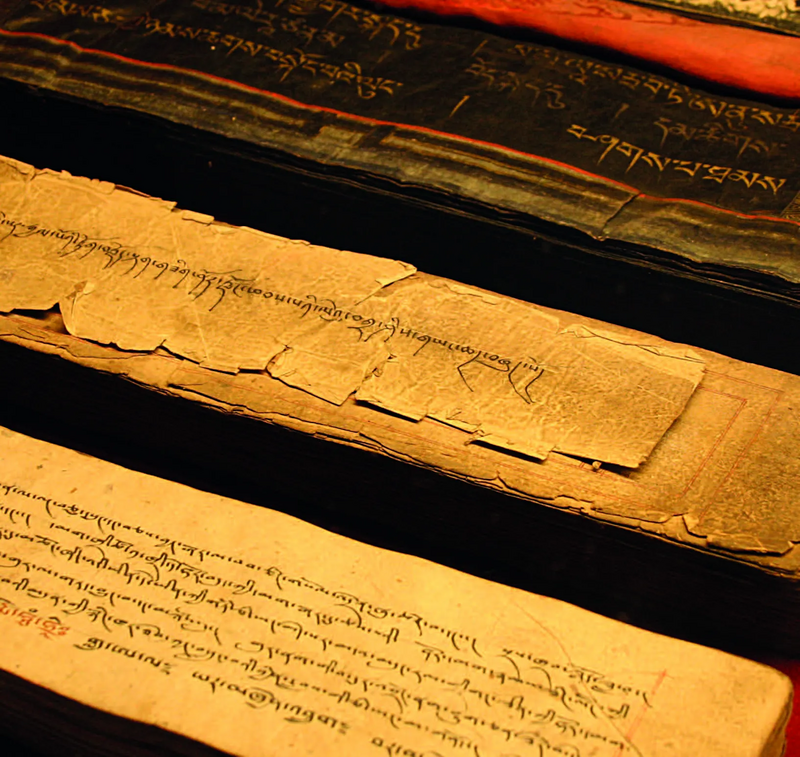
The Mirror Clarifying the Results of Karma (Byang chub sems dpa'i spyod pa la 'jug pa'i sgrung 'grel las 'bras gsal ba'i me long) is a narrative commentary on the anecdotes that appear in the ten chapters of the Bodhicaryāvatāra by Wangchuk Rinchen (c. 12th cent), who was a disciple of Latö Könchok Khar and became the abbot of Nering. The stories presented here were translated by Gregory Forgues and Khenpo Könchok Tamphel.
Story 1, Chapter 5
[In this chapter, stories are about:]
Monk Donfau, Supreme Elephant, Labu, Novice Utpala-Eyes, Laba, Pu-yer, Sutapa, Merchant Seryik,The Chief, Gur, Chung, Mati - thirteen in all.
Tigers, lions, elephants, and bears,
Snakes and every hostile foe,
Those who guard the prisoners in hell,
Ghosts and ghouls and every evil wraith,[p.62]The Way of the Bodhisattva (2006)
Blankleder, Helena, and Wulstan Fletcher (Padmakara Translation Group), trans. The Way of the Bodhisattva: A Translation of the Bodhicharyāvatāra. By Śāntideva. Rev. ed. Shambhala Classics. Boston: Shambhala Publications, 2006.
Page(s) 61
Blankleder, Helena, and Wulstan Fletcher (Padmakara Translation Group), trans. The Way of the Bodhisattva: A Translation of the Bodhicharyāvatāra. By Śāntideva. Rev. ed. Shambhala Classics. Boston: Shambhala Publications, 2006.
སྟག་དང་སེང་གེ་གླང་ཆེན་དྲེད། །
སྦྲུལ་དང་དགྲ་རྣམས་ཐམས་ཅད་དང་། ། སེམས་ཅན་དམྱལ་བའི་སྲུང་མ་དང་། །
བྱད་མ་དེ་བཞིན་སྲིན་པོ་རྣམས། །stag dang seng ge glang chen dred/_/
sbrul dang dgra rnams thams cad dang /_/ sems can dmyal ba'i srung ma dang /_/
byad ma de bzhin srin po rnams/_/Concerning the phrase "Tigers, lions, elephants, and bears,": Once upon a time in Vārāṇasī, to King Jeweled Armor,[1] who had five hundred queens but no son, a god indicated in a dream while he slept: "Outside, there are two sages, one iron-colored and one gold-colored.
As he prayed and they accepted, the other also followed suit. After the two passed away, they were reborn in the wombs of two of the king’s queens. Within a week, the queens realized they were pregnant. Given special care, they carried the pregnancies to term, and the children were born at the same time. An astrologer named them Virtuous Purpose and Nonvirtuous Purpose, respectively.
They received expert training in all arts and sciences. When they came of age, they visited a pleasure garden for sightseeing. Along the way, they saw their subjects looking impoverished as they carried out their duties. Curious about their condition, the princes asked, and the people replied, "Our ancestors were farmers. Through the four types of farming activities, we sustain ourselves and also pay taxes to the king.”
Feeling compassion for them, the princes left for the forest. As they wandered distracted along a lonely path, they came upon a small stream. Finding it beautiful, they began to speak to it:
O spring, your flowing sound is as pleasant as a drum. From where do you come, and where do you go? Why such haste, and must you be so loud? Pause for a moment—let’s exchange a few words.
In reply, [it said,]
I came this morning from the unborn White Snow Mountain. By tonight, I shall enter the depths of the unceasing ocean. My roaring voice is the natural sound of emptiness, without self. My haste is an example of how all conditioned things perish.
[Virtuous Purpose, the First Son]
As it said this, thinking, "This must be an emanated stream,” Virtuous Purpose said again:
I too am Virtuous Purpose, the son of a king; Even my glory and life are uncertain, trembling. For those of noble birth who seek awakening— What is the first step in the path of training?
In reply, [it said,]
When you were brahmin Sandeśavarta in the past, The protector, the glorious Dīpaṃkara, Extensively taught how generosity is the first step on the path. Have you forgotten that?
Thus urged and having earlier seen the impoverished, which made him unhappy and brought him to tears, he prostrated before his father and said:
"When I went walking, I saw that all the servants and subjects are worn down by various negative actions and sufferings, all for the sake of food. In order to protect them, please grant me the means for giving!”
His father replied, "I have kept the entire treasury of wealth for you alone. Give as you please.”
With this permission, he began giving away whatever people desired.
Soon, the treasury keeper reported, "Half the treasury is exhausted.”
Virtuous Purpose replied, "Even if it is exhausted, that is fine.”
Later, when the keeper warned, "Now two-thirds are gone,” the king said, "I cannot go against my son’s wishes, but you may stop him in a skillful way.”
With this approval, the keeper locked the treasury doors and went elsewhere.
Virtuous Purpose thought, "He would not dare do this on his own. He must have received permission from my father. In any case, a son should not completely deplete his father’s treasury.”
So he asked around, "How can I generate wealth to benefit sentient beings through it?”
People offered various suggestions—farming, trade, a nomadic life, or traveling to distant islands. The last option appealed to him most.
When he brought this up, his father said, "If you wish to give alms, we already have all you need at home. But I will not allow you to go to the perilous ocean.”
When his wish was denied, he stopped eating and remained in bed. Though everyone advised him, he would not listen.
After six days, the people said, "If he doesn’t eat tonight, he will die. He may very well return from the ocean.” So, they granted him permission and appointed Virtuous Glory[2] as the captain. Virtuous Glory initially refused, saying, "I am one hundred and twenty years old, and I have neither eyesight nor hearing. I am unfit for the task. But I cannot disobey the king’s command.”
[Nonvirtuous Purpose, the Second Son]
Then, Nonvirtuous Purpose insisted on joining, and together they set out with five hundred merchants. Their mother came to see them off. After navigating the ship through seven stages, when the wind blew in the desired direction, they sped ahead like a mighty arrow and reached an island of jewels.
Upon arrival, Virtuous Purpose defined the standards for quality, quantity, weight, and other measurements, and entrusted Nonvirtuous Purpose with overseeing the mission. Then he, along with the ship’s captain, boarded a small boat to search for wish-fulfilling jewels.
After some time, they swam through the waters, and the captain became exhausted. They encountered mountains shimmering in white, blue, yellow, and other hues—these were mountains of gold, silver, and beryl. In front of the golden mountain lay a field of golden sand. Virtuous Purpose asked the captain to rest there, and the captain said:
I am dying. If you go to the right of this golden mountain, mysterious openings along the path will release tigers, lions, snakes, ogres, and other fearsome beings. They will appear ready to devour you. But press on, maintaining a mind of loving-kindness. They will be tamed and perceive you as a parent. Beyond them is a palace made of seven jewels. Knock on its door with a stone, and five hundred goddesses will each offer you a jewel. One especially beautiful goddess will give you a blue jewel. Do not linger. Once you obtain it, grasp it firmly—but without attachment. With loving-kindness and compassion for all sentient beings, restrain your senses and flee quickly! These jewels are extremely rare, and the nāgas may become jealous and try to take it.
With these final words, the captain passed away.
Virtuous Purpose circled the captain’s remains in respect, buried the bones in the golden sand, and proceeded as instructed. He accomplished all the captain had described and swiftly returned to Nonvirtuous Purpose, now empowered by the jewel.
When he inquired about the merchants, Nonvirtuous Purpose replied, "The ship was destroyed by a sea monster. I alone escaped, clinging to a corpse.”
Moved by compassion, Virtuous Purpose said, "It is good that you survived.”
But Nonvirtuous Purpose replied, "What use is my life without wealth?”
"Do not grieve,” said Virtuous Purpose. "I have a wish-fulfilling jewel.” And he showed it.
This filled Nonvirtuous Purpose with jealousy. When Virtuous Purpose said, "I am tired. I will sleep. Guard me and the jewel,” Nonvirtuous Purpose seized the opportunity. He stabbed thorns into Virtuous Purpose’s eyes, stole the jewel, and fled.
Blinded and in pain, Virtuous Purpose cried out, "A thief has come! Take the jewel and flee!” But the gods answered, "The thief is none other than Nonvirtuous Purpose!”
Heartbroken, Virtuous Purpose fled blindly and entered bear territory. A bear approached, intending to eat him, but instead treated him like its own cub. It removed the thorns from his eyes and carried him to the base of a mountain of Lishi trees. There, a herdsman named Supreme Herd protected him from being trampled by bulls and soothed his pain by licking his eyes.
Seeing his sorrow, the herdsman took him to the outskirts of the Lishi town. There, Virtuous Purpose brought joy to all through his music and wise words and even cared for five hundred beggars.
Later, the king appointed him to guard the royal pleasure garden. Virtuous Purpose said, "But I have no eyes.”
The king replied, "That is fine. Tie bells to the trees and guard the garden by pulling the ropes.”
Many people gathered there, including the king’s daughter. She said, "I would like to share a meal with him.” Others warned, "If you eat with a beggar, the king will punish you,” but she ignored them. Even that evening, she refused to return home, saying, "I am staying at his house. I will not return.”
They tried to stop her: "You’ve given yourself to Virtuous Purpose. Are you in love with this beggar?” But their efforts failed, and the two were married.
One day, when the woman went out, Virtuous Purpose accused her: "You’ve been with another man.”
She replied, "It’s shameful for you to slander me—especially after I overlooked the fact that you were a blind beggar and tried to make you happy! But if I have even once thought of another man, may I too go blind! And if I have not—may you regain your sight!”
As she spoke, one of his eyes became perfectly clear.
"Do you know who I am?” he asked.
"Yes,” she replied, "the blind beggar.”
He said, "Have you heard of Virtuous Purpose, son of Jeweled Armor? That is who I am.”
She asked, "Who can testify to this?”
"If I truly am he,” he declared, "may my other eye see clearly too!”
Immediately, both his eyes regained perfect sight, gleaming as if they competed in brightness.
The woman informed the king, who came and asked Virtuous Purpose for forgiveness. The news spread quickly: "Virtuous Purpose is returning from the ocean!” A grand reception was prepared.
The king gave him his daughter and sent them off with all necessary provisions.
Meanwhile, Nonvirtuous Purpose returned to their homeland and falsely declared, "Virtuous Purpose and all the merchants have died!” On hearing this, the people fainted. When they recovered, they tied a letter to the neck of a white goose—Virtuous Purpose’s childhood companion—and released it to search for him. The goose found him.
Virtuous Purpose sent it back with a message detailing all that Nonvirtuous Purpose had done.
Upon receiving this message, Nonvirtuous Purpose was imprisoned. His parents sent a warning to the Lishis: "If you do not return our son with servants, we will come with an army!”
Eventually, with five hundred horses and bulls laden with goods, Virtuous Purpose, his wife, and servants were sent back.
When he arrived, his parents welcomed him, and he paid his respects. He asked about Nonvirtuous Purpose, and they replied, "He is in prison. He must not be released.”
Virtuous Purpose declared, "Then I will not enter the house.”
As a result, they released Nonvirtuous Purpose. Virtuous Purpose greeted him warmly: "My younger brother, are you well?” And he treated him with even greater kindness than before.
Later, a discussion arose about the missing jewels. Though many searched, none could find them. But when Virtuous Purpose went, the jewel revealed itself to him from a krośa away. He recovered it and made an aspiration:
These jewels, when purified—may they restore my parents’ sight! May our palace, throne, robes, parasol, and all else be made of precious substances! And may the treasuries, once emptied through acts of generosity, overflow even more abundantly!
All unfolded just as he wished.
At an auspicious time, Virtuous Purpose bathed, dressed in clean clothes, and tied the jewel to the tip of a victory banner. Then he prayed: "From this wish-fulfilling jewel, may all beings receive whatever they desire!”
Immediately, the wind swept away all impurities. Rain settled the dust. Then, food, clothing, grain, treasure, and every kind of desirable thing poured down like a shower.
When the land overflowed with abundance and none lacked anything, Virtuous Purpose proclaimed:
Disregarding my own body and life, I obtained this jewel. Let the fruit of my efforts end poverty across the world. Therefore, all must abandon the ten nonvirtuous actions and embrace the ten virtuous ones!
The people followed this decree with devotion, and all who died in that time were reborn as gods.
Story 2, Chapter 5
Where could beings, fishes, and the rest,
Be placed to keep them safe from being killed?
Deciding to refrain from every harmful act
Is said to be transcendent discipline.[p.63]The Way of the Bodhisattva (2006)
Blankleder, Helena, and Wulstan Fletcher (Padmakara Translation Group), trans. The Way of the Bodhisattva: A Translation of the Bodhicharyāvatāra. By Śāntideva. Rev. ed. Shambhala Classics. Boston: Shambhala Publications, 2006.
Page(s) 62
Blankleder, Helena, and Wulstan Fletcher (Padmakara Translation Group), trans. The Way of the Bodhisattva: A Translation of the Bodhicharyāvatāra. By Śāntideva. Rev. ed. Shambhala Classics. Boston: Shambhala Publications, 2006.
ཉ་ལ་སོགས་པ་གང་ཞིག་ཏུ། །
དེ་དག་གསོད་མི་འགྱུར་བར་བསྐྲད། ། སྤོང་བའི་སེམས་ནི་ཐོབ་པ་ལས། །
ཚུལ་ཁྲིམས་ཕ་རོལ་ཕྱིན་པར་བཤད། །nya la sogs pa gang zhig tu/_/
de dag gsod mi 'gyur bar bskrad/_/ spong ba'i sems ni thob pa las/_/
tshul khrims pha rol phyin par bshad/_/Concerning the phrase "Deciding to refrain from every harmful act": There were two men, a father and a son, both of whom became fully ordained monks. The father abided in severe ascetic practices, and because of that, he would not take food at the appropriate time. Concerned that his father might become emaciated, the son accompanied him. One day, while they were traveling, the son urged his father to go faster. But since the father was weak and slow to move, the son pushed him from behind, and the father’s head struck a stone, and he died. Yet that son was reborn in the Heaven of the Thirty-Three. This is because, in the Mahāyāna, intention is foremost.
Story 3, Chapter 5
Harmful beings are everywhere like space itself. Impossible it is that all should be suppressed. But let this angry mind alone be overthrown, And it’s as though all foes had been subdued.
Page(s) 63
Blankleder, Helena, and Wulstan Fletcher (Padmakara Translation Group), trans. The Way of the Bodhisattva: A Translation of the Bodhicharyāvatāra. By Śāntideva. Rev. ed. Shambhala Classics. Boston: Shambhala Publications, 2006.
སེམས་ཅན་མི་བསྲུན་ནམ་མཁའ་བཞིན། །
དེ་དག་གཞོམ་གྱིས་ཡོང་མི་ལང་། ། ཁྲོ་བའི་སེམས་འདི་གཅིག་བཅོམ་ན། །
དགྲ་དེ་ཐམས་ཅད་ཆོམས་དང་འདྲ། །sems can mi bsrun nam mkha' bzhin/_/
de dag gzhom gyis yong mi lang /_/ khro ba'i sems 'di gcig bcom na/_/
dgra de thams cad choms dang 'dra/_/Concerning the phrase "let this angry mind alone be overthrown,": King Maṇicūḍa gave an excellent elephant to a brahmin. The brahmin then sold this elephant to a minor king. Subsequently, when that minor king led an army against king Maṇicūḍa, he gave him even his entire kingdom, saying, "I cannot commit negative actions for the sake of just this life."
Story 4, Chapter 5
A clear intent can fructify And bring us birth in such as Brahmā’s realm. The acts of body and of speech are less— They do not generate a like result.
Page(s) 63
Blankleder, Helena, and Wulstan Fletcher (Padmakara Translation Group), trans. The Way of the Bodhisattva: A Translation of the Bodhicharyāvatāra. By Śāntideva. Rev. ed. Shambhala Classics. Boston: Shambhala Publications, 2006.
སེམས་གསལ་གཅིག་བསྐྱེད་འབྲས་བུ་གང་། །
ཚངས་ལ་སོགས་པ་ཡིན་པ་ལྟར། ། ལུས་ངག་བཅས་པའི་འབྲས་བུ་ཡང་། །
སྤྱོད་པ་ཞན་པས་དེ་ལྟ་མིན། །sems gsal gcig bskyed 'bras bu gang /_/
tshangs la sogs pa yin pa ltar/_/ lus ngag bcas pa'i 'bras bu yang /_/
spyod pa zhan pas de lta min/_/Concerning the phrase "A clear intent can fructify": When a mother and her child were swept away by a flood, the mind of awakening arose in them. As a result, upon dying and transmigrating, they were reborn in the Brahmā realm.
Story 5, Chapter 5
If this is how I act and live, Then even in the midst of evil folk, Or even with fair women, all is well. My steady keeping of the vows will not decline.
Page(s) 64
Blankleder, Helena, and Wulstan Fletcher (Padmakara Translation Group), trans. The Way of the Bodhisattva: A Translation of the Bodhicharyāvatāra. By Śāntideva. Rev. ed. Shambhala Classics. Boston: Shambhala Publications, 2006.
སྤྱོད་པ་འདི་འདྲས་གནས་བྱེད་ན། །
སྐྱེ་བོ་ངན་པའི་ཁྲོད་གནས་སམ། ། བུད་མེད་ཁྲོད་ན་གནས་ཀྱང་རུང་། །
སྡོམ་བརྩོན་བརྟན་པ་ཉམས་མི་འགྱུར། །spyod pa 'di 'dras gnas byed na/_/
skye bo ngan pa'i khrod gnas sam/_/ bud med khrod na gnas kyang rung /_/
sdom brtson brtan pa nyams mi 'gyur/_/Concerning the phrase "Or even with fair women, all is well": Not long after the Teacher had passed into parinirvāṇa, there lived in the land of Magadhā a brahmin named Peace Glory. He upheld the five precepts and possessed wealth comparable to a son of Vaiśravaṇa. His object of veneration was a monk named Supreme Gold, who was learned in the Three Piṭakas, grounded in the Three Trainings, and endowed with the qualities of a purified practitioner.
The brahmin invited him daily for the midday meal. However, due to the monk’s exposure to intense heat or cold while traveling, his practice was disrupted. As a result, he requested that his meals henceforth be delivered to him.
In that same region, a householder’s son developed deep faith in the teachings and wished to rely on a sublime teacher. He approached the monk with this request. Gazing with his pure divine eye, the monk foresaw that this young man’s reputation for ethical conduct would spread across the ten directions and that he would become a bearer of the victory banner of the Dharma. Recognizing this, he ordained him as a novice and gave him the name Excellent God.
The entire household of the upāsaka Peace Glory was once invited to a feast by a family friend. His sixteen-year-old daughter, Blissful Glory, was left behind to guard the house.
Now, their family had long venerated a deceitful brahmin named Nathule. Jealous of them all, and seeing an opportunity to slander them, Nathule went to the monk Supreme Gold and said, "The upāsaka (Peace Glory) is occupied today, so it would be best if you came to collect your midday meal yourself.” Supreme Gold replied, "If he is occupied, it would not be appropriate to eat there. You, be mindful and go collect the offering.” The brahmin answered, "Excellent God, I will go and do as you say.” Saying this, he prostrated at his abbot’s feet and departed.
When he knocked on the door of Peace Glory’s house, the daughter called out, "Who is it?”
"The abbot has sent me to collect alms,” he replied.
The girl was delighted, thinking, "My wish has come true!” But she also reflected, "This monk, accustomed to applying antidotes and greatly cherishing his ethical conduct, may be difficult to sway—but I must put him to the test.”
With this scheme in mind, she fashioned a terrifying deity figure and hid a maid behind it. She instructed the maid to deliver a fabricated prophecy in the voice of a god: "If he is frightened by this dreadful image, it will be clear that he has not seen the truth. Then, tell him, ‘Abandon your impure ethical conduct and enjoy bliss with this young woman. If your power of antidote increases afterward, and you again take your vows, you will swiftly attain liberation.’”
Following these instructions, the terrifying image and the maid were sent ahead. When Excellent God was startled by the sight, the maid delivered the message, and Blissful Glory followed with a soft voice, saying:
This household has wealth equal to the splendor of Vaiśravaṇa. Since I have no brother, I offer it to you—I will be your servant. Or if not, then as the deity instructed, fulfill my wish just for today. If you later take your vows again and guard them, you will attain great power. After that, I will serve you with even greater devotion.
The novice thought to himself:
Alas! The fire of this woman’s desire is about to consume the wood of my ethical discipline. If I flee, she may pursue me, and all sorts of slander will follow—bringing Nāthule’s scheme to fruition. But if I stay, the Buddha’s lineage will be disgraced, and the victory banner of the Dharma will be brought down. Better that my life end than my vows be broken!
With this in mind, he said to the young woman, "Let’s close the door—I need to make some preparations.” Entering the innermost room of the house, he hung his Dharma robes on a peg, placed his palms together, and declared:
I do not abandon the Three Jewels, my abbot, or my precepts! To preserve my vows of ethical conduct, I now give up this body. Through the power of this discipline, may I be reborn in a human life of leisure and fortune. May I again go forth as a youth and swiftly attain buddhahood by training on the path.
Having made this aspiration, he cut his own throat with a razor and ended his life.
As time passed and he did not return, the girl called for him. When there was no reply, she entered and found him dead. Overwhelmed by terror, the fire of her desire was extinguished, and she collapsed in an ocean of grief. She fell unconscious and did not hear her father knocking on the door.
After going around the village and returning home, Peace Glory discovered his daughter unconscious. Sprinkling water on her face, he revived her. She thought to herself, "If I tell the truth, I will condemn myself. Claiming that the novice monk behaved inappropriately would doom me to hell. Just having obstructed his life is enough to bring about that result.” So, she told the truth.
Hearing this, her father bowed his head and said, "Indeed, the nature of all conditioned things is impermanence. Do not grieve.” He then entered the house and saw the novice’s body, stained with blood. But his complexion remained undimmed. Seeing this, he exclaimed, "How astonishing! How truly wondrous that he preserved his ethical conduct even at the cost of his own life!” And with reverence, he offered praise and prostrations.
According to the law of that kingdom, if a person maintaining vows died in a layperson’s home, a fine of one thousand gold coins was due. So, the father gathered the amount and went to the king, saying, "I feel somewhat ashamed. Please accept this fine.”
The king replied, "In this land, you are the one person who is both honest and faithful to the Dharma. These faults are therefore purifiable.”
The father then recounted the events, both condemning his daughter and praising the novice.
The king responded, "What is there to condemn in the young woman? Those still bound by desire naturally act in such ways. But for the novice to uphold his vows without regard even for life—this is rare indeed! You bear no fault. Take your gold back. I myself will pay homage to his remains.”
With that, he ordered the golden drum to be struck. Accompanied by thirty attendants, he prostrated before the body of Excellent God and praised him. His remains were then placed on a jeweled chariot and cremated with fragrant sandalwood and incense. As this took place, the earth trembled, and a rain of flowers fell from the sky.
The king then had the young woman stand before the people and declared:
In all my dominion, there is no one more beautiful than she. And yet, the novice monk, unmoved even by her, gave up his precious life to preserve his ethical discipline. This is truly and exceedingly marvelous!
He then invited a spiritual master[3] to teach Dharma. As a result, all who were present gave rise to profound respect for ethical conduct and generated the mind of awakening.
Story 6, Chapter 5
All you who would protect your minds, Maintain your mindfulness and introspection; Guard them both, at cost of life and limb, I join my hands, beseeching you.
Page(s) 64
Blankleder, Helena, and Wulstan Fletcher (Padmakara Translation Group), trans. The Way of the Bodhisattva: A Translation of the Bodhicharyāvatāra. By Śāntideva. Rev. ed. Shambhala Classics. Boston: Shambhala Publications, 2006.
Concerning the phrase "Guard them both, at cost of life": In the land of Kāśī, King Gift of Brahmā commanded five outcastes, saying, "Go and bring back the tusks of the elephant Utpalākṣa, who dwells near the Snowy Mountains.” Obeying this order, they disguised themselves as renunciants by donning Dharma robes and killed the elephant with poisoned arrows hidden under their arms.
[Buddha said:]
Because the elephant still showed respect and veneration for the Dharma robes, he will in the future become ordained in my teachings. Regardless of whether or not he is a suitable vessel, anyone who offers food and other requisites to him will accumulate the same merit as offering to the buddhas of the three times.
Ācārya Lawapa
When the ācārya Lawapa went to Uḍḍiyāna to engage in spiritual practice, a non-Buddhist yoginī imprinted the image of an utpala flower onto his hand through her mind. Later, a Buddhist yoginī noticed this and warned him, saying, "A non-Buddhist is trying to find a vulnerability in you! Meditate on your deity!”
Following her advice, he meditated using generation-stage methods—visualizing, for example, a mountain of fire and a vajra fence—but these methods proved ineffective. So, he turned his focus to meditating on emptiness.
[As a result of this profound realization—or as a symbolic act connected with it] the patchwork robe he had discarded was torn into pieces and eaten by a group of yoginīs.
The next day, having petitioned the king—and because the yogi possessed great mental power—when he beat the wives of the ministers with a thorny whip, a handspan-sized piece of the patched robe was offered as restitution for each. The one missing handspan from the total was offered as restitution by the king's chief queen, who was known as "the one with the golden forehead ornament." When it was all arranged, it became as if complete.
Story 7, Chapter 5
Through fear, and by the counsels of their abbots, And staying ever in their teacher’s company— In those endowed with fortune and devotion Mindfulness is cultivated easily.
Page(s) 65
Blankleder, Helena, and Wulstan Fletcher (Padmakara Translation Group), trans. The Way of the Bodhisattva: A Translation of the Bodhicharyāvatāra. By Śāntideva. Rev. ed. Shambhala Classics. Boston: Shambhala Publications, 2006.
བླ་མ་དང་ནི་འགྲོགས་པ་ལས། །
མཁན་པོས་རྗེས་སུ་བསྟན་པ་དང་། ། འཇིགས་པས་སྐལ་ལྡན་གུས་བྱེད་ལ། །
དྲན་པ་བདེ་བླག་ཉིད་དུ་སྐྱེ། །bla ma dang ni 'grogs pa las/_/
mkhan pos rjes su bstan pa dang /_/ 'jigs pas skal ldan gus byed la/_/
dran pa bde blag nyid du skye/_/Concerning the phrase "and by the counsels of their abbots,": When the noble Kātyāyana was residing in Jetavana, he taught the Dharma of impermanence to a wealthy king named Puvīra. The king developed deep faith and took ordination.
While meditating in seclusion at a forest hermitage, guarding his mind, another king came to the area on a hunting excursion with his queen. When the queen requested Dharma teachings from the monk, her husband, consumed by jealousy, had Puvīra whipped with thorn-switches until blood flowed from his nine orifices. Agitated and distraught, Puvīra went to Kātyāyana, recounted what had occurred, and declared, "I wish to give back my vows! I will rally my fourfold army and destroy this king!”
Kātyāyana again taught the Dharma of impermanence, but Puvīra would not accept it. So Kātyāyana said, "Sleep near me tonight. Tomorrow, if you still wish to give back your vows, you may do so.”
That night, through the power of the abbot’s blessings, Puvīra had a dream in which he led his fourfold army into battle. He was defeated and captured by fierce enemies. Waking in terror, he rushed to Kātyāyana and said, "Abbot, I take refuge in you!”
Kātyāyana replied, "There are times when the few overcome the many,” and gave him further teachings on the Dharma. Moved by these words, Puvīra abandoned his plan to disrobe and instead entered into single-pointed meditation. This transformation was due entirely to the compassion and guidance of his abbot.
Sudāsa's Son
The Buddha [as] Putracandra said to Sudāsa's son:
Even if one encounters a holy being but once, Whatever longing one may have for that meeting, Without needing to exert effort in habituation, One becomes someone utterly steadfast.
Having spoken three such verses of Dharma, Sudāsa’s son developed faith and declared, "I offer four pledges!” To this, Putracandra responded:
Uphold the disciplined practice of truth, and abandon the killing of living beings. Free those who are imprisoned. O Hero, you must give up the consumption of human flesh. Give these four—greatest among glorious offerings.
Having been tamed through these teachings and more, Sudāsa’s son was also restored to his own kingdom. This was the benefit of having relied on the abbot.
Story 8, Chapter 5
Extol their qualities discreetly; When they’re praised by others, praise them too. But when the qualities they praise are yours, Reflect upon their skill in recognizing qualities.
Page(s) 72
Blankleder, Helena, and Wulstan Fletcher (Padmakara Translation Group), trans. The Way of the Bodhisattva: A Translation of the Bodhicharyāvatāra. By Śāntideva. Rev. ed. Shambhala Classics. Boston: Shambhala Publications, 2006.
ལྐོག་ན་ཡོན་ཏན་བརྗོད་བྱ་ཞིང་། །
ཡོན་ཏན་བརྗོད་ན་རྗེས་སུ་བརྗོད། ། རང་གི་ཡོན་ཏན་བརྗོད་ན་དེ། །
ཡོན་ཏན་ཤེས་པར་རིག་པར་བྱ། །lkog na yon tan brjod bya zhing /_/
yon tan brjod na rjes su brjod/_/ rang gi yon tan brjod na de/_/
yon tan shes par rig par bya/_/Attributing qualities that do not exist Is like slandering the sublime beings.
Concerning the phrase "Reflect upon their skill in recognizing qualities": When the Teacher was reborn as the bodhisattva merchant Glorious Increase,[4] a minister of King Increasing Merit,[5] he went to visit the king. In the meantime, his mother-in-law came to visit her daughter. The mother asked, "What is your husband’s conduct like?” Embarrassed to praise her husband, the daughter lowered her head and said softly, "Such conduct is not found even among ordained monks.”
The mother-in-law, being elderly and hard of hearing, only caught the word "ordained,” and began to weep, saying, "My son-in-law has become a monk!” Her daughter thought, "Ah, my mother has come to share in my sorrow,” and she too began to weep. Then, the rest of the household gathered and joined in weeping. The merchant, wondering what had happened, sent a servant to find out, and he reported back to the merchant, "They are grieving because they heard that you, having renounced your wealthy household, have been ordained as a monk."
The merchant said, "I will be ashamed to return home without fulfilling their expectations.” Saying this, he quickly went back to the king and explained the situation.
The king responded, "What sorrow do you have? Speak plainly! Don’t say such things!”
The merchant replied, "How could anyone who depends on a king like you feel sorrow? But everyone now expects me to be ordained, and I would be ashamed to return without doing so.”
Although the king protested, saying, "It is not right for you to abandon us over mere worldly rumors,” the merchant remained firm in his request. At last, the king gave his permission.
Before departing, the merchant wrote carefully worded letters to his family, using various skillful means to discourage their attachment. Then he departed for the forest.
Therefore, [the lesson is this:]
If one is called a spiritual friend, a teacher, or a monk, one should strive to embody the conduct those titles represent.
Story 9 of Chapter 5
Always fired by highest aspiration,
Laboring to implement the antidotes,60For example, meditation on patience as an antidote to anger, or on the disgusting aspects of the body as an antidote to desire.
You will reap great virtues in the field of excellence
And in the fields of benefits and sorrow.61The expression ‟field of excellence” refers to the Buddhas and Bodhisattvas; the ‟field of benefits” refers to all those who bring benefits—parents, friends, and so on; the ‟fields of sorrow” (or, more usually, the ‟field of compassion”) refers to all other beings who suffer or who are in some way disadvantaged, e.g., the sick, wayworn travelers, and others.[p.73]The Way of the Bodhisattva (2006)
Blankleder, Helena, and Wulstan Fletcher (Padmakara Translation Group), trans. The Way of the Bodhisattva: A Translation of the Bodhicharyāvatāra. By Śāntideva. Rev. ed. Shambhala Classics. Boston: Shambhala Publications, 2006.
Page(s) 72
Blankleder, Helena, and Wulstan Fletcher (Padmakara Translation Group), trans. The Way of the Bodhisattva: A Translation of the Bodhicharyāvatāra. By Śāntideva. Rev. ed. Shambhala Classics. Boston: Shambhala Publications, 2006.
རྟག་པར་མངོན་ཞེན་གྱིས་བསླངས་པའམ། །
གཉེན་པོ་ཡིས་ནི་བསླངས་པ་ཉིད། ། ཡོན་ཏན་དང་ནི་ཕན་འདོགས་ཤིང་། །
སྡུག་བསྔལ་བ་ལ་དགེ་ཆེན་འགྱུར། །rtag par mngon zhen gyis bslangs pa'am/_/
gnyen po yis ni bslangs pa nyid/_/ yon tan dang ni phan 'dogs shing /_/
sdug bsngal ba la dge chen 'gyur/_/Concerning the phrase "great virtues in the field of excellence, and in the fields of benefits . . .": The Teacher was residing in Śrāvastī, together with a retinue of 1,350 disciples. At that time, a beautiful and pleasing boy was born to the wife of a certain householder. Strangely, both his fists were clenched. Wondering whether this was a good or bad omen, they gently opened his fists, and from each one a gold coin appeared. The parents were overjoyed. When they took the coins, his fists closed again.
They consulted an astrologer, who said the signs were extremely auspicious and gave him the name Golden Letter.[6] From then on, whenever they opened the child’s fists, gold coins would appear. The parents’ treasuries became completely full, yet the supply of coins never diminished.
When he came of age, he requested permission from his parents to be ordained. After receiving full ordination as a monk, gold coins would appear whenever he prostrated. In time, he attained the state of an arhat.
Ānanda once asked the Teacher, "What past karma caused this monk, Golden Letter, to be born with such a condition?”
The Buddha replied:
Ninety-one eons ago, the Buddha Kanakamuni appeared in the world. On one occasion, he and his retinue were invited by two householder families and offered a grand feast. At that time, a poor woodcutter, who had developed faith, earned two gold coins from selling firewood after a long day’s labor. When the Blessed One arrived at the doorstep, the woodcutter offered those coins with great joy and respect for the other [offerers]. The Buddha, moved by compassion, accepted the offering and made a dedication prayer for him.
The story continues at length from there.
Kṛṣṇapādaḥ's Maṇḍalavidhiḥ
It is also said in Kṛṣṇapādaḥ's Maṇḍalavidhiḥ:
Two thousand ordinary beings Are equal to one pure brahmin.
Two thousand pure brahmins Are matched with one fully ordained monk.
Two thousand fully ordained monks Are equal to one who is stainless.
Two thousand stainless ones Are matched with one who possesses wisdom.
Two thousand who possess wisdom Are considered equal to one Āchārya.
Thus it is taught, and so forth.
The benefited field of [merit],[7] such as the story of Dzawo’s Daughter, has already been explained. As for the dusty field of [merit],[8] it is illustrated in the Sūtra of the Purpa, and so on.
It continues:
If the Saṅgha exists, make offerings to them! Otherwise, provide a feast for children. Giving to the unprotected Yields a boundless heap of merit.
Story 10 of Chapter 5
Therefore understand this well, And always labor for the benefit of beings. The Compassionate One farsightedly permits, To this end, even what has been proscribed.63According to Mahāyāna teaching, in extreme circumstances and when the motives are exclusively those of compassion, actions of body and speech (though not of mind), normally proscribed in the list of ten nonvirtues (see note 44) may be performed.
Page(s) 73
Blankleder, Helena, and Wulstan Fletcher (Padmakara Translation Group), trans. The Way of the Bodhisattva: A Translation of the Bodhicharyāvatāra. By Śāntideva. Rev. ed. Shambhala Classics. Boston: Shambhala Publications, 2006.
དེ་ལྟར་རིག་བྱས་གཞན་དོན་ལ། །
རྟག་ཏུ་བརྩོན་པར་གནས་པར་བྱ། ། ཐུགས་རྗེ་མངའ་བ་རིང་གཟིགས་པས། །
བཀག་པ་རྣམས་ཀྱང་དེ་ལ་གནང་། །de ltar rig byas gzhan don la/_/
rtag tu brtson par gnas par bya/_/ thugs rje mnga' ba ring gzigs pas/_/
bkag pa rnams kyang de la gnang /_/Concerning the phrase "permits, to this end, even what has been proscribed": The caravan leader, the Great Compassionate One,[9] proclaimed, "Who is willing to journey to the ocean on a mission to protect sentient beings from poverty?” Five hundred merchants set out with him. Among them was a bandit named Bha-tsi, skilled in deception, who disguised himself as a merchant. Secretly, he plotted, "Once success is achieved, I will cast the merchants into the ocean and claim all the wealth for myself!”
When the ship was filled with valuables and jewels, and just as they were preparing to return to Jambudvīpa, the bandit thought, "Now is the time!” That very night, a sea deity appeared in the caravan leader’s dream and warned:
Among your company is one named Bha-tsi—large-bodied, dark-complexioned, red-eyed, and of great strength. He will soon carry out his plot. You must act at once to prevent this. If you do not, know that these merchants are all noble nonreturners, and Bha-tsi will fall into the endless hell!
Awakening from the dream, the caravan leader was deeply troubled. The wind turned against them, and for seven days the ship was stalled. During that time, the captain reflected:
If I reveal the plot, the merchants will unite and kill the bandit, and they will fall into hell. If I do nothing, the merchants will lose their lives, and Bha-tsi will fall into hell. If I kill Bha-tsi, I myself will fall into hell. In any case, I cannot escape the hell realm. Therefore, to protect the lives of the merchants and to save Bha-tsi from the torments of hell, I will willingly endure that suffering for a hundred thousand eons.
With that resolve and a mind of great compassion, he seized Bha-tsi’s own sandalwood spear and struck him down. As a result, the captain shortened his own samsaric existence by a hundred thousand eons. Yet, he ensured the merchants’ safe return to Jambudvīpa, established them in virtue, and Bha-tsi was reborn in a heavenly realm.
Story 11 of Chapter 5
Do not teach the Dharma to the disrespectful:
To those who, though not sick, wrap cloths around their heads,
To those who carry weapons, staffs, or parasols,
To those who are with covered heads.[p.74]The Way of the Bodhisattva (2006)
Blankleder, Helena, and Wulstan Fletcher (Padmakara Translation Group), trans. The Way of the Bodhisattva: A Translation of the Bodhicharyāvatāra. By Śāntideva. Rev. ed. Shambhala Classics. Boston: Shambhala Publications, 2006.
Page(s) 73
Blankleder, Helena, and Wulstan Fletcher (Padmakara Translation Group), trans. The Way of the Bodhisattva: A Translation of the Bodhicharyāvatāra. By Śāntideva. Rev. ed. Shambhala Classics. Boston: Shambhala Publications, 2006.
མ་གུས་པ་ལ་ཆོས་མི་བཤད། །
མི་ན་བཞིན་དུ་མགོ་དཀྲིས་དང་། ། གདུགས་དང་འཁར་བ་མཚོན་ཐོགས་དང་། །
མགོ་བོ་གཡོགས་པ་དག་ལ་མིན། །ma gus pa la chos mi bshad/_/
mi na bzhin du mgo dkris dang /_/ gdugs dang 'khar ba mtshon thogs dang /_/
mgo bo g.yogs pa dag la min/_/Concerning the phrase "Do not teach the Dharma to the disrespectful": The yoginī Little Hunchback[10] sat on a low cushion and repeatedly taught the Dharma to many of the king’s queens, who were seated on high golden thrones, but they failed to gain any accomplishment, not even as much as a dust particle. Wondering why, she went to her teacher and asked, "Why do accomplishments not arise in my students?”
The teacher replied, "It is because of their lack of respect. Tell the queens to descend from their thrones.”
Following this advice, the queens, having subdued the pride of their noble lineage, descended from their thrones and sat on low cushions. They placed the yoginī Little Hunchback on the golden throne, listened to the Dharma with reverence, and as a result, attained accomplishments.
End of Chapter Five.
