- Prince Mahāsattva and the Tigress
- The Boy Who Made Flowers Fall from the Sky
- The Golden Deer King
- The Golden Elephant and the Monk's Journey
- The Lamp That Changed Destiny
- The Patient Buffalo
- The Silver Tusked Savior
- The White Cloth
- The Mirror Clarifying the Results of Karma: Chapter 1
- The Mirror Clarifying the Results of Karma: Chapter 10
- The Mirror Clarifying the Results of Karma: Chapter 2
- The Mirror Clarifying the Results of Karma: Chapter 3
- The Mirror Clarifying the Results of Karma: Chapter 4
- The Mirror Clarifying the Results of Karma: Chapter 5
- The Mirror Clarifying the Results of Karma: Chapter 6
- The Mirror Clarifying the Results of Karma: Chapter 7
- The Mirror Clarifying the Results of Karma: Chapter 8
- The Mirror Clarifying the Results of Karma: Chapter 9
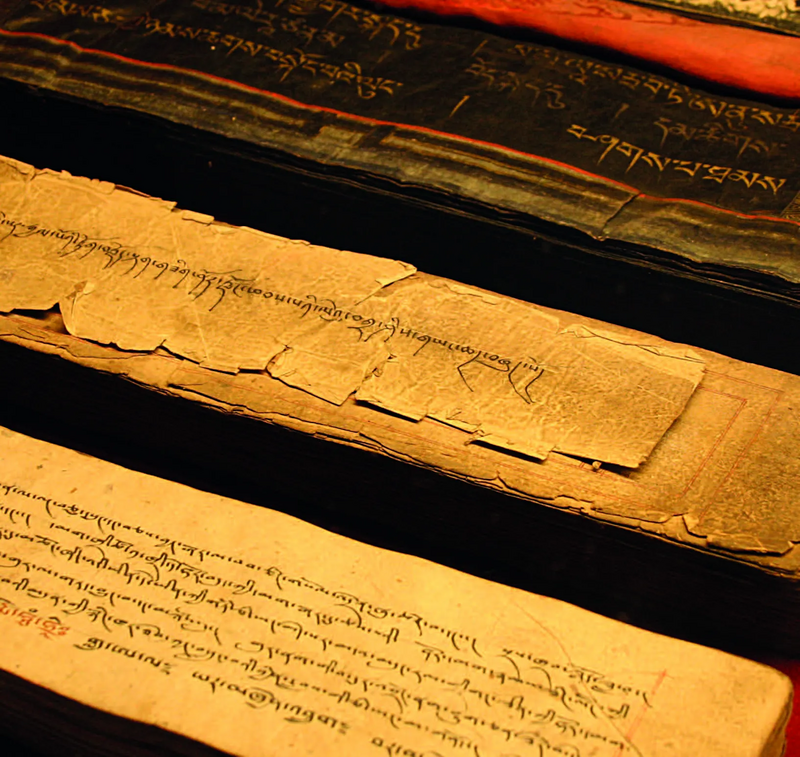
The Mirror Clarifying the Results of Karma (Byang chub sems dpa'i spyod pa la 'jug pa'i sgrung 'grel las 'bras gsal ba'i me long) is a narrative commentary on the anecdotes that appear in the ten chapters of the Bodhicaryāvatāra by Wangchuk Rinchen (c. 12th cent), who was a disciple of Latö Könchok Khar and became the abbot of Nering. The stories presented here were translated by Gregory Forgues and Khenpo Könchok Tamphel.
Chapter 9 Introduction
[In this chapter, stories are about:]
The Bhagavān, the Three Magicians, Eye-medicine, Sanku Salthub, Sgur-chung, Me-mgal, Khyi-gu, And Karma Barphyug Zangpo. The thirteen Norba also of special mind.
Story 1 of Chapter 9
(Within whose ranks
The lower, in degrees of insight, are confuted by the
higher)
By means of the examples that the yogis and the worldly both accept.
And for the sake of the result, analysis is left aside.[p.138]The Way of the Bodhisattva (2006)
Blankleder, Helena, and Wulstan Fletcher (Padmakara Translation Group), trans. The Way of the Bodhisattva: A Translation of the Bodhicharyāvatāra. By Śāntideva. Rev. ed. Shambhala Classics. Boston: Shambhala Publications, 2006.
Page(s) 137
Blankleder, Helena, and Wulstan Fletcher (Padmakara Translation Group), trans. The Way of the Bodhisattva: A Translation of the Bodhicharyāvatāra. By Śāntideva. Rev. ed. Shambhala Classics. Boston: Shambhala Publications, 2006.
རྣལ་འབྱོར་པ་ཡང་བློ་ཁྱད་ཀྱིས། །
གོང་མ་གོང་མ་རྣམས་ཀྱིས་གནོད། ། གཉིས་ཀ་ཡང་ནི་འདོད་པའི་དཔེས། །
འབྲས་བུའི་དོན་དུ་མ་དཔྱད་ཕྱིར། །rnal 'byor pa yang blo khyad kyis/_/
gong ma gong ma rnams kyis gnod/_/ gnyis ka yang ni 'dod pa'i dpes/_/
'bras bu'i don du ma dpyad phyir/_/Concerning the phrase, ". . . in degrees of insight . . .": When the Blessed One, together with his retinue, was dwelling on Vulture Peak Mountain, he gave a command in order to test Ānanda’s wisdom:
"Ānanda, from here, go to Rājagṛha and bring milk for me, as I am ill."
When Ānanda went to the city, he was seen by the Licchavi Vimalakīrti, who was renowned for his supreme wisdom. Vimalakīrti asked him why he had come. Ānanda replied precisely as instructed—that the Blessed One was ill and had asked for milk.
Vimalakīrti said, "The Blessed One has a diamond body. Having completely overcome all suffering, his body cannot be subject to illness. So you are greatly mistaken to think this way,"—and he refuted Ānanda with many lines of reasoning.
When Ānanda returned and came before him, the Blessed One asked, "Did you get the milk?" Ānanda reported everything that had occurred with Vimalakīrti, and the Blessed One said, "What he said is indeed true. However, what I did was to test your wisdom, in accordance with worldly convention."
Story 2 of Chapter 9
"Through a Buddha, who is but illusion, how does merit spring?” As if the Buddha were existing truly. "But,” you ask, "if beings are like illusions, How, when dying, can they take rebirth?”
Page(s) 138
Blankleder, Helena, and Wulstan Fletcher (Padmakara Translation Group), trans. The Way of the Bodhisattva: A Translation of the Bodhicharyāvatāra. By Śāntideva. Rev. ed. Shambhala Classics. Boston: Shambhala Publications, 2006.
སྒྱུ་འདྲའི་རྒྱལ་ལས་བསོད་ནམས་ནི། །
ཇི་ལྟར་དངོས་ཡོད་ལ་ཇི་བཞིན། ། གལ་ཏེ་སེམས་ཅན་སྒྱུ་འདྲ་ན། །
ཤི་ནས་ཇི་ལྟར་སྐྱེ་ཞེ་ན། །sgyu 'dra'i rgyal las bsod nams ni/_/
ji ltar dngos yod la ji bzhin/_/ gal te sems can sgyu 'dra na/_/
shi nas ji ltar skye zhe na/_/Concerning the phrase, "if beings are like illusions": In the city of Śrāvastī, a guest who was a sculptor of deity images spent the night at the house of a magician. That night, the magician conjured—through his magical powers—an exceedingly beautiful girl and had her fan the guest.
The guest became deeply attached to the girl. But when he reached out and took her hand, she transformed into a wooden tool and other objects. In this way, the illusion vanished.
Overcome with shame and embarrassment, the guest drew an image of himself bound and dead on the wall of the sleeping chamber and quietly fled.
The next morning, just as the sun was rising, the magician called for the guest, but he was nowhere to be found. Entering the chamber, he saw what appeared to be the guest’s body—bound and lifeless.
Terrified that he might be accused of murder, the magician summoned a man named Dusata, an official in the king’s retinue. He brought him to the house to prove his innocence.
At first, Dusata also saw the same. But when he struck the ropes with his knife, the body immediately turned into a drawing on the wall. Realizing he had been deceived, the magician was left equally ashamed.
Story 3 of Chapter 9
As long as the conditions are assembled, Illusions, likewise, will persist and manifest. Why, through simply being more protracted, Should sentient beings be regarded as more real?
Page(s) 138
Blankleder, Helena, and Wulstan Fletcher (Padmakara Translation Group), trans. The Way of the Bodhisattva: A Translation of the Bodhicharyāvatāra. By Śāntideva. Rev. ed. Shambhala Classics. Boston: Shambhala Publications, 2006.
ཇི་སྲིད་རྐྱེན་རྣམས་ཚོགས་གྱུར་པ། །
དེ་སྲིད་སྒྱུ་མའང་འབྱུང་བར་འགྱུར། ། རྒྱུན་རིང་ཙམ་གྱིས་ཇི་ལྟར་ན། །
སེམས་ཅན་བདེན་པར་ཡོད་པ་ཡིན། །ji srid rkyen rnams tshogs gyur pa/_/
de srid sgyu ma'ang 'byung bar 'gyur/_/ rgyun ring tsam gyis ji ltar na/_/
sems can bden par yod pa yin/_/Concerning the phrase, "Why, through simply being more protracted": Ācārya Nāgārjuna once stayed for a few days in the house of a magician. Later, when he went to the village of another magician, that magician saw him and thought, "Such a beautiful monk coming here must certainly be a magician testing my skill." With that thought, he magically created a monk resembling Nāgārjuna and sent the illusion to him.
Nāgārjuna asked the illusory monk, "Have you come in peace?" But the illusion could not speak. After a long time, the illusory monk gradually faded and vanished. The magician then thought to himself, "The other magician is definitely more skilled than I am."
Knowing his thoughts, the Noble One said, "I am Nāgārjuna, not your illusion. But both you magicians are equally skilled." Hearing this, the magician was also freed from the thought that he was lacking in skill.
Story 4 of Chapter 9
There is no power in things like spells, So mirage-like minds do not occur through them. Illusions spring from various causes; Thus illusions are of different kinds.
Page(s) 139
Blankleder, Helena, and Wulstan Fletcher (Padmakara Translation Group), trans. The Way of the Bodhisattva: A Translation of the Bodhicharyāvatāra. By Śāntideva. Rev. ed. Shambhala Classics. Boston: Shambhala Publications, 2006.
སྔགས་སོགས་རྣམས་ལ་ནུས་མེད་ཕྱིར། །
སྒྱུ་མའི་སེམས་ནི་འབྱུང་བ་མེད། ། སྣ་ཚོགས་རྐྱེན་ལས་བྱུང་བ་ཡི། །
སྒྱུ་མ་དེ་ཡང་སྣ་ཚོགས་ཉིད། །sngags sogs rnams la nus med phyir/_/
sgyu ma'i sems ni 'byung ba med/_/ sna tshogs rkyen las byung ba yi/_/
sgyu ma de yang sna tshogs nyid/_/Concerning the phrase, "illusions are of different kinds": In the presence of a certain king, a man came with a woman, carrying a sword in his right hand and holding a shield in his left. He entrusted the woman to the king and then threw a rope into the sky and climbed up it.
After some time, his hands, feet, head, sword, and shield fell down in succession. As a result, it was assumed that he had died in a battle between the gods and the demigods. Then, a man requested, "Now that he is dead, I ask that the woman be given to me," and the king gave her to him.
But then, the fallen parts—the head and the entire body—reassembled, and the man rose up and said to the king, "I want back the woman I entrusted to you." The king replied, "Thinking you were dead, I gave the woman to another." But the man did not accept this, and the woman was returned to him.
Story 5 of Chapter 9
"In certain cases,” you will say, "the mind Can see the minds of others, how then not itself?” But through the application of a magic balm, The eye may see the treasure, but the salve it does not see.
Page(s) 140
Blankleder, Helena, and Wulstan Fletcher (Padmakara Translation Group), trans. The Way of the Bodhisattva: A Translation of the Bodhicharyāvatāra. By Śāntideva. Rev. ed. Shambhala Classics. Boston: Shambhala Publications, 2006.
རྐྱེན་གཞན་དག་དང་ལྡན་པ་ནི། །
མཐོང་ཕྱིར་རང་ཉིད་རང་གསལ་ན། ། གྲུབ་པའི་མིག་སྨན་སྦྱོར་བ་ལས། །
བུམ་མཐོང་མིག་སྨན་ཉིད་འགྱུར་མིན། །rkyen gzhan dag dang ldan pa ni/_/
mthong phyir rang nyid rang gsal na/_/ grub pa'i mig sman sbyor ba las/_/
bum mthong mig sman nyid 'gyur min/_/Concerning the phrase, "But through the application of a magic balm, The eye may see the treasure," [the following is explained]: Take a portion of eye-balm and feed it to a cat, mixed with the fat of buffalo flesh. Unable to digest it, the cat will excrete it. Collect the excretion and place it in a skull, using a wick made from arka leaves. Light this as a lamp, and when the smoke gathers in an upper skull, apply that smoke to the eyes. [Then, the treasure will become visible.]
Alternatively, one will see a treasure vase filled with jewels beneath the earth if one walks to it wearing shoes made from arka leaves.
Another method is to mount the shoulders of a boy or girl who was born feet-first, thereby ensuring that one's feet do not touch the ground.
Story 6 of Chapter 9
The healing shrine of the garuḍa, Even when its builder was long dead, Continued even ages thence To remedy and soothe all plagues and venom.
Page(s) 142
Blankleder, Helena, and Wulstan Fletcher (Padmakara Translation Group), trans. The Way of the Bodhisattva: A Translation of the Bodhicharyāvatāra. By Śāntideva. Rev. ed. Shambhala Classics. Boston: Shambhala Publications, 2006.
དཔེར་ན་ནམ་མཁའ་ལྡིང་གི་ནི། །
མཆོད་སྡོང་བསྒྲུབས་ནས་འདས་གྱུར་པ། ། དེ་འདས་ཡུན་རིང་ལོན་ཡང་དེ། །
དུག་ལ་སོགས་པ་ཞི་བྱེད་བཞིན། །dper na nam mkha' lding gi ni/_/
mchod sdong bsgrubs nas 'das gyur pa/_/ de 'das yun ring lon yang de/_/
dug la sogs pa zhi byed bzhin/_/Concerning the phrase, ". . . shrine of the garuḍa . . .": In a southern city named Kriyā, there were seven brahmin brothers who incurred the wrath of the nāgas. The nāgas gradually devoured six of the brothers. The youngest, named Brahmin Saṅku, survived. Fearing that he too would be eaten, Saṅku built a three-story fortress. He placed many cats on the ground floor, lived with his wife on the middle floor, and stationed many peacocks on the top floor, thereby securing himself against danger.
One day, it was rumored that Saṅku's wife had gone to the city of the nāgas and made many offerings to them. Enraged, Saṅku destroyed all the houses belonging to the nāgas. The nāgas convened a council and asked, "Who can harm this one?" When no one dared, a great nāga woman with a beak said, "I can!" and uttered "Phū!"—a powerful wind arose, and all the peacocks on the top floor fled below.
Then, the nāga woman transformed into a small snake, climbed to the middle floor, and bit Saṅku on the thigh while he slept. In the morning, when his wife called to wake him, he was found dead. Grieving, she placed his corpse into a large boat on the Gaṅgā and sailed away.
Along both sides of the riverbank were many herdsmen. Seeing the woman weeping in the boat, they inquired, and she replied, "My husband was killed by nāgas. Do you know of any way to revive him?" Some said, "No." Others said, "Come back—I will be your husband." This continued for three days. Then again, a herdsman asked, and she answered as before. He said, "Come ashore. There is a nāga city here." When they arrived, he said, "Take out your possessions." She took out her belongings and made offerings to the nāgas. The nāgas extracted the poison, and Saṅku was revived.
She then gave all her remaining possessions to the herdsman, saying, "Please come to my country. I will give you many more things." But he declined, saying it was too far. The couple returned to their homeland, where they met a man. They asked him, "Is there any bad news in this town?" He replied, "Nothing else, but the seventh-day death ceremony for the brahmin Saṅku and a Dharma event are being held."
The wife sent the man back with a message: "I have revived Brahmin Saṅku from death; let his parents come out to meet him." But the parents replied, "There is no return from death!" and wept again. When the couple finally entered the house, all the relatives were overjoyed—though some still harbored doubt. There, Saṅku gained many kinds of knowledge that offered protection from the nāgas.
Later, in another region, they saw many women washing clothes by the water. One woman carried a child who was crying and wouldn't let her wash. The woman said, "Come here!" A snake appeared and bit the child"s foot, rendering him unconscious. After finishing her washing, the woman said again, "Come here!" The snake returned and licked the child, reviving him, and they went home.
Saṅku stayed there for six months, sweeping and performing daily duties [for the woman]. One day, the woman asked, "What do you desire?" Saṅku recounted his story and said, "I seek secret instructions for resisting nāgas." She replied, "You are not a suitable vessel, so it will not benefit you." When he persisted, she added, "Even the necessary samaya substance is difficult to obtain."[1] Through hard work, Saṅku finally found it. She blessed the substance with the Garuḍa-vidyāmantra and gave it to him to drink.
He drank six hand-cups in succession. She warned, "If any remains, it will harm us both." But he could not manage more than seven. One hand-cup still remained. The woman said, "I warned you. Had you drunk all eight, you would have been immune to the poisons of all eight nāga types. Because you missed one, one day you will be harmed by the nāga Vāsuki.[2] As a remedy, acquire sea foam through the three samayas and apply it to yourself. You have attained the accomplishment to be free from seven kinds of nāgas."
Afterward, Saṅku created a Garuḍa shrine—a stone pillar topped with an image of Garuḍa—anointed with the power of dhāraṇī mantras, to treat past and future nāga afflictions.
Through the power of the mantra, he summoned and enjoyed all the female nāgas. Hearing of this, Vāsuki instructed his sister, "Ask Saṅku how many nāgas he can resist." She asked, and Saṅku, fearing she might betray him, replied, "I can resist them all." The sister told Vāsuki, who then bit Saṅku on the nape of the neck.
Following the yoginī's[3] instructions, Saṅku entrusted the three samayas—(1) do not look back, (2) even if you look, do not speak, (3) even if spoken to, do not listen—to two attendants and sent them to fetch sea foam. As they returned and neared their village, Vāsuki, unable to tolerate their success, took the form of a physician and pursued them. Though they were called to, they did not look back. But when they heard his voice, they looked and answered. The "physician" said, "He is already dead. The foam is useless—throw it away." They did so.
When they returned, Saṅku was still alive and asked, "Did you bring the foam?" They replied, "We had it, but threw it away [on the physician’s] advice." Saṅku said, "If you had kept even one of the three samayas, it would have sufficed. That physician was a nāga’s emanation. Go to the palace again and retrieve the foam—it is now mixed with dust."
When they returned, they found the place where the foam had been thrown had become a pond due to the nāga's power. As a result, the brahmin lost hope and died. But the [garuḍa] shrine he built for veneration continues to pacify nāga afflictions to this day.
It is like that.
Story 7 of Chapter 9
Likewise having gained the "shrine of victory” In accordance with their deeds for sake of Buddhahood, Though Bodhisattvas pass beyond all grief, They yet can satisfy all ends.
Page(s) 142
Blankleder, Helena, and Wulstan Fletcher (Padmakara Translation Group), trans. The Way of the Bodhisattva: A Translation of the Bodhicharyāvatāra. By Śāntideva. Rev. ed. Shambhala Classics. Boston: Shambhala Publications, 2006.
བྱང་ཆུབ་སྤྱོད་པའི་རྗེས་མཐུན་པར། །
རྒྱལ་བའི་མཆོད་སྡོང་བསྒྲུབས་པ་ཡང་། ། བྱང་ཆུབ་སེམས་དཔའ་མྱ་ངན་ལས། །
འདས་ཀྱང་དོན་རྣམས་ཐམས་ཅད་མཛད། །byang chub spyod pa'i rjes mthun par/_/
rgyal ba'i mchod sdong bsgrubs pa yang /_/ byang chub sems dpa' mya ngan las/_/
'das kyang don rnams thams cad mdzad/_/Concerning the phrase, ". . . pass beyond all grief, they yet can satisfy all ends . . .": In the distant past, countless eons ago, in Jambudvīpa, there lived a king named Manifestly Capable,[4] who ruled over eighty-four thousand vassal kings. When a buddha named Viśva appeared in the world, the king made offerings and served him with various kinds of provisions.
However, as the buddha was about to pass into nirvana, the king implored him:
O Teacher, endowed with compassion, these eighty-four thousand vassal kings of mine are possessed of nonvirtuous minds. Since they have neither seen the Teacher's face nor made offerings, what should I do, for they are bound to wander in the lower realms?
The Teacher replied, "After I have passed away, create an image of me. Have them replicate it and make offerings to it in the proper manner. In doing so, they will obtain the result." Thus he spoke.
Then, King Manifestly Capable had eighty-four thousand images made from precious substances—some cast, some painted on cloth, and others created in various forms. He assembled all eighty-four thousand vassal kings and instructed them to make offerings. When they complied accordingly, they attained the fruit.
[Concerning this, the buddha said:] "O Jewel, at that time, in that very era, King Manifestly Capable was the present Śākyamuni. The eighty-four thousand vassal kings were the eighty-four thousand śrāvakā monks."
Story 8 of Chapter 9
If through removal of defilement you are freed, Your freedom should occur at once. Yet those who from defilements are set free Continue to display the influence of karma.
Page(s) 143
Blankleder, Helena, and Wulstan Fletcher (Padmakara Translation Group), trans. The Way of the Bodhisattva: A Translation of the Bodhicharyāvatāra. By Śāntideva. Rev. ed. Shambhala Classics. Boston: Shambhala Publications, 2006.
ཉོན་མོངས་སྤངས་པས་གྲོལ་ན་དེའི། །
དེ་མ་ཐག་ཏུ་དེར་འགྱུར་རོ། ། ཉོན་མོངས་མེད་ཀྱང་དེ་དག་ལ། །
ལས་ཀྱི་ནུས་པ་མཐོང་[p.109]Byang chub sems dpa'i spyod pa la 'jug pa rtsa ba dang 'grel pa (1990)Slob dpon zhi ba lha and Mkhan po kun dpal. Byang chub sems dpa'i spyod pa la 'jug pa rtsa ba dang 'grel pa. Khreng tu'u: Si khron mi rigs dpe skrun khang, 1990.

nyon mongs spangs pas grol na de'i/_/
de ma thag tu der 'gyur ro/_/ nyon mongs med kyang de dag la/_/
las kyi nus pa mthong [p.109]Byang chub sems dpa'i spyod pa la 'jug pa rtsa ba dang 'grel pa (1990)Slob dpon zhi ba lha and Mkhan po kun dpal. Byang chub sems dpa'i spyod pa la 'jug pa rtsa ba dang 'grel pa. Khreng tu'u: Si khron mi rigs dpe skrun khang, 1990.
Concerning the phrase, "display the influence of karma": In the city of Śrāvastī, a son was born to the wife of a poor householder. Even as he grew up, he and his parents survived only by eating mud. Since they had nothing else to eat, the boy came to be known as Little Curved Spine Mud Eater.[5]
Later, he was ordained in the Buddha's dispensation, and through meditating on the four noble truths, he attained arhatship.
Then, when he went for an alms-round in the city, he found nothing—not even a morsel—and remained hungry for three days. At that time, it was rumored throughout Śrāvastī: "The noble Curved Spine has been hungry for three days!"
Hearing this, the venerable Kāśyapa took two bowls and went on an alms-round. On his return, with both bowls filled, a crow flew by and spilled the food from Curved Spine's bowl. Thus, he remained hungry on the fourth day.
Then Śāriputra likewise took two alms bowls, but on his way back, a cow bumped into him, spilling Curved Spine's bowl again. He remained hungry on the fifth day.
Again, Maudgalyāyana did the same. While he was eating his own alms, the bowl meant for Curved Spine fell to the ground. Thus, he remained hungry for the sixth and seventh days. On the morning of the eighth day, although free from defilements, the noble Curved Spine passed away from starvation—due to the ripening of past karma.
Then the monastic retinue requested the Blessed One, saying: "Venerable Curved Spine had eliminated defilements and attained arhatship. Yet his sustenance was continually obstructed, and he died of starvation. What was the cause of this, O Omniscient One?"
The Blessed One replied:
In the past, in the city of Tāṭa, there was a wealthy householder who had no son. Wishing for one, he invited teachers of the six heretical schools to a Dharma feast and prayed for a son. One year after this prayer, a son was born.
As he grew up, his father passed away. His mother gave abundant charity to the spiritual community, but the son became extremely miserly. Thinking, "My mother is wasting my wealth," he became angry at those receiving charity and locked the treasury doors.
When his mother later asked, "Please bring me something to eat," he mockingly gave her mud. Seven days later, she died of starvation.
Struck with remorse, he later confessed to the Buddha. After his death, the ripening of his karma was to die of starvation in five hundred lifetimes—and this was the final one.
Thus, the [Blessed One] spoke.
The Pair of Supreme Ones
Again, when the pair of Supreme Ones[6] were observing the beings of the five migrations, they saw—at the edge of a hell—a being whose body was as vast as a mountain and whose tongue was as large as a region. During the day, he endured immense suffering, being plowed by five hundred burning plowshares. At night, the plow-oxen disappeared, and he rested in ease. When they asked the reason for this, the being replied:
In Jambudvīpa, I was a teacher of heretics named Pūraṇa Kāśyapa. During the day, I taught false Dharma, and at night, I lived in luxury and ease. This is the karmic result. When you, noble ones, go to Jambudvīpa, please give this message to my disciples: "I am suffering immensely for teaching wrong Dharma. Even your offerings to my bones increase my suffering. Therefore, I urge all of you to abandon the mistaken path and enter the correct one."
When the two reached Jambudvīpa, the disciples of Pūraṇa Kāśyapa, who were teaching Dharma, saw them. Some said, "We see some śramaṇa children of the Śākya. How should we treat them?" Others replied, "Let's beat them—what else?" Yet others cautioned, "No, it's not good to beat them immediately; let's provoke them first."
Then, when Śāriputra arrived first, the wandering mendicants[7] asked, "Śāriputra, are there śramaṇas among us wandering mendicants or not?"
Śāriputra, understanding their intent, replied, "There are śramaṇas, truly excellent ones who have entered the path, among you wandering mendicants." Hearing this, they found no excuse to insult him and said, "He has spoken well; let him go."
Later, when Maudgalyāyana arrived, they again asked, "Are there śramaṇas among us wandering mendicants or not?"
He replied, "There are no śramaṇas among you wandering mendicants. The quality of being a śramaṇa is unique to the followers of the Buddha." He then conveyed their former teacher's message. This startled and agitated them, and they exclaimed, "This shaved-head śramaṇa not only insults us but also maligns our teacher. What should we do with him?"
Some said, "What else? Beat him!" And so they beat him with sticks, breaking all his ribs—as if an elephant had fallen into a house made of reeds—and left him lying there.
When Maudgalyāyana did not return, Śāriputra went to find him and asked, "What happened?"
Maudgalyāyana replied, "The heretics did this to me."
Śāriputra said, "Weren’t you predicted by the Buddha to be foremost in miracle powers? Why didn't you escape using your miraculous abilities?"
Maudgalyāyana replied, "Śramaṇas, look at the power of karma! Overpowered by karma, I couldn't even remember what a miracle was, let alone perform one."
Śāriputra then carried him back, wrapped in his Dharma robe like a small child, and explained the situation to King Prasenajit. The king ordered the wandering mendicants to be punished. Hearing this, they fled and could not be found.
The king then summoned a physician and told him, "If you fail to heal him, you will face legal consequences." But because Maudgalyāyana was elderly and the beating severe, the physician was frightened, and he took refuge in Maudgalyāyana himself, who said:
I have seen the power of my own karma, and my time is nearly over. The Teacher will also pass away soon. However, after seven days, I will perform miracles and free you from the punishment. Then I will pass into nirvana.
Thus, the physician announced, "He will be healed in seven days and will go for an alms-round in the city."
Indeed, after seven days, Maudgalyāyana emanated himself and went on an alms-round in Śrāvastī, performing various miracles that inspired faith among gods and humans. Afterward, in Nālandā, amidst seventy thousand arhats, he passed into nirvana.
Unable to bear the sorrow of his younger spiritual brother's passing, Śāriputra also passed into nirvana beforehand, in the city of Kāṣṭhakūṭa-nagara, amidst eighty thousand arhats.
How was this the power of [Maudgalyāyana’s] karma?
In a past life, he was born as the son of a brahmin couple living in a mountain hermitage. One day, due to household conflict, he spoke harshly and said, "I'll thrash the limbs of these old parents like reeds!" Because of that, he was born in lower realms for many lifetimes. Even when born as a human, for five hundred lives, he endured the pain of having his ribs beaten like reeds—resulting in death each time. Even now, although his defilements are exhausted, he experienced this final suffering. Such is the power of karma.
Thus it is said.
Story 9 of Chapter 9
If suffering itself is truly real,
Why is joy not altogether quenched thereby?
If pleasure’s real, then why will pleasant tastes
Not comfort and amuse a man in agony?[p.150]The Way of the Bodhisattva (2006)
Blankleder, Helena, and Wulstan Fletcher (Padmakara Translation Group), trans. The Way of the Bodhisattva: A Translation of the Bodhicharyāvatāra. By Śāntideva. Rev. ed. Shambhala Classics. Boston: Shambhala Publications, 2006.
Page(s) 149
Blankleder, Helena, and Wulstan Fletcher (Padmakara Translation Group), trans. The Way of the Bodhisattva: A Translation of the Bodhicharyāvatāra. By Śāntideva. Rev. ed. Shambhala Classics. Boston: Shambhala Publications, 2006.
སྡུག་བསྔལ་དེ་ཉིད་དུ་ཡོད་ན། །
ཅི་སྟེ་རབ་དགའ་ལ་མི་གནོད། ། བདེ་ན་མྱ་ངན་གདུངས་སོགས་ལ། །
ཞིམ་སོགས་ཅི་སྟེ་དགའ་མི་བྱེད། །sdug bsngal de nyid du yod na/_/
ci ste rab dga' la mi gnod/_/ bde na mya ngan gdungs sogs la/_/
zhim sogs ci ste dga' mi byed/_/Concerning the phrase, "If suffering itself is truly real": In Magadha, there was a man who had a new pot filled with water. From the rooftop, a dog urinated, mixed with its semen, and it fell into the pot. The man, unaware of this, drank the water. Strangely, a fetus formed in his belly.
After many months had passed, he became burdened with mental distress. A physician made him drink a large amount of water, and the water caused the puppy to rise to the upper part of his belly. When it reached just above his heart, the man was instructed to meditate on excrement. The puppy inside his belly became very pleased, and, desiring to eat excrement, it came out from the man's mouth.
Thus, while the man suffered from the smell of excrement, the puppy experienced joy. Therefore, happiness and suffering are not truly real in essence—if they were real, they would be experienced the same by both of them. Thus it is said.
Story 10 of Chapter 9
In everyday perception
There’s a cause for everything.
The different segments of the lotus flower
Arise from a variety of causes.[p.154]The Way of the Bodhisattva (2006)
Blankleder, Helena, and Wulstan Fletcher (Padmakara Translation Group), trans. The Way of the Bodhisattva: A Translation of the Bodhicharyāvatāra. By Śāntideva. Rev. ed. Shambhala Classics. Boston: Shambhala Publications, 2006.
Page(s) 153
Blankleder, Helena, and Wulstan Fletcher (Padmakara Translation Group), trans. The Way of the Bodhisattva: A Translation of the Bodhicharyāvatāra. By Śāntideva. Rev. ed. Shambhala Classics. Boston: Shambhala Publications, 2006.
རེ་ཞིག་འཇིག་རྟེན་མངོན་སུམ་གྱིས། །
རྒྱུ་རྣམས་ཐམས་ཅད་མཐོང་བ་ཡིན། ། པདྨའི་སྡོང་བུ་སོགས་དབྱེ་ནི། །
རྒྱུ་ཡི་དབྱེ་བས་བསྐྱེད་པ་ཡིན། །re zhig 'jig rten mngon sum gyis/_/
rgyu rnams thams cad mthong ba yin/_/ pad+ma'i sdong bu sogs dbye ni/_/
rgyu yi dbye bas bskyed pa yin/_/Concerning the phrase, "In everyday perception": By narrating the life story of Kun tu rgyu byang chub, or Brahmā, the infallibility of karma and its result is established.
Story 11 of Chapter 9
If Īshvara is held to be the cause of beings, You must now define for us his nature. If, by this, you simply mean the elements, No need to tire ourselves disputing names!
Page(s) 154
Blankleder, Helena, and Wulstan Fletcher (Padmakara Translation Group), trans. The Way of the Bodhisattva: A Translation of the Bodhicharyāvatāra. By Śāntideva. Rev. ed. Shambhala Classics. Boston: Shambhala Publications, 2006.
དབང་ཕྱུག་འགྲོ་བའི་རྒྱུ་ཡིན་ན། །
རེ་ཞིག་དབང་ཕྱུག་གང་ཡིན་སྨྲོས། ། འབྱུང་རྣམས་ཤེ་ན་དེ་ལྟ་མོད། །
མིང་ཙམ་ལ་ཡང་ཅི་ཞིག་ངལ། །dbang phyug 'gro ba'i rgyu yin na/_/
re zhig dbang phyug gang yin smros/_/ 'byung rnams she na de lta mod/_/
ming tsam la yang ci zhig ngal/_/Concerning the phrase, "If Īshvara is held to be the cause of beings": In India, three brahmin brothers were born. The eldest was Baraswami, who built Vajrāsana (Bodhgayā). The middle brother was Pakilaswami, who constructed a non-Buddhist temple. The two debated about who was superior: the Blessed One or Īśvara.
The elder brother said, "You should go to Mount Kailāśa, where Great Īśvara resides, and ask him directly who is superior." The younger brother then went to Mount Kailāśa and opened the door [of Kailāśa]. At that moment, seven monks flew into the sky by the power of their miracles and departed. After that, Great Īśvara appeared with his consort. Pakilaswami asked, "Īśvara, who is superior—you or the Blessed One?"
Īśvara replied, "It is not like that. Even these seven śrāvakas of Gautama are worthy of my veneration. Therefore, it goes without saying that the Blessed One is superior to me."
Right then and there, Pakilaswami entered into the teachings of the Buddha.
Story 12 of Chapter 9
It does not come from somewhere else, Neither does it stay nor yet depart. How will what confusion takes for truth In any sense be different from a mirage?
Page(s) 157
Blankleder, Helena, and Wulstan Fletcher (Padmakara Translation Group), trans. The Way of the Bodhisattva: A Translation of the Bodhicharyāvatāra. By Śāntideva. Rev. ed. Shambhala Classics. Boston: Shambhala Publications, 2006.
གཞན་ནས་འོངས་པའང་མ་ཡིན་ལ། །
གནས་པ་མ་ཡིན་འགྲོ་མ་ཡིན། ། རྨོངས་པས་བདེན་པར་གང་བྱས་འདི། །
སྒྱུ་མ་ལས་ནི་* ལ་ནི་ in the source text. ཁྱད་ཅི་ཡོད། །gzhan nas 'ongs pa'ang ma yin la/_/
gnas pa ma yin 'gro ma yin/_/ rmongs pas bden par gang byas 'di/_/
sgyu ma las ni * la ni [ in the source text. ] khyad ci yod/_/Concerning the phrase, "How . . . any sense be different from a mirage?": In Rājagṛha, there was a man named Bhadra,[8] who was highly skilled in the ascetic practice of illusion. Through his miracles, he was able to impress the general populace. However, Bhadra was unable to bewilder the fourfold retinues[9] of the Buddha's disciples, as they were already content with the Buddha's miraculous powers. Therefore, he thought, "If Gautama is not omniscient and I can bewilder him with illusions, all people will be drawn to me." With this in mind, and in order to test whether the Buddha was omniscient or not, he went to Vulture Peak and requested: "Tomorrow, please come to my residence for the midday meal."
Knowing that the time to tame Bhadra had arrived, the Buddha accepted the invitation. Maudgalyāyana said, "Since Bhadra lacks faith, please do not go and be subjected to dishonor."
The Buddha replied, "Do not be concerned. In this world, even among gods, no one can dishonor a person of integrity."
In Rājagṛha, within a mansion created by illusion, Bhadra prepared seats, food, and other offerings. Beings from all realms—including gods, nāgas, and humans—gathered, and Bhadra intended to disgrace the Tathāgata. Then he thought to himself, "When the Buddha arrives with his spiritual community, everyone will prostrate and make offerings. In that case, it would not be appropriate for me to bewilder him." He quickly approached, confessed his intention, and requested the Buddha to go elsewhere for the meal.
The Buddha replied, "Offer illusory acts of service to the Buddha or to an illusion, and you will attain the result of an illusory buddhahood."
Then he instructed his retinue, "Until I am seated, none of you should take your seats. Until I begin eating, you all should not eat."
Bhadra attempted to dismantle his illusion, but he was unable to do so. When he asked why, the Buddha responded, "Because I have blessed it," and he said, "Wonderful!"
Then the Buddha said:
Who gives what to whom? Thus, generosity free from conceptual grasping Is equanimous generosity, through which May Bhadra fully accomplish [generosity].
He also said, "Have I not taught that all phenomena are like illusions?"
Having given such teachings, the Buddha inspired Bhadra to develop faith, and he was established in the state of fruition.
End of Chapter Nine of the Perfection of Wisdom
Notes
- ↑ In the Gtam rgyud (story # 36), the substance is said to be milk from a black dog.
- ↑ In the Gtam rgyu, the nāga here is not Vāsuki, but Ānanda.
- ↑ The woman who gave him the instructions before.
- ↑ Prabhūtarāja; Rgyal po gsal thub.
- ↑ 'Dam zan sgur chung 'dam za.
- ↑ Śāriputra and Maudgalyāyana.
- ↑ Parivrājaka; Kun tu rgyu.
- ↑ Bzang po.
- ↑ 4 types of monastic community.

