- Prince Mahāsattva and the Tigress
- The Boy Who Made Flowers Fall from the Sky
- The Golden Deer King
- The Golden Elephant and the Monk's Journey
- The Lamp That Changed Destiny
- The Patient Buffalo
- The Silver Tusked Savior
- The White Cloth
- The Mirror Clarifying the Results of Karma: Chapter 1
- The Mirror Clarifying the Results of Karma: Chapter 10
- The Mirror Clarifying the Results of Karma: Chapter 2
- The Mirror Clarifying the Results of Karma: Chapter 3
- The Mirror Clarifying the Results of Karma: Chapter 4
- The Mirror Clarifying the Results of Karma: Chapter 5
- The Mirror Clarifying the Results of Karma: Chapter 6
- The Mirror Clarifying the Results of Karma: Chapter 7
- The Mirror Clarifying the Results of Karma: Chapter 8
- The Mirror Clarifying the Results of Karma: Chapter 9
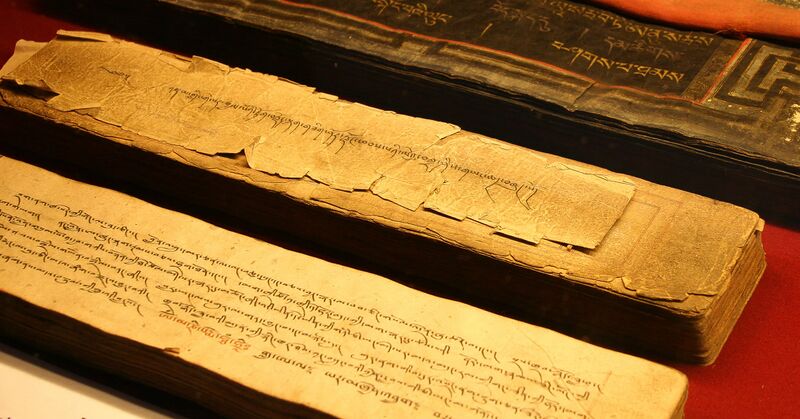
The Mirror Clarifying the Results of Karma (Byang chub sems dpa'i spyod pa la 'jug pa'i sgrung 'grel las 'bras gsal ba'i me long) is a narrative commentary on the anecdotes that appear in the ten chapters of the Bodhicaryāvatāra by Wangchuk Rinchen (c. twelfth cent), who was a disciple of Latö Könchok Khar and became the abbot of Nering. The stories presented here were translated by Gregory Forgues and Khenpo Könchok Tamphel.
Story 1 of Chapter 1
To those who go in bliss,25‟Those who go in bliss” (Tib. bde gshegs, Skt. sugata): a title of the Buddhas. the dharmakāya26The word dharmakāya (Tib. chos sku, Skt. dharmakāya) means ‟dharma body.” According to the commentarial tradition, two interpretations are possible. The term may be taken to mean simply ‟the body of the Dharma of realization and transmission” (which is the interpretation of Kunzang Pelden and other authorities), with the result that the first line of the poem is a salutation to the Three Jewels of Buddha, Dharma, and Saṅgha. On the other hand, it may be understood as referring to the dharmakāya or ‟truth body,” the ultimate aspect of a Buddha, as contrasted with the rūpakāya or ‟form body” (further subdivided into the sambhogakāya and nirmānakāya). they possess, and all their heirs,27The ‟heirs” of the Buddhas are the Bodhisattvas. We have preferred this translation, which is gender-inclusive and corresponds more closely to Shāntidevaʼs obvious intention than the literal rendering of ‟sons” (Tib. sras) as this is likely to be understood by a modern Western readership. Phis interpretation is in fact supported by one of the earliest known Tibetan commentaries on the Bodhicharyāvatāra (composed by Sonam Tsemo, 1142–1182), where sras is glossed as gdung ʼtshob (inheritor, successor). In the present context, reference is actually being made to ‟noble” Bodhisattvas, so-called because their realization corresponds to the Mahāyāna path of seeing and beyond, in other words, who are abiding on the Bodhisattva bhūmis or grounds, and who are therefore sublime objects of refuge. To all those worthy of respect, I reverently bow. According to the scriptures, I shall now in brief describe The practice of the Bodhisattva discipline.
Page(s) 31
Blankleder, Helena, and Wulstan Fletcher (Padmakara Translation Group), trans. The Way of the Bodhisattva: A Translation of the Bodhicharyāvatāra. By Śāntideva. Rev. ed. Shambhala Classics. Boston: Shambhala Publications, 2006.
བདེ་གཤེགས་ཆོས་ཀྱི་སྐུ་མངའ་སྲས་བཅས་དང་། ། ཕྱག་འོས་ཀུན་ལའང་གུས་པས་ཕྱག་འཚལ་ཏེ། ། བདེ་གཤེགས་སྲས་ཀྱི་སྡོམ་ལ་འཇུག་པ་ནི། །
ལུང་བཞིན་མདོར་བསྡུས་ནས་ནི་བརྗོད་པར་བྱ། །bde gshegs chos kyi sku mnga' sras bcas dang /_/ phyag 'os kun la'ang gus pas phyag 'tshal te/_/ bde gshegs sras kyi sdom la 'jug pa ni/_/
lung bzhin mdor bsdus nas ni brjod par bya/_/Concerning the phrase "To all those worthy of respect, I reverently bow," it is said that a bodhisattva does not bow to beings of lesser status, such as śrāvakas and pratyekabuddhas. For example, King Ajātaśatru[1] once invited the venerable Mahākāśyapa[2] and other śrāvakas to the palace for a midday meal. At that time, as the king's sixteen-year-old daughter, who was exceptionally beautiful, remained seated on her throne, the king remarked, "When such noble beings are present, failing to bow or show respect is a disgrace." To this, the daughter responded, "Father, by that standard, you are equally disgraceful." When asked why, she replied:
Just as a universal monarch,[3] Perfectly endowed with auspicious signs, Does not bow to ordinary people, And just as a king's daughter, Perfectly endowed with auspicious signs, Does not bow to ordinary people, Similarly, how could the child of the buddhas, Perfectly endowed with auspicious signs, Bow to śrāvakas and pratyekabuddhas?
"Why is this so? Because bodhisattvas and universal monarchs are capable of succeeding their fathers' lineages. I am also a bodhisattva. Therefore, I do not bow to śrāvakas and pratyekabuddhas," she said.
Story 2 of Chapter 1
For like the supreme substance of the alchemists, It takes our impure flesh and makes of it The body of a Buddha, jewel beyond all price. Such is bodhichitta. Let us grasp it firmly!
Page(s) 32
Blankleder, Helena, and Wulstan Fletcher (Padmakara Translation Group), trans. The Way of the Bodhisattva: A Translation of the Bodhicharyāvatāra. By Śāntideva. Rev. ed. Shambhala Classics. Boston: Shambhala Publications, 2006.
གསེར་འགྱུར་རྩི་ཡི་རྣམ་པ་མཆོག་ལྟ་བུ། །
མི་གཙང་ལུས་འདི་བླངས་ནས་རྒྱལ་བའི་སྐུ། །
རིན་ཆེན་རིན་ཐང་མེད་པར་[p.5]Byang chub sems dpa'i spyod pa la 'jug pa rtsa ba dang 'grel pa (1990)
Slob dpon zhi ba lha and Mkhan po kun dpal. Byang chub sems dpa'i spyod pa la 'jug pa rtsa ba dang 'grel pa. Khreng tu'u: Si khron mi rigs dpe skrun khang, 1990. 
gser 'gyur rtsi yi rnam pa mchog lta bu/_/
mi gtsang lus 'di blangs nas rgyal ba'i sku/_/
rin chen rin thang med par [p.5]Byang chub sems dpa'i spyod pa la 'jug pa rtsa ba dang 'grel pa (1990)
Slob dpon zhi ba lha and Mkhan po kun dpal. Byang chub sems dpa'i spyod pa la 'jug pa rtsa ba dang 'grel pa. Khreng tu'u: Si khron mi rigs dpe skrun khang, 1990.
Concerning the phrase "Like the supreme substance of the alchemists," in the city of Jñāta, in the land of Bheta, there was a brahmin yogi named Victorious God.[4] When his chief consort Wise Lady[5] gave birth to a baby boy named Noble Intelligence,[6] they presented him to a soothsayer, who said, "If he lives long, he will be like a second buddha, but his lifespan is not more than seven days." However, due to nāgas reciting auspicious verses, the boy's life was extended to seven years. Further, by propitiating the [deity] Great Peacock [Wisdom Queen],[7] it was extended to fifteen years.
Around this time, the brahmin's junior wife, a Brahmin woman named Beautiful Form[8] won her husband's favor and made a request: "Please," she said, "grant the mastery of the medical arts to my son, Noble Merit." The father, not wishing to show undue favoritism, replied, "It would be improper to simply give it away. I shall bestow it through a test of skill." He then proceeded to teach all the profound instructions of the science of healing to Noble Merit. When the training was complete, the father addressed both sons: "In three days, I will entrust my entire legacy to whichever of you proves to be more learned. Prepare yourselves!"
Noble Intelligence noticed his mother's sorrowful expression and asked her the reason. She explained the situation, lamenting, "I am heartbroken that you, the eldest son, might not receive the inheritance!" "Do not worry," he reassured her. "Simply prepare the butter lamps for me."
That night, through intense concentration, he realized his father's single true intention. On the second night, he perceived the flaws in his father's reasoning. On the third night, he comprehended the ultimate nature of reality itself. When he presented these insights in sequence over the three days of the contest, his younger brother, Noble Merit, was left utterly speechless, unable to offer any response. As tensions began to rise between the two mothers, the elder brother, Noble Intelligence, intervened. "Father and mothers, please do not be troubled," he announced. "Let the inheritance be given to Noble Merit. I ask only for your permission to renounce the world and become a monk." Delighted by his noble character, they granted his request.
[Noble Intelligence] then became ordained at Nālandā under Rāhulabhadra, and he learned all five sciences by merely seeing or hearing them once. However, upon reaching the age of fifteen, he stood still in the Grove of Sorrow at Śrīparvata.[9] When Saraha asked him why, he said, "I do not have more than seven days of life left." Saraha said, "I will bestow upon you the accomplishment of swift feet. Go to Wǔtái and tell Mañjuśrī about this, and pray to the goddess Immortal Lamp.[10]
As he did as instructed, within five days, he realized the twelve hundred qualities of the path of seeing,[11] attained the accomplishment of longevity,[12] and returned to Jambudvīpa to find it going through a great famine. To protect the people of Jambudvīpa, he propitiated the Three Staff Wielding Sister.[13] [At that time,] he had a dream wherein she instructed him to go to Copper Island[14] and learn the science of alchemy.
The next morning, when he went to a mountain crevice to refresh himself, a white snake, chased by a black snake, came before him. As he put a leaf on its belly, it flew away. As he put a flower on its head, it landed [on the ground]. As it was chased again [by the black snake], it took a fruit in its mouth and vanished.
The teacher bundled these three items together. The leaf enabled him to fly, while the flower allowed him to land in Copper Island. He offered gold in exchange for learning [alchemy], but no one taught it to him in fear that [the knowledge of alchemy] would spread.
The [Copper Island beings] asked him, "What allowed you to reach this place?" He replied, "It was the power of this leaf." They said, "If you give it to us, we will teach you [alchemy]." He gave it to them, and he learned the science [of alchemy]. Then, using the leaf, he flew back—but was soon chased [by the Copper Island beings]. So, he used the fruit to make himself invisible, and he landed using the flower.
To accomplish the elixir [that turns into gold everything it touches], the instruction was to obtain blood from a virgin girl's golden [pillar] vein.[15] However, he managed only to obtain the sullied water left from her handwashing, which failed to work. Hence, he supplicated the ḍākiṇīs. As a result, the girl, frightened by a windstorm, overstepped and injured her gold vein. He held the blood in a bowl, thereby perfecting the elixir, which could turn everything it touched into gold. Later, taking this as an analogy for how all who give rise to the awakening mind become buddhas, Saraha said,
Just as one supreme substance of accomplishment Can turn all it touches into purest gold, So too, with a single supreme awakening mind, Embodied beings become Victorious Ones.
Story 3 of Chapter 1
Since the boundless wisdom of the only guide of beings
Perfectly examined and perceived its priceless worth,
Those who wish to leave this state of wandering
Should hold well to this precious bodhichitta.[p.33]The Way of the Bodhisattva (2006)
Blankleder, Helena, and Wulstan Fletcher (Padmakara Translation Group), trans. The Way of the Bodhisattva: A Translation of the Bodhicharyāvatāra. By Śāntideva. Rev. ed. Shambhala Classics. Boston: Shambhala Publications, 2006.
Page(s) 32
Blankleder, Helena, and Wulstan Fletcher (Padmakara Translation Group), trans. The Way of the Bodhisattva: A Translation of the Bodhicharyāvatāra. By Śāntideva. Rev. ed. Shambhala Classics. Boston: Shambhala Publications, 2006.
འགྲོ་བའི་དེད་དཔོན་གཅིག་པུ་ཚད་མེད་བློས། །
ལེགས་པར་ཡོངས་སུ་བརྟགས་ན་རིན་ཆེ་བས། ། འགྲོ་བའི་གནས་དང་བྲལ་བར་འདོད་པ་རྣམས། །
རིན་ཆེན་བྱང་ཆུབ་སེམས་ལེགས་བརྟན་པར་གཟུང་། །gro ba'i ded dpon gcig pu tshad med blos/_/
legs par yongs su brtags na rin che bas/_/ 'gro ba'i gnas dang bral bar 'dod pa rnams/_/
rin chen byang chub sems legs brtan par gzung /_/Concerning the phrase "Since the boundless wisdom of the only guide of beings": A caravan leader named Perfectly Release, with a large ship and many merchants, went to sea. However, due to misjudging the wind conditions, they ended up being stranded on an island in the doldrums. There, they found the bones of many merchants who had died previously. Feeling utterly disheartened, they lamented and wept.
To console the merchants during the day, the caravan leader said, "There is a way!" But at night, he actually considered how to find a way out of this situation.
At that time, some birds were perched on a tall tree. The caravan leader, knowing bird language, listened. Two newcomer birds were very healthy, while the native birds were emaciated. A native bird said, "Guests, what kind of good do you have?" A guest bird replied, "We eat the leftovers of King Meritorious's rice gruel and other foods." Then the guest bird asked, "Native birds, why are you so emaciated?" A native bird replied, "We have nothing to eat but black and white pebbles."
Thereupon, the caravan leader wrote a letter to that king: "We, so many merchants, are trapped in such an enclosure in the sea. If you have a way, you must rescue us." He tied the letter to the neck of a guest bird without being noticed at night. The king saw it and beat a drum, proclaiming, "If someone can release such merchants, I will give half of my kingdom!" A brahmin with magical powers said, "I can rescue them–but I want six of your regions, not just half the kingdom!"
He then went over the sea by magical power. All the merchants, thinking it was a demon or something similar, became frightened. But the caravan leader said, "I have sent a message with a bird. It is likely that he is here to rescue us. Do not be afraid!" As he reached them, he said, "I am the rescuer! But I must leave one of you behind; all the rest I will rescue." The caravan leader accepted this condition and agreed to stay behind.
Then the brahmin said, "The one who stays behind must strike this golden drum in the island cave!" As instructed, he struck it. Many birds were present there, and the wind force from their collective flight propelled the ship, leading to its rescue. The caravan leader was eventually also rescued.
Story 4 of Chapter 1
As though they pass through perils guarded by a hero, Even those weighed down with dreadful wickedness Will instantly be freed through having bodhichitta. Why do those who fear their sins not have recourse to it?
Page(s) 33
Blankleder, Helena, and Wulstan Fletcher (Padmakara Translation Group), trans. The Way of the Bodhisattva: A Translation of the Bodhicharyāvatāra. By Śāntideva. Rev. ed. Shambhala Classics. Boston: Shambhala Publications, 2006.
སྡིག་པ་ཤིན་ཏུ་མི་བཟད་བྱས་ན་ཡང་། །
དཔའ་ལ་བརྟེན་ནས་འཇིགས་པ་ཆེན་པོ་ལྟར། ། གང་ལ་བརྟེན་ནས་ཡུད་ཀྱིས་སྒྲོལ་འགྱུར་བ། །
དེ་ལ་བག་ཅན་རྣམས་ཀྱིས་ཅིས་མི་བསྟེན། །sdig pa shin tu mi bzad byas na yang /_/
dpa' la brten nas 'jigs pa chen po ltar/_/ gang la brten nas yud kyis sgrol 'gyur ba/_/
de la bag can rnams kyis cis mi bsten/_/Concerning the phrase "Even those weighed down with dreadful wickedness":[16] In a city called Close Possession,[17] there was a king named Immaculate Voice[18] and a queen named Virtuous Lady.[19] As they were greatly saddened by the lack of a son, the king asked a Sage with clairvoyance in that region, "Is it that I inherently lack the fortune to have a son, or is it simply due to circumstances that one could not be born?"
The sage replied, "Great King, the son destined for you is currently a brahmin meditating in this region. When he completes his life and passes away, he will be reborn as your son." Driven by his longing for a son, the king could not bear to wait and had the brahmin's life taken prematurely. As a result, the brahmin was unable to be reborn as his son and was instead born elsewhere.
Once again, the king said to the sage, "The brahmin has already passed away, yet he wasn’t born as my son. What is the reason for this?"
The sage replied, "Because you took his life prematurely, he was unable to be reborn as your son. He has now taken birth near the Iron Mountain of Blazing Fire, as a fierce, reddish-grey rabbit with a bent left ear. As soon as it dies, it will be born as your son."
Again, the king mobilized many people from the kingdom to hunt. They found a fierce reddish-grey rabbit with a left bent ear and killed it. The rabbit, in its mind, uttered a curse: "I am a rabbit who lives harmlessly in the wilderness, eating only grass and drinking water—yet this king has gathered many to kill me. O King! After I die, may I be reborn as your executioner."
Immediately after it died, it entered the womb of Queen Virtuous Lady. From the moment it settled there, she developed a craving solely for flesh. Since no other type of flesh satisfied her, blood was drawn from the king's little finger and given to her. Then, in due course of time, it was born and named prince Gem Holder.
The prince was raised and nurtured by many nurses. From time to time, he came before the king to pay his respects. Upon witnessing the king’s immense wealth, he asked a spiritual teacher, "When will I inherit all the splendors of my father?" The teacher replied, "You will inherit them when the king passes away."
Driven by attachment and greed, the prince drew his sword against his father. At that moment, the queen cried out, "A foe unborn has been born to me!" Thus, he came to be known as "The Unborn Foe."[20]
Due to this event, his mother died, and the prince unjustly killed Arhat Utpala's Radiant. He drew blood from the Tathāgata with the intention to kill him, and he caused dissension in the Saṅgha—it is said he committed all five deeds of immediate retribution.
Although the ministers thought, "The kingdom should not be given to this reckless prince," they nonetheless gave it to him, saying, "Now that there is no other heir, it must be given."
One time, when the king went hunting, he encountered a Sage in the forest and asked, "What do you do with such suffering?"
The sage replied, "Great King, I endure this suffering of ascetic practice, relying on the Three Jewels to seek the unsurpassed fruit of awakening. But you, having killed your parents and others for the sake of mere worldly desires in this life and destined for Avīci Hell—this I cannot bear!"
He asked, "Great Sage, what are the Three Jewels you speak of? What becomes of negative actions such as killing one's parents? And what result can one attain by abandoning such deeds?"
The sage explained to him the Dharma of karma and its results in detail, and he was filled with intense remorse. Nevertheless, the effects of his actions became visibly manifest: fire-like boils broke out on his body, his complexion and form turned utterly repulsive, and the stench of pus spread in all directions. His body and mind suffered as though he were already in a real hell.
At that time, he heard a voice in the sky saying, "In seven days, the earth will split open, and with this very body, you will fall into Avīci Hell." Overwhelmed by fear and intense suffering, he went to the six heretical teachers and asked how he could confess all his negative deeds, but none of them knew the way.
Then a boy named Healer said, "If you go to the Buddha, you will surely be liberated from this." He replied, "The Buddha is such a pure being, surrounded by pure Arhats. How could I, with this hellish body, possibly approach him?"
Healer answered, "The Buddha teaches the Dharma equally to Śāriputra and to the lowly. He purifies both King Prasenajit and the poor. If he treats Rāhula and Devadatta with the same equanimity, then why wouldn’t you be able to approach him?"
He replied, "It is said that those who see the truth do not fall into the lower realms. So let's ride an elephant together. If I fall, hold on to me."
When they arrived, they sat quietly in a corner. The Buddha called out twice, but he, thinking it wasn't directed at him, remained silent. On the third call, the Buddha said clearly, "Great King Ajātaśatru!"
Overjoyed, he was able to respond. The Buddha asked, "Have you committed the deeds of immediate retribution?" "Yes, I have, Venerable Sir, you are right," he replied. "Confess them," the Buddha instructed. "I confess the negative deeds of myself and all sentient beings individually, and I vow never to commit them again!"
As he made this confession, the Buddha said, "Excellent! You, the royal lineage holder, have not only confessed your own negative deeds but also those of all beings!" Thus, all his negative deeds were purified, and he attained forgiveness.
Then, the Buddha instructed Mañjuśrī to pacify the king's remorse. Mañjuśrī asked the king, "Is it true that you have committed the five deeds of immediate retribution?" "Great Wisdom, it is true!" he replied. "What is the doer of these deeds?" Mañjuśrī asked. "They were done by the body, instigated by the mind," he replied. "Where is that instigator—within or without? What kind of color or shape does it have?" asked Mañjuśrī.
The king examined these questions and realized that all phenomena lack inherent existence. He thought, "May the consequences of the apparitional karmas of all beings ripen upon me, and may all of them attain awakening!"
In that very moment, he realized the suchness of samsara and nirvana, and the realization of the sixth stage arose within him. Then, a voice was heard in the sky:
Although Ajātaśatru committed negative deeds of immediate retribution, Look! How his one thought makes him a liberated yogi!
Story 5 of Chapter 1
Just as by the fire that will destroy the world, Great sins are surely and at once consumed by it. Its benefits are thus unbounded As the Wise and Loving Lord30The reference is to Maitreya, the Buddha of the future, as recounted in the Gandavyūha-sūtra. explained to Sudhana.
Page(s) 33
Blankleder, Helena, and Wulstan Fletcher (Padmakara Translation Group), trans. The Way of the Bodhisattva: A Translation of the Bodhicharyāvatāra. By Śāntideva. Rev. ed. Shambhala Classics. Boston: Shambhala Publications, 2006.
དེ་ནི་དུས་མཐའི་མེ་བཞིན་སྡིག་ཆེན་རྣམས། །
སྐད་ཅིག་གཅིག་གིས་ངེས་པར་སྲེག་པར་བྱེད། ། དེ་ཡི་ཕན་ཡོན་དཔག་ཏུ་མེད་པ་དག །
བྱམས་མགོན་བློ་དང་ལྡན་པས་ནོར་བཟང་བཤད། །de ni dus mtha'i me bzhin sdig chen rnams/_/
skad cig gcig gis nges par sreg par byed/_/ de yi phan yon dpag tu med pa dag_/
byams mgon blo dang ldan pas nor bzang bshad/_/Concerning the phrase "As the Wise and Loving Lord explained to Sudhana": It is said in the Gaṇḍavyūhasūtra that in the city called Source of Joy,[21] Sudhana,[22] the son of a merchant named Source of Wealth,[23] generated the mind of awakening[24] in the presence of Mañjuśrī, who then bestowed upon him the precepts. After that, he gradually made his way to the presence of Maitreya. From afar, he saw Maitreya in the southern direction, on the shore of the great ocean, in a multistoried mansion called "Heart of Ornamentation, Manifesting All Forms,” where he was teaching the Dharma amidst an ocean-like assembly. Filled with joy and reverence, the youth prostrated with his whole body.
The noble Maitreya then extended his right hand, long and graceful like an elephant’s trunk, pointed to the youth, and presented him before the entire assembly as if displaying him proudly. He said:
Look! This one with completely pure intention— Sudhana, son of Source of Wealth, Seeking the supreme bodhisattva conducts, Has come, and come well, into my presence. Have you come well, O mind of awakening of compassion? Have you come well to Maitreya’s vast maṇḍala? Have you come well, you who are peaceful to behold? In following this path, have you not grown weary? Come forth, you of pure intent—come well! Come forth, you of unborn mind—come well! Come forth, you of steadfast faculties—come well! Surely, in your practice, you have not worn out!
Sudhana circumambulated the noble Maitreya three times to the right. Then, kneeling before him with palms joined, he said, "Noble One, if I am to enter into unsurpassed awakening, I do not know how to train in its precepts or how to apply myself diligently in practice. Please, teach me!"
In response to this request, Maitreya said, "Son of noble lineage, you are fully embraced by a virtuous friend. Why is that? Because, son of noble lineage, the mind of awakening is like the seed of all Buddha dharmas. It is like a fertile field that nurtures the growth of wholesome Dharma in all beings. It is like the earth that steadfastly supports the world."
He went on to explain over seventy such examples—drawing from plants, medicines, jewels, and more. Those most relevant are presented here.
Story 6 of Chapter 1
If with kindly generosity One merely has the wish to soothe The aching heads of other beings, Such merit knows no bounds.
Page(s) 34
Blankleder, Helena, and Wulstan Fletcher (Padmakara Translation Group), trans. The Way of the Bodhisattva: A Translation of the Bodhicharyāvatāra. By Śāntideva. Rev. ed. Shambhala Classics. Boston: Shambhala Publications, 2006.
སེམས་ཅན་རྣམས་ཀྱི་ཀླད་ནད་ཙམ། །
བསལ་ལོ་སྙམ་དུ་བསམས་ན་ཡང་། ། ཕན་འདོགས་བསམ་པ་དང་ལྡན་ཏེ། །
བསོད་ནམས་དཔག་མེད་ལྡན་གྱུར་ན། །sems can rnams kyi klad nad tsam/_/
bsal lo snyam du bsams na yang /_/ phan 'dogs bsam pa dang ldan te/_/
bsod nams dpag med ldan 'gyur na/_/Concerning the phrase "The aching heads of other beings": In the Pūrṇapramukhāvadāna, it is stated:
Parents are Brahmā, they are our teachers. Because the wise revere their parents, In this life, they are praised by all, And in the next, enjoy happiness in the happy realms.
When the Buddha said this, the monks asked, "Why is honoring one’s parents regarded so highly?" He replied:
In the past, when I was still bound by afflictions, listen now to how great suffering arose from a small harm I inflicted upon my mother.
Monks, long ago in Vārāṇasī, when all the sons of a caravan leader named Maitrakanyakaḥ[25] had died, a brahmin, skilled in interpreting signs, told him, "If a son is born now, give him a girl's name, and he will live."
Soon after, the caravan leader's wife became pregnant. When she gave him the news, he was overjoyed. He placed her alone in a pleasant upper chamber of his mansion, ensuring that no men were present. He shielded her from unpleasant sounds and arranged for her to be served food that was neither too bitter nor otherwise unsuitable. He also spread soft pads on the floor so that her feet would not touch the ground.
Because she received excellent prenatal care, after ten months, she gave birth to a beautiful and pleasing baby boy. His head resembled an umbrella; he had a broad forehead, smooth eyebrows, and a high nose bridge—endowed with all the auspicious characteristics. A grand birth celebration was held, and he was named Daughter of Maitrakanyakaḥ.
The father died at sea, and when the child grew up under his mother's care, he asked her about his father's profession. Fearing he might die if she told him the truth, she said, "He traded in grains, incense, clothes, and jewels." Gradually, through these trades, he earned four, eight, sixteen, and thirty-two Kārṣāpaṇa coins, respectively, and offered them to his mother. After that, as he prepared to depart with five hundred sea merchants, his mother wept and clung to his feet to stop him. But he kicked her on the head with his foot and left. His mother prayed, "Son, may you never experience the ripening of what you have just done!"
When his ship was attacked and wrecked by a monstrous fish, he clung to a plank and eventually reached the shore. There, he was welcomed in four cities—Joy, Source of Joy, Mad Tiger, and Brahmā's Lord—by groups of four, eight, sixteen, and thirty-two celestial maidens, respectively. In each city, he enjoyed heavenly pleasures and bliss for as many years as the number of maidens.
After that, he wished to travel south, despite having been warned not to. Upon arriving, he entered an iron house, and the door shut behind him on its own. Inside, he saw a large man whose head was being consumed by a flaming wheel, and whose body was soaked in pus and blood. When asked, he said, "This is the result of kicking my mother's head." Hearing this, he realized: "Oh, then I too am led here by the same karma." At that very moment, heard an exclamation in the sky, saying,
- Having abandoned the [cities]—
Joy, Source of Joy, Mad Tiger, and Brahmā’s Lord—
Why have you come to this place?
He replied, "I have been driven here by my karma." At that moment, he heard a voice declare, "The one who is bound will be released, and the one who is released will be bound!" Immediately, the wheel shifted onto the head of Daughter of Maitrakanyakaḥ and began to spin.
He asked the freed man, "How long did the wheel spin on your head?"
He replied, "For sixty-six thousand years."
Knowing how difficult it would be to become free from it, he asked in despondence, "Will others come here too?"
The man replied, "All those who have accumulated karma for this place will arrive."
Pondering his own situation, compassion arose in him for others, and he proclaimed, "May all the karmic results that would cause beings to suffer in this way ripen upon me, and may no one else ever come here!"
As soon as he spoke these words, the wheel lifted from the bodhisattva Daughter of Maitrakanyakaḥ’s head, rose to the height of seven tāla trees, and he died and was reborn in Tuṣita Heaven.
Monks, as a result of offering his mother the kāṣāpaṇa coins, he experienced happiness and joy in four cities. However, due to the minor harm he caused her, he endured the suffering of having his brain slashed.
Story 7 of Chapter 1
Could our father or our mother Ever have so generous a wish? Do the very gods, the ṛiṣhis,33According to ancient Indian tradition, the ṛiṣhis were sages who perceived the sound of the Vedas and transmitted them to the world. They form a class by themselves between gods and humans. even Brahmā34Brahmā, the creator of the universe according to the Vedas. Harbor such benevolence as this?
Page(s) 34
Blankleder, Helena, and Wulstan Fletcher (Padmakara Translation Group), trans. The Way of the Bodhisattva: A Translation of the Bodhicharyāvatāra. By Śāntideva. Rev. ed. Shambhala Classics. Boston: Shambhala Publications, 2006.
ཕ་འམ་ཡང་ན་མ་ཡང་རུང་། །
སུ་ལ་འདི་འདྲའི་ཕན་སེམས་ཡོད། ། ལྷ་དང་དྲང་སྲོང་རྣམས་ཀྱང་རུང་། །
ཚངས་པ་ལ་ཡང་འདི་ཡོད་དམ། །pha 'am yang na ma yang rung /_/
su la 'di 'dra'i phan sems yod/_/ lha dang drang srong rnams kyang rung /_/
tshangs pa la yang 'di yod dam/_/Concerning the phrase "Do the very gods, the ṛiṣhis, even Brahmā, harbor such benevolence as this?": Brahmā is said to have made the aspiration: "May the birth of all sentient beings never be interrupted!" Believing that birth indeed continues as he aspired, he regards all sentient beings as his children and meditates on the [four] immeasurables toward them.
Story 8 of Chapter 1
If someone who returns a favor Is deserving of some praise, Why need we speak of Bodhisattvas, Those who do good even unsolicited?
Page(s) 35
Blankleder, Helena, and Wulstan Fletcher (Padmakara Translation Group), trans. The Way of the Bodhisattva: A Translation of the Bodhicharyāvatāra. By Śāntideva. Rev. ed. Shambhala Classics. Boston: Shambhala Publications, 2006.
ཕན་བཏགས་ལན་ལྡོན་གང་ཡིན་པ། །
དེ་ཡང་རེ་ཞིག་བསྔགས་འོས་ན། ། མ་བཅོལ་ལེགས་པར་བྱེད་པ་ཡི། །
བྱང་ཆུབ་སེམས་དཔའ་སྨོས་ཅི་[p.8]Byang chub sems dpa'i spyod pa la 'jug pa rtsa ba dang 'grel pa (1990)Slob dpon zhi ba lha and Mkhan po kun dpal. Byang chub sems dpa'i spyod pa la 'jug pa rtsa ba dang 'grel pa. Khreng tu'u: Si khron mi rigs dpe skrun khang, 1990.
phan btags lan ldon gang yin pa/_/
de yang re zhig bsngags 'os na/_/ ma bcol legs par byed pa yi/_/
byang chub sems dpa' smos ci [p.8]Byang chub sems dpa'i spyod pa la 'jug pa rtsa ba dang 'grel pa (1990)Slob dpon zhi ba lha and Mkhan po kun dpal. Byang chub sems dpa'i spyod pa la 'jug pa rtsa ba dang 'grel pa. Khreng tu'u: Si khron mi rigs dpe skrun khang, 1990.
Concerning the phrase "If someone who returns a favor": In a city called Perfect Glorious, there lived a king named Godly Abode, who had appointed a thousand of his sons as vassal kings across various regions. One day, while his youngest son, Virtuous Abode—revered by both humans and nonhumans—was in the pleasure garden, a yakṣa emerged from the depths of the earth and warned him: "Know this! The deceitful minister Bearer of Enmity will kill your father and seize the throne. He will slay the vassal kings, and he will come to kill you as well. Therefore, flee from here at once!"
Startled by what he had heard, he began to flee. On the way, he saw his seven-year-old son, Noble Birth. As he picked him up, his wife asked, "Is this really appropriate?" When he explained the situation to her, she said, "Then please let me come with you." So, the three of them quickly set off together down the path. After traveling a long distance, they began to run out of provisions, as the food meant to sustain one person for a day was now being shared among three.
The father thought, "To lose my beloved son would be unbearable. Therefore, I would kill my wife and feed him." With this resolve, he drew his sword from its sheath. However, the son, folding his hands, said, "Do not do that! Instead, kill me. But if you kill me now, my body will rot. Keep me alive, and cut only what is necessary. This way, I will last much longer."
The father followed the instructions. When much of the flesh had been used, he realized they had not yet reached their destination. So, he gathered the pieces of flesh that had become lodged in the crevices of the sword cuts, along with organs such as the eyes and others, and continued on his way. Then, the son said, "Father, feed a little also to this body of mine, which still has some breath flowing, and continue on your way." As the father did as instructed and continued on his way, the son prayed, "By this act of offering even the flesh of my body to my parents, may I in the future attain buddhahood and protect all sentient beings." As he said these words, the earth trembled with a level six intensity, and the witnessing devas, endowed with supernormal knowledge, descended and scattered flowers upon him, weeping with compassion. Indra, to test him, manifested as a beggar and asked for a small piece of his flesh, which he gave him.
Again, when Indra manifested as a tiger and other fierce beasts—leaping and roaring as they tried to devour him—he said, "I have no more flesh left on me. So, satisfy yourself with my bones, tendons, marrow, brain, and so forth. May I then satisfy you in the future with the nectar of Dharma.”
As he thus dedicated himself and aspired to make his body meaningful, Indra, perceiving his thoughts, revealed his true form and asked, "As a result of these deeds, what do you wish to become—a universal monarch, Brahmā, or something else?"
He replied, "I do not wish for any samsaric joy as a result. By this merit, I wish to attain buddhahood in order to protect all sentient beings."
Indra asked, "Don’t you regret giving even your own flesh for that?"
He replied, "I have no regret—not even the slightest suffering."
Indra then asked, "Who is your witness for that?"
He replied, "If I truly have no regret and instead feel joy, may my body be restored to its former state, and may I ultimately attain buddhahood. But if I harbor any regret or anger, may I die right now and fall into Avīci Hell!"
As soon as he said this, his body was restored to its former state, radiant with splendor and glory. His parents and all the people of the city gathered, marveling at the wonder, and they exclaimed in unison:
One who shows gratitude for kindness received, Who is unattached even to their own body, And who repays the benefits bestowed— Such a person is worthy of everyone's praise.
Then, the king of that country invited him with his parents to his palace and offered them various honors. With a great sense of love in his mind for the prince, he waged war against Bearer of Enmity, overthrew him, and reinstated both father and son to their former kingdom, where they ruled in accordance with the Dharma.
In the City of Bihata
The city of Bihata became a deserted plain with a well, into which four beings—a human, a hawk, a mouse, and a snake—fell and, for a long time, endured various forms of suffering, such as freezing cold and more. As a person came to that place, saw them, and compassionately pulled them out using various means, the four of them said, "Since you have saved our lives from this deep well, we would like to repay your kindness!" The man, however, disparaged them, saying, "The human among you likely cannot do so, and the other three are merely animals—there will never come a time when I would have to expect anything from you."
Later, that man became impoverished and went hunting in the forest. There, he encountered the hawk from before, who asked, "Friend, what are you doing?" When the man replied, "I am hunting because I am poor," the hawk said, "I will repay your earlier kindness." Saying this, it brought him the ornaments of the king's wife, which it had taken while she was washing her hair. Later, the man became impoverished and went hunting in the forest. There, he encountered the hawk he had once saved, who asked, "Friend, what are you doing?" When the man replied, "I am hunting because I am poor," the hawk said, "I will repay your earlier kindness." Saying this, it brought him the ornaments of the king's wife, which it had taken while she was washing her hair.
The man later told the other person he had rescued from the well about the gift he received from the hawk. When the king made an announcement to the townspeople, saying, "Whoever can tell me who took the queen's ornaments shall receive a reward," that man, forgetting the kindness that had saved his life and going back on his own words of gratitude as no more than a blade of grass, went and revealed the incident to the king. As a result, the king had the man arrested and thrown into a dungeon, where he was given only enough food and water to keep him alive, leaving him in a state of deprivation. At that time, the mouse he had once saved saw him and began bringing him food.
The snake coiled itself around the king's body, and due to its breath, the king’s body began to swell. Astrologers were consulted, and they concluded, "This snake is the guardian of the prisoner. If the prisoner is released, the snake will depart." Following their advice, the king released the prisoner and even returned the ornaments that had been taken back from him earlier.
Story 9 of Chapter 1
All those who harbor evil in their minds Against such lords of generosity, the Buddha’s heirs, Will stay in hell, the mighty Sage has said, For ages equal to the moments of their malice.
Page(s) 36
Blankleder, Helena, and Wulstan Fletcher (Padmakara Translation Group), trans. The Way of the Bodhisattva: A Translation of the Bodhicharyāvatāra. By Śāntideva. Rev. ed. Shambhala Classics. Boston: Shambhala Publications, 2006.
གང་ཞིག་དེ་འདྲའི་རྒྱལ་སྲས་སྦྱིན་བདག་ལ། །
གལ་ཏེ་ངན་སེམས་སྐྱེད་པར་བྱེད་པ་དེ། ། ངན་སེམས་བསྐྱེད་པའི་གྲངས་བཞིན་བསྐལ་པར་ནི། །
དམྱལ་བར་གནས་པར་འགྱུར་ཞེས་ཐུབ་པས་གསུངས། །gang zhig de 'dra'i rgyal sras sbyin bdag la/_/
gal te ngan sems skyed par byed pa de/_/ ngan sems bskyed pa'i grangs bzhin bskal par ni/_/
dmyal bar gnas par 'gyur zhes thub pas gsungs/_/Concerning the phrase "Will stay in hell, the mighty Sage has said": Once, when the venerable Maudgalyaputra visited a realm of hell beings, he saw a massive sentient being with flames pouring from its mouth, lying stretched out and pinned to a burning iron ground that had become a single mass of flame. On its tongue were a thousand ploughing animals, their hooves sharp as razors, engulfed in flames. Wherever they stepped, the ground beneath them cut and tore continuously in that direction, causing the being to endure intense and unrelenting suffering.
This made Maudgalyaputra think, "What could have caused such suffering?" Although he remained in meditative equipoise and reflected on it, he saw only that the being was continually reborn from one hell to another, yet he could not discern the specific karma behind it. He then asked the Blessed One, "While on a walk, I saw such a hell being. Please tell me—what karma led to such a result?"
The Blessed One replied,
In the distant past, a buddha named Unwavering Gait appeared in the world. At that time, a monk who was a master of the Tripiṭaka, endowed with the confidence of learning and liberation, and a teacher of the Dharma with a large following, settled and resided in a royal palace as a recipient of great offerings and veneration.
At that time, an arhat monk, a master of the Tripiṭaka endowed with great intelligence and many such qualities, arrived in that region with a retinue of five hundred disciples. The people chose to venerate only him, ignoring the former master of the Tripiṭaka who resided there. As a result, the latter thought: "Before this monk arrived, I was revered and renowned. But now that he is here, that is no longer the case. If he were not here, I would once again receive the veneration and renown I enjoyed before."
Thinking thus, he spread a false accusation, saying, "This monk is immoral in his conduct." As a result, the people eventually stopped paying attention to the arhat, who, upon realizing this, departed and went elsewhere.
[The Buddha asked,] "Monks, what do you think? That monk who was a Tripiṭaka master at that time is now this very hell being. From the time of the buddha Unwavering Gait until now, in my own time, that sentient being has died and been reborn solely in the hell realm."
Maudgalyāyana asked, "Blessed One, when will that sentient being be freed from such suffering?"
The Buddha replied,
In the future, a buddha named Supreme One[26] will appear in the world. At that time, that being will die and depart from the hell realm, be reborn as a human, and take ordination under that buddha's teachings. Eventually, he will become an arhat. However, he will face much abuse; wherever he goes, he will encounter abuse in each and every place. Growing weary from this alone, he will finally pass into the expanse of nirvana without remainder.
Story 10 of Chapter 1
But joyous and devoted thoughts Will yield abundant fruits in greater strength. Even in great trouble, Bodhisattvas Never bring forth wrong; their virtues naturally increase.
Page(s) 36
Blankleder, Helena, and Wulstan Fletcher (Padmakara Translation Group), trans. The Way of the Bodhisattva: A Translation of the Bodhicharyāvatāra. By Śāntideva. Rev. ed. Shambhala Classics. Boston: Shambhala Publications, 2006.
འོན་ཏེ་གང་ཞིག་ཡིད་རབ་དང་བྱེད་ན། །
དེ་ཡི་འབྲས་བུ་དེ་བས་ལྷག་པར་འཕེལ། ། རྒྱལ་སྲས་རྣམས་ལ་དོ་གལ་ཆེན་པོས་ཀྱང་། །
སྡིག་པ་མི་འབྱུང་དགེ་བ་ངང་གིས་འཕེལ། །on te gang zhig yid rab dwang byed na/_/
de yi 'bras bu de bas lhag par 'phel/_/ rgyal sras rnams la do gal chen pos kyang /_/
sdig pa mi 'byung dge ba ngang gis 'phel/_/Concerning the phrase "But joyous and devoted thoughts will yield . . .": The Blessed One said in the Great Secret: "If the net of desire is torn apart by the weapon of wisdom, it becomes a pure field, free from desire." When these words were spoken, the bodhisattva Source of Joy[27] rose from his perfect equipoise and went to Śrāvastī for alms. There, a merchant's daughter named Glorious Virtues saw him. As she approached with alms in her hands, her gaze remained fixed on Source of Joy, captivated by his peaceful presence, disciplined demeanor, and handsome appearance. She became intensely attached to him, causing her to lose her senses. Source of Joy, too, was momentarily overcome by improper thoughts, but as he quickly regained his focus and analyzed the cause of the attachment, he found nothing in it to which he could be attached. As a result, he attained forbearance in the unborn nature of phenomena and ascended to the height of seven tāla trees. As he glided and reached Jetavana, the Blessed One said to Ānanda, "On the foundation of the mind of desire, Source of Joy has overcome the army of Māras and set the wheel of Dharma in motion."
The lady Glorious Virtues was tormented by desire. She convulsed and jerked her limbs and died at that very spot. Then, the very moment she was reborn in the thirty-three god realm, she found herself in a bejeweled palace, which was twelve yojanas high, with a hundred thousand celestial maidens as her attendants. Realizing the cause through her recollection, she thought, "Alas! If even a mind of attachment yields such results, then I shall venerate him with a mind of devotion." Thus, accompanied by five hundred celestial maidens, she offered flowers and other gifts to him, prostrated before him, circumambulated him seven times, and praised him with many verses.
Her parents, believing that Source of Joy had cast a spell on her, raised a lament and angrily hurled accusations at him. However, once the true events were explained, they acknowledged their mistake, prostrated before him, and, together with five hundred of Glorious Virtues’s relatives, generated the mind of awakening in the presence of Source of Joy. Thus, one should have faith in the conduct of bodhisattvas.
Story 11 of Chapter 1
But joyous and devoted thoughts Will yield abundant fruits in greater strength. Even in great trouble, Bodhisattvas Never bring forth wrong; their virtues naturally increase.
Page(s) 36
Blankleder, Helena, and Wulstan Fletcher (Padmakara Translation Group), trans. The Way of the Bodhisattva: A Translation of the Bodhicharyāvatāra. By Śāntideva. Rev. ed. Shambhala Classics. Boston: Shambhala Publications, 2006.
འོན་ཏེ་གང་ཞིག་ཡིད་རབ་དང་བྱེད་ན། །
དེ་ཡི་འབྲས་བུ་དེ་བས་ལྷག་པར་འཕེལ། ། རྒྱལ་སྲས་རྣམས་ལ་དོ་གལ་ཆེན་པོས་ཀྱང་། །
སྡིག་པ་མི་འབྱུང་དགེ་བ་ངང་གིས་འཕེལ། །on te gang zhig yid rab dwang byed na/_/
de yi 'bras bu de bas lhag par 'phel/_/ rgyal sras rnams la do gal chen pos kyang /_/
sdig pa mi 'byung dge ba ngang gis 'phel/_/Concerning the phrase "Even in great trouble, Bodhisattvas . . .": From a Jātaka: In a past life, the Teacher was born as a monkey. One day, while he was wandering alone through a beautiful forest grove, a man who had lost his way arrived in the area, searching for his missing cow. Hungry, the man climbed onto a branch that drooped over the edge of a cliff, hoping to reach some ripe fruit. Just as he was about to grasp the treetop, the branch snapped with a loud crack, and he tumbled down into a pool of water at the base of the cliff. Though unharmed, he stood up and looked around, but when he found no way out, he cried out in despair.
The monkey heard him and asked, "What brings you to this inescapable abyss?" As the man recounted his story and, with palms joined, pleaded, "Please be my refuge," the bodhisattva monkey let out a deep sigh of compassion. After training himself by lifting a stone that matched the man’s weight, he leapt into the abyss and carried the man up to safety.
Exhausted, the kind-hearted monkey—having just helped the man and suspecting no harm—said, "I will take a nap on this stone slab. Please guard me from wild animals and other dangers," and with that, he lay down and fell asleep. But the man, harboring evil thoughts and hoping to secure provisions for his journey, hurled a stone at the monkey’s head; however, due to his weakness and unsteady aim, he missed and struck the corner of the stone slab instead, and the sound of the hitting stone startled the monkey awake.
As the monkey leapt up and looked around, the man stood speechless, overcome by shame and fear. Though aware of the attempt to harm him, the monkey felt only pity. Gazing at the man with compassion, he said, "Though you are human, you act without gratitude. Even so, though you have proven untrustworthy, I cannot bear to see you come to harm." With that, he safely escorted him to the edge of the village.
Not long after, the man was stricken with leprosy and abandoned by all. He took refuge in a remote hermitage, where he became unrecognizable as a human being. One day, the king of that land, having lost his way while hunting, stumbled upon this mass of oozing sores, foul-smelling, defiled by pus and blood. Startled by this sight, he asked, "Are you a demon? Or what kind of being are you?" The man replied, "I am a human, and the cause of my present condition is:
Just as a flower ripened here, For the love that was betrayed. But in another world to come, Unbearable, hellish suffering awaits.
Hearing this, the great bodhisattva generated even stronger compassion for the man and once again exerted himself in virtuous activity.
When the Teacher Became Power of Love
From a Jātaka: In a past life, when the Teacher (Buddha) was born as a king named Power of Love,[28] after the White Lily Festival, five yakṣa attendants of the god Vaiśravaṇa were expelled for some offense. Unable to steal the essence of sentient beings in Jambudvīpa, they manifested as brahmins and went to a forest grove, where they heard a cowherd praising the king, and they went to the palace gate and begged for food. Although they were offered the three white foods,[29] they remained unsatisfied. So, they revealed their true forms and demanded fresh and warm flesh and blood. The king offered them his own flesh and blood.
Satisfied, they asked, "What would you like in return for your kindness?"
The king replied, "I wish to become a buddha to protect all beings."
They responded, "That’s beyond us. But given the exertion you put in your commitment in mind, you will attain it soon. When you do, please remember us first."
The king gave his word:
You have been true companions on the path of Dharma— How could I forget you upon attaining awakening? From the flawless, pure nectar of the Dharma, You shall be the very first to receive a share.
That was one of the reasons why Buddha first taught the Dharma to the five disciples. The yakṣas also made vows, such as abstaining from killing and similar actions, and after offering prostrations, they disappeared.
End of Chapter One.
Notes
- ↑ Rgyal po ma skyes dgra.
- ↑ Gnas brtan 'od srung.
- ↑ Cakravartin.
- ↑ Rgyal ba'i lha.
- ↑ Blo ldan ma.
- ↑ Blo gros 'phags.
- ↑ Mahāmāyūrī [Vidyārājñī]; Rma bya chen mo.
- ↑ Gzugs ldan ma.
- ↑ Dpal gyi ri.
- ↑ 'Chi med sgon ma.
- ↑ mthong lam.
- ↑ tshei'i ngos grub.
- ↑ Dbyu gu ma mched gsum.
- ↑ Śrī Laṅka.
- ↑ This vein is located in the hand.
- ↑ In the Gtam rgyud, this story is connected with BCA 8.123.
- ↑ Nikaṭayukta; Nyer ldan.
- ↑ Vimalaśabda; Dri med sgra.
- ↑ Dge ldan ma.
- ↑ Ajātaśatru.
- ↑ Skyid pa'i 'byung gnas.
- ↑ Perfect Wealth; Nor bzang.
- ↑ Nor rten.
- ↑ In these stories, bodhicitta is translated with "mind of awakening."
- ↑ Mdza bo.
- ↑ Songs rgyas bla ma.
- ↑ Dga' byed
- ↑ Byams stobs.
- ↑ milk, yogurt, butter.

