- Prince Mahāsattva and the Tigress
- The Boy Who Made Flowers Fall from the Sky
- The Golden Deer King
- The Golden Elephant and the Monk's Journey
- The Lamp That Changed Destiny
- The Patient Buffalo
- The Silver Tusked Savior
- The White Cloth
- The Mirror Clarifying the Results of Karma: Chapter 1
- The Mirror Clarifying the Results of Karma: Chapter 10
- The Mirror Clarifying the Results of Karma: Chapter 2
- The Mirror Clarifying the Results of Karma: Chapter 3
- The Mirror Clarifying the Results of Karma: Chapter 4
- The Mirror Clarifying the Results of Karma: Chapter 5
- The Mirror Clarifying the Results of Karma: Chapter 6
- The Mirror Clarifying the Results of Karma: Chapter 7
- The Mirror Clarifying the Results of Karma: Chapter 8
- The Mirror Clarifying the Results of Karma: Chapter 9
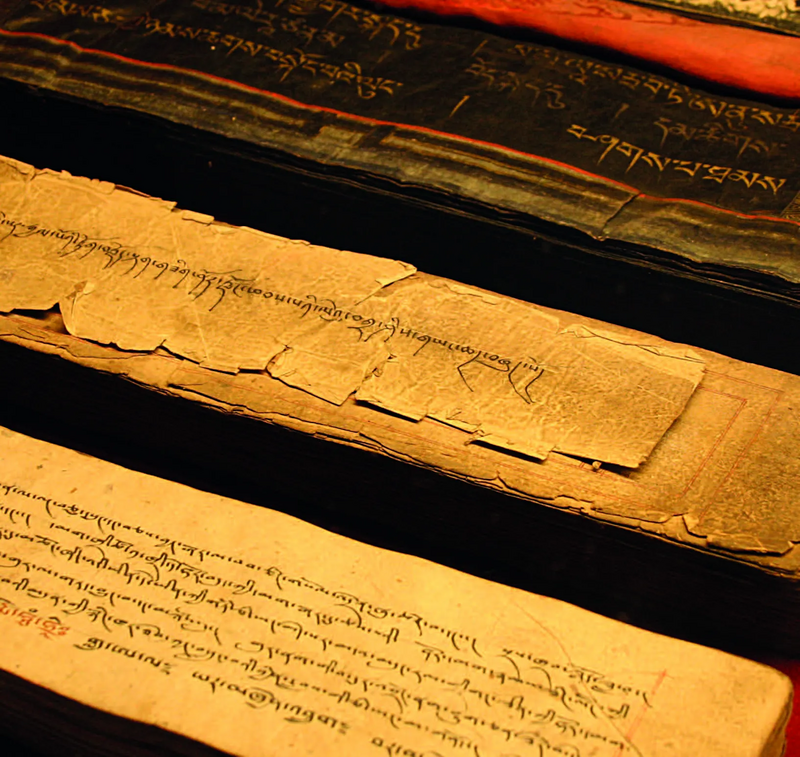
The Mirror Clarifying the Results of Karma (Byang chub sems dpa'i spyod pa la 'jug pa'i sgrung 'grel las 'bras gsal ba'i me long) is a narrative commentary on the anecdotes that appear in the ten chapters of the Bodhicaryāvatāra by Wangchuk Rinchen (c. 12th cent), who was a disciple of Latö Könchok Khar and became the abbot of Nering. The stories presented here were translated by Gregory Forgues and Khenpo Könchok Tamphel.
Chapter 7 Introduction
[In this chapter, stories are about:]
The Girl, the Rich woman, the Hawk, The Hungry Ghost, the Insect and Firm Mind, The vessel filled with oil - seven.
Story 1 of Chapter 7
That if they bring forth strength of perseverance,
Even bees and flies
And gnats and grubs will gain
Supreme enlightenment so hard to find.[p.100]The Way of the Bodhisattva (2006)
Blankleder, Helena, and Wulstan Fletcher (Padmakara Translation Group), trans. The Way of the Bodhisattva: A Translation of the Bodhicharyāvatāra. By Śāntideva. Rev. ed. Shambhala Classics. Boston: Shambhala Publications, 2006.
Page(s) 99
Blankleder, Helena, and Wulstan Fletcher (Padmakara Translation Group), trans. The Way of the Bodhisattva: A Translation of the Bodhicharyāvatāra. By Śāntideva. Rev. ed. Shambhala Classics. Boston: Shambhala Publications, 2006.
སྦྲང་བུ་ཤ་སྦྲང་བུང་བ་དང་། །
དེ་བཞིན་སྲིན་བུར་གང་གྱུར་པ། ། དེས་ཀྱང་བརྩོན་པའི་སྟོབས་བསྐྱེད་ན། །
བྱང་ཆུབ་ཐོབ་དཀའ་བླ་མེད་འཐོབ། །sbrang bu sha sbrang bung ba dang /_/
de bzhin srin bur gang gyur pa/_/ des kyang brtson pa'i stobs bskyed na/_/
byang chub thob dka' bla med 'thob/_/Concerning the phrase "Even bees and flies": King Kṛkṛ had seven daughters, each possessing extraordinary beauty. These daughters developed profound faith in the Buddha’s teachings. After becoming ordained, they attained the state of arhatship.
The king then asked the Teacher, "What is the cause of such a remarkable event?”
The Teacher replied:
Long ago, in the vast outer ocean, there were four sacred stūpas. At that time, seven tiny worms, living on a leaf of a tree, were carried by a powerful gust of wind, which caused them to circumambulate the stūpas once. As a result of that virtuous act, they were reborn as seven daughters of a humble caste. Later, feeling disenchanted with their lowly birth and scant possessions, they began selling firewood and engaging in acts of generosity and other virtuous deeds. Consequently, they were reborn as princesses and developed deep faith in the Dharma.
Thus, the Buddha explained.
Story 2 of Chapter 7
And yet the Supreme Healer does not use, Like them, these common remedies. With ways of extreme tenderness He soothes away intense and boundless suffering.
Page(s) 100
Blankleder, Helena, and Wulstan Fletcher (Padmakara Translation Group), trans. The Way of the Bodhisattva: A Translation of the Bodhicharyāvatāra. By Śāntideva. Rev. ed. Shambhala Classics. Boston: Shambhala Publications, 2006.
གསོ་དཔྱད་ཕལ་པ་འདི་འདྲ་བ། །
སྨན་པ་མཆོག་གིས་མ་མཛད་དེ། ། ཆོ་ག་ཤིན་ཏུ་འཇམ་པོ་ཡིས། །
ནད་ཆེན་དཔག་མེད་གསོ་བར་མཛད། །gso dpyad phal pa 'di 'dra ba/_/
sman pa mchog gis ma mdzad de/_/ cho ga shin tu 'jam po yis/_/
nad chen dpag med gso bar mdzad/_/Concerning the phrase "With ways of extreme tenderness": In Śrāvastī, there lived a wealthy householder so miserly that he would not give away even as much as a speck of dust. The noble Maudgalyāyana, intending to tame him, approached and spoke to him for seven days solely on the topic of generosity.
However, when Maudgalyāyana later begged for alms, the householder became angry and retorted, "Is that the only thing you know how to talk about?”
When the Blessed One was asked the reason for this response, he said, "He is to be tamed by me alone.”
The Buddha himself then went to the householder, who was at the time working with some straws. When the Buddha begged for alms, the householder offered a single straw. The Buddha accepted it with delight and performed the ritual for repaying generosity.[1]
Later, when the householder offered leaves from his garden, the Buddha again praised his generosity. Witnessing such appreciation even for the smallest offerings, the householder was deeply moved.
He invited the Buddha and the spiritual community for a Dharma gathering. Gradually, step by step, he gave away all his possessions to the Teacher and the spiritual community. In the end, becoming detached even from his own body, he wrapped himself in oil-soaked cloth, offered himself as a lamp, and attained the fruit of stream entry.
Story 3 of Chapter 7
Our guide instructs us to begin
By giving vegetable greens or other little things,
That later, step-by-step, the habit once acquired,
We may be able to donate our very flesh.[p.101]The Way of the Bodhisattva (2006)
Blankleder, Helena, and Wulstan Fletcher (Padmakara Translation Group), trans. The Way of the Bodhisattva: A Translation of the Bodhicharyāvatāra. By Śāntideva. Rev. ed. Shambhala Classics. Boston: Shambhala Publications, 2006.
Page(s) 100
Blankleder, Helena, and Wulstan Fletcher (Padmakara Translation Group), trans. The Way of the Bodhisattva: A Translation of the Bodhicharyāvatāra. By Śāntideva. Rev. ed. Shambhala Classics. Boston: Shambhala Publications, 2006.
ཚོད་མ་ལ་སོགས་སྦྱིན་པ་ལའང་། །
འདྲེན་པས་ཐོག་མར་སྦྱོར་བ་མཛད། ། དེ་ལ་གོམས་ནས་ཕྱི་ནས་ནི། །
རིམ་གྱིས་རང་གི་ཤ་ཡང་གཏོང་། །tshod ma la sogs sbyin pa la'ang /_/
'dren pas thog mar sbyor ba mdzad/_/ de la goms nas phyi nas ni/_/
rim gyis rang gi sha yang gtong /_/Concerning the phrase, "step-by-step [. . .] We may be able to donate our very flesh": Countless eons ago, in this world of Jambudvīpa, in a land called Devadhana, there lived a king named Wood-Mouse.[2] He was immensely wealthy and endowed with boundless loving-kindness and compassion.
At that time, Indra began to experience signs of impending death, and Viśvakarman stated that King Wood-Mouse possessed the ability to protect him. To test the king, Viśvakarman transformed himself into a pigeon, while Indra assumed the form of a hawk and gave chase.
The pigeon, still uncaught, flew into the king’s residence for refuge. The hawk arrived shortly after and demanded, "That pigeon is my prey—return it to me at once!”
But the king replied, "This pigeon has sought refuge with me, and I cannot possibly give it to you.”
The hawk retorted, "If you grant refuge to the pigeon, will you deny it to me? I am starving and on the verge of death!”
The king asked, "Would you be satisfied if I offered you other flesh in its place?”
The hawk answered, "Yes—if it is warm, freshly killed flesh and blood, I will be content.”
Without hesitation, the king cut flesh from his own thigh, equal in weight to the pigeon, and offered it to the hawk. The hawk then declared, "It must be weighed on a scale.”
When the flesh was placed on the scale, it was found that even both of the king’s thighs—the whole of them—were still not enough. Eventually, the king fainted from exhaustion and loss.
At that moment, the earth and sky quaked in six different ways.
Indra then revealed his true divine form and asked, "King, with such extraordinary self-sacrifice, what result do you hope to achieve?”
The king replied, "I do not seek worldly happiness. My only desire is to attain buddhahood so that I may liberate all sentient beings from suffering.”
Indra then asked, "Having given away even your own flesh, do you feel no regret?”
"None whatsoever,” the king affirmed.
"Who can bear witness to your truthfulness?” Indra pressed.
The king declared, "If it is true that from the moment I vowed to protect this pigeon until now I have not felt even a trace of regret, may my body return to its original state!”
As he uttered these words, his body instantly returned to its former state.
Story 4 of Chapter 7
My failure to aspire to Dharma
Now and in the past
Has brought me to my present dereliction.
Who therefore would spurn such aspiration?[p.103]The Way of the Bodhisattva (2006)
Blankleder, Helena, and Wulstan Fletcher (Padmakara Translation Group), trans. The Way of the Bodhisattva: A Translation of the Bodhicharyāvatāra. By Śāntideva. Rev. ed. Shambhala Classics. Boston: Shambhala Publications, 2006.
Page(s) 102
Blankleder, Helena, and Wulstan Fletcher (Padmakara Translation Group), trans. The Way of the Bodhisattva: A Translation of the Bodhicharyāvatāra. By Śāntideva. Rev. ed. Shambhala Classics. Boston: Shambhala Publications, 2006.
Concerning the phrase, "Has brought me to my present dereliction": Venerable Maudgalyāyana, while journeying to the realm of hungry ghosts, encountered one whose mouth was as tiny as the eye of a needle, obscured by its own tangled hair. Its stomach was enormous like a mountain, and its body was engulfed in flames. Wretched and crying out in agony, it could not easily find even excrement or urine to consume.
Maudgalyāyana asked, "What karma caused you to be born in such a condition?”
The hungry ghost replied, "Just as a lamp is needless when the sun has risen, it is beyond my capacity to explain. Please ask the Blessed One. He will reveal the ripening of my karma.”
When the Blessed One was asked, he replied: "In a past life, when a pratyekabuddha begged for sugarcane juice, a householder instructed his servant, saying, ‘Offer it to the noble one.’ The servant took the alms bowl and secretly filled it with urine and feces, then poured a layer of sugarcane foam on top and offered it. As a result of that karma, this is the condition that has ripened.”
Thus is recounted in The Narrative of Gangpo's Realization.[3]
Story 5 of Chapter 7
But if, through seeking happiness, my deeds are wrong, No matter where I turn my steps, The knives of misery will cut me down, The wage and retribution of a sinful life.
Page(s) 103
Blankleder, Helena, and Wulstan Fletcher (Padmakara Translation Group), trans. The Way of the Bodhisattva: A Translation of the Bodhicharyāvatāra. By Śāntideva. Rev. ed. Shambhala Classics. Boston: Shambhala Publications, 2006.
སྡིག་པ་བྱེད་པ་བདེ་འདོད་ཀྱང་། །
གང་དང་གང་དུ་འགྲོ་འགྱུར་བ། ། དེ་དང་དེར་ནི་སྡིག་པ་དེས། །
སྡུག་བསྔལ་མཚོན་གྱིས་རྣམ་པར་འཇོམས། །sdig pa byed pa bde 'dod kyang /_/
gang dang gang du 'gro 'gyur ba/_/ de dang der ni sdig pa des/_/
sdug bsngal mtshon gyis rnam par 'joms/_/Concerning the phrase, "The knives of misery will cut me down": When the Blessed One was residing on Vulture Peak Mountain,[4] there was, in a pit of filth and refuse within the city, a worm resembling a snake, with four legs. At times, it would emerge from the filth; at other times, it would appear on the surface of the water. For many years, it endured immeasurable suffering in that place.
The Blessed One, accompanied by his retinue, went to that location and proclaimed,
Listen well and pay close attention. I shall explain the cause of this being’s past karma. In the past, during the time of the Buddha Vipaśyin, fourteen thousand monks resided in a forest monastery. At one time, five hundred merchants offered precious jewels as alms, which the monastic community accepted. A bhikṣu was appointed as their mediator. Later, when there was a shortage of food, the monks instructed the mediator: "Bring forth the jewels offered by the merchants. We will sell them to obtain alms." The mediator bhikshu, enraged, retorted: "Would you eat vomit? Those jewels were sold to me—they were given to me alone, not to all of you."
Upon hearing this, the monastic community dispersed and went their separate ways.
Due to this karma, upon death, he fell into the Great Hell of Incessant Suffering, where he wallowed in vomit for ninety-one eons. After being liberated from that realm, he was reborn in this very pit of filth, and even after countless years, he has yet to be freed.
Behold! Even the Buddha of the past, Ratnaśikhin, along with his spiritual community, came to this place and revealed this being’s karmic cause to his attendants. Likewise, Buddha Viśvabhū made the same revelation. After again dying and transmigrating to hell, and spending countless billions of years there, he was reborn once more in this very pit.
Later, Buddha Krakucchanda also revealed his karma, as did Buddha Kanakamuni and Buddha Kāśyapa.
In the same way, all one thousand buddhas of this Fortunate Eon, together with their respective attendants, will come to this very place and disclose the origin of this worm’s karma.”
Upon hearing this, the monks were filled with fear and became intensely diligent in guarding their body, speech, and mind.
Thus it is said in the Wise and Foolish [Sūtra].[5]
Story 6 of Chapter 7
When arrogance inflates the mind, It draws it down to states of misery— Or ruins happiness, should human birth be gained. Thus one is born a slave, dependent for one’s sustenance,
Page(s) 105
Blankleder, Helena, and Wulstan Fletcher (Padmakara Translation Group), trans. The Way of the Bodhisattva: A Translation of the Bodhicharyāvatāra. By Śāntideva. Rev. ed. Shambhala Classics. Boston: Shambhala Publications, 2006.
ཉོན་མོངས་ང་རྒྱལ་གྱིས་ཁེངས་ནི། །
ངན་འགྲོར་ང་རྒྱལ་གྱིས་ཁྲིད་ཅིང་། ། མི་ཡི་དགའ་སྟོན་བཅོམ་པ་དང་། །
གཞན་གྱི་ཟས་ཟའི་བྲན་དང་ནི། །nyon mongs nga rgyal gyis khengs ni/_/
ngan 'gror nga rgyal gyis khrid cing /_/ mi yi dga' ston bcom pa dang /_/
gzhan gyi zan za'i bran dang ni/_/Concerning the phrase, "It draws it down to states of misery": Master Vasubandhu had four disciples who were considered equal to himself. Regarding the first, named Steadfast Wisdom,[6] it is said:
In the western town of brahmin Rabten, the master prepared an oil lamp and began reciting twelve thousand scriptures from a collection of eighty-four thousand treatises each morning. Within seven days, he completed the recitation. The brahmin’s son listened to the entire recitation with devotion and passed away in that very state. He was then reborn as the brahmin’s son once more, and later became ordained at Nālandā, receiving the name Steadfast Wisdom.
As the karmic imprints from his previous life ripened—particularly the impressions formed from hearing the master’s teachings—he swiftly became learned. He diligently collected many manuscripts of sūtras that had previously been burned by Nyime Ngosdup. However, he was unable to recover profound and extensive texts such as the Abhidharma, Ratnakūṭa, and others. Supported by the patronage of Brahmadatta, he managed to recollect them entirely from memory.
It is said that he was revered by all great scholars, like a jewel adorning the crown of learning. Everyone looked to him as a master. Then, rising to speak, he declared:
If my intelligence were placed on one side, And the intelligence of all beings on the other, If it were possible to weigh them, My intelligence would outweigh the scale.
When someone asked, "Well then, what about Vasubandhu?” he responded:
Though he crossed an ocean of treatises, Vasubandhu failed to grasp their import. Saddened by a single jar of beer, He slumbered idly on the Buddha’s teaching.
Thus, he praised himself. But at the end of his thirty-ninth year, this act of belittling his master became the cause of his downfall. Because of his pride, he fell into hell, where he was boiled and stirred with a blazing stick. Unable to endure the pain, he grasped the stick, only to find that it, too, burned his hands. As both his body and the stick burned equally, he reflected: "The stick shouldn’t be burning—this is due to my self-grasping!”
By analyzing the nature of existence, he realized that all phenomena are selfless. As a result, he reappeared in Jambudvīpa and proclaimed:
My pride is like a piece of iron; My wisdom, like a boat. A piece of iron sinks in the ocean— But see how it floats when shaped as a boat.
While passing through seven lower states of existence—such as that of a pig—the paṇḍita once spoke from the womb of a sow:
I am the one formerly known as Matiṣṭhira. Due to my pride, I was born in this sow’s womb. Do not leave me here—take me to Rājagṛha, So that I may be reborn in the divine realm of Tuṣita.
As it is said: Although his pride in being learned caused his descent into the lower realms, it also became the condition for his swift liberation. In contrast, the pride of the foolish leads only to perpetual wandering. Therefore, cultivating the antidote to pride is of utmost importance.
Story 7 of Chapter 7
I will be like a frightened man, a brimming oil-jar in his hand, And menaced by a swordsman saying, "Spill one drop and you shall die!” This is how practitioners should hold themselves.
Page(s) 107
Blankleder, Helena, and Wulstan Fletcher (Padmakara Translation Group), trans. The Way of the Bodhisattva: A Translation of the Bodhicharyāvatāra. By Śāntideva. Rev. ed. Shambhala Classics. Boston: Shambhala Publications, 2006.
ཡུངས་མར་བཀང་བའི་སྣོད་བསྐུར་ལ། །
རལ་གྲི་ཐོགས་པས་དྲུང་བསྡད་དེ། ། བོ་ན་གསོད་བསྡིགས་འཇིགས་པ་ལྟར། །
བརྟུལ་ཞུགས་ཅན་གྱིས་དེ་བཞིན་སྒྲིམ། །yungs mar bkang ba'i snod bskur la/_/
ral gri thogs pas drung bsdad de/_/ bo na gsod bsdigs 'jigs pa ltar/_/
brtul zhugs can gyis de bzhin sgrim/_/Concerning the phrase, ". . . a brimming oil-jar in his hand": To purify the negativity resulting from his southern military victory, King Fierce Radiance[7] invited Venerable Kātyāyana. Upon his arrival, he was received with a large gathering of jesters. The king asked him, "Among these, who is the most skilled?”
Kātyāyana replied, "As I had no time to look, I did not see.”
The king found this hard to believe. Then Kātyāyana said, "Among those under your command, is there someone awaiting punishment?”
The king answered, "Yes.” In fact, the king had sentenced a convict to carry a vessel filled with oil while walking along a slippery path. At his side stood a man with a sword, threatening to kill him should even a single drop spill, but promising release from punishment if not a drop was lost. Meanwhile, the crowd of jesters surrounded him, performing.
Kātyāyana asked the convict: "Among these jesters, who is the most skilled?”
The convict replied, "I feared that if I looked at them, I might spill the oil and lose my life. Therefore, I did not take the chance to look.”
To this, Kātyāyana responded, "That is merely the loss of this present life. But if one is touched by carelessness here, one loses the life of ultimate benefit and lasting happiness. Therefore, ascetics must be especially vigilant.”
Upon hearing this, the king developed even greater faith.
End of Chapter Seven.
