- Prince Mahāsattva and the Tigress
- The Boy Who Made Flowers Fall from the Sky
- The Golden Deer King
- The Golden Elephant and the Monk's Journey
- The Lamp That Changed Destiny
- The Patient Buffalo
- The Silver Tusked Savior
- The White Cloth
- The Mirror Clarifying the Results of Karma: Chapter 1
- The Mirror Clarifying the Results of Karma: Chapter 10
- The Mirror Clarifying the Results of Karma: Chapter 2
- The Mirror Clarifying the Results of Karma: Chapter 3
- The Mirror Clarifying the Results of Karma: Chapter 4
- The Mirror Clarifying the Results of Karma: Chapter 5
- The Mirror Clarifying the Results of Karma: Chapter 6
- The Mirror Clarifying the Results of Karma: Chapter 7
- The Mirror Clarifying the Results of Karma: Chapter 8
- The Mirror Clarifying the Results of Karma: Chapter 9
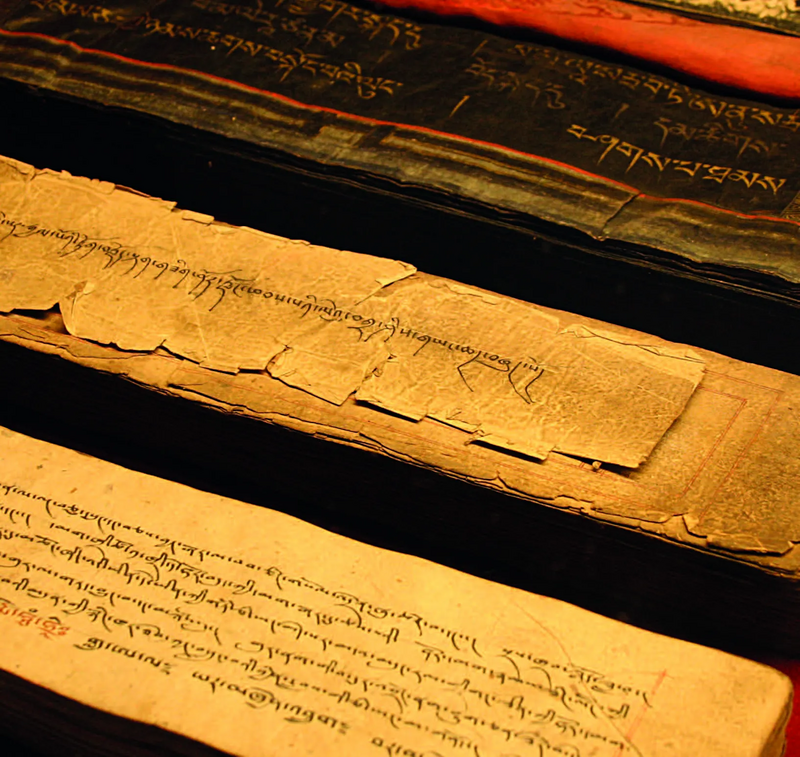
The Mirror Clarifying the Results of Karma (Byang chub sems dpa'i spyod pa la 'jug pa'i sgrung 'grel las 'bras gsal ba'i me long) is a narrative commentary on the anecdotes that appear in the ten chapters of the Bodhicaryāvatāra by Wangchuk Rinchen (c. 12th cent), who was a disciple of Latö Könchok Khar and became the abbot of Nering. The stories presented here were translated by Gregory Forgues and Khenpo Könchok Tamphel.
Chapter 6 Introduction
[In this chapter, stories are about:]
The sage, Gyaldam's Gorawa, Peacock Thorn Utpala-Color, Devadatta, Golden Hundred-Thousand, Buffalo, Temple Keeper, Ox, Sheep, Mangnü and others, Serthub, the Group of Five, Zhige, King Chandraprabha, Branch, Fierce One - these twenty.
Story 1 of Chapter 6
All the good works gathered in a thousand ages, Such as deeds of generosity, And offerings to the Blissful Ones— A single flash of anger shatters them.
Page(s) 77
Blankleder, Helena, and Wulstan Fletcher (Padmakara Translation Group), trans. The Way of the Bodhisattva: A Translation of the Bodhicharyāvatāra. By Śāntideva. Rev. ed. Shambhala Classics. Boston: Shambhala Publications, 2006.
༈ བསྐལ་པ་སྟོང་དུ་བསགས་པ་ཡི། །
སྦྱིན་དང་བདེ་གཤེགས་མཆོད་ལ་སོགས། ། ལེགས་སྤྱད་གང་ཡིན་དེ་ཀུན་ཀྱང་། །
ཁོང་ཁྲོ་གཅིག་གིས་འཇོམས་པར་བྱེད། །bskal pa stong du bsags pa yi/_/
sbyin dang bde gshegs mchod la sogs/_/ legs spyad gang yin de kun kyang /_/
khong khro gcig gis 'joms par byed/_/Concerning the phrase "A single flash of anger shatters them": While the Blessed One was residing in Śrāvastī, many non-Buddhists set out to bathe in Lake Mānasasarovara. At the same time, the Blessed One, accompanied by thirteen hundred and fifty monks, traveled there by miraculous power, flying through the sky like a flock of geese.
As they passed directly above Nepal, they saw a monk paying reverent homage to a stūpa made from the hair of Buddha Kāśyapa. The disciples asked, "What is the measure of his merit?” The Blessed One replied, "From where he stands to the golden earth below, the number of atoms equals the number of times he will be born as a universal monarch.”
Upon reaching the lake, they noticed that Sthavira Kāśyapa’s name was missing from the tally stick[1] on which it was written. The two supreme ones[2] were sent to invite him, but he refused to come. Even when they attempted to bring him by miraculous power, they could not move him. Then the Blessed One broke his meditative concentration and summoned him by his own miraculous power.
There, the Buddha and his retinue bathed. On their return, as they again passed above Nepal, they saw the same monk angrily throwing and catching mangoes with a companion—a celibate practitioner of pure conduct. The disciples asked, "What is the measure of this demerit?”
The Blessed One replied, "He has destroyed the merit of his previous deed, which would have led him to be born as a king countless times. Now, for a time equal to the number of atoms from where he stands to the golden earth, he will be born in hell.”
Having said this, they continued on to Śrāvastī.
Story 2 of Chapter 6
The Karna folk and those devoted to the Goddess,75A reference to the devotees of the Hindu goddess Durgā, whose cult demanded the practice of extreme austerities. Endure the meaningless austerities Of being cut and burned. So why am I so timid on the path of freedom?
Page(s) 79
Blankleder, Helena, and Wulstan Fletcher (Padmakara Translation Group), trans. The Way of the Bodhisattva: A Translation of the Bodhicharyāvatāra. By Śāntideva. Rev. ed. Shambhala Classics. Boston: Shambhala Publications, 2006.
དཀའ་ཟློག་དད་དང་ཀརྞ་པ། །
བསྲེག་དང་བཅད་སོགས་ཚོར་བ་ནི། ། དོན་མེད་བཟོད་བྱེད་ཐར་པ་ཡི། །
དོན་དུ་བདག་ཀོ་ཅི་ཕྱིར་སྡར* བསྡར་ in the source text. ། །dka' zlog dad dang kar+Na pa/_/
bsreg dang bcad sogs tshor ba ni/_/ don med bzod byed thar pa yi/_/
don du bdag ko ci phyir sdar* bsdar [ in the source text. ] /_/Concerning the phrase "The Karna folk and those devoted to the Goddess":[3] When the gods were defeated and sought to stop the valiant Mahādeva from his ascetic practice to enlist him in battle, they gathered together. Aware of his susceptibility to sensual desire, each god offered a portion of their own flesh to create a goddess of exceptional beauty—Parvati. They presented her to Mahādeva and implored him to abandon his asceticism and aid them in the war.
Though Mahādeva rose from his meditation, he remained captivated by desire and showed no interest in fighting. To separate him from Parvati, the fire god Agni ignited their point of union with fire. Enraged, Mahādeva released his seed, which accidentally fell into the ocean and turned into salt. This, it is said, is why Devadatta abstains from consuming salt.
There, Mahādeva, enraged, became violent and he also separated from Pravati. Then, the god's son Growing Power[4] immolated himself to worship Parvati and she was pleased. This appeased Mahādeva, and he joined the battle and made the gods win. For this reason, even today, in order to please Parvati, people endure self-immolation.
The name Karnapa is translated as the Black Naked One. As Karnapa was practicing asceticism, during a solar eclipse, he saw two meditators, who, after a minor dispute, ended up beheading each other and dying. Karnapa, with his super knowledge, saw them born in the Brahmā Heaven. As he spoke about where the two had been born, even to this day, people endure the suffering of beheading one another.
Great Divine Holy Victor[5]
The word "et cetera" (sogs) [in the root verse] also includes the Great Divine Holy Victor. While he was residing in a place of ascetic practice, a Buddhist pratyekabuddha was attacked by a gorilla who stripped him naked, stole his few possessions, and killed him by tying him to a tree.
The Great Divine Holy Victor, using his supernormal knowledge, could not perceive the pratyekabuddha’s rebirth in any realm. He therefore declared, "When one dies in such a manner, one is liberated into the unborn.” For this reason, even today, Jain ascetics subject themselves to such intense austerities.
Story 3 of Chapter 6
There’s nothing that does not grow light Through habit and familiarity. Putting up with little cares I’ll train myself to bear with great adversity!
Page(s) 79
Blankleder, Helena, and Wulstan Fletcher (Padmakara Translation Group), trans. The Way of the Bodhisattva: A Translation of the Bodhicharyāvatāra. By Śāntideva. Rev. ed. Shambhala Classics. Boston: Shambhala Publications, 2006.
གོམས་ན་སླ་བར་མི་འགྱུར་བའི། །
དངོས་དེ་གང་ཡང་ཡོད་མ་ཡིན། ། དེ་བས་གནོད་པ་ཆུང་གོམས་པས། །
གནོད་པ་ཆེན་པོའང་བཟོད་པར་བྱོས། །goms na sla bar mi 'gyur ba'i/_/
dngos de gang yang yod ma yin/_/ de bas gnod pa chung goms pas/_/
gnod pa chen po'ang bzod par byos/_/Concerning the phrase "There’s nothing that does not grow light through habit and familiarity":
Concerning the phrase "such as Gorawa" in the Nītiśāstra:
It is said that Brahmadatta once saw his minister Gorawa comfortably napping in bed and noticed that he could hear the swish of a horse’s tail beneath his bedding. Remarking, "Even Indra does not possess such sensitive hearing,” he dismissed him from the ranks of his ministers.
Later, urged by his wife and children, Gorawa began selling firewood. Barefoot in a rocky ravine and burdened with thorns, he sang songs as he worked. The king happened to hear him and asked, "Before, you complained about the sensation of a horse’s tail, but now you sing songs while carrying thorns. What has changed?”
Gorawa replied, "In the past, under the King’s protection, I was carried by ministers and subjects to a seven-layered silk mattress, dressed in three layers of fine silk, and pampered with delicious and sweet food. Yet, I felt no joy, because I felt entitled. Now, despised by my wife and children, scolded by companions, and carrying thorns from the rocky ravine—though I’ve not eaten even a morsel—I don’t feel the suffering, because I have become familiar with it. It is the power of the mind’s familiarity. Happiness and suffering do not reside in the body.”
"That is true,” said the king, and reinstated him as a minister.
Story 4 of Chapter 6
Never thinking, "Now I will be angry,” People are impulsively caught up in anger. Irritation, likewise, comes Though never plans to be experienced!
Page(s) 80
Blankleder, Helena, and Wulstan Fletcher (Padmakara Translation Group), trans. The Way of the Bodhisattva: A Translation of the Bodhicharyāvatāra. By Śāntideva. Rev. ed. Shambhala Classics. Boston: Shambhala Publications, 2006.
ཁྲོ་བར་བྱ་ཞེས་མ་བསམས་ཀྱང་། །
སྐྱེ་བོ་རྣམས་ནི་གྱི་ནར་ཁྲོ། ། བསྐྱེད་པར་བྱ་ཞེས་མ་བསམས་ཀྱང་། །
ཁྲོ་བ་དེ་བཞིན་སྐྱེ་བར་འགྱུར། །khro bar bya zhes ma bsams kyang /_/
skye bo rnams ni gyi nar khro/_/ bskyed par bya zhes ma bsams kyang /_/
khro ba de bzhin skye bar 'gyur/_/Concerning the phrase "People are impulsively caught up in anger": As a monk was going for alms and arrived in Vārāṇasī, he saw a householder drying a jewel, with a peacock nearby. The radiance of the monk’s red robes reflected onto the jewel, making it appear red. Mistaking it for flesh, the peacock swallowed the jewel.
When the householder returned with alms and found the jewel missing, he accused the monk of theft. The monk replied, "I did not take it,” but did not reveal that the peacock had eaten it.
Angered, the householder tied a knot in his own robe. In response, the monk also tied a knot in his robe. At that moment, the householder’s kick struck the peacock and killed it. The monk then said, "The peacock ate the jewel. I didn’t tell you earlier because I feared you would kill it.”
The householder retorted, "You too became angry—when I tied a knot, you did the same!” The monk replied, "My mind remained unchanged. I tied the knot not out of anger, but to restrain you from your actions.”
Hearing this, the householder was moved. He developed deep faith, offered the jewel as a donation, and gave rise to the mind of awakening. It was, of course, a manifestation of dependent origination that the householder became angry due to the robe, the jewel, and the peacock.
Story 5 of Chapter 6
Yet carelessly, all unaware, They tear themselves on thorns; And ardent in pursuit of wives and goods, They starve themselves of nourishment.
Page(s) 82
Blankleder, Helena, and Wulstan Fletcher (Padmakara Translation Group), trans. The Way of the Bodhisattva: A Translation of the Bodhicharyāvatāra. By Śāntideva. Rev. ed. Shambhala Classics. Boston: Shambhala Publications, 2006.
བག་མེད་པས་ནི་བདག་ལའང་བདག །
ཚེར་མ་ལ་སོགས་གནོད་པ་བྱེད། ། བུད་མེད་ལ་སོགས་འཐོབ་བྱའི་ཕྱིར། །
རྔམ་ཞིང་ཟས་གཅོད་ལ་སོགས་བྱེད། །bag med pas ni bdag la'ang bdag_/
tsher ma la sogs gnod pa byed/_/ bud med la sogs 'thob bya'i phyir/_/
rngam zhing zas gcod la sogs byed/_/Concerning the phrase "They tear themselves on thorns": In Nalendra in Magadha, there were fourteen large temples and three hundred smaller ones. A Kashmiri guest named True Awakening was sleeping in a house. When a local did not allow him to sleep there, he became angry and thought, "I will drive all of these people from this land, and I alone will take possession of this place!" Thinking thus, he made an ambitious expectation from his deity. To receive a vision from his deity, he lay down on a large pile of thorns and inflicted suffering upon himself.
There, when he had become extremely emaciated, a deity appeared to him in a dream and asked, "What do you desire?”
He replied, "I desire the land of Magadha.”
The deity responded, "It is a special land, home to many extraordinary beings, such as those who have generated the mind of awakening and so forth. Expelling them from there will result in negative karma.”
He replied, "Even if it results in negative karma, I still desire it.”
The deity said, "Very well, take the land—but do not commit negative actions!”
Upon waking, he rose from amidst the thorns and went to Magadha, into the presence of the king. He said, "These members of the Sangha demand that all their needs be fulfilled by servants, yet they do not perform any virtuous deeds. Expel them all, and I will take charge!” Because of this, the king agreed. By the power of the deity, he was then established as a great minister, and his influence became vast.
Later, when he was afflicted by a fatal illness, his servant Bharat looked around for something to use as a spittoon, but another servant, Pendha, caught his expectorated mucus in his bare hand. The minister thought, "I shall give my ministerial position to none but Pendha.”
When the two servants asked, "To which of us will you give it?” he told them, "Go to the king and ask him!”
Pendha hid his fine clothes and went in rags, while Bharat wore new clothes but met with misfortune. Pendha then changed into new garments and said to the king, "Our minister has died. To which of us two will you give the ministerial position?”
The king replied, "Bharat, if you cannot even manage your own clothes, how could you possibly manage the affairs of state?” Saying this, he appointed Pendha as minister. It is said that he holds the position to this day.
Story 6 of Chapter 6
For when affliction seizes them, They even slay themselves, the selves they love so much. So how can they not be the cause Of others’ bodily distress?
Page(s) 82
Blankleder, Helena, and Wulstan Fletcher (Padmakara Translation Group), trans. The Way of the Bodhisattva: A Translation of the Bodhicharyāvatāra. By Śāntideva. Rev. ed. Shambhala Classics. Boston: Shambhala Publications, 2006.
གང་ཚེ་ཉོན་མོངས་དབང་གྱུར་པས། །
བདག་སྡུག་ཉིད་ཀྱང་གསོད་བྱེད་པ། ། དེ་ཚེ་དེ་དག་གཞན་ལུས་ལ། །
གནོད་མི་བྱེད་པར་ཇི་ལྟར་འགྱུར། །gang tshe nyon mongs dbang gyur pas/_/
bdag sdug nyid kyang gsod byed pa/_/ de tshe de dag gzhan lus la/_/
gnod mi byed par ji ltar 'gyur/_/Concerning the phrase "They even slay themselves, the selves they love so much": A certain man, having become drunk from alcohol, came home at midnight. His wife, who had just given birth to a child, was unable to get up and open the door. Enraged, he broke down the door and shouted, "You! Butcher your child and eat it! Otherwise, I will kill you!”
Terrified for her own life, the wife butchered the child and ate him.
This became a matter of great astonishment. The reason is as follows: In a previous life, she had been the chief queen of a certain king, but she had no children of her own. A junior wife had given birth to a son, and the chief queen inserted a needle into the fontanelle of the infant and killed him. The junior wife cried, "You killed my son!” But the queen denied it, saying, "I did not kill him! But if I did, then may it come to pass in a future life that I kill my own child and eat him! May some of my children be devoured by wolves, and some be swept away by water! May I enter the charnel ground again and again while still alive!”
These statements were her karma. In more detail, learn about this story from the Biography of Bhikṣuṇī Utpalavarṇā and so on.
Story 7 of Chapter 6
Because of them, and through my patience, All my many sins are cleansed and purified. But they will be the ones who, thanks to me, Will have the long-drawn agonies of hell.
Page(s) 84
Blankleder, Helena, and Wulstan Fletcher (Padmakara Translation Group), trans. The Way of the Bodhisattva: A Translation of the Bodhicharyāvatāra. By Śāntideva. Rev. ed. Shambhala Classics. Boston: Shambhala Publications, 2006.
འདི་དག་ལ་ནི་རྟེན་བཅས་ནས། །
བཟོད་པས་བདག་སྡིག་མང་དུ་འབྱང་* འབྱུང་ in the source text. ། ། བདག་ལ་བརྟེན་ནས་དེ་དག་ནི། །
ཡུན་རིང་སྡུག་བསྔལ་དམྱལ་བར་འདོང་། །di dag la ni rten bcas nas/_/
bzod pas bdag sdig mang du 'byang * 'byung [ in the source text.] /_/ bdag la brten nas de dag ni/_/
yun ring sdug bsngal dmyal bar 'dong /_/Concerning the phrase, ". . . through my patience, all my many sins are cleansed": In the past, when lifespans were immeasurable, there was a king who ruled a city surrounded by three thousand settlements. He perfectly upheld generosity and ethical conduct. As a result, no one ever caused him harm. Reflecting on this, he thought, "I have no opportunity to cultivate patience.”
So he said to his attendants, "Whoever among you truly cherishes me, please cause me harm so that I may practice patience.”
At that time, a man who had first served as the lowest gatekeeper for a thousand years, then as the second gatekeeper for another thousand years, and finally became the gatekeeper of the king’s palace, stepped forward and said, "If it benefits the king, I will do everything that is harmful.”
The king agreed, and in this way, he perfected the practice of patience.
That [gatekeeper] was Devadatta.
Story 8 of Chapter 6
Perhaps I turn from it because It hinders me from having what I want. But all my property I’ll leave behind, While sins will keep me steady company.
Page(s) 85
Blankleder, Helena, and Wulstan Fletcher (Padmakara Translation Group), trans. The Way of the Bodhisattva: A Translation of the Bodhicharyāvatāra. By Śāntideva. Rev. ed. Shambhala Classics. Boston: Shambhala Publications, 2006.
རྙེད་པའི་བར་ཆད་བྱེད་པའི་ཕྱིར། །
གལ་ཏེ་བདག་འདི་མི་འདོད་ན། ། བདག་གིས་རྙེད་པ་འདིར་འདོར་གྱི། །
སྡིག་པ་དག་ནི་བརྟན་པར་གནས། །rnyed pa'i bar chad byed pa'i phyir/_/
gal te 'di bdag mi 'dod na/_/ bdag gis rnyed pa 'dir 'dor gyi/_/
sdig pa dag ni brtan par gnas/_/Concerning the phrase "But all my property I’ll leave behind": To the north of Bodhgayā, there lived a Kashmiri monk who possessed a vase filled with gold. As he lay dying, despite being unable to move, he dragged himself to a latrine pit and threw the gold into it—so intense was his attachment.
After his death, his body was taken to the charnel ground. When people searched for the gold, it was nowhere to be found.
Later, an outcast, while digging out humanure, struck something with his pickaxe, which landed with a dull thud. When he looked, he saw a frog clinging tightly to a golden pot. He tried to remove the frog, but it would not come off, so he cut it apart and took the gold.
He then went north of Vajrāsana and secretly sold a small piece of the gold to a blacksmith. However, the blacksmith, intending to harm him, reported the matter publicly. As a result, the monastic community seized the outcast, tied him up, and confiscated the gold.
Story 9 of Chapter 6
Instead, why did they act in times gone by That they are now so harmed at others’ hands? Since everything depends on karma, Why should I be angry at such things?
Page(s) 87
Blankleder, Helena, and Wulstan Fletcher (Padmakara Translation Group), trans. The Way of the Bodhisattva: A Translation of the Bodhicharyāvatāra. By Śāntideva. Rev. ed. Shambhala Classics. Boston: Shambhala Publications, 2006.
གང་གིས་གཞན་དག་གནོད་བྱེད་པའི། །
ལས་དེ་སྔོན་ཆད་ཅི་ཕྱིར་བྱས། ། ཐམས་ཅད་ལས་ལ་རག་ལས་ན། །
བདག་གིས་འདི་ལ་ཅི་སྟེ་བཀོན། །gang gis gzhan dag gnod byed pa'i/_/
las de sngon chad ci phyir byas/_/ thams cad las la rag las na/_/
bdag gis 'di la ci ste bkon/_/Concerning the phrase "Since everything depends on karma": A ship carrying many merchants was wrecked. Seven people—and an eighth, a buffalo—survived but were starving. A man named Dzanma Bhiris began cutting mouthful-sized pieces of flesh from the live buffalo and ate them. The other seven, saying, "That is impure; it is better to remain hungry,” sustained themselves on roots and other foraged food.
By the time they returned to their homeland, the buffalo’s flesh had been entirely consumed. Upon its death, driven by intense hatred, the buffalo was reborn as a crocodile in a pond in that region. It let out a great roar in a human voice, which caused the people to stop fetching water and performing their usual tasks. The crocodile declared, "I will not harm anyone except one specific person, so do not be afraid!”
One day, when Dzanma Bhiris went to bathe, the crocodile seized him. It began cutting and eating sesame-seed-sized pieces, starting from his head, causing him prolonged suffering.
Story 10 of Chapter 6
Is it not a happy chance if when, condemned to death, A man is freed, his hand cut off in ransom for his life? And is it not a happy chance if now, to escape hell, I suffer only the misfortunes of the human state?
Page(s) 87
Blankleder, Helena, and Wulstan Fletcher (Padmakara Translation Group), trans. The Way of the Bodhisattva: A Translation of the Bodhicharyāvatāra. By Śāntideva. Rev. ed. Shambhala Classics. Boston: Shambhala Publications, 2006.
གསད་བྱའི་མི་ཞིག་ལག་བཅད་དེ། །
གལ་ཏེ་ཐར་ན་ཅིས་མ་ལེགས། ། གལ་ཏེ་མི་ཡི་སྡུག་བསྔལ་གྱིས། །
དམྱལ་བ་བྲལ་ན་ཅིས་མ་ལེགས། །gsad bya'i mi zhig lag bcad de/_/
gal te thar na cis ma legs/_/ gal te mi yi sdug bsngal gyis/_/
dmyal ba bral na cis ma legs/_/Concerning the phrase ". . . is it not a happy chance if now, to escape hell,": In the Amoghapāśa Temple in the South, the caretaker—a minister named With God[6]—secretly sliced into a statue made of gośīrṣa sandalwood from the back and sold the pieces. His wife, Happiness-Endowed,[7] said to him, "Make a substitute statue to purify the negative karma! Otherwise, a person burdened by such karma cannot find true happiness.”
He followed her advice. As he began the work, there was a subtle sign of purification, which encouraged him to exert himself day and night, forgetting food and sleep. Over time, his entire back became wounded from the strain. Unable to bear the pain, he called his wife. She said, "This is the suffering of hell ripening in this life. You must keep going!”
One day, he had a vision of the statue: its back was covered in scabs, and its face was turned away from him. Thinking, "The negative karma is not yet purified,” he fell into despair and lay down without moving. When his wife brought him food and saw him in that state, she said, "This is just a preliminary sign! Get up and complete the task!”
Obeying her, he continued his work. Then, one day, some white beings appeared, broke down the door, and dragged him along a narrow, rocky path until his back became torn and exhausted. Near death, they abandoned him beside a stream, where he collapsed and lost consciousness from blood loss.
When he revived, five gods appeared in the sky and spoke these verses:
How excellent it is, if hell is avoided Through suffering in human form. Having swiftly gone to Sukhāvatī, You will soon attain awakening.
With this prophecy and encouragement, they vanished. Through their blessing, two fruits of accomplishment appeared by the stream. He ate one, and his wounds were instantly healed. He attained a divine body. Out of gratitude, he left the other fruit to repay his wife’s kindness.
When she came to bring him food, she found the door broken and in ruins. Following the trail of blood along which he had been dragged, she arrived at the stream and saw a divine being. When she asked who he was, he replied, "It is I! This is what happened.” He gave her the remaining fruit. As soon as she ate it, she attained a divine body and was reborn in Sukhāvatī, swiftly attaining realization for having served him faithfully during his practice.
Story 11 of Chapter 6
"But they’re the ones who’ll have the happiness,” you say. If this then is a joy you would resent, Abandon paying wages and returning favors. You will be the loser—both in this life and the next!
Page(s) 88
Blankleder, Helena, and Wulstan Fletcher (Padmakara Translation Group), trans. The Way of the Bodhisattva: A Translation of the Bodhicharyāvatāra. By Śāntideva. Rev. ed. Shambhala Classics. Boston: Shambhala Publications, 2006.
གཞན་ཡང་དེ་ལྟར་བདེ་འགྱུར་ཞེས། །
གལ་ཏེ་ཁྱོད་བདེ་འདི་མི་འདོད། ། གླ་རྔན་སྦྱིན་སོགས་སྤངས་པའི་ཕྱིར། །
མཐོང་དང་མ་མཐོང་ཉམས་པར་འགྱུར། །gzhan yang de ltar bde 'gyur zhes/_/
gal te khyod bde 'di mi 'dod/_/ gla rngan sbyin sogs spangs pa'i phyir/_/
mthong dang ma mthong nyams par 'gyur/_/Concerning the phrase "You will be the loser—both in this life and the next!": During the Teacher’s lifetime, there was a poor man living at the upper end of the valley. His only wealth was a single sheep. As he prepared to slaughter it, the sheep suddenly spoke:
"Do not kill me! I will give you a reward!”
The man asked, "What will you give me?”
The sheep replied, "At the outskirts of the valley lives a wealthy man who owns an ox. Tell him, ‘Let your ox and my sheep compete. If he claims that his ox is stronger, challenge him to wager ten ounces of gold.’”
The shepherd did as the sheep instructed. Then the sheep said, "Load me with a measuring mug and a scale.” He did so, and many people came to witness the contest. It was agreed that whoever’s animal won would receive the gold.
When the measuring mug and the scale clunked together, the ox became frightened and fled. The sheep thus won, and the worldly people exclaimed, "It’s as if a bleat chased away an insect!”
When the Teacher was asked about what had happened, he replied, "That sheep was previously a wealthy man. But instead of practicing generosity and other virtues, he created karmic actions that led to his decline in both this life and the next. The ox, however, had not yet repaid the debt he owed him.”
Section Two
Story 12, Chapter 6
If I am wise in what is good for me, I’ll ask what benefit these bring. For if it’s entertainment I desire, I might as well resort to alcohol and cards!80In other words, for Shāntideva, a monk, the enjoyment of honors and reputation is as inappropriate as gambling and drink.
Page(s) 90
Blankleder, Helena, and Wulstan Fletcher (Padmakara Translation Group), trans. The Way of the Bodhisattva: A Translation of the Bodhicharyāvatāra. By Śāntideva. Rev. ed. Shambhala Classics. Boston: Shambhala Publications, 2006.
བདག་ནི་རང་དོན་ཤེས་གྱུར་[p.59]Byang chub sems dpa'i spyod pa la 'jug pa rtsa ba dang 'grel pa (1990)
Slob dpon zhi ba lha and Mkhan po kun dpal. Byang chub sems dpa'i spyod pa la 'jug pa rtsa ba dang 'grel pa. Khreng tu'u: Si khron mi rigs dpe skrun khang, 1990. 
དེ་ལ་རང་དོན་ཅི་ཞིག་ཡོད། ། ཡིད་བདེ་འབའ་ཞིག་འདོད་ན་ནི། །
རྒྱན་སོགས་ཆང་ཡང་བསྟེན་དགོས་སོ། །bdag ni rang don shes gyur [p.59]Byang chub sems dpa'i spyod pa la 'jug pa rtsa ba dang 'grel pa (1990)
Slob dpon zhi ba lha and Mkhan po kun dpal. Byang chub sems dpa'i spyod pa la 'jug pa rtsa ba dang 'grel pa. Khreng tu'u: Si khron mi rigs dpe skrun khang, 1990.
de la rang don ci zhig yod/_/ yid bde 'ba' zhig 'dod na ni/_/
rgyan sogs chang yang bsten dgos so/_/Concerning the phrase, "I might as well resort to alcohol and cards!": One narrates here "The Birth Story of the Vase" and so on.
In brief:
Indra, the brahmin, the Female who Causes Intoxication, Perfectly Gone to the Other Shore and the Fish, The Bird and the Vase, the Son of the Rich Person, The Ascetic and the Leader of the Group.
These are the ten [stories] related to ethical conduct, and so on.
The bodhisattva Swan, the Great Bodhisattva, The Monkey, the Śarabha deer, Ruru, the Monkey King, the Speaker of Patience, Brahmā, and the Elephant–these are the ten.
These are the ten [stories] related to patience and so on.
Sūda pa and the Iron House, The Buffalo and the Mare.
These are the four [stories] related to diligence. Here also, in the context of the six perfections, they will be recounted in varying detail, as appropriate to the occasion and connection.
The Birth Story of the Vase[8]
Drinking alcohol gives rise to many faults and becomes extremely improper. Therefore, wholesome beings stop others from it, let alone themselves. It is said that a bodhisattva who cultivated great compassion and whose mind delighted in benefiting and bringing happiness to others, who practiced increasing merit through generosity, discipline, tranquility, and so forth, was for a time reborn as Indra, the lord of the gods. Although he possessed the perfect enjoyments of the gods, being under the sway of compassion, his diligence in working for the welfare of the world did not slacken.
When most of the world is glorious, Like being intoxicated by alcohol, they abandon their own welfare. Those who are heedful, even for the sake of others, Even though endowed with divine power and glory, are not intoxicated by it. Towards beings afflicted by much suffering, Like loving dear friends and relatives, Being steadfast and knowing the nature of glory, They never forget to act for the welfare of others.
Then, for a time, when that great being wandered in the human world, with eyes of compassion, love, and great power, he saw a king named "Friend of All.” Due to relying on negative spiritual friends, the king, along with his ministers and subjects, had become fond of drinking alcohol. They did not see it as a fault. Seeing the great fault in drinking alcohol, that great being, with great compassion, became disheartened and thought, "Alas, these worlds have become utterly improper and are established thus,” and he said:
If one drinks, at first it is very delicious, Seeing it as a fault becomes obscured. It makes one unable to become virtuous, Like a wrong path being seen as good.
Thinking, "How would it be proper to act in this situation?” and considering that "seeing this is meaningful:
Whatever the leader practices, Other beings also follow that. Therefore, if the king himself is subdued here, As virtue and nonvirtue in the world arise from its leader.
Having thus clearly decided, that great bodhisattva miraculously manifested as one whose appearance was pleasing, like the color of refined gold, with slightly rough and curly hair tied in a topknot, wearing bark garments and the skin of an Ajina deer, and possessing a body like Brahmā endowed with splendor and majesty. He arrived holding a vase filled with alcohol, which was not very large, in his left hand.
Then, as the retinue of the king "Friend of All” were gathered together, discussing various types of alcohol, honey wine, sugarcane wine, artificial wine, and grape wine, he appeared in the space before them and remained there.
Thereupon, those people, filled with great wonder and profound respect, rose and, joining their palms, paid homage. Like a rain cloud emitting a deep thunderous sound, he spoke, praising secretly:
Adorned with garlands of flowers around its neck, Filled completely below the neck, Adorned with the ornaments of a vase, This vase, who wishes to buy it?
Like being tied with bracelets of flower garlands, Adorned with ornaments of leaves around the mouth of the vase, Violently swaying when moved by the wind, This vase, who wishes to buy it for a price?
Then, the king was also filled with great astonishment and wonder at him. Looking with profound respect and joining his palms, he spoke:
Glorious like the rising sun, beautiful like the moon, Your beautiful form is indeed that of a Victorious One. Therefore, it is fitting that the whole world should know. We hope that you possess wondrous qualities.
Indra spoke:
Who I am, you will know later. If you are not afraid of other worlds, And are not afraid of ruin in this life, Then buy this vase from me.
The king spoke:
Alas, this merchandise you are selling is something that has never appeared before! In the world, as for merchandise, Even if it is bad, qualities are praised. Faults and defects are hidden; Selling merchandise is known to be like that. Those who fear speaking falsely, Adopt a manner like yours. Virtuous and truthful ones, Even if impoverished, do not abandon them. What fills this vase? What great profit is there, That someone like you would sell it to us? Great being, please tell me!
Indra spoke:
Great King, listen! This is not filled with water, yogurt, buttermilk, or heretical water. Nor is it filled with fragrant saffron-flavored wine or butter. Nor is it filled with milk like a Kumuda flower or the light of the moon without clouds. Listen to the qualities of this vase filled with the very nature of negativity! If one drinks it, intoxication arises, and one walks uncontrollably, stumbling. One wanders in unfamiliar places, is beaten and corrected, and loses mindfulness. Without discrimination between what is edible and inedible, one eats this and that. Buy this utterly base vase filled with this and that! By which one's mind becomes uncontrolled, one’s intelligence deteriorates, and one wanders aimlessly. One becomes foolish like an animal and is ridiculed even by enemies. By which one dances in assemblies and beats one’s own mouth. This alcohol in the vase, which is without virtue, is what you should buy! If one drinks it, one abandons what is worthy of shame. Even if one is naked and without clothes, there is no displeasure. One walks confidently in the streets of the city filled with many people. That which is worthy of being sold is poured into this vase! If one drinks it, one’s clothes become stained with vomited food. Even dogs will lick one’s mouth without hesitation. One will lie down even on the main road without mindfulness. That which is distributed when sold is poured into this vase! If one drinks it, one becomes intoxicated and loses control. One will even tie up one’s own parents with ropes. One will also disregard and kill the owners of wealth. That which is harmful and ruinous is poured into this vase! If one drinks it, one becomes intoxicated and loses memory. Even Vṛṣṇa and Andhaka will fight amongst themselves. Taking up great clubs, they will strike each other to dust. That which causes intoxication is poured into this vase! That to which one becomes attached, though it may be a basis for glory and status, Even that which becomes higher and higher will be ruined. Even those of wealthy and noble lineage will be destroyed. That which is to be sold is in this vase! Suddenly one cries and sits, laughs and speaks incoherently. Like being possessed by a demon, the eyes are filled with tears. One will certainly become a target of scorn and contempt. This deterioration of intelligence is in this vase! Even when one has grown old, by which the mind deteriorates, And one does not enter the path beneficial to oneself. One will certainly speak much without consideration. That which is to be sold is in this vase! By whose fault the gods of the past became intoxicated, And were ruined in the glory of the king of gods, Seeking refuge, they hid in the ocean. Buy this vase which is filled with that! One speaks untruths as if they were truths, making them appear prominent. One does what should not be done, as if it should be done, with delight. By which one knows the presence or absence of consequences in a perverted way. That is in this vase, like a body worthy of scorn! The intoxicating spell that becomes a cause of suffering, Like the manifest evil omen of a sinful mother demoness, Which is not different from the path of contention, Buy that unbearable darkness of the heart! By which one’s intelligence becomes utterly impaired, And one will even kill blameless parents. One will also kill ascetics who are not attached to pleasure. Accept what is offered to the king by the method of selling! Although alcohol is like that, O lord of men, In the world, it is widely known as ‘divine.’ Those who do not delight in qualities, Should strive to buy this alcohol! If one relies on it, one will engage in negative actions. One will fall into the utterly terrifying hell realms. One will be reborn in the state of animals and become impoverished pretas. Who would wish to see that? Even if one drinks only a little of that alcohol, the ripening is this: Even if born in the human realm, one’s ethical conduct and view [lta ba] will deteriorate. Later, one will be burned by the blazing Avīci Hell. One will be reborn in the realm of pretas and the inferior state of animals. Ethical conduct will deteriorate, and bad reputation will become manifest. One will become shameless and one’s intelligence will become defiled. If one drinks it, those and those qualities [yon tan] will deteriorate. Therefore, O King, how is it proper for you to drink alcohol?
Then, the king, having understood the faults of drinking alcohol through these words that touched his heart, became free from attachment and craving for alcohol. He spoke to Indra as follows:
Like a loving father, or a teacher who delights in discipline, Like a Victorious One skilled in what is proper and improper, You have kindly advised me for my benefit. I will practice that conduct and please you properly. As an offering in return for your excellent words, It is fitting that you accept this from me. I offer you five excellent regions. I offer one hundred maidservants and five hundred riding cows. Accept these ten excellent chariots drawn by supreme horses. My teacher will show me what is beneficial.
Furthermore, whatever I should do, please instruct me here, and in the future, I pray that you will look upon me with your compassionate eyes.
Indra spoke:
I do not desire excellent regions and so forth. Know, O King, that I am the lord of gods. The offering to one who speaks beneficially Is to practice according to the words of instruction. This is the path to fame and glory, And one will also attain happiness in future lives. Therefore, utterly abandon attachment to alcohol, And by dwelling in the Dharma, rely on my realm.
Having spoken thus, Indra immediately became invisible. That king, along with his ministers and subjects, stopped drinking alcohol.
Thus, since drinking alcohol [chang] gives rise to many faults and is extremely improper, if even virtuous ones turn away from this, what need is there to mention oneself? It is said that the Blessed One, in his previous lives, performed only beneficial actions for the world, and this is recounted when praising the qualities [yon tan] of the Tathāgata. This is the seventeenth story, The Birth Story of the Vase.
Story 13 of Chapter 6
So, like a treasure found at home, That I have gained without fatigue, My enemies are helpers in my Bodhisattva work And therefore they should be a joy to me.
Page(s) 92
Blankleder, Helena, and Wulstan Fletcher (Padmakara Translation Group), trans. The Way of the Bodhisattva: A Translation of the Bodhicharyāvatāra. By Śāntideva. Rev. ed. Shambhala Classics. Boston: Shambhala Publications, 2006.
དེ་བས་ངལ་བས་མ་བསྒྲུབས་པའི། །
ཁྱིམ་དུ་གཏེར་ནི་བྱུང་བ་ལྟར། ། བྱང་ཆུབ་སྤྱོད་པའི་གྲོགས་གྱུར་པས། །
བདག་གིས་དགྲ་ལ་དགའ་བར་བྱ། །de bas ngal bas ma bsgrubs pa'i/_/
khyim du gter ni byung ba ltar/_/ byang chub spyod pa'i grogs gyur pas/_/
bdag gis dgra la dga' bar bya/_/Concerning the phrase "like a treasure found at home": In Śrāvastī, as soon as a girl named Saga was born, wells sprang up at the four corners of her family’s house, and from them flowed everything they could desire.
When she grew up and married, she had three sons. Despite the abundance, the laywoman Saga was not attached to material possessions and did not hoard anything.
One day, her son asked, "Mother, won’t our possessions be depleted?”
She replied, "They won’t be depleted.”
"Why not?” he asked.
"Because in my previous life, I refrained from taking what was not given.”
To test her words, the three sons conspired together and threw her finger-ring—set with three stones: one that warded off poison, one that warded off disease, and one that warded off lightning—into the Ganges River.
Later, one son asked her, "Mother, where has your finger-ring gone?”
She replied calmly, "It will come back someday.”
Some time afterward, fishermen caught a fish in the Ganges with great difficulty. When the laywoman Saga bought it and ate it, her lost ring emerged from the fish’s head. She showed it to her sons, and at last, they developed trust in her words.
Story 14 of Chapter 6
Since I have grown in patience Thanks to them, To them its first fruits I should give, For of my patience they have been the cause.
Page(s) 92
Blankleder, Helena, and Wulstan Fletcher (Padmakara Translation Group), trans. The Way of the Bodhisattva: A Translation of the Bodhicharyāvatāra. By Śāntideva. Rev. ed. Shambhala Classics. Boston: Shambhala Publications, 2006.
འདི་དང་བདག་གིས་བསྒྲུབས་པས་ན། །
དེ་ཕྱིར་བཟོད་པའི་འབྲས་བུ་ནི། ། འདི་ལ་ཐོག་མར་བརྡར་འོས་ཏེ། །
འདི་ལྟར་དེ་ནི་བཟོད་པའི་རྒྱུ། །di dang bdag gis bsgrubs pas na/_/
de phyir bzod pa'i 'bras bu ni/_/ 'di la thog mar bdar 'os te/_/
'di ltar de ni bzod pa'i rgyu/_/Concerning the phrase, "To them its first fruits I should give": Before teaching the Dharma to the thousand brothers of Kāśyapa, the Teacher first taught it to the group of five disciples. When asked the reason for this, he replied, "It is because I made a promise to them in the past.”
How was that?
In Vārāṇasī, there was a king named Source of Dispute, who, along with his retinue, traveled toward a forest where an ascetic, endowed with great patience, was dwelling with his five followers. One day, when the king awoke from a nap and searched for his queens, he found them seated before the ascetic. Jealousy arose in him, and he exclaimed, "Whether or not he has attained immeasurable qualities, what is he doing with women in a remote, unprotected place?”
People replied, "He is practicing patience.”
The king said, "Let’s see whether he is truly patient or not!” Then, with a sword, he cut off the ascetic’s four limbs one by one. Yet the ascetic’s patience did not waver. At that moment, his followers took to the sky, and the earth trembled.
The king said, "Still, what proof is there that he feels nothing about this? If he truly harbors no resentment, then may his blood turn to milk and his limbs be restored to their original state!”
As soon as he said this, the ascetic’s body returned to its original form.
Filled with remorse, the king said, "I have erred through heedlessness. I pray that you forgive me. Please regard me with compassion.”
The ascetic replied, "Just as you, out of jealousy, cut off my limbs, when I attain Buddhahood, I will cut off the limbs of your afflictions with the sword of wisdom.”
Hearing this, the king confessed his wrongdoing and earnestly sought forgiveness. From that time onward, he continuously made offerings to the ascetic in his palace.
Furthermore, he patiently endured the dust, urine, and feces hurled at him by the thousand non-Buddhist ascetics of that region, who were overcome by jealousy. Despite this abuse, he made a solemn vow: "When I attain buddhahood, I will wash away the defilements of their afflictions with the nectar of the Dharma.”
The one who made this vow was the Teacher himself. [The king] "Source of Dispute” was Kauṇḍinya, and his four ministers were Vāṣpa and the others. The thousand non-Buddhist ascetics were the thousand brothers of Kāśyapa.
Thus, this was the fulfillment of a past-life promise and an expression of gratitude for the opportunity to perfect patience.
Story 15 of Chapter 6
By helping beings we repay the ones Who sacrifice their lives for us and plunge into the hell of Unrelenting Pain. Should beings therefore do great harm to me, I’ll strive to bring them only benefit.
Page(s) 94
Blankleder, Helena, and Wulstan Fletcher (Padmakara Translation Group), trans. The Way of the Bodhisattva: A Translation of the Bodhicharyāvatāra. By Śāntideva. Rev. ed. Shambhala Classics. Boston: Shambhala Publications, 2006.
གང་ཕྱིར་སྐུ་གཏོང་མནར་མེད་འཇུག་པ་ལ། །
དེ་ལ་ཕན་བཏགས་ལན་ལོན་འགྱུར་བས་ན། ། དེ་བས་འདི་དག་གནོད་ཆེན་བྱེད་ནའང་། །
ཐམས་ཅད་བཟང་དགུ་ཞིག་ཏུ་སྤྱད་པར་བྱ། །gang phyir sku gtong mnar med 'jug pa la/_/
de la phan btags lan lon 'gyur bas na/_/ de bas 'di dag gnod chen byed na'ang /_/
thams cad bzang dgu zhig tu spyad par bya/_/Concerning the phrase, "Who sacrifice their lives for us and plunge into the hell of Unrelenting Pain": In the past, to protect Jambudvīpa from the danger of famine, two caravan leaders—Peaceful and Virtuous—became excellent friends. Unable to part from one another, they both embarked on a sea voyage. Having reached Treasure Island and satisfied themselves with riches, a contrary wind arose and carried them off course to the land of Chamara.[9]
There, they were captured by some rākṣasis. The rākṣasīs kept the handsome caravan leaders for themselves and prepared to devour the rest of the merchants.
At that moment, Virtuous, who was actually Mañjuśrī, possessed of great wisdom, brought the ship they had used earlier to the edge of the island and shouted, "The merchants have escaped!” [The captors asked], "Did they abandon the ship and flee?” and took him along to investigate.
Meanwhile, Peaceful, who was Avalokiteśvara, endowed with great compassion, helped the merchants board the ship and sent them off, just as a favorable wind arose. The merchants exclaimed, "Caravan leader Peaceful, come quickly! How amazing! No one is left behind except Virtuous!”
Peaceful replied, "What is the point of my own liberation if my noble friend is left behind? It is better to die alongside my friend!” The merchants took their seats, and sailed away saying, "Come soon!” to [Peaceful who was] still with a rākṣasī.
Moved by his loyalty, the rākṣasī thought, "This youth from Jambudvīpa is truly sincere!”
Then, another rākṣasī said, "Since there are no more merchants to capture, a discussion is underway to devour you tonight! Each of you should quickly mount one of these small boats and escape.”
As they fled, the journey was long, and the small boats began to disintegrate. As they were close to death, Virtuous, endowed with great wisdom, said, "Let’s take turns carrying each other and swim!” First, he carried Peaceful across a great distance. Then Peaceful took his turn. But after swimming some way, Peaceful became exhausted and thought:
The journey is long, and we have no sustenance. Both of us may perish. As one who has generated the mind of awakening, if I take my own life, I will be born in the Unrelenting Hell. But if this Dharma treasure reaches the shore, he will become a protector of beings, and the ocean will not coexist with a dead body for many days.
With that thought, he took a razor and cut his own artery. Shortly after, the tide brought Virtuous to the shore.
Virtuous called out, "Get up now!” But Peaceful did not rise. Realizing he had passed away, Virtuous cried out in grief. The nāgas heard his lament. They came and smeared resurrection medicine on Peaceful, bringing him back to life. Then, using ocean foam, they made his body pure white.
When the nāgas beseeched him to protect sentient beings—especially to pacify the diseases of the nāgas—Peaceful declared, "By merely hearing my name, may the suffering of sentient beings be pacified. Especially may diseases of the nāga be pacified. And may the nāgas never harm any sentient being!”
As he made this proclamation like a lion’s roar, it became known as the Lion's Roar.[10]
Story 16 of Chapter 6
For those who have become my lords, At times, took care not even of their bodies. Why should I, a fool, behave with such conceit? Why should I not become the slave of others?
Page(s) 94
Blankleder, Helena, and Wulstan Fletcher (Padmakara Translation Group), trans. The Way of the Bodhisattva: A Translation of the Bodhicharyāvatāra. By Śāntideva. Rev. ed. Shambhala Classics. Boston: Shambhala Publications, 2006.
རེ་ཞིག་བདག་གི་[p.63]Byang chub sems dpa'i spyod pa la 'jug pa rtsa ba dang 'grel pa (1990)
Slob dpon zhi ba lha and Mkhan po kun dpal. Byang chub sems dpa'i spyod pa la 'jug pa rtsa ba dang 'grel pa. Khreng tu'u: Si khron mi rigs dpe skrun khang, 1990.
གང་ཕྱིར་རང་གི་སྐུ་ལའང་མི་གཟིགས་པ། ། དེ་ལ་རྨོངས་པ་བདག་གིས་ཇི་ལྟར་ན། །
ང་རྒྱལ་བྱ་ཞིང་བྲན་གྱི་དངོས་མི་བྱ། །re zhig bdag gi [p.63]Byang chub sems dpa'i spyod pa la 'jug pa rtsa ba dang 'grel pa (1990)
Slob dpon zhi ba lha and Mkhan po kun dpal. Byang chub sems dpa'i spyod pa la 'jug pa rtsa ba dang 'grel pa. Khreng tu'u: Si khron mi rigs dpe skrun khang, 1990.
gang phyir rang gi sku la'ang mi gzigs pa/_/ de la rmongs pa bdag gis ji ltar na/_/
nga rgyal bya zhing bran gyi dngos mi bya/_/Concerning the phrase "At times, took care not even of their bodies": In a previous life, the Teacher was born as King Moonlight in the southern city called Palace of Good Livelihood. He ruled over eighty-four thousand vassal kings, one million eight hundred thousand cities, and had twenty-five thousand queens and more.
Reflecting on his prosperity, he thought, "My present fortune is the result of past virtue. Therefore, for the sake of future lives, I shall now accumulate merit.” So he beat a golden drum and proclaimed, "I will give whatever is desired to all beings!” He satisfied everyone with gifts, and his fame spread across the earth.
The vassal king Bhīmasena of the borderlands, unable to bear this, honored all monks and brahmins and said, "Please dispel my sorrow.” "What is your sorrow?” they asked. "The fame of Moonlight has eclipsed even my name! Please devise a way to take his life.” All were aghast and said, "Such a thing is not even right to hear!” Enraged, he declared, "If someone brings me the head of Moonlight, I will give him half my kingdom and my daughter.”
A brahmin named Lo’u du cha accepted the offer. When he reached the palace gate, the gatekeeping deity barred his entry. Then, the gods of the Pure Abode, realizing this was an opportunity to fulfill the perfection of generosity, revealed to King Moonlight in a dream, "Your holy object of generosity stands at your gate!” Awaking, the king instructed his minister, Great Moon, "Go and tell the deity not to stop anyone who wishes to enter.”
When the message was delivered, the deity warned, "This brahmin is driven by jealousy and sent to take the king’s head.” Great Moon replied, "You are right, but the king’s command cannot be disobeyed.” Thus, the brahmin was allowed in. The king welcomed him and asked, "What do you desire—gold, silver, or something else?”
The brahmin replied, "External possessions do not complete the perfection of generosity. Giving one’s own body is supreme. I beseech you: give me your head.” The king, terrified, pleaded, "I will give you five hundred golden heads instead,” but the brahmin refused.
All the vassal kings, queens, and princes tried to appease the brahmin with other valuable gifts, but he remained unmoved. They gathered before the king, weeping, and pleaded, "Please do not abandon us, our protector, for the sake of a brahmin!”
The king spoke gently: "I have wasted this body for countless lifetimes. Now let me offer this quickly decaying body to the brahmin and dedicate it to awakening. When I attain buddhahood, I will return as your protector.” Then, he turned to the brahmin and said, "Now, the time has come to take my head.”
Realizing there was no way to dissuade the king, the minister Great Moon collapsed from grief and died.
The brahmin said, "How can I behead you in front of such a large assembly? If you are truly willing, please come with me to the pleasure garden behind the palace.” There, he added, "You are young and strong, like a wrestler. I may hesitate and regret it. Let us tie your head to a tree and cut it.” The king agreed, and as the brahmin tied him to a sturdy tree, the king knelt and said, "Cut it off and place it in my hand, so that I may offer this gift myself.”
As the brahmin raised his sword, the tree goddess struck him down with a slap. The king addressed her: "I have given nine hundred and ninety-nine heads before. With this one, I will complete a thousand, perfect the perfection of generosity, and attain buddhahood. Do not obstruct me.”
Weeping, the tree goddess restored the brahmin’s strength. He rose, beheaded the king, and placed the head in his hand.
Through this great act of generosity, May I become a self-arisen buddha among beings! May I liberate the multitude of beings Not liberated by previous buddhas!
As he spoke these verses and offered the head, the earth trembled, a rain of flowers fell, and the sky filled with rainbows and light.
[The vassal king Bhima] Sena was struck with regret and died. Hearing this, the brahmin had a heart attack and died as well. Both went immediately to the hell realm like an arrow, without an intermediate state. The king’s retinue, who died from grief, were reborn in the heavens.
Story 17 of Chapter 6
Imagine that the steward of a king Does injury to multitudes of people. Those with clear, farseeing eyes Do not respond with violence even if they can.
Page(s) 95
Blankleder, Helena, and Wulstan Fletcher (Padmakara Translation Group), trans. The Way of the Bodhisattva: A Translation of the Bodhicharyāvatāra. By Śāntideva. Rev. ed. Shambhala Classics. Boston: Shambhala Publications, 2006.
དཔེར་ན་རྒྱལ་པོའི་མི་འགའ་ཞིག །
སྐྱེ་བོ་མང་ལ་གནོད་བྱེད་ཀྱང་། ། སྐྱེ་བོ་མིག་རྒྱང་རིང་པོ་དག །
ནུས་ཀྱང་ཕྱིར་གནོད་མི་བྱེད་དེ། །dper na rgyal po'i mi 'ga' zhig_/
skye bo mang la gnod byed kyang /_/ skye bo mig rgyang ring po dag_/
nus kyang phyir gnod mi byed de/_/Concerning the phrase "Imagine that the steward of a king": A brahmin attendant of a powerful king named Kanadha once traveled to the land of a vassal king. There, he bought a fish, but on his way home, an eagle snatched it from him. Puffing himself up with pride in his own king’s power, the brahmin went before the vassal king and his ministers and declared, "I bought a fish, and an eagle from your land stole it! You must now catch that eagle and give it to me!”
The vassal king and his ministers replied, "We cannot find the eagle for you, but we will pay you the price of the fish.” However, the brahmin insisted, "I want the eagle—no matter what!”
Although they could easily have dealt with the brahmin, who was alone, they feared offending King Kanadha. So, the vassal king and his ministers generously paid the brahmin far more than the fish was worth.
Story 18 of Chapter 6
Their allies are the guardians of hell
And also the compassionate Buddhas.
Therefore living beings I will gratify
As subjects might placate a wrathful king.[p.96]The Way of the Bodhisattva (2006)
Blankleder, Helena, and Wulstan Fletcher (Padmakara Translation Group), trans. The Way of the Bodhisattva: A Translation of the Bodhicharyāvatāra. By Śāntideva. Rev. ed. Shambhala Classics. Boston: Shambhala Publications, 2006.
Page(s) 95
Blankleder, Helena, and Wulstan Fletcher (Padmakara Translation Group), trans. The Way of the Bodhisattva: A Translation of the Bodhicharyāvatāra. By Śāntideva. Rev. ed. Shambhala Classics. Boston: Shambhala Publications, 2006.
འདི་ལྟར་དམྱལ་བའི་སྲུང་མ་དང་། །
ཐུགས་རྗེ་ལྡན་རྣམས་དེ་ཡི་དཔུང་། ། དེ་ལྟས་དམངས་ཀྱིས་རྒྱལ་གཏུམ་བཞིན། །
སེམས་ཅན་རྣམས་ནི་མགུ་བར་བྱ། །di ltar dmyal ba'i srung ma dang /_/
thugs rje ldan rnams de yi dpung /_/ de ltas dmangs kyis rgyal gtum bzhin/_/
sems can rnams ni mgu bar bya/_/Concerning the phrase "As subjects might placate a wrathful king": In the past, a great king had many queens. The chief queen, having slept with an impious man, gave birth to a son. As the boy grew up, he delighted in impious deeds. He could not sleep and therefore did not eat. Eventually, he seized the kingdom and was known as King Fierce Radiance.
Because he was unable to sleep, his subjects took turns keeping him company in conversation. Those who failed in their duty were executed. One day, a man named Earth-Holder was assigned his turn. He went to the king but accidentally fell asleep. When the king asked, "Who are you?” he did not respond. The king repeated the question loudly. Startled awake, the man answered, "It is I, your subject.”
The king declared, "You shall be executed for failing to answer when I asked!” Earth-Holder replied, "It was because I was reflecting on a worldly riddle.”
"What riddle?” the king asked.
"In this world,” Earth-Holder said, "if you weigh something at ten ounces, and after removing one ounce and weighing again, it still weighs ten ounces?”
"How is that so?” asked the king.
Earth-Holder explained, "It is obvious! Consider a bird weighing ten ounces. Even after one ounce of feathers is removed, it still weighs ten ounces.”
"What is the reason behind that?” asked the king.
"Because the feathers were what lifted it,” he answered.
The king was amused and spared his life. Earth-Holder slept by the king on the following night also. On those occasions, he presented further riddles, saying: "If salty water, muddy water, butter, and yogurt—each filling one measuring mug—are combined, the total still measures only one mug."
The king said, "Earth-Holder, you are wise!” He replied, "Your Highness, it is due to your kindness.”
Then the king asked, "Why is it that I cannot sleep?”
"Your Majesty,” Earth-Holder said, "Grant me your word that I need not fear.”
"You have it,” said the king.
"It is because you are the son of an impious man,” Earth-Holder replied.
The king then asked his mother, "Tell me the truth—whose son am I?”
She replied, "Grant me your word that I need not fear.”
"You have it,” said the king.
She confessed, "It was difficult to meet your father. While I was menstruating, I encountered an impious man. I thought to myself, ‘This is a man. How wonderful it would be to copulate with him.’ So he inserted his organ into me.”
Upon hearing this, the king was ashamed. He rewarded Earth-Holder with abundant gifts and discreetly exiled him to another land.
A physician later prepared central-region butter mixed with alcohol and gave it to the king, which helped him fall asleep. While he slept, the physician fled. When the king awoke, he experienced a rumbling stomach sound from the butter and shouted, "The physician gave me butter! Find him and kill him!”
The courtiers replied, "Your Majesty, he sought only to help you sleep—and it worked. If you acknowledge his kindness, how can it be just to kill him?” Thus, by their words and reasoning, they calmed the king.
End of Chapter Six.
Notes
- ↑ Tsul shing.
- ↑ Probably, Śāriputra and Mogalputra.
- ↑ Parvati.
- ↑ Balavardhana; Stobs 'phel.
- ↑ Lha chen rgyal ba dam pa.
- ↑ Lha bcas.
- ↑ Bde ldan.
- ↑ This story is only mentioned in the original text. It was drawn and translated from Karmapa Rangjung Dorje's Gsung 'bum (KA), page 244, line 6, http://purl.bdrc.io/resource/MW3PD1288_65F667.
- ↑ An island of Rakshas.
- ↑ Siṃhaghoṣa.

