- Prince Mahāsattva and the Tigress
- The Boy Who Made Flowers Fall from the Sky
- The Golden Deer King
- The Golden Elephant and the Monk's Journey
- The Lamp That Changed Destiny
- The Patient Buffalo
- The Silver Tusked Savior
- The White Cloth
- The Mirror Clarifying the Results of Karma: Chapter 1
- The Mirror Clarifying the Results of Karma: Chapter 10
- The Mirror Clarifying the Results of Karma: Chapter 2
- The Mirror Clarifying the Results of Karma: Chapter 3
- The Mirror Clarifying the Results of Karma: Chapter 4
- The Mirror Clarifying the Results of Karma: Chapter 5
- The Mirror Clarifying the Results of Karma: Chapter 6
- The Mirror Clarifying the Results of Karma: Chapter 7
- The Mirror Clarifying the Results of Karma: Chapter 8
- The Mirror Clarifying the Results of Karma: Chapter 9
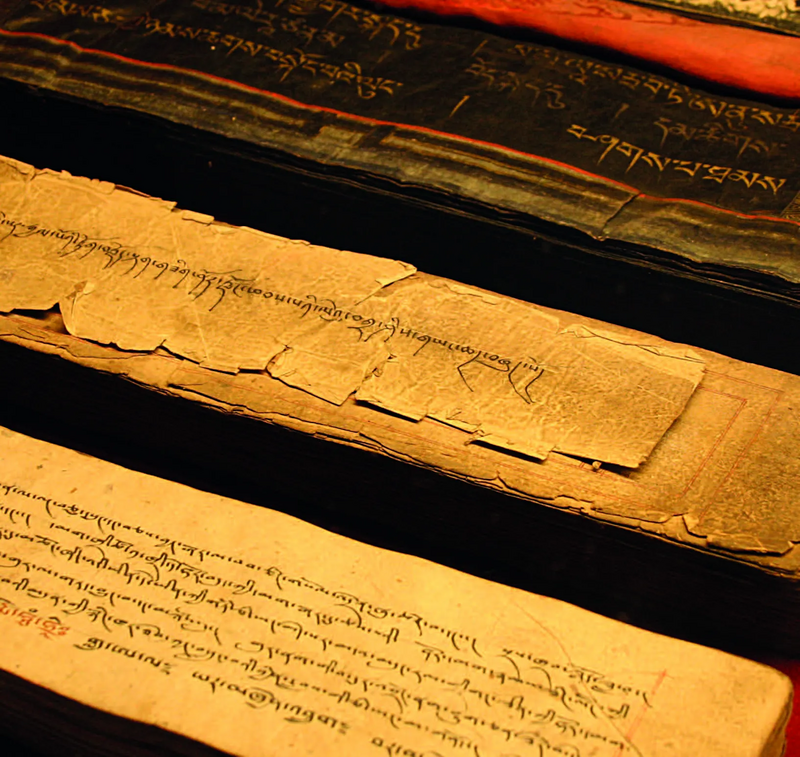
The Mirror Clarifying the Results of Karma (Byang chub sems dpa'i spyod pa la 'jug pa'i sgrung 'grel las 'bras gsal ba'i me long) is a narrative commentary on the anecdotes that appear in the ten chapters of the Bodhicaryāvatāra by Wangchuk Rinchen (c. 12th cent), who was a disciple of Latö Könchok Khar and became the abbot of Nering. The stories presented here were translated by Gregory Forgues and Khenpo Könchok Tamphel.
Story 1 of Chapter 3
And in the Buddhahood of the protectors I delight And in the grounds of realization47From the moment when, through a direct realization of emptiness, the path of seeing is entered, and throughout the path of meditation until the point where perfect Buddhahood is attained, the progress of the Bodhisattva passes through ten bhūmis or ‟grounds” of realization. Bodhisattvas residing on these grounds are considered noble beings (Tib. ʼphags pa), who have passed beyond the world in the sense that henceforth they can no longer fall back into the ordinary condition of saṃsāra. This two-line stanza does not appear in the extant Sanskrit version. For an explanation of the five paths of accumulation, joining, seeing, meditation, and no more learning, see Treasury of Precious Qualities, pp. 301–304. of the Buddhas’ heirs.
Page(s) 47
Blankleder, Helena, and Wulstan Fletcher (Padmakara Translation Group), trans. The Way of the Bodhisattva: A Translation of the Bodhicharyāvatāra. By Śāntideva. Rev. ed. Shambhala Classics. Boston: Shambhala Publications, 2006.
སྐྱོབ་པ་རྣམས་ཀྱི་བྱང་ཆུབ་དང་། ། རྒྱལ་སྲས་ས་ལའང་ཡི་རང་ངོ་། །
skyob pa rnams kyi byang chub dang /_/ rgyal sras sa la'ang yi rang ngo /_/
Concerning the phrase "in the grounds of realization of the Buddhas' heirs," [there are stories about:]
Sada, Gentle One, Wisdom Holder, Elephant, Golden-Hued, Liberated from All, Powerless One, and Strength of Bliss— These are the eight great ones.
With an altruistic mind, King Prasenajit made extensive offerings and offered services to the Buddha and his monastic community for seven days. On the first day, the Buddha asked, "King, shall I dedicate the merit of your virtue or the merit of someone whose virtue is a hundred times greater than yours?"
Unconvinced that anyone else could possess greater virtue than himself that day, the king replied, "Please dedicate the merit of whoever’s virtue is greater than mine."
Then, the Buddha dedicated the merit of a beggar named Sada—someone who rejoiced day and night in the virtues of the Mahāyāna—who was standing at the gate, thinking, "How wonderful that this king, with such an altruistic mind, is making offerings to the Buddha and the monastic community together!"
The Buddha repeated the same dedication over the next six days. The king, disheartened, made gestures of sorrow. When people asked what was wrong, he explained the situation. A wise minister then said, "Great King, there is no need to be dismayed—there is a way to ensure your merit is dedicated."
Saying this, he arranged for twice the usual amount of rice porridge to be prepared for the next day's farewell meal. As it was being served, half was deliberately spilled. When the beggars came to collect it, he had the king command, "Drive them away!" Angered and disturbed, the beggars lost their rejoicing in him.
Finally, the Buddha dedicated the king's own virtue, and King Prasenajit received a prophecy from him.[1]
Story 2 of Chapter 3
For all those ailing in the world, Until their every sickness has been healed, May I myself become for them The doctor, nurse, the medicine itself.
Page(s) 48
Blankleder, Helena, and Wulstan Fletcher (Padmakara Translation Group), trans. The Way of the Bodhisattva: A Translation of the Bodhicharyāvatāra. By Śāntideva. Rev. ed. Shambhala Classics. Boston: Shambhala Publications, 2006.
འགྲོ་[p.20]Byang chub sems dpa'i spyod pa la 'jug pa rtsa ba dang 'grel pa (1990)
Slob dpon zhi ba lha and Mkhan po kun dpal. Byang chub sems dpa'i spyod pa la 'jug pa rtsa ba dang 'grel pa. Khreng tu'u: Si khron mi rigs dpe skrun khang, 1990. 
ནད་སོས་གྱུར་གྱི་བར་དུ་ནི། ། སྨན་དང་སྨན་པ་ཉིད་དག་དང་། །
དེ་ཡི་ནད་གཡོག་བྱེད་པར་ཤོག །gro [p.20]Byang chub sems dpa'i spyod pa la 'jug pa rtsa ba dang 'grel pa (1990)
Slob dpon zhi ba lha and Mkhan po kun dpal. Byang chub sems dpa'i spyod pa la 'jug pa rtsa ba dang 'grel pa. Khreng tu'u: Si khron mi rigs dpe skrun khang, 1990.
nad sos gyur gyi bar du ni/_/ sman dang sman pa nyid dag dang /_/
de yi nad g.yog byed par shog_/Concerning the phrase, "The doctor, [. . . ], the medicine itself": The Heap of Jewels Sūtra[2] says:
Śāntamati, in a past age, when various illnesses arose throughout Jambudvīpa and became unbearable—causing people to cry out in lament—the present Teacher, having assumed the form of Indra of the Heaven of the Thirty-Three, perceived through his supernormal knowledge what would bring benefit. He swiftly took a miraculous birth as a being named Despa in a city called Kuru, located at the center of Jambudvīpa, and from the sky, he spoke to the people, saying:
- In the city known as Kuru,
Dwells a being named Despa.
Whoever partakes of its flesh
Will be freed from every illness.
As soon as the people partook of its flesh, their illnesses were cured, and their lifespan and vitality became complete—yet the flesh remained undiminished.
The people then said, "Please instruct us how we might repay your kindness, you who have become both our healer and our medicine."
At that moment, Despa appeared in the sky in a divine form and declared, "I am a manifestation of a physician from the Heaven of the Thirty-Three. I have no need for offerings of food or wealth. Instead, abandon the ten nonvirtuous actions, and cultivate loving-kindness and compassion."
In this way, he became the cause not only of their physical well-being but also of their mental well-being. By following his instructions as they had promised, all of them eventually attained awakening.
Story 3 of Chapter 3
For all those ailing in the world, Until their every sickness has been healed, May I myself become for them The doctor, nurse, the medicine itself.
Page(s) 48
Blankleder, Helena, and Wulstan Fletcher (Padmakara Translation Group), trans. The Way of the Bodhisattva: A Translation of the Bodhicharyāvatāra. By Śāntideva. Rev. ed. Shambhala Classics. Boston: Shambhala Publications, 2006.
འགྲོ་[p.20]Byang chub sems dpa'i spyod pa la 'jug pa rtsa ba dang 'grel pa (1990)
Slob dpon zhi ba lha and Mkhan po kun dpal. Byang chub sems dpa'i spyod pa la 'jug pa rtsa ba dang 'grel pa. Khreng tu'u: Si khron mi rigs dpe skrun khang, 1990.
ནད་སོས་གྱུར་གྱི་བར་དུ་ནི། ། སྨན་དང་སྨན་པ་ཉིད་དག་དང་། །
དེ་ཡི་ནད་གཡོག་བྱེད་པར་ཤོག །gro [p.20]Byang chub sems dpa'i spyod pa la 'jug pa rtsa ba dang 'grel pa (1990)
Slob dpon zhi ba lha and Mkhan po kun dpal. Byang chub sems dpa'i spyod pa la 'jug pa rtsa ba dang 'grel pa. Khreng tu'u: Si khron mi rigs dpe skrun khang, 1990.
nad sos gyur gyi bar du ni/_/ sman dang sman pa nyid dag dang /_/
de yi nad g.yog byed par shog_/Concerning the phrase "May I myself become for them [. . .] nurse . . .": It is said in the Samādhirājasūtra, "He who wishes to swiftly attain buddhahood should serve ailing proponents of the Dharma."
This refers to a past age when the buddha named King of Superior Vows appeared in the world. On the very day of his enlightenment, he manifested countless emanations and established many beings in the fruition of the Three Vehicles. That same afternoon, he passed into nirvana.
His sacred Dharma remained for a billion kotis of years. Later, when the teachings came to be practiced only in name, a universal monarch named Power of Wisdom ruled over the four continents. He had a teacher, a Dharma proponent known as Limbs of Intelligence, also called Perfect Intelligence.
At one point, this teacher was afflicted by a condition known as black frog-fire boils. All the physicians despaired of finding a cure, and he was near death. The king and his court grieved deeply. Then, the king and his son had a dream in which the deity who protected the king—the goddess Supreme Wisdom—appeared and said, "If he is treated by the application of fresh human blood and given broth made from fresh human flesh, he will be cured."
The king gathered the populace and asked for a volunteer, but no one came forward. At that moment, his fifteen-year-old daughter, Possessor of Wisdom, thought to herself, "Let me make this body meaningful." She went to her chamber, opened a major artery, and applied her blood to the afflicted monk.[3] Then, cutting a piece of her own flesh, she prepared a broth and offered it to him.
The monk was cured of his illness and, through his teachings, brought countless beings to the irreversible path.
Later, the king asked his daughter, "Where did you find the medicine?"
She replied, "When no one volunteered after the goddess's prophecy, I healed him by offering my own body."
The king then asked, "Do you not regret causing yourself such pain?"
She responded, "Had he died, the Dharma would have declined, and all would be lost in darkness. For the sake of such a noble purpose, why would I feel regret?"
The king asked, "What proof is there that you do not regret it?"
She declared, "If I feel regret, may I die this instant. If not, may my body be restored to its original state!"
As soon as she spoke, her body returned to its former condition, and the king and his retinue rejoiced.
[The Buddha concluded in the Samādhirāja:] "Young ones, I myself was Possessor of Wisdom at that time. The Dharma teacher, the monk, was Dīpaṅkara. The king was Maitreya, and the goddess was Acala."
Story 4, Chapter 3
Raining down a flood of food and drink, May I dispel the ills of thirst and famine. And in the aeons marked by scarcity and want,49A reference to the antarakalpa, an age of extreme decline figuring in the ancient Indian conception of temporal sequences, in which the quality of human life is gradually reduced until the age of ten years marks the summit of growth and capacity. It is a time of extreme instability and famine. May I myself appear as drink and sustenance.
Page(s) 48
Blankleder, Helena, and Wulstan Fletcher (Padmakara Translation Group), trans. The Way of the Bodhisattva: A Translation of the Bodhicharyāvatāra. By Śāntideva. Rev. ed. Shambhala Classics. Boston: Shambhala Publications, 2006.
Concerning the phrase "May I myself appear as drink and sustenance": In a past life, the Teacher took birth as an elephant in a beautiful region filled with trees and flowing water, surrounded by a vast and desolate plain far from any town. One day, while wandering along the edge of this forested area, he heard cries of lamentation. Moved by compassion, he followed the sound into the barren plain and saw many emaciated, exhausted people stranded in a dry, shelterless wasteland without trees or water.
When they saw the elephant—majestic like a moving snow mountain—they were filled with fear, but their weakness from hunger and exhaustion left them unable to flee. The elephant gently exhaled and said, "You need not be afraid of me." Approaching them, he asked the cause of their suffering. Hearing the elephant speak in human language, the people were deeply moved. They prostrated to him and said, "We were banished by a cruel king over a minor dispute. Now, we beg you to protect us from this suffering."
The elephant asked, "How many of you are there?"
They replied, "Only about seven hundred remain out of a thousand. The rest have perished."
Filled with compassion and thinking, "There is no other way for these people to survive—I shall give my body," he made a plan. Extending his trunk like the head of a snake, he said, "Beyond that mountain, by the shore of a lake filled with pure water, there lies the carcass of an elephant that fell from the mountain. Use its flesh for food and its intestines to carry water. If you take that path, you will find freedom."
Having said this, he quietly took another route, climbed to the top of the mountain, and, thinking, "By the merit of saving these desperate beings, may I become a protector and refuge for all sentient beings," he leapt from the cliff—giving his body without regard for his own suffering.
When the people reached the lake and saw the elephant's body, some said, "This elephant looks just like the one we met—perhaps they were from the same family."
Others said, "Considering the signs, like the trembling of the earth, perhaps it was the same elephant who jumped for our sake. We cannot bring ourselves to eat his flesh—let us instead cremate it as an offering."
Yet others said, "If we fulfill his expressed intention, that will be the best way to repay his kindness."
All of them mourned as children would the death of a wise mother. In the end, they followed his wishes, used the provisions he offered, and were freed from their suffering. They gathered his bones, built a stūpa, and made offerings to it regularly, just as they would for a revered teacher.
Story 5, Chapter 3
Raining down a flood of food and drink, May I dispel the ills of thirst and famine. And in the aeons marked by scarcity and want,49A reference to the antarakalpa, an age of extreme decline figuring in the ancient Indian conception of temporal sequences, in which the quality of human life is gradually reduced until the age of ten years marks the summit of growth and capacity. It is a time of extreme instability and famine. May I myself appear as drink and sustenance.
Page(s) 48
Blankleder, Helena, and Wulstan Fletcher (Padmakara Translation Group), trans. The Way of the Bodhisattva: A Translation of the Bodhicharyāvatāra. By Śāntideva. Rev. ed. Shambhala Classics. Boston: Shambhala Publications, 2006.
ཟས་དང་སྐོམ་གྱི་ཆར་ཕབ་སྟེ། །
བཀྲེས་དང་སྐོམ་པའི་གནོད་པ་བསལ། ། མུ་གེའི་བསྐལ་པ་བར་མའི་ཚེ། །
བདག་ནི་ཟས་དང་སྐོམ་དུ་གྱུར། །zas dang skom gyi char phab ste/_/
bkres dang skom pa'i gnod pa bsal/_/ mu ge'i bskal pa bar ma'i tshe/_/
bdag ni zas dang skom du gyur/_/Concerning the phrase "Raining down a flood of food and drink": Once upon a time, in the land of King Golden Hue, a diviner predicted that no rain would fall for twelve years. Although all existing resources were equally distributed, they lasted no more than eleven years, as too many newly born people consumed them.
Eventually, only a handful of rice porridge remained for the king himself. At that moment, a pratyekabuddha, recognizing that this was an opportunity for the king to complete his accumulation of merit, came to beg for alms. Believing his death was near, the king offered the porridge with the aspiration: "This is the final act of generosity from Golden Hue. May all of you, my retinue, rejoice!"
Immediately afterward, a rain of food, clothing, and all that was desired fell across the whole of Jambudvīpa.
That king at the time was me (Buddha).
Story 6, Chapter 3
My body, thus, and all my goods besides, And all my merits gained and to be gained, I give them all and do not count the cost, To bring about the benefit of beings.
Page(s) 48
Blankleder, Helena, and Wulstan Fletcher (Padmakara Translation Group), trans. The Way of the Bodhisattva: A Translation of the Bodhicharyāvatāra. By Śāntideva. Rev. ed. Shambhala Classics. Boston: Shambhala Publications, 2006.
ལུས་དང་དེ་བཞིན་ལོངས་སྤྱོད་དང་། །
དུས་གསུམ་དགེ་བ་ཐམས་ཅད་ཀྱང་། ། སེམས་ཅན་ཀུན་གྱི་དོན་སྒྲུབ་ཕྱིར། །
ཕངས་* ཕོངས in the source text. པ་མེད་པར་བཏང་བར་བྱ། །lus dang de bzhin longs spyod dang /_/
dus gsum dge ba thams cad kyang /_/ sems can kun gyi don bsgrub phyir/_/
phangs * phongs[ in the source text.] pa med par btang bar bya/_/Concerning the phrase "I give them all and do not count the cost": Viśvantara[4] was an exceptionally brave benefactor. Once, when he gave away the most excellent elephant to a brahmin, the people of Shipi grew angry. However, after they exiled him to Mount Vaṅka, and he went on to give away his horse, his two small children, and even his wife, the people of Shipi eventually rejoiced in his generosity and reinstated him as their king.
In short, as it is said in the Jātakas:
The two merchants and The Rabbit, Viśvantara and Offering Giver.
These, along with others, make up ten stories related to acts of generosity. They are also recounted either briefly or in detail when teaching about giving.
Story 7, Chapter 3
This is the supreme draft of immortality That slays the Lord of Death, the slaughterer of beings, The rich unfailing treasure-mine To heal the poverty of wanderers.
Page(s) 51
Blankleder, Helena, and Wulstan Fletcher (Padmakara Translation Group), trans. The Way of the Bodhisattva: A Translation of the Bodhicharyāvatāra. By Śāntideva. Rev. ed. Shambhala Classics. Boston: Shambhala Publications, 2006.
འགྲོ་བའི་འཆི་བདག་འཇོམས་བྱེད་པའི། །
བདུད་རྩིའི་མཆོག་ཀྱང་འདི་ཡིན་ནོ། ། འགྲོ་བའི་དབུལ་བ་སེལ་བ་ཡི། །
མི་ཟད་གཏེར་ཡང་འདི་ཡིན་ནོ། །gro ba'i 'chi bdag 'joms byed pa'i/_/
bdud rtsi'i mchog kyang 'di yin no/_/ 'gro ba'i dbul ba sel ba yi/_/
mi zad gter yang 'di yin no/_/Concerning the phrase "The rich unfailing treasure-mine": Once, in the distant past in Vārāṇasī, when King Mahendrasena was perfect in both Dharma and worldly rule, the King of Aparānta marched with his army, conquered Vārāṇasī, and settled there. King Mahendrasena said to his retinue, "We cannot commit wrongdoing merely to preserve our lives. Therefore, I permit all of you to pay homage to the King of Aparānta." As instructed, the retinue did so, and Mahendrasena himself withdrew to the forest, living on roots and fruits.
At that time, a poor brahmin, having heard that King Mahendrasena gave whatever was requested, went to see him. The king said, "Bind me and take me before the King of Aparānta—he will reward you with whatever you desire." The brahmin replied, "I cannot bear to bind you." So the king bound himself, and the brahmin brought him to the King of Aparānta, saying, "Your Majesty, here is your enemy—I have captured and brought him to you."
The King of Aparānta thought, "He is a man of great strength—how could this frail brahmin have bound him? He must have bound himself and surrendered to the brahmin." Then he asked the brahmin, "Tell me the truth—how did you bind him?" The brahmin told the truth. Astonished, the King of Aparānta asked for forgiveness, returned the kingdom to Mahendrasena, and withdrew to his own land.
The brahmin, satisfied with wealth, helped establish the people in the practice of the ten virtues.
The Buddha said, Monks, at that time, I myself was King Mahendrasena."
Story 8, Chapter 3
It is the mighty sun that utterly dispels The misty ignorance of wandering beings, The creamy butter, rich and full, That’s churned from milk of holy teaching.
Page(s) 51
Blankleder, Helena, and Wulstan Fletcher (Padmakara Translation Group), trans. The Way of the Bodhisattva: A Translation of the Bodhicharyāvatāra. By Śāntideva. Rev. ed. Shambhala Classics. Boston: Shambhala Publications, 2006.
འགྲོ་བའི་མི་ཤེས་རབ་རིབ་དག །
དཔྱིས་འབྱིན་ཉི་མ་ཆེན་པོ་ཡིན། ། དམ་ཆོས་འོ་མ་བསྲུབས་པ་ལས། །
མར་གྱི་ཉིང་ཁུ་ཕྱུང་བ་ཡིན། །gro ba'i mi shes rab rib dag_/
dpyis 'byin nyi ma chen po yin/_/ dam chos 'o ma bsrubs pa las/_/
mar gyi nying khu phyung ba yin/_/Concerning the phrase "churned from milk of holy teaching": It is like the tale of King Rājabalavardhana churning the ocean, from which arose a sun and a moon, a vessel of poison, a woman named Chang, a container of women, and so on.
End of Chapter Three.

